

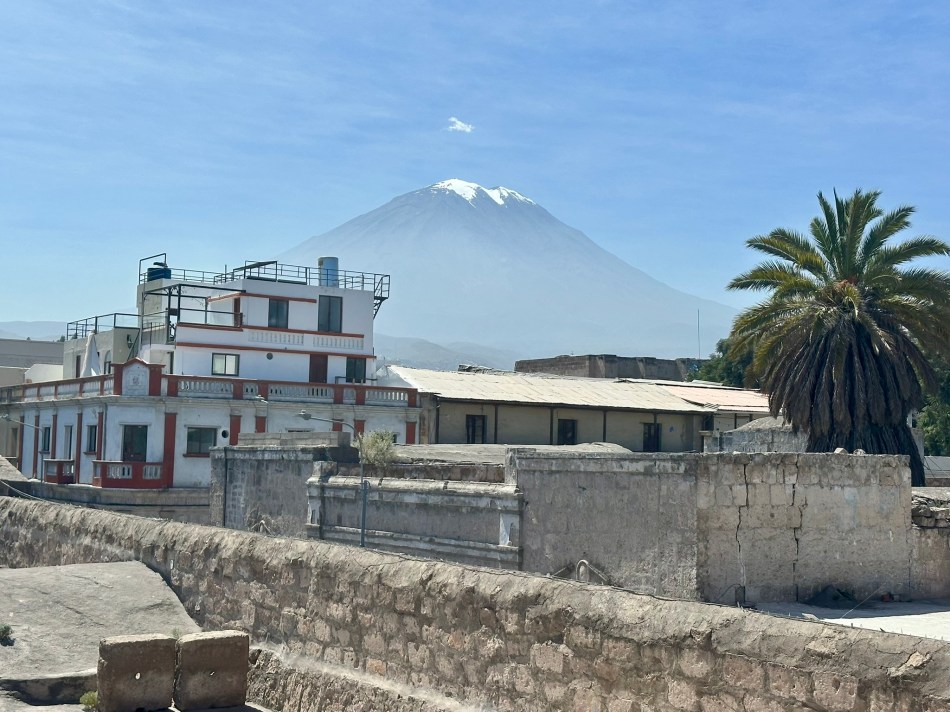
We wrapped up our two weeks in southern Peru in Arequipa, the “white city”. The original hotels, or tambos, of the area were built by the Incas but when the Spanish arrived and built their colonial settlement in 1540 the natives called it the “white city” because of the color of the colonists’ skin. Perhaps that was also to shorten the original given name by the Spaniards of Nuestra Señora de la Asunción del Valle Hermoso (or Beautiful Valley of our Lady of the Assumption). I get the gratitude, but it sure is a mouthful. Despite the original given name, King Carlos V ordered it to be called “Arequipa” a year later.
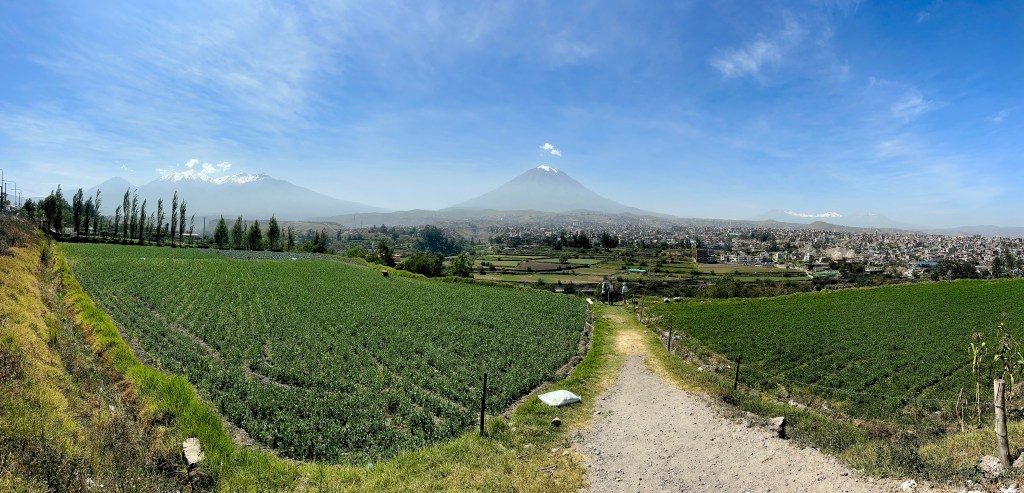
Arequipa is ringed by mountains, three of which, Misti, Chachani and Pichu Pichu, are volcanic and an eruption of Huaynaputina, one of South America’s largest volcanoes, in 1600 destroyed that original Spanish city. Rebuilt in 1604, a subsequent earthquake destroyed that one too. The current historical colonial city was rebuilt after the devastating earthquake in 1868 using white volcanic stone which was designed to be more earthquake resistant. At that time, the Spaniards also adopted the “white city” moniker as their own.
The Churches. Such has it been in Arequipa. The sign on the cathedral indicates it was built, or rather finished, in 1847 but that’s when the sign was carved, another earthquake delayed the actual opening to 1848, but they just left the sign. They finished construction on the current cathedral one-hundred years later in 1950. Incidentally, in the main square in front of the cathedral, the Mayor comes to hear the grievances of the residents every Sunday.
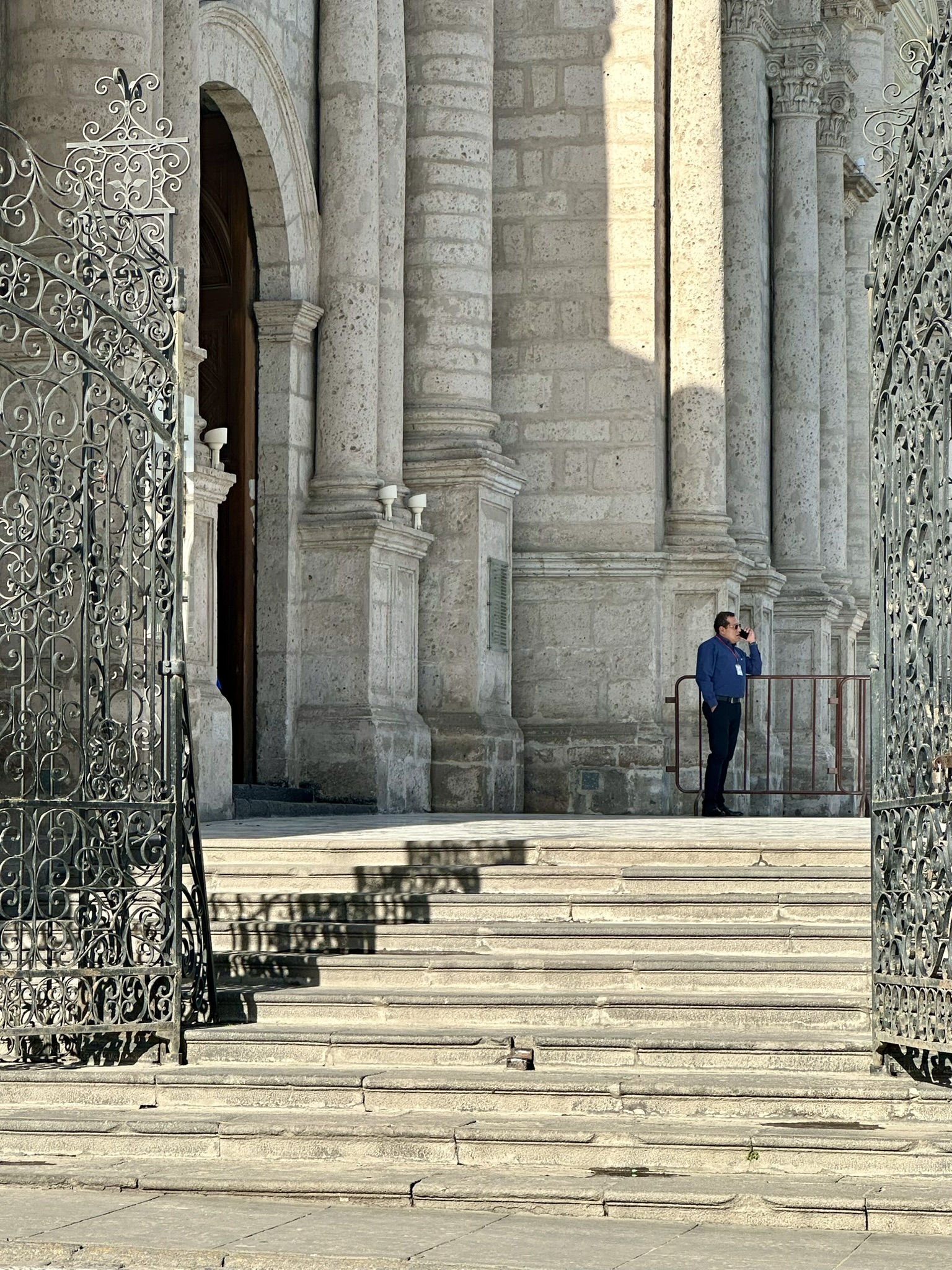
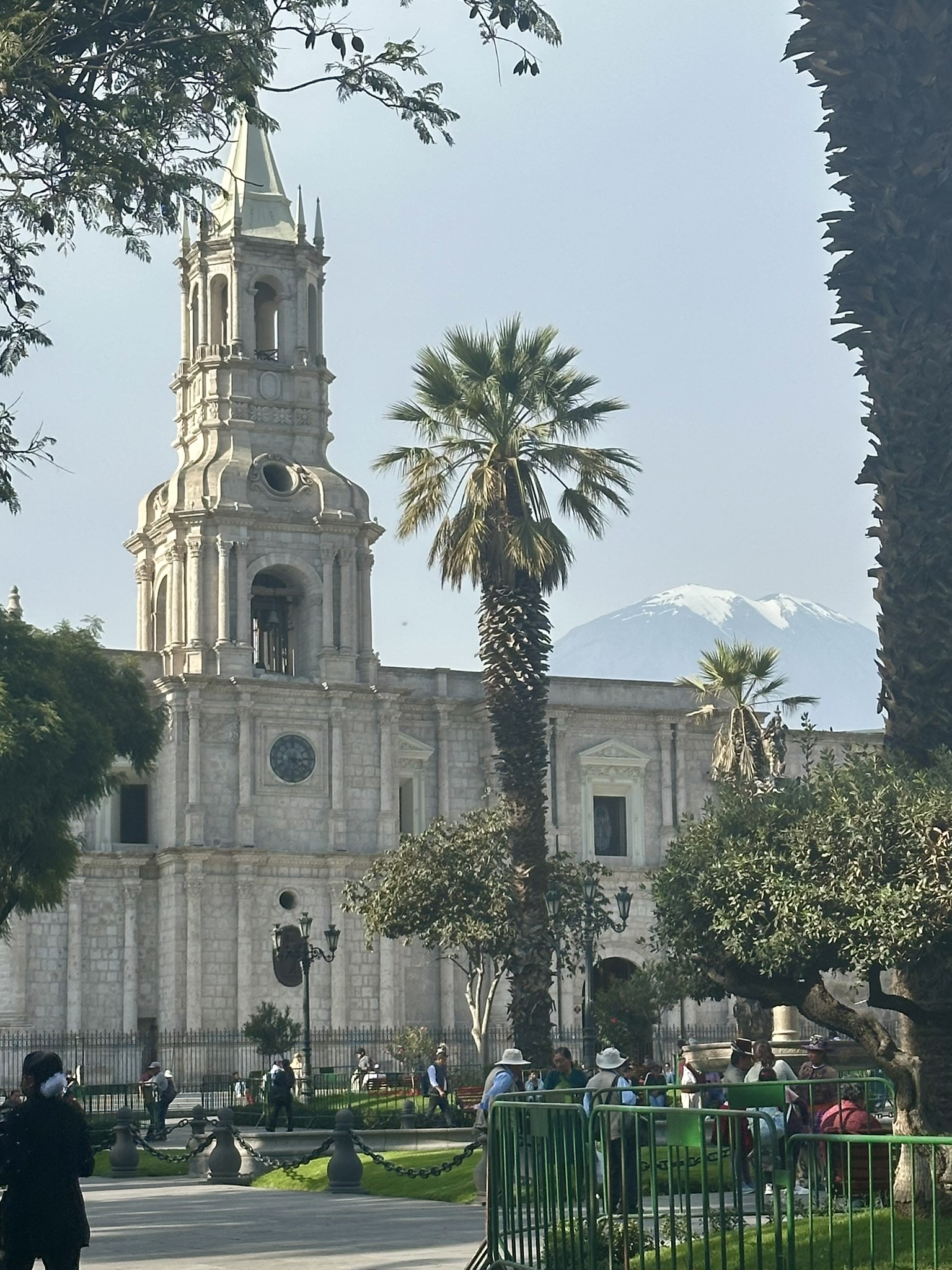
The Jesuits took 100 years to build their church located just kitty-corner to the square and finished it in 1698, also (you guessed it) because of earthquakes. The last major earthquakes in Arequipa were in 1996 (7.7 magnitude) and in 2001 (8.4). “Do you get nervous living near so many volcanoes?” we asked our guide, “of course”, he replied but left it at that. Modern technology helps, but it’s still an unstable place to live, geologically speaking. But for what it lacks in security from natural disaster it makes up for in charm.
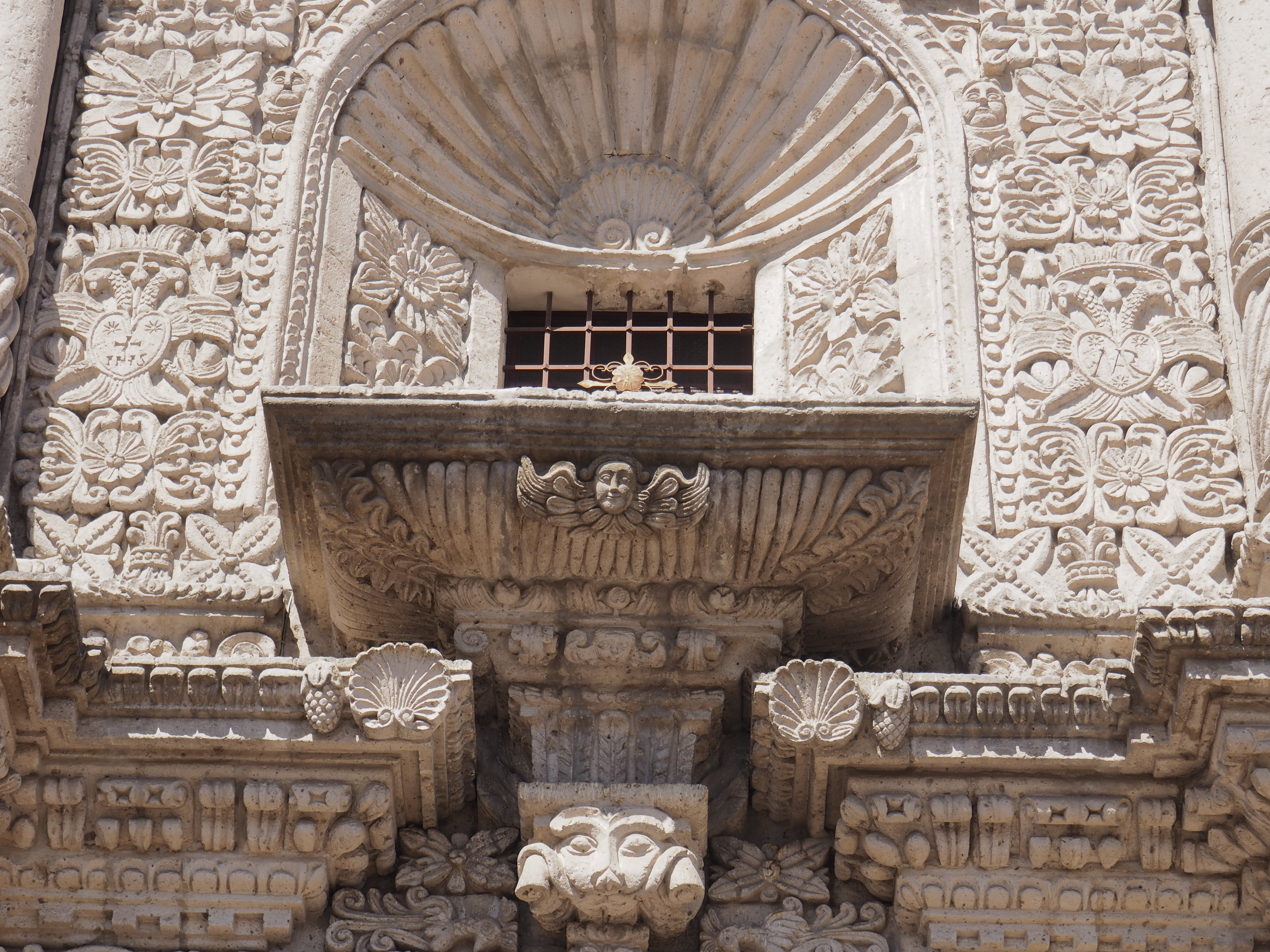
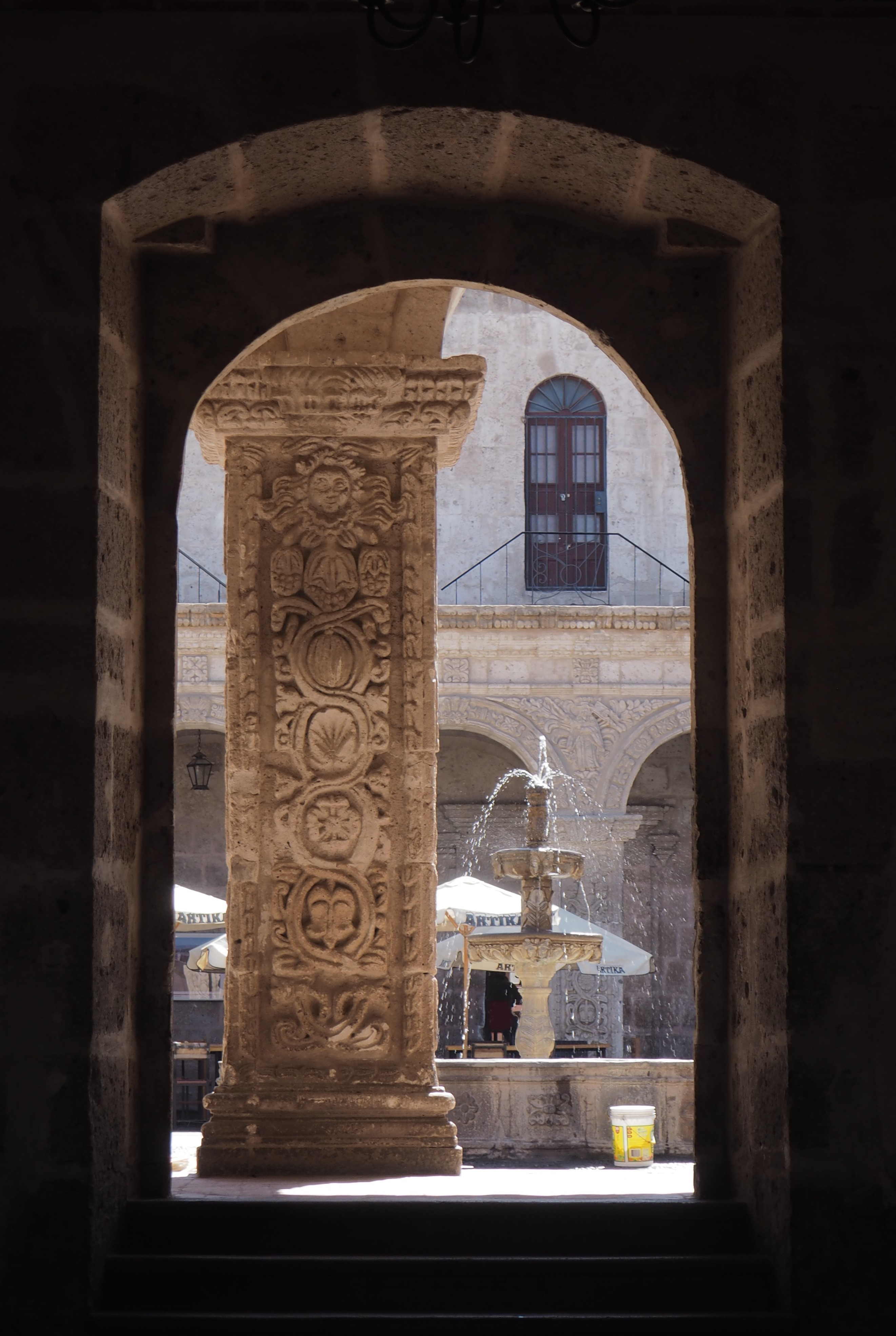
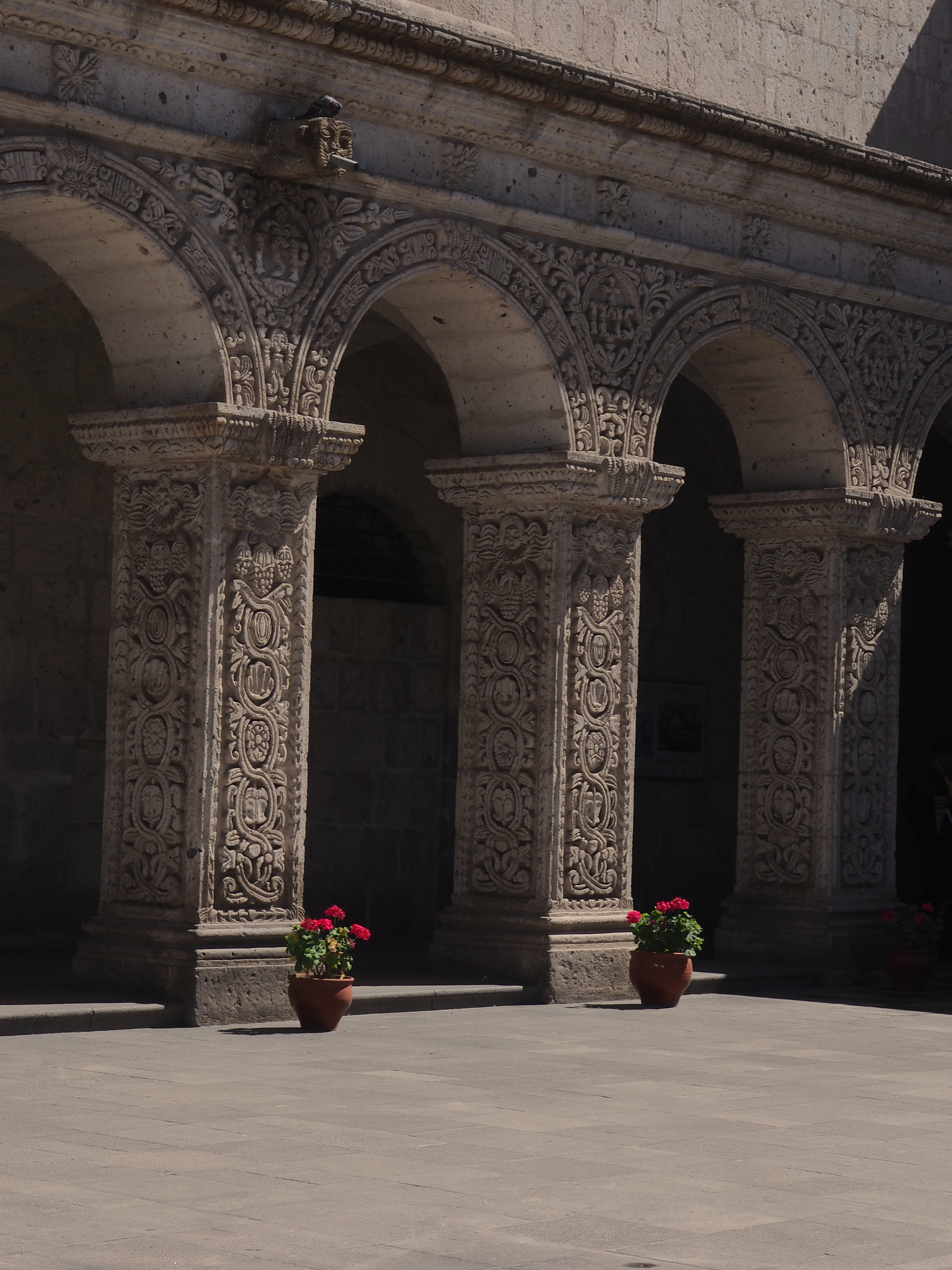
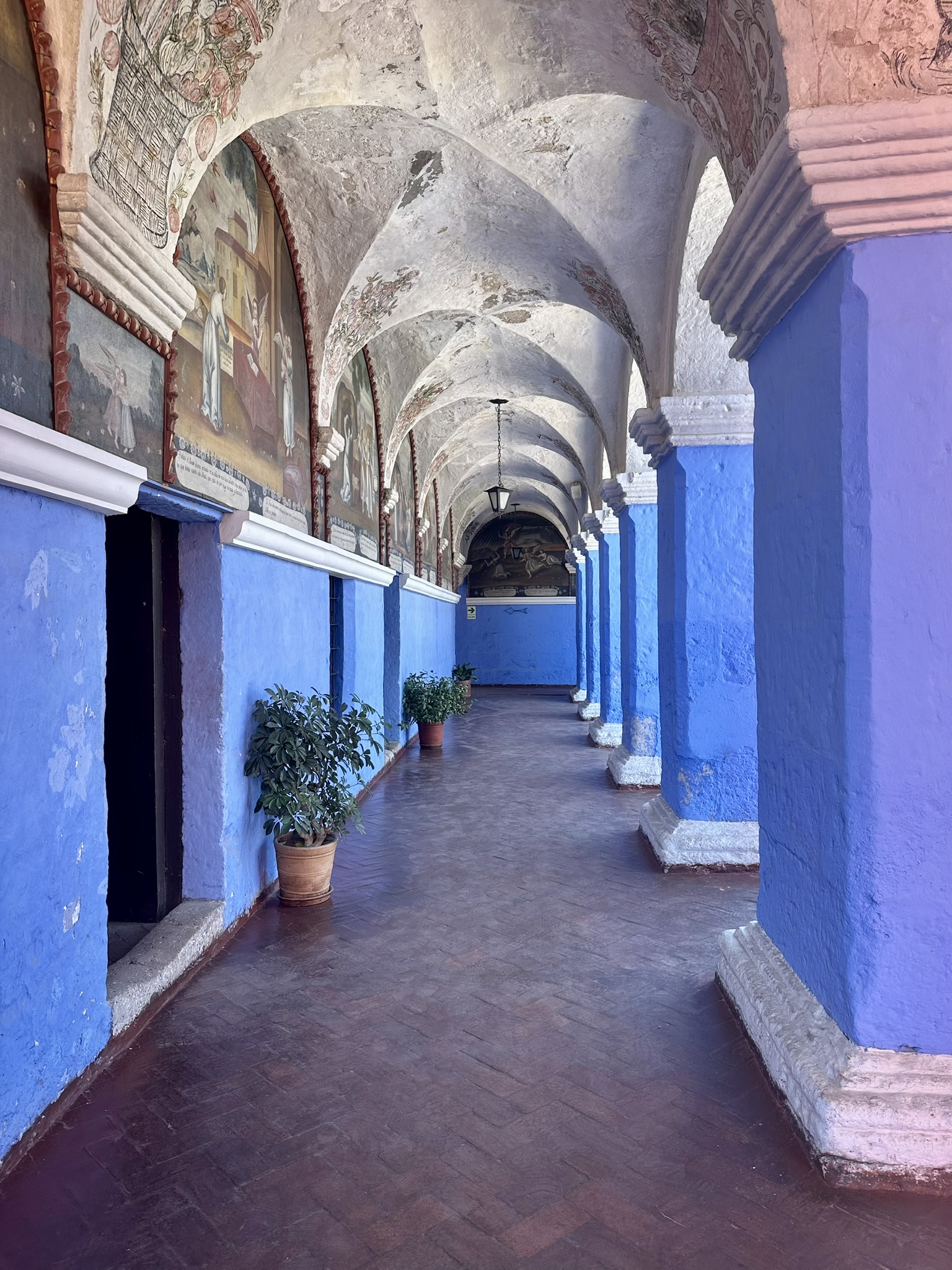
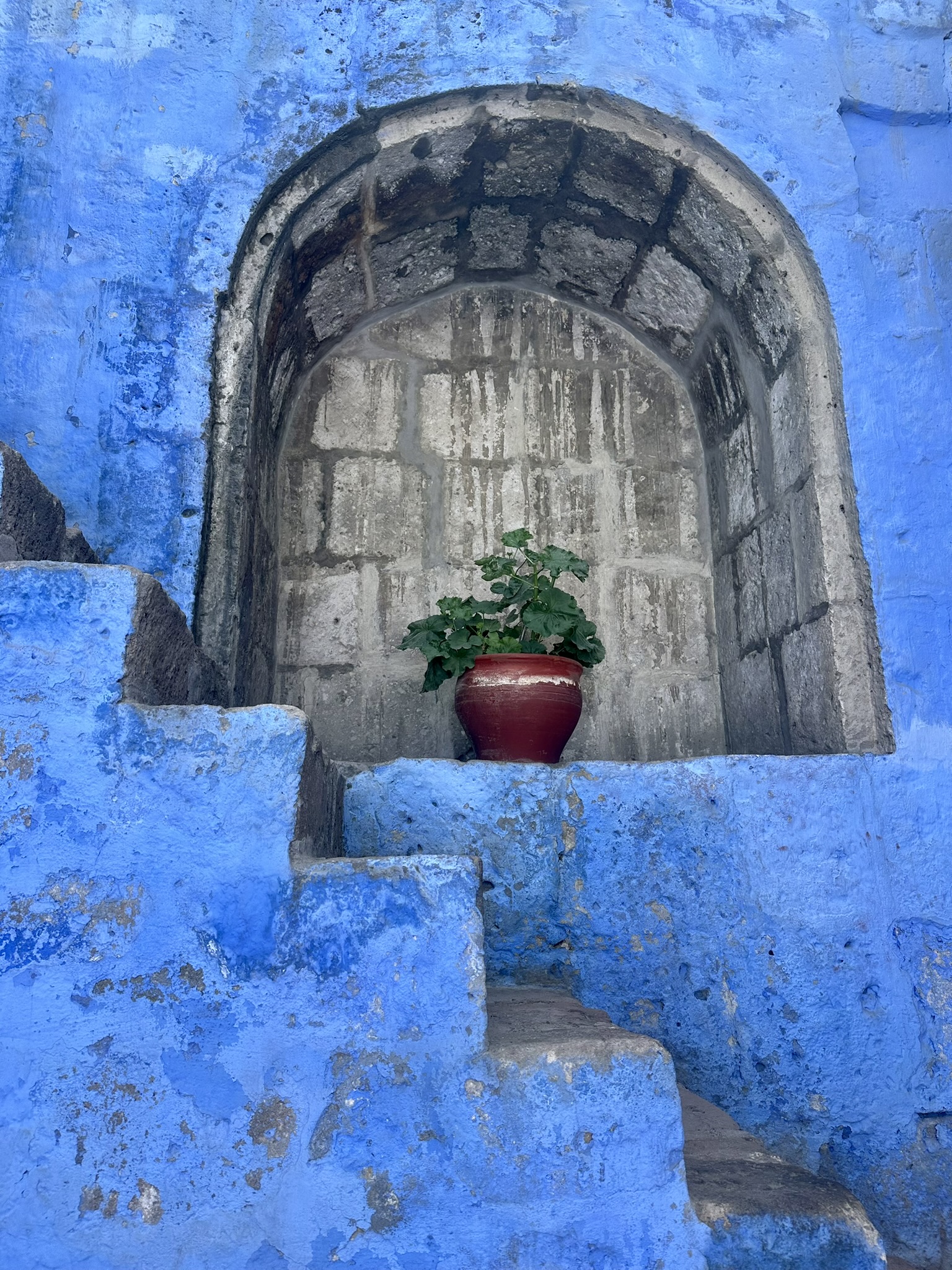
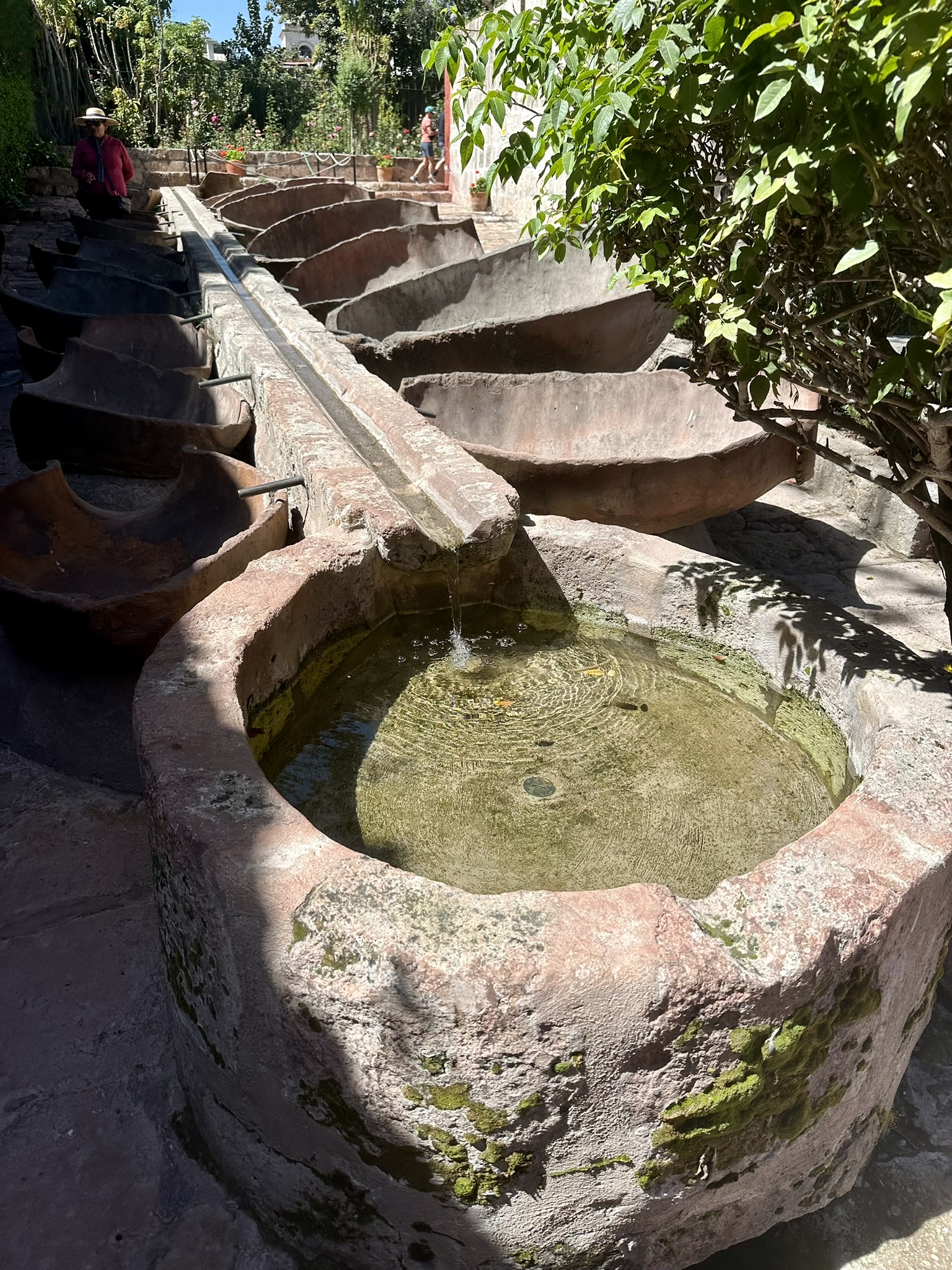
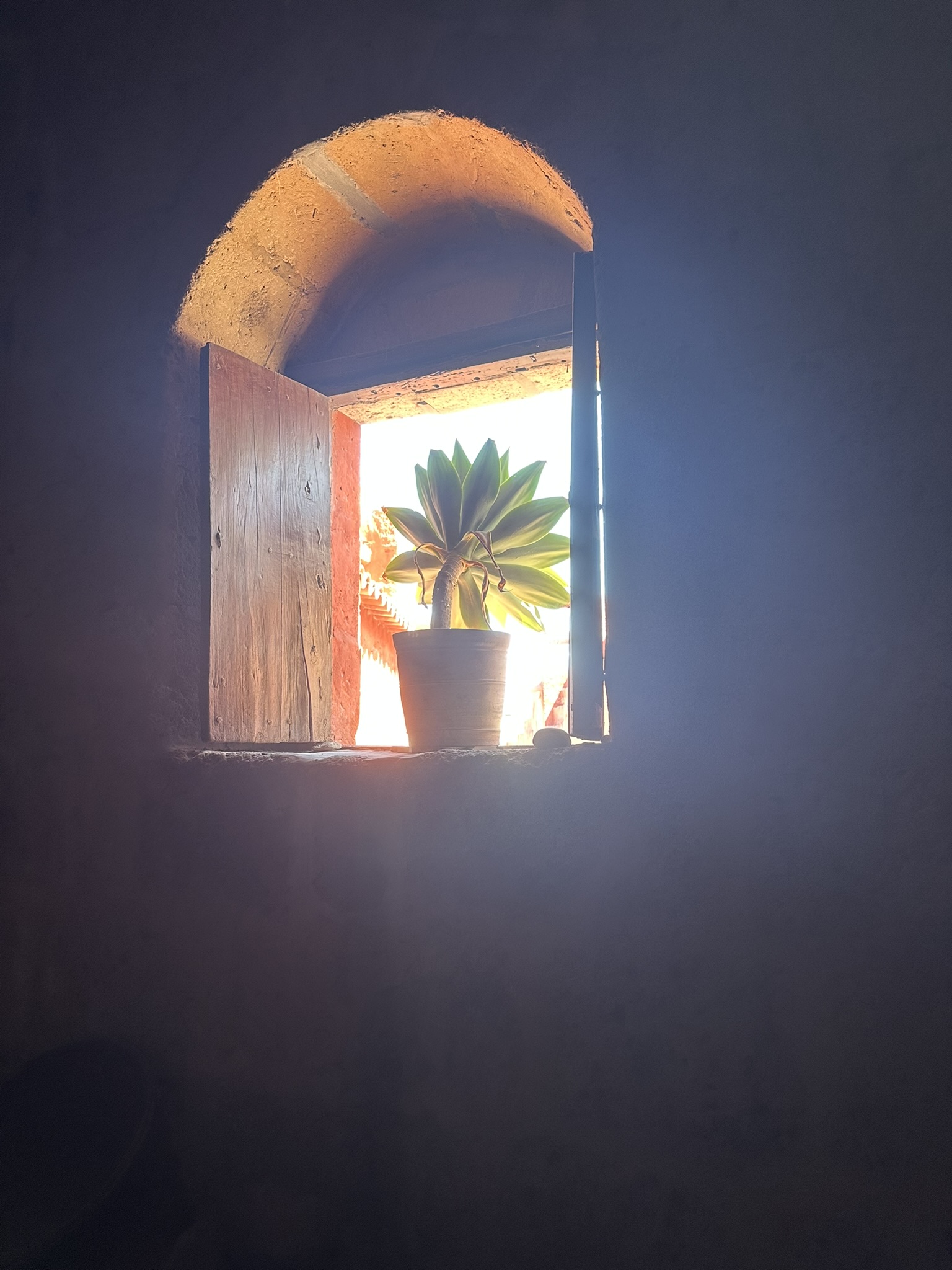
The Santo Domingo Monastery. A highlight was our visit to the Santo Domingo Monastery, a literal self-contained small city with colorfully adorned walls within the confines of the White City. At one time, the convent housed around 200 nuns. Novices would train for up to 4 years and were financed by their families. As the nuns weren’t allowed to leave, priests would visit to perform religious services and doctors would visit for medical ones. Nowadays, about 15 nuns are active here with external family and medical visits now permitted.
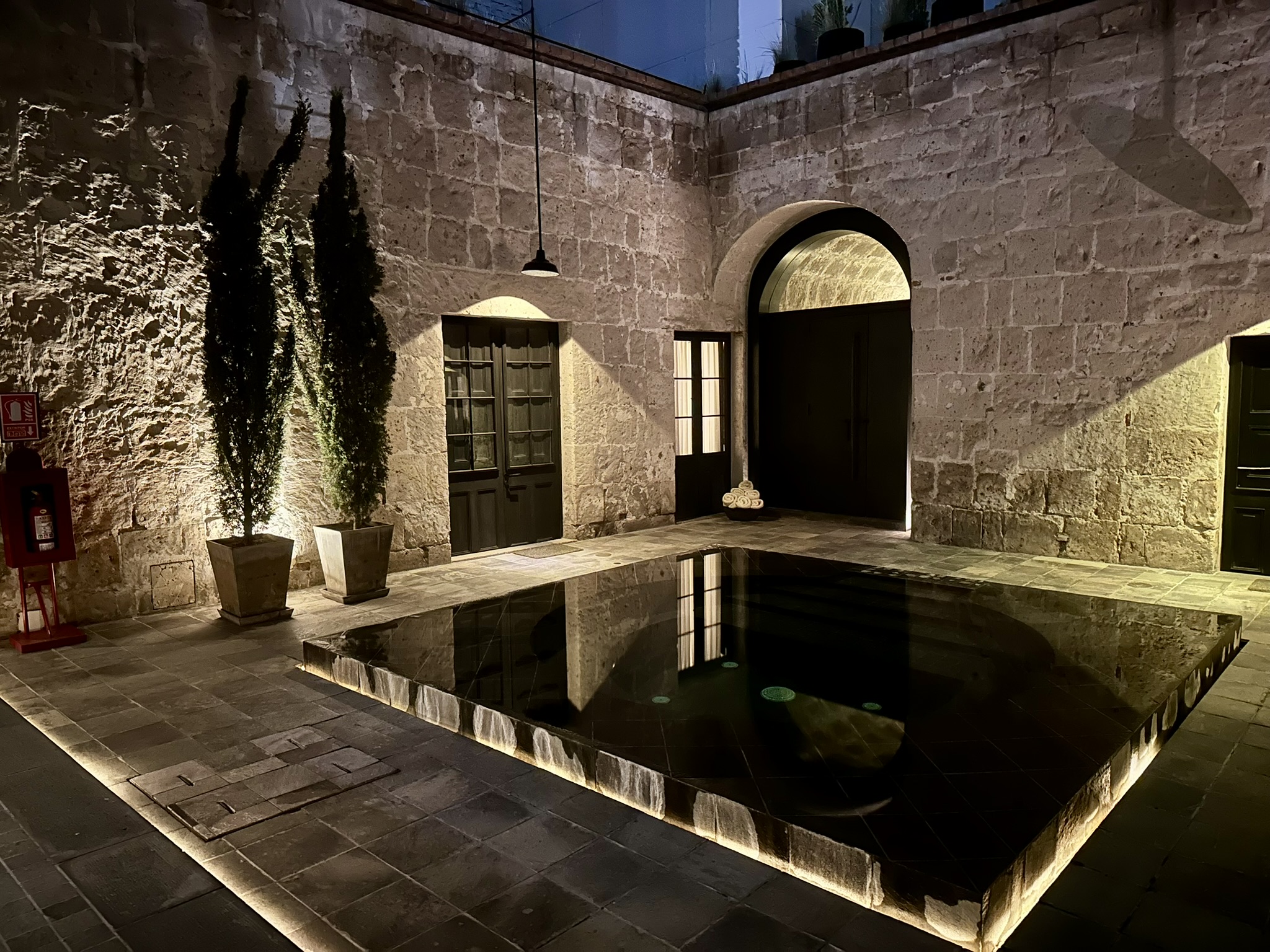
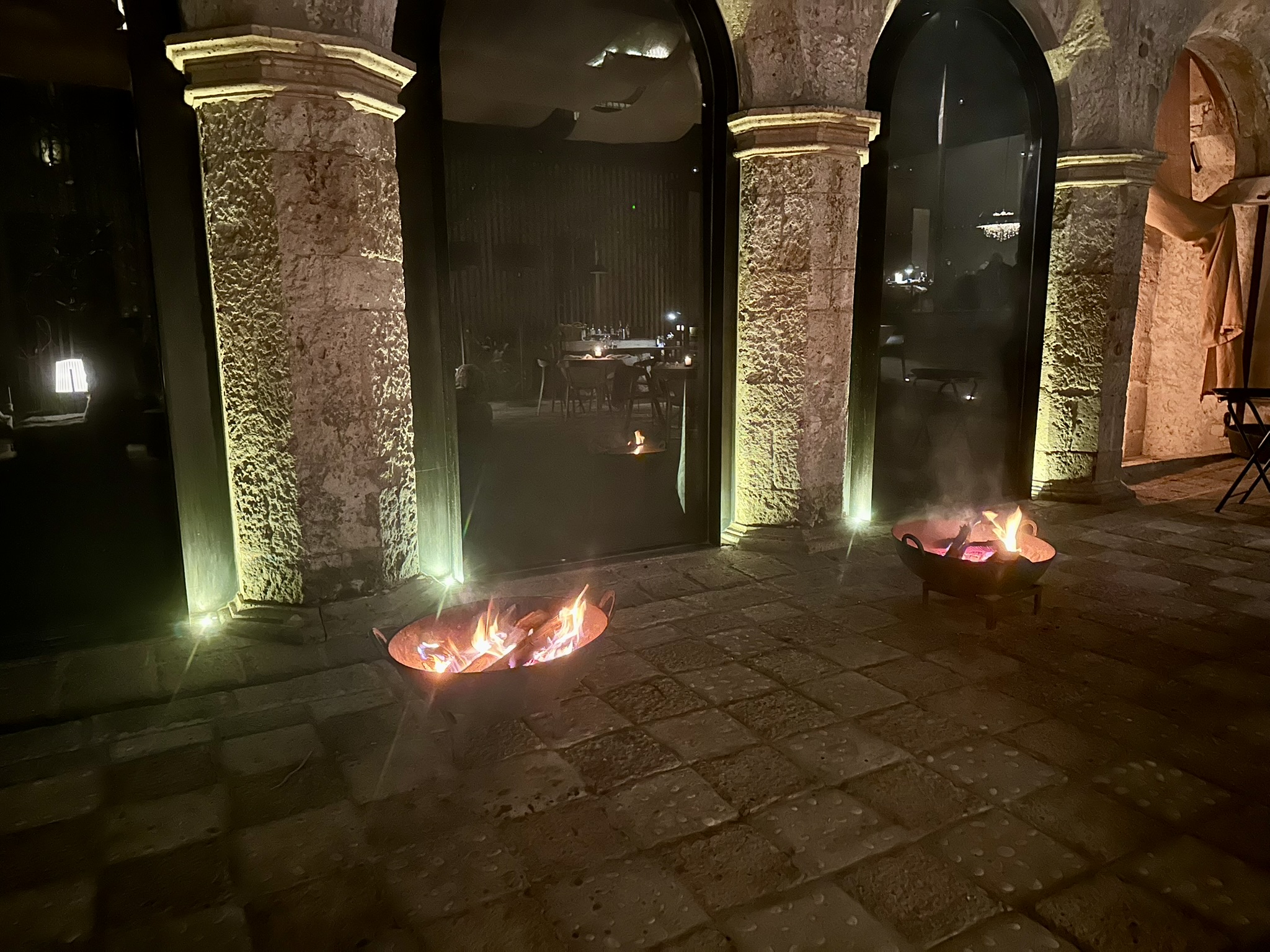
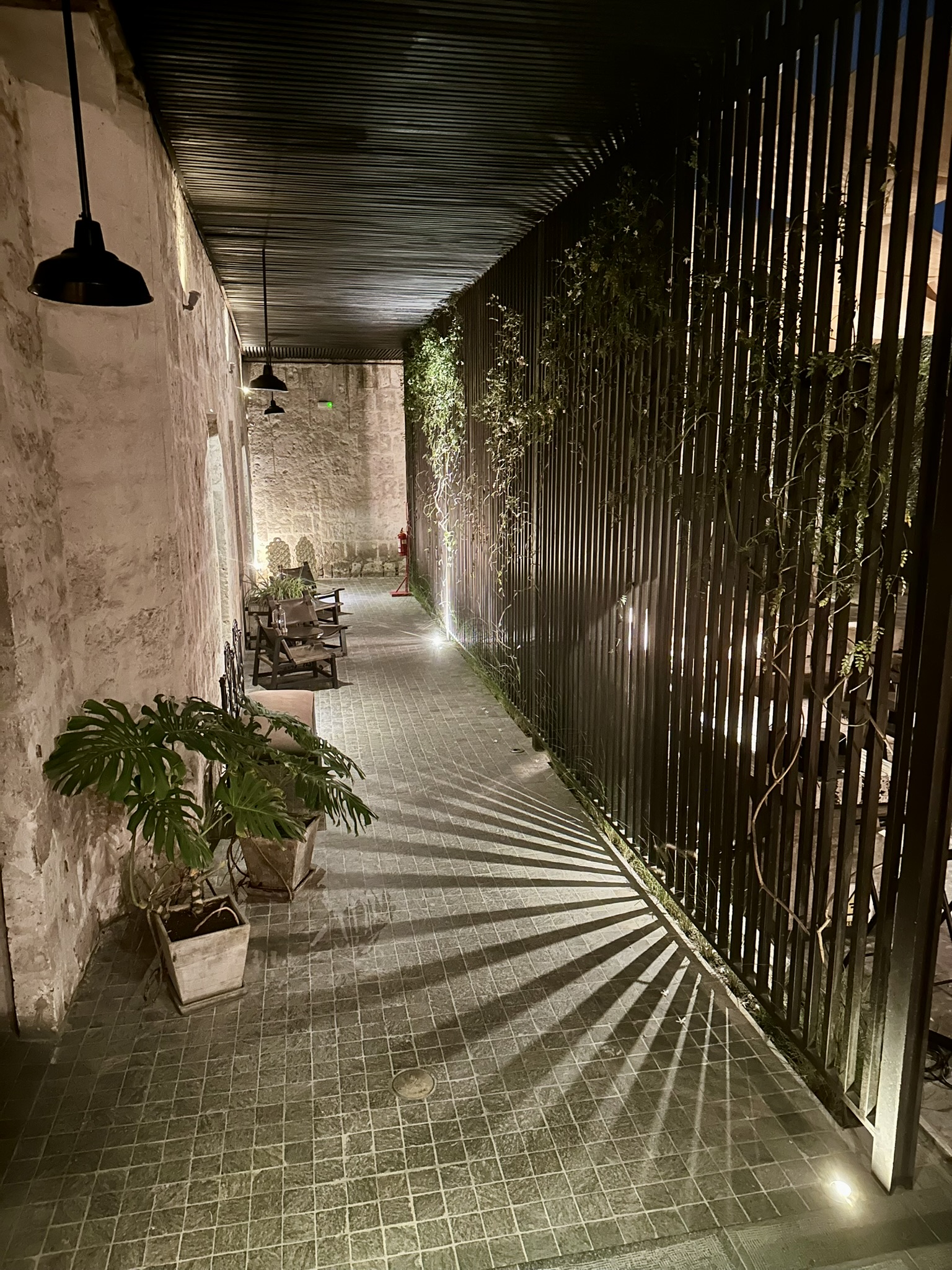
Our hotel, Cirqa, was built beginning in 1583 as an Augustinian religious complex with gardens, shops, cloister and a church. In the 18th century, a secret catacomb network and church were discovered underneath. The property was transferred to the Peruvian government in 1821 during Peru’s independence and it became a hotel when the property was subdivided later in the 20th century. Cool white stone accompanied with modern steel and glass, hip interior lighting and comfortable outdoor sitting spaces made for a lovely afternoon, and evening, nestled inside the old town. To boot, we had some of the best food we ate in our whole two weeks at Cirqa.
Also, if you’re visiting, be sure to try the local Queso Helado dessert made with milk, cinnamon and vanilla. It won’t be hard. They sell it nearly everywhere. And while Arequipa’s temperatures remain about the same with highs in the mid to upper-60s and lows in the mid-40s Fahrenheit year-round, the daily high-altitude highs are hot enough that you’ll long for this sweet, delicious cold treat.
Finally, our guide, Victor, was excellent. He lives in Arequipa and was our guide throughout southern Peru from the Colca Canyon to the Condor Cross to Arequipa. You can reach him on Instagram here.
Sources:


0 comments on “Peru’s White City: Arequipa”