

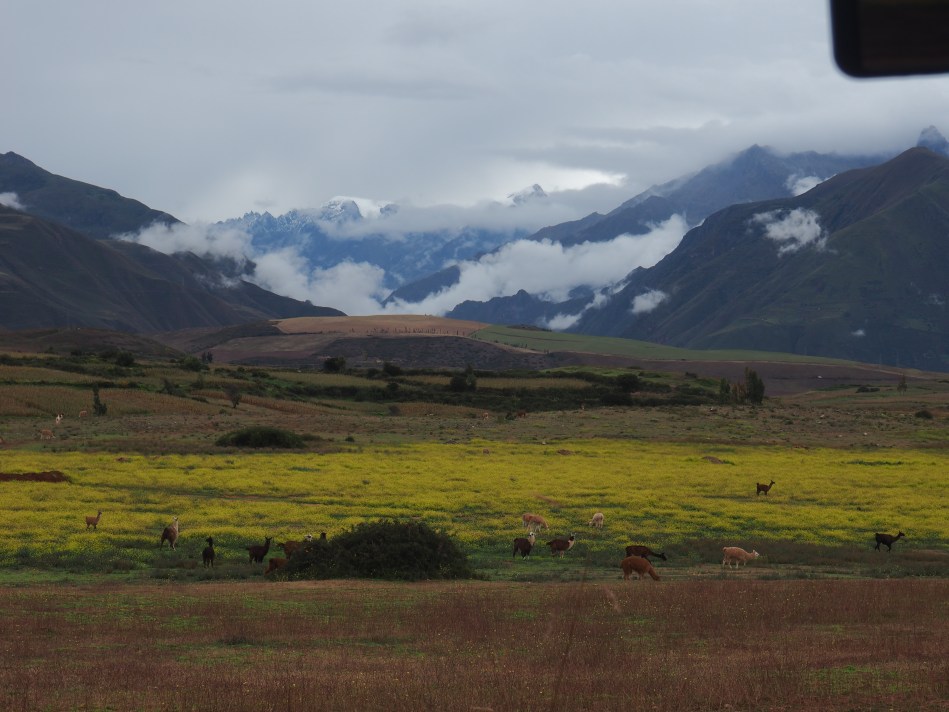
Leaving the Sacred Valley and Machu Picchu behind, we headed to Cusco through the high plains of Peru.
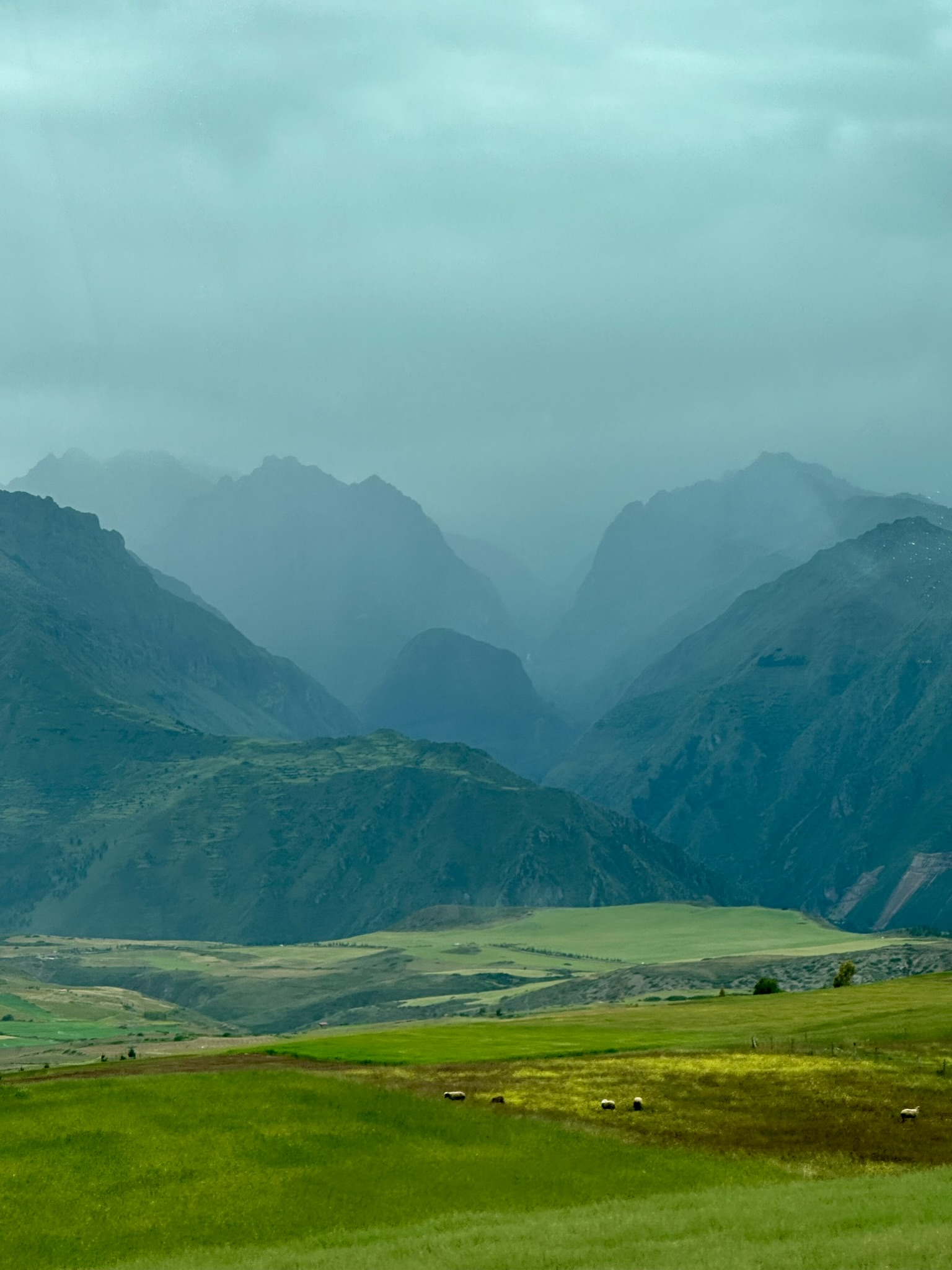
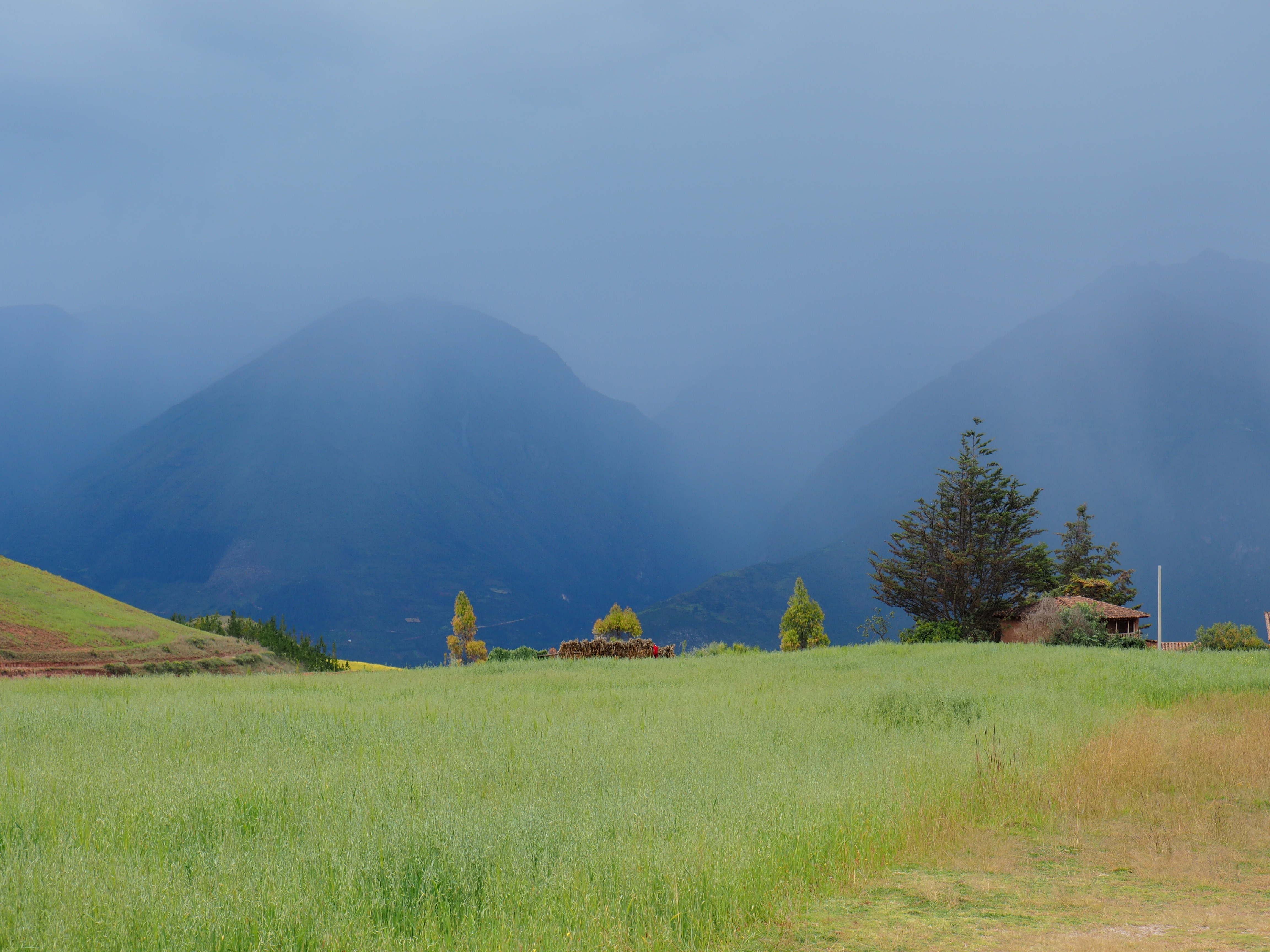
The pampa (flat land) of the high plains are home to farmland where wheat, corn, barley, oats, mustard seed, quinoa and fava beans are grown and rock salt is harvested. And with wind swept grasses, bright yellow mustard seed, amber waves of grain and the high peaks of the Andes beyond it is jaw droppingly beautiful.
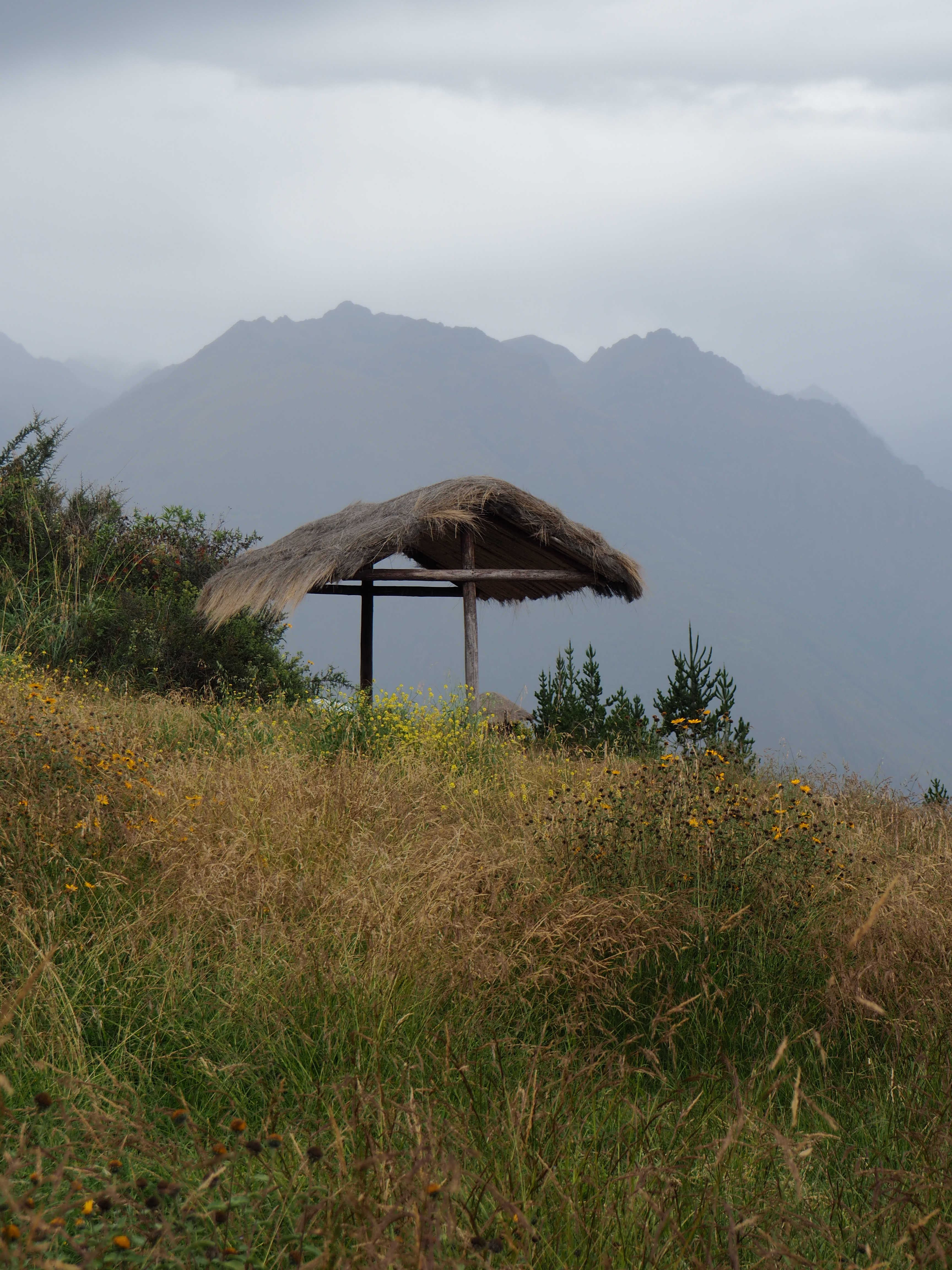
Maray. We began our tour at Maray, a remarkable Inca site. During the Inca days, they used a natural depression in these high plains to carve four semicircular circuits with seven layers each, it is speculated, to improve and adapt seeds for crops at various altitudes. Present day scientists have measured the soils and found that the bottom of these circles have soil like that of the valley floor below with each semicircle representing soils of increasing altitude.
Because of its position in a large indentation in the high plains, this miniature microclimate is warmer than the surrounds and is protected from the winds making the Incan seed experimentation possible.
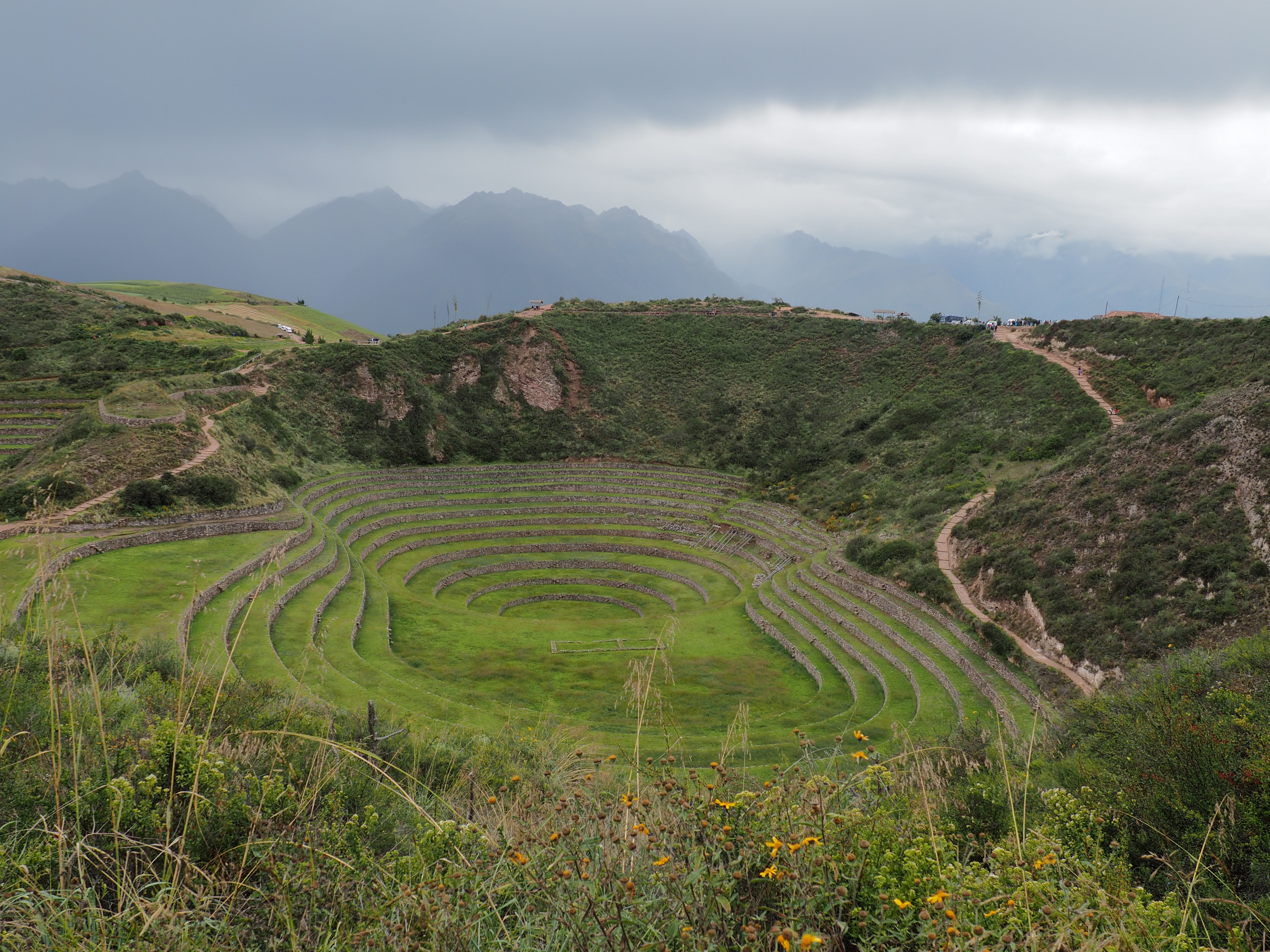
But it may have also been a lunar calendar and/or a sacred site as well. Perhaps its 4 circuits of 7 tiers also correspond to the 28 day cycle of the moon. Without a written history from the Inca, one can’t be sure.
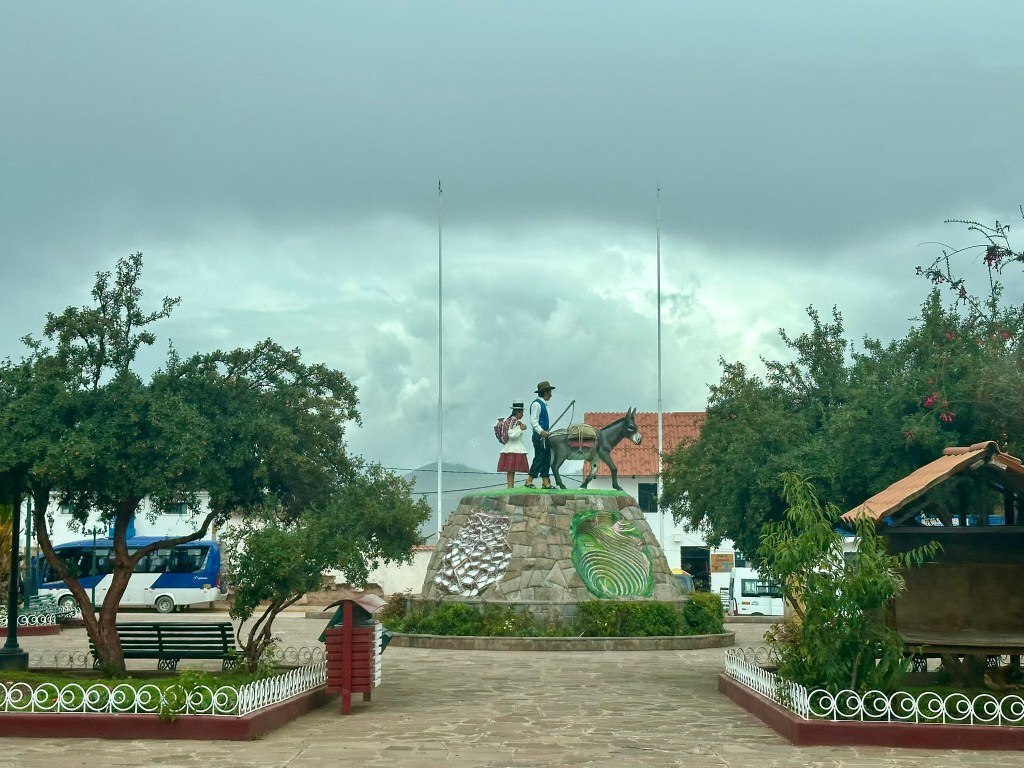
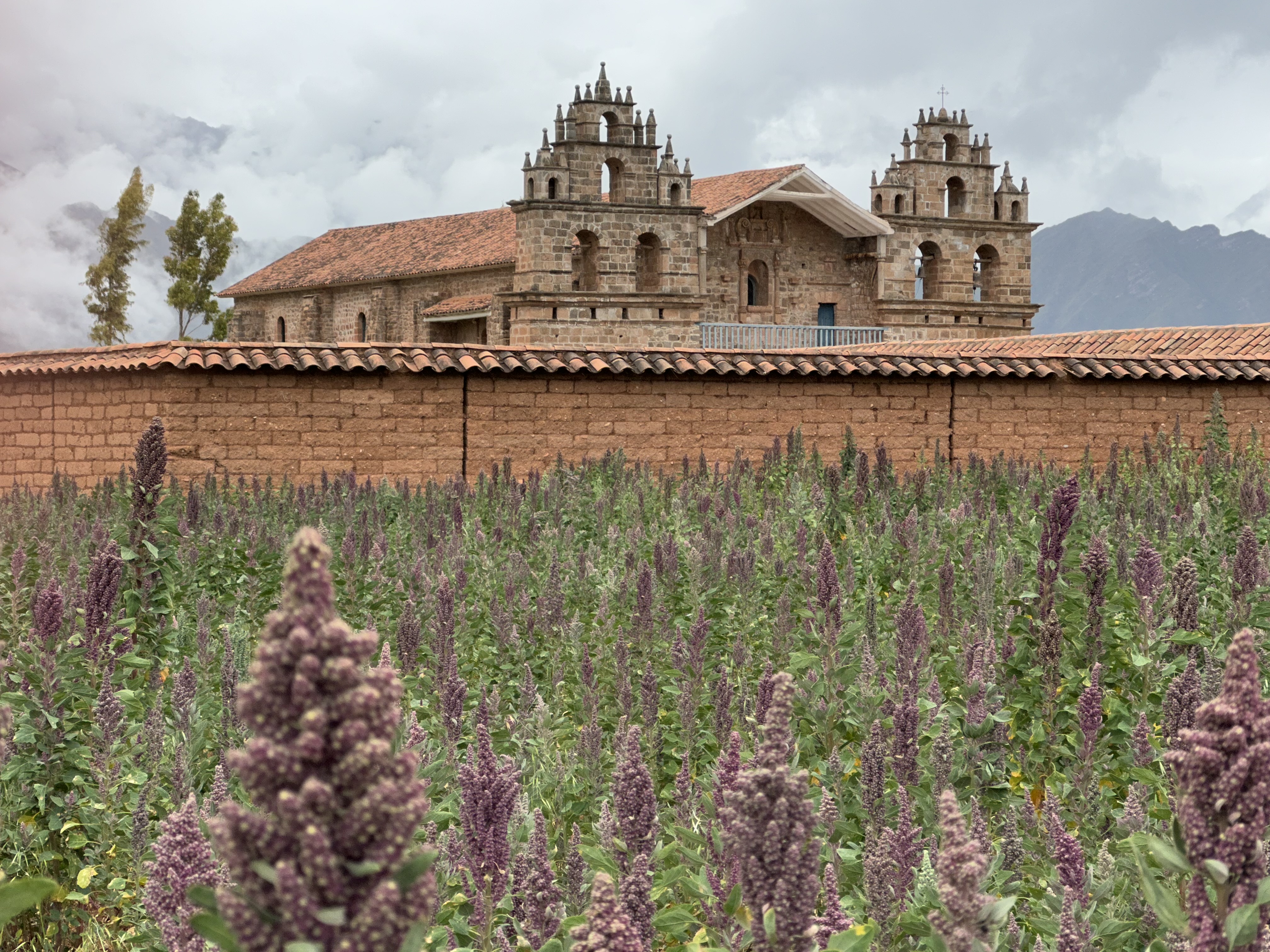
Lunch on the Plains. We drove through the Spanish colonial town of Maras and headed to lunch at the small UNU restaurant next to the magnificent high plains church at Tiobamba.
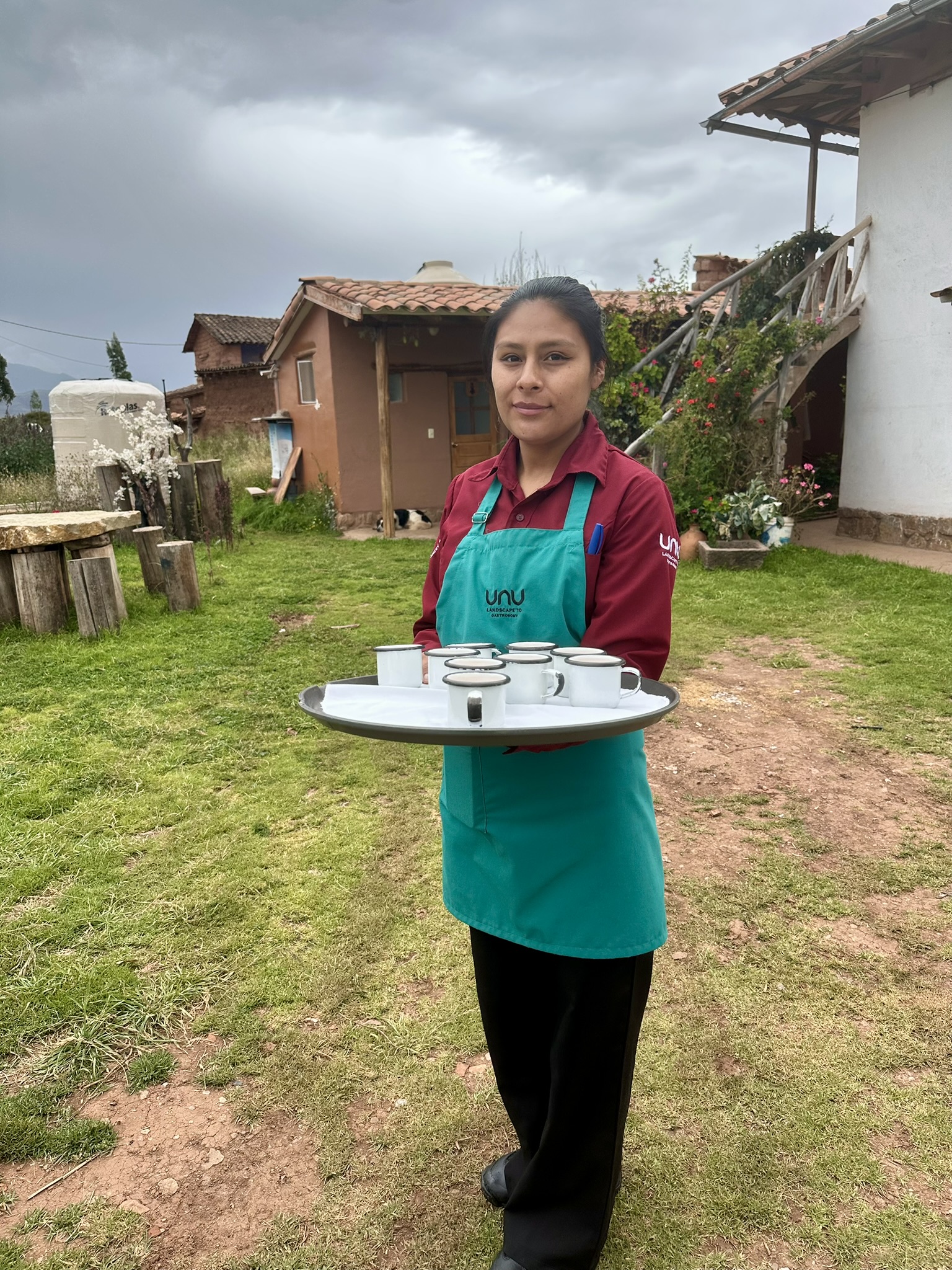
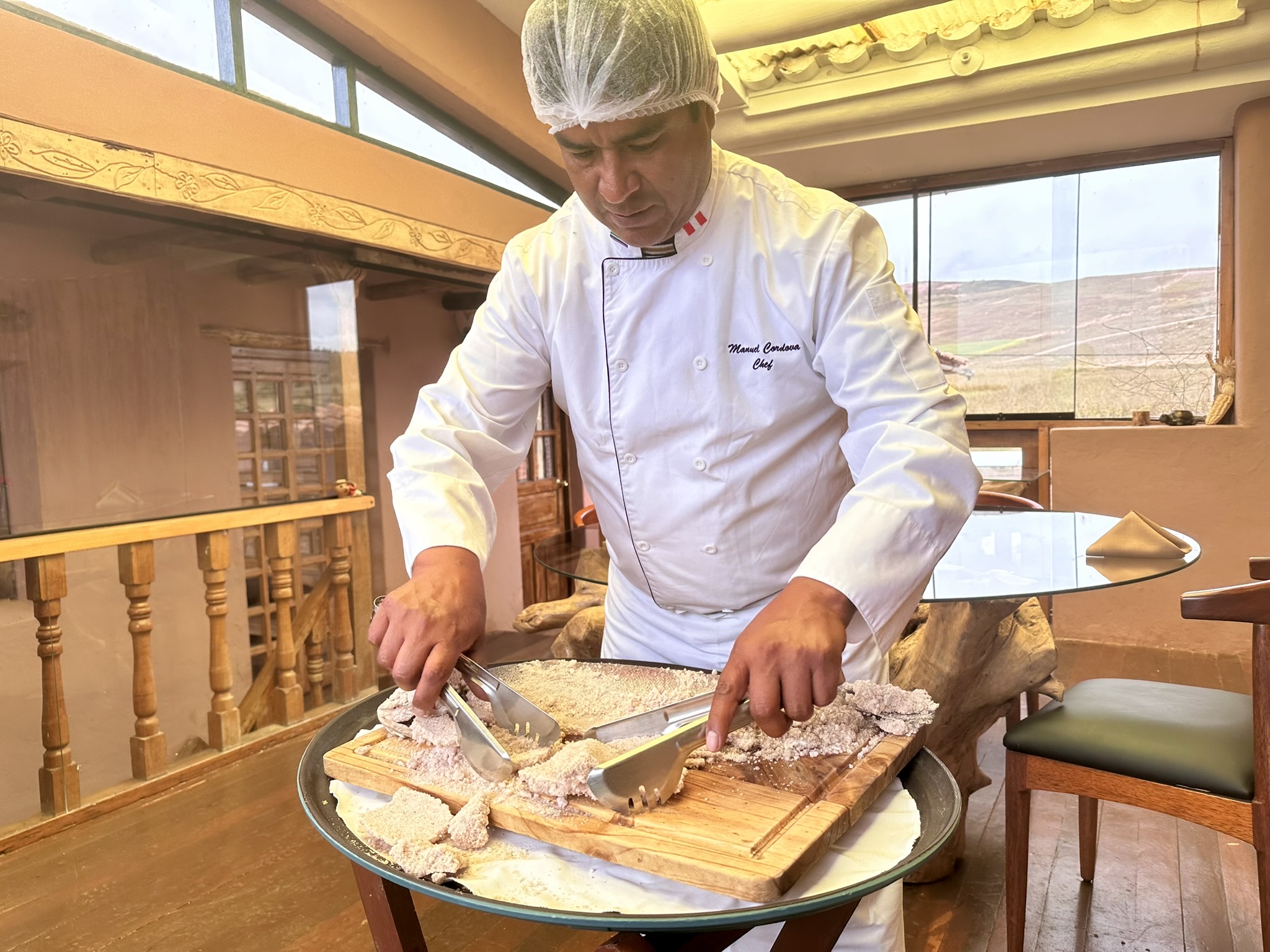
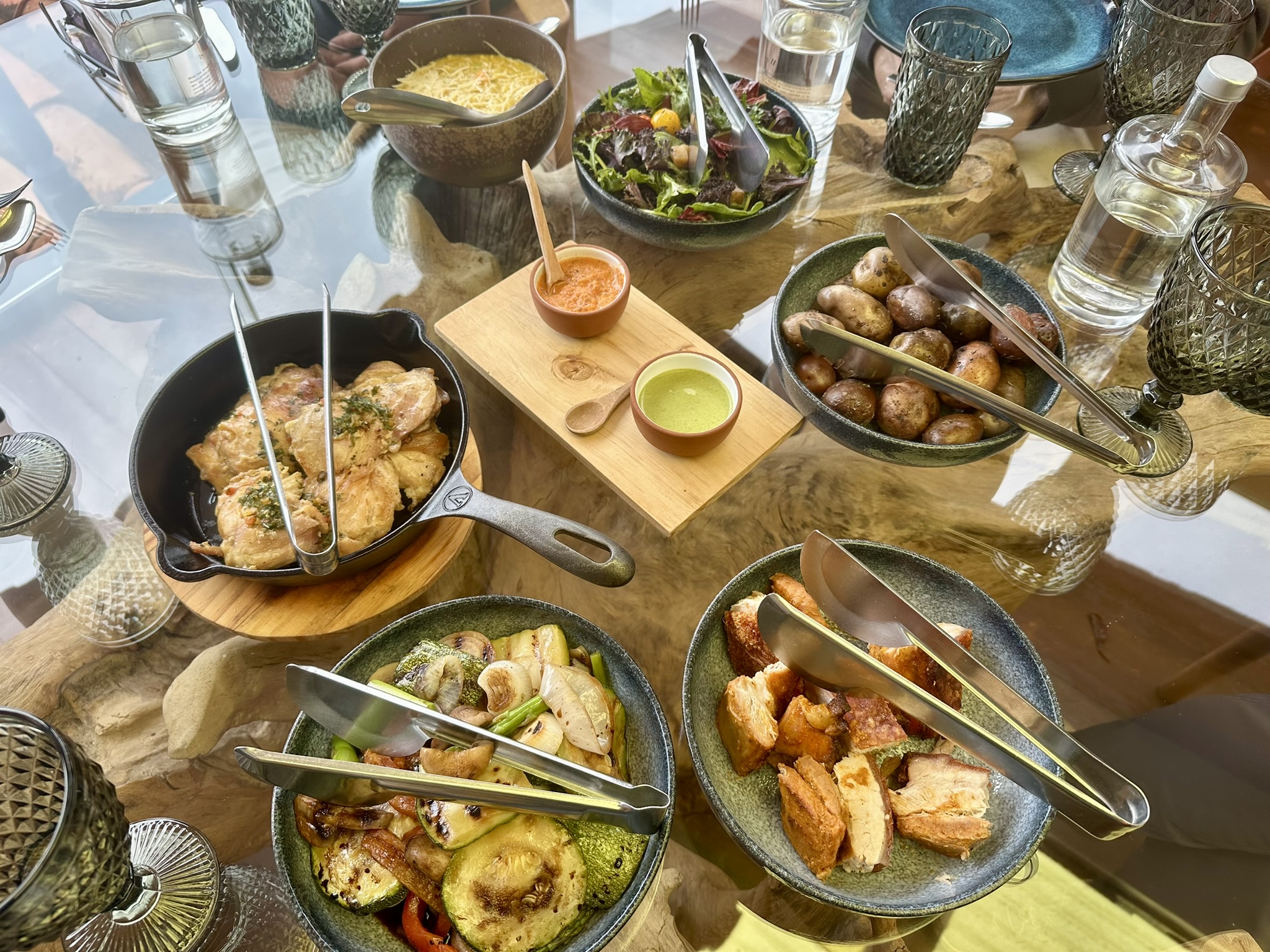
We were greeted with muña mint tea (we are forming an addiction to this stuff, which allegedly helps with altitude) in the yard and assembled with our hosts and guides at a round table overlooking the Tiobamba churchyard with the high Andes beyond. Lunch was ample, more than. We were served grilled vegetables, smoked and salted trout, pork belly, chicken, potatoes and beef capped off with a coconut cheesecake and the most delicious flan ever made. Seriously. Ay caramba, papa’s gonna need a diet when all this is done.
The Salt Mines. Last stop of the day was to see the salt mines of Maras. During the wet season (South American summer/North American winter), most of the people of Maras work the farms, but when the rains end and the dry season comes, they hit the mines.
Salt has been mined here since the pre-Inca period, by the Incas, the Spanish colonists and up to the present day.
The mines are an impressive collection of salt pans far below the overlook. As the wet season was just wrapping up, no rock salt was being mined on the day of our visit but we could imagine this viewpoint when the workers below would have been pulling the salt out of the pans in a bustle of activity in this indentation in the high plains.
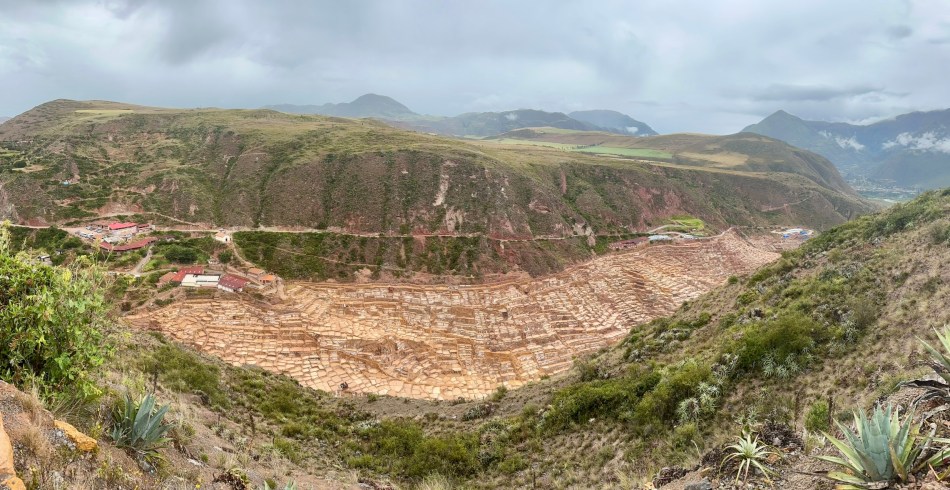
Unlike their more famous Himalayan rock salt miners who actually mine the mountain for the salt, the Marasians (which is probably not what they call themselves) allow the salt to naturally flow from the mountains into the pans, dry out and then be extracted leaving the ecosystem intact as it has been done here for a thousand years.
Raqchi. After a two day respite in Cusco, we returned to the high plains to traverse, by train, to Lake Titicaca. Climbing out of Cusco, we trucked through the river valley and stopped at the high plains Incan settlement of Raqchi.
Raqchi had a large circular food and supply storage system and the walls of the Temple of Wiracocha still remain partially standing.
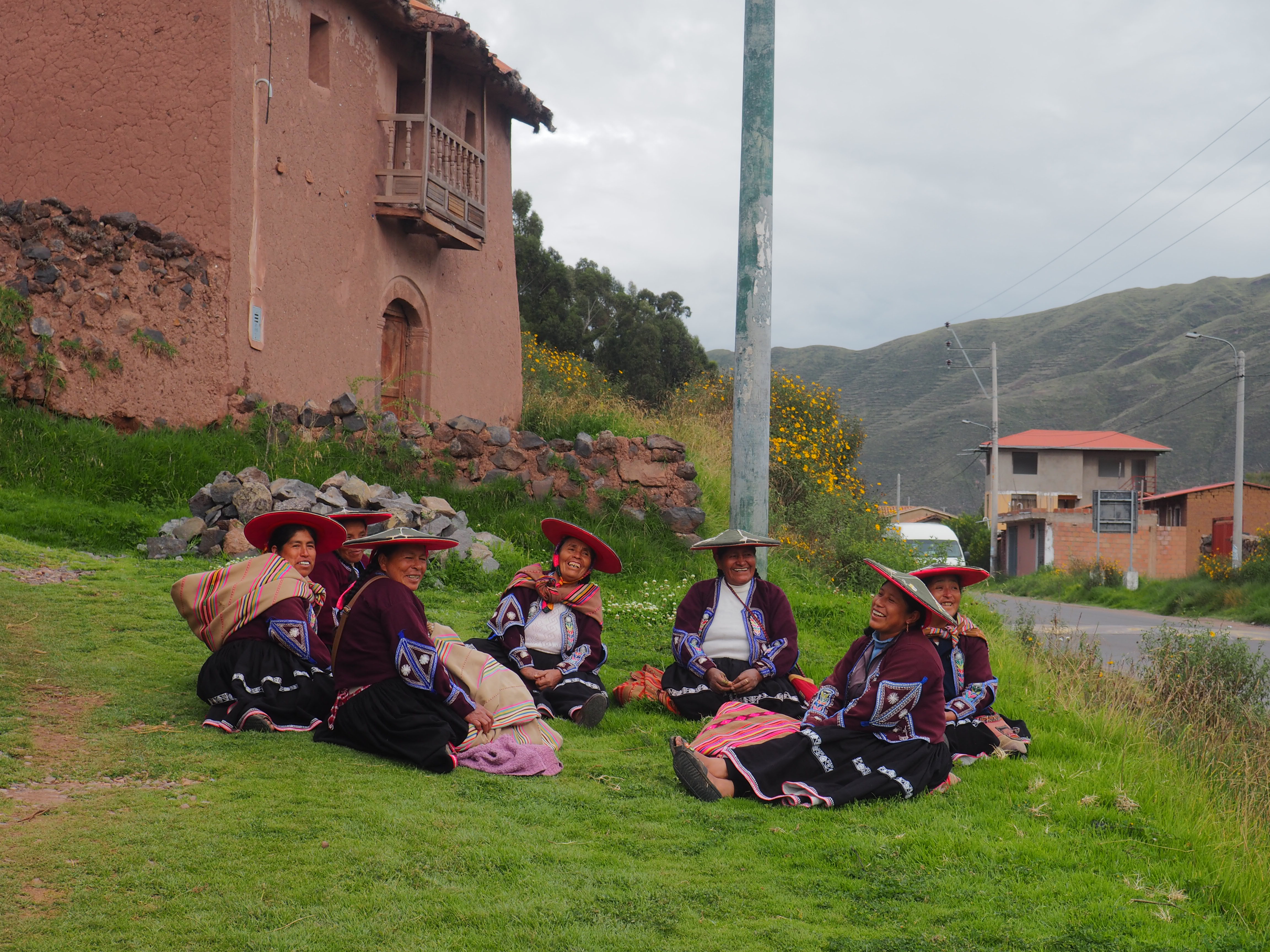
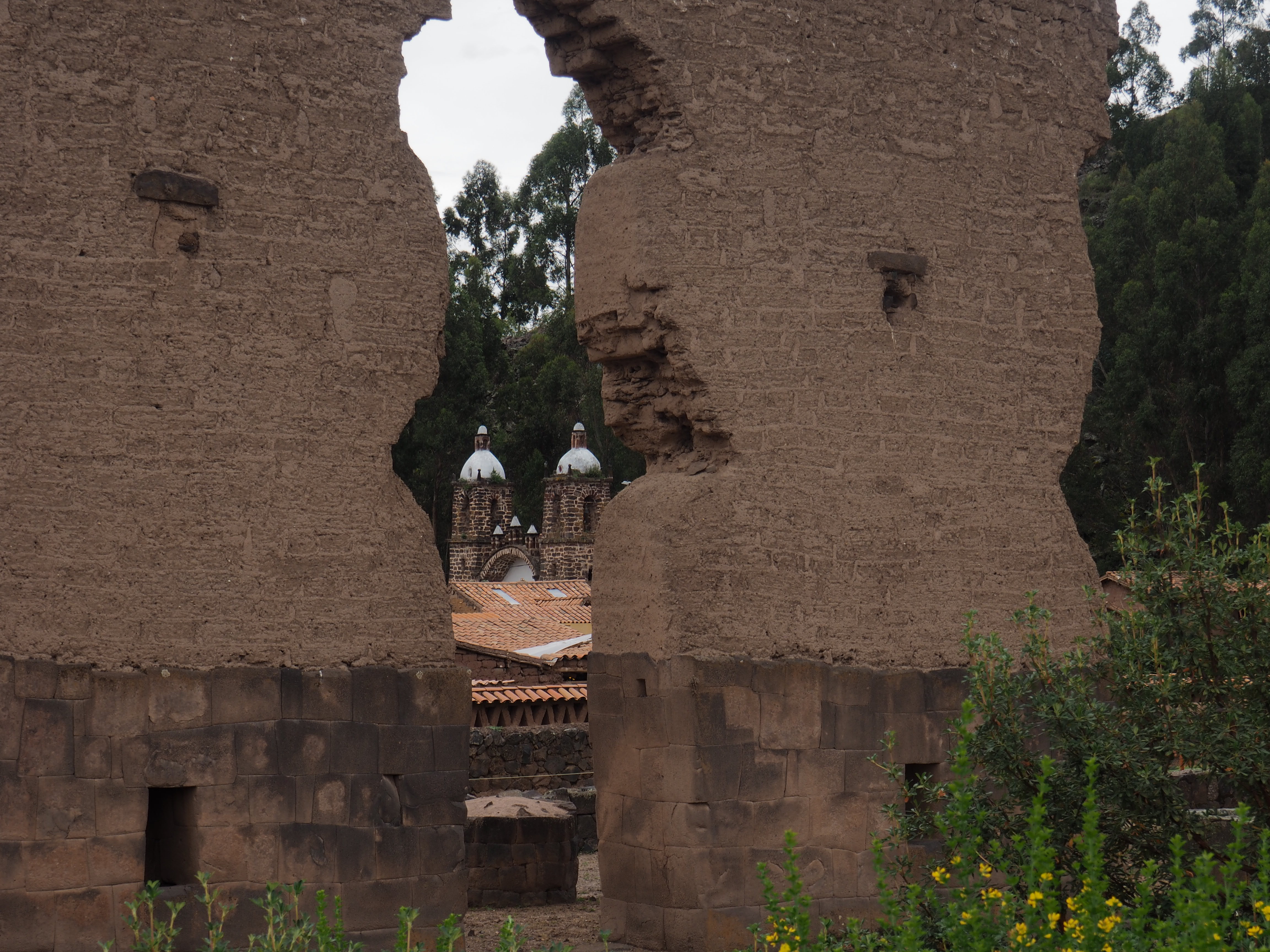
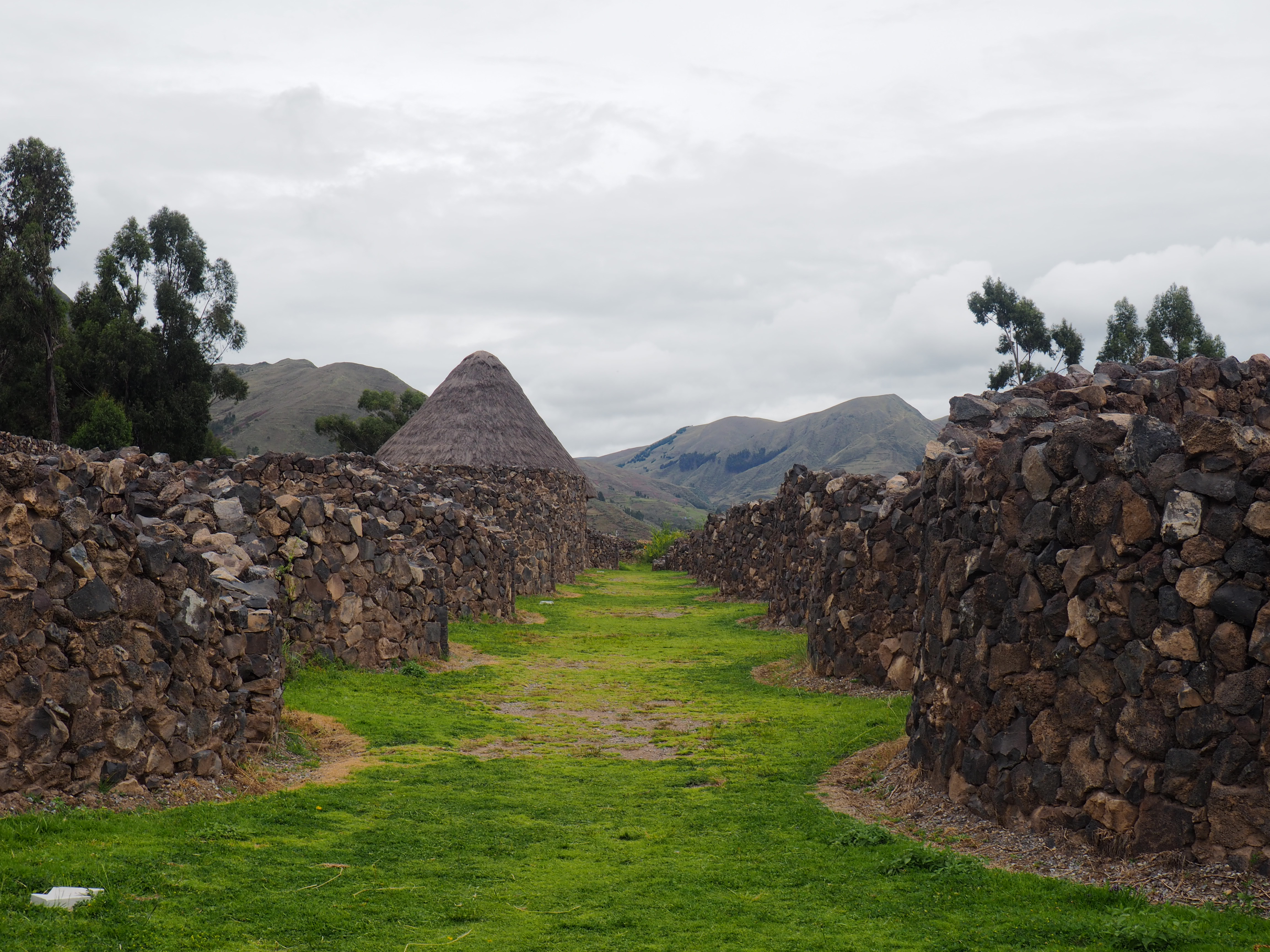
Yet more Inca trail network lays in the foothills above it and the irrigation and water systems, evident in all of these Inca settlements, provide yet more evidence of Incan engineering.
And with that, we climbed aboard and headed higher to our evening destination: Lake Titicaca.
 The Traveling Ridleys
0 comments on “Drifting Across the High Plains of Peru”