
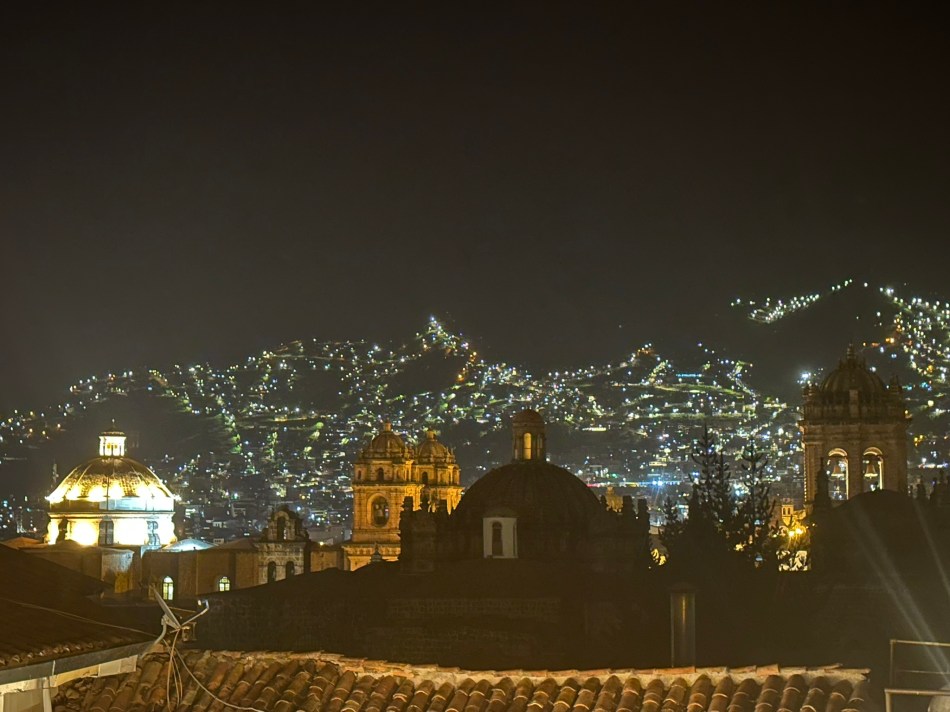
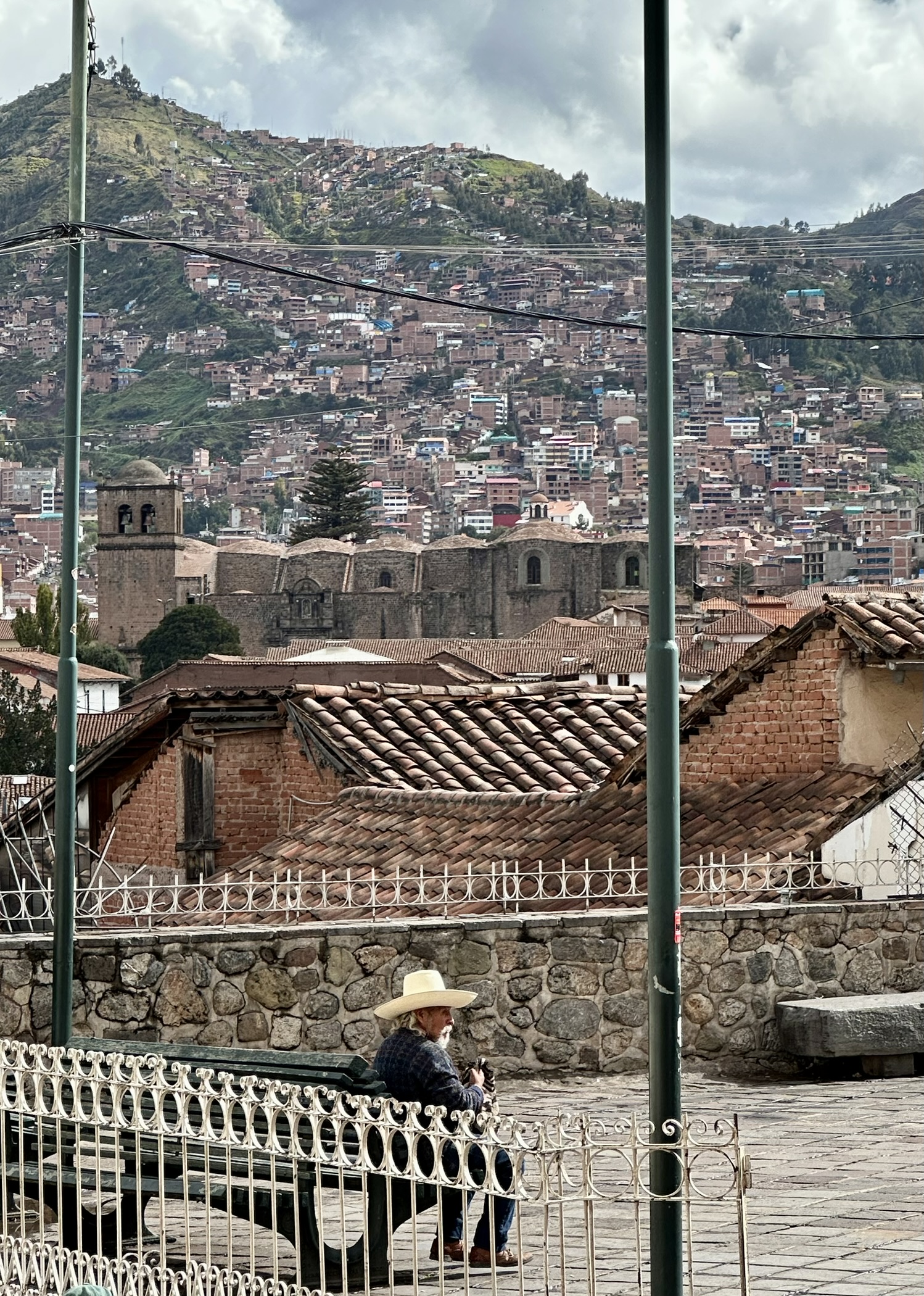
We arrived in Cusco after our stay in the Sacred Valley and visit to Machu Picchu. Cusco was the center of the Inca Empire and its capitol. The Inca trail led to the Suyos, or regions, from there: north, south, east and west, spiderwebbing across the Empire.
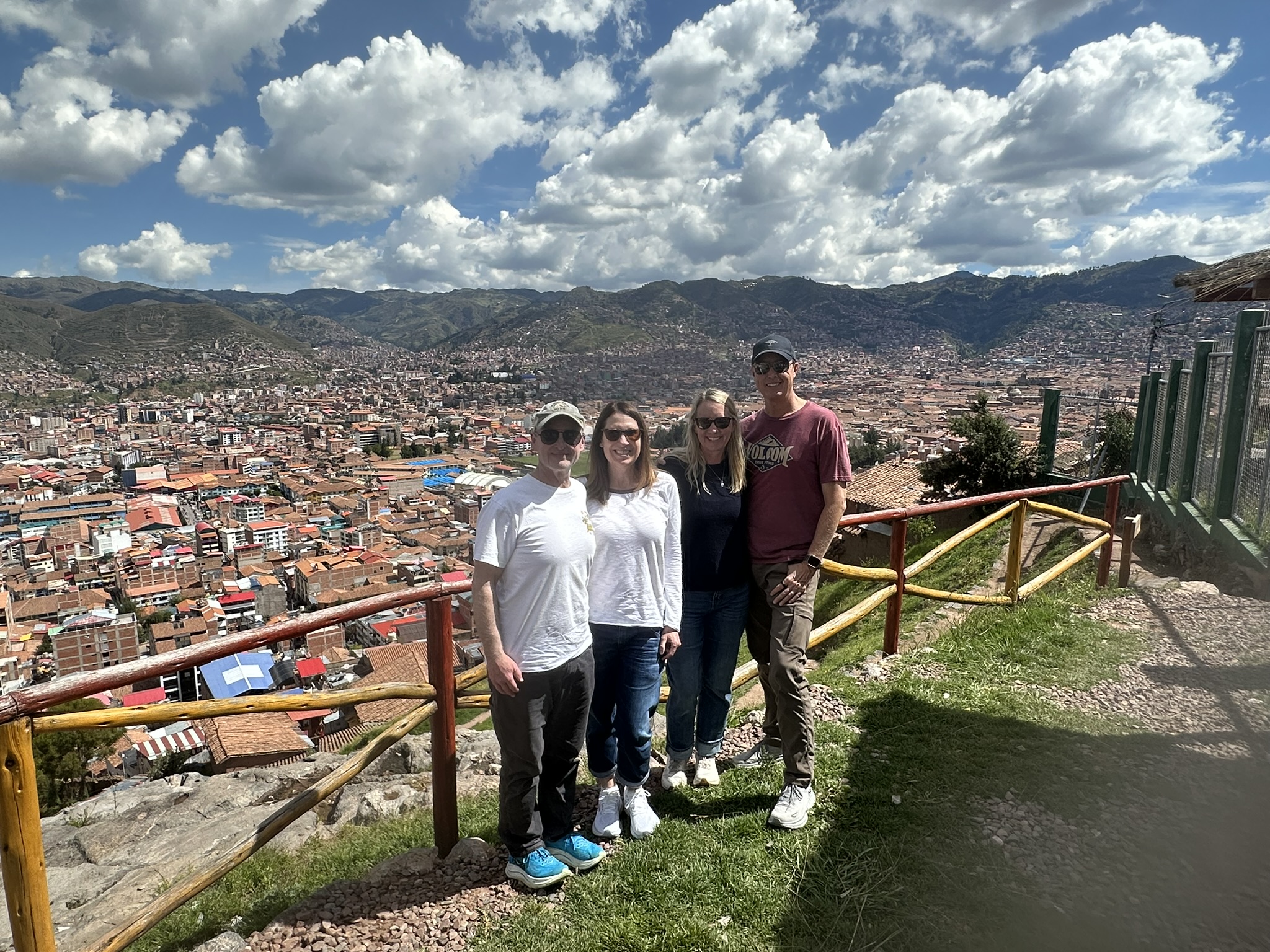
Today, Cusco is Peru’s sixth largest city. From the historical center, the city spreads up the hillsides and down the valley enveloping the colonial core.
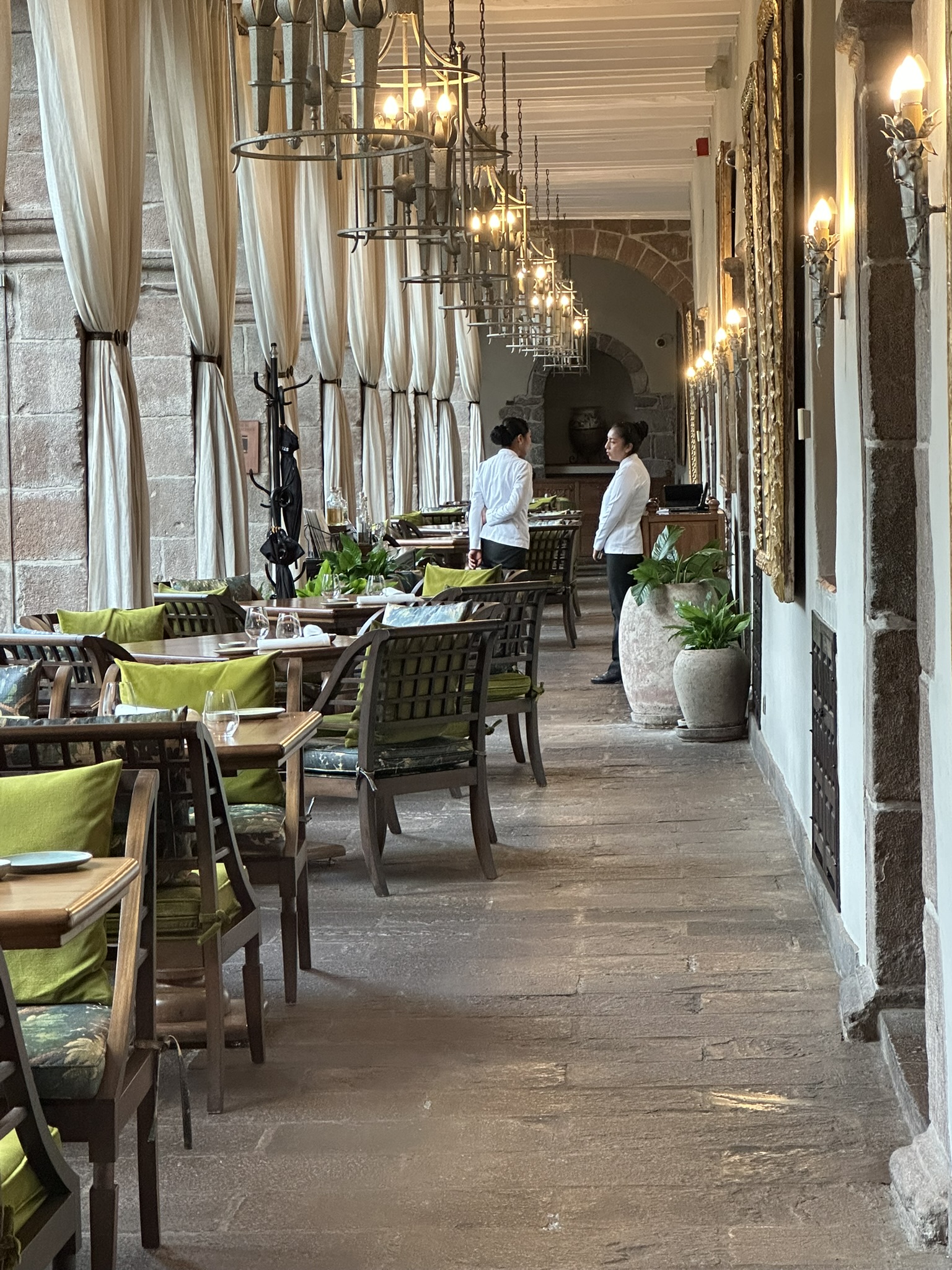
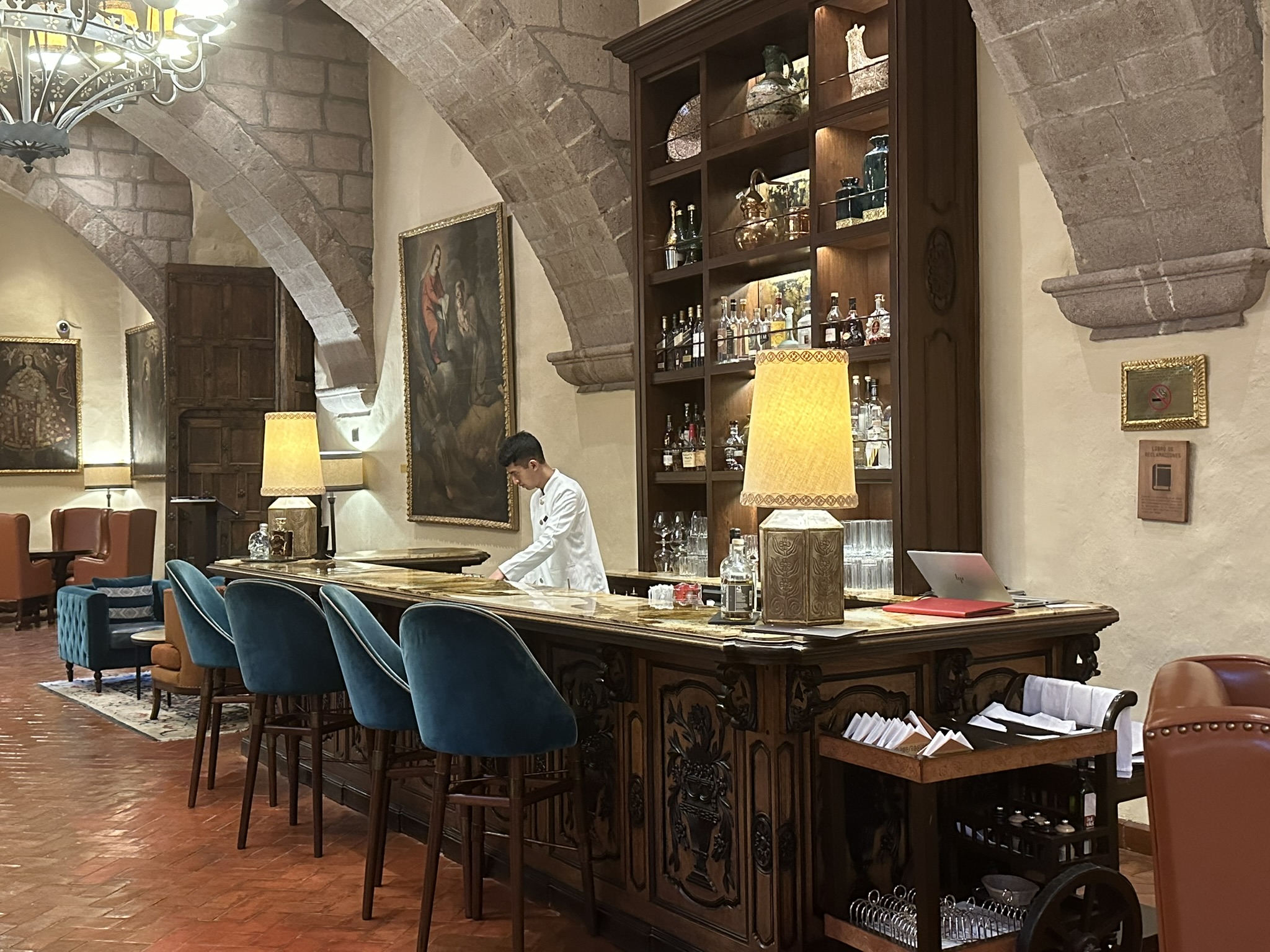
The Art of Monasterio. The Monasterio Hotel, a former monastery still owned by the church but leased to Belmond to operate as a hotel, is chocked full of interesting religious art and they offer a tour of that art each evening.
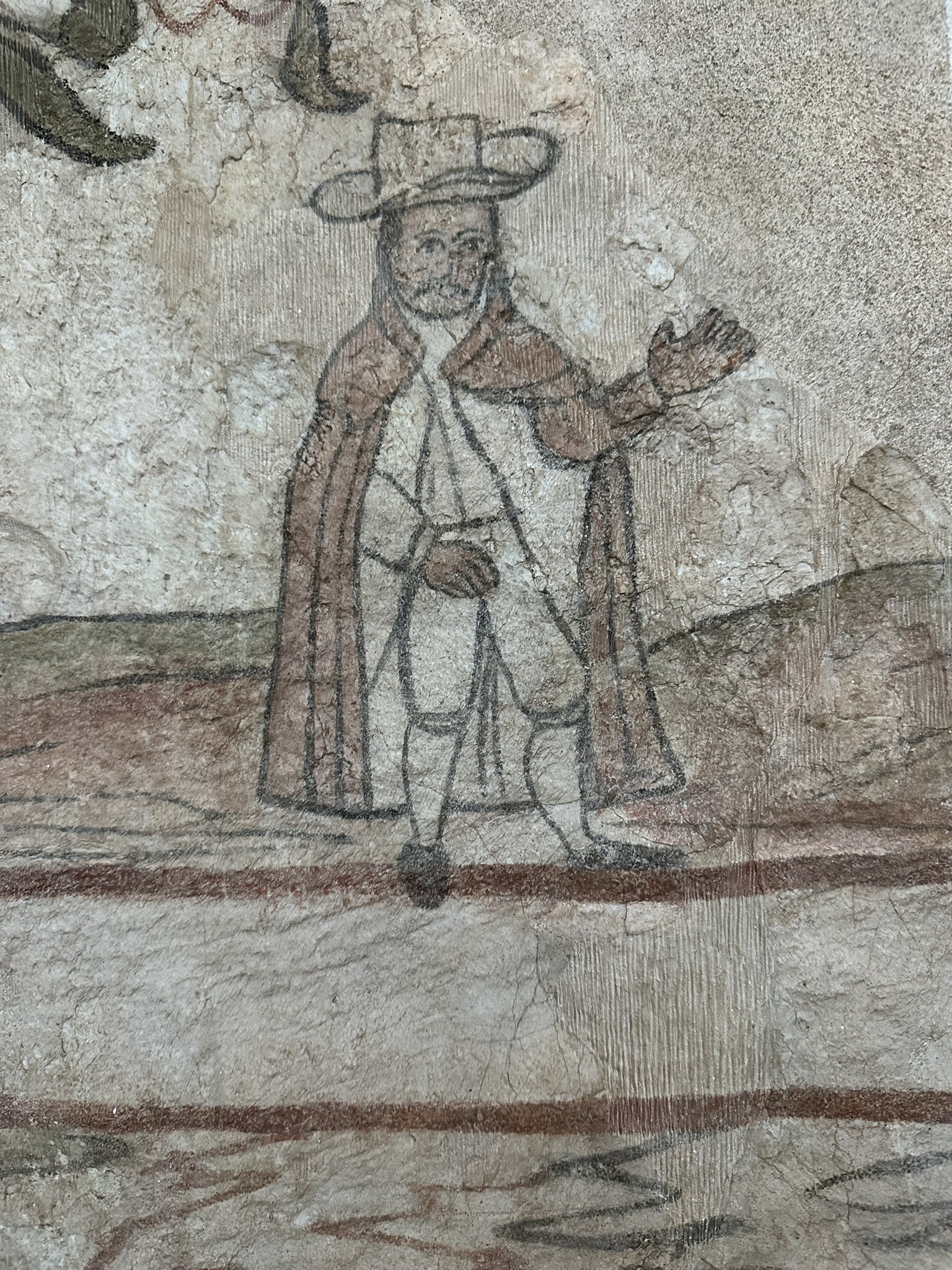
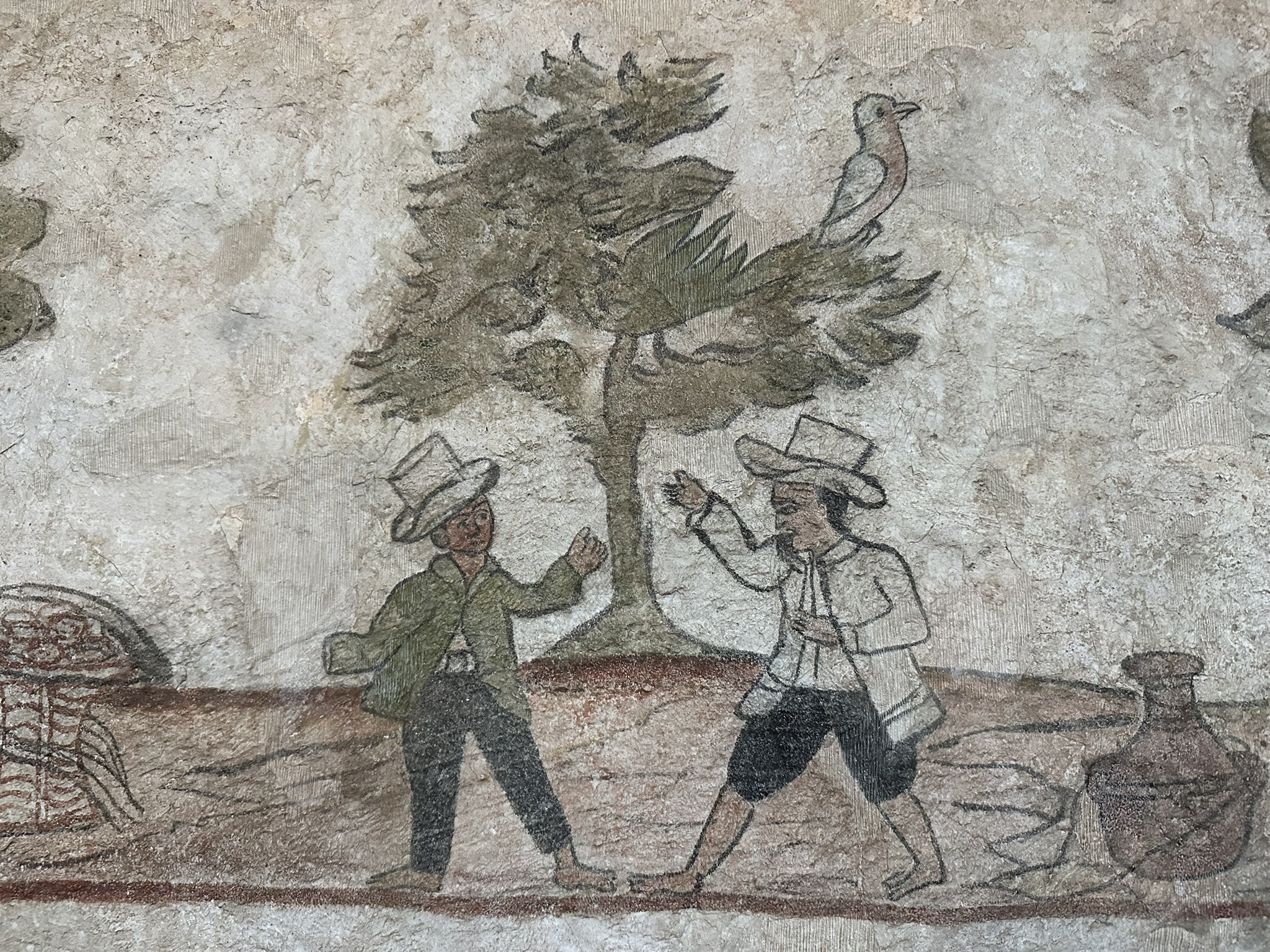
The Palacio Nazarenas hotel, next door, also a Belmond property, was an Inca school taken over by the Franciscans. On the walls of the courtyard are examples of art works done by students learning to paint. Baskets of flowers outsize the people significantly and the charming simple shapes of the people surround a torno that the nuns used to sell their pastries without disobeying their vow of seclusion.
Back inside the Monasterio, artwork done by Peruvians in the 17th and 18th centuries depict Bible scenes, saints, Jesus and Mary in (mostly) Peruvian settings. Italian and Flemish influences are apparent in the brush strokes of the natives. The Virgin Mary’s long hair is a stand-out feature. Ordinarily depicted with her hair covered, indicating modesty or purity, here she was often depicted with long flowing hair. In Peru, long hair is a symbol of wisdom and, according to our art tour guide, women in the countryside often let their long hair flow.
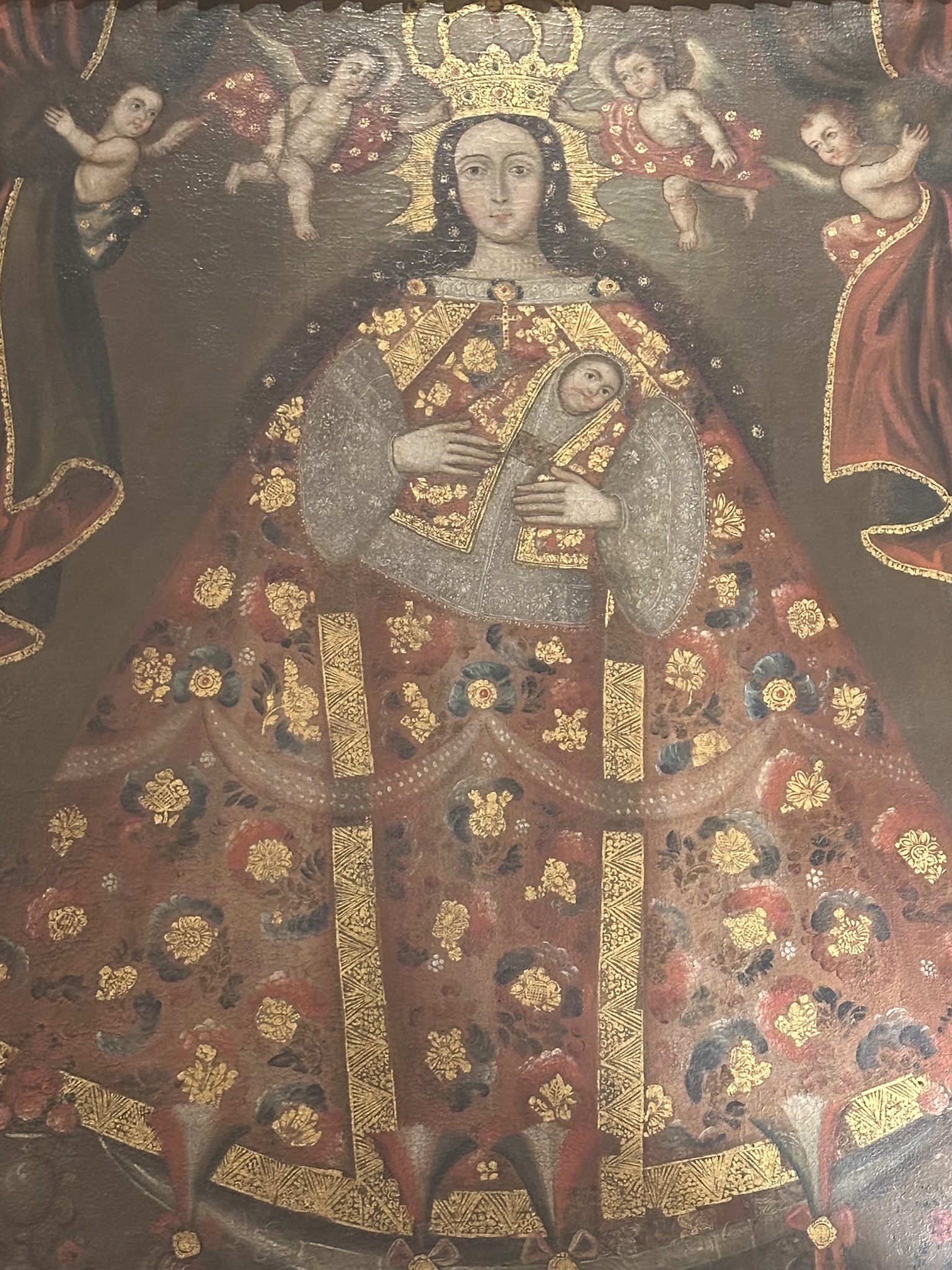
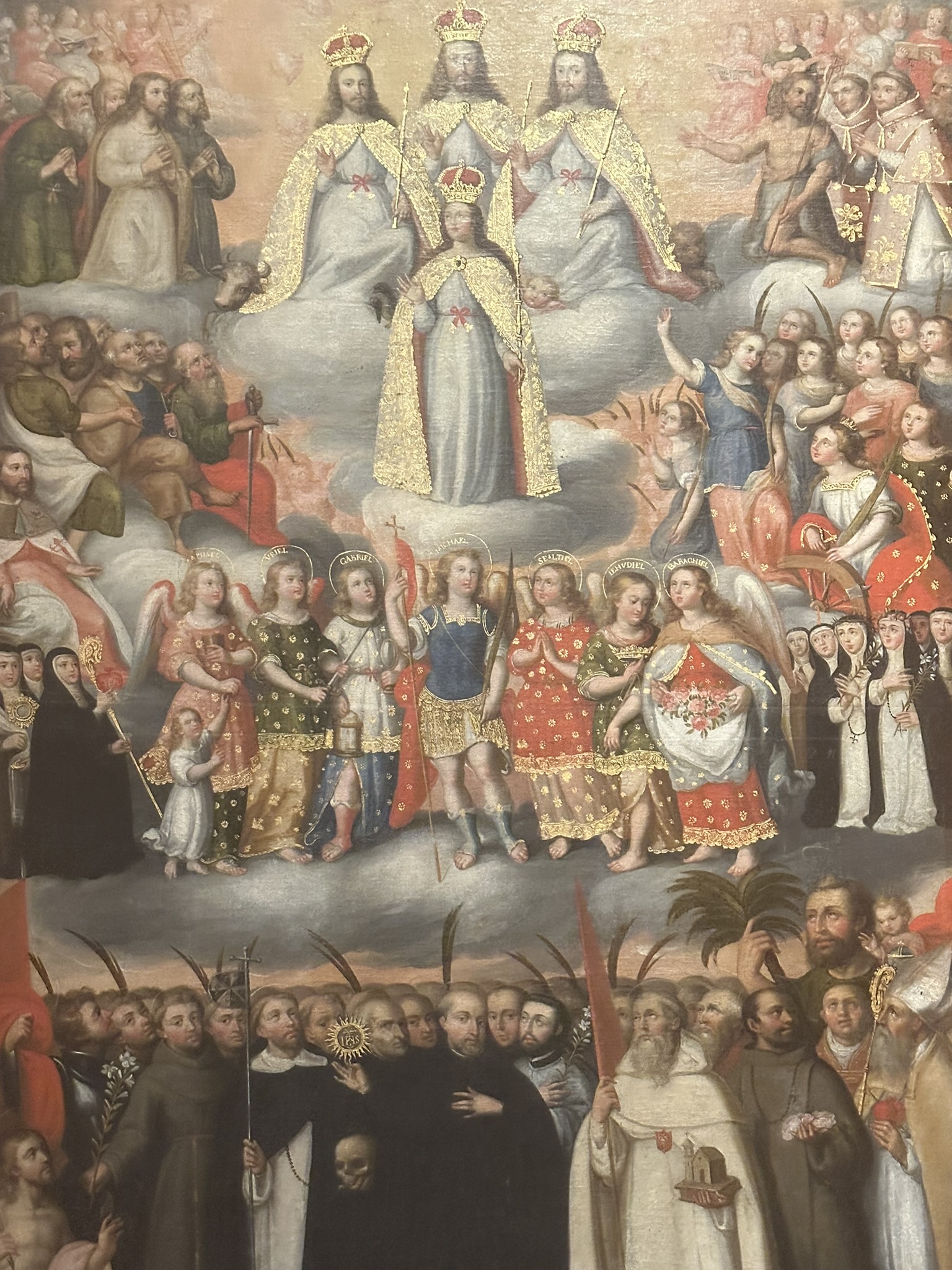
Fun fact: above Mary on the painting to the right is a depiction of the Holy Trinity, but these early Peruvian Catholic converts and artists didn’t know how to depict the Father and Holy Ghost, so they just painted Jesus three times.
Inside the monastery’s chapel, dedicated to Saint Anthony the Abbott, much of the art depicts his resistance to Satan’s temptations as he cloistered himself away in his hermitage. His persistent resistance to the deadly sins being the cause of his sainthood.
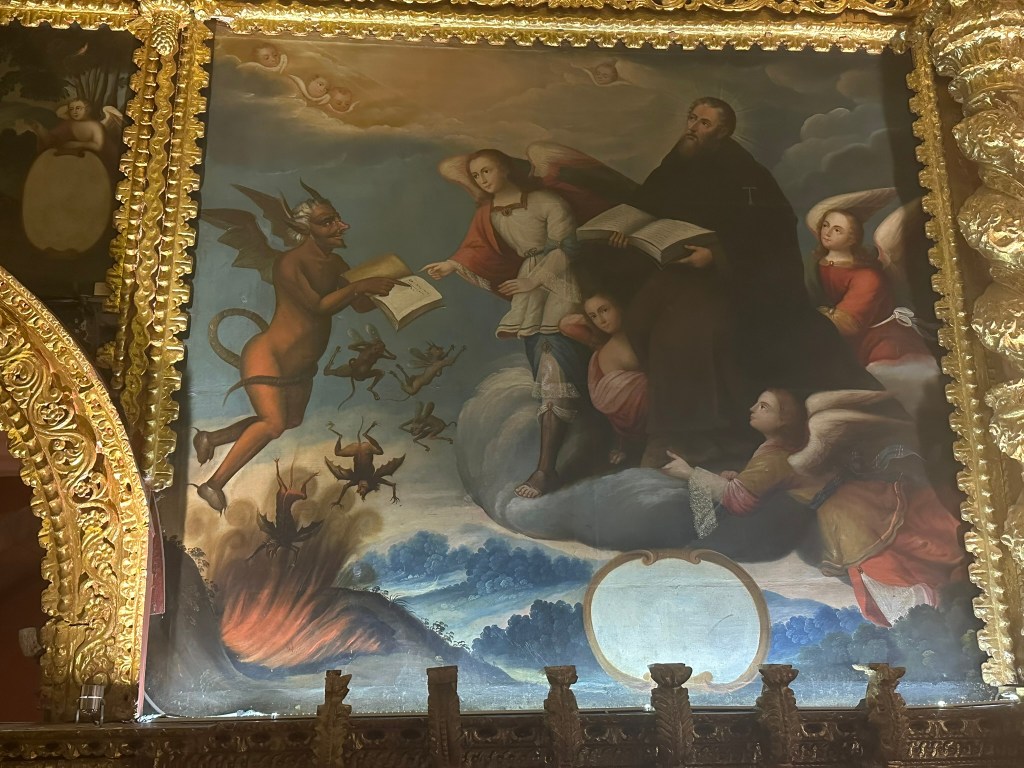
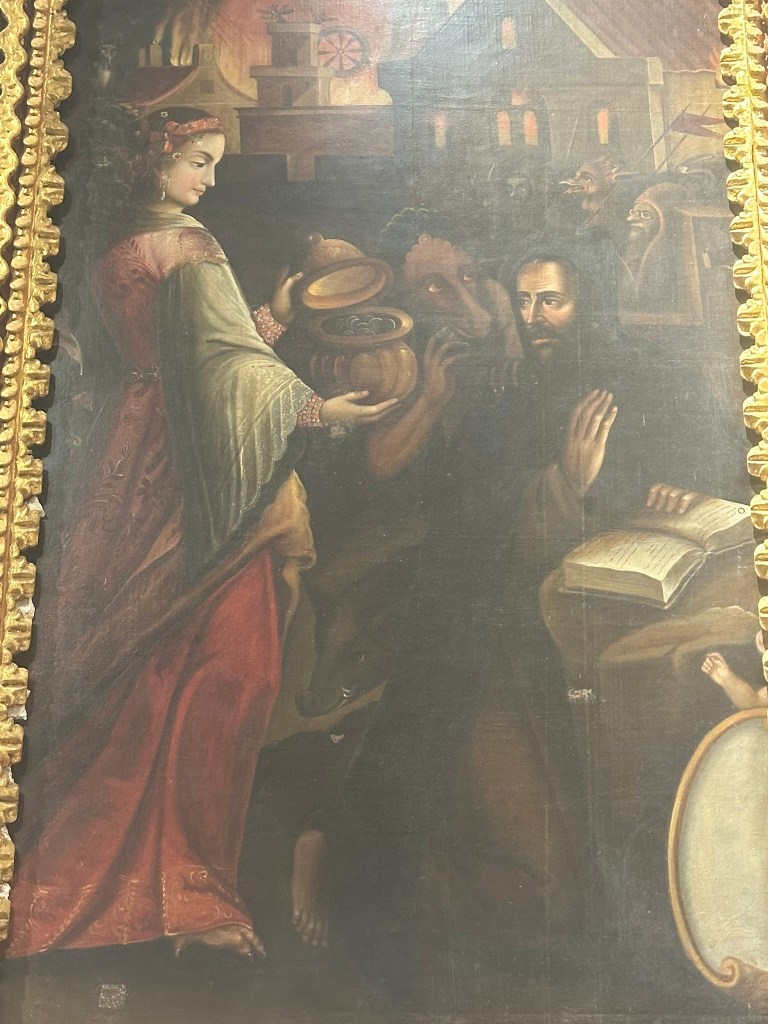
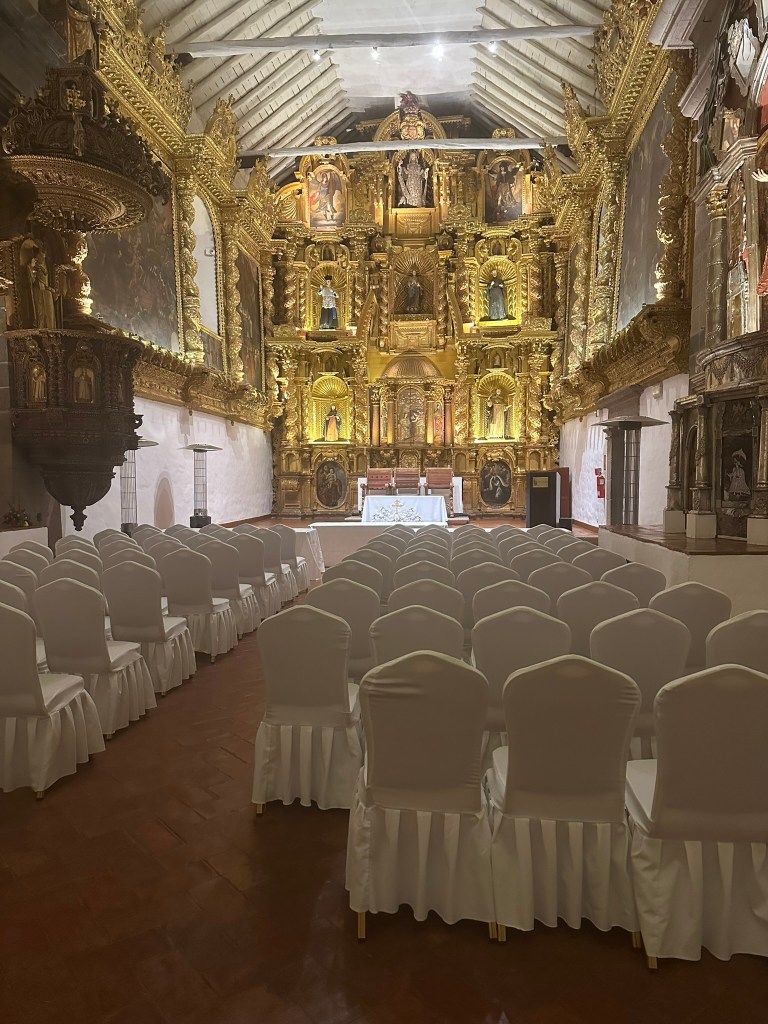
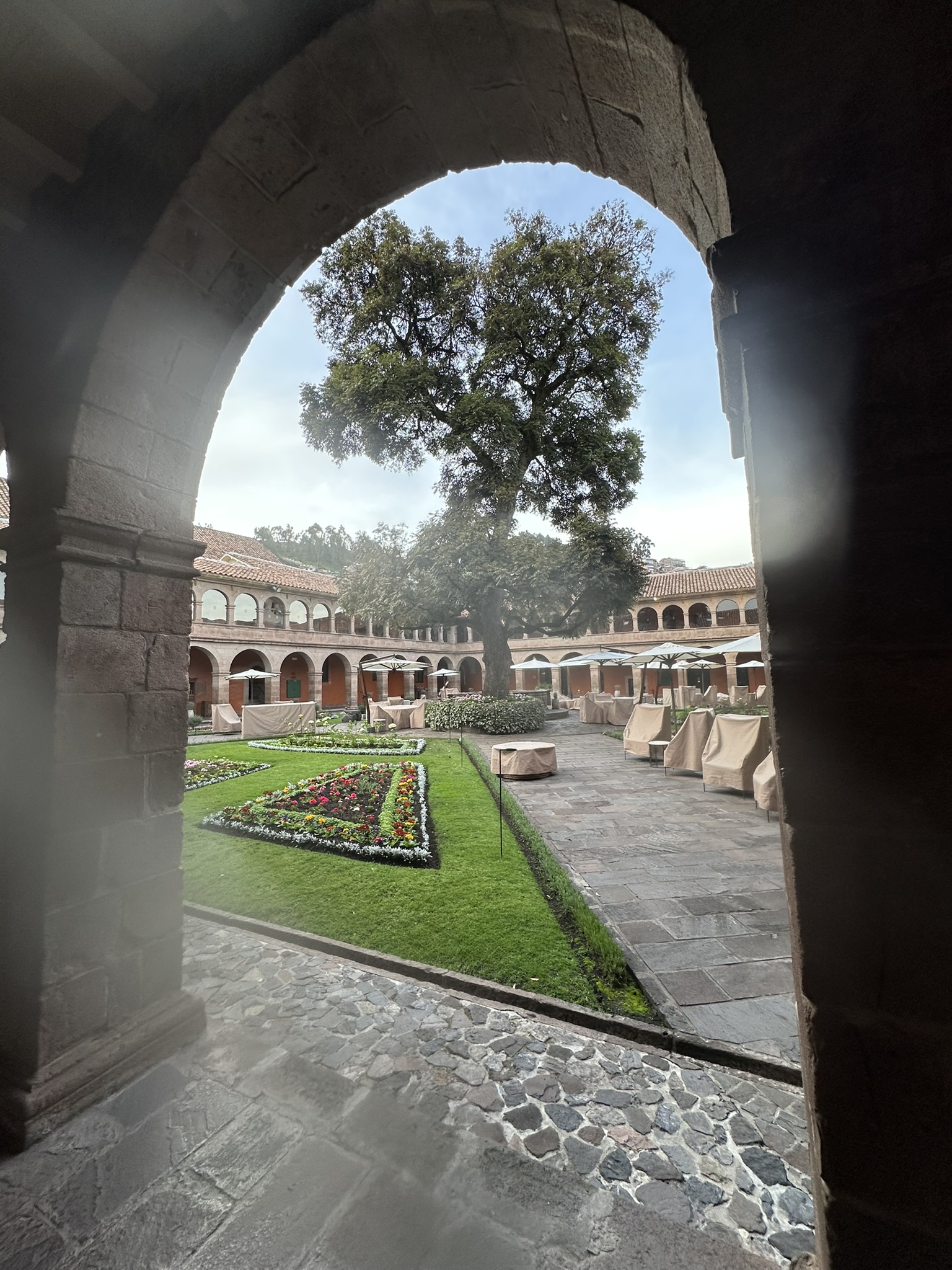
The frames and altar are all carved cedar covered in gold. Cusco once had many cedar trees but they were mostly used for construction and for decorating the churches. Mostly, except for one. In the courtyard of the hotel the lone surviving, 330-year-old cedar tree remains, a centerpiece of the hotel.
Santo Domingo Convent and Coricancha. The Coricancha (or Quri Kancha in Quechua) was the most important temple in the Inca empire. When the Conquistadors captured the Emperor Atahualpa he, thinking that all they wanted was their gold and they would leave, promised them a room piled full of gold and silver and, to the horrified dismay of the priests and locals, the conquistadors stripped off the golden and silver adornment from this temple as his ransom. (Alas for Atahualpa, the Spanish were here to stay).
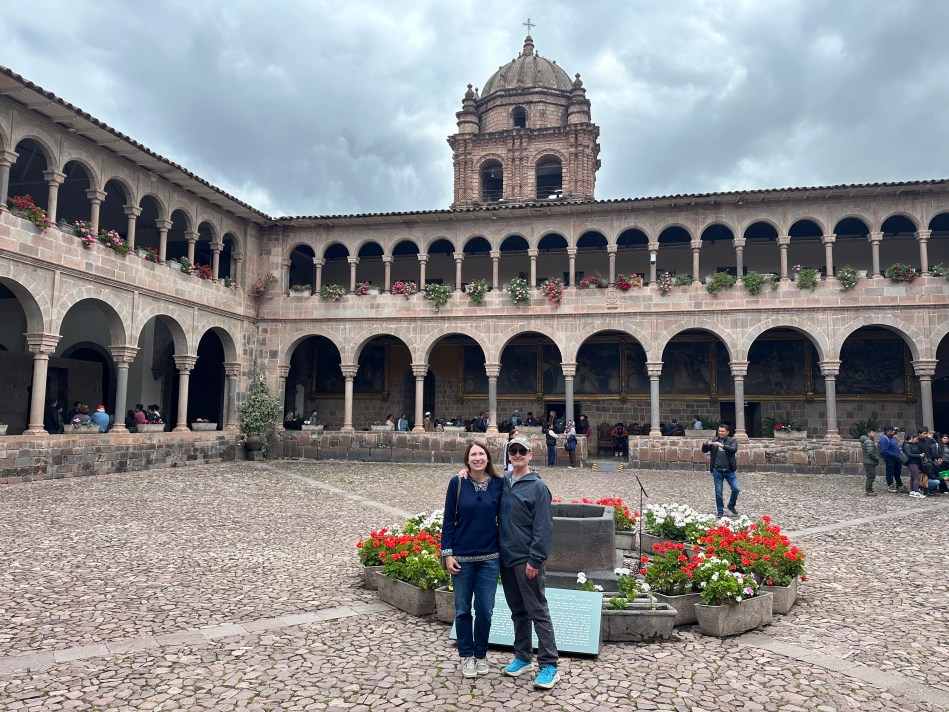
Once the Spanish took Cusco, they built the Convent of Santo Domingo on its foundation, but you can still see some of the original walls of the temple off of the cloister. The original temple walls were built to lean inward and without mortar to protect against damage during earthquakes.
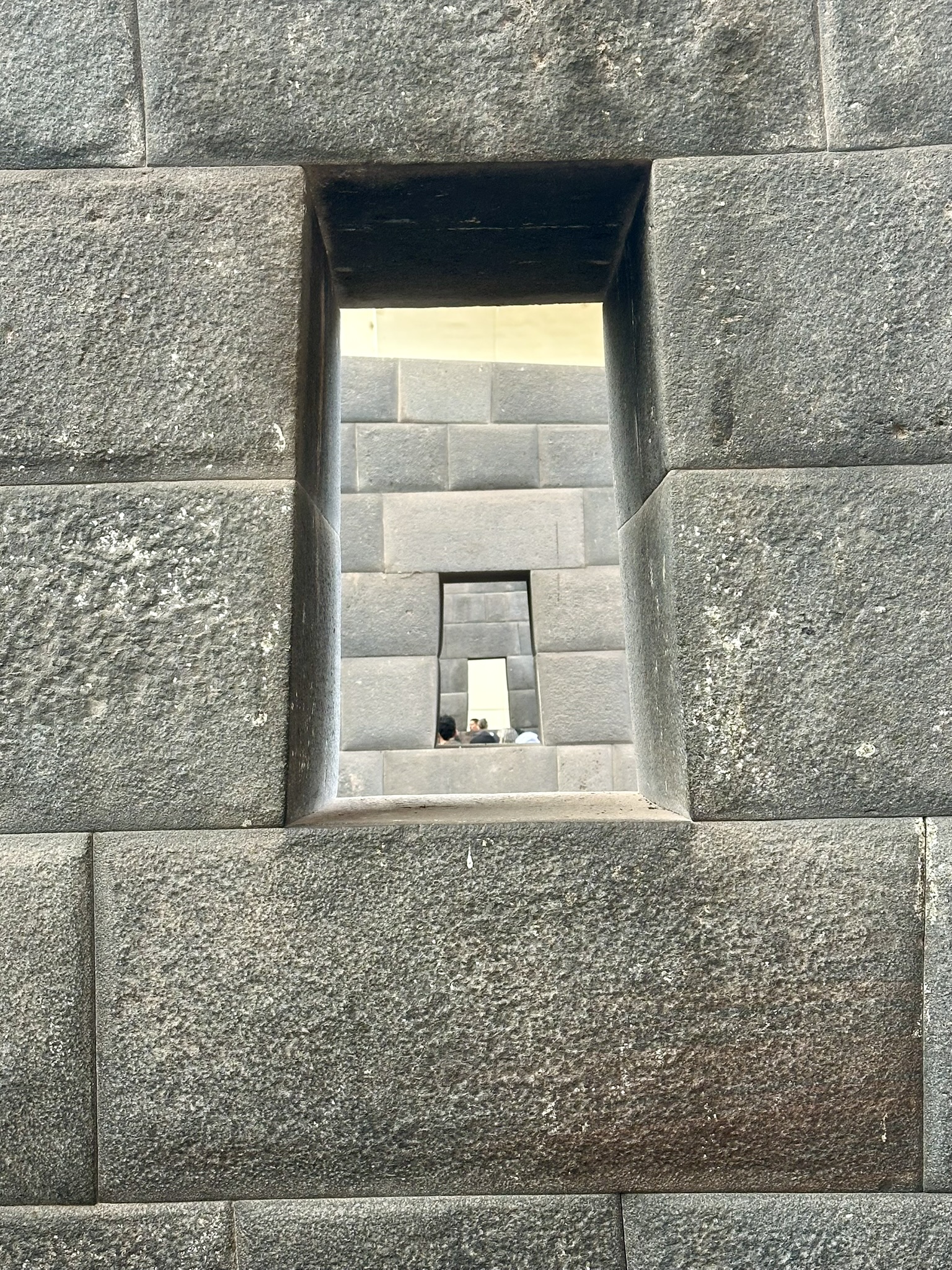
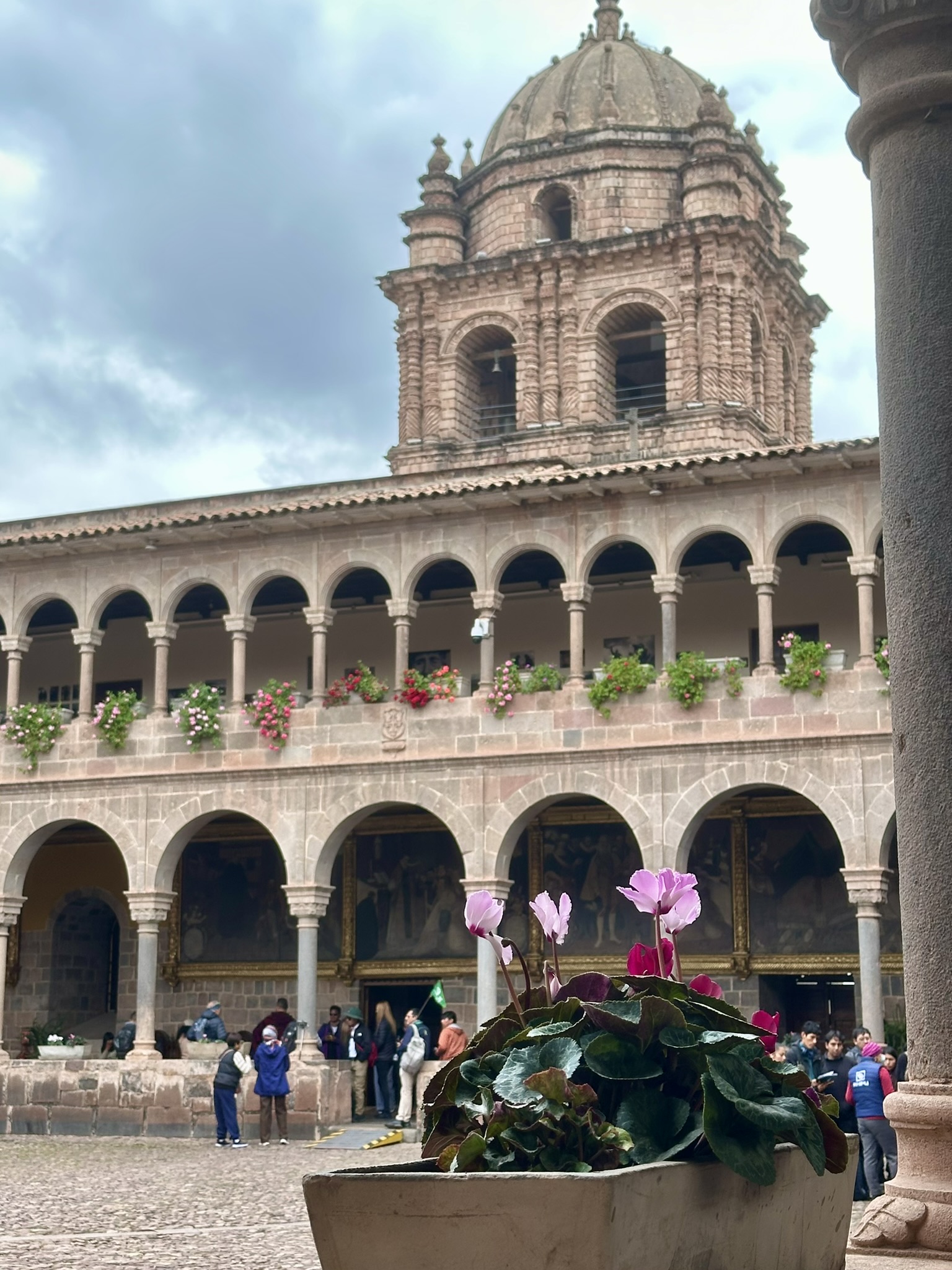
As you enter, notice the moorish doors and the Inca walls adorned with renaissance art. In the center of the cloister’s courtyard was the holiest place in the Inca empire, where the energy of the sun, moon and Pachamama (Mother Earth) could be felt and provided strength.
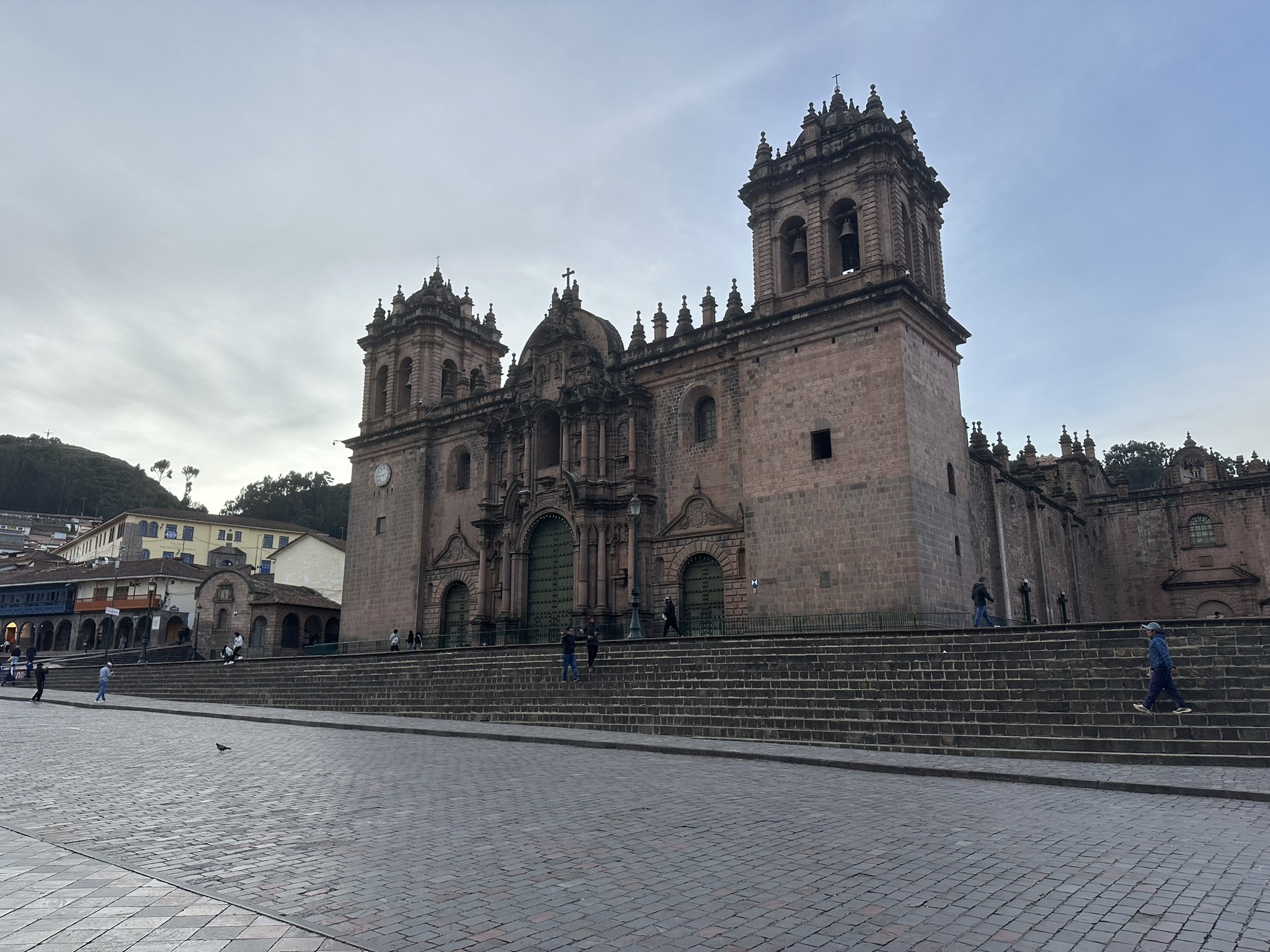
The Cathedral. As you enter the chapel to the right, located just off the Plaza Mayor, you are entering the original cathedral. The cross above the altar is the same one which the Spanish planted here in Cucso to signify their victory over the idolatry of the Incas. It is, for this reason, known as the chapel of triumph.
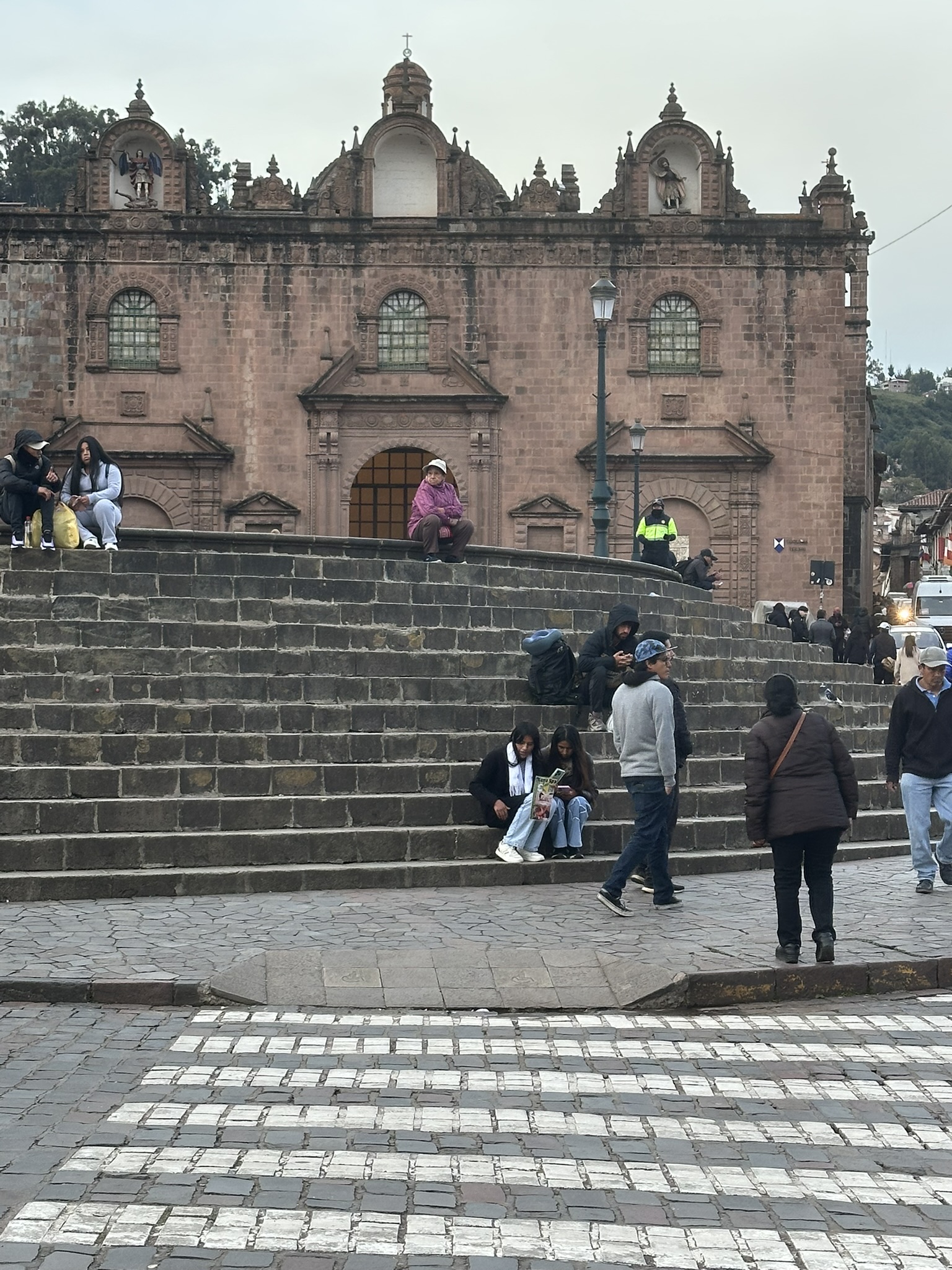
Incidentally, this is the same cross in front of which Atahualpa was christened before his execution, this christening saving him from the fate of execution by burning at the stake, which in the Inca religion would have meant his body could not pass into the afterlife.
Much like in Europe, when the Spanish pushed back the moors from the Iberian Peninsula, they believed that Saint James came to help them defeat the Incas here in Peru. Saint James is prominently displayed in this chapel.
As the population grew, the Spanish realized that they needed a bigger church and the main sanctuary of today’s Cathedral was constructed over the next 104 years beginning in 1550.
Take some time to admire the cedar wood carvings of the martyred saints in the choir and the depiction of the Last Supper behind the altar with a guinea pig featured as the centerpiece of the meal. Guinea pigs (or Cuy, as they are called here) are served during significant celebrations and events. As in the Monasterio hotel most of the landscapes in the artwork in the cathedral are Peruvian, helping to educate the converted Christians about the stories of the Bible and making them relatable.
The Plaza Mayor. In the Inca religion, the condor is the messenger between the earthly world and the upper heavens who carries the dead to the afterlife on its wings. The snake represents wisdom and knowledge and the underworld, but not in the Christian sense. In the Inca religion the underworld represents new life. And the puma represents life on Earth, strength and power.
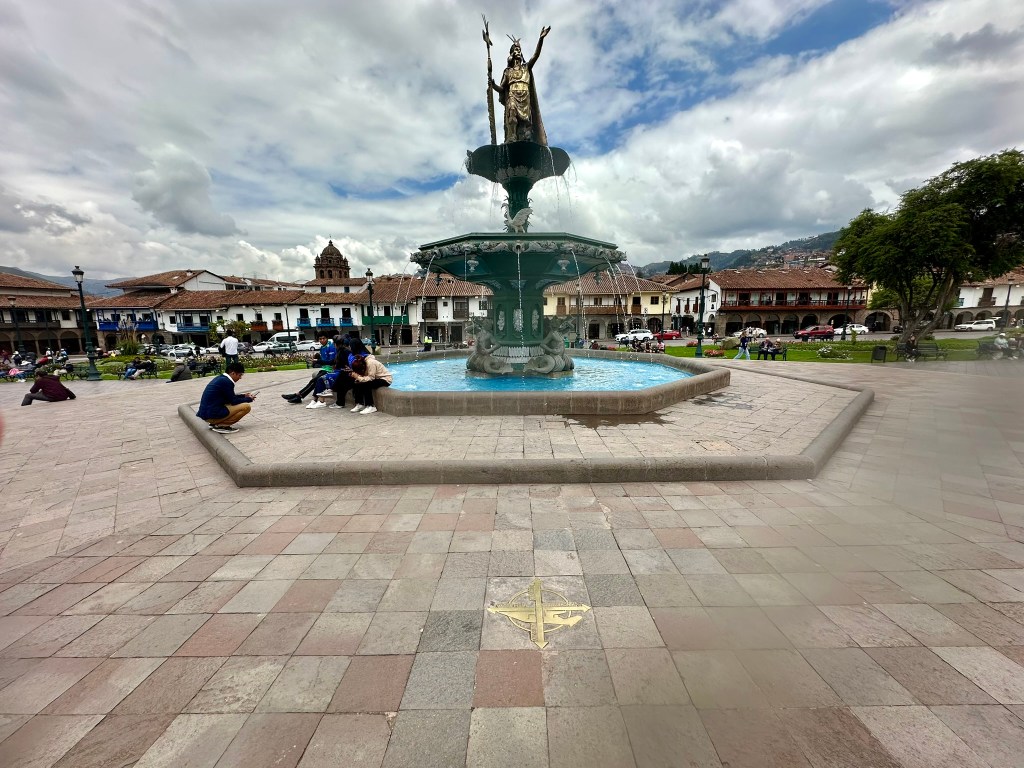
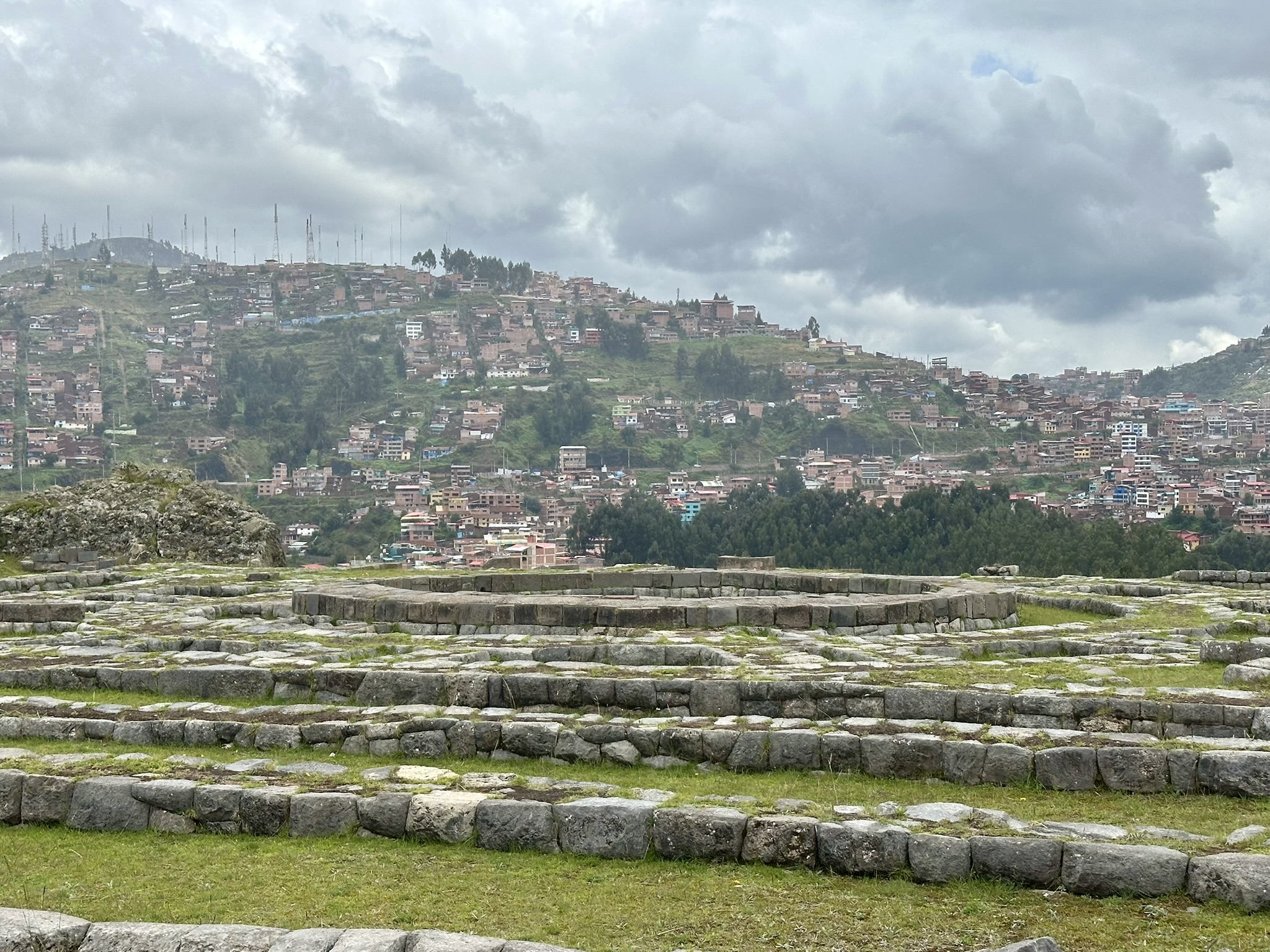
Incan Cusco was built in the shape of a puma, with its head as the hilltop Sacsayhuaman temple hovering over the city and the Huacaypata (or place of ceremony) square, today’s Plaza de Armas (or Plaza Mayor) and at its heart.
The Plaza Mayor prominently features a statue of the first Incan Emperor, Manco Capac, at its center above a placard indicating the start of the Inca trail in each direction and the very heart of Incan territory. Today, shops, western restaurants and vendors align it to either side of the cathedral and the Jesuit church.
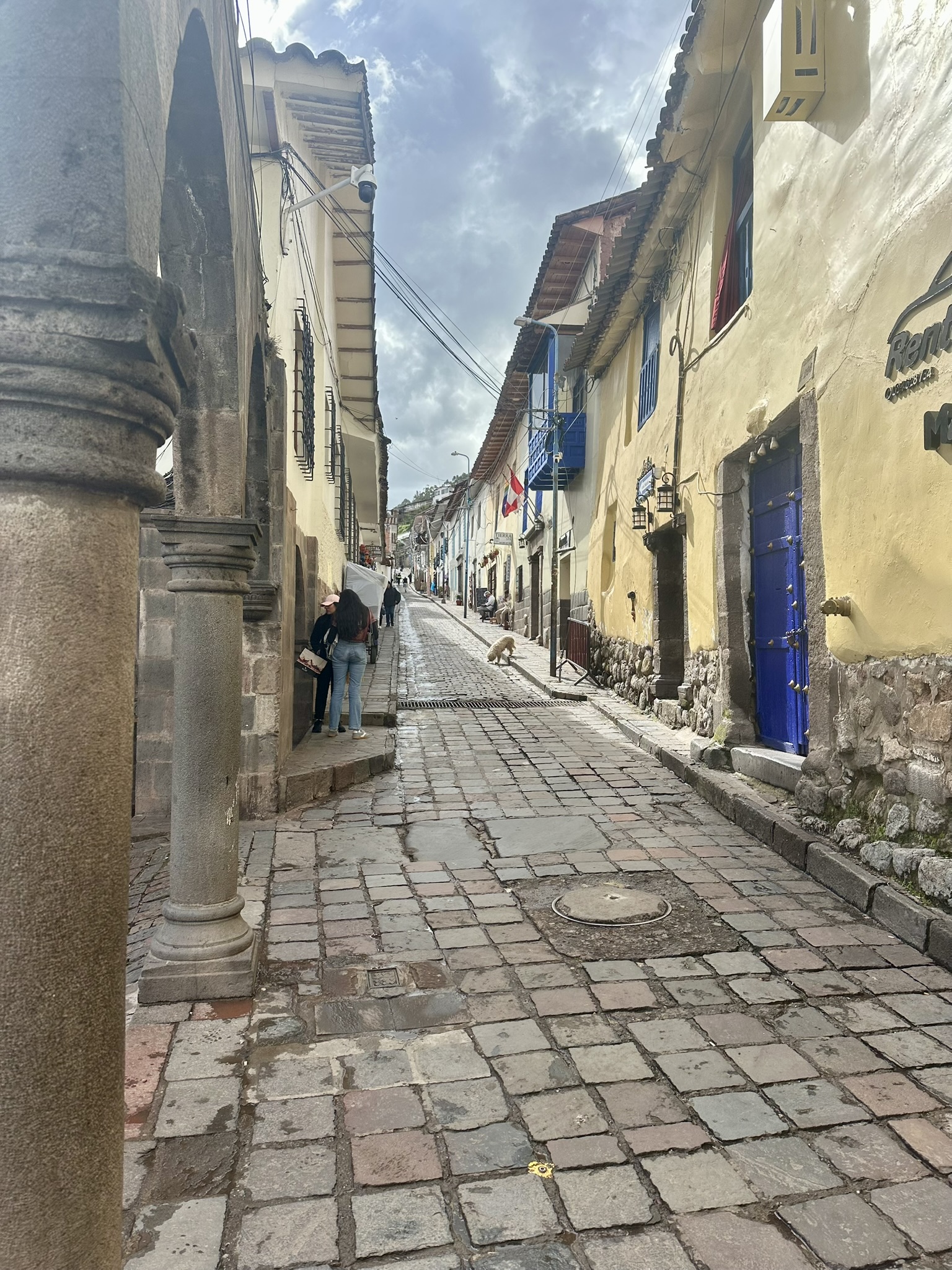
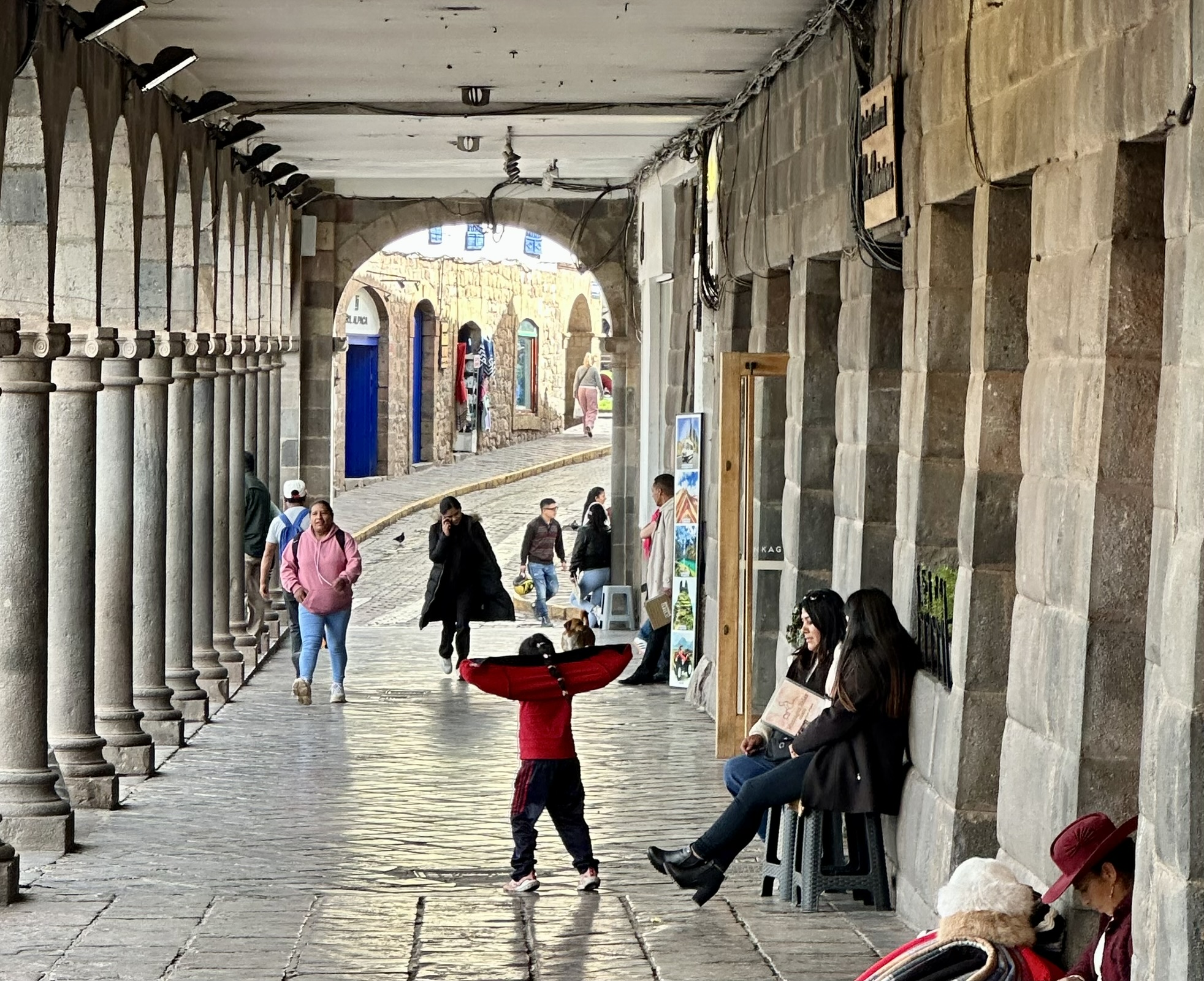
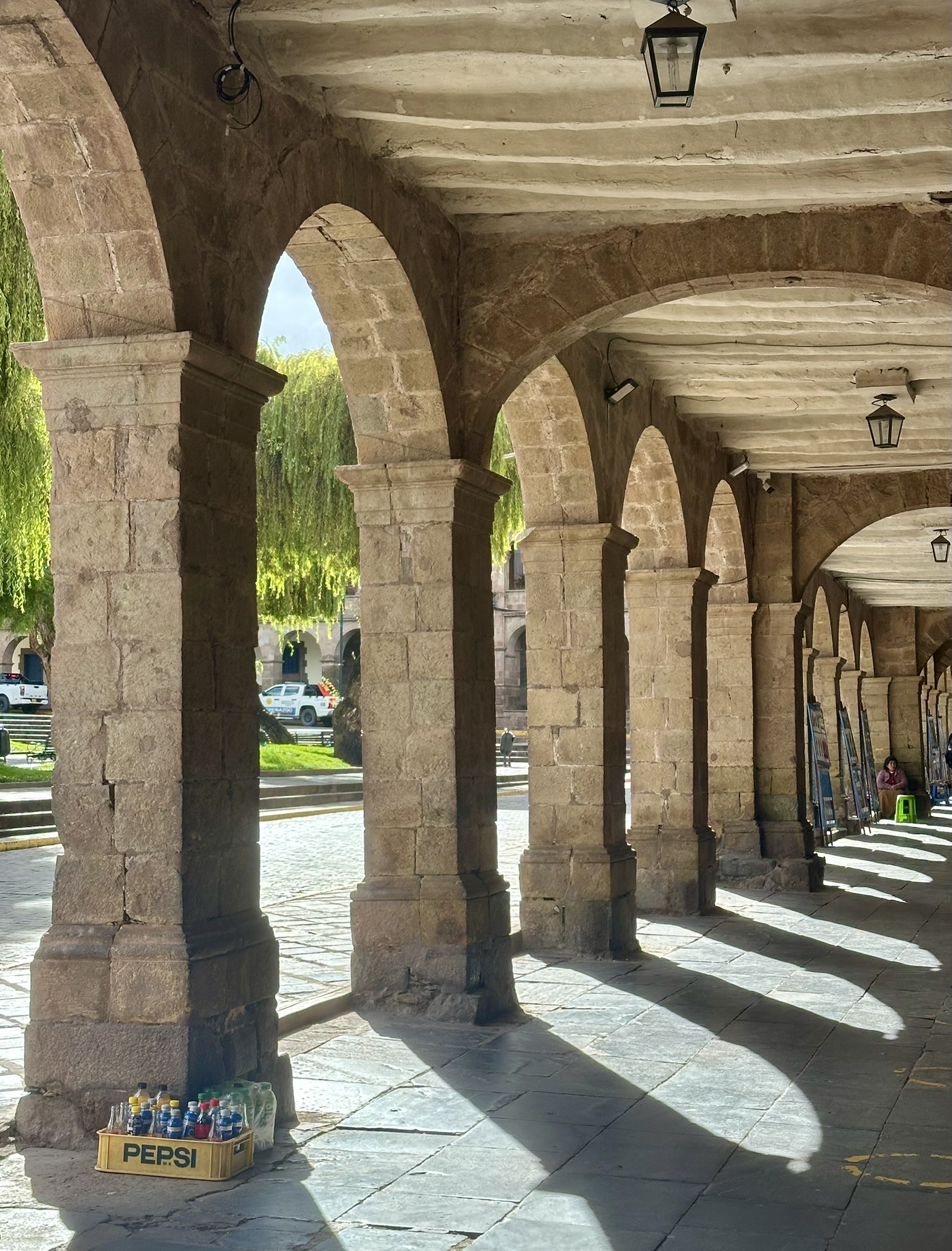
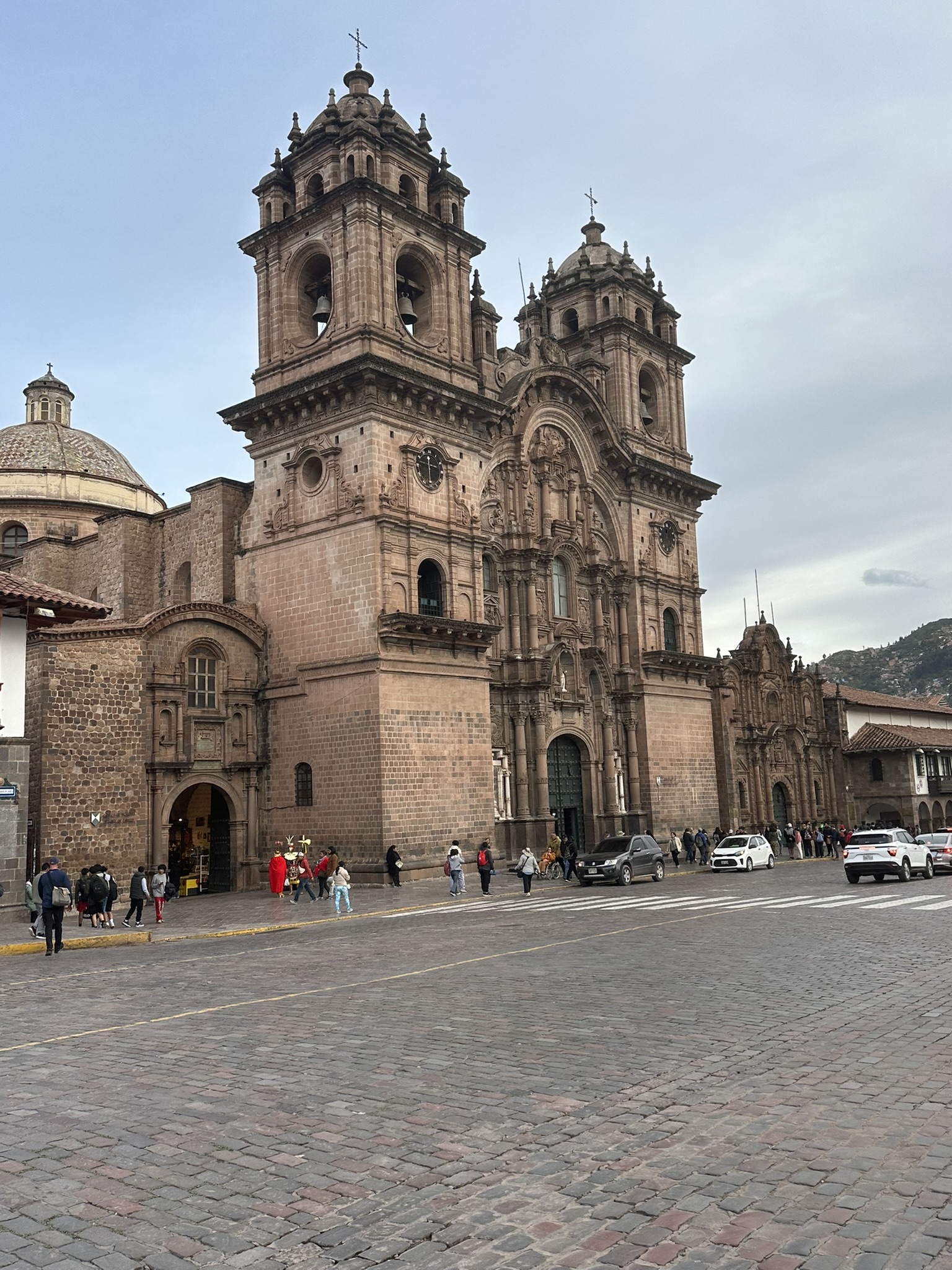
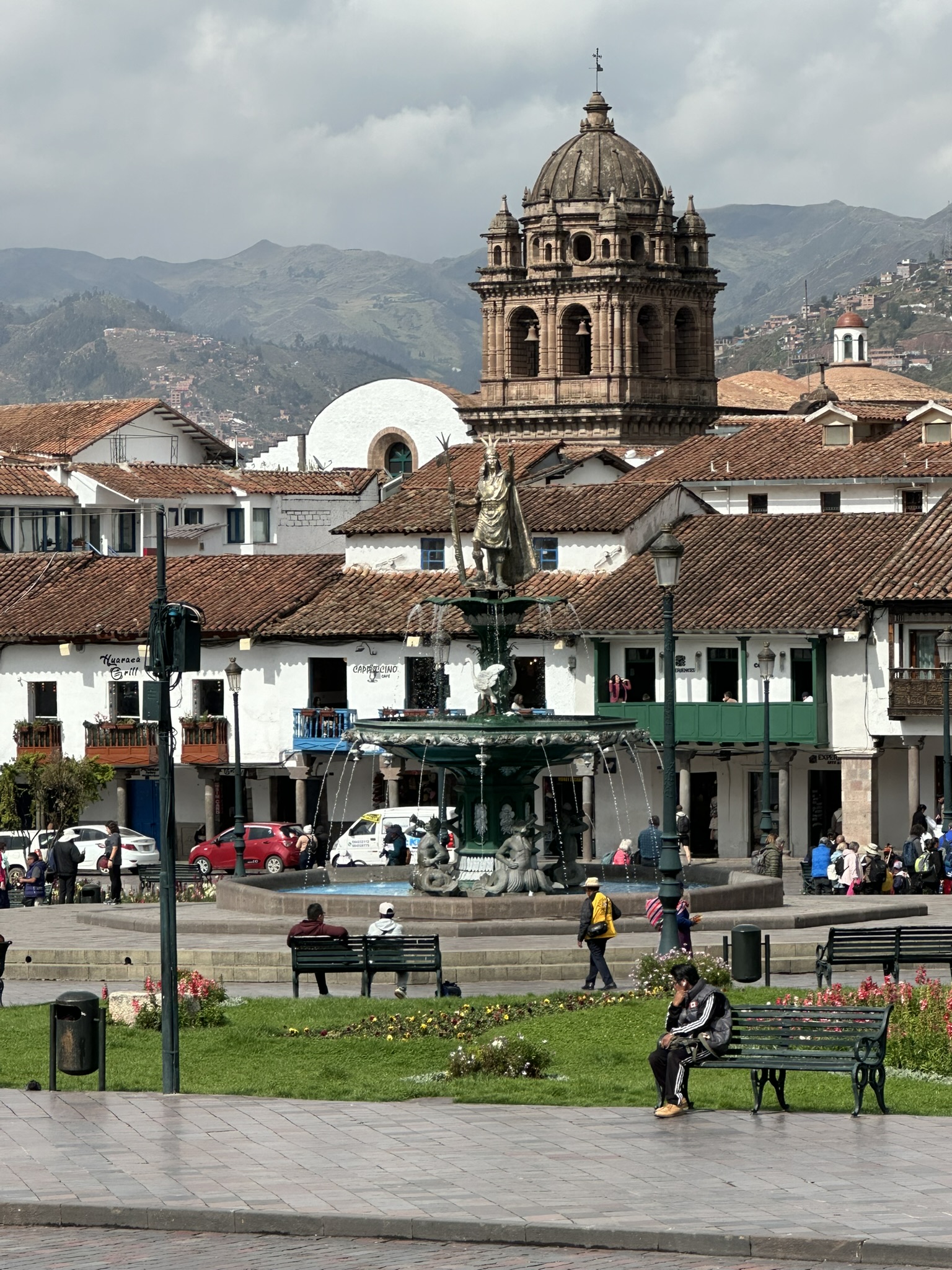
And after your touring is complete if you’re thirsty for some of the black stuff, you can sip a Guinness at the highest altitude Irish pub in the world at its corner.
Sources:
- Monasterio Hotel art tour. April 2026.
- Belmond tour guide. April 2026.
- https://en.wikipedia.org/wiki/Coricancha
- Last Days of the Incas. Kim MacQuarrie. 2007.
- https://www.salkantaytrekking.com/blog/spiritual-importance-condor-puma-snake-peru/
- Cusco: 7 Secrets of the Main Square | Plaza de Armas
 The Traveling Ridleys
0 comments on “All Roads Led to Cusco”