

“There are several ways to get to Machu Picchu”, he said, “and you’ve chosen the nicest one”.
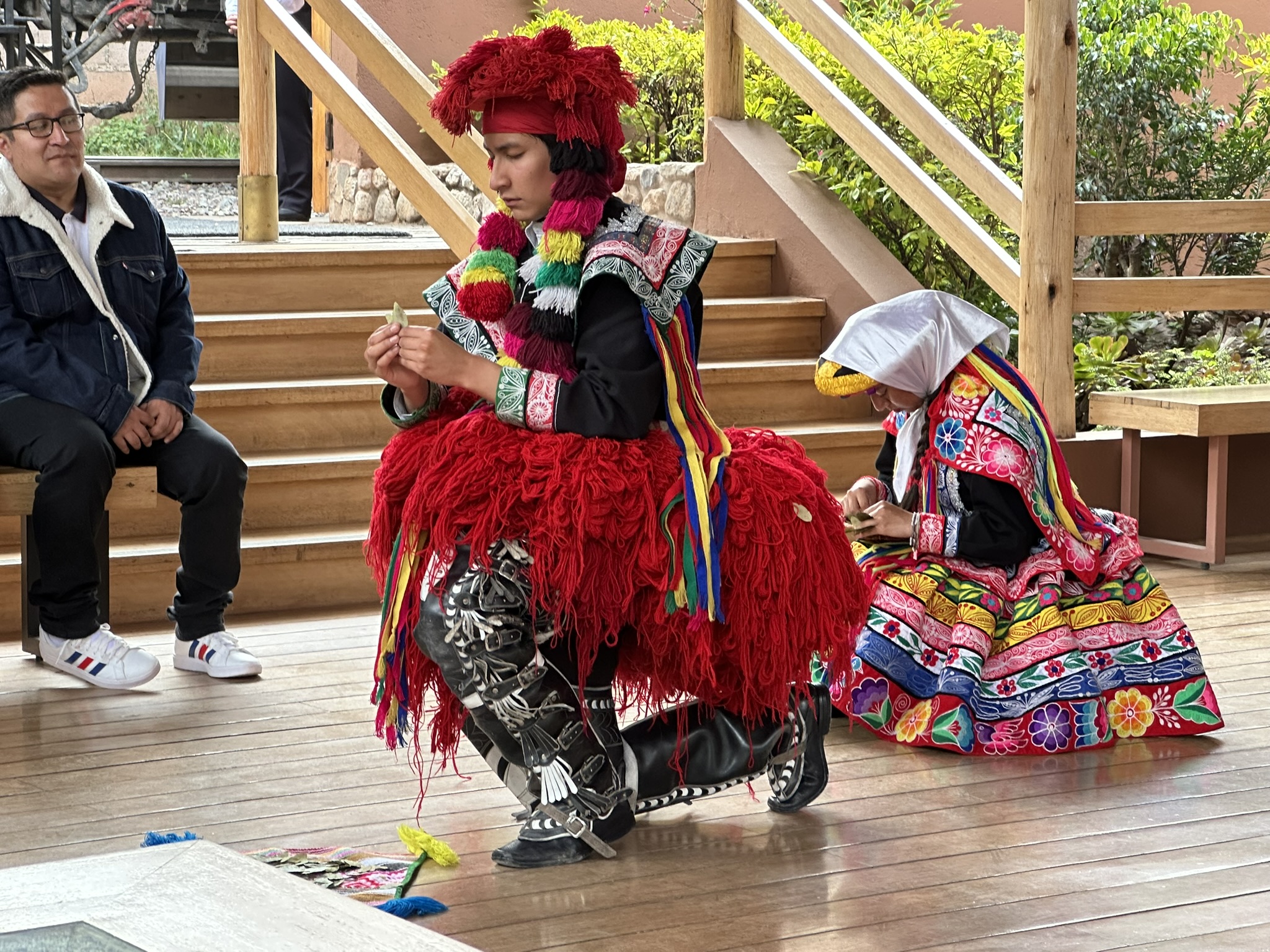
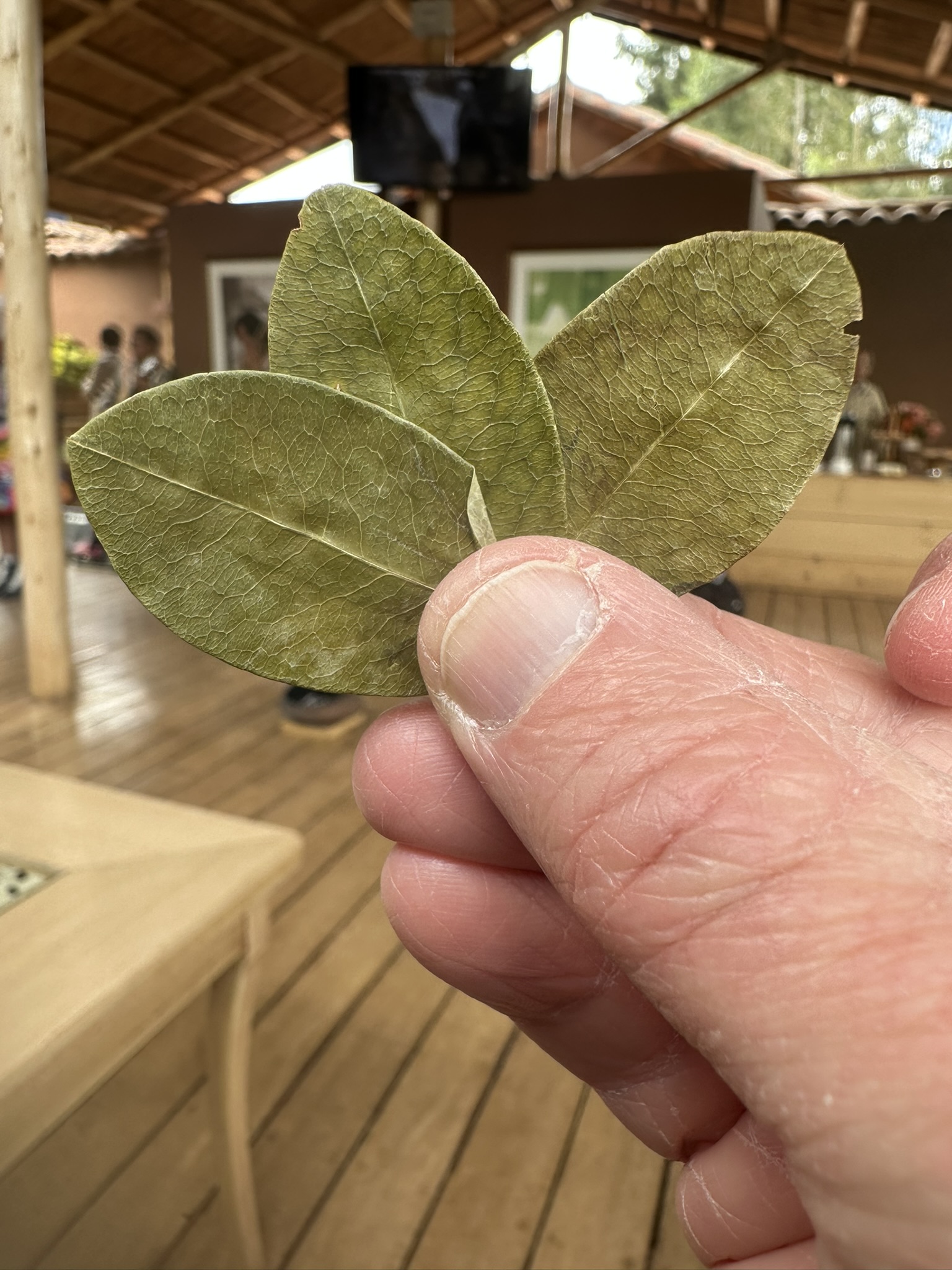
We boarded the Hiram Bingham train at Rio Sagrado Hotel in Peru’s Sacred Valley, destination: the Inca site of Machu Picchu. Before boarding we were party to a coca leaf ceremony where traditionally dressed Peruvian dancers brought forth leaves, prayed to Pachamama (Mother Earth) and danced as we burnt the leaves in a ceremonial fire. It’s a ritual to give back to nature, release negative energy and for purification.
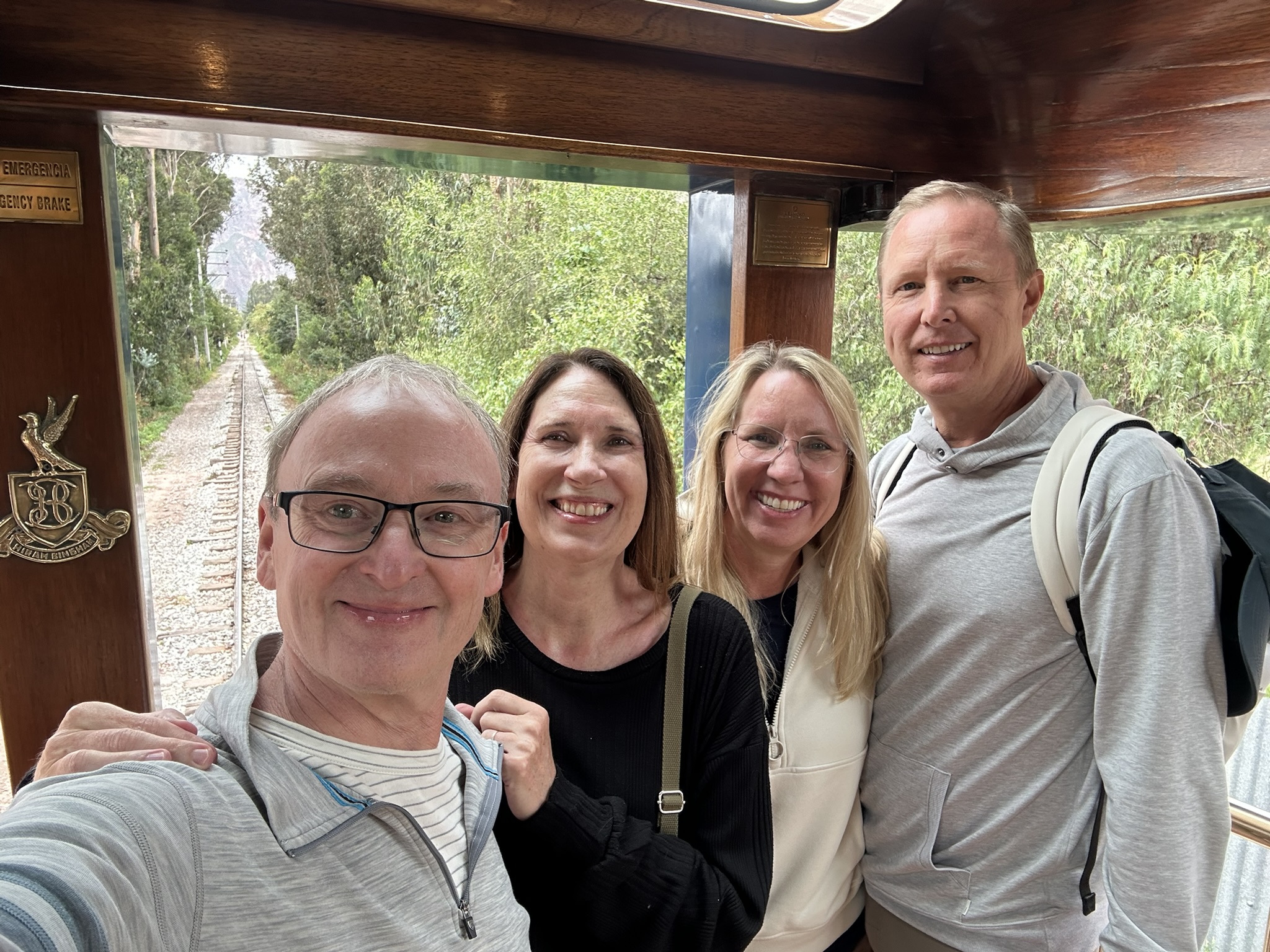
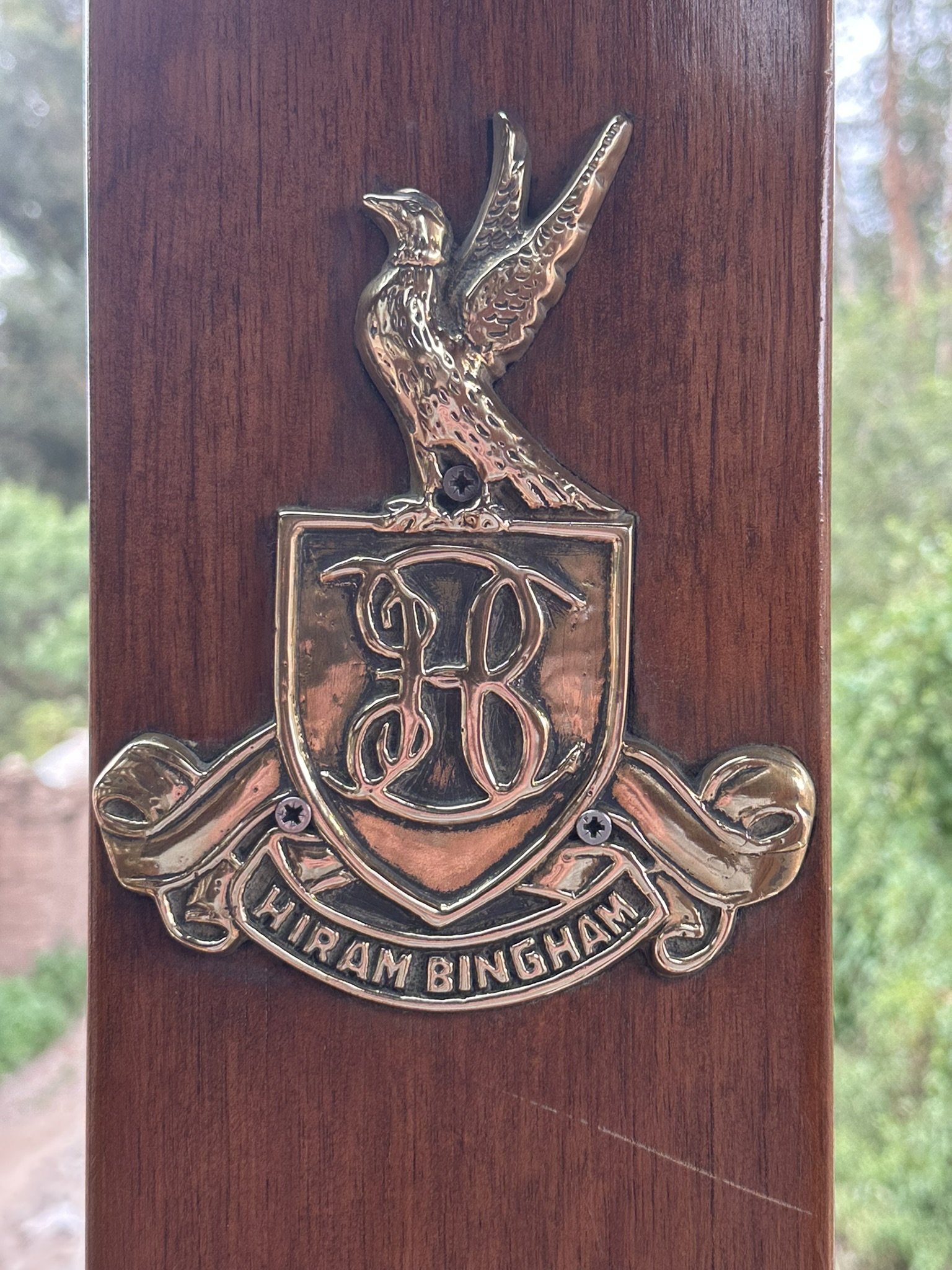
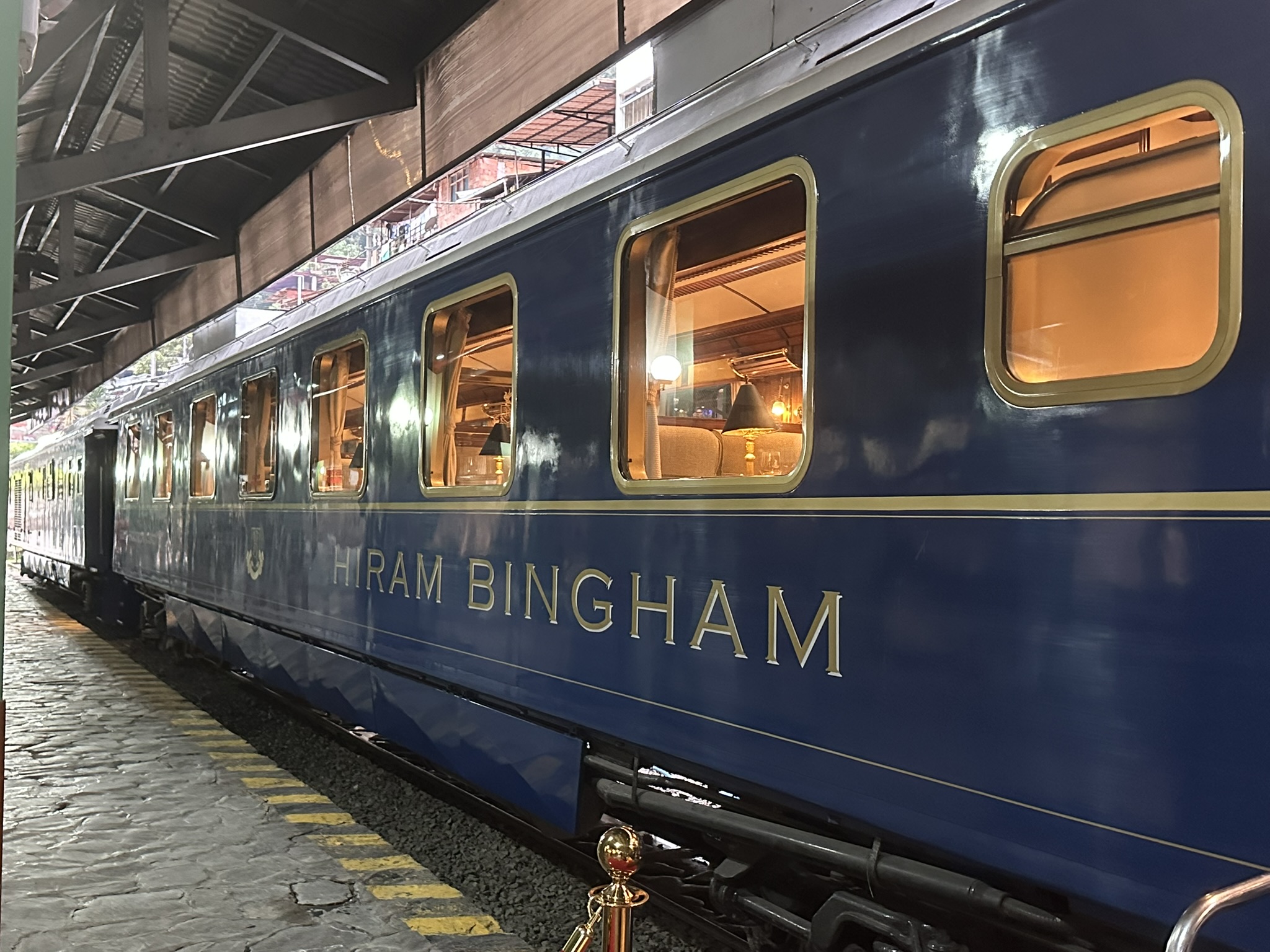
Feeling positive and purified, we boarded the train. Hiram Bingham traveled here in much less luxurious circumstances. After spending time exploring Cusco, Bingham set off to the Sacred Valley to find Vilcabamba, the sacred refuge of the Inca, stopping off at other ruins along the way. He and his party stopped in the tropical forest below the peak of Huayna Picchu (young mountain) where it was indicated, to them, that ruins lay. Bingham set off that July morning in 1911 with only his cameras, gear and a single Peruvian guide and discovered, several hours later, what is now one of the Seven (New) Wonders of the World.
You can get to Machu Picchu by train, as we did (the discoverer’s namesake train being one of the nicest) and then bus (from Águas Calientes to the gates) or you can walk along miles and miles of Inca Trail to reach it.
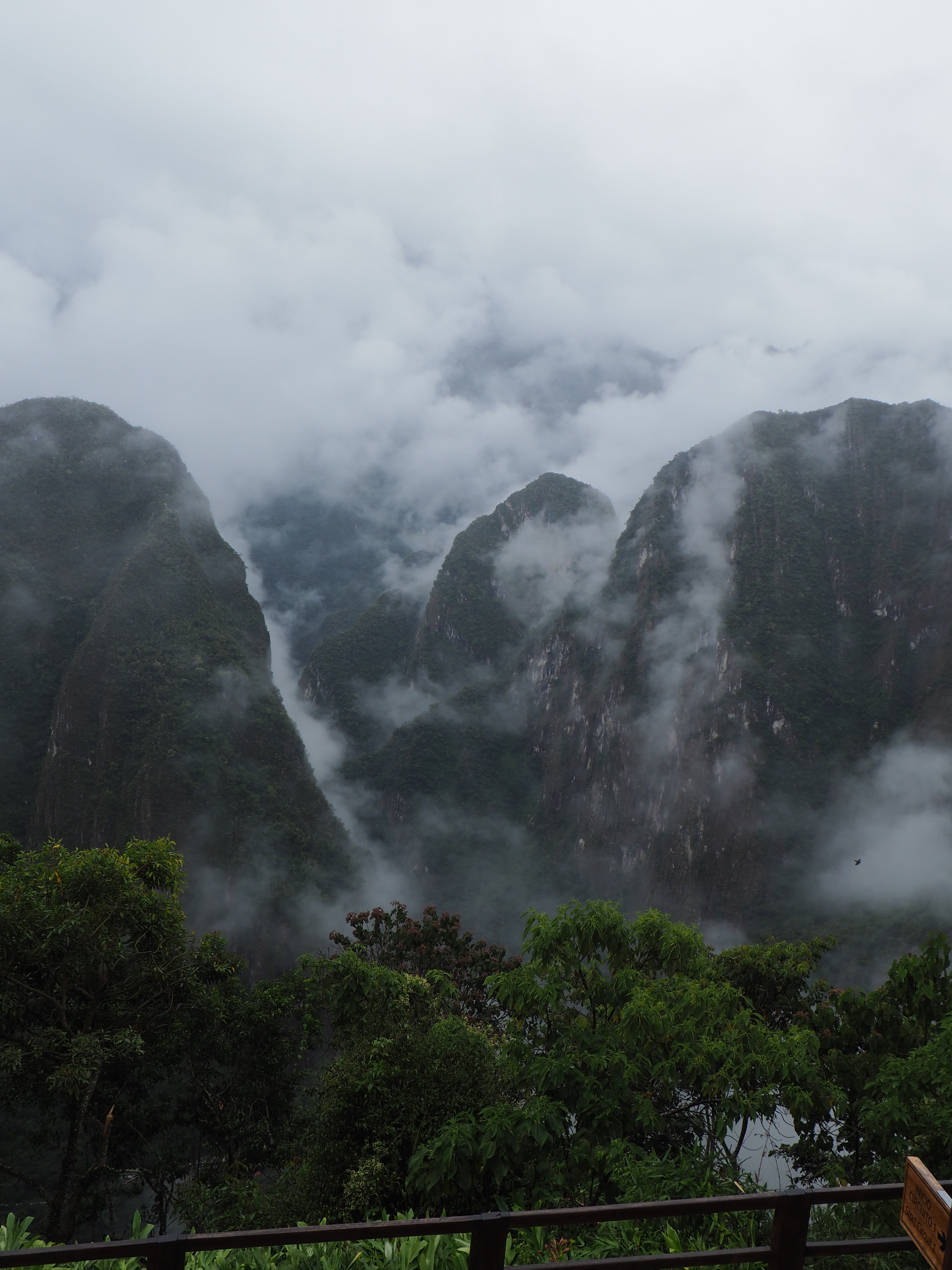
Machu Picchu sits where the Urubamba River descends from the higher altitude Sacred Valley as the waters turn turbulent and frothy, the terrestrial biome turns to the tropical jungle of Amazonia and the mountain peaks more boldly majestic, their domed tops stretching skyward as though trying to climb to the heavens.
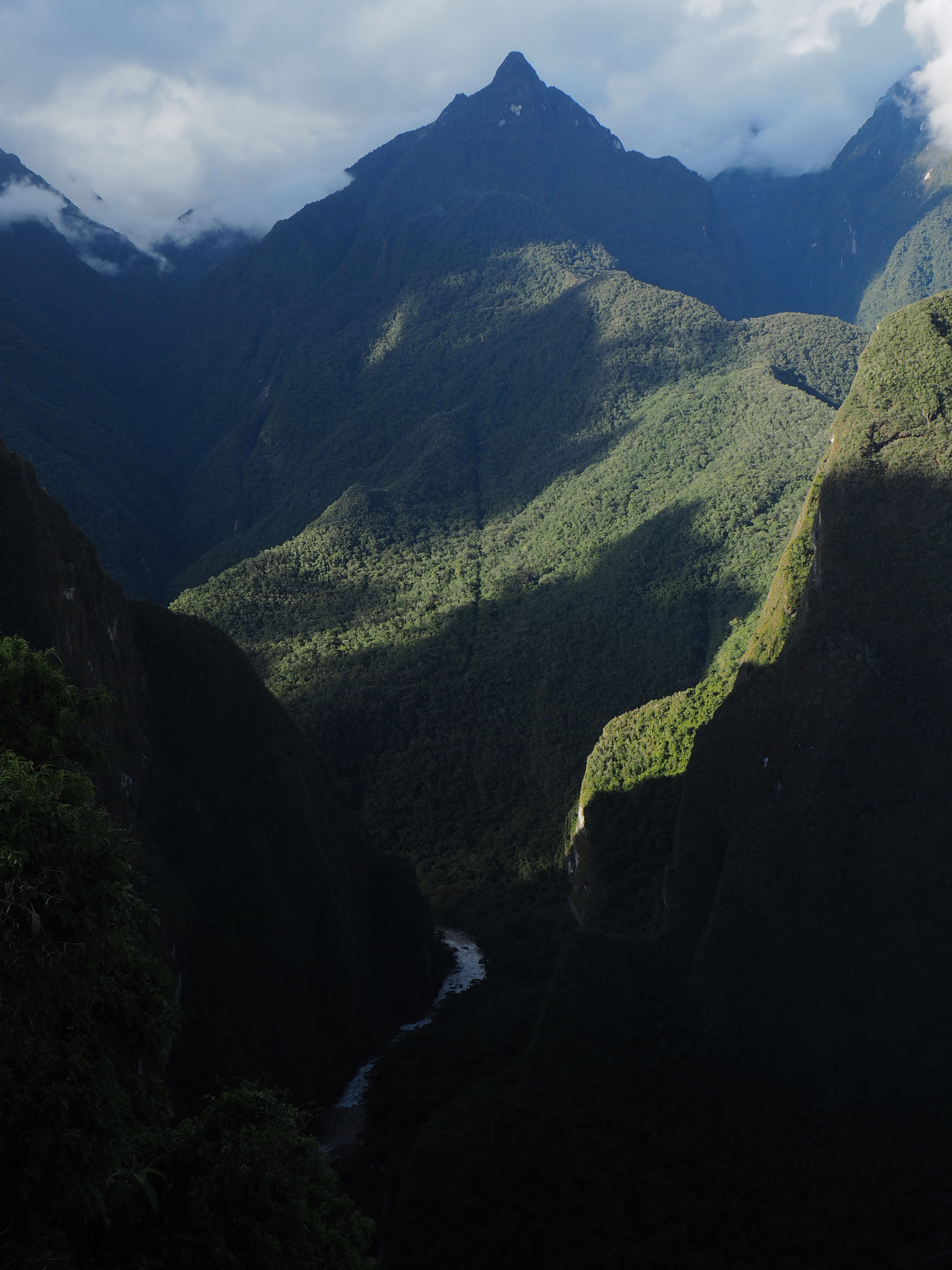
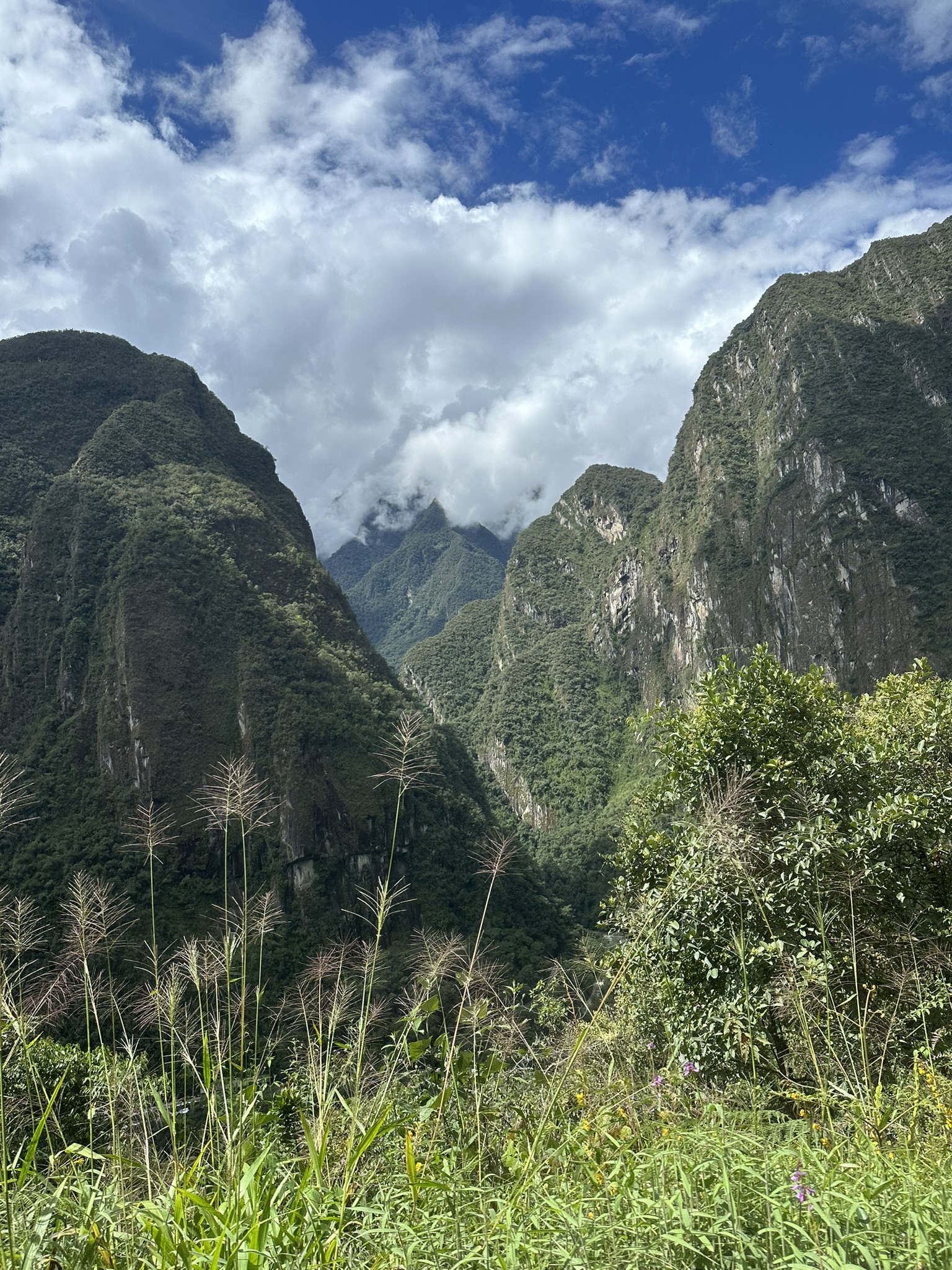
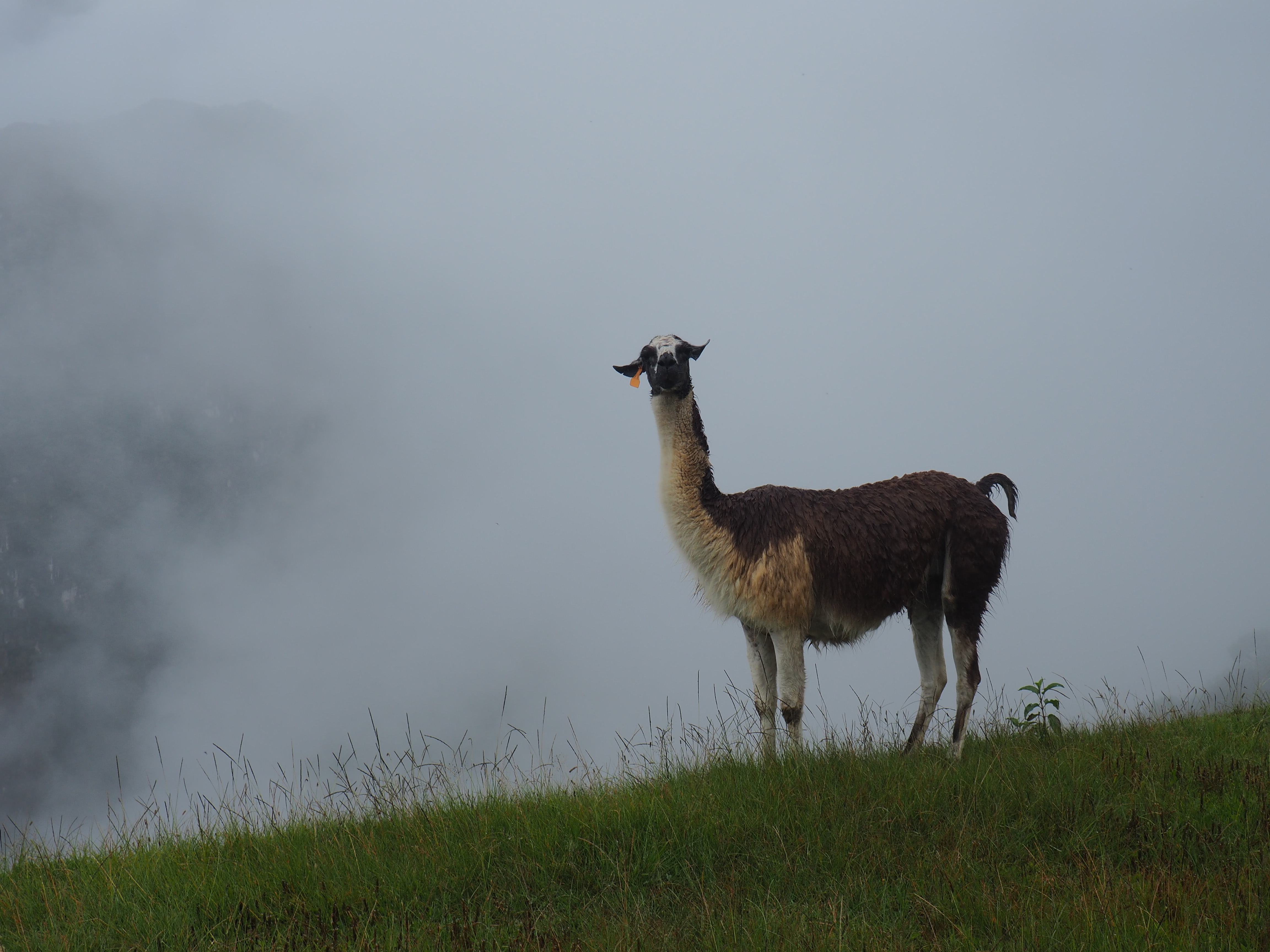
The city Hiram Bingham “discovered” in 1911 was not what you see when you catch your first glimpse today. The jungle had overtaken it, and his team spent four years clearing, uncovering and excavating. The Peruvian government has planted non-native African grasses to keep the jungle’s forces at bay and llamas roam and serve as lawnmowers. Restoration continues constantly to remove lichen and moss from the granite stones the Inca lay to keep them from deteriorating.
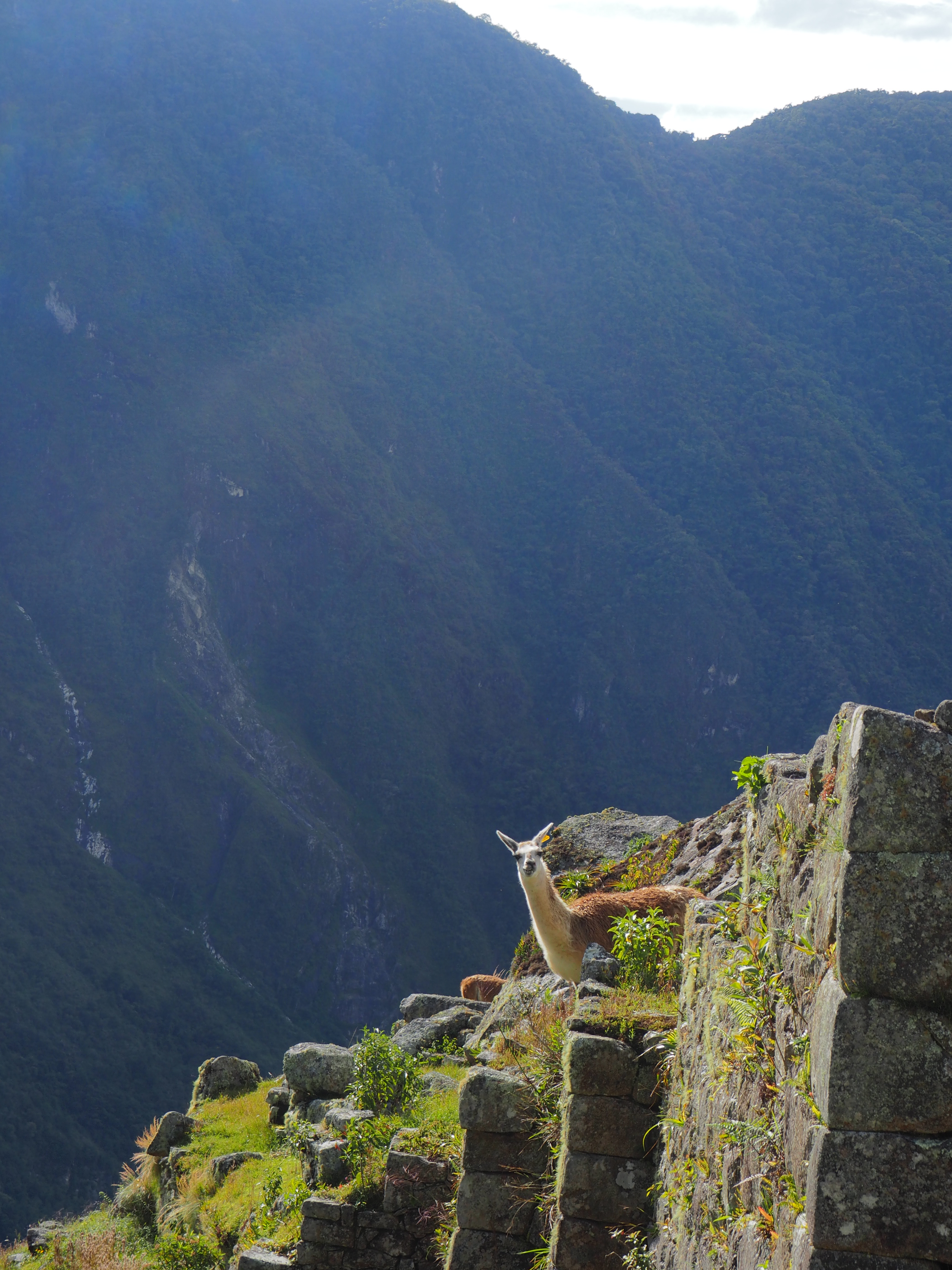
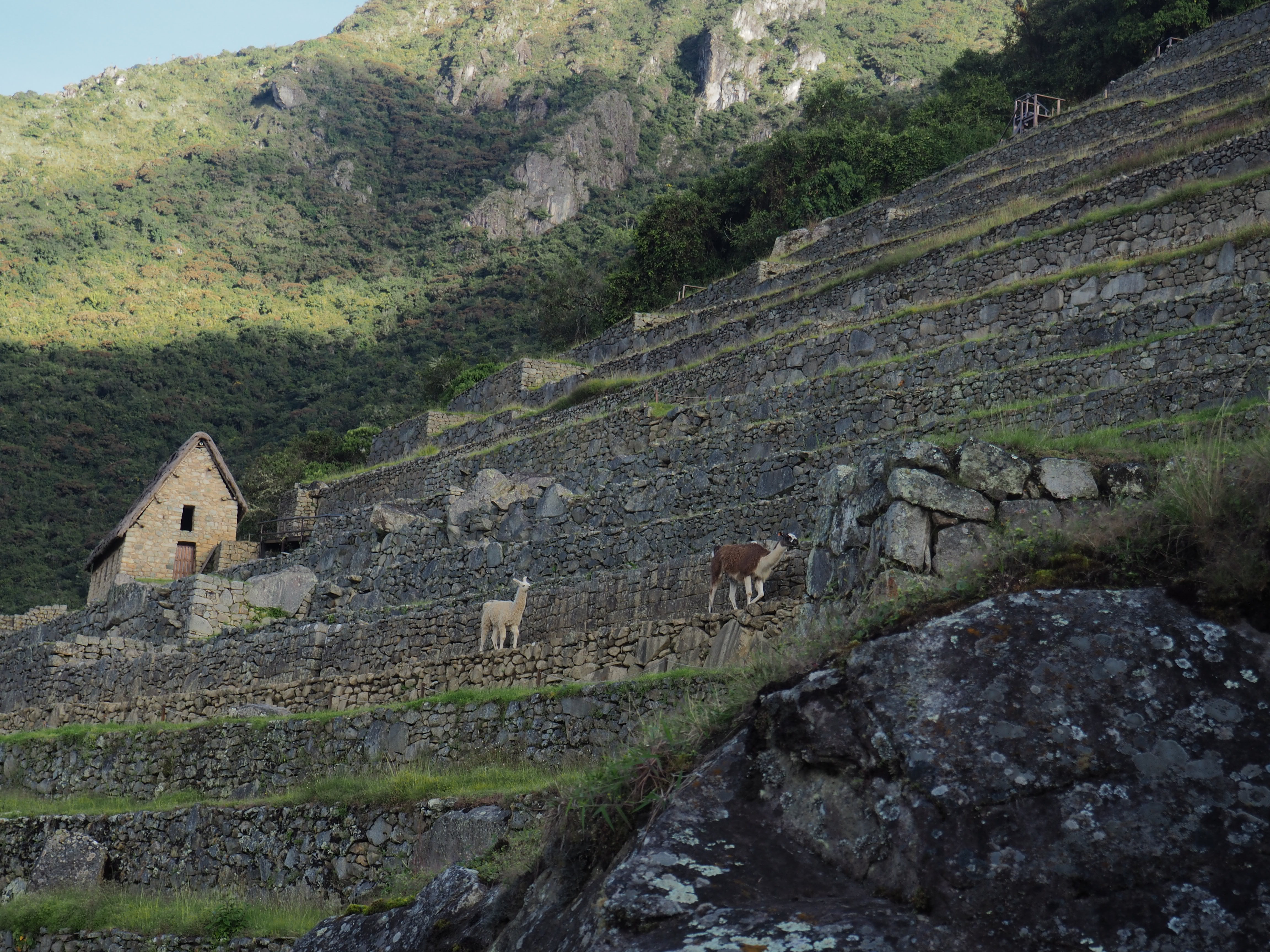
We had tickets to Circuit 2, which permits you to enter the citadel (#1 only provides access to the viewpoint above and to the trailhead of Machu Picchu Mountain, more on this later). Much of the city, including the name itself, was chosen by Bingham and his team as they worked to piece together what it all might have been. Machu Picchu itself is named after the mountain that sits to its south. In the Quechua language Machu Picchu means “old mountain” and Bingham adopted the name of the southern bookend mountain for the citadel.
Archaeologists have dated the site to having been built in 1450, but the Inca had no written history so much of the theory of the history of the Inca Empire is based on accounts of the Spanish Conquistadors and some good solid detective work.
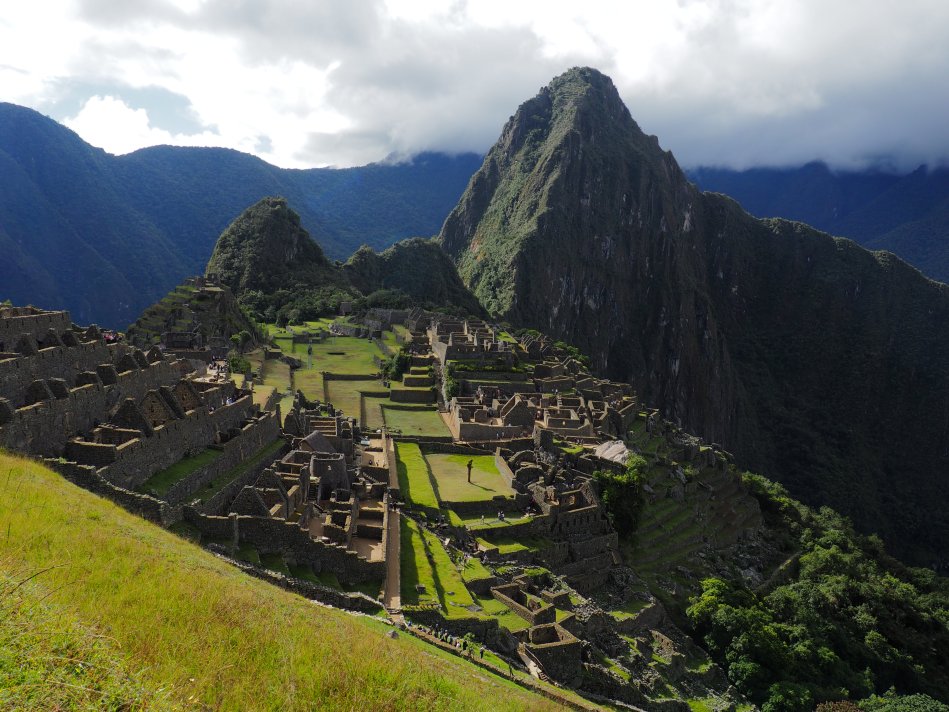
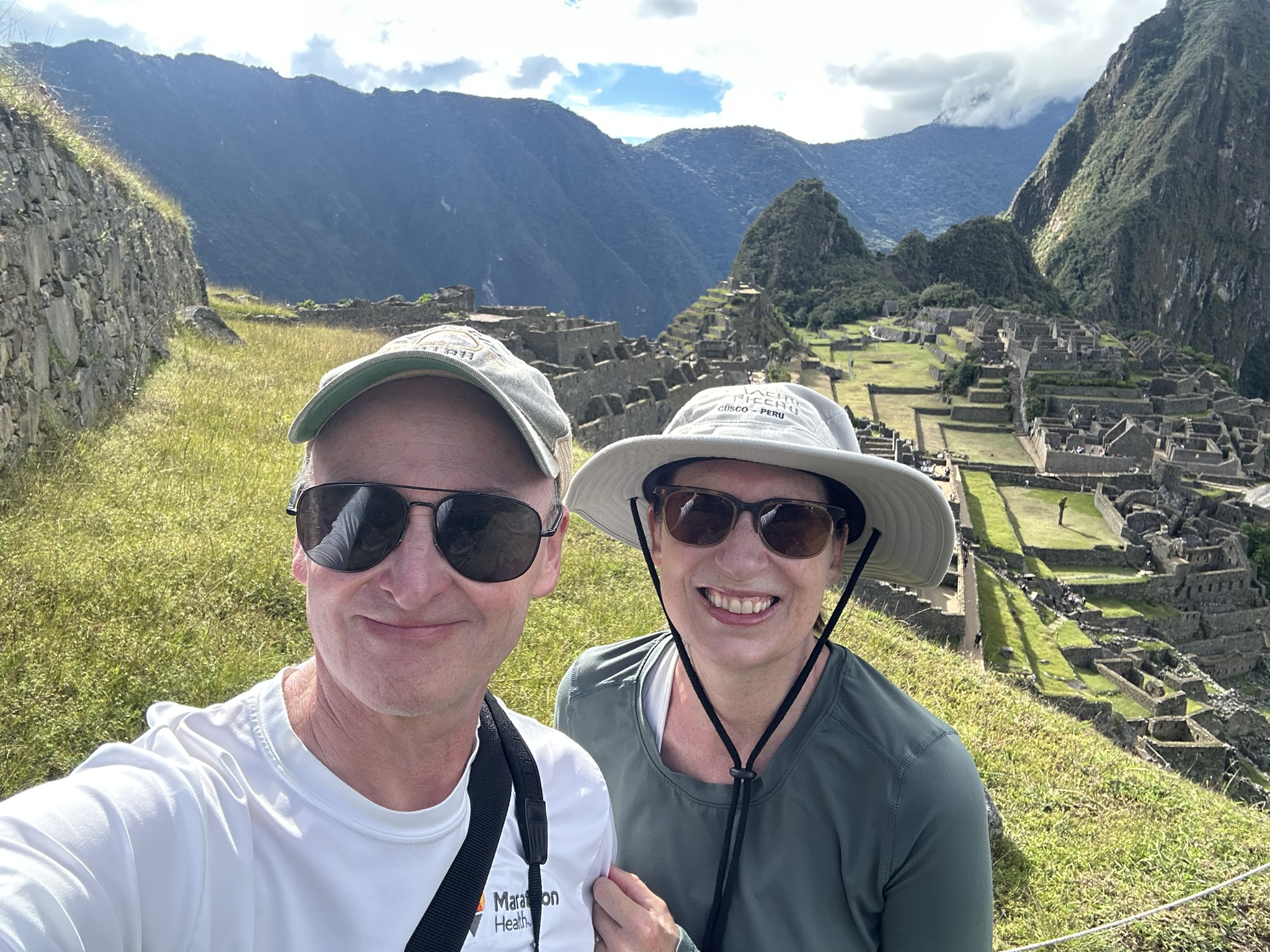
Circuit 2 ascends to begin with the money shot of the citadel below in the foreground and the northern bookend mountain, Huayna Picchu beyond. Here you can stop and admire the terraces, built for farming, the central square which they suppose was for events, trade and the paying of taxes. The citadel, they believe, was home to the elites. The villagers from surrounding areas would come to pay tax in the form of a percentage (a large one) of their crops. The network of Inca Trail that crisscrossed Peru and came through Machu Picchu connected the Inca of Amazonia to the capital in Cusco and beyond.
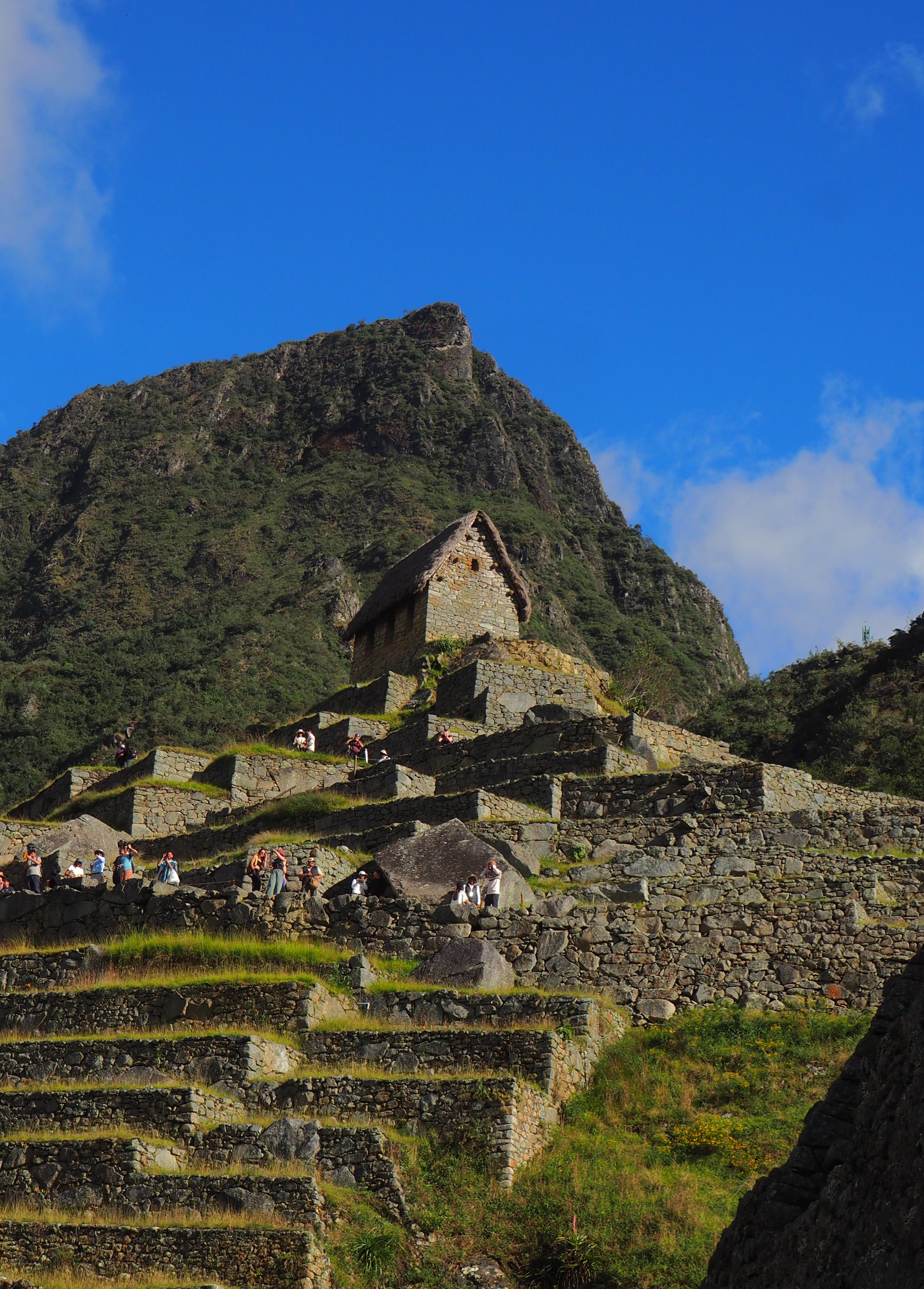
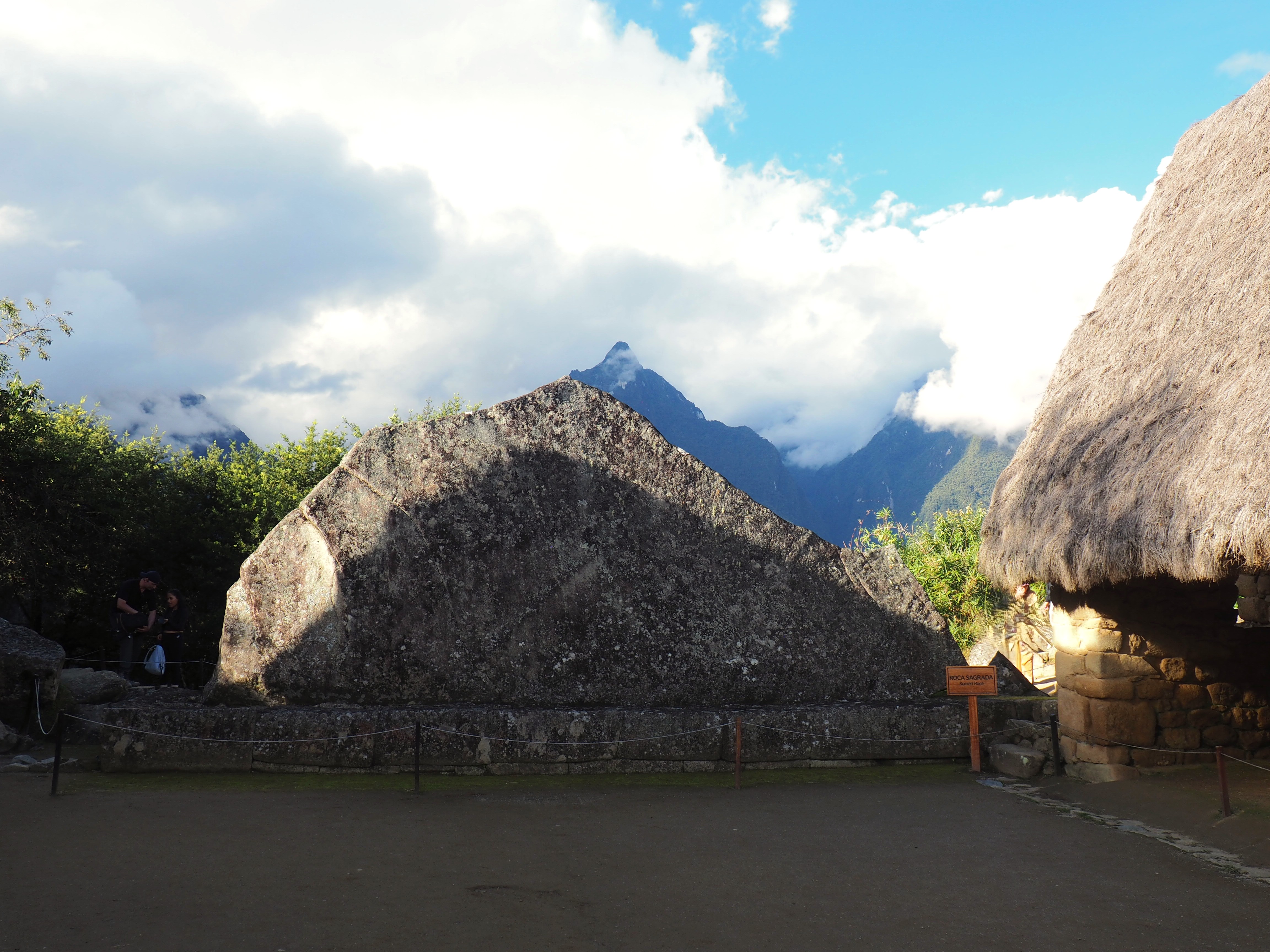
Bingham is responsible for much of the naming of sites based on some meticulous research, knowledge of the Inca at Cusco and good educated guesses. The House of Three Windows has windows, of course, that align with the sun at the summer and winter solstices. One of the sacred rocks is diamond shaped and points directly towards the southern cross constellation corresponding with its dimensions. Another is formed in the shape of the mountain behind it. Our excellent guide Luís, escorted us through and explained it all.
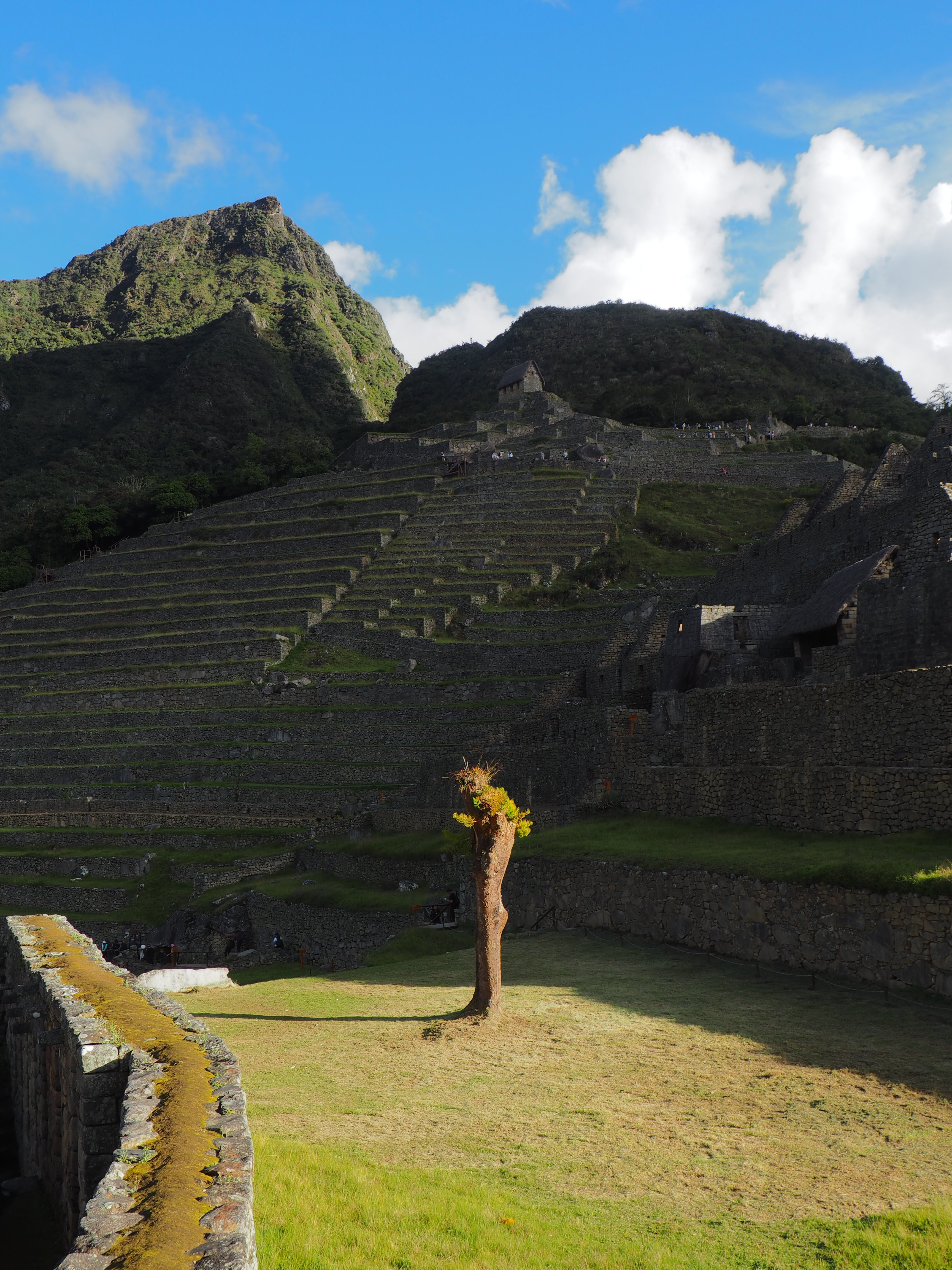
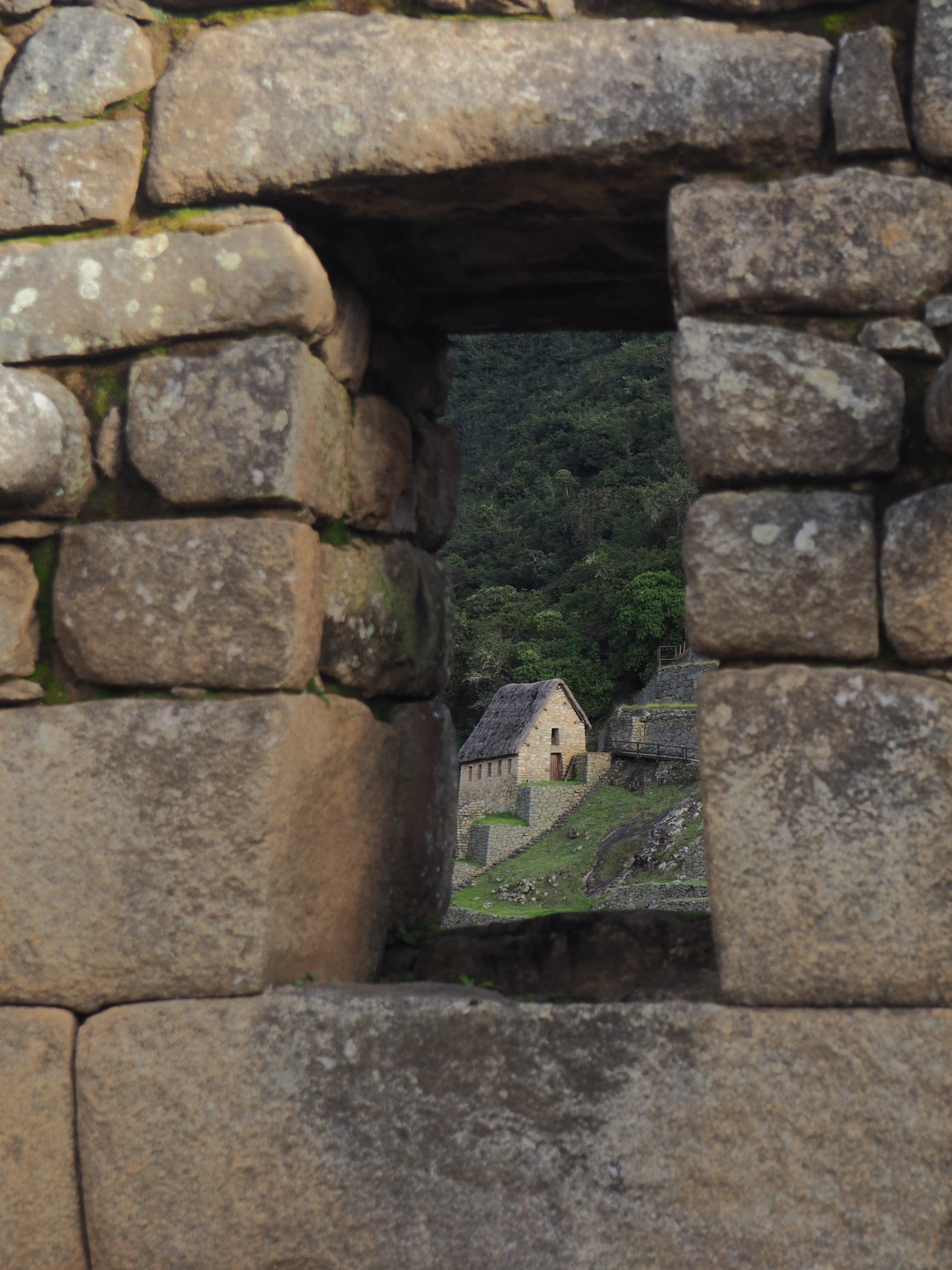
The next day, we awoke to rain. Hard rain. It is a rain forest, and we were at the end of rainy season, after all. So much for our hike to the top of Machu Picchu Mountain. But Luís arrived and convinced us that weather shifts and changes, and current conditions don’t predict future ones. So off we set for our 9am Circuit 1 entry time to make it through the gates to the mountain by 9:30.
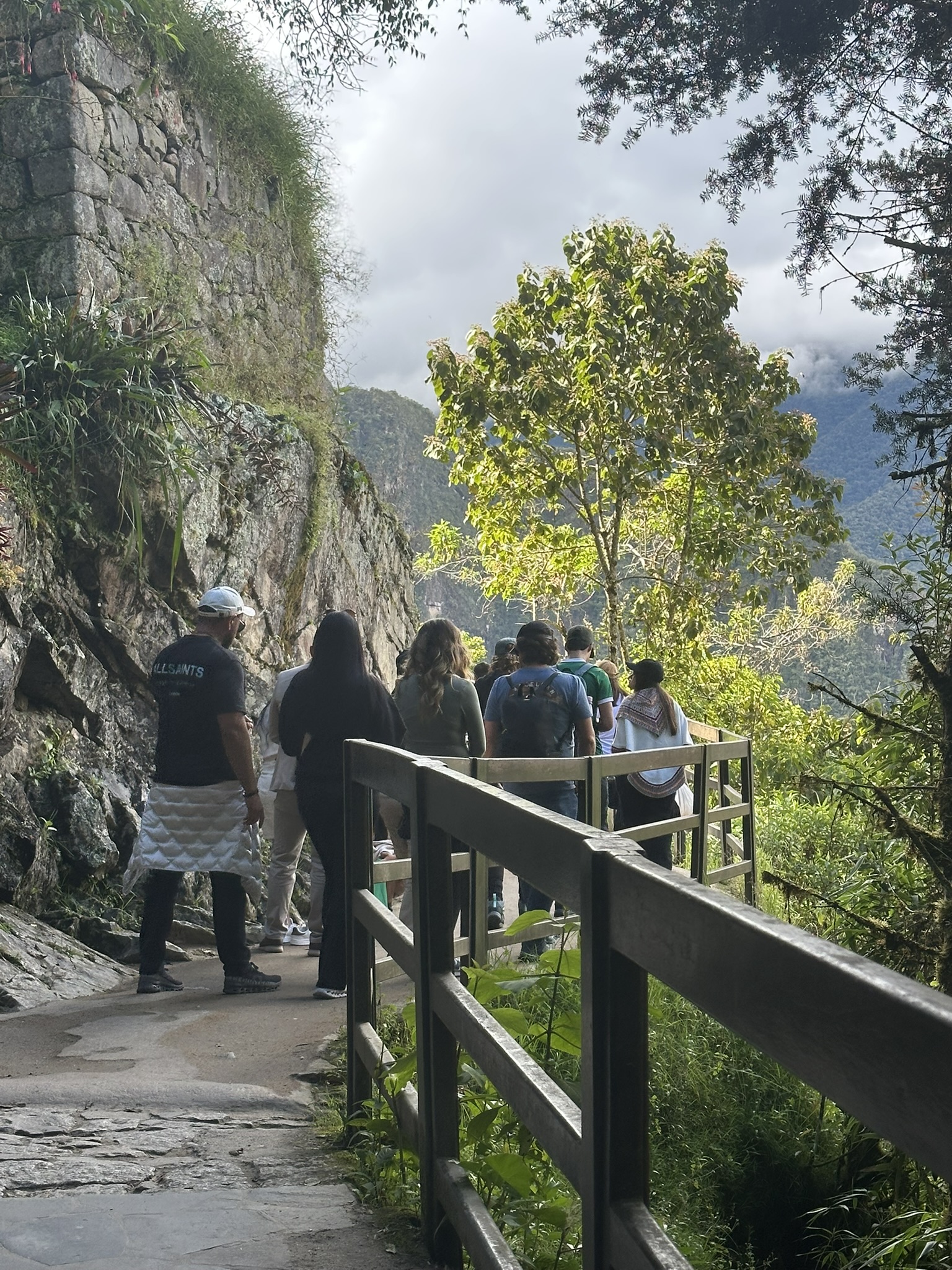
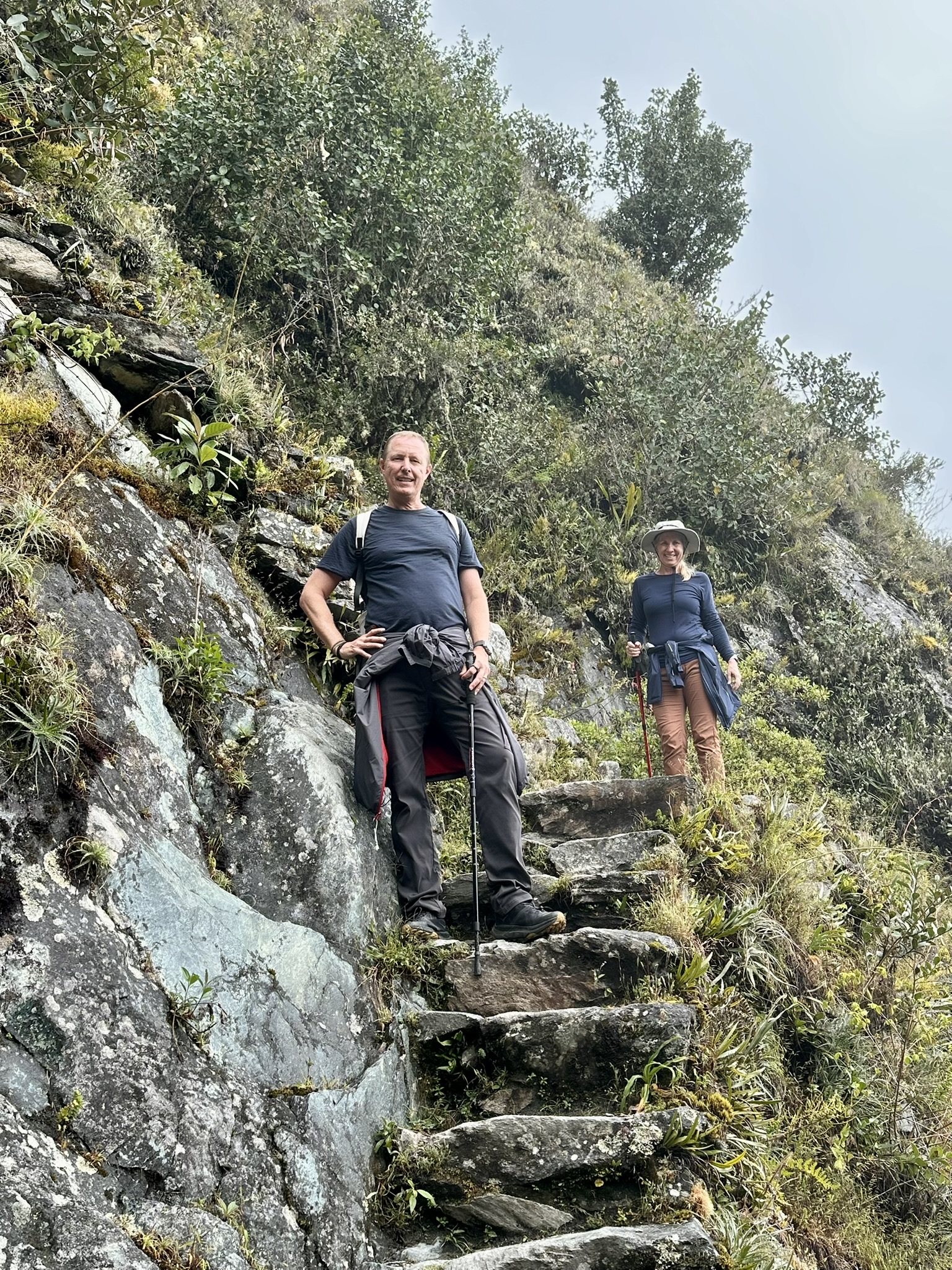
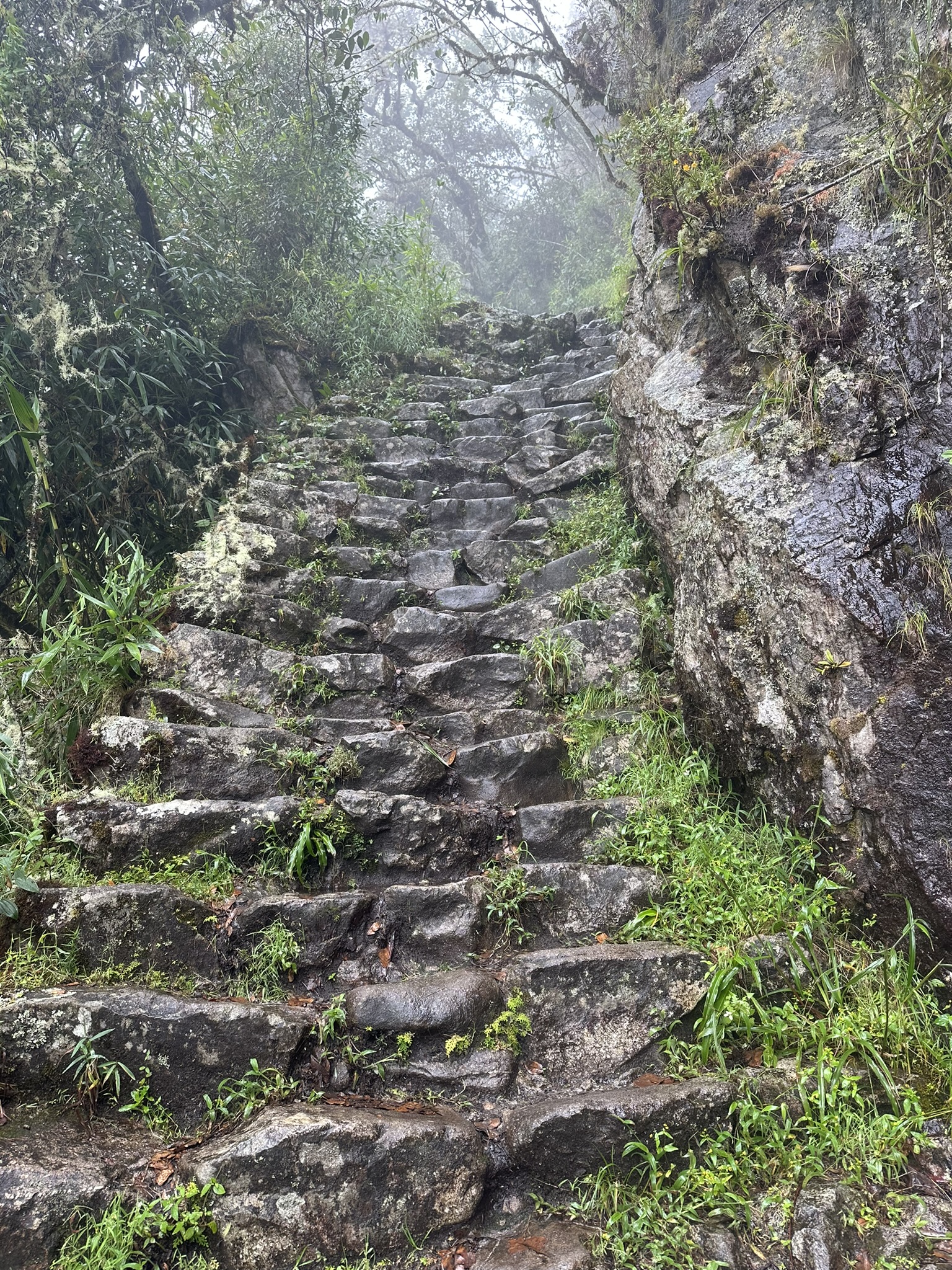
This hike is no joke and it filled us with admiration for the Incas who cleared, carved and maintained their trail networks across the high Andes, through their jungle and stretching the length of the Empire from present day Colombia and into Chile. The trail to Machu Picchu mountain is no exception. It goes up for about 3,600 steps. Straight up. Bringing yet even more admiration for the chasqui messengers who ran messages across the Inca trail network from settlement to city, city to settlement.
On the way up, the weather cooperated zero, other than the fact that the retreating rain which made it actually quite comfortable for hiking. No views of the citadel. Sparing views of the mountains. Mostly views of the jungle, flowers, the trail and fellow hikers, which they restrict to 200 people per day (there were 105 on the day we ascended). It all could have been much worse.
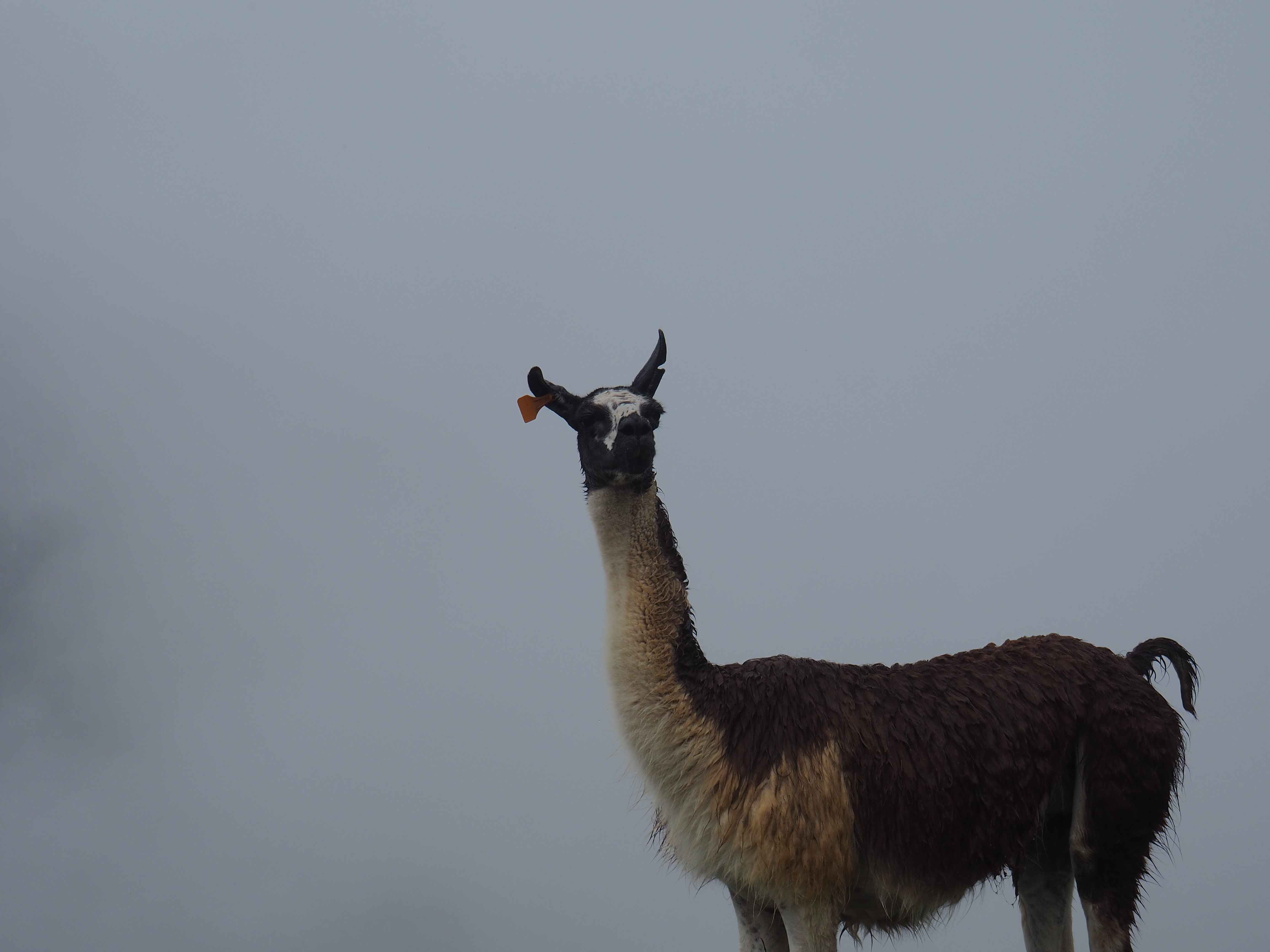
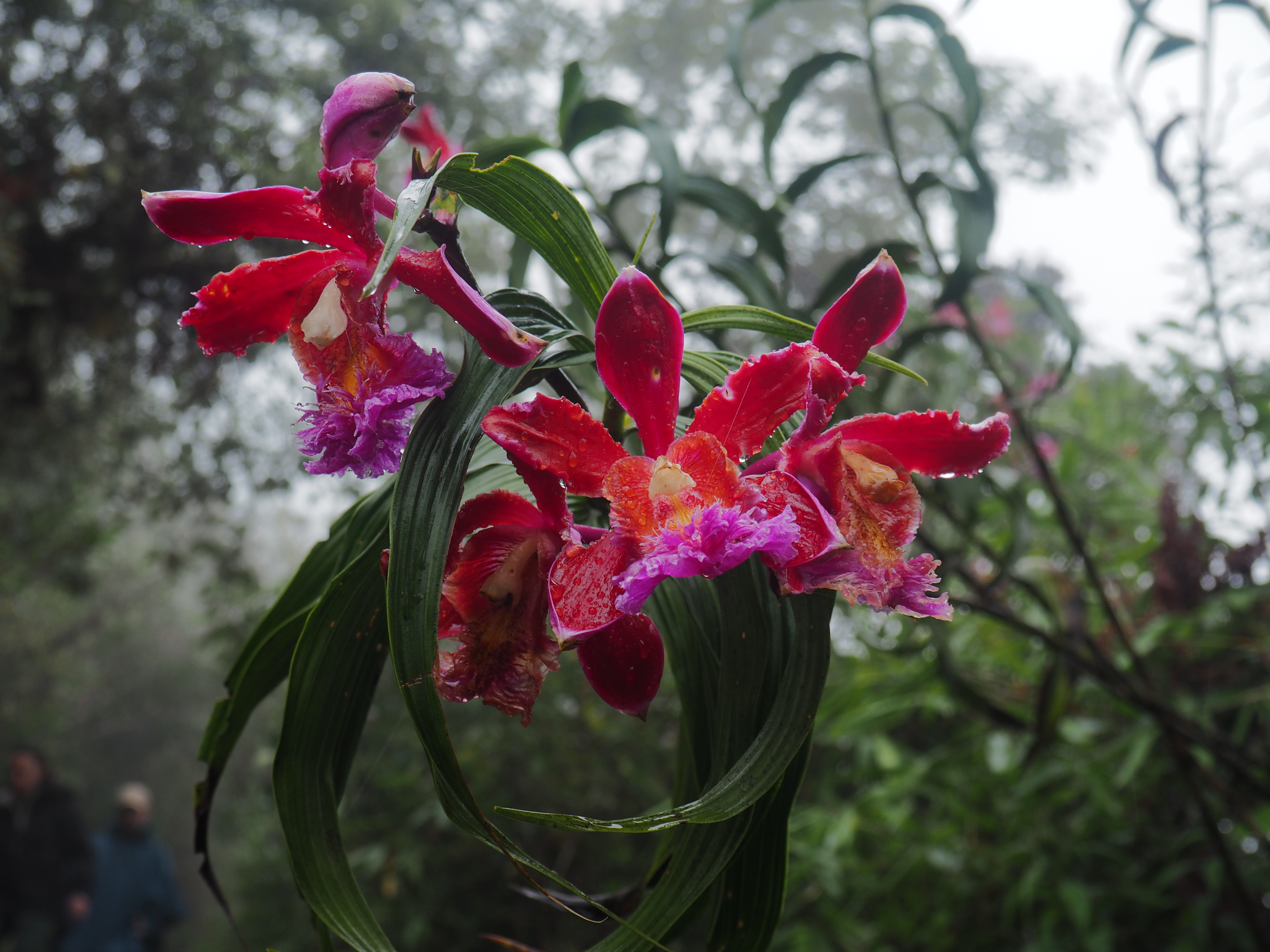
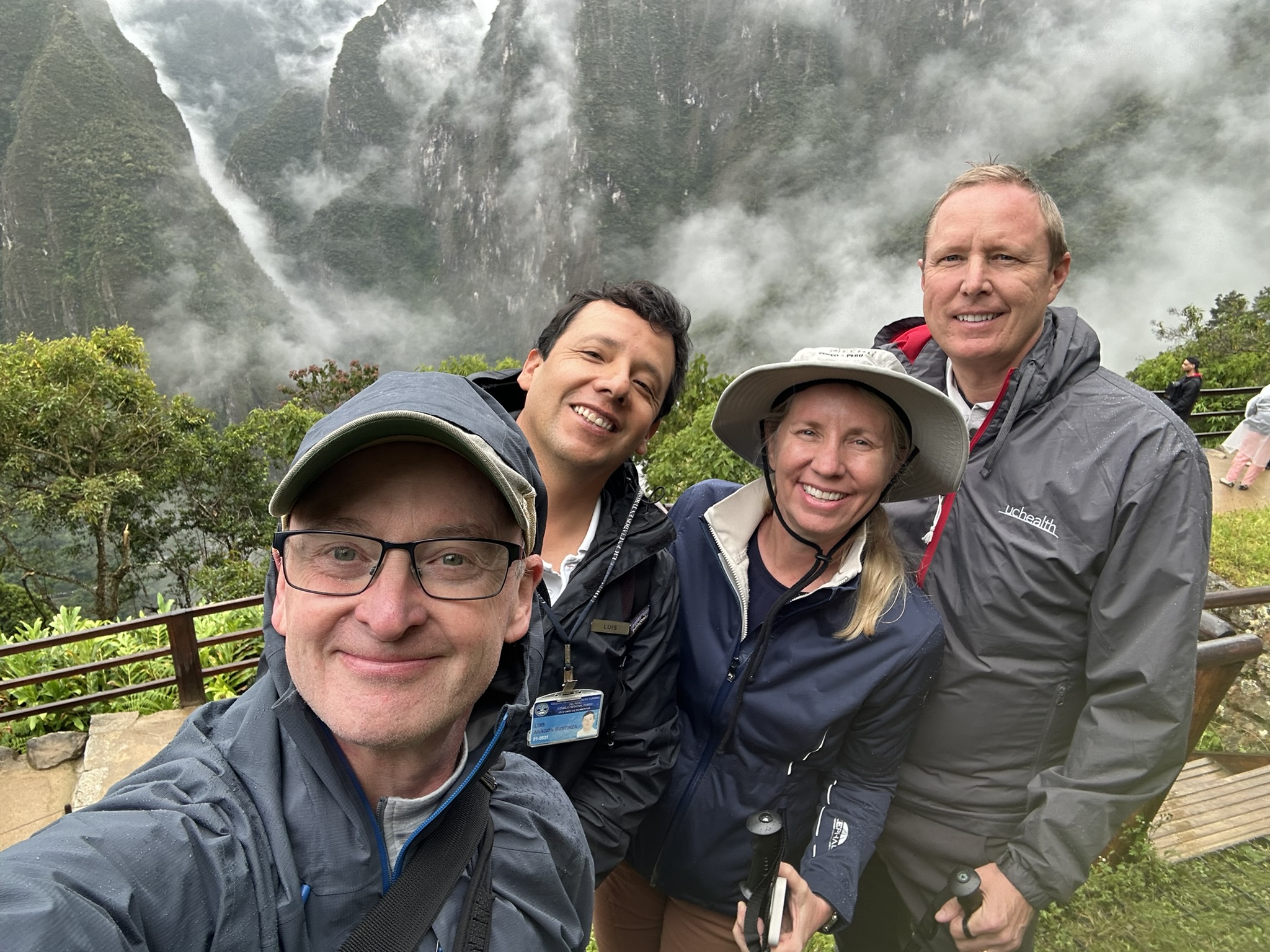
When I asked Luis about the coca leaf ceremony we’d witnessed the day before he told us that the ceremony is made before major decisions (like building a house or opening a business). Before major activities (like taking a trip). That it helps to make offerings to earth, wind, water or fire and pray for your hopes for that event. Then he suggested I do a coca leaf offering to Pachamama for our hike (we had, of course, been chewing our coca leaves for energy). I prayed for our safe passage up and down. For our safe return home and various other people in our lives.
We summited the 10,000-foot mountain and the citadel presented herself for our admiration as though Luís had planned it.
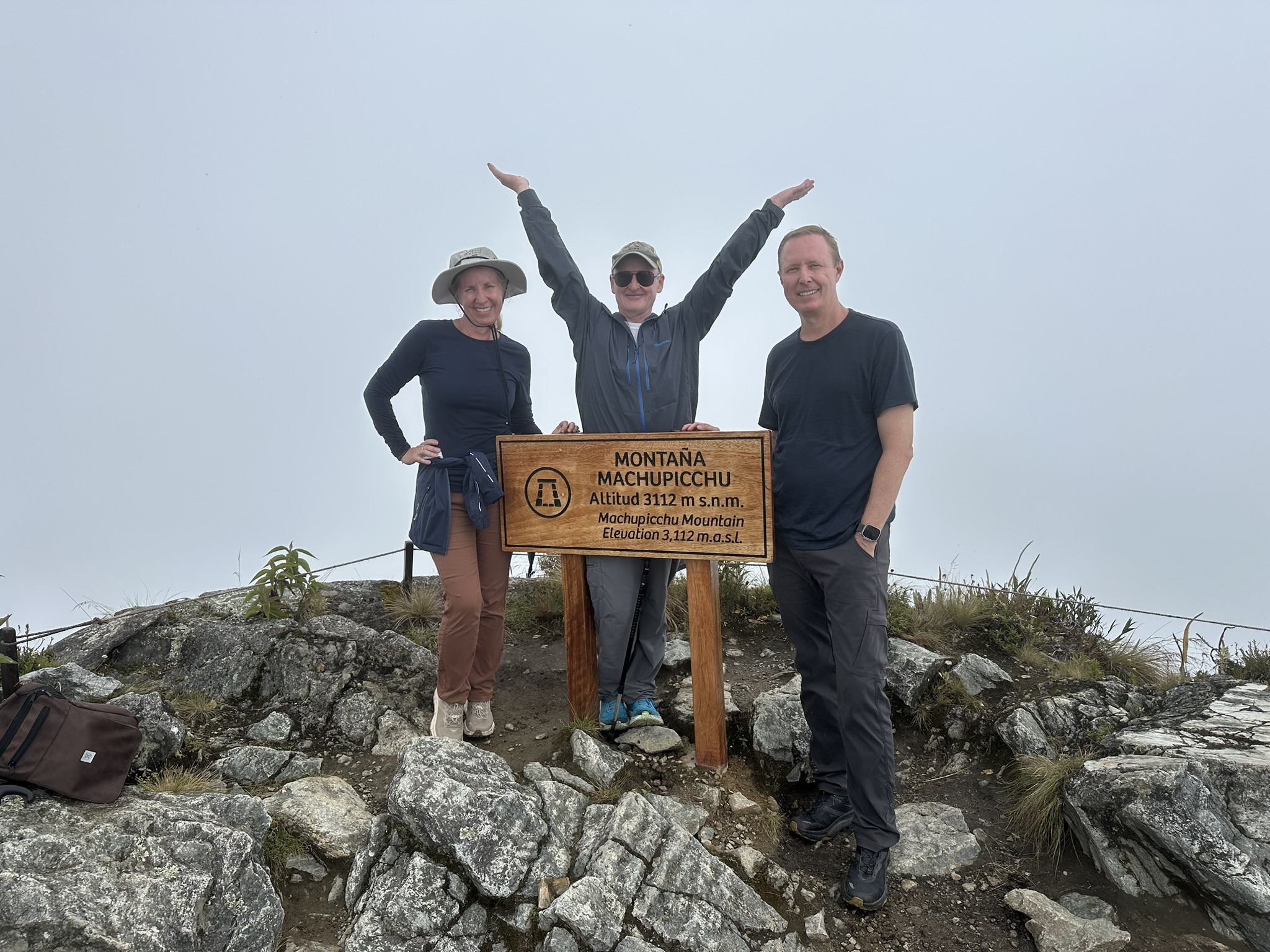
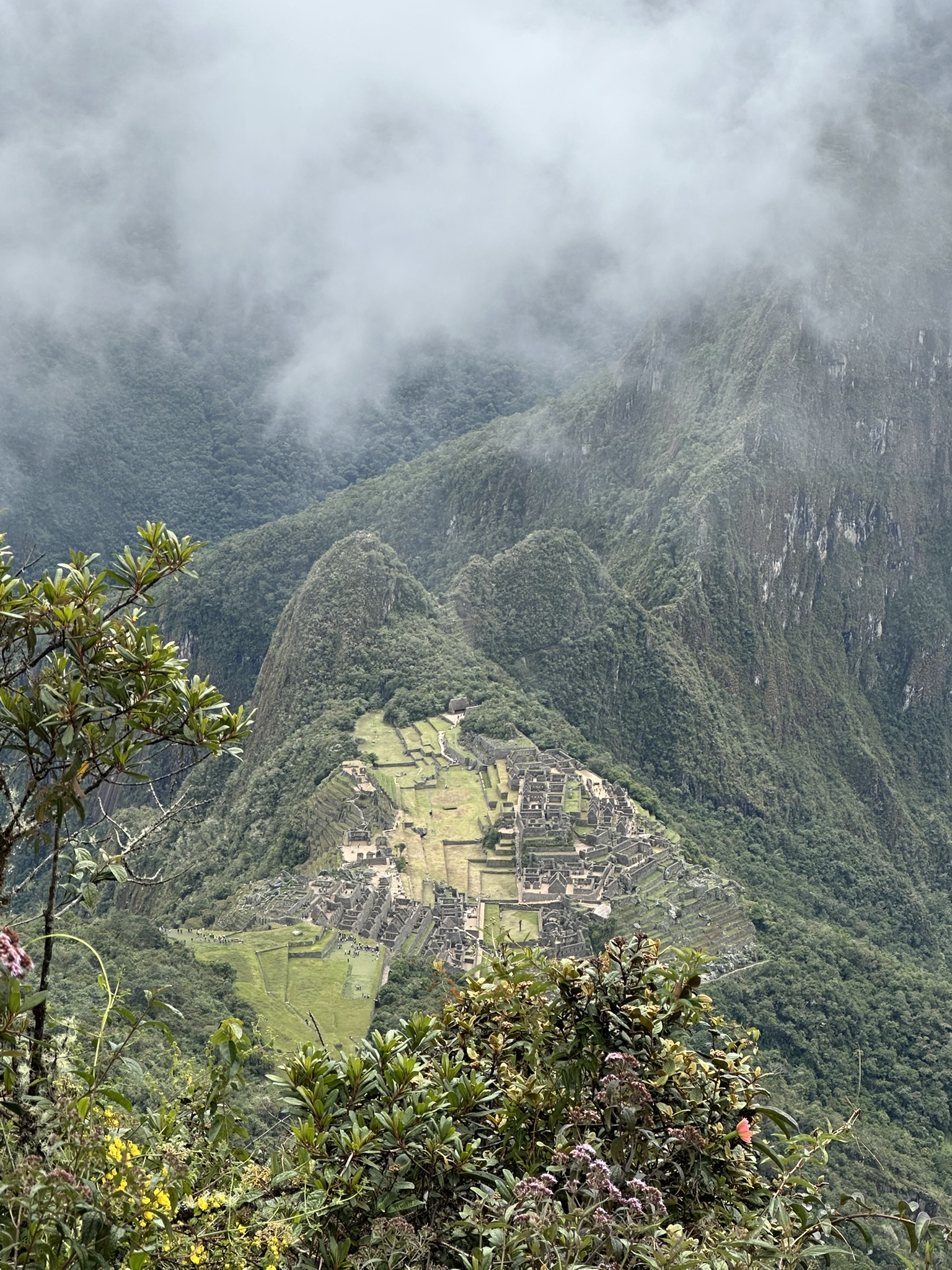
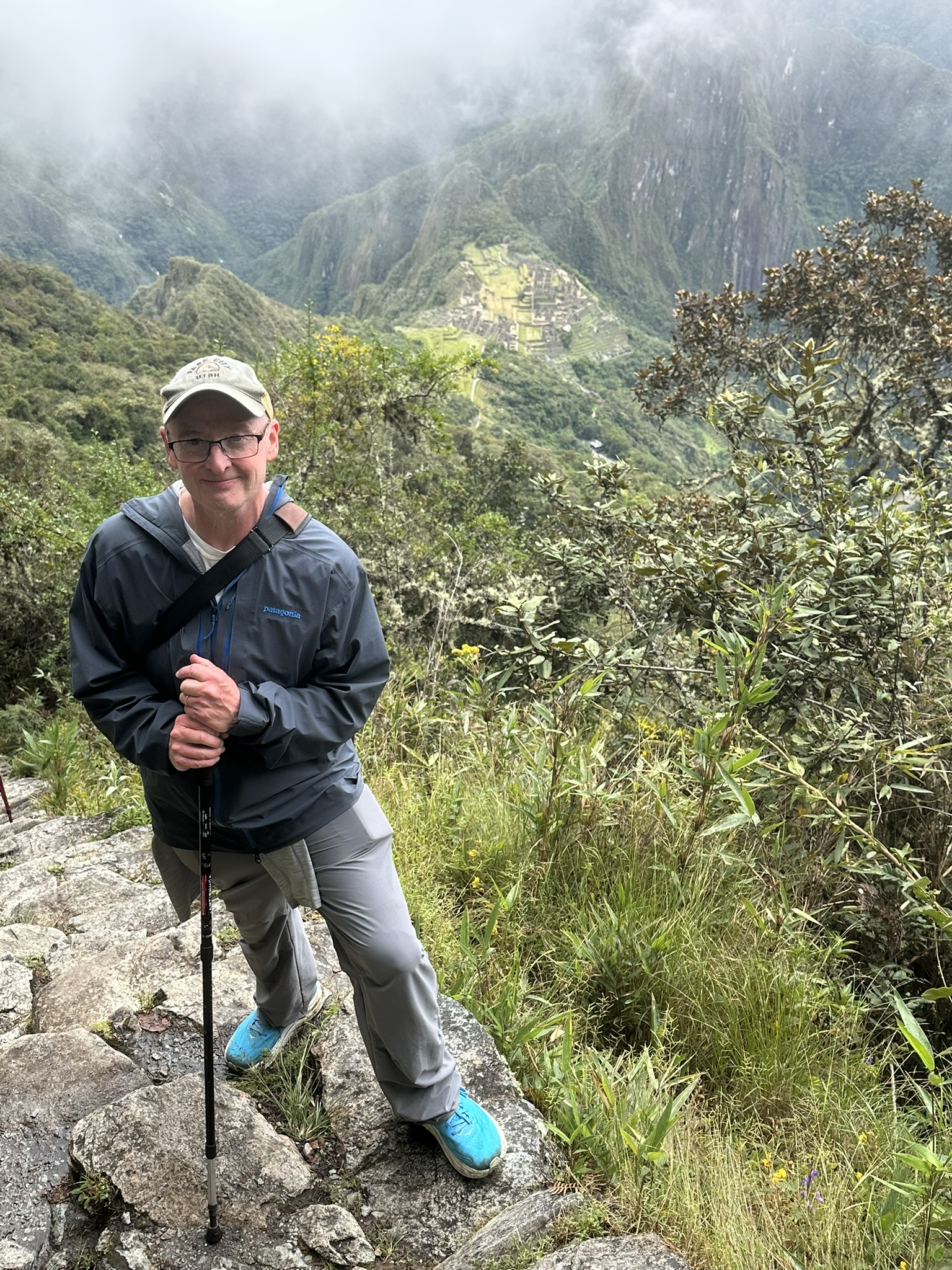
Machu Picchu is a mystical place. A spiritual place. A magical place. It is hard to describe. Part of its majesty is the unknown. Bingham and those who followed have opened our understanding, but imperfectly. And a visit to this high mountaintop helps to put things in perspective. Connects you to nature and the awesome legacy and wonders of the Inca people.
Sources:
- https://incamedicineschool.com/blog/kintu-the-three-sacred-coca-leaves/
- https://trexperienceperu.com/blog/true-story-hiram-bingham-and-mystery-machu-picchu
- The Last Days of the Incas. Kim MacQuarrie. 2007.
- https://www.theonlyperuguide.com/peru-guide/machu-picchu/a-short-history/
- Belmond tour. April 2026.


David, you captured our experience of this awesome place perfectly! Thank you!
LikeLiked by 1 person