

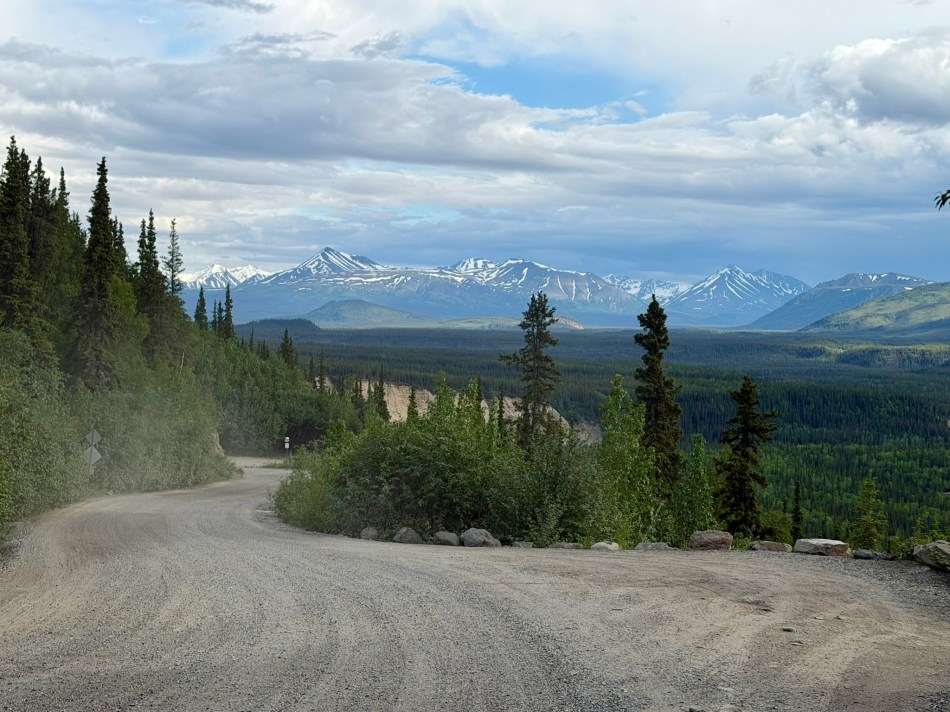
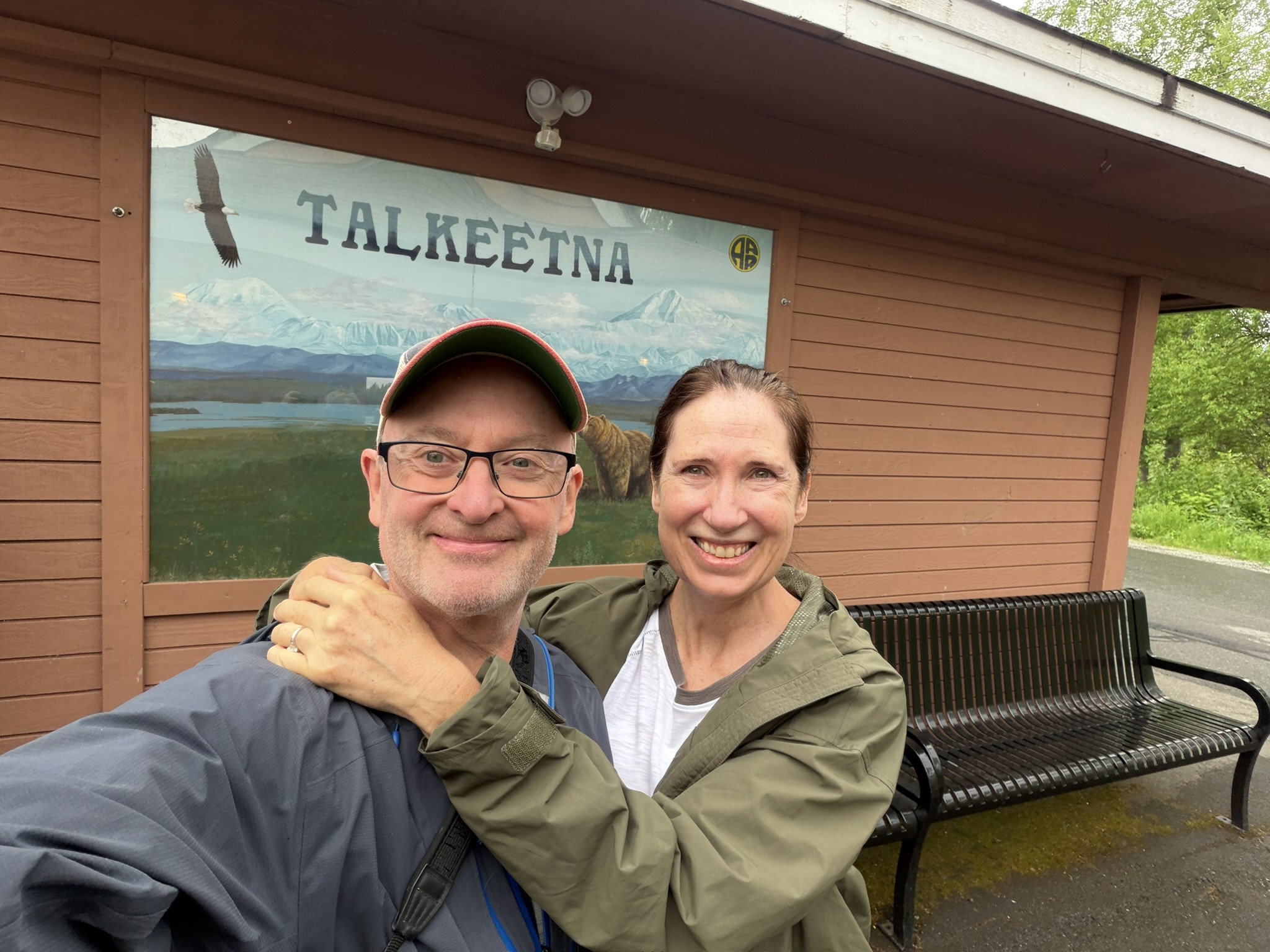
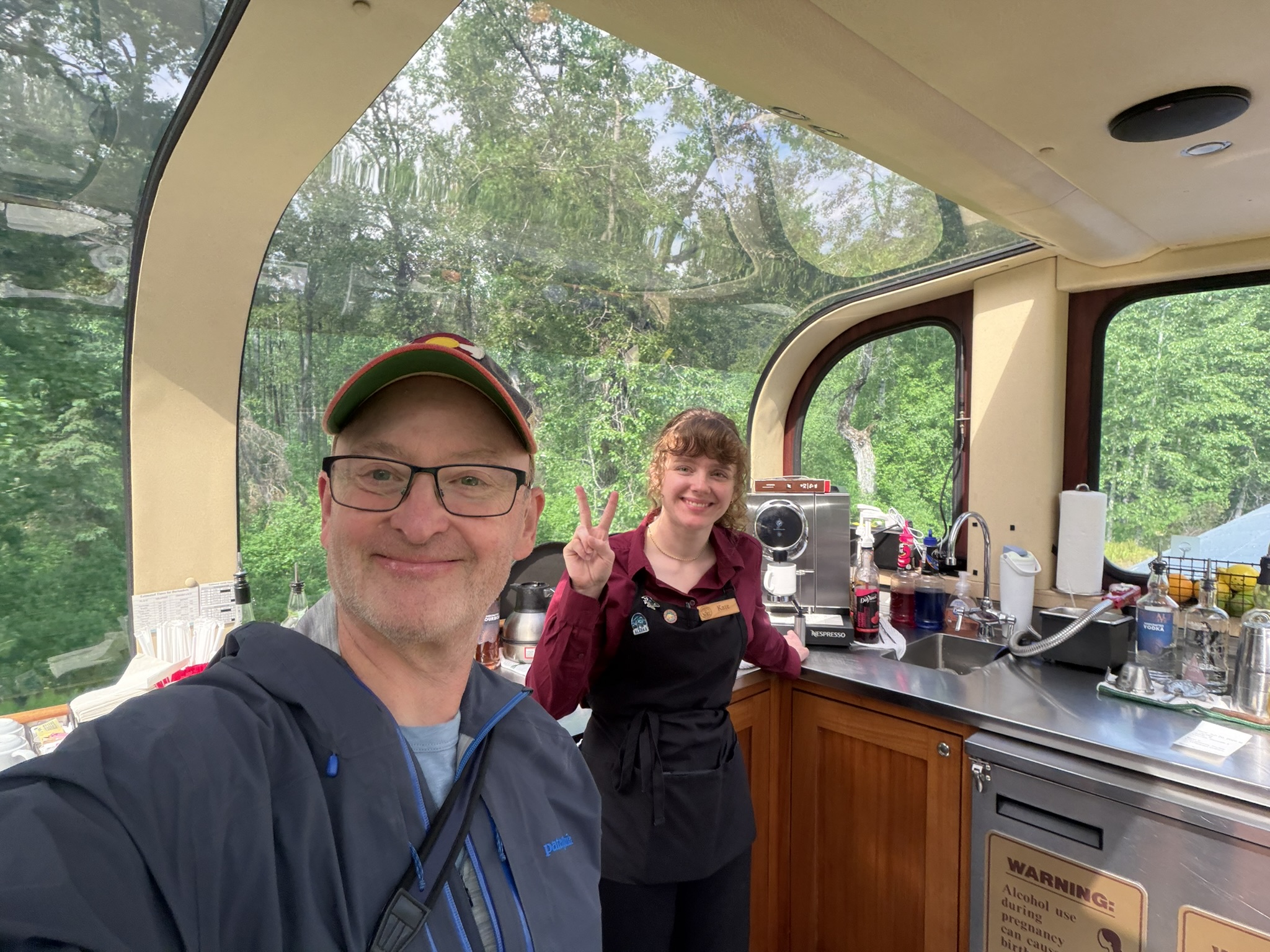
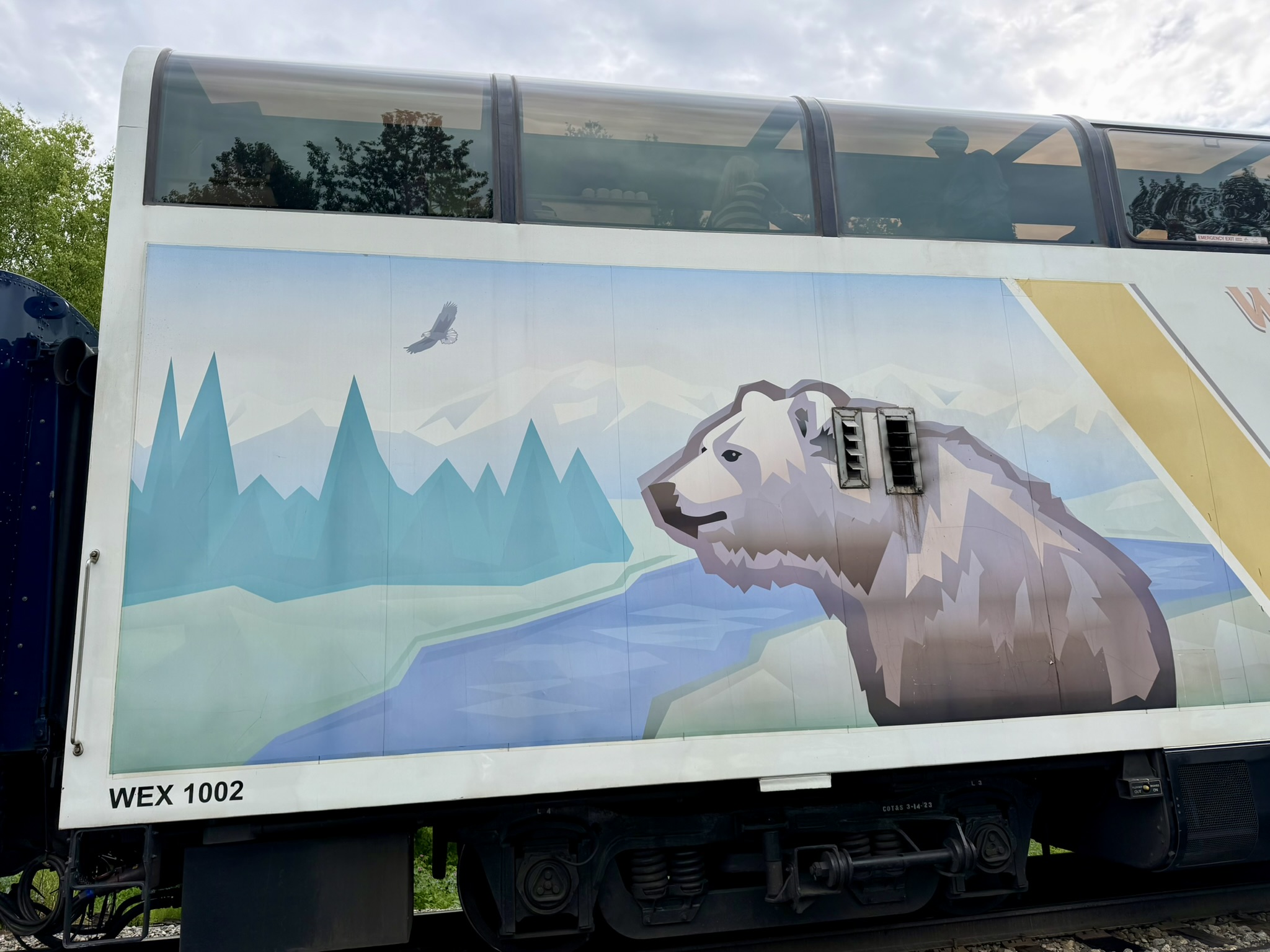
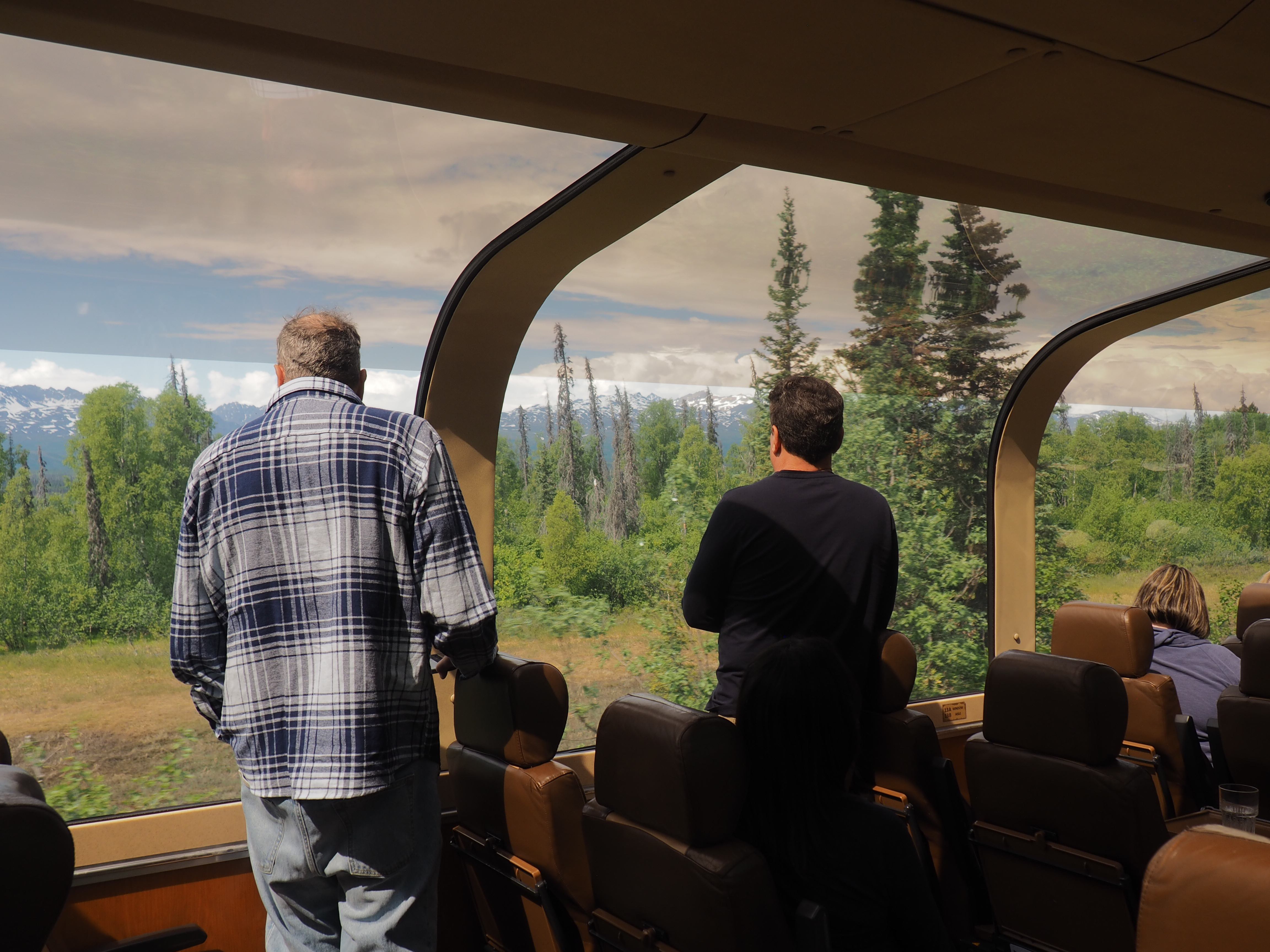
From Anchorage, we set out by bus to Talkeetna, the town upon which the TV show Northern Exposure’s Cicely from the 1990s was based. There, we boarded the Alaskan Railroad on one of its domed Wilderness Express cars. Next stop: Denali National Park.
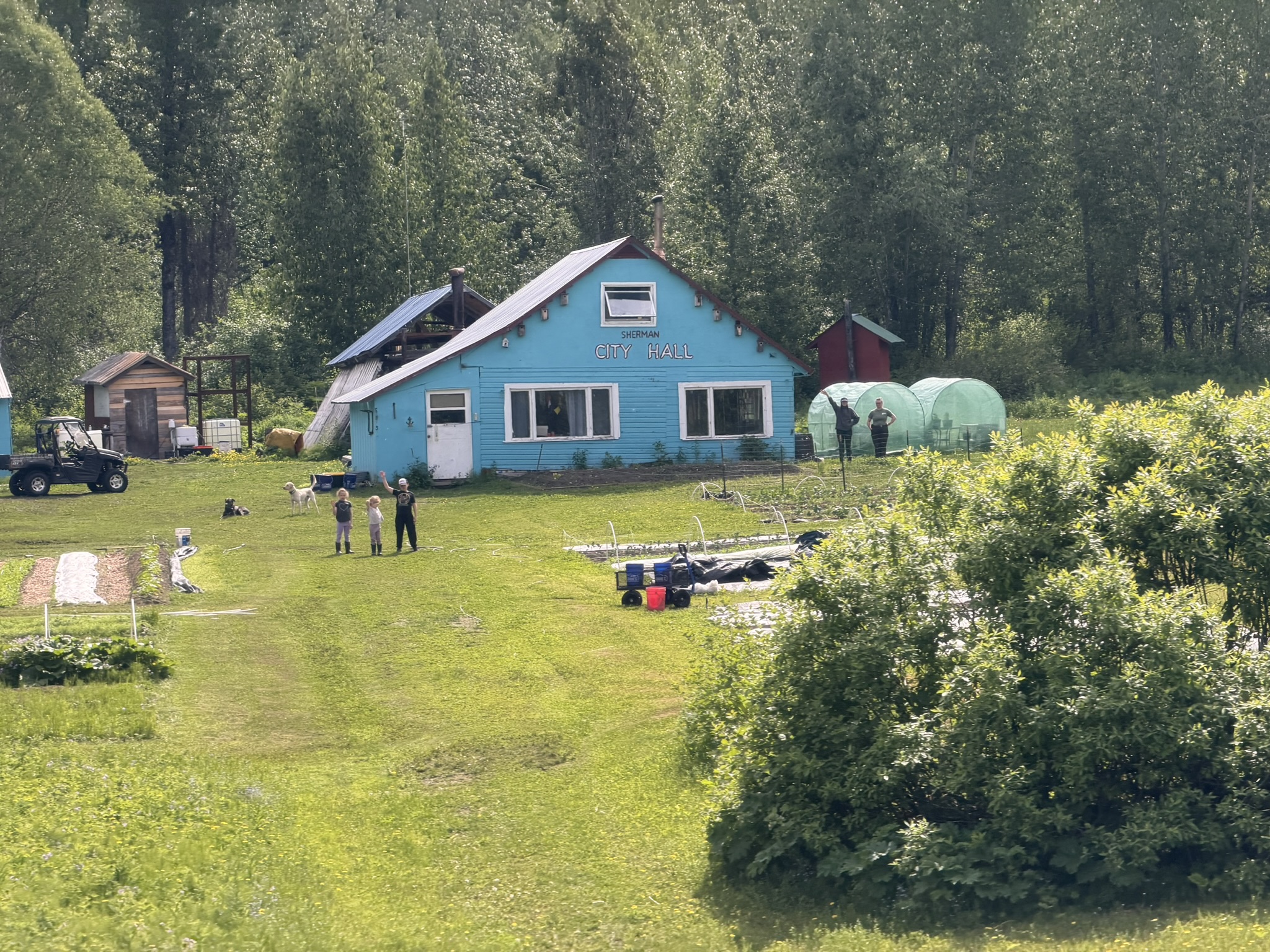
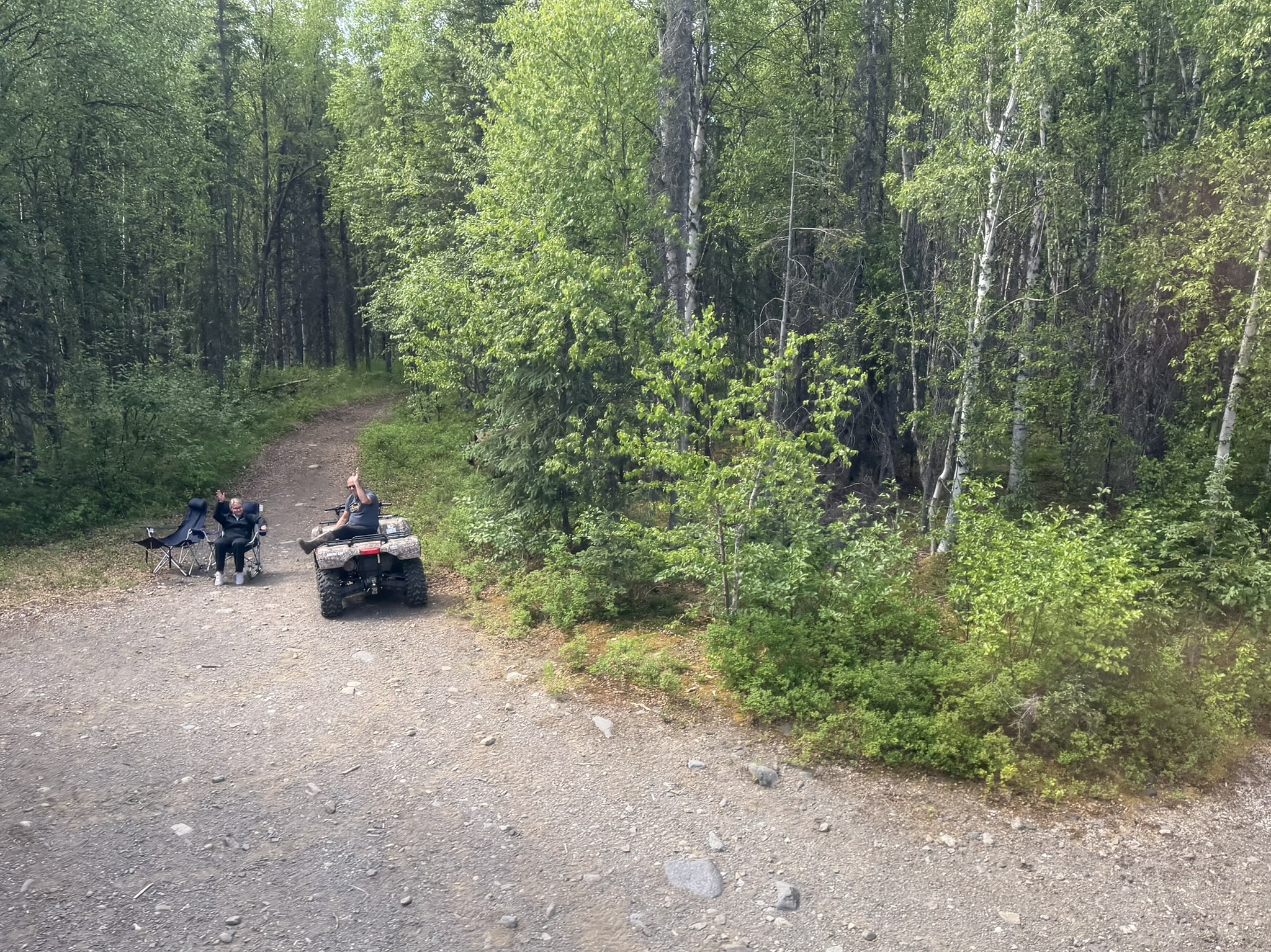
The Train. We chugged alongside the Susitna and Chilitna rivers and past “flag stop” settlements like Sherman, where the descendants of homesteaders stood in front of the “town hall” waving as we rolled past, and “towns” like Honolulu (named by a prospector who allegedly wished he’d gone there instead during a long, dark, Alaskan winter) and Colorado. Alaska has the last remaining flag stop train in North America where you can flag down the train when you want to hop on or hop off.
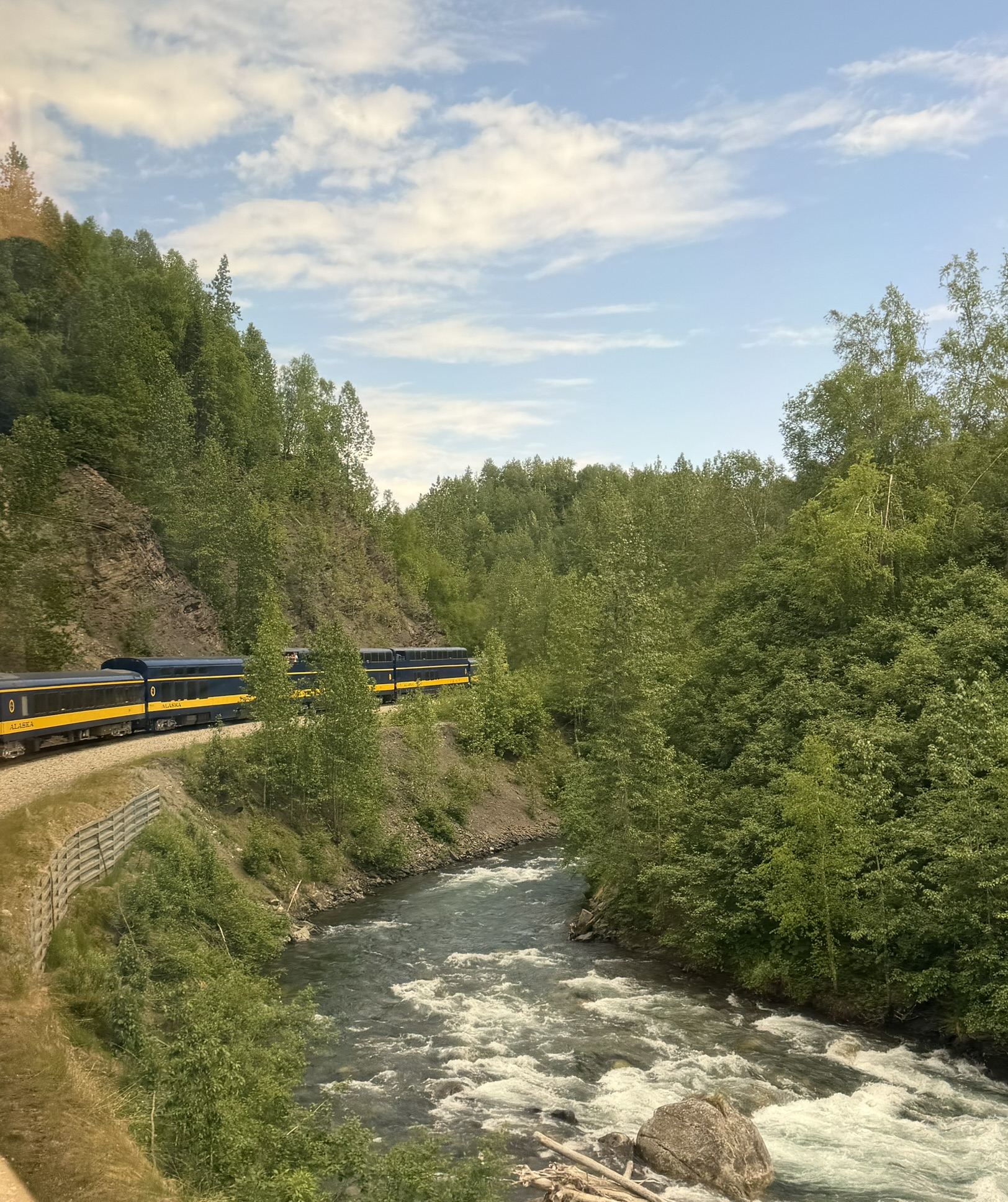
We passed by Cantwell where Sean Penn and the film crew stayed while making the film Into the Wild. We crossed the impressive Hurricane Gulch bridge (where the winds can blow at near hurricane force, fortunately not on the day of our crossing) and over our highest point of Broad Pass at 2,300 feet. From Broad Pass, it was all downhill to Denali.
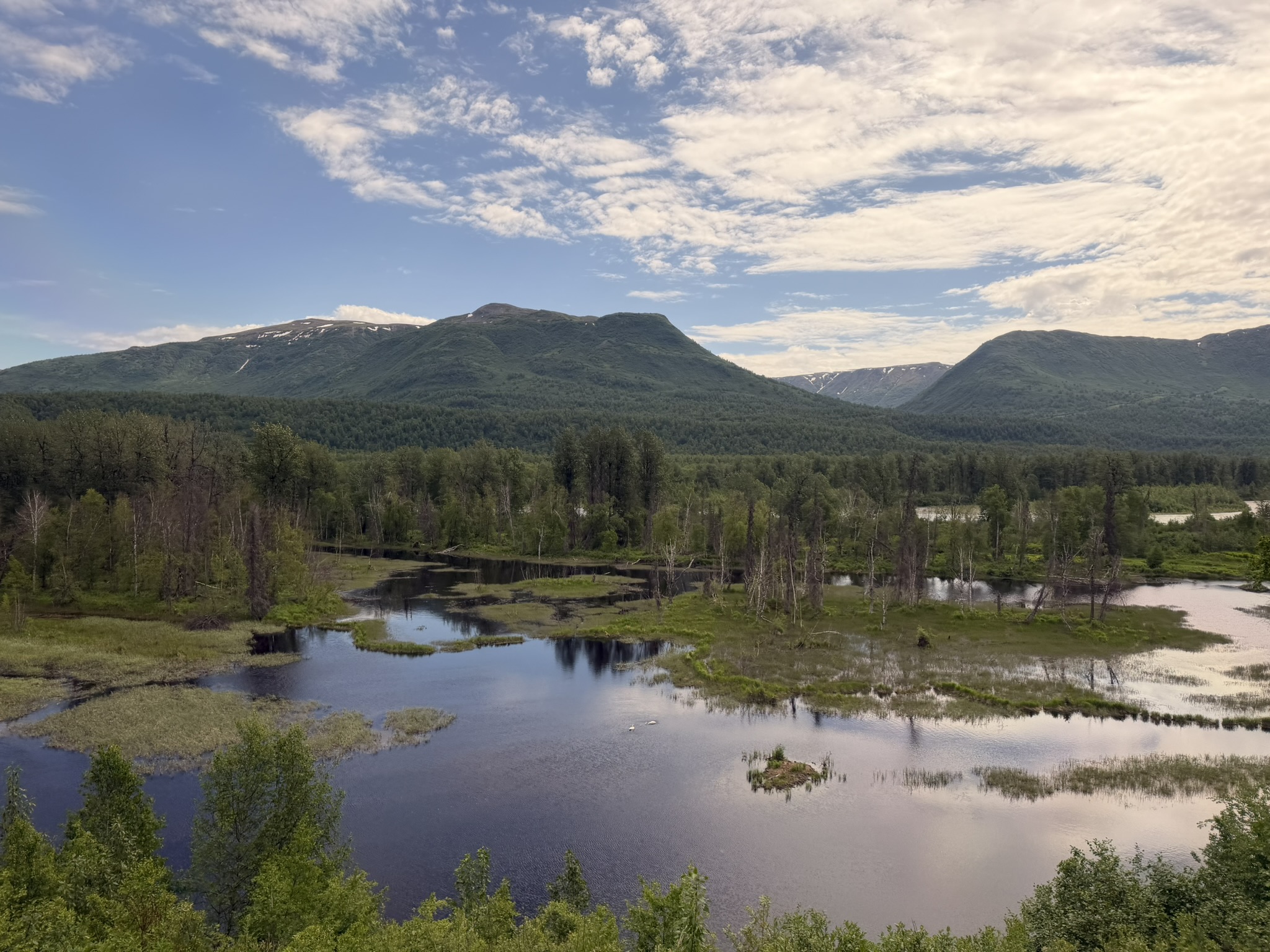
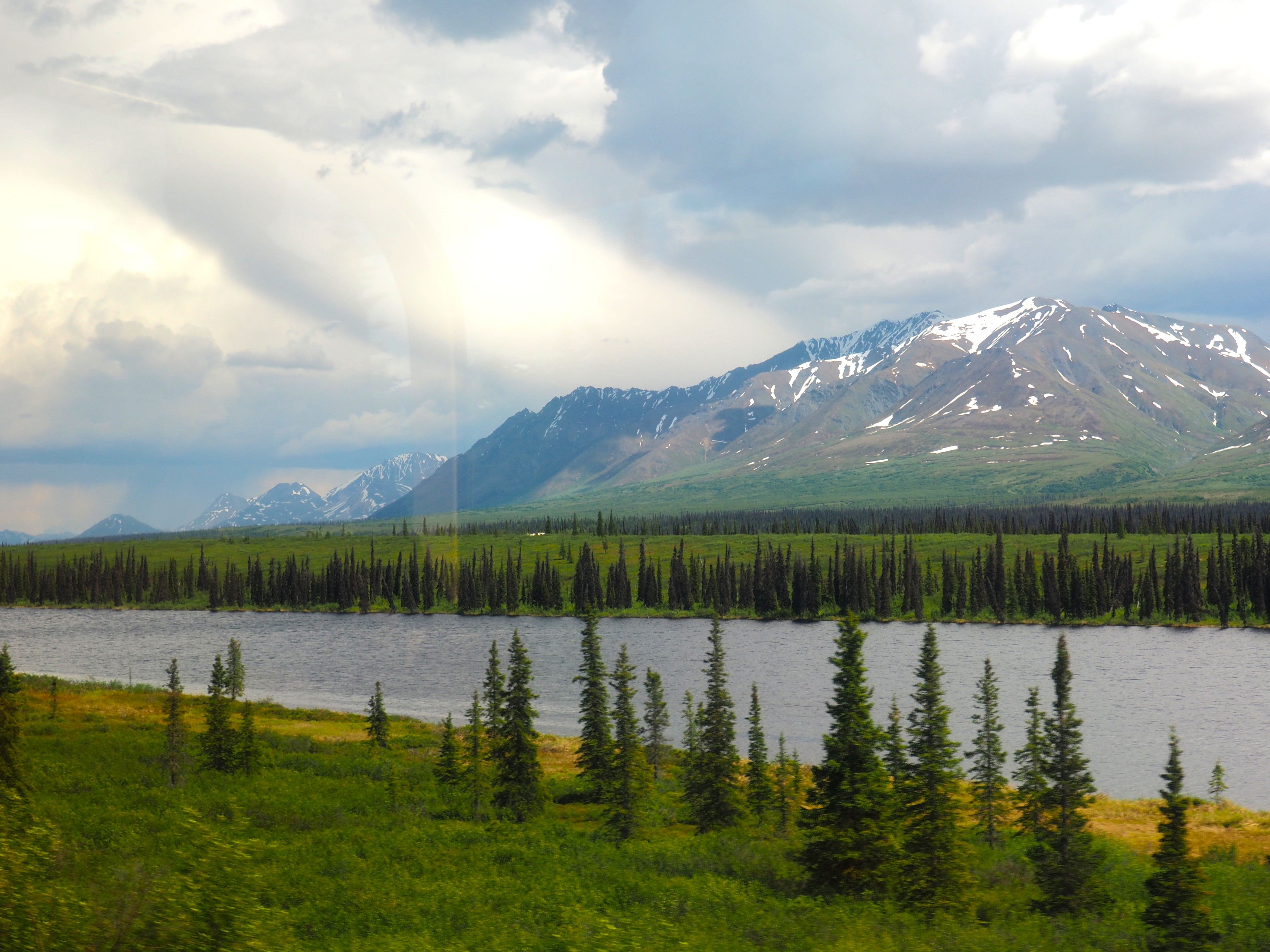
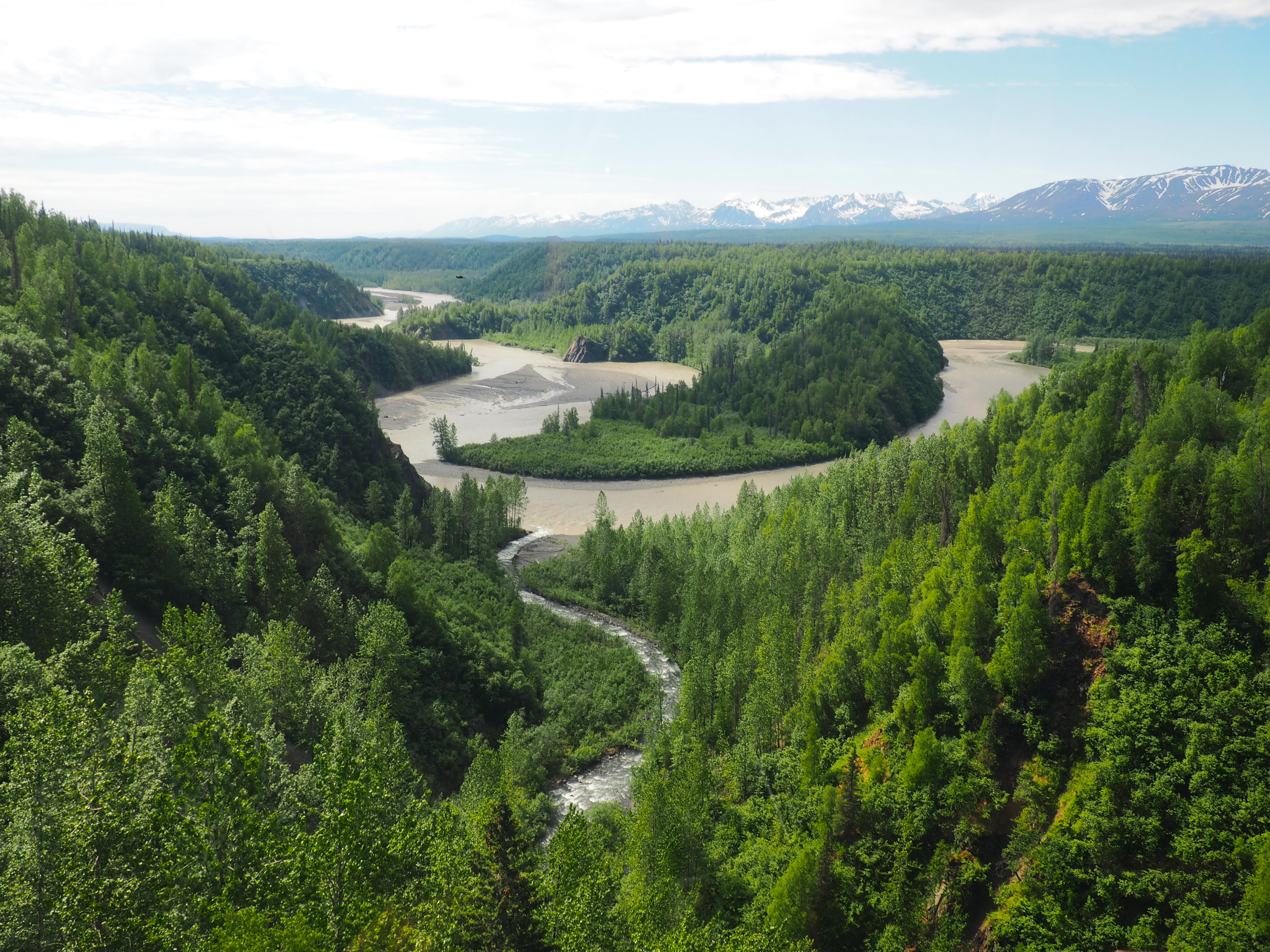
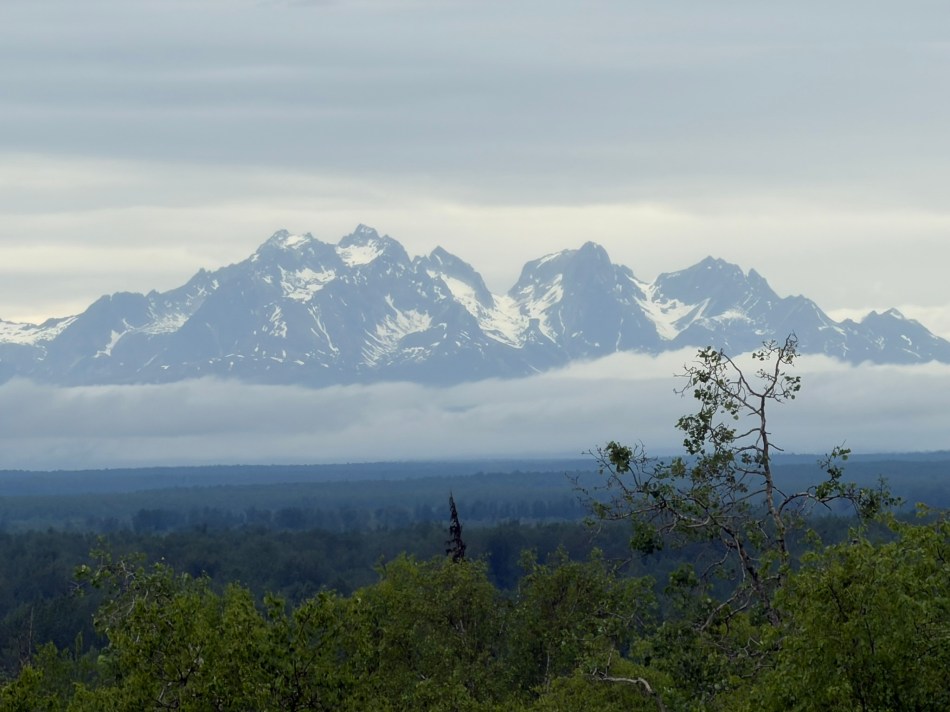
And along the way, “the Mountain”, as they call Denali here, revealed himself. In mythology, “the great one”, Denali is male. Whereas many mountains are referred to with a female pronoun Denali’s lady, Foraker, stands nearby while he lords over this land. In Athabaskan myth, Denali was formed during a chase between the Raven Chief and Yahoo, a native who was escaping with his new wife. The Raven Chief was sending waves to overtake Yahoo who used all of his medicine to turn the waves to stone, forming both Foraker and Denali to block the Raven Chief’s path. With a peak of over 20,300 feet, Denali is the highest point in North America and grows taller every year.
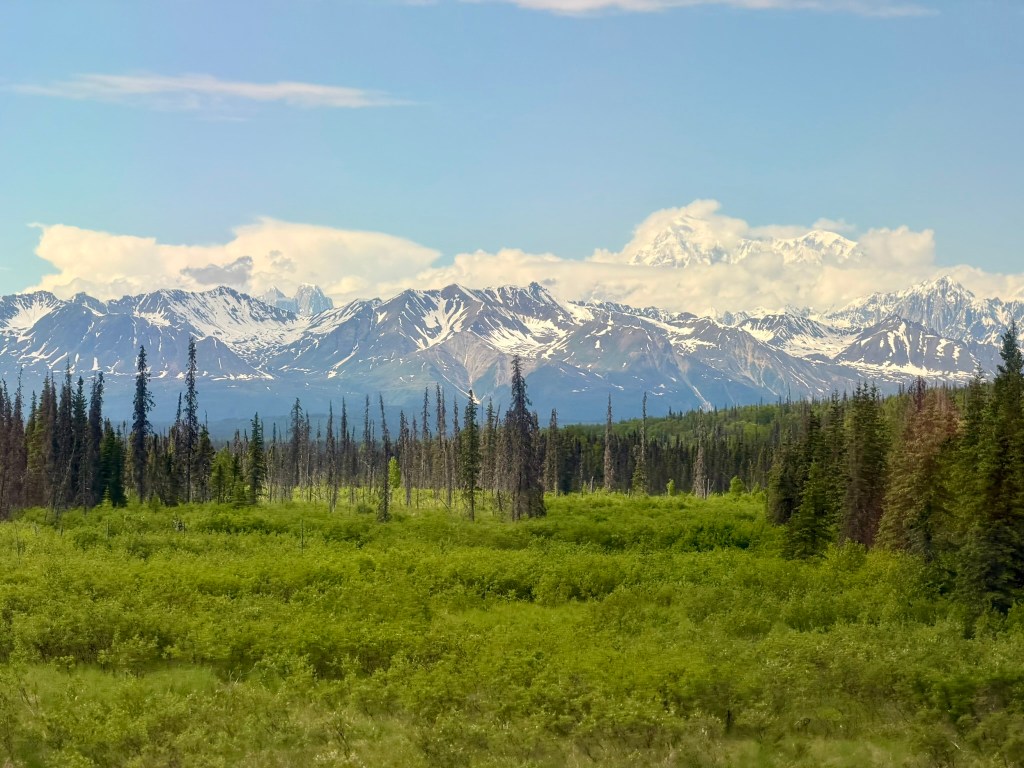
Denali National Park. Denali is the native name, and the one by which most Alaskans refer to it. It became known as Mount McKinley when a prospector, William Dickey, an advocate of the gold standard (of which Presidential candidate William McKinley also was), was trying to curry favor with the soon-to-be 25th President. McKinley never visited the territory of Alaska and allegedly didn’t do much to promote its statehood or much else, so around these parts, Alaskans (other than the big McKinley Tariff fans) still refer to “him”, the mountain, by his native name to which the federal government also recognized it between 2015 and 2025. Both of Alaska’s US Senators and all of its congressional delegation have advocated for legislation reverting the name back to Denali but, for now anyway, the Feds call it McKinley, and the state and most Alaskans call the mountain Denali.
We got lucky. “He” doesn’t reveal himself every day, often shrouded in clouds but we saw him while landing in Anchorage and of our days in and near the National Park, we saw him on 2 out of 4 of them.
Denali was recognized as McKinley National Park in 1917, becoming one of America’s first National Parks. Its designation followed the efforts of Charles Sheldon, a hunter and naturalist, who wanted to create a preserve to protect wildlife, particularly the Dall sheep, from unregulated hunting.
The Naturalist. Our first stop was to the Denali Discovery Center for a talk by an excellent Naturalist. This prepared us for our next day, when we went into the tundra of the park.
We learned all sorts of interesting tidbits about Denali’s interconnected wildlife ecosystem. For example, did you know:
- There are 39 species of mammals, 160 species of birds (20 of which are here year round) and no reptiles which make the park their home.
- There is one amphibious frog who freezes itself, its organs and eyes every winter, producing massive quantities of glucose to avoid organ failure until the spring thaw.
- The “big five” park mammals are the moose, bear, Dall Sheep, caribou and wolves.
- Mammals like the snowshoe hare (with its large paddle-like feet) and the grizzly bear turn white (the hares) or blonde (even platinum blonde) (the bears) in winter and brown up in summer, for camouflage.
- The hares can run up to 30 mph and leap 10 feet, but so can their primary predator, the lynx, who match their running speed but can exceed their leaping distance by a cool 15 feet (total: 25).
- Another favorite predatory dietary supplement are the red backed voles who burrow under snow but not safely enough away from coyote and fox who can hear them scratching and moving under the surface and dive, head first, into the snow, to retrieve them. Nor are they safe from the golden eagle who can see them from up to a mile away and dive-bomb at them at rates of 170 mph when they do. That vole never saw them coming.
- The golden eagle also will fly at those speeds to knock a Dall sheep off its perch on a ridge. Ouch.
- Despite popular perception, a Denali Grizzly’s diet is 90% vegetation and berries. But that doesn’t mean you should attract them. Feeding them or leaving food is a big time no-no. In fact, feeding them, and/or wolves, will nearly certainly seal their fate as it will retrain them to threaten humans visiting the park.
- While the bears do hibernate, in winter, they don’t sleep the whole time. They (or at least the mamas) are awake at least long enough to give birth and nurse the cubs. But the Arctic ground squirrel actually does sleep all winter, slowing their summertime heart rate from 500 bpm to just a single beat per minute.
- If a moose cow or mama bear isn’t fat enough to support a calf or cub at the beginning of the mating season, the moose will elect not to mate, and a bear’s embryos won’t implant unless they are robust (I would never say fat) enough to carry the cub full term.
- Denali Park covers more than 9,400 square miles of terrain. Its temperatures can range from 90 degrees in summer to below 50 Fahrenheit in winter. But, surprisingly to us, it only receives about 12 inches of precipitation annually.
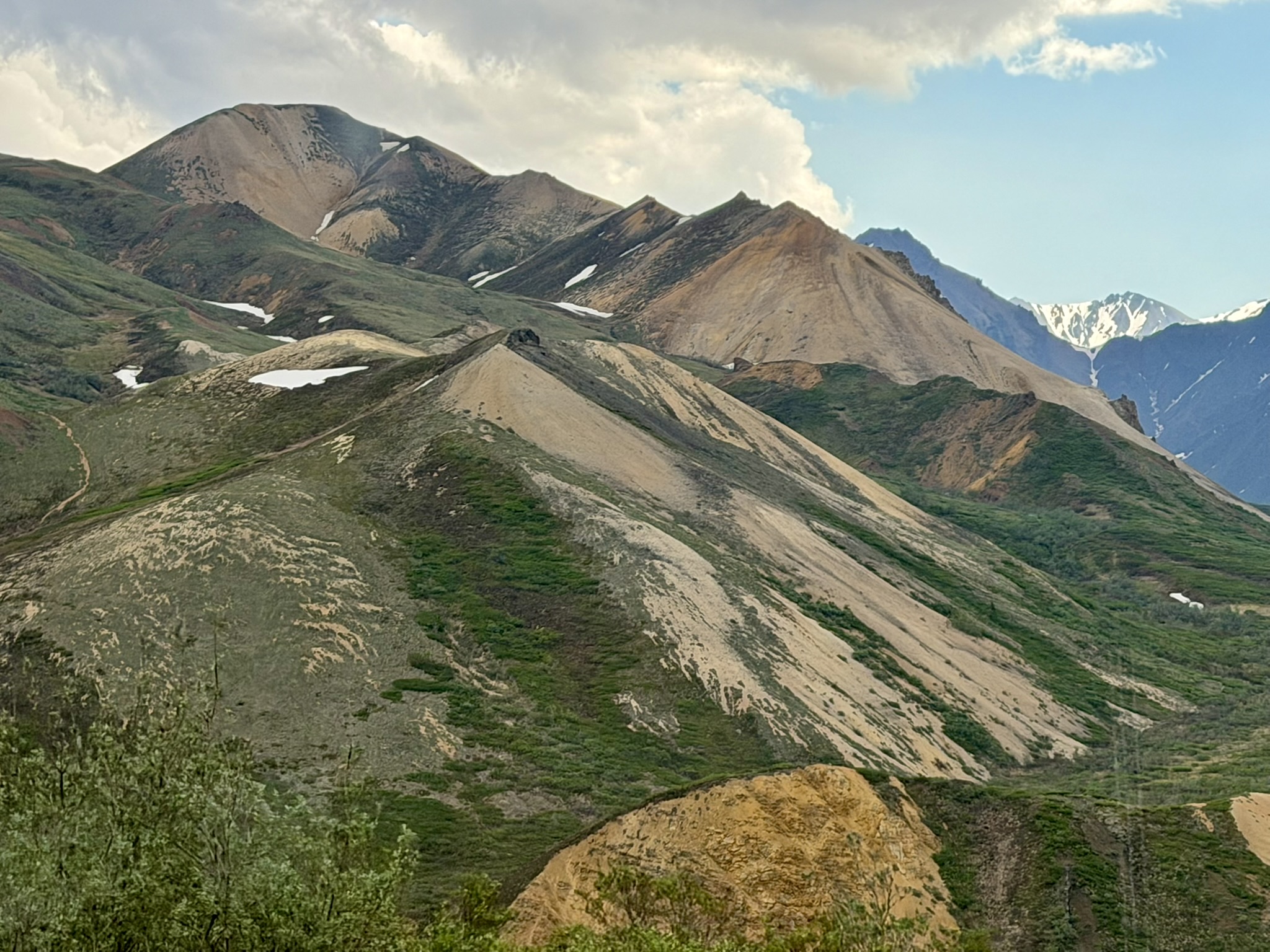
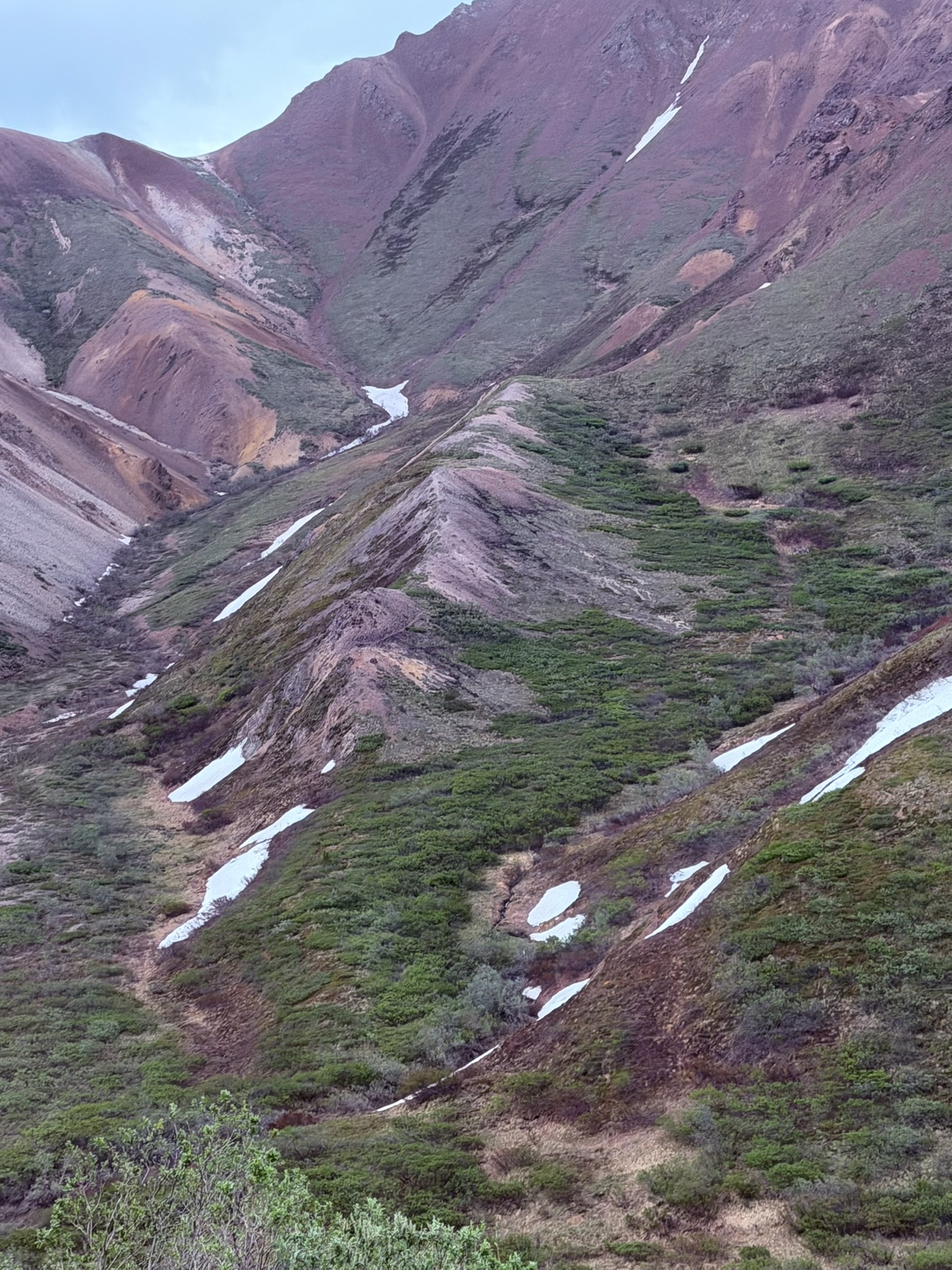
The Tundra. The next day, we boarded a school bus, with modified comfortable (relatively so) seating and seat belts (something the school buses of my childhood never had in the “survival of the fittest” 1970s) and headed into the park on “the park road” (there’s one) to try to spot some of the big five (moose, bear, caribou, Dall sheep and, if we would be really, really lucky, wolves).
Our little, intimate band of 13 pre-cruise expeditioners was joined by about 30 Lutherans from Southern California for our tundra tour.
We were all on duty, scanning hillsides with eyeballs, camera lenses and binoculars for wildlife. It took a while, but we did spot one grizzly (deep in the bushes and hard to see), a family of Dall sheep way up on a ridge, several snowshoe hares, a marmot, and several caribou. And after we dropped the Lutherans, the band of 13 found a mama and moose calf feeding in the woods.
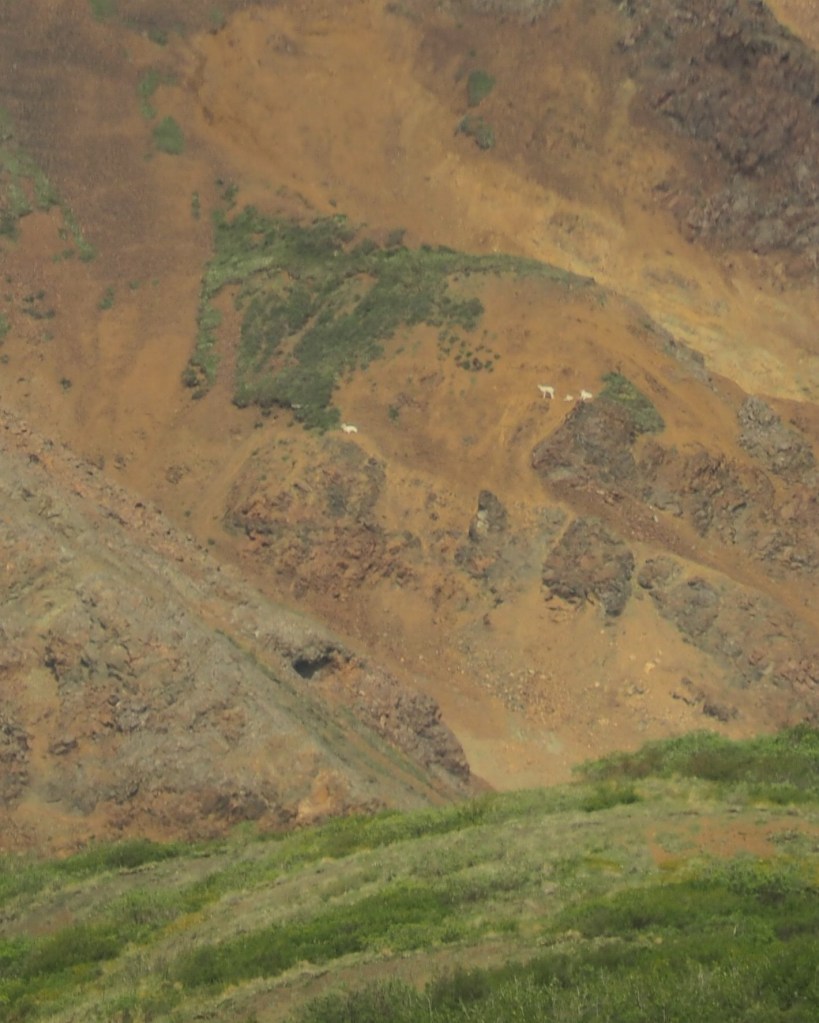
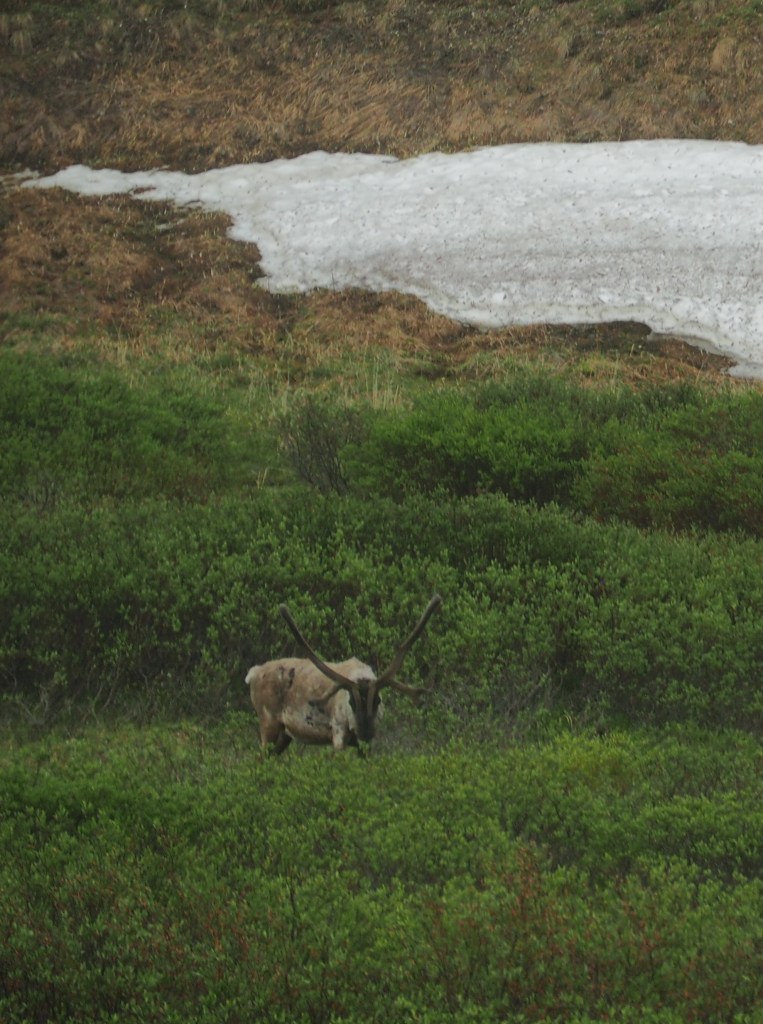
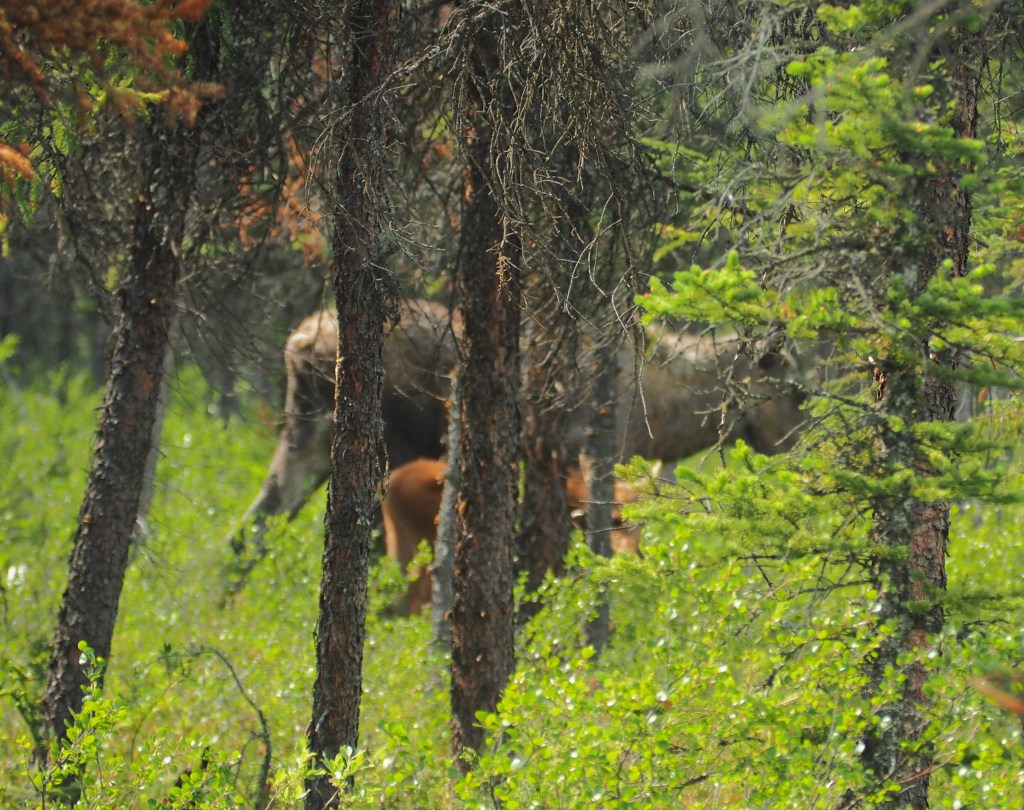
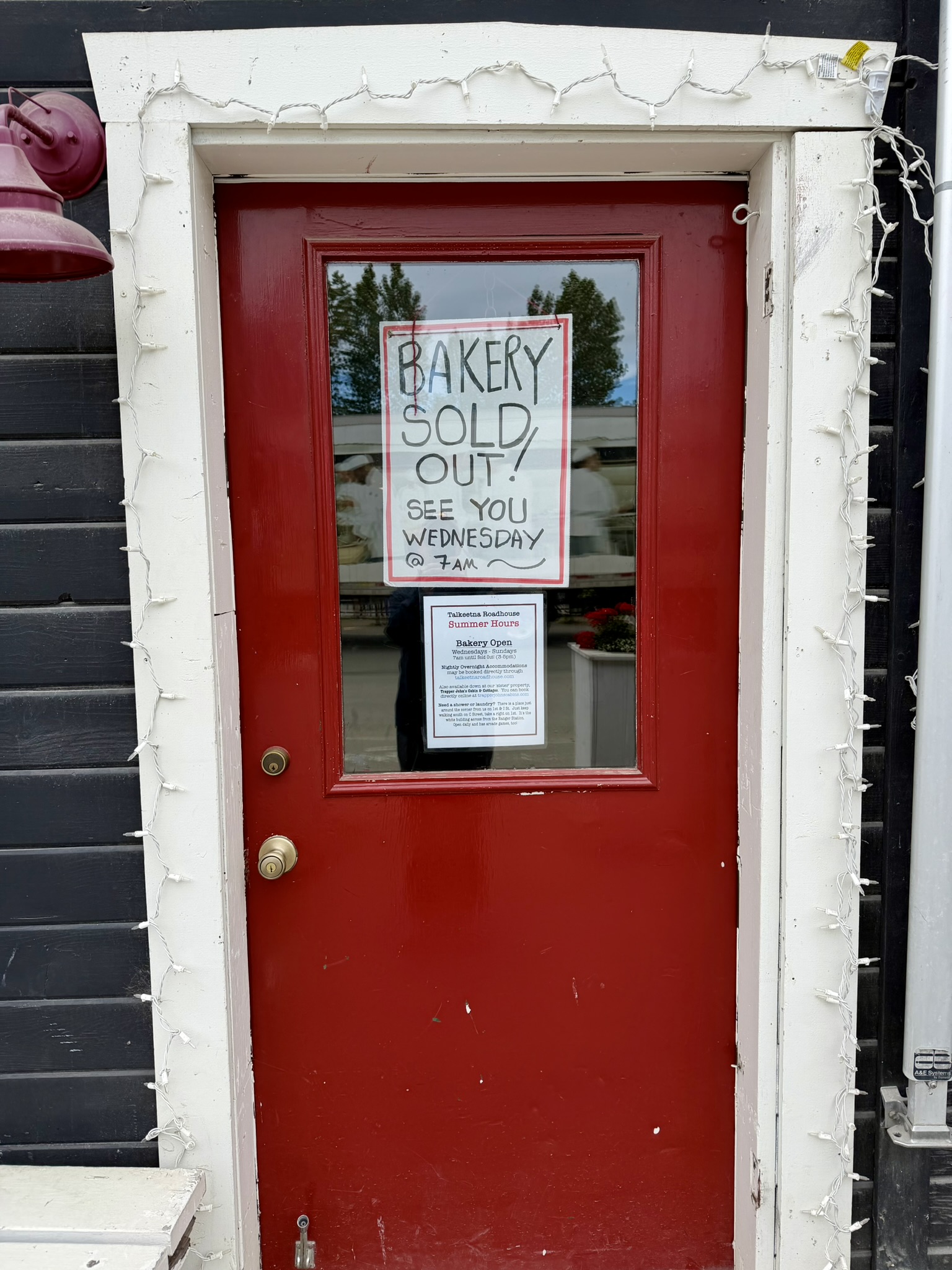
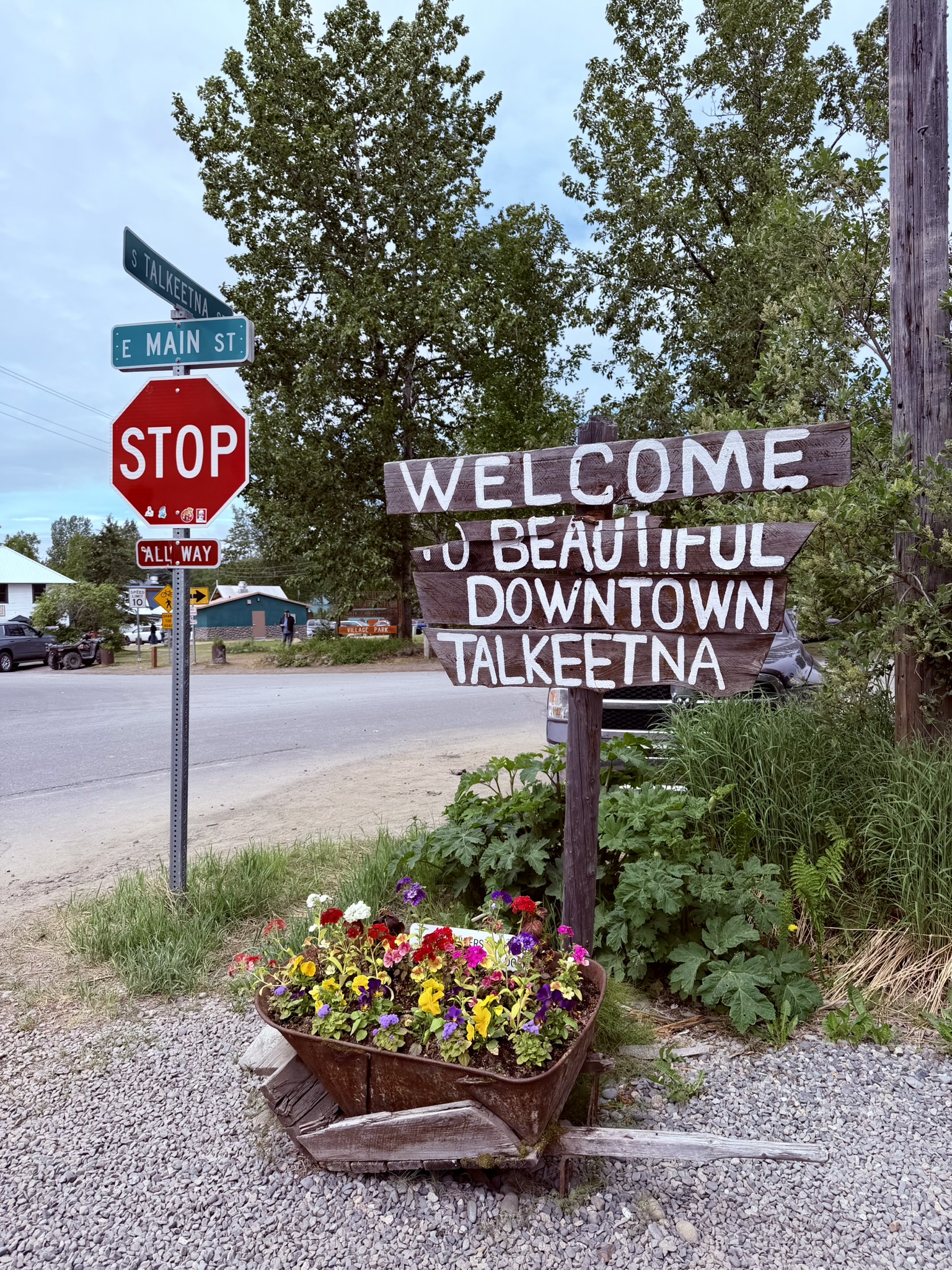
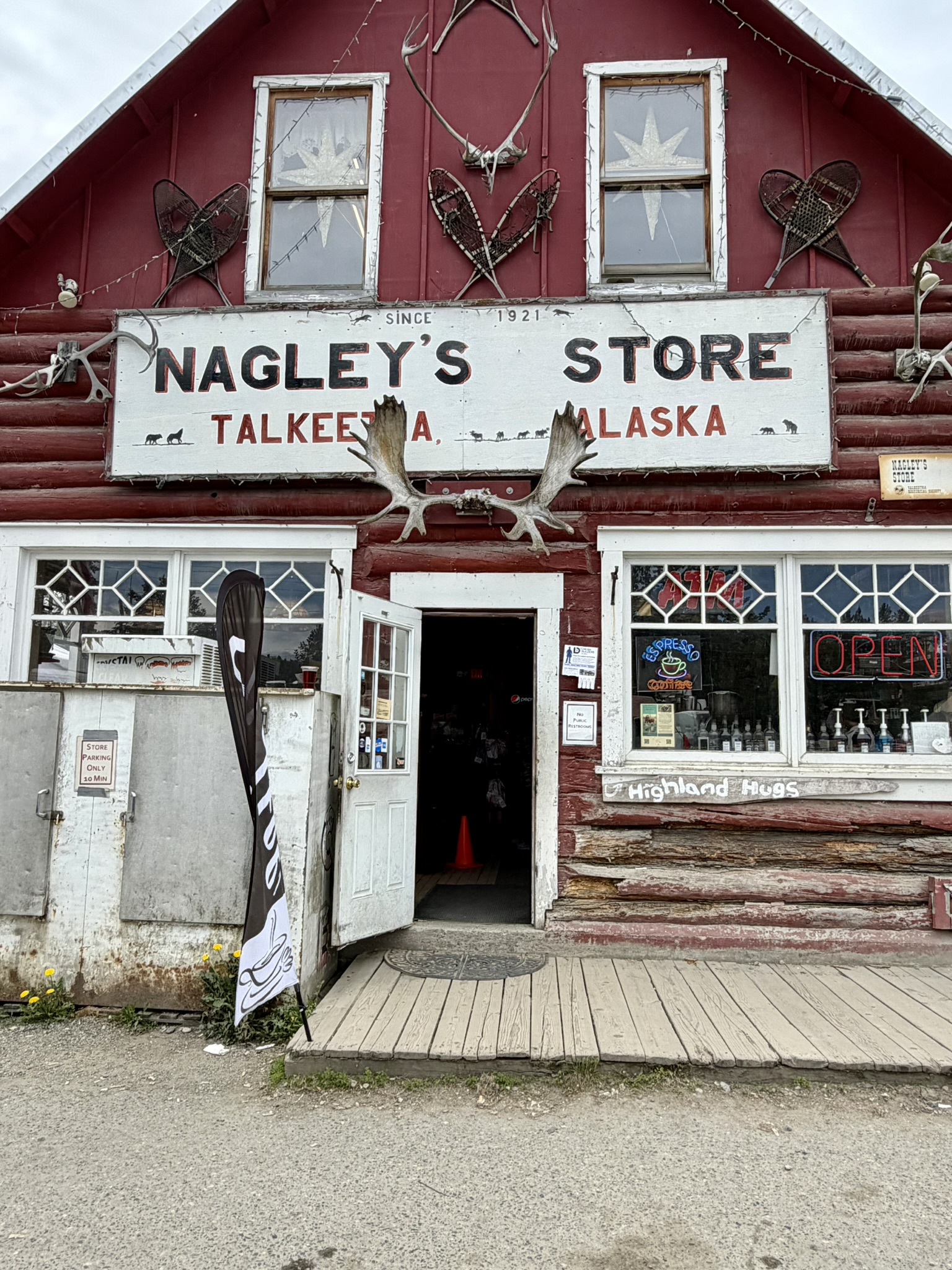
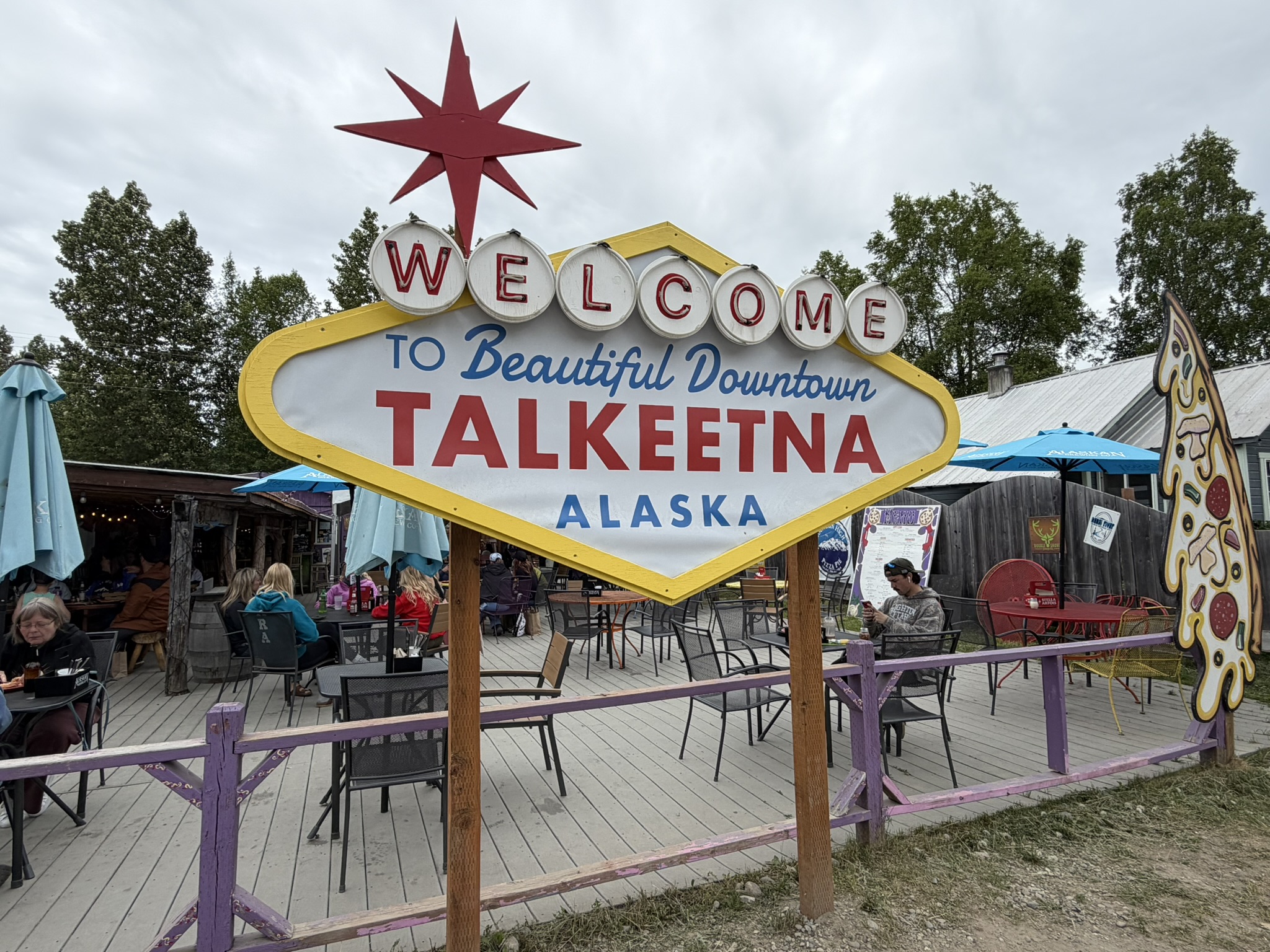
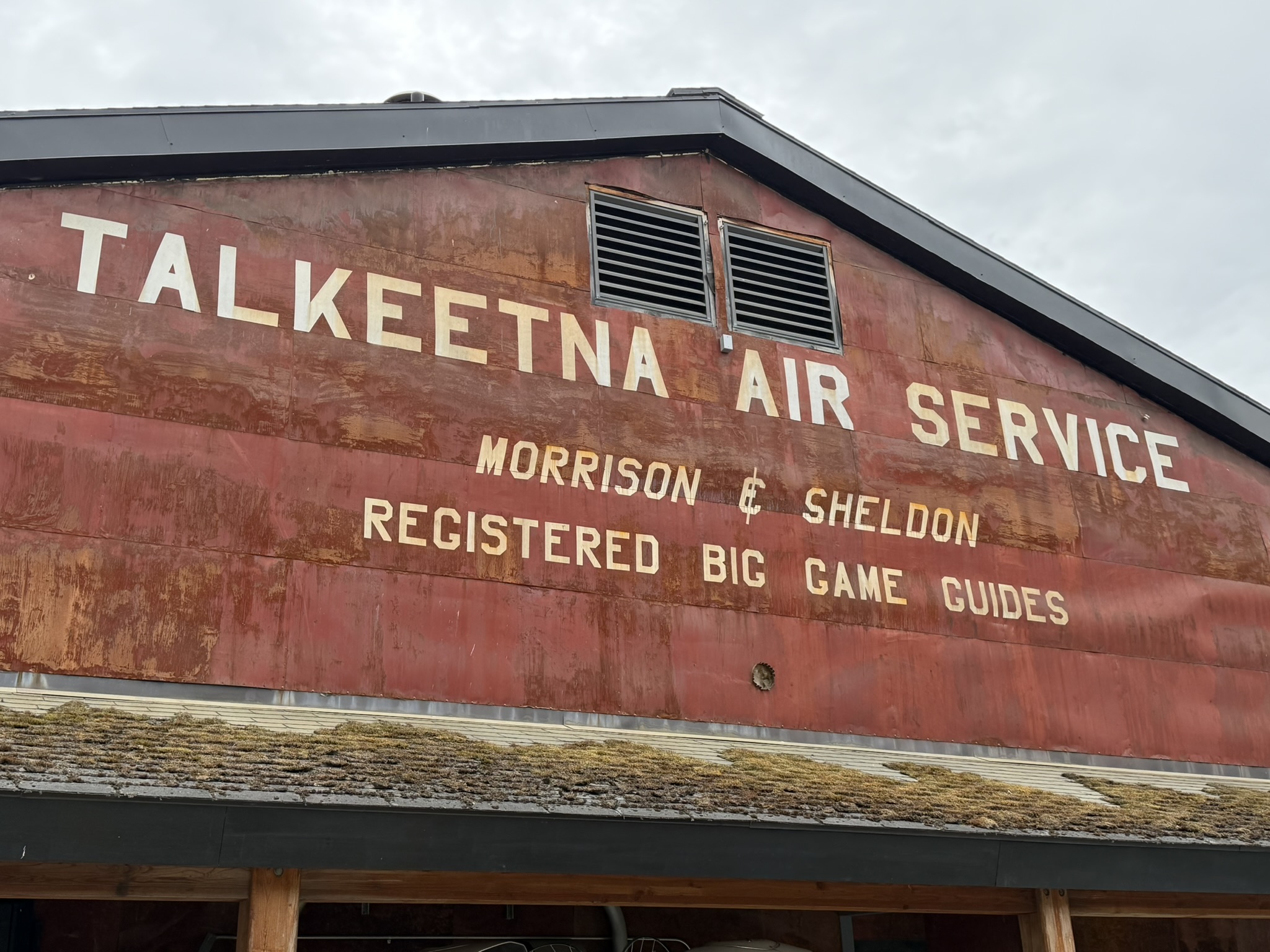
Talkeetna. On our way back to Anchorage, we stopped in Talkeetna for lunch and a short two-hour opportunity to stretch our legs and work off some of the calories stacking up with so many hours of sitting.
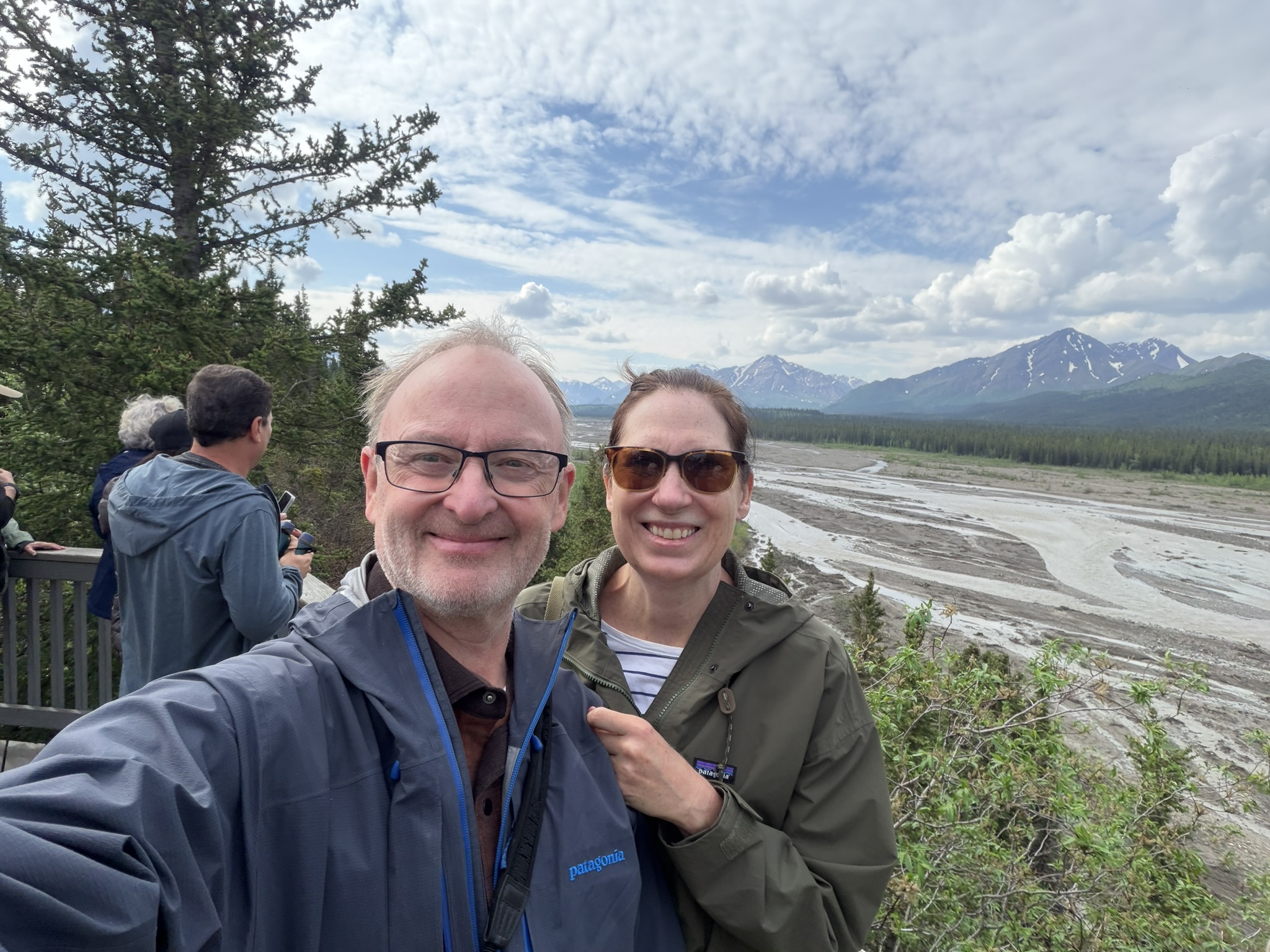
We wandered around this funky little town, stopping in to see early settler cabins and to the park ranger station for a Denali National Park passbook stamp. It is from this station that all Denali hikers retrieve their permits before checking in for the three-week attempt to summit North America’s tallest peak and park namesake mountain.
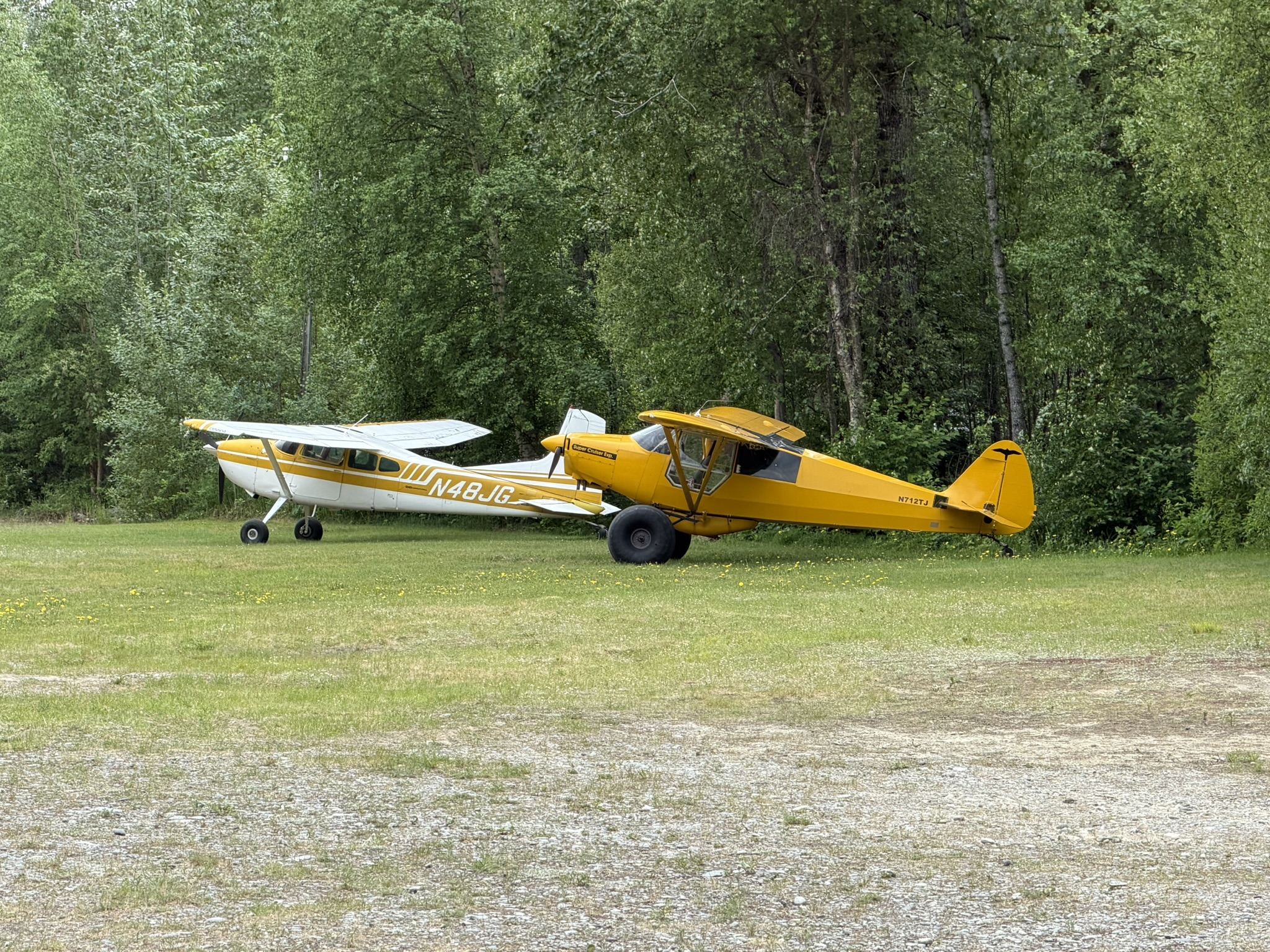
The massive, interconnected ecological system of Denali is magical to behold and well worth preserving. Like all of our National Parks, this “American treasure” deserves to be saved and protected for its inhabitants and for future generations of Americans and international tourists to visit, learn from and appreciate.
Sources:
- https://www.alaska.org/detail/hurricane-turn
- Alaskan Rail guide, June 2026.
- Crystal Cruises pre-cruise Denali add-on tour guide, June 2026.
- https://npshistory.com/publications/dena/hrs/chap1.htm
- https://www.nps.gov/dena/learn/historyculture/legend-of-denali.htm
- https://www.nps.gov/dena/learn/historyculture/mountain-name.htm
- https://alaskapublic.org/news/politics/washington-d-c/2025-12-09/murkowski-tries-again-to-change-mountains-name-to-denali
- https://www.denalijeep.com/history-of-denali-national-park-the-denali-highway/


0 comments on “The Summer Solstice in Denali”