
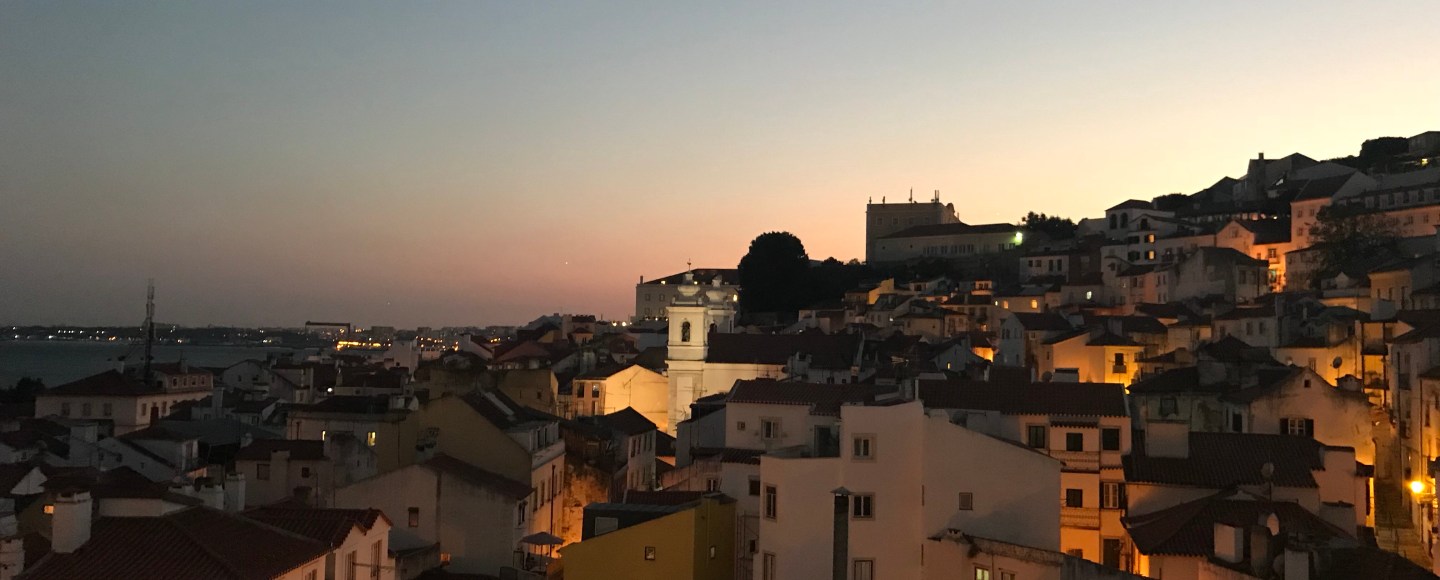
Obviously, there is a lot to do and see in Lisbon proper. We have a walking tour we take visitors on which can be broken up into a couple of days or done in one, relatively aggressive day (with many cuts from the list below).
If you break it up, we suggest:
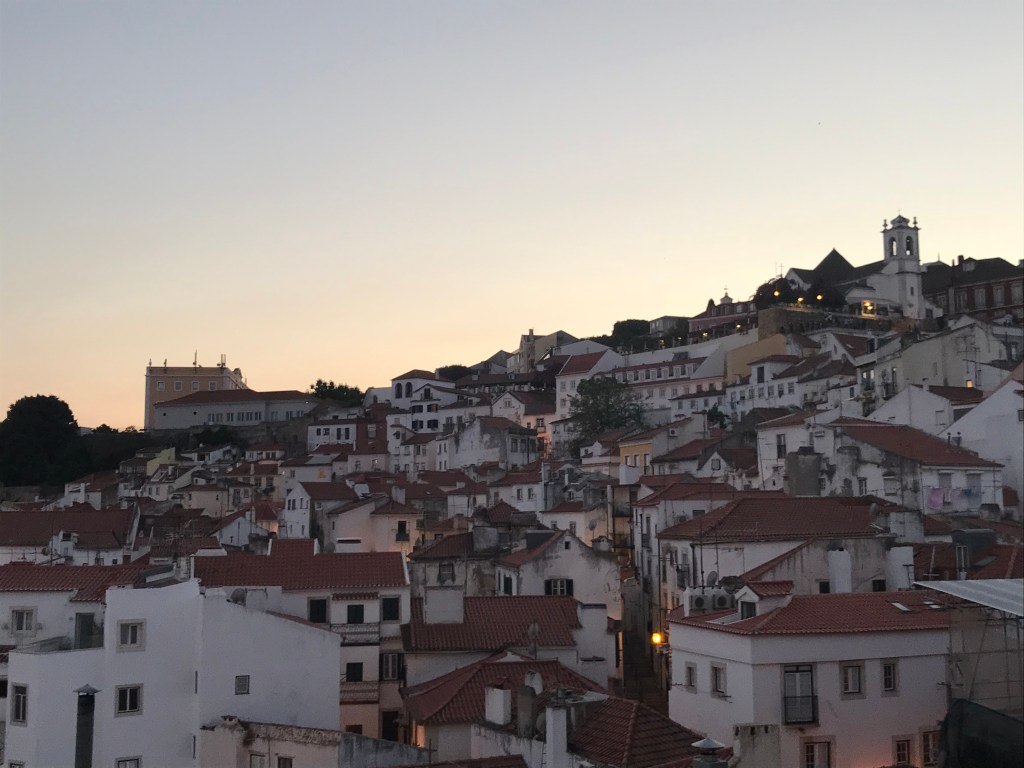
Day One: Alfama – Start out at the Praça do Comercial where Lisbon meets the Tagus River. There’s a lot to explore there including the cafes and the Lisboa Story Center which is a good museum for kids telling the story of Lisbon. From there, you can climb the hill into the Alfama neighborhood where you can visit the Sé (the Cathedral), the Castelo de São Jorge (the reproduction of the historic castle atop the hill), and the Roman Ruins and museum nearby. Stop for lunch (on the back side of the Castle is the ever popular Cervejeria Ramiro but you may want to take a Tuk Tuk or cab there or hit it for lunch on day two as there are lots of good lunch options in Alfama proper. We are fond of Alfama Cellar and its very nostalgic for us as it is where we ate our first meal in Lisbon) and check out several of the Miradouros (viewpoints) of the city, castle and the river.
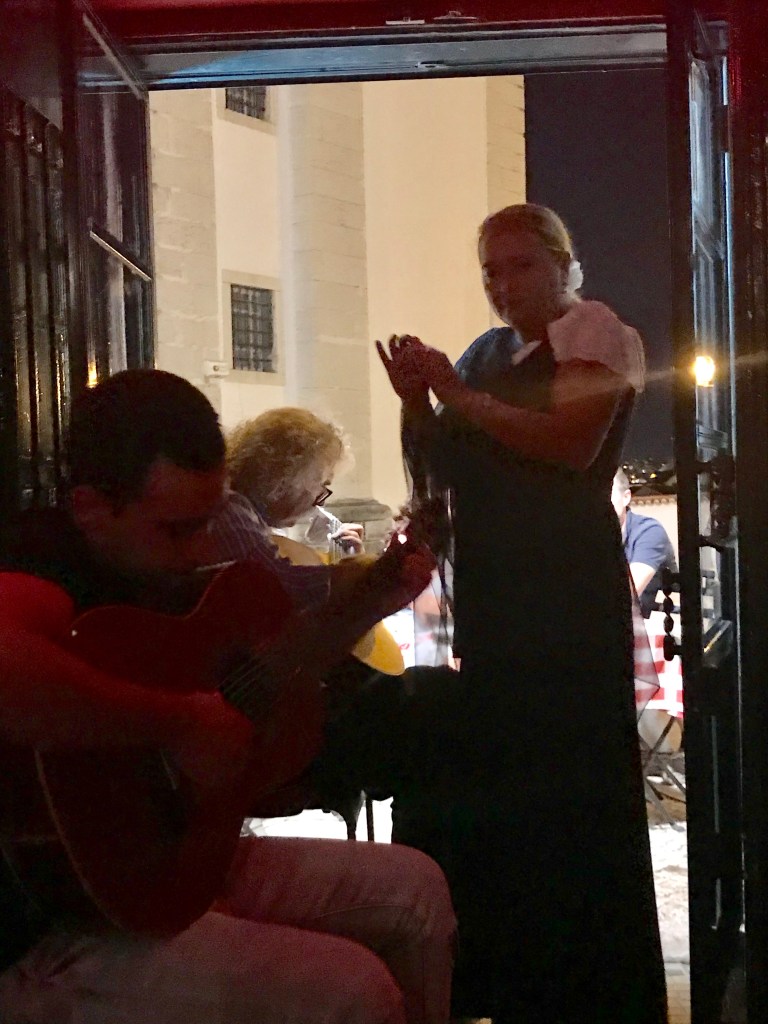
Another great view of the city can be obtained from the roof of the Pantheon. If you’re staying overnight, check out the Fado music in one of the many Fado bars near the Sé, most require you sit for dinner too, so we recommend Fado e Fado. For a brewpub with good snacks try The Crafty Corner just down the road on the right side of the cathedral.
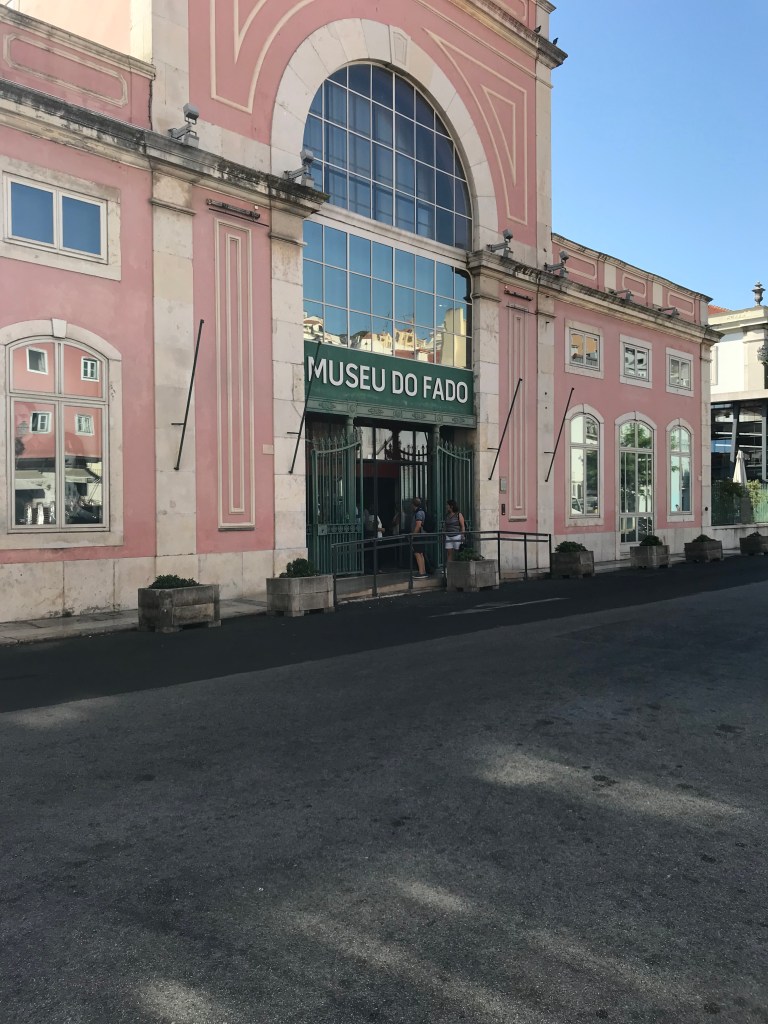
Our first four nights in Portugal were spent in Alfama and it has a special place in our hearts. The Military Museum (museu militar) and Fado Museum are also worth checking out, if you have the time.
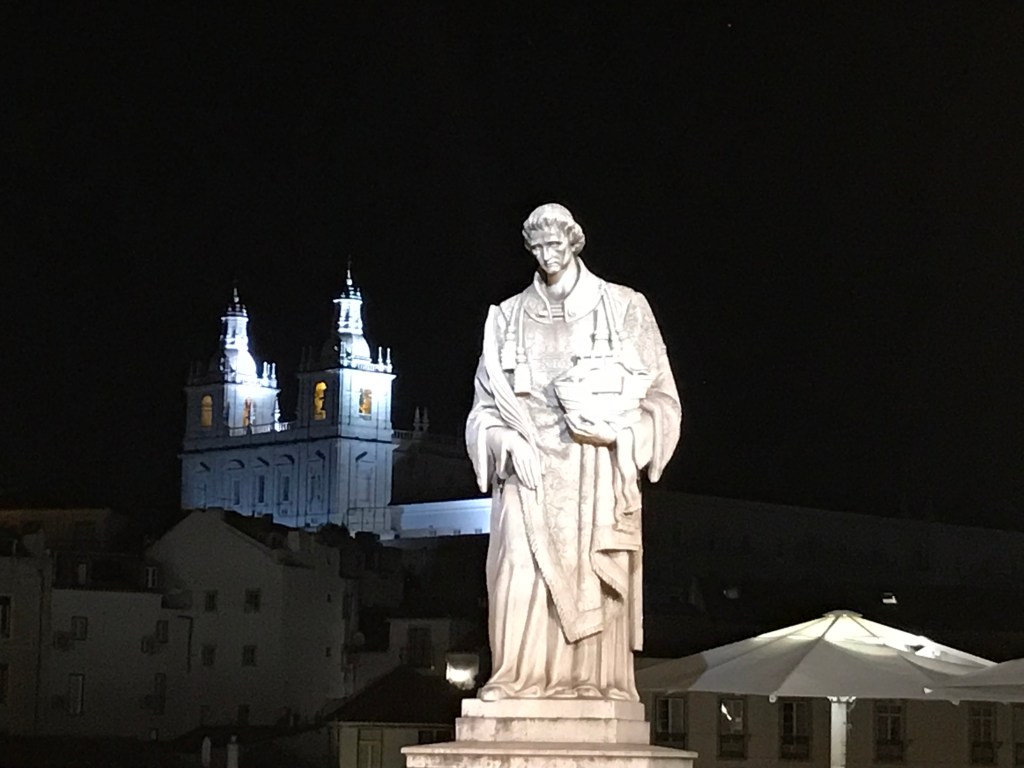


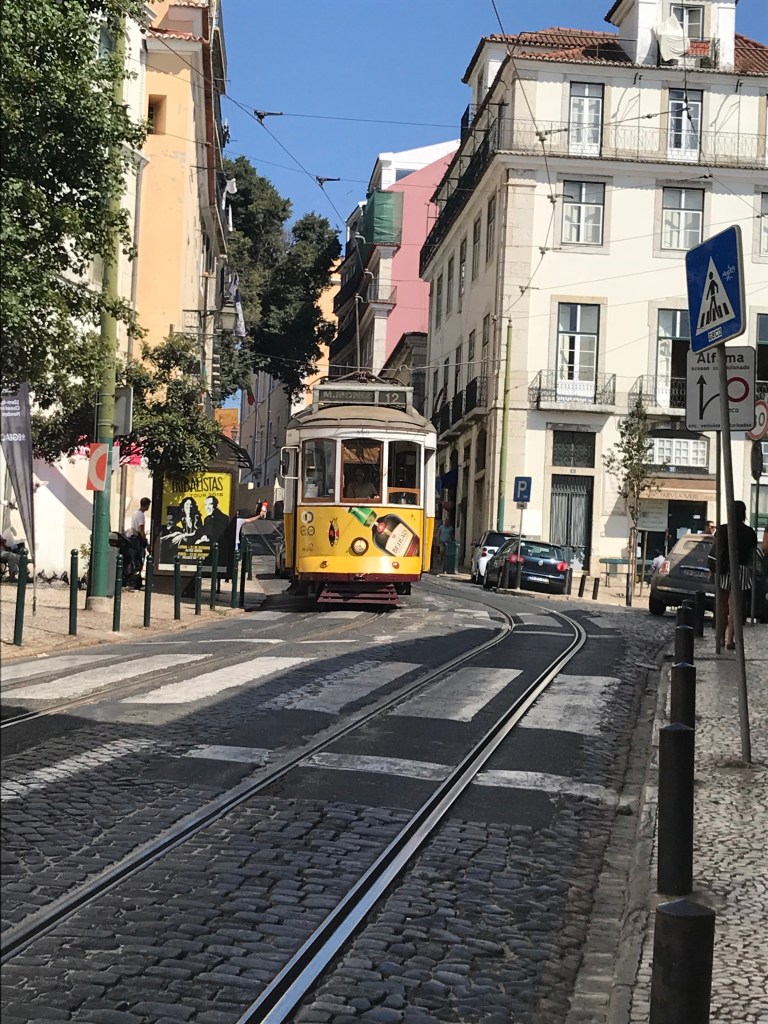
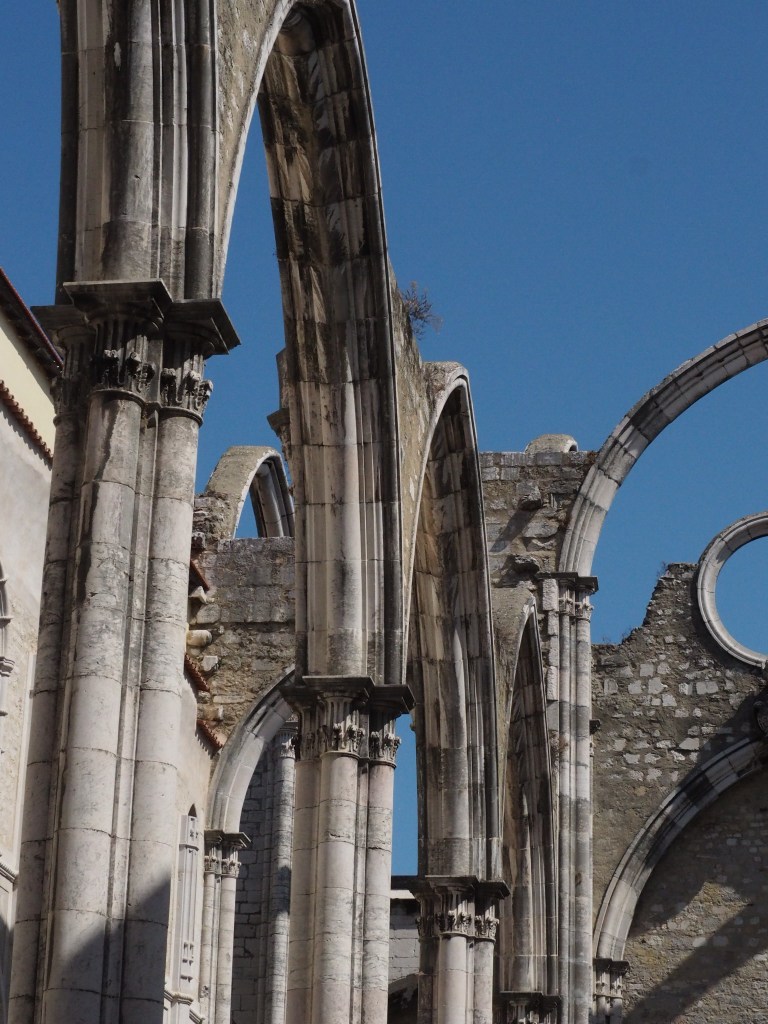
Day Two: Bairro Alto and Baixa – Explore the Santa Justa lift, the Convento do Carmo, Rossio Square and historic São Domingos Square. Eat lunch in Bairro Alto (or hit up Ramiro a fifteen-minute walk up the road from Rossio (avoid Martim Moniz Square though, it has gotten seedy) and have dinner in Bairro Alto instead). There are any number of good spots by the Convento do Carmo (Oficina do Duque is one of our go-tos. We love the little fish and beef hamburgers as a starter). This is also a great neighborhood in which to stay over if you’re overnighting.
If you’re into churches, the Church of São Roque, just up the stairs from Oficina do Duque, is worth visiting. It has a beautiful faux-domed ceiling and is home to the “world’s most expensive chapel” of St. John not just for its construction but also for the fact that it took 5 years to build and was its materials were transported here by three separate ships. Finish your day at the Miradouro de São Pedro de Alcântara and admire Lisbon across and below.
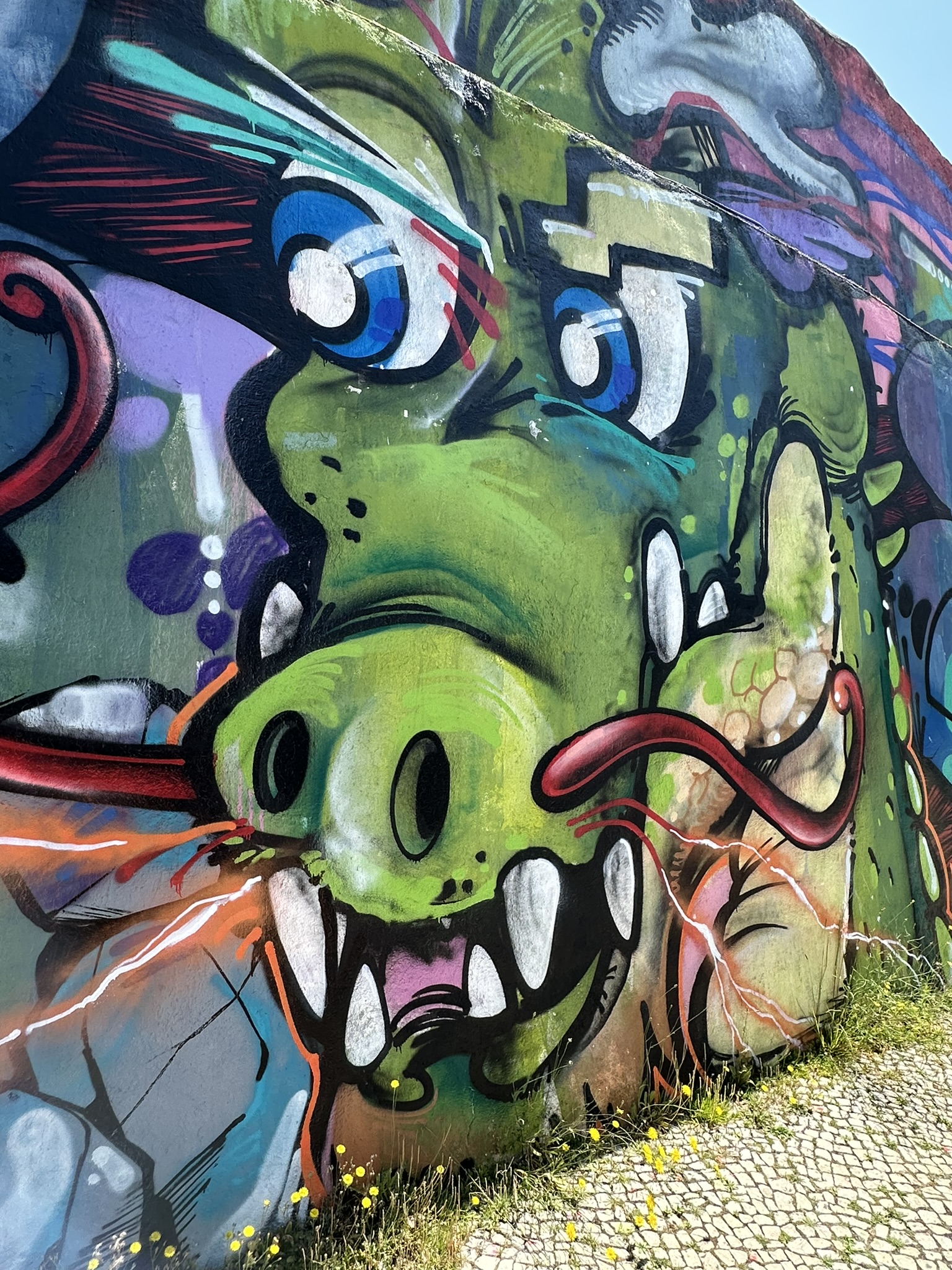
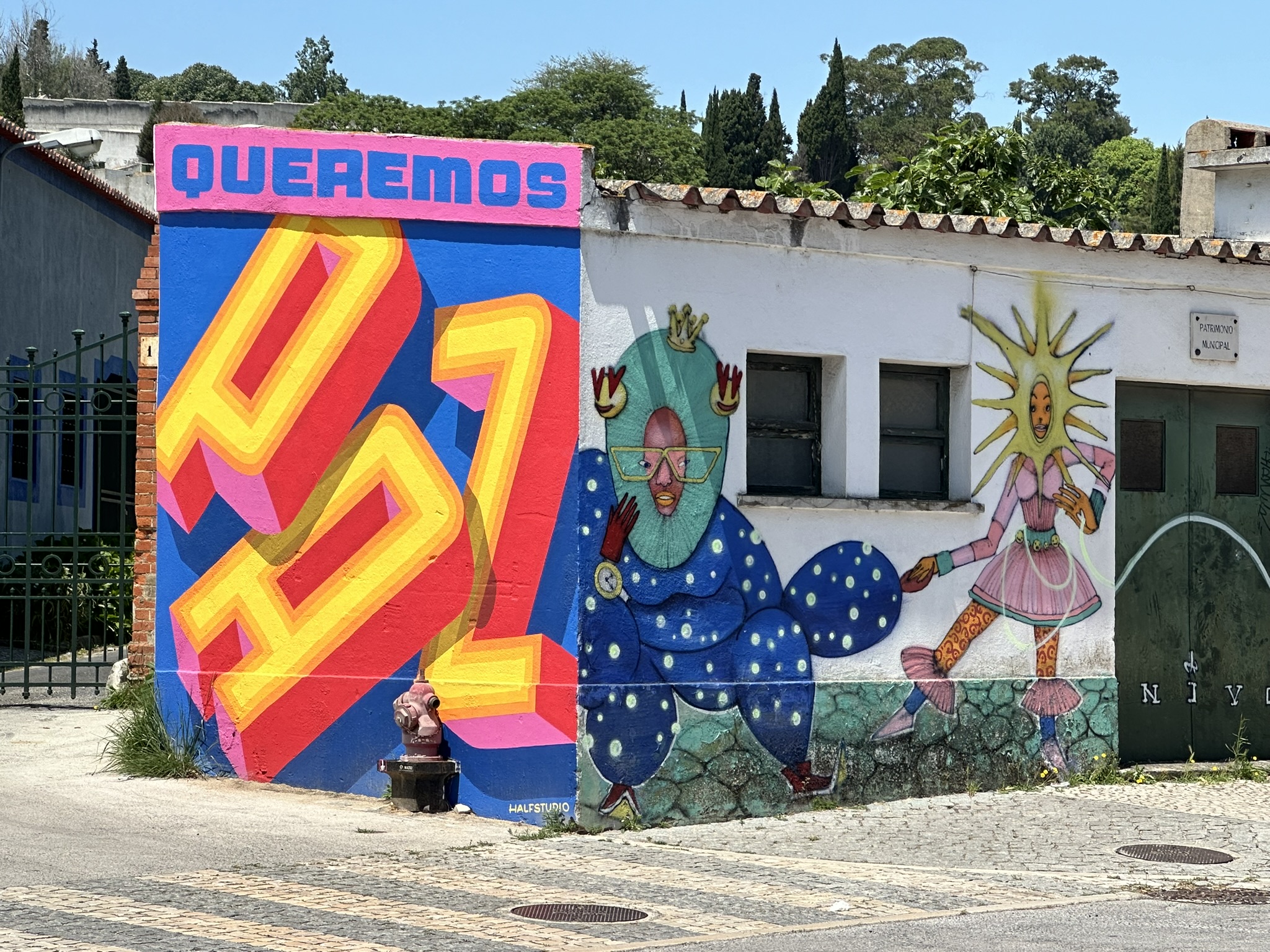
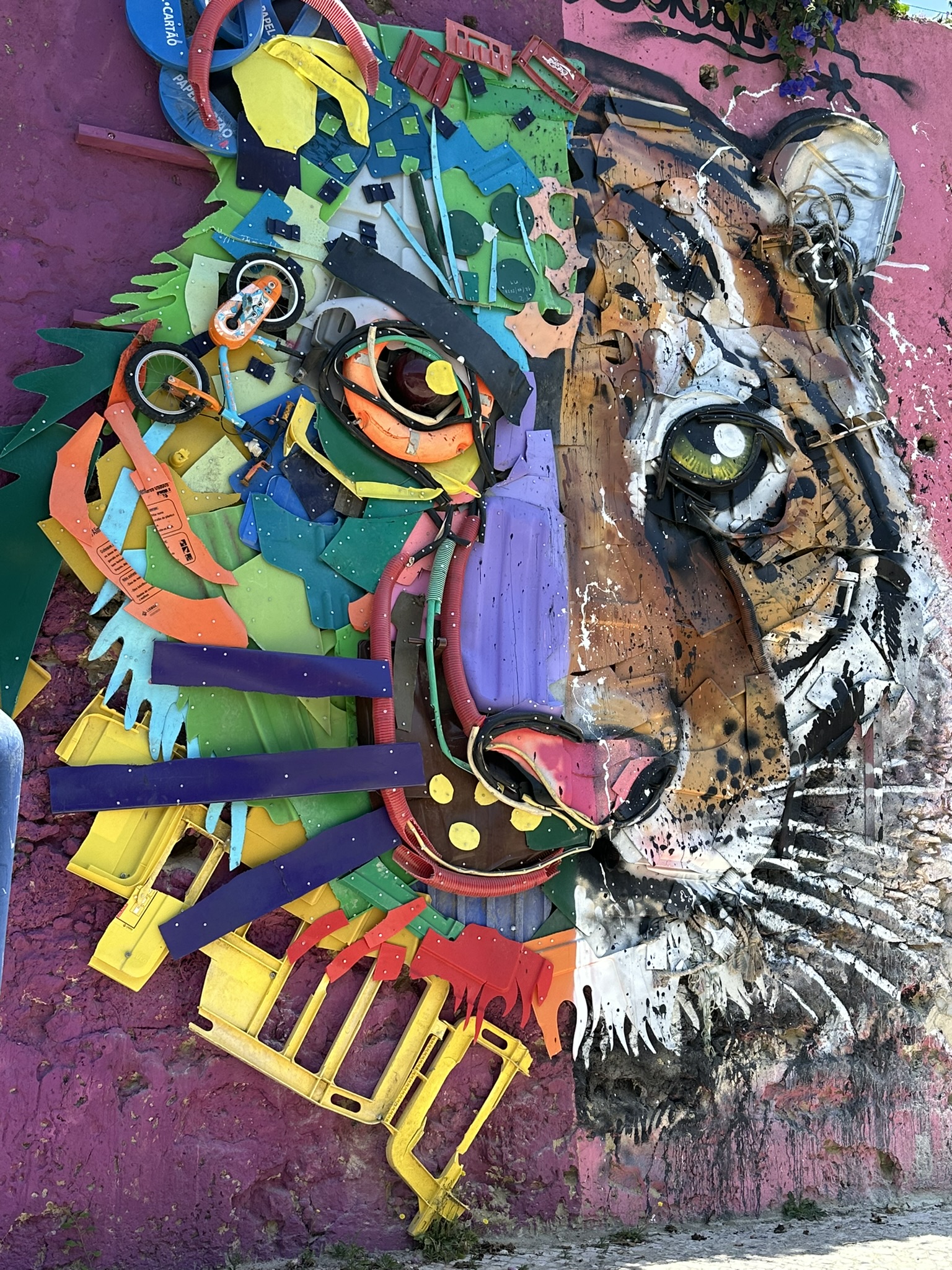
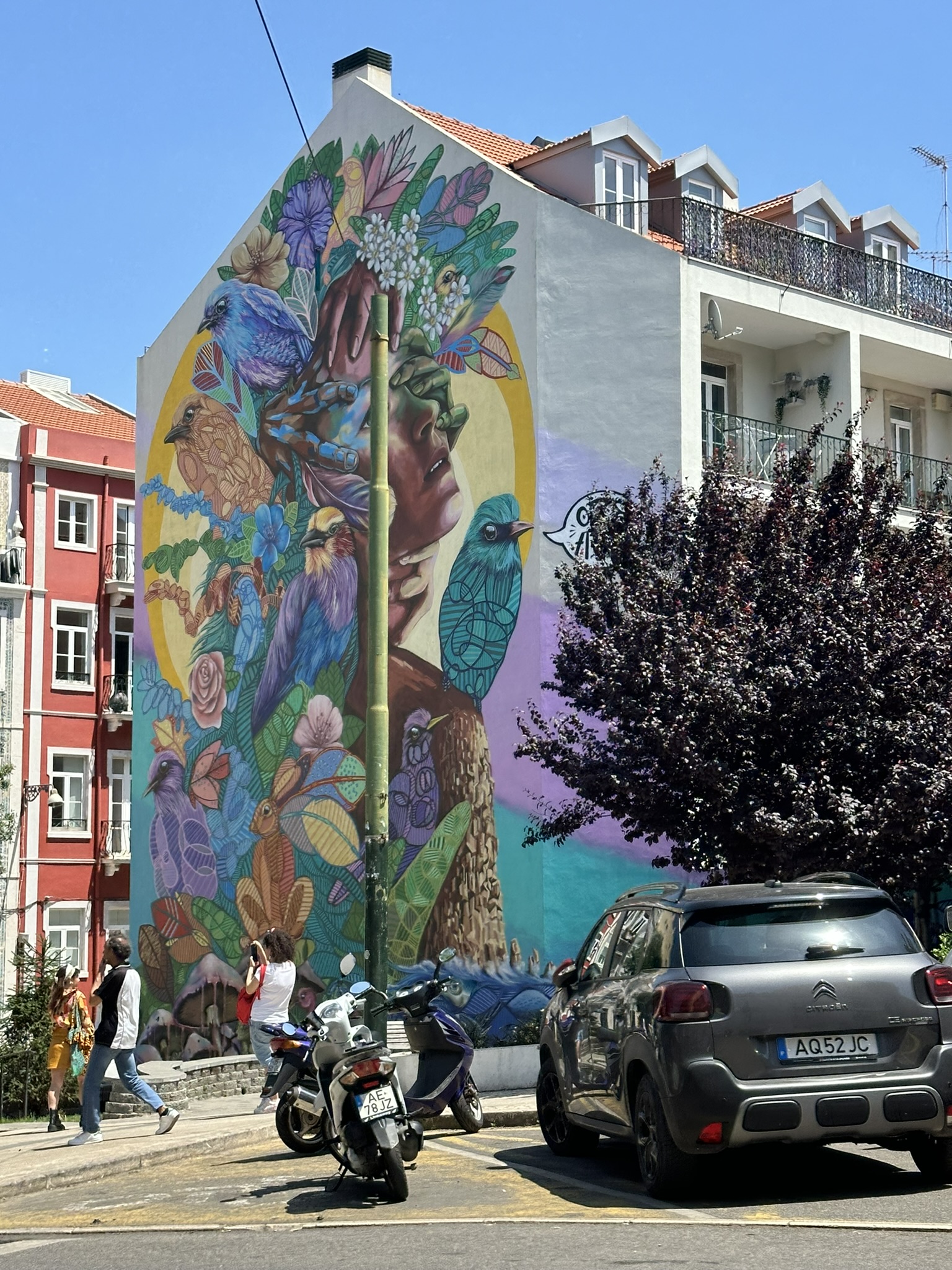
Take some time to just wander around, admire the street art, explore the shops, cafes, bars and restaurants.
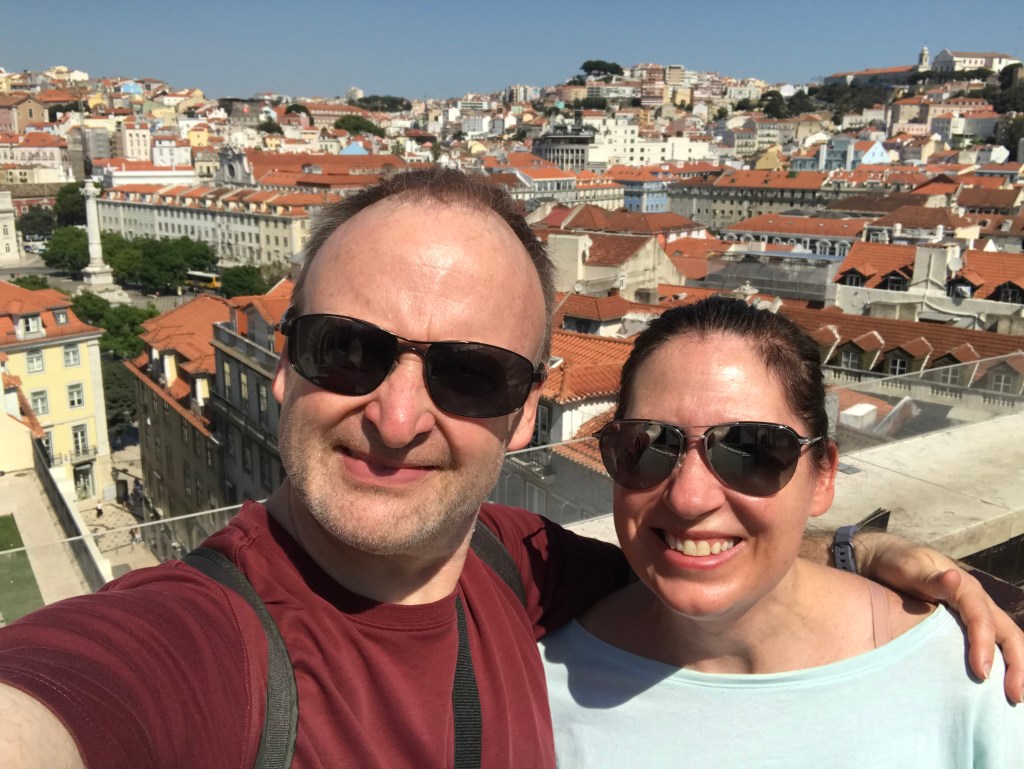

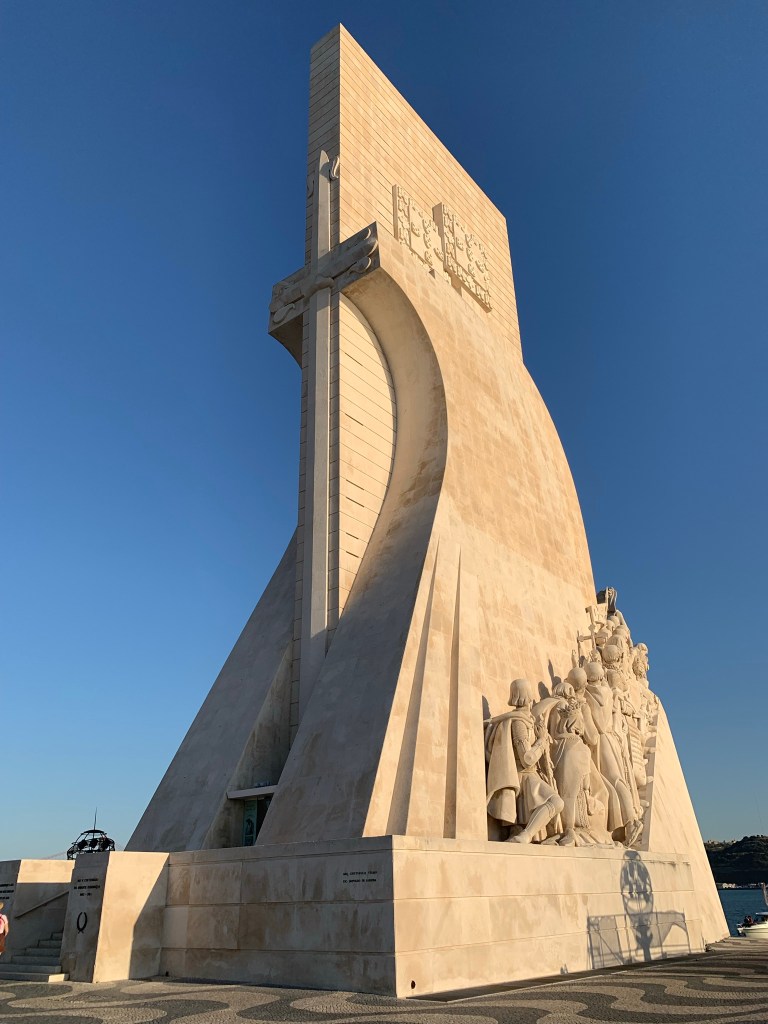
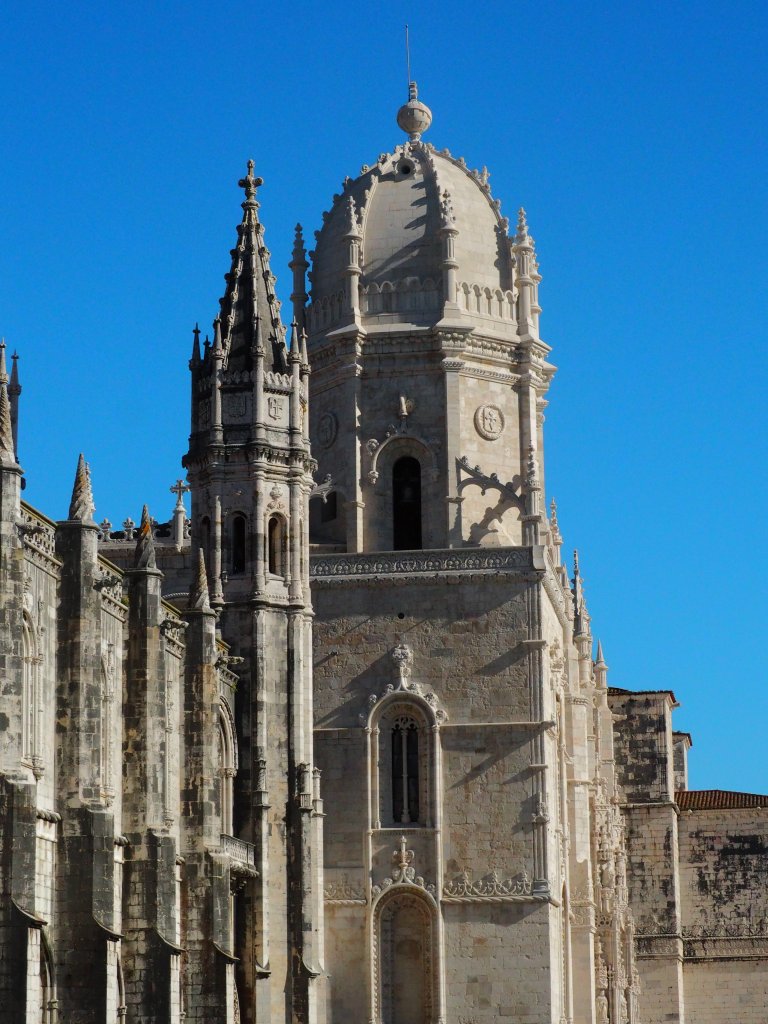
Day Three: Belém – a short train ride from Cais do Sodre train station in Lisbon, you can catch the train to Belém. Belém is home to the Belém Tower, the Jerónimos Monastery and the monument to the discoveries (Padrão dos Descrobrimentos). There are lots of good spots for seafood along the river.
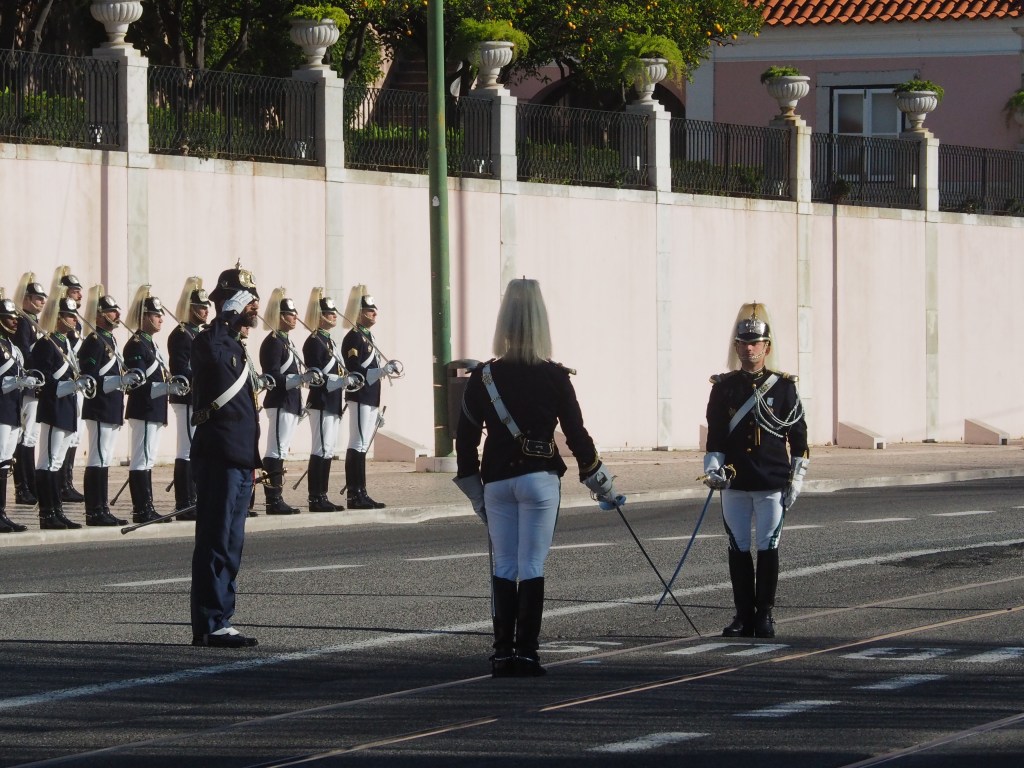
If you didn’t already try Pastel de Nata in Alfama you can get the original here in Belém but be ready to wait in line. Also, you can watch them change the guard on the third Sunday morning of each month at the Belém Palace.
From Belém you can enjoy a sail on the Tagus/Tejo River (Tagus is the Latin name, Tejo the Portuguese one) to cruise by the monuments in the day or at sunset. We use these guys.
Other suggestions: While you’re in town make some time to wander around and check out the street art. If you’re really into it, here are some options for going a little deeper. There are also guided walking tours you can book.
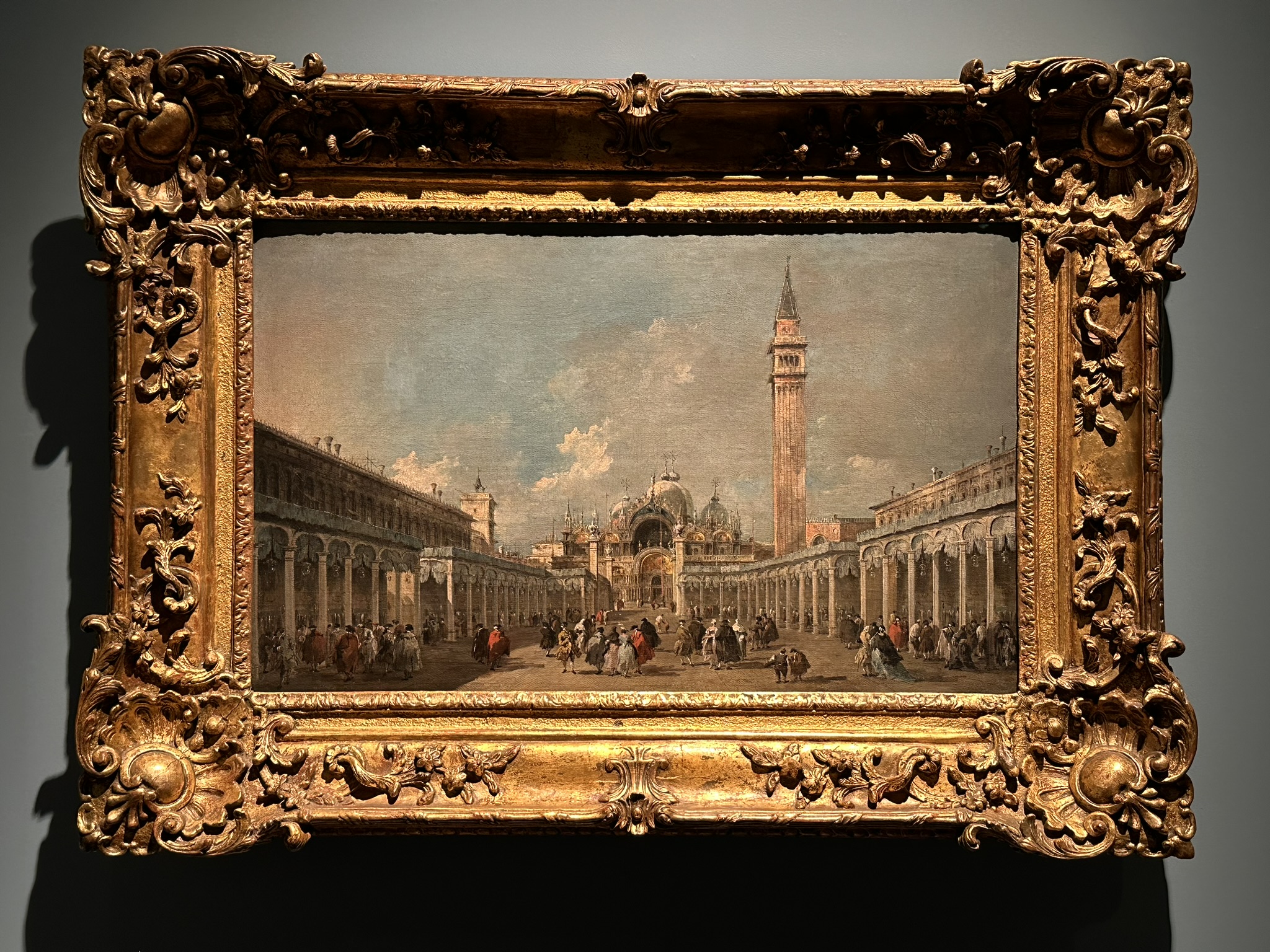
If art museums are your thing, the Calouste Gulbenkian Museum (pictured below) is well worth a trip.
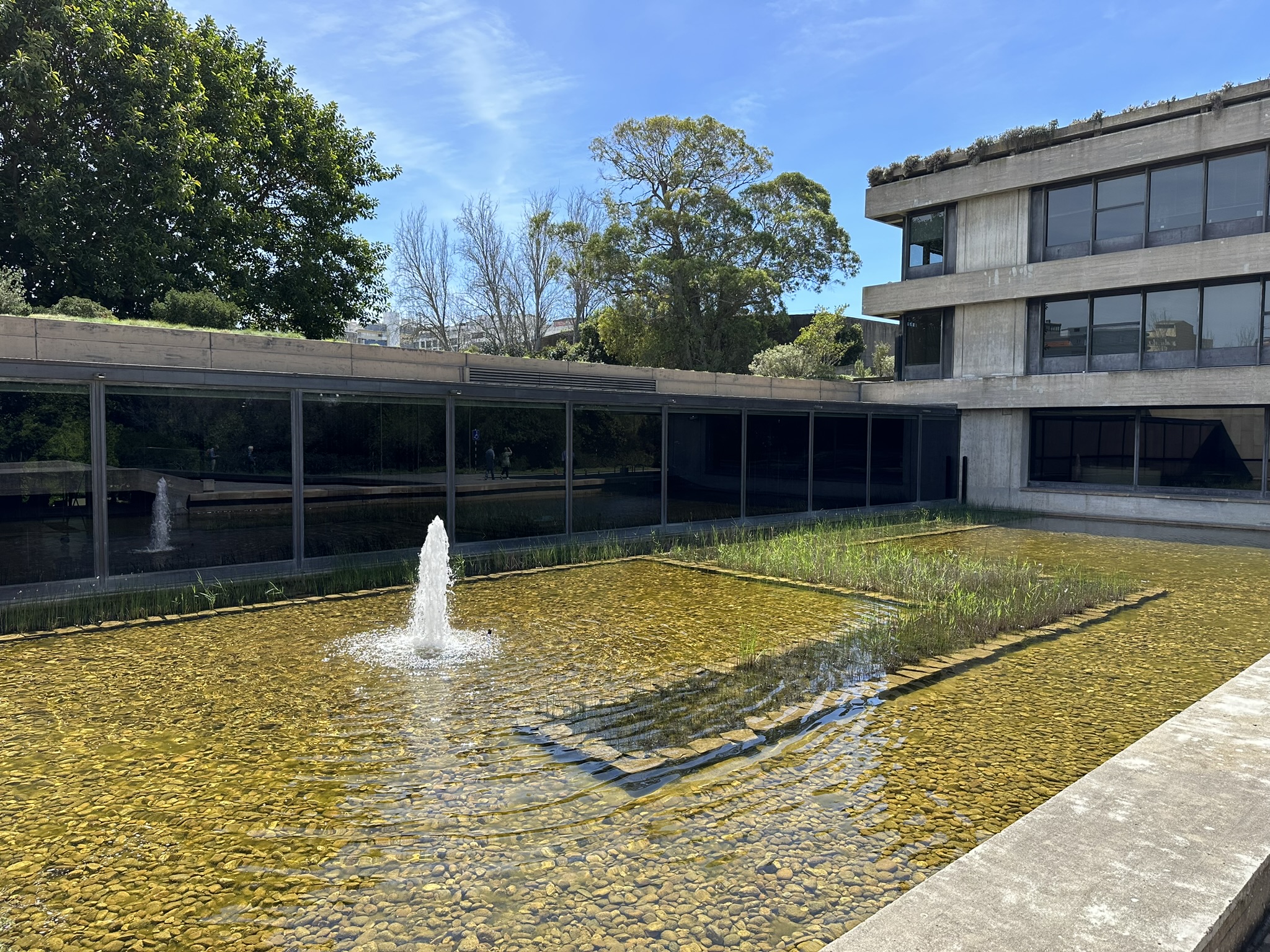
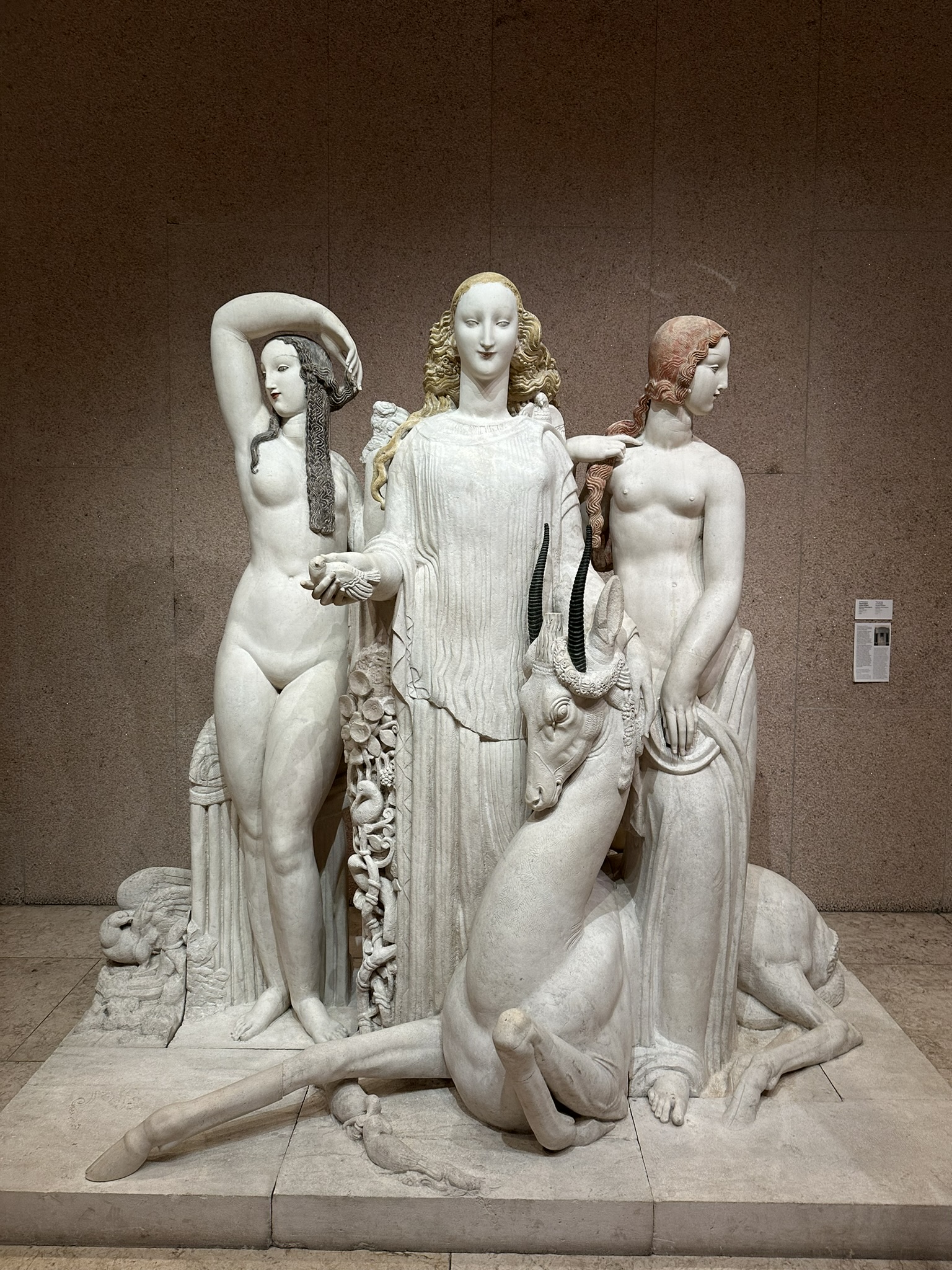
If you choose to visit the museum, it is worth visiting the museum’s garden and spending some time in Parque Eduardo VII and visiting the statue of Marques de Pombal who led the reconstruction efforts of Lisbon after the 1755 earthquake. For shopping, the tree-lined Avenida da Liberdade has lots of high-end shops, restaurants, kiosks and street vendors.
Saint Anthony’s Day. If you happen to be here in June, you may just get lucky (or unlucky, depending on your perspective) and land here on Saint Anthony’s Day. June is the month of the popular saints in Portugal which means a lot of holidays and celebrations. For Lisbon, Saint Anthony’s Day is the highlight and they prepare for it for weeks. You can read our reviews of the weddings and “marchas” (parades) here and our night out in Alfama on Saint Anthony’s eve here.
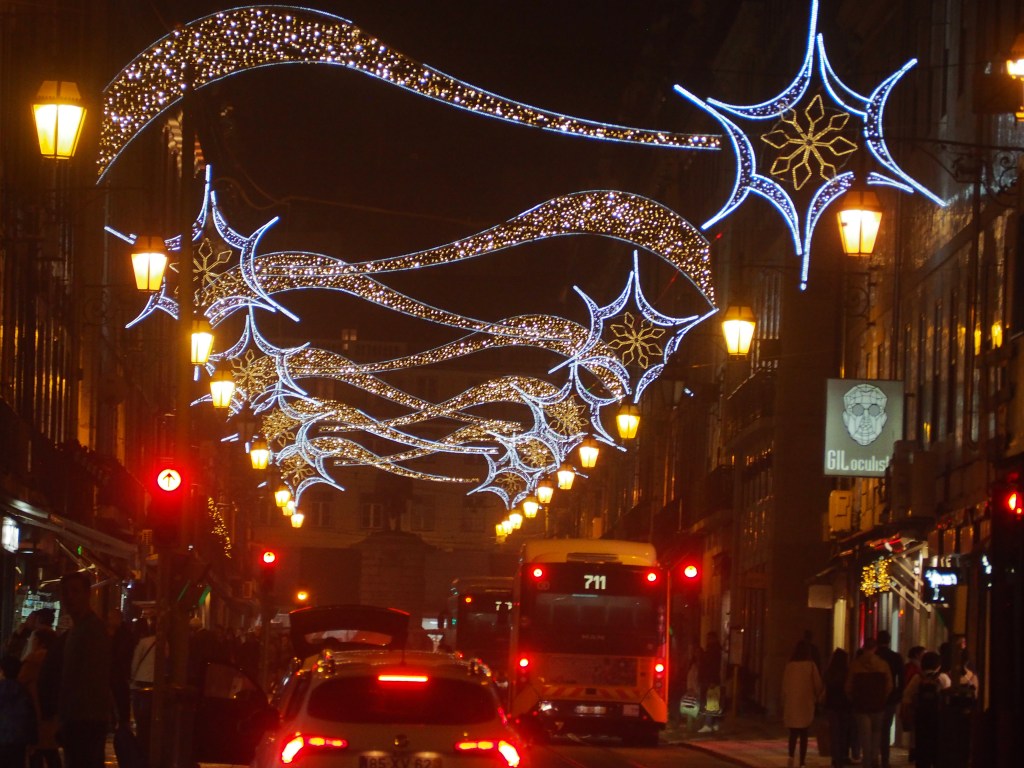
Christmas in Lisbon. If you’re here in December the lights in most Portuguese cities are a work of art. Read about our experience checking out the lights of Lisbon at Christmas time.
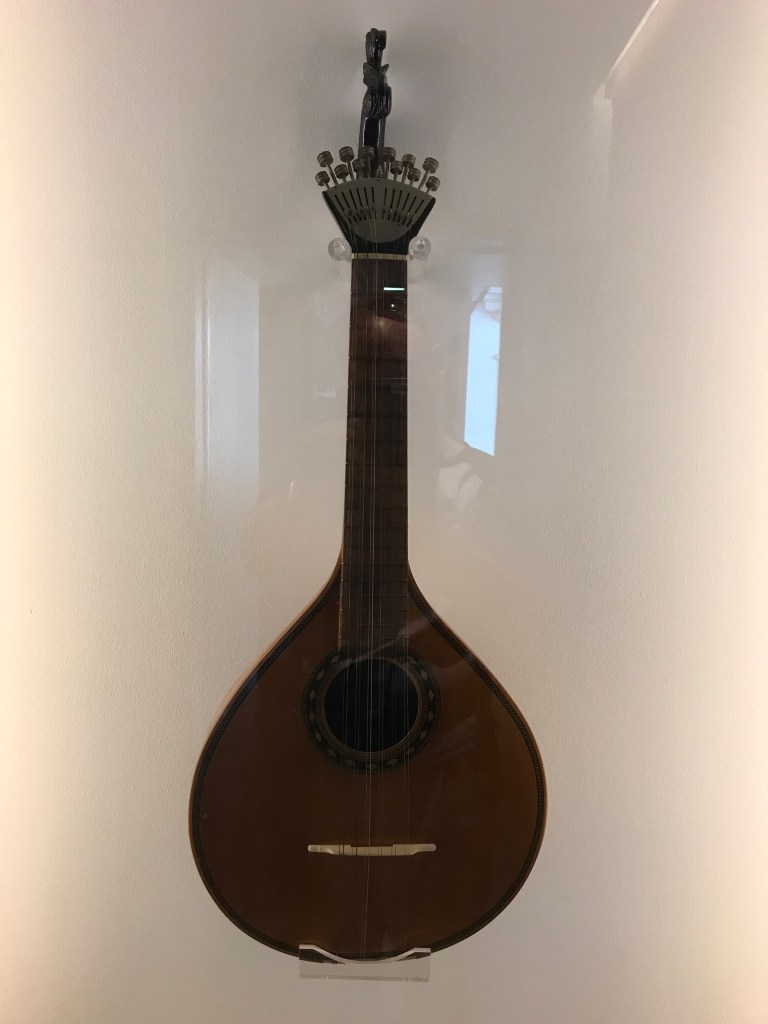
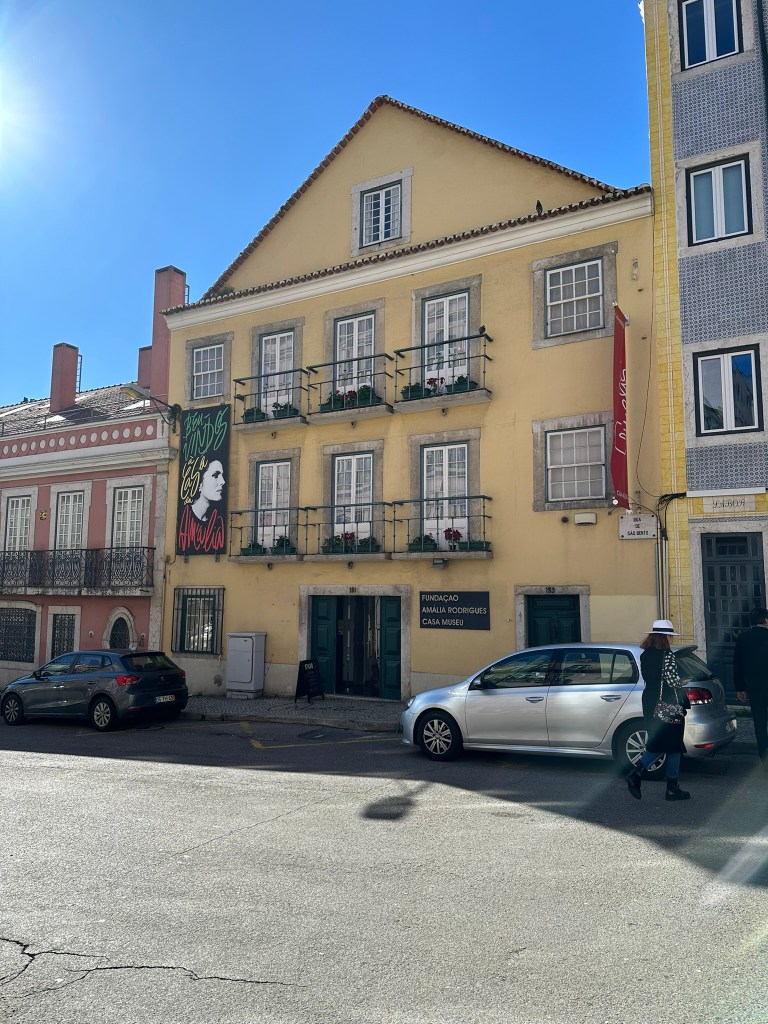
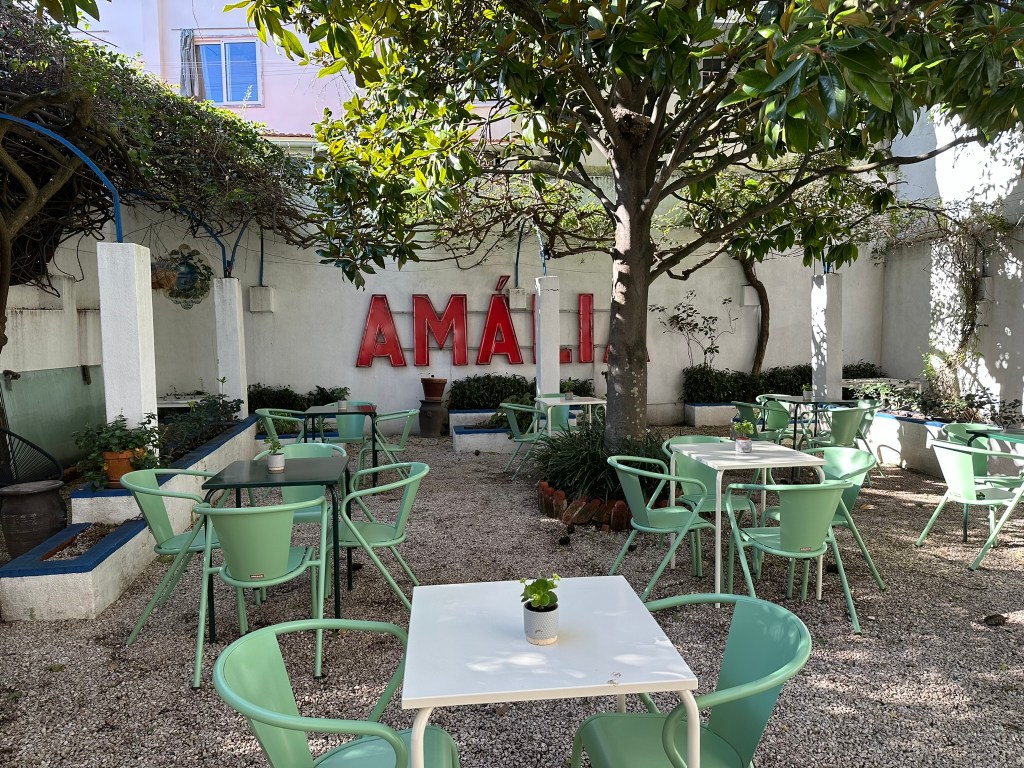
Fado Music. And finally, if you’d never heard it before, and you fell in love with the sounds of Fado spilling out of Fado bars in Alfama and the stirring wafts of music made you “tem saudades” (a Portuguese expression for longing), check out the Fado Museum (referenced above also under “Day One”) near the river just outside the winding maze of Alfama and a bit farther afield is the home (now museum) of one of Portugal’s most famous “fadistas” Amália Rodrigues. After touring her living room, kitchen and bedrooms you can stop off for a refreshing beverage in the courtyard behind. Advanced tickets may be required. Tours are offered in Portuguese and English. As noted above, if you’re interested in a live show, check out the one at Fado e Fado near the Sé, it is less than an hour long, educational, relatively inexpensive and doesn’t require you to sit for a meal.

For more info, you can find our posts about our first trip to Lisbon, our top 10 Lisbon recommendations.
 The Traveling Ridleys