

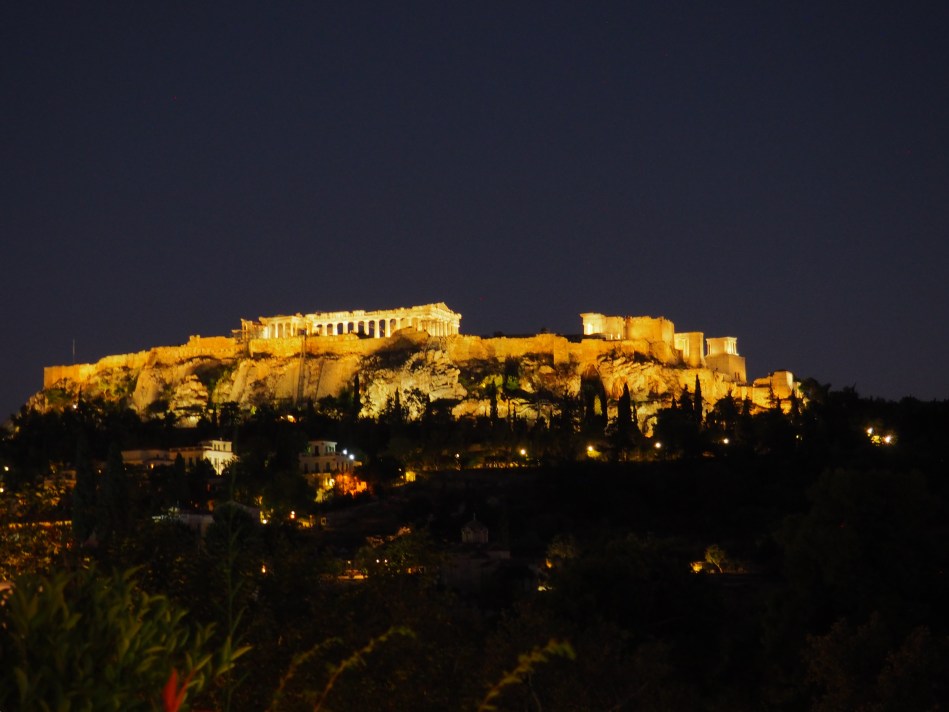
When I hear people talk about so-and-so went to Athens as their first European city I think: what were they thinking?
Athens is intense. It is the 3rd largest metropolitan area in the EU, after all (behind Paris and Madrid), and home to about 6 million people, more than half of the population of Greece. Athens is the birthplace of democracy; home to the first court and birthplace of the modern justice system; home to the world’s first theater and the birthplace of philosophy. It is full of rich historical relevance and Greek culture turned all the way up to 11. It’s hot in summer, crowded most times. The narrow warrens and alleyways can be tight and overwhelming. Many young men sit for long hours in cafe bars chain smoking hand rolled cigarettes and you’ll likely be lucky enough to get a meal next to (or between) a few. The traffic is nuts. And most of those people who choose Athens for their first must think: Europe is too crazy for me.
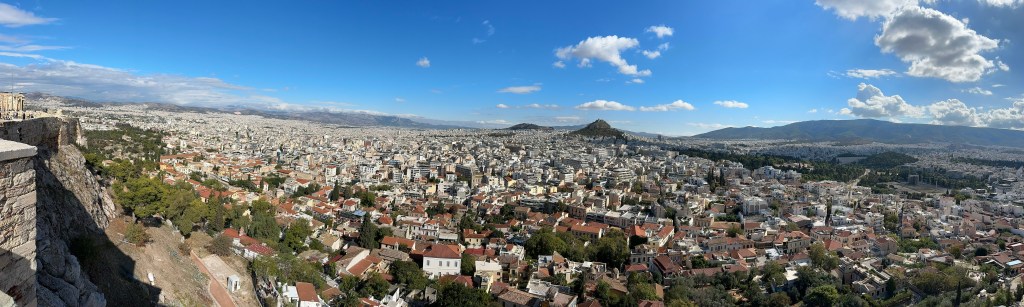

It wasn’t my first European city, but it also wasn’t my twentieth. In fact, it was closer to my first than my twentieth. We first came here not long after the global financial crisis when the government was crumbling under the weight of financial mismanagement and people were protesting EU-imposed austerity measures. Many of our friends thought (and said): “what are you thinking?” But except for one somewhat sketchy moment walking through the Psyrri neighborhood (now a better place to visit) to Syntagma Square, we had no issues and we loved it.
Now that we’ve not only been to (in some cases several times) large, but more approachable, European cities like London, Paris and Edinburgh those with a more moderated intensity like Barcelona, Dublin, Milan, Rome and Lisbon and several more intense ones like Naples, Belfast and Genoa, I like it even more. But, it’s (in our opinion) not for the first-time European vacationer.
Like the hero Theseus, we returned to Attica, this time, across the Aegean from Knossos and Crete via a stop in Naxos. No black mournful flag was flying above our craft leading anyone we know to hurl themselves over a wall in Greek tragic mythologic style (as Theseus’ King father did). Just a crush of humanity exiting the hull of the Seajets Champions League ferry at the largest port of the Mediterranean (now owned by the Chinese) and descending on the madness of cab stands, exiting cars and busses and making their way in to or out of Athens.
In mythology, Athens’ name indicates its homage to Athena goddess of wisdom. Athena and Poseidon descended from Mount Olympus and led a crowd from the city up to the Acropolis hill where they offered their gifts for their patronage. Poseidon, god of the seas, offered the people ocean water. The people were pleased, as water was essential to life, but when they drank, its salty taste turned them off. Athena knelt on the ground and planted an olive tree which was recognized as a source of food but also shade and wood for fuel to burn or make into tools. And thus, Athens was pledged to the virgin goddess of wisdom.

(New Acropolis Museum)
Rick Steves City Walk. Regular readers will know that we often use Rick Steves (and his free walks) to get an orientation to a European city. Athens was no exception and his Athens City Walk is excellent. As is our custom, we did it on the first full day of our return to Europe’s oldest capitol.
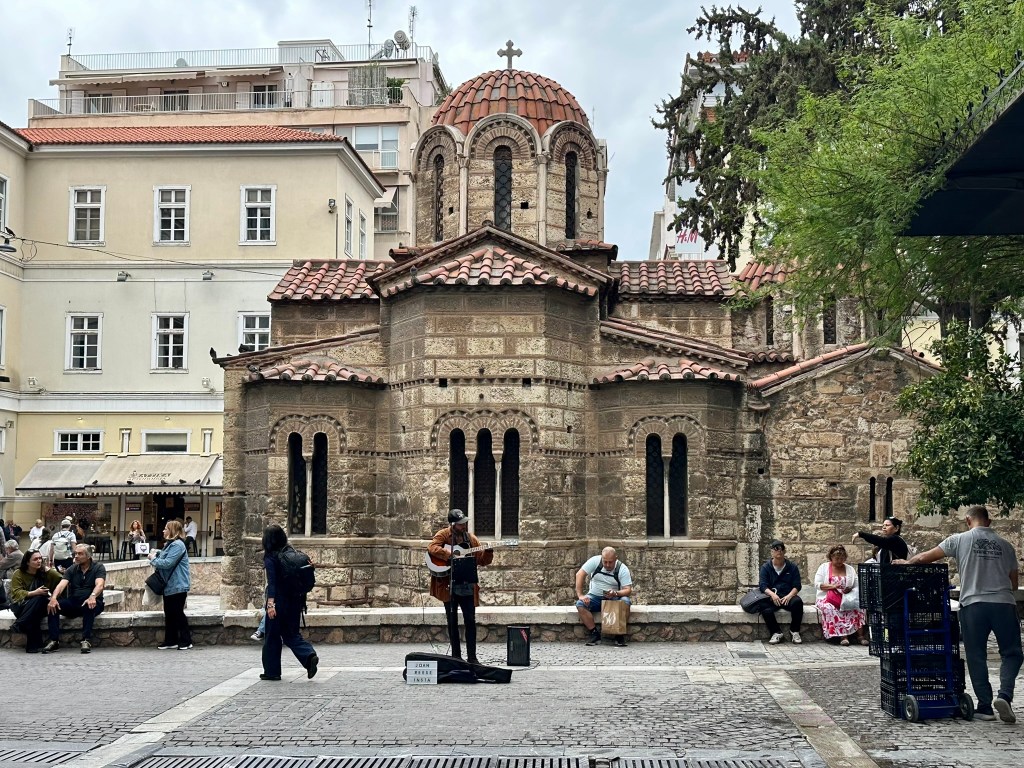
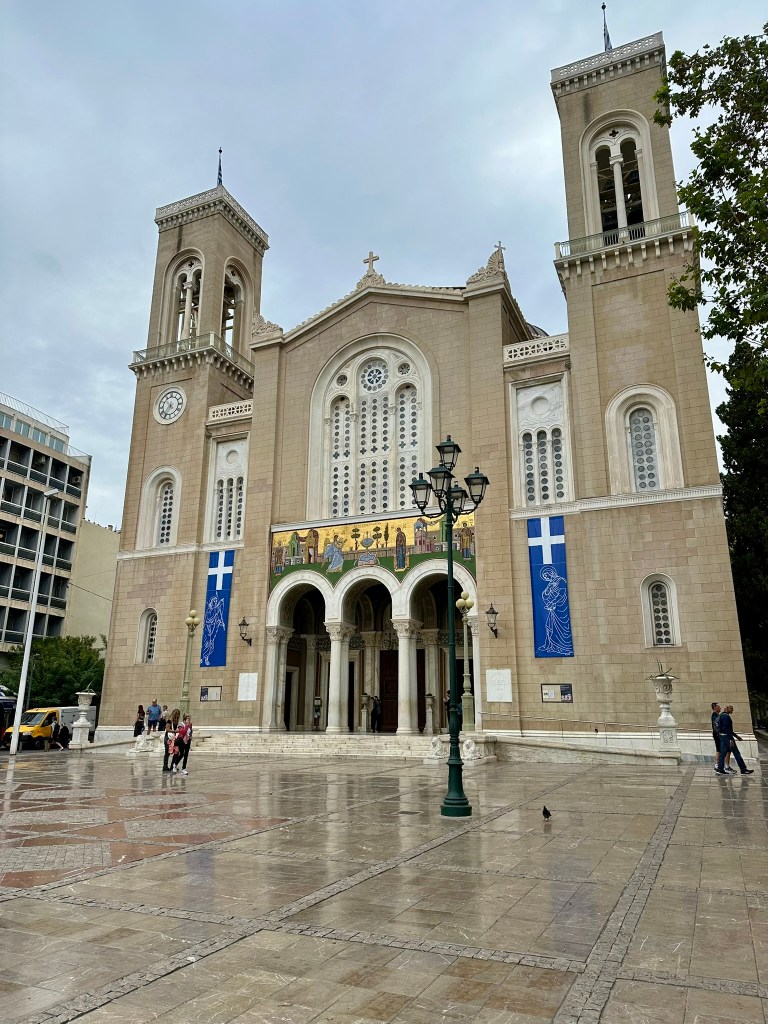
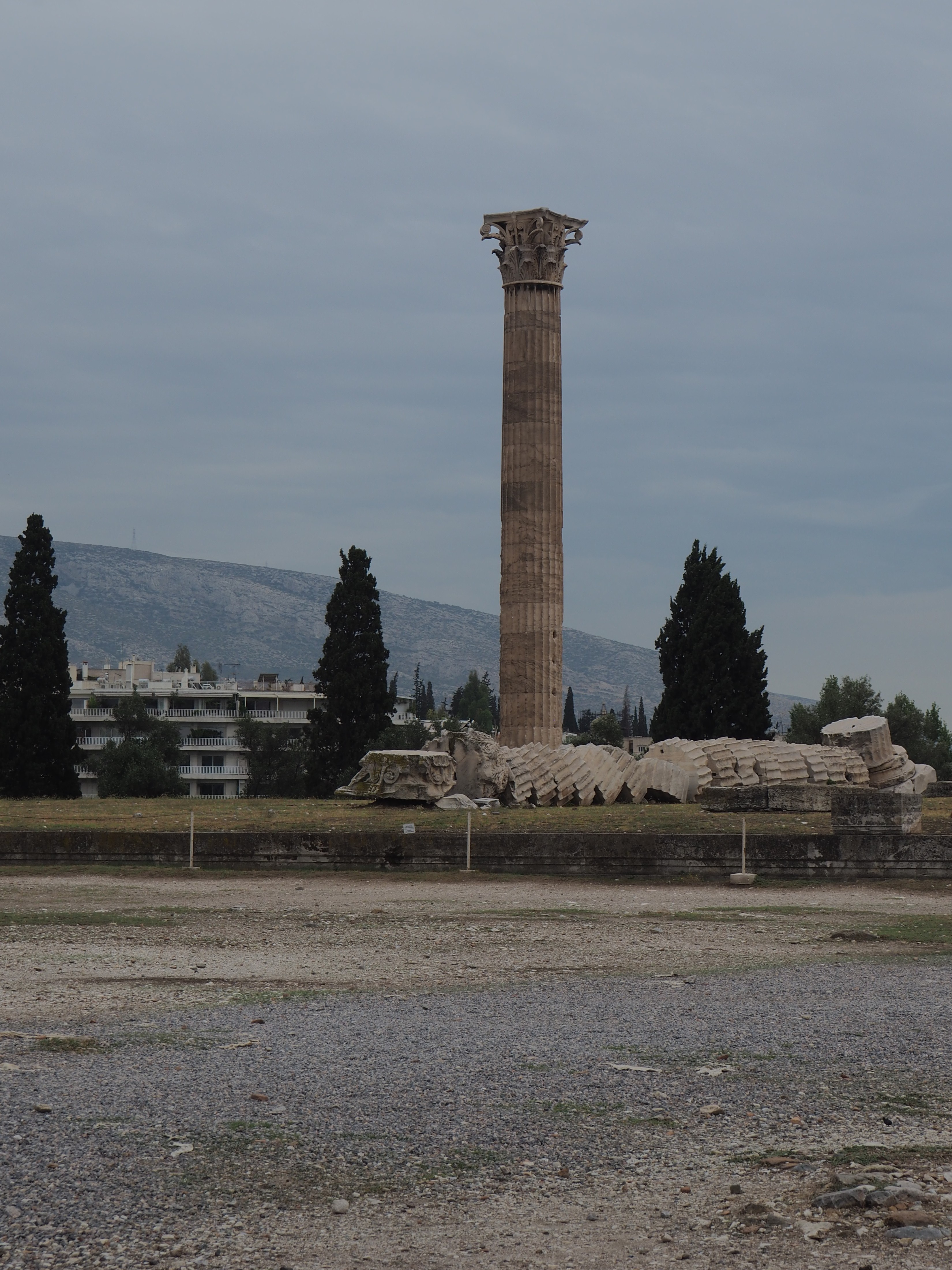
The walk begins in Syntagma (Greek for constitution) Square, site of many protests, at the foot of Greece’s Parliament building. It takes you to the Greek Tomb of the Unknown Soldier then down to the fabulous 1000 AD Byzantine Church of Kapnikarea, over to the Mitropolis Cathedral (Greek Orthodox religion’s equivalent of the Vatican), through the winding Plaka neighborhood, and to the Temple of Zeus and Arch of Hadrian.

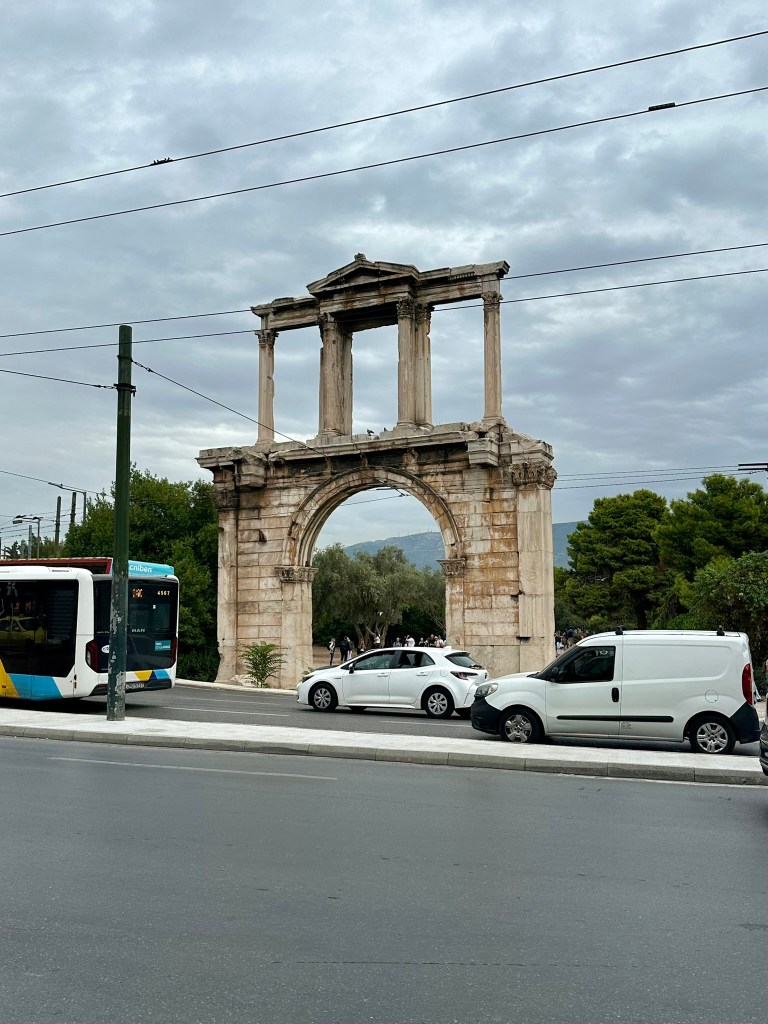
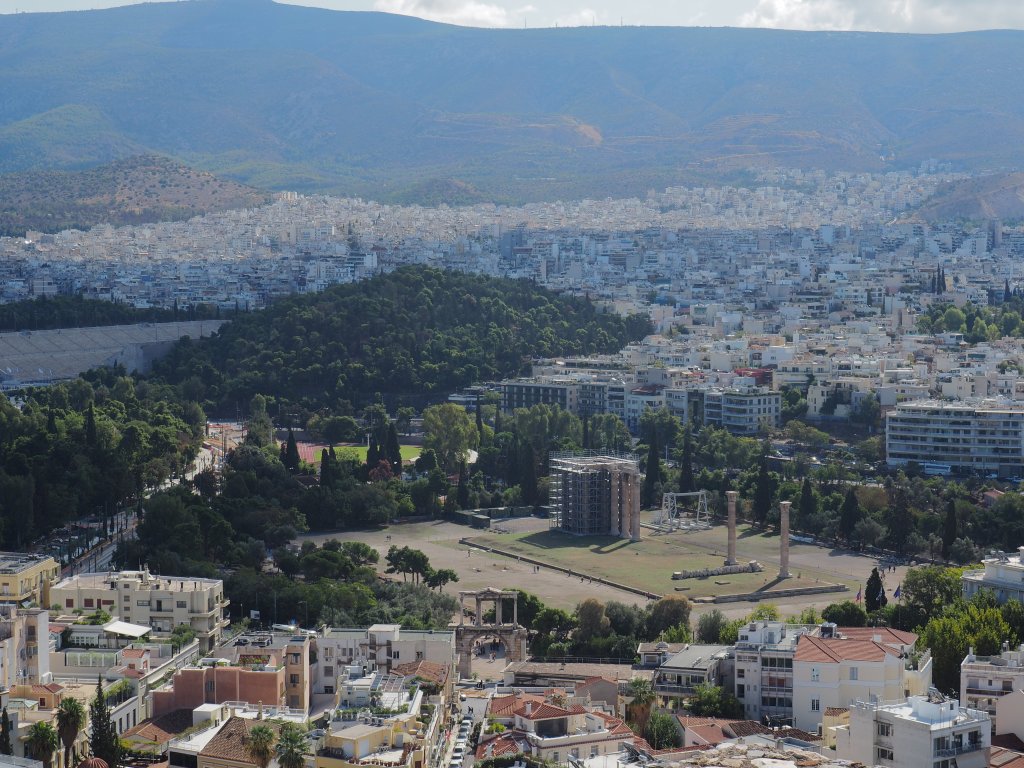
(from Acropolis)
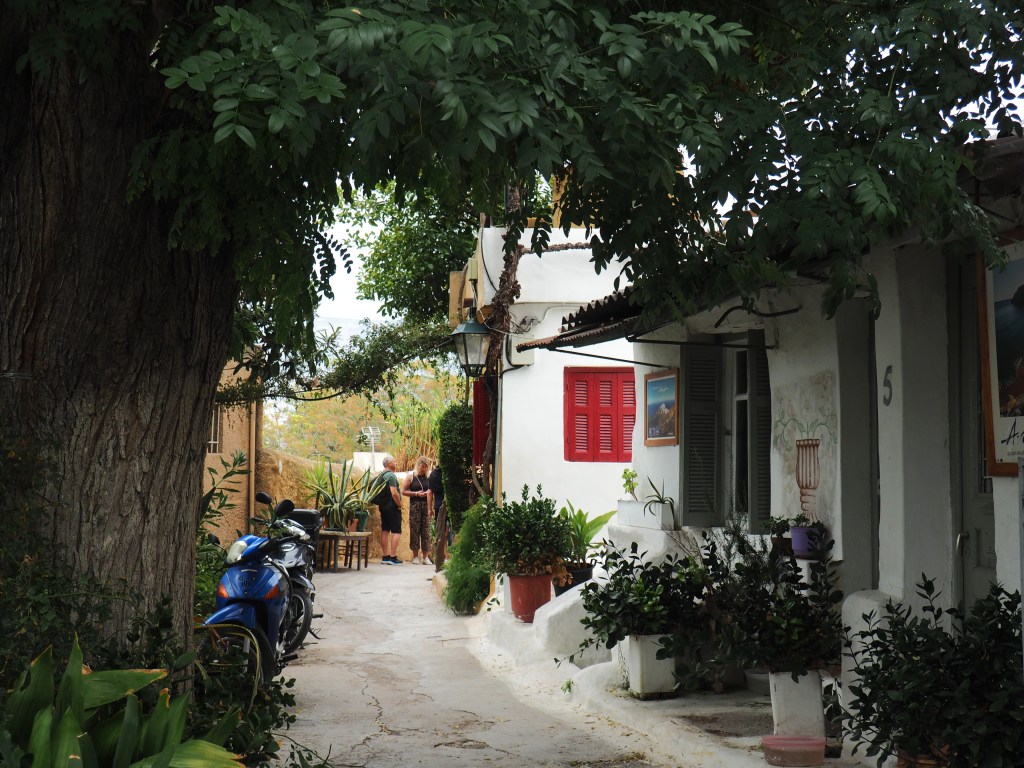
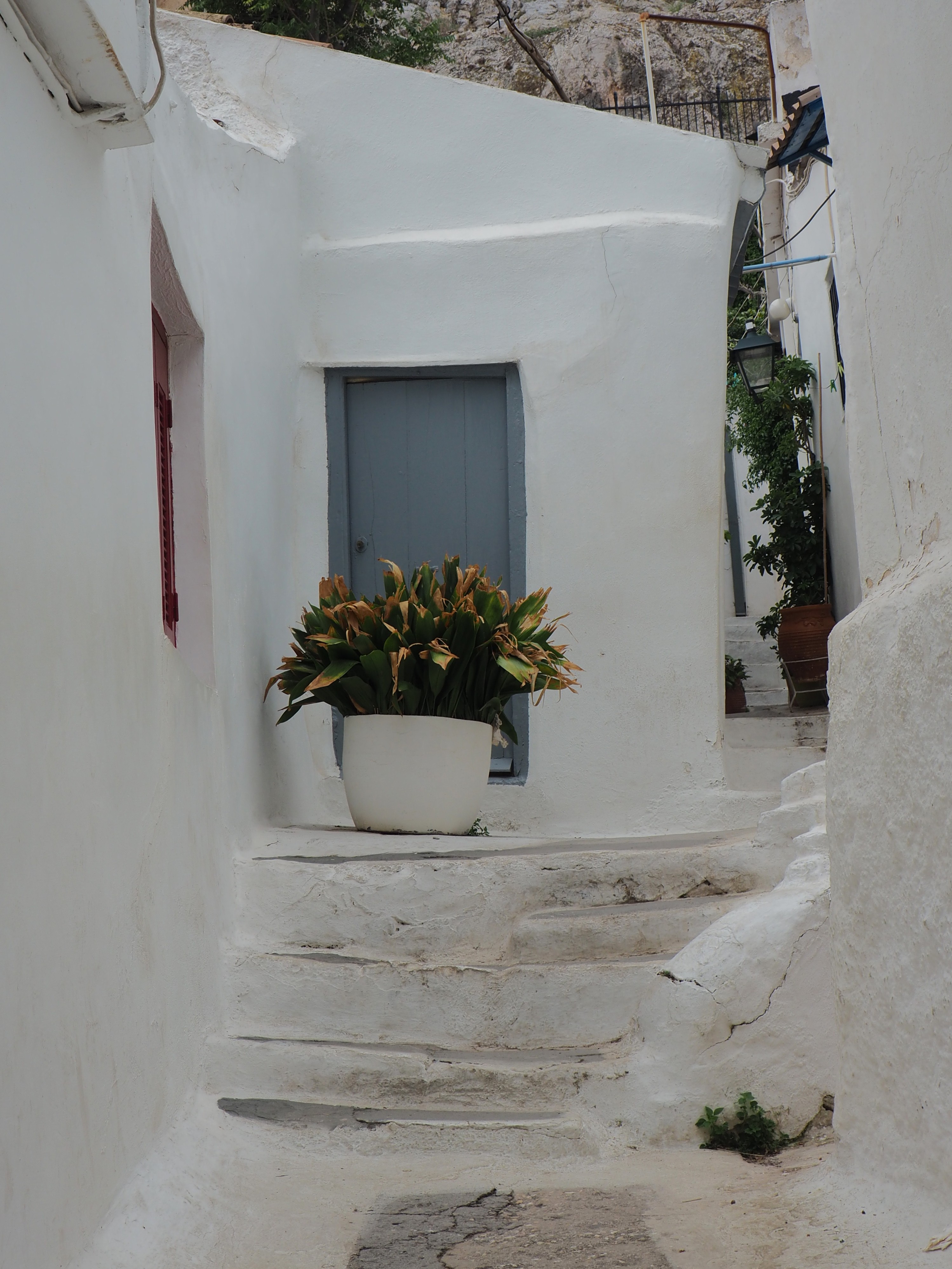
Back through the Plaka, you ascend the hill underneath the Acropolis through the Anafiotika neighborhood, which feels a little like walking through a Cycladic island village (and should because the people who moved here from the island of Anafi built it to feel that way), then down to bustling Monastiraki Square. We were staying right near there, so we lucked out with being “dropped off” near home at the end of the tour as the rain rolled in.

The Acropolis and “New” Acropolis Museum.
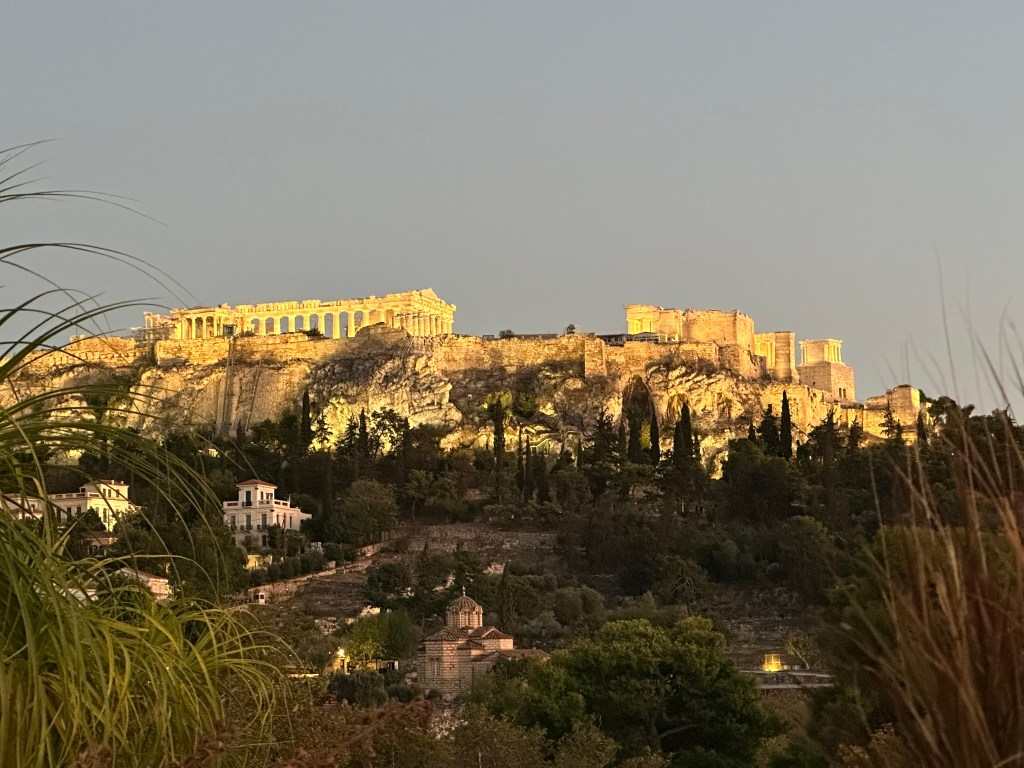
“The Greeks invented democracy, built the Acropolis and called it a day” – David Sedaris.
Despite making it a long day, it is best to do the Acropolis and the Acropolis Museum (called the “New” Acropolis Museum even though it opened in 2009) together. This is because you can see the actual site and then the recovered artifacts (or vice versa) while the other is still fresh in your mind. Last time we came to Athens, we did both together too – Acropolis first then museum. This time, we decided to take a guided tour (having, theoretically, learned our lesson from the Palace of Knossos in Heraklion Crete). We used Get Your Guide to get hooked up with Athenian Tours and our guide, Nikos, was excellent. (Note to future travelers: this tour is very long, about five hours long when both the Acropolis and Museum are done together).
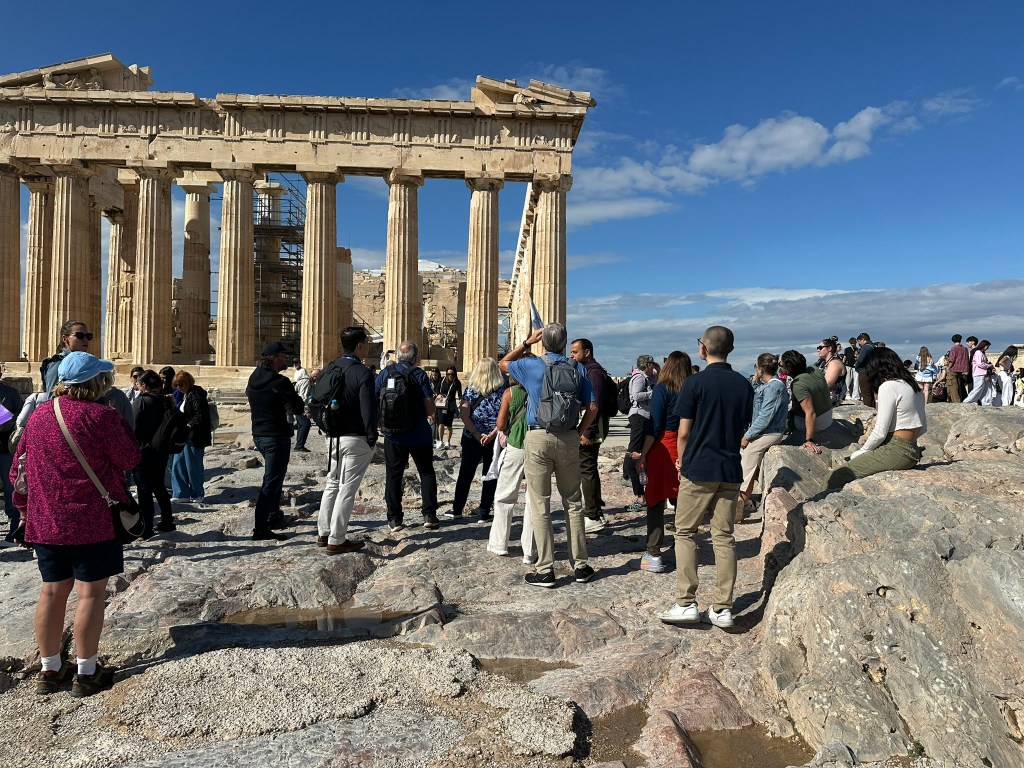
Acropolis means “top” (acro) of “the town” (polis). The remains of the Acropolis you see are 25 centuries old, the first Acropolis was destroyed by an earthquake and the second by the Persians, though you can see salvaged decorations of the second one on the 1st floor (one above the ground floor) of the Acropolis Museum.
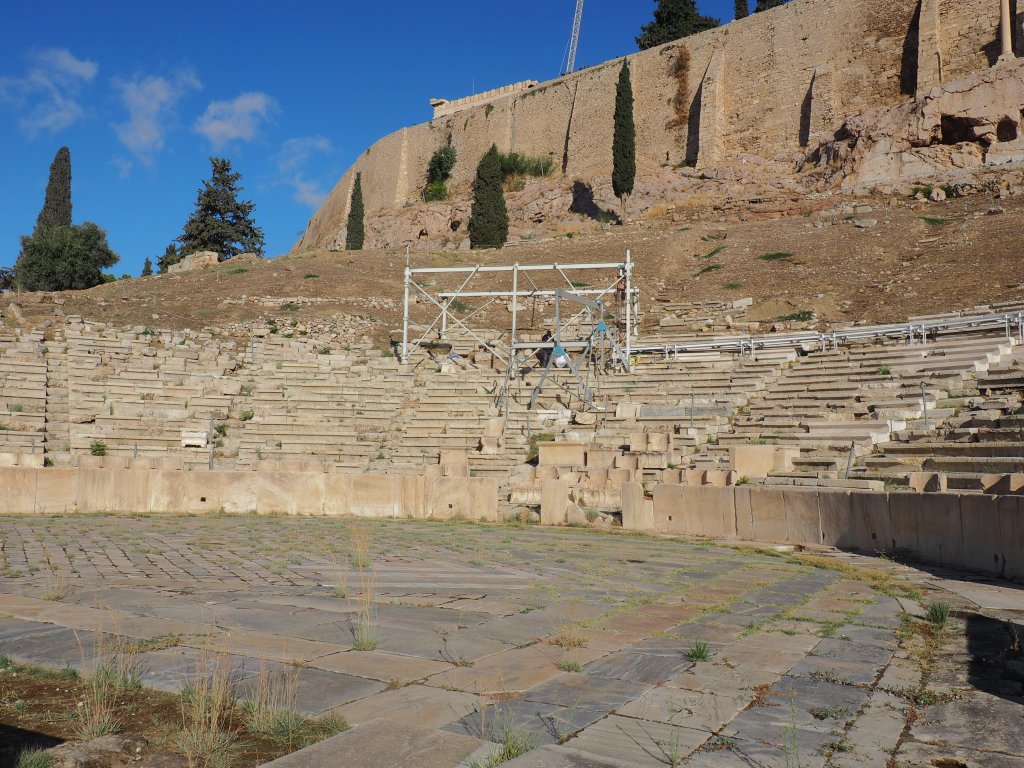
The South Slope. The Athenian tour begins at the south slope of the Acropolis, home to the world’s oldest theater and hospital. The Dionysus Theater was the first and one of 170 built to the god of theater (and wine) across Greece. The throne in the center of the seating area was reserved for the priest to Dionysus.
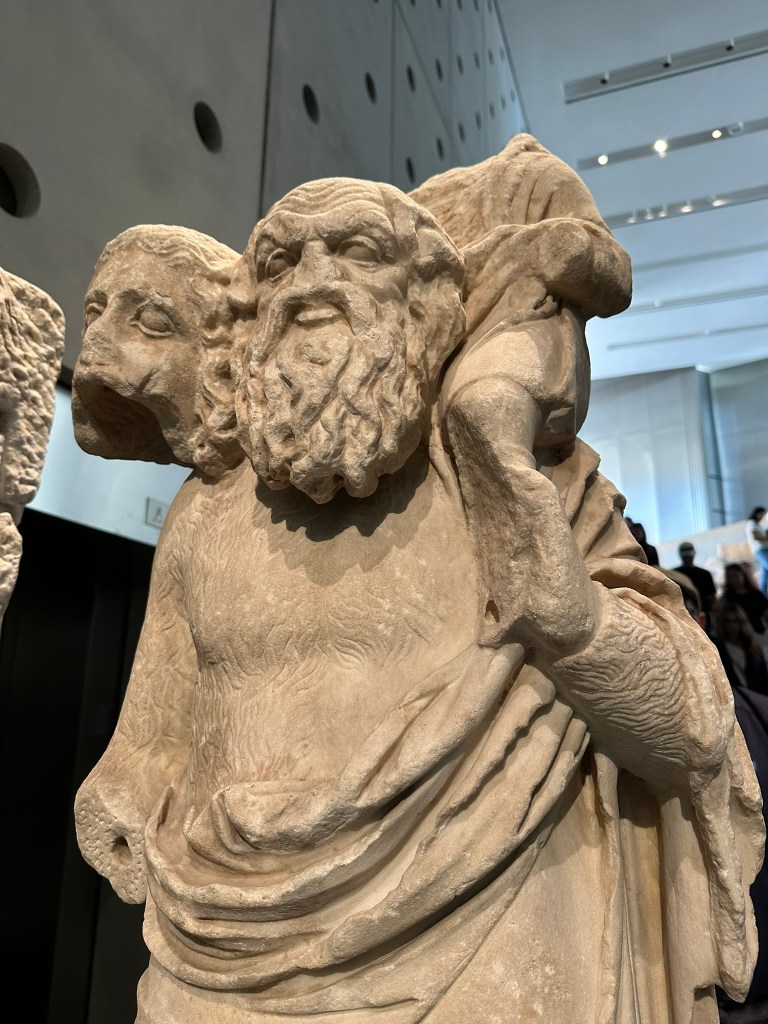
(New Acropolis Museum)
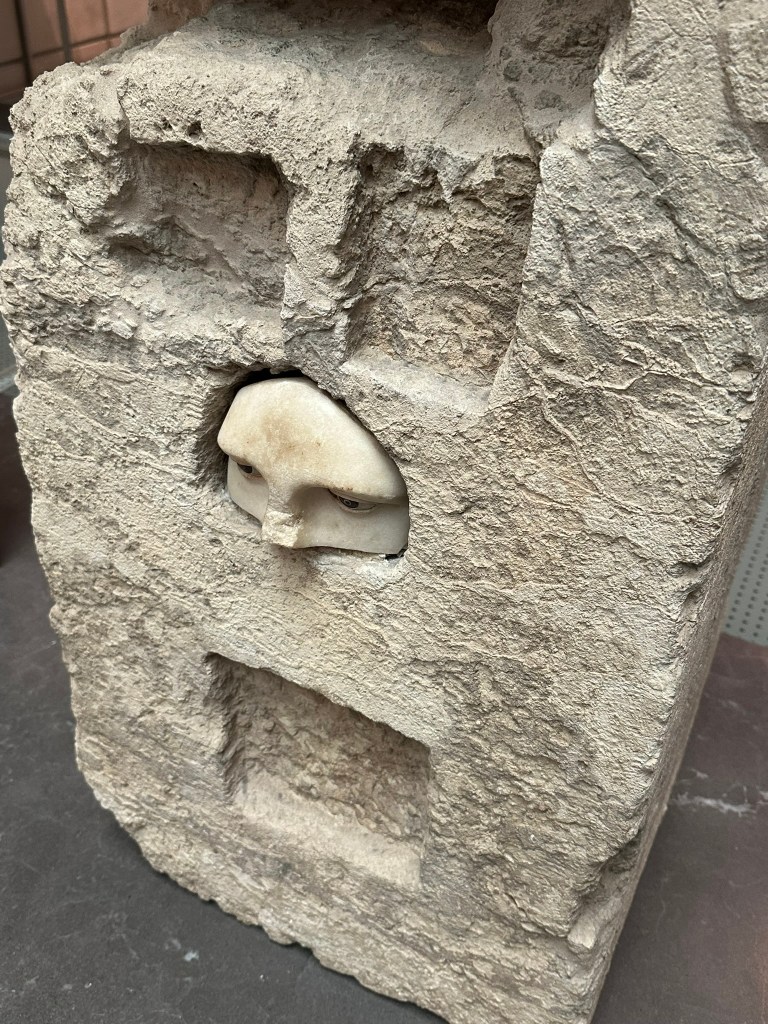
The Temple of Askeplios, the god of health, was built nearby alongside the hospital as it was believed that music and theater were key parts of a patient’s healing. At the Temple of Askeplios, Greeks would offer marble statues of the body parts which needed healing (samples of which are available to see on the ground floor of the museum).
(New Acropolis Museum)
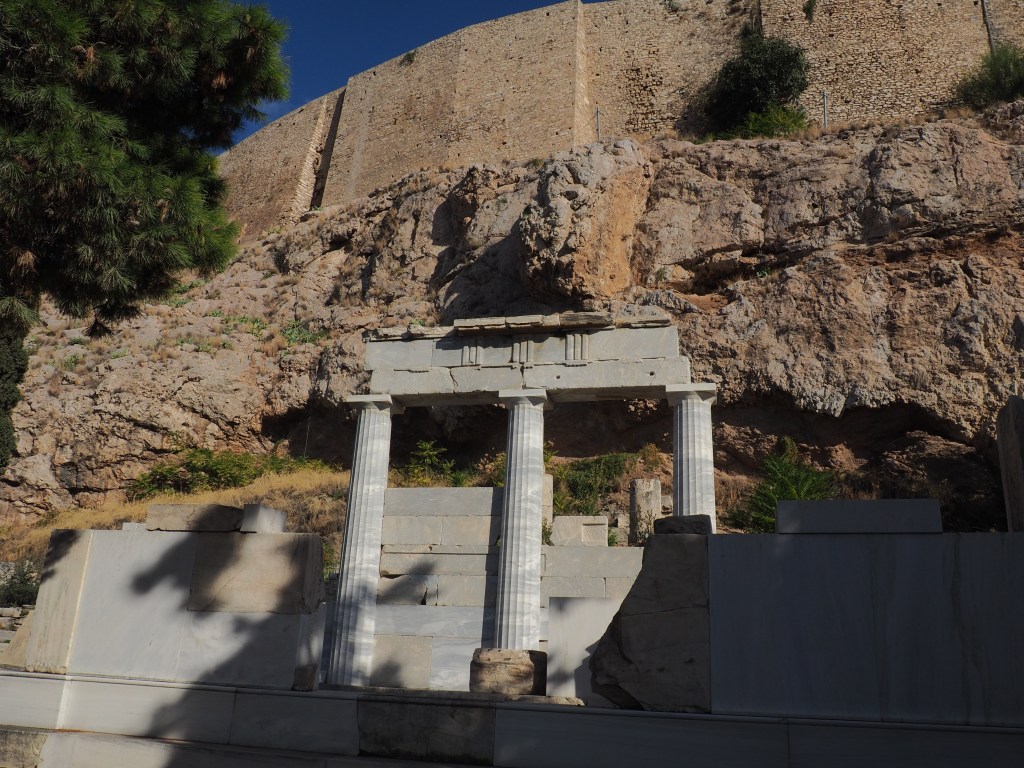
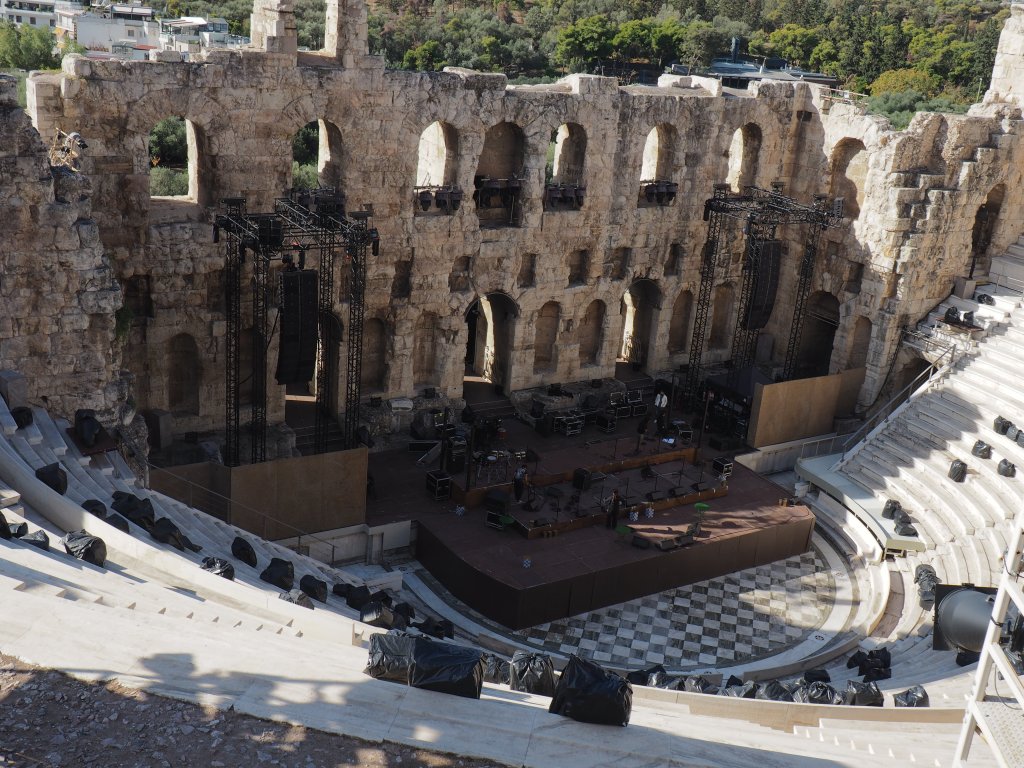
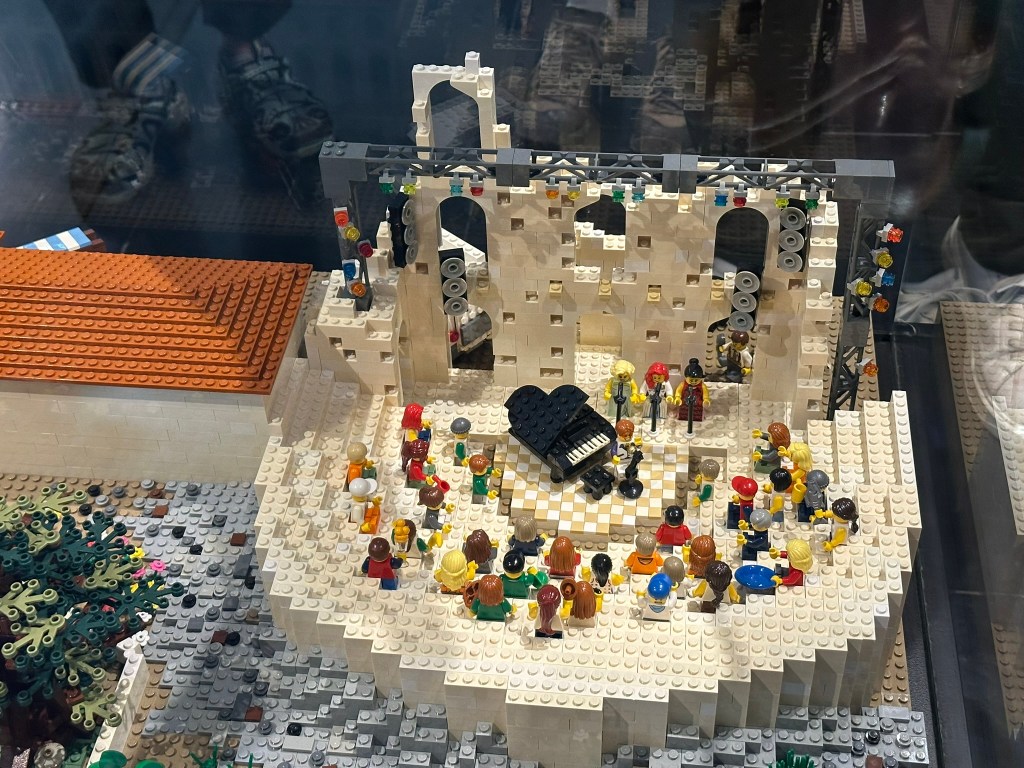
Several hundred years later, the Roman Theater was constructed also on the south slope. Every summer, concert series are held in this theater which has been graced by the likes of Sir Elton John, Frank Sinatra, Alice Cooper, the Beatles, Guns & Roses and the Scorpions; an eclectic mix.
(New Acropolis Museum)
Most of these buildings now lay in various states of ruin after the Herulian invasion of 267 AD.
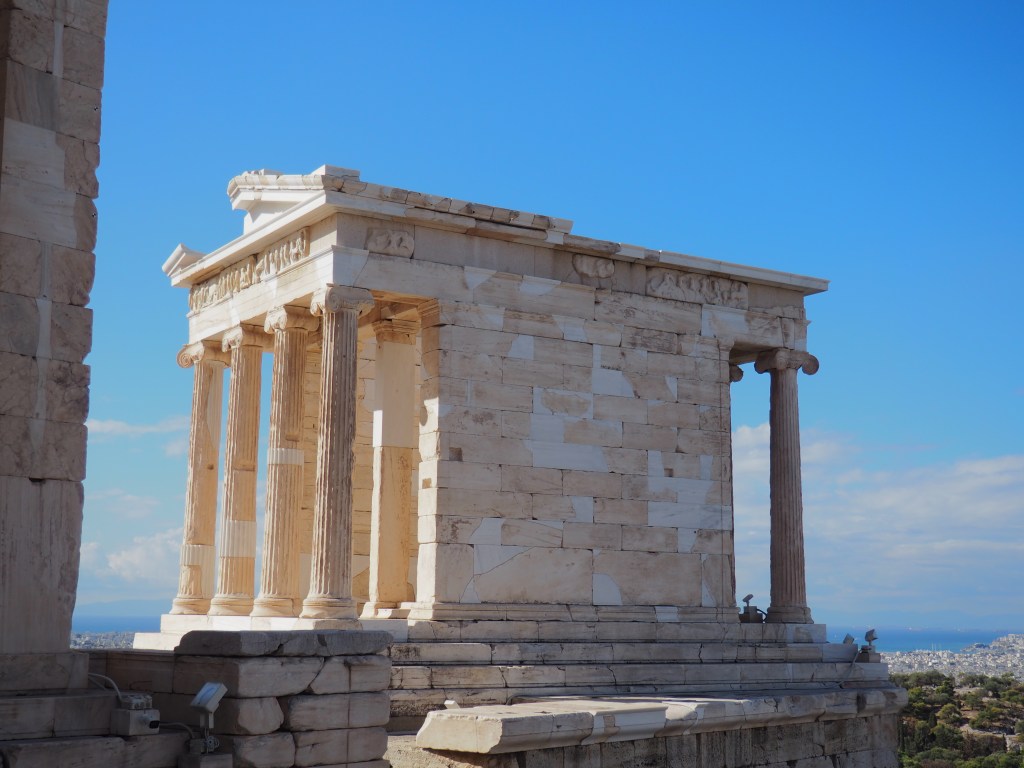
Atop the Acropolis. As you enter through the Propylaia Gate, the relatively well preserved and striking Temple of Athena Nike, goddess of Victory, is to your right. The Propylaea gate was destroyed by the Ottoman Turks.
As you enter the grounds, the Parthenon stands before you. This Temple was dedicated to Athena. Ironically, the columns are in the doric style which represented men (vs. ionic which represented women) despite the temple being dedicated to Athena. The columns were built in such a way that they leaned inward to protect this third version from being destroyed by an earthquake., This genius feat of ancient engineering has helped keep it standing (along with the restorations) and it “dances” during earthquakes.
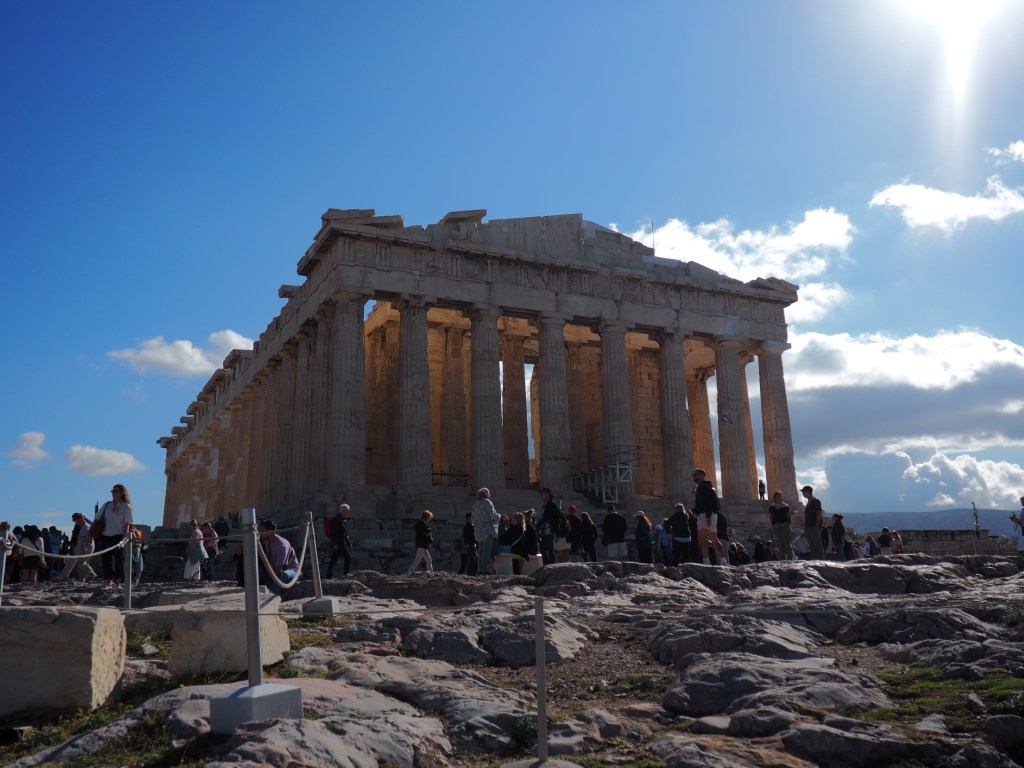
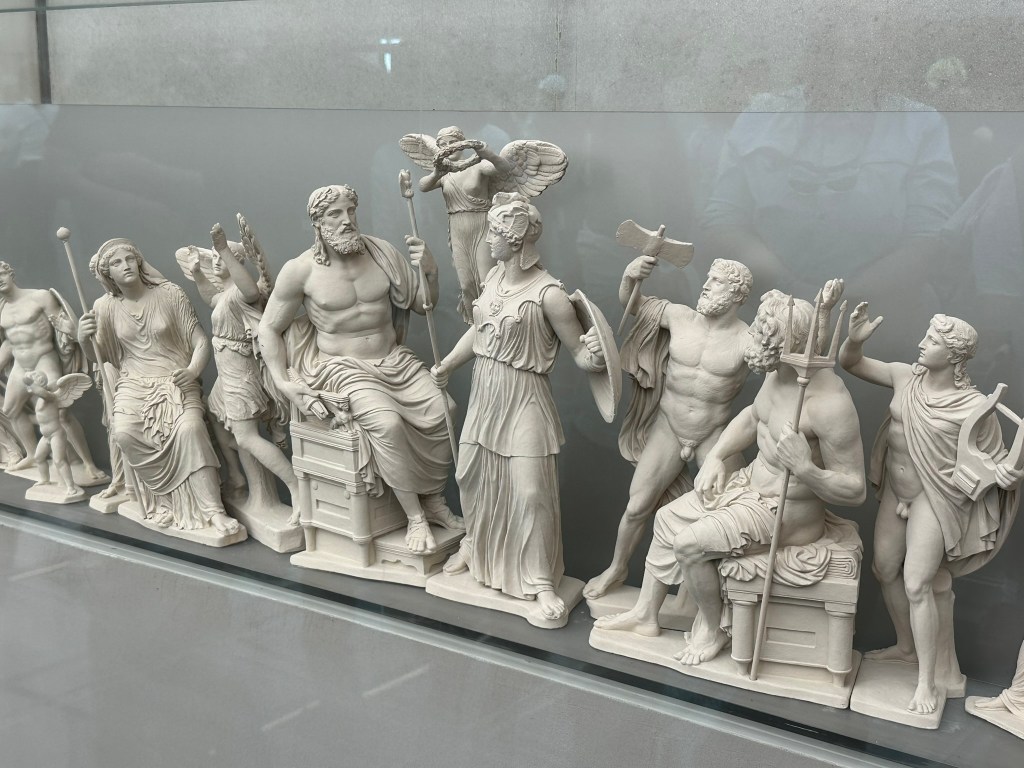
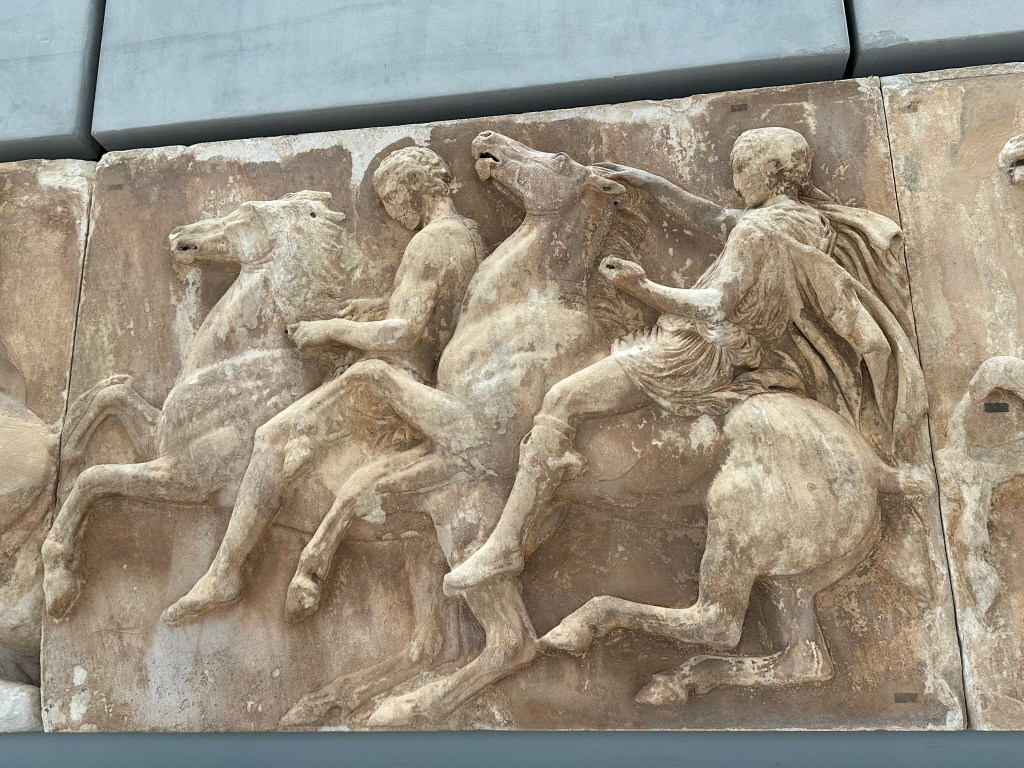
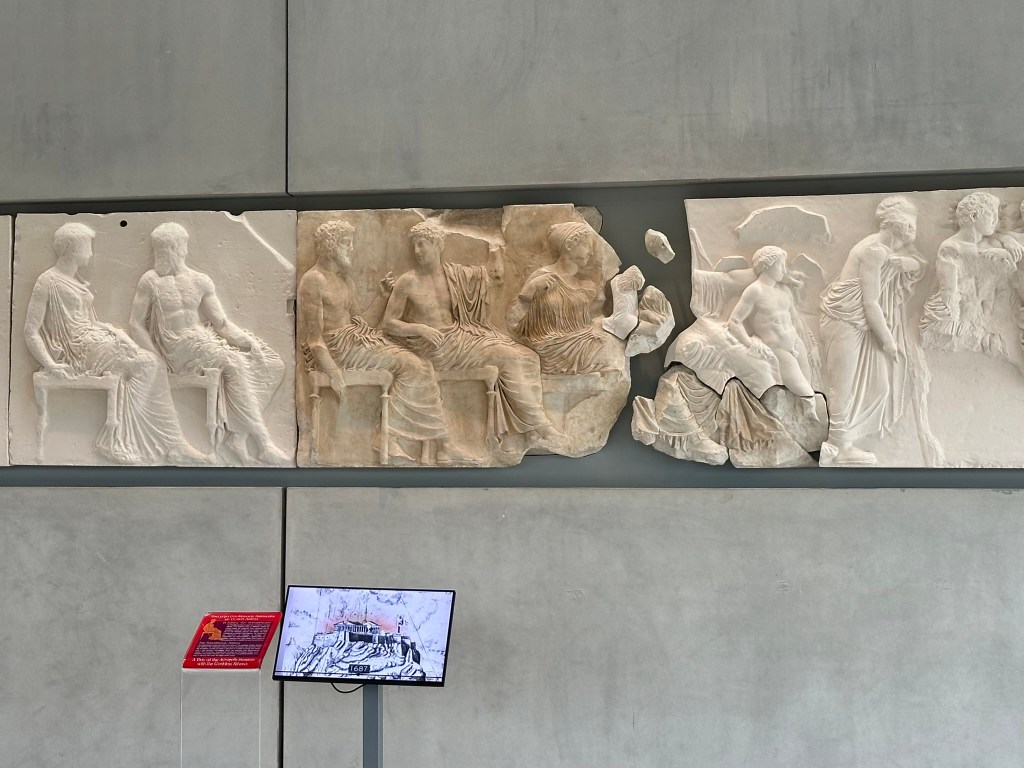
Around the temple, was a decorated frieze showing the procession of the Athenian citizens to the goddess Athena. The east pediment once depicted the birth of Athena who sprang from the head of Zeus. The west pediment depicted the contest between Poseidon and Athena for the patronage of Athens. Other decorations depicted scenes from the Trojan War and Greek mythology. All of the decorations and statues on the Acropolis were painted in brilliant blues, reds, greens and yellows. Alas, about 50% of the original “marbles” were whisked away to Scotland by Lord Elgin in the early 19th century to use as decoration of his Scottish mansion, but when he went bankrupt he sold them off to the British Museum in London where they reside to this day.
The Christians converted the Parthenon to a church to honor another virgin, Mary, and the Ottoman Turks converted it to a mosque. Restorations of the Parthenon continue to this day (and for the foreseeable future decades).
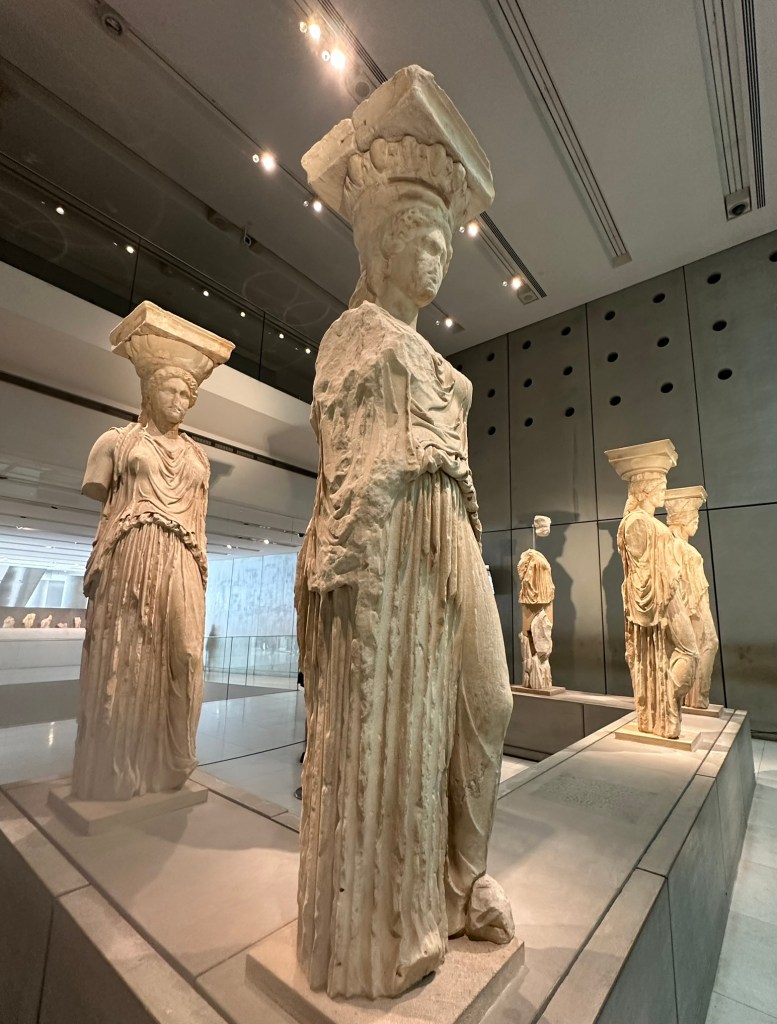
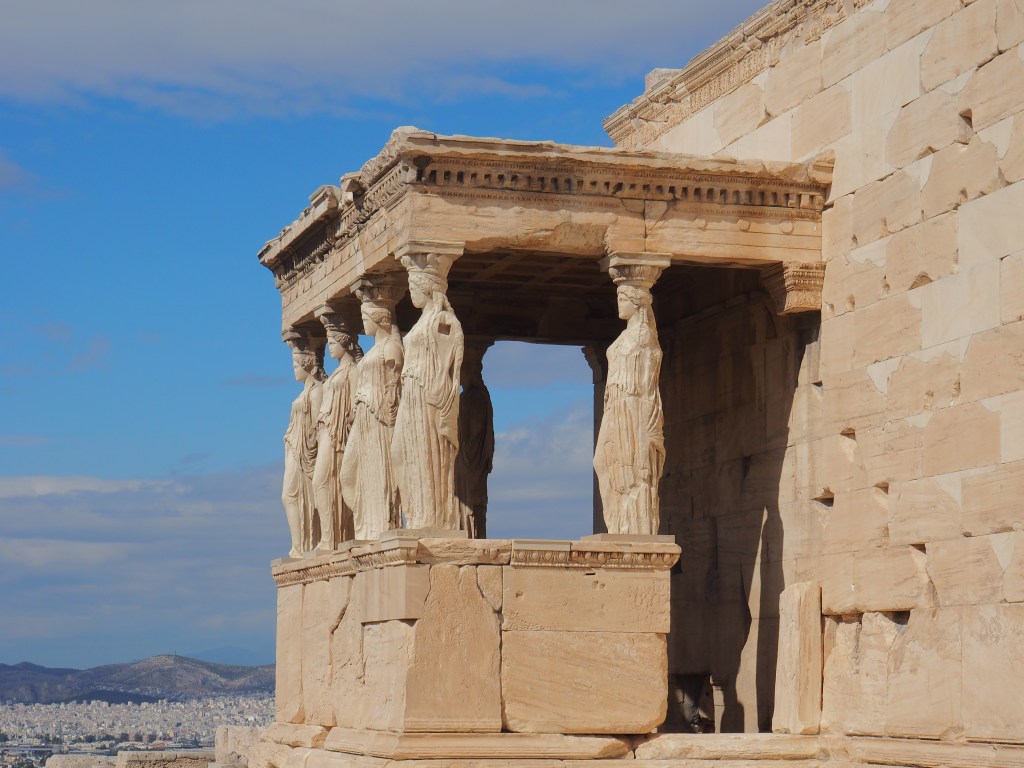
Finally, you’ll visit the Erectheio Temple which was built to all the gods. Six original Carotid statues once stood outside this temple. Early Christians vandalized these, and other statues, removing their eyes and noses in a fight against paganism, idol worship and, in this case, because the statues were beautiful.
Today, five replicas of them remain as five of the originals reside in the New Acropolis Museum down below, one (the sixth) is in disrepair as Lord Elgin tried to pilfer it because it was the only structure on the whole of the Acropolis painted purple. The third one, missing here resides, you guessed it, in the British Museum after Elgin’s successful swiping.
(New Acropolis Museum)

(New Acropolis Museum)
The “New” Acropolis Museum. The museum is fantastic. Below it you can see the remains of Roman ruins which were discovered while building it. The first floor above ground level contains the five Carotid originals and remnants of the second Acropolis (the one destroyed by the Persians). The second floor of the museum contains both replicas (the whiter ones) and originals (the faded ones) from the frieze, metopes and pediments of the third Acropolis’ Parthenon.

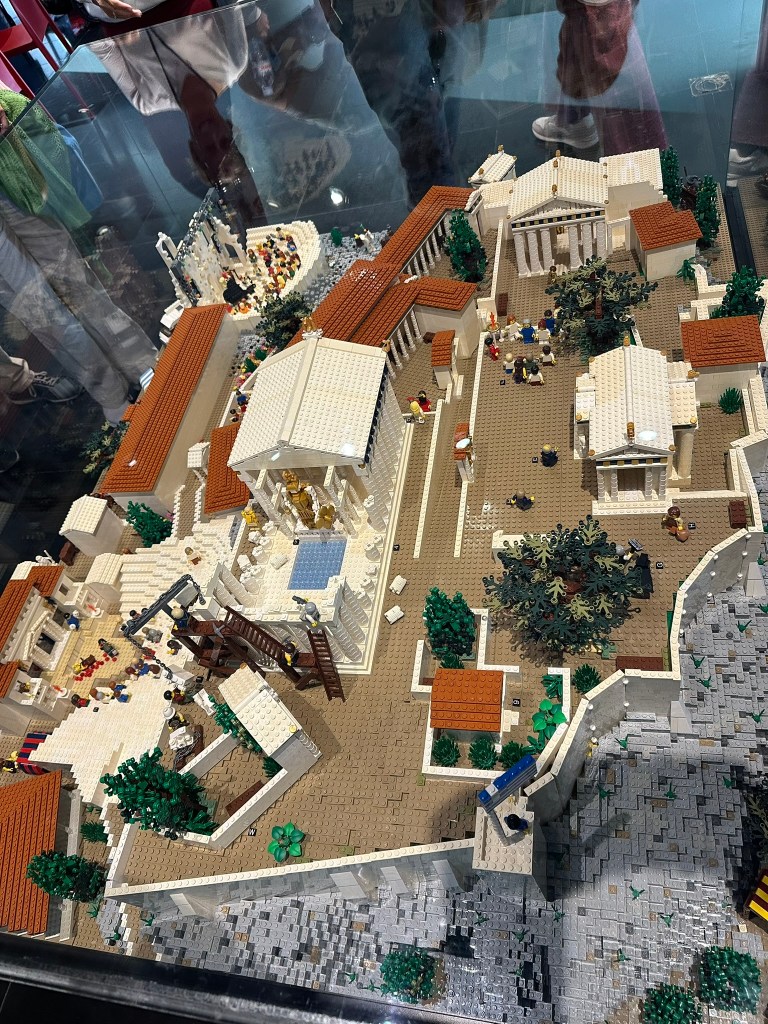
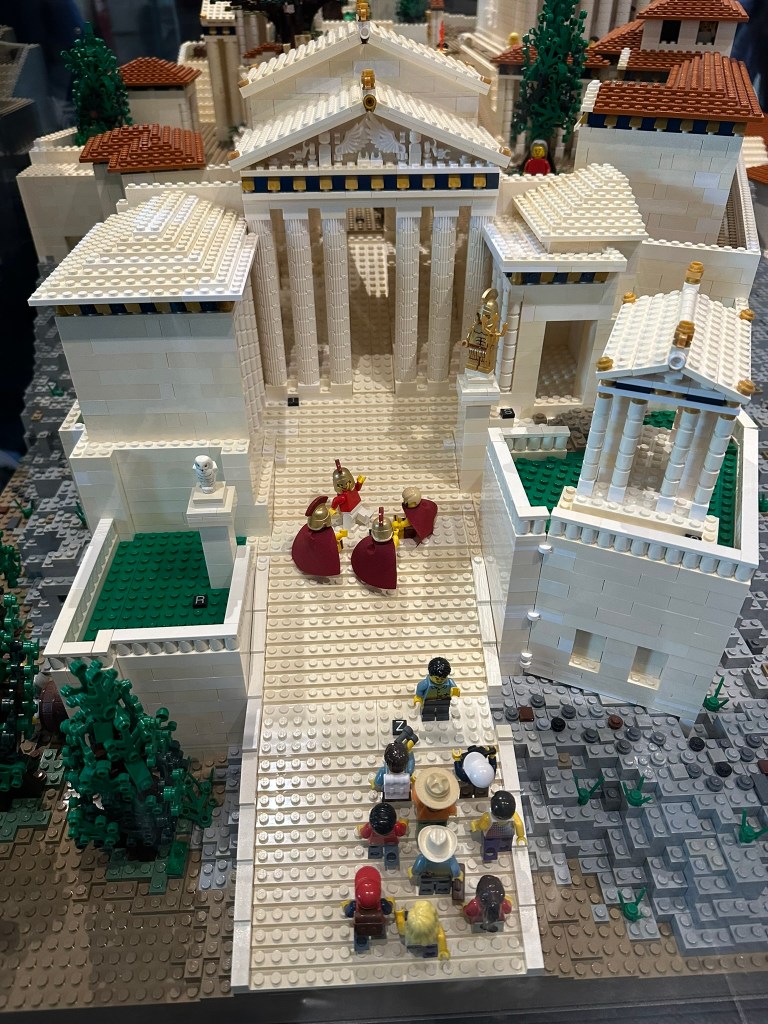
You’ll also be able to view some pretty fantastic models of what the pediments once looked like and a copy of Acropolis hill made of Legos. The inventor or Lego blocks was inspired by the Temple of Athena Nike after a visit to Athens and created the famous painful-if-stepped-upon-in-bare-feet blocks from his inspiration.
(New Acropolis Museum)
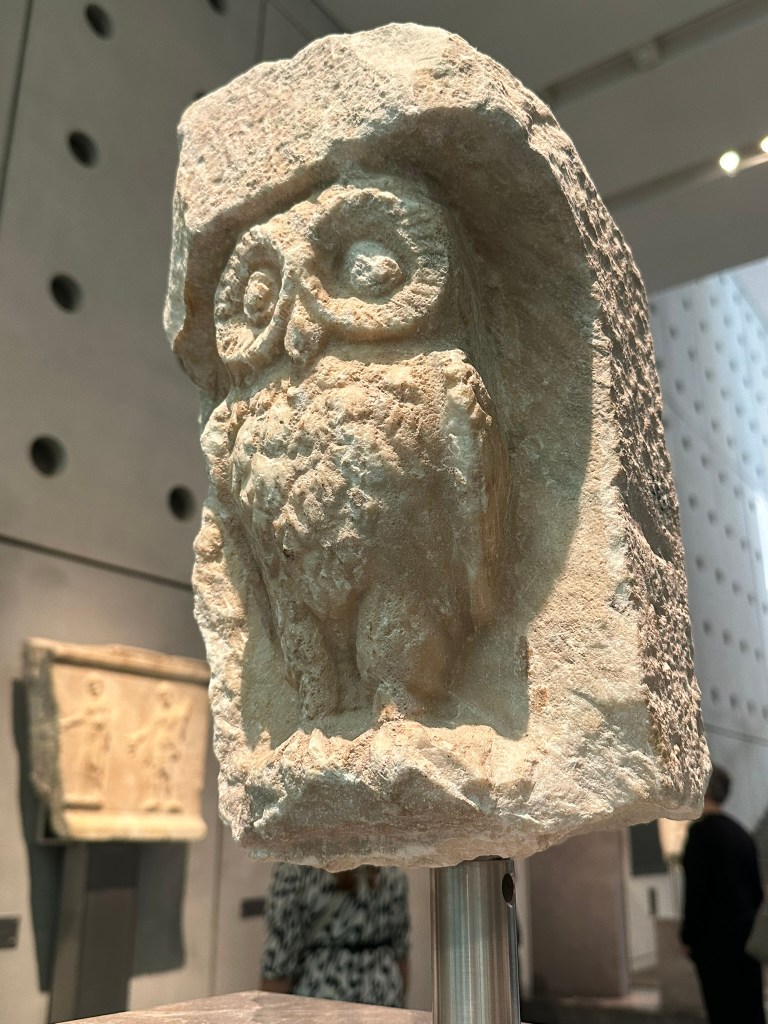
And what are those holes in the walls of the museum you say (see above behind the carotids)? Glad you asked. The geniuses who designed the museum punched them in the walls to help with acoustics and keep it quieter despite hoards of visitors. And you know what… it works.
The Ancient Agora. The Agora, the world’s first shopping mall, is worth a visit. Much less crowded than the Acropolis, you can lose yourself in ancient Greece.
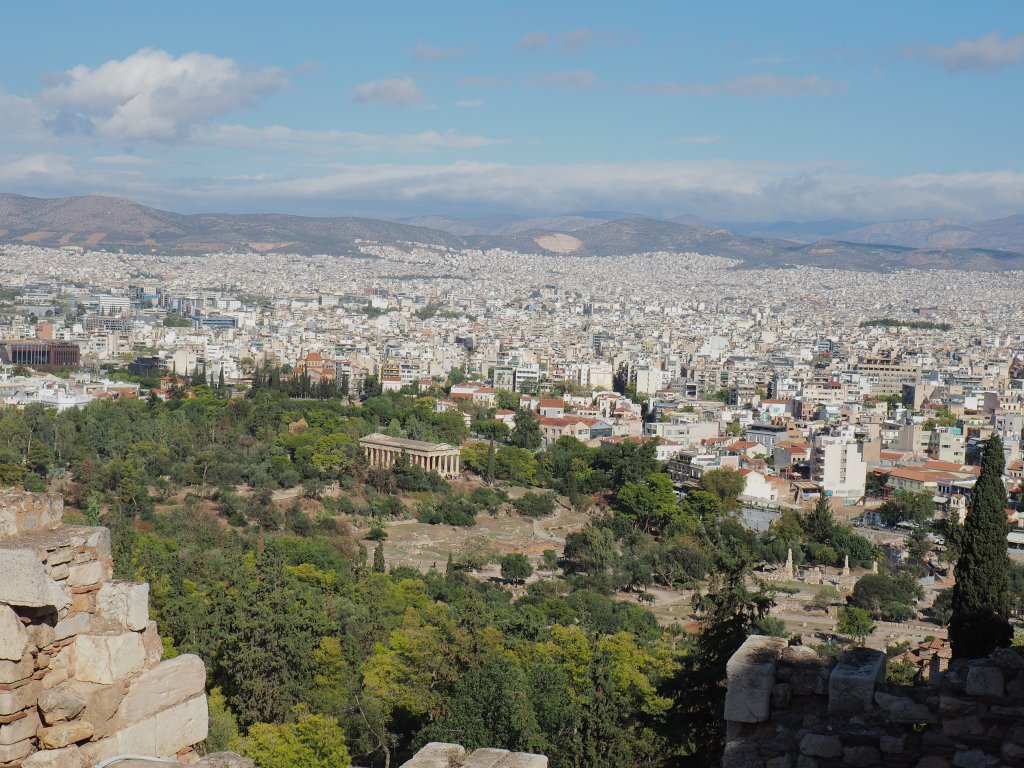
Like most ruins to make sense of what you’re seeing, it’s helpful to have a guide. It’s a lesson we learn (at Knossos Palace in Crete), make changes (the Acropolis) and forget (Mycenae) and then relearn (here).
Fortunately, Rick Steves has an excellent one free and available on his app. His tour takes about an hour to do and exposes you to life in ancient Greece: the Agora market, the rebuilt Stoa (where the museum now resides), the temple of Hephaestus and the Tholos (now just a circular mark on the ground with a crumbled pillar at its center) where Greek democracy was born.
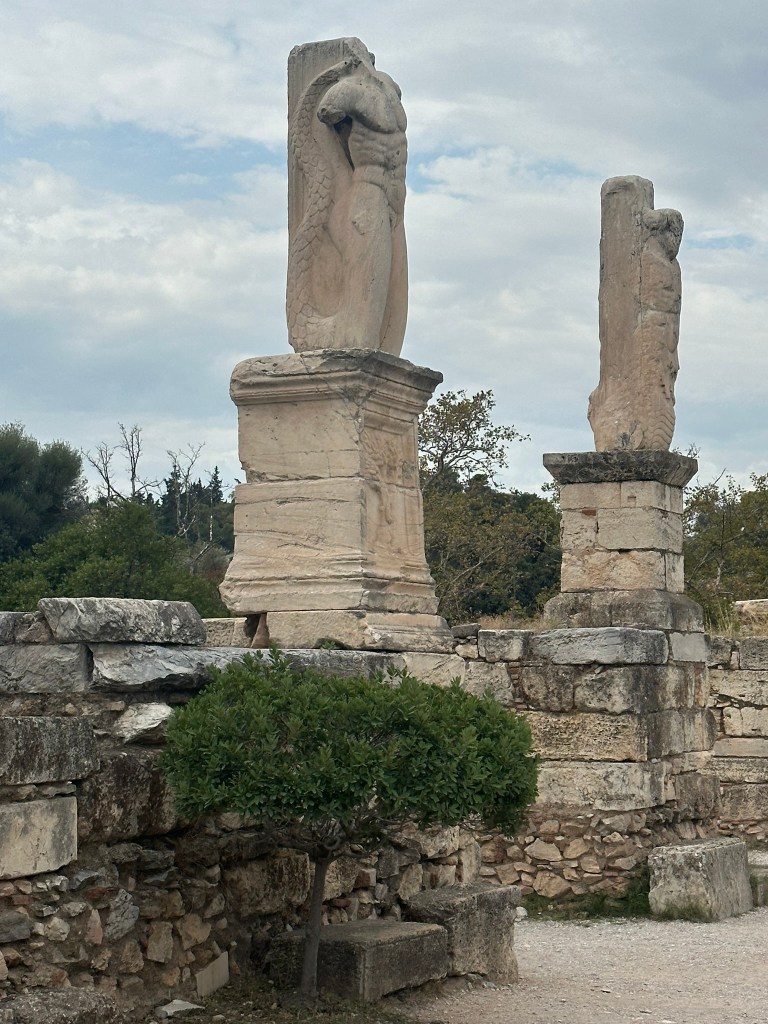
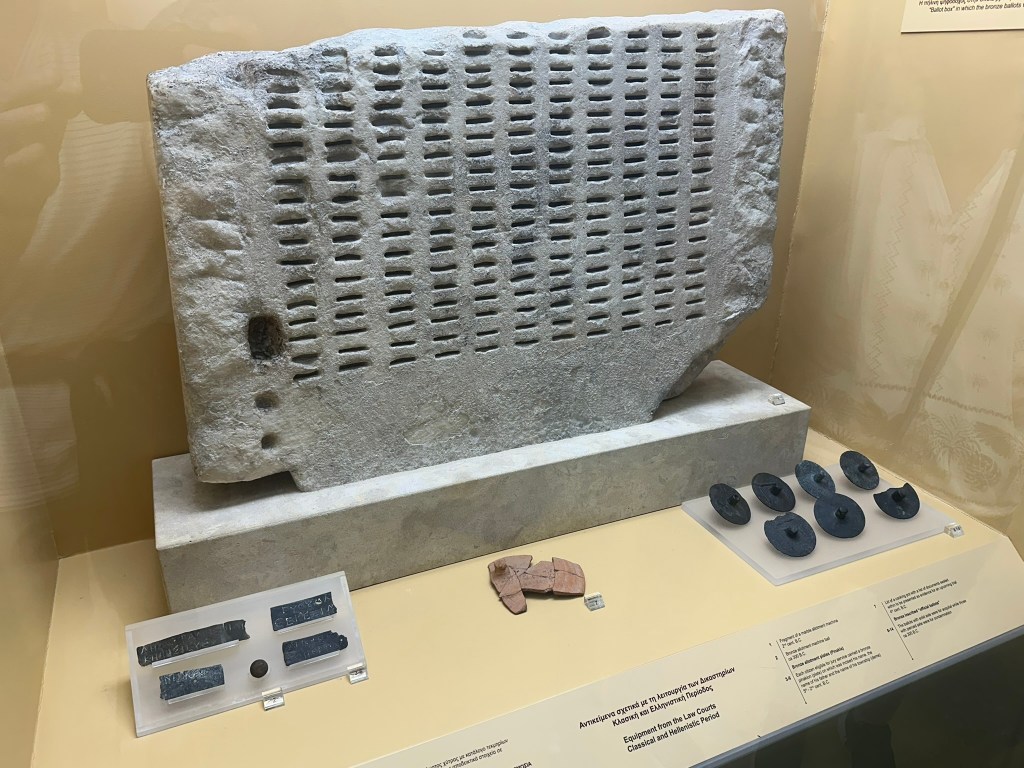
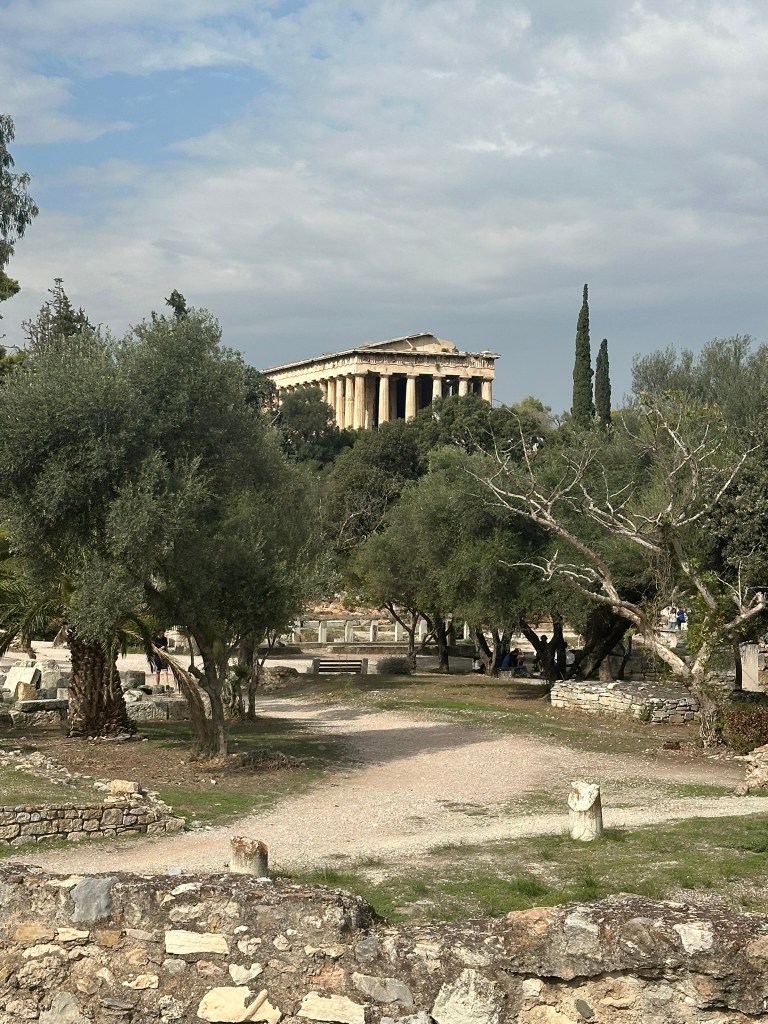
Closing Out our Greek Odyssey. We left Athens to take a spin around the Peloponnese, but returned here for our final nights and wrapped it all up with some wandering through the Plaka. The only touristy thing we did was take the tour of the ancient Agora. At the end of these longer trips, we like to spend our final day or days just wandering around, reliving memories and relaxing on our hotel’s rooftop or wherever we find ourselves. We ended our visit at 2Mazi, the restaurant where we finished our last trip here 10 years ago. It seemed somehow fitting to end there, a bookend on our two trips.
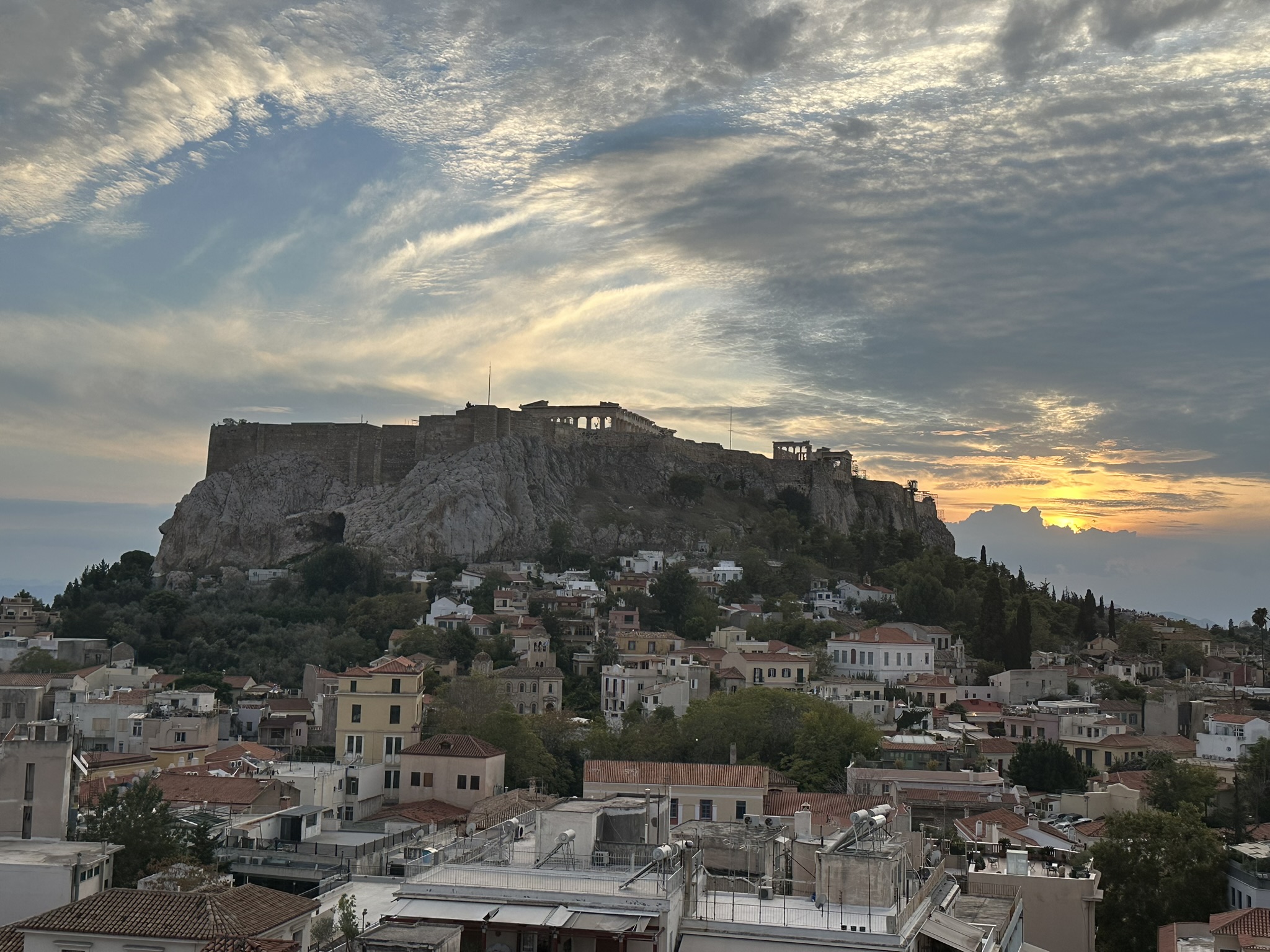
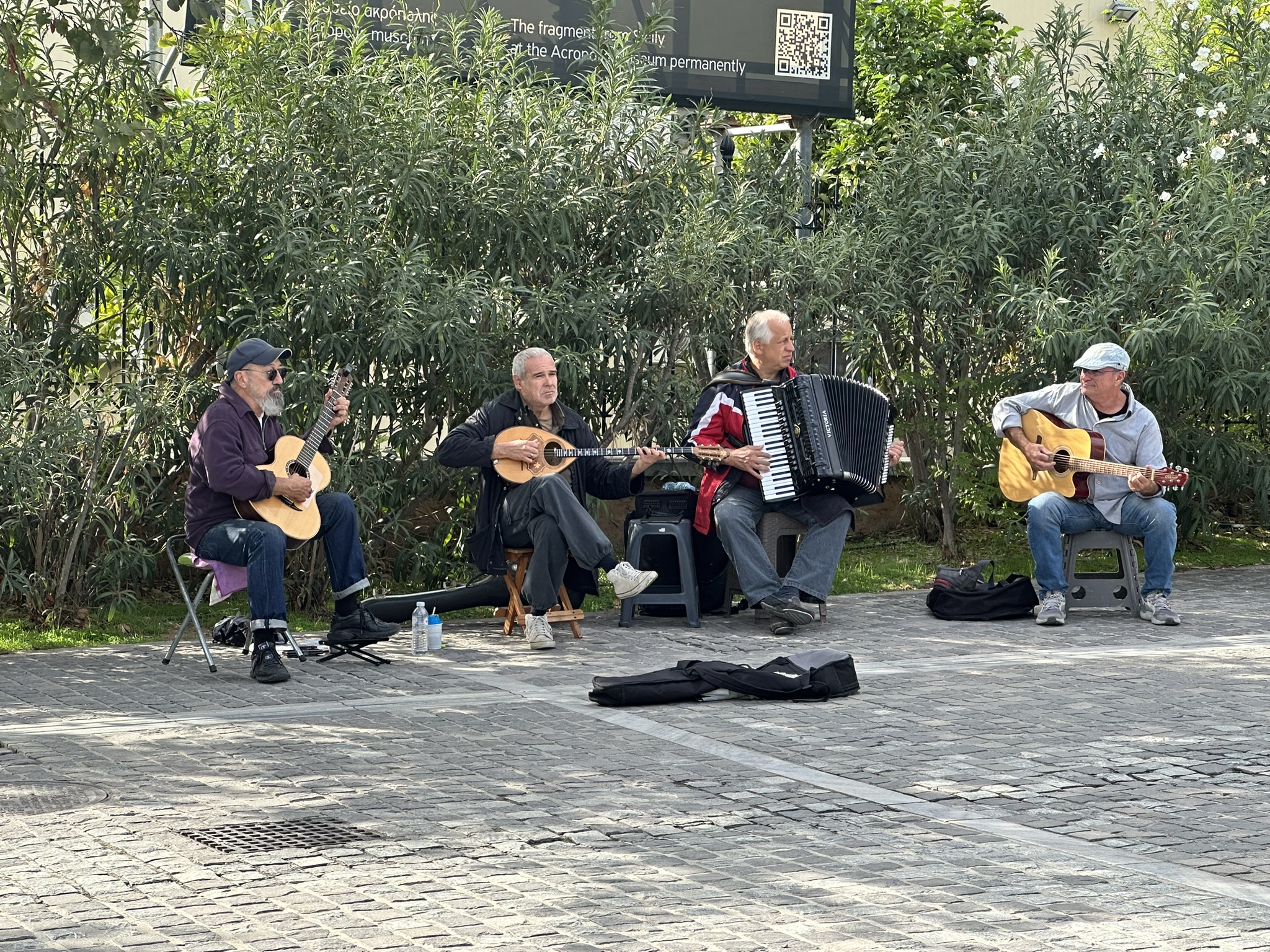
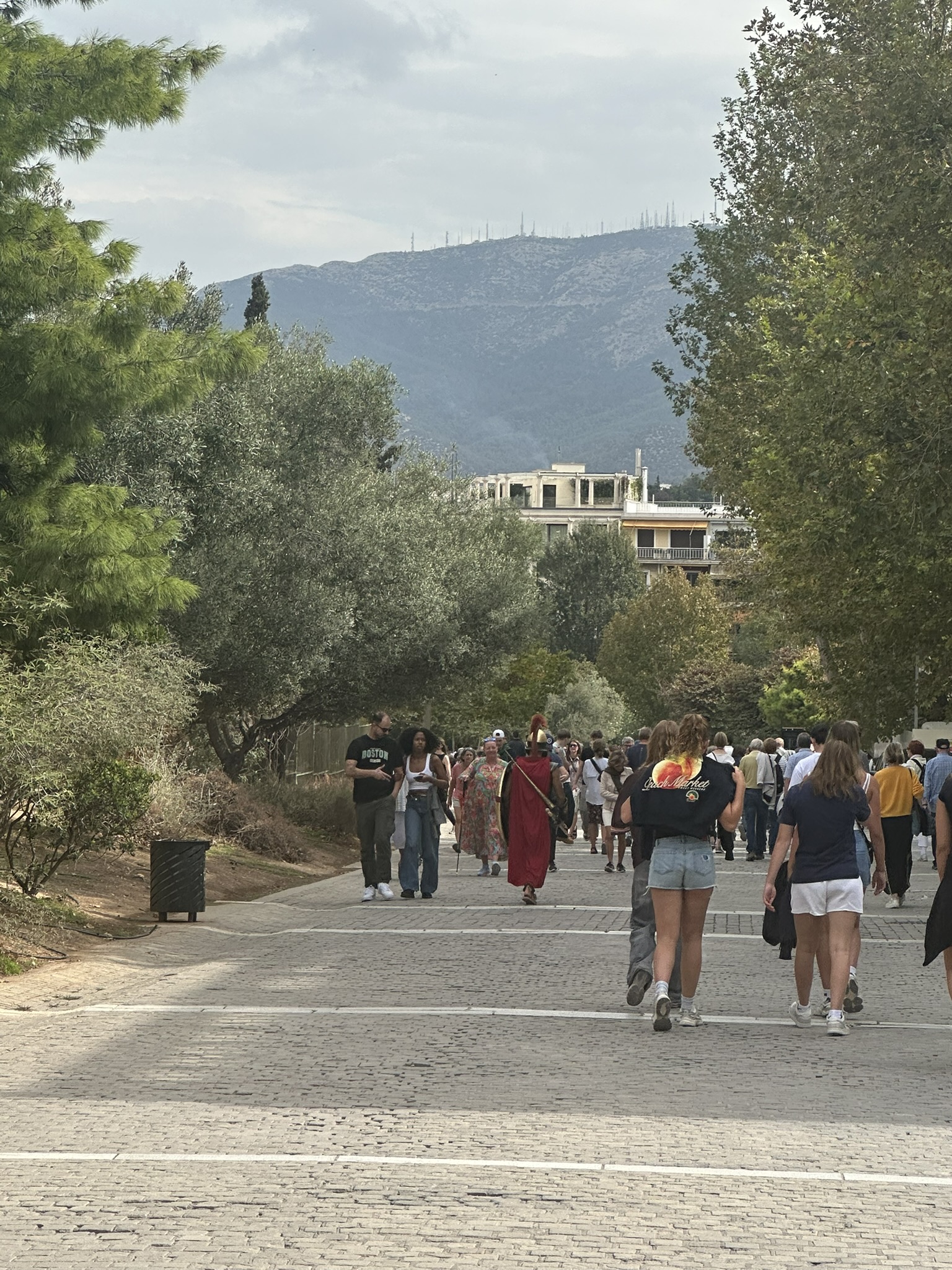
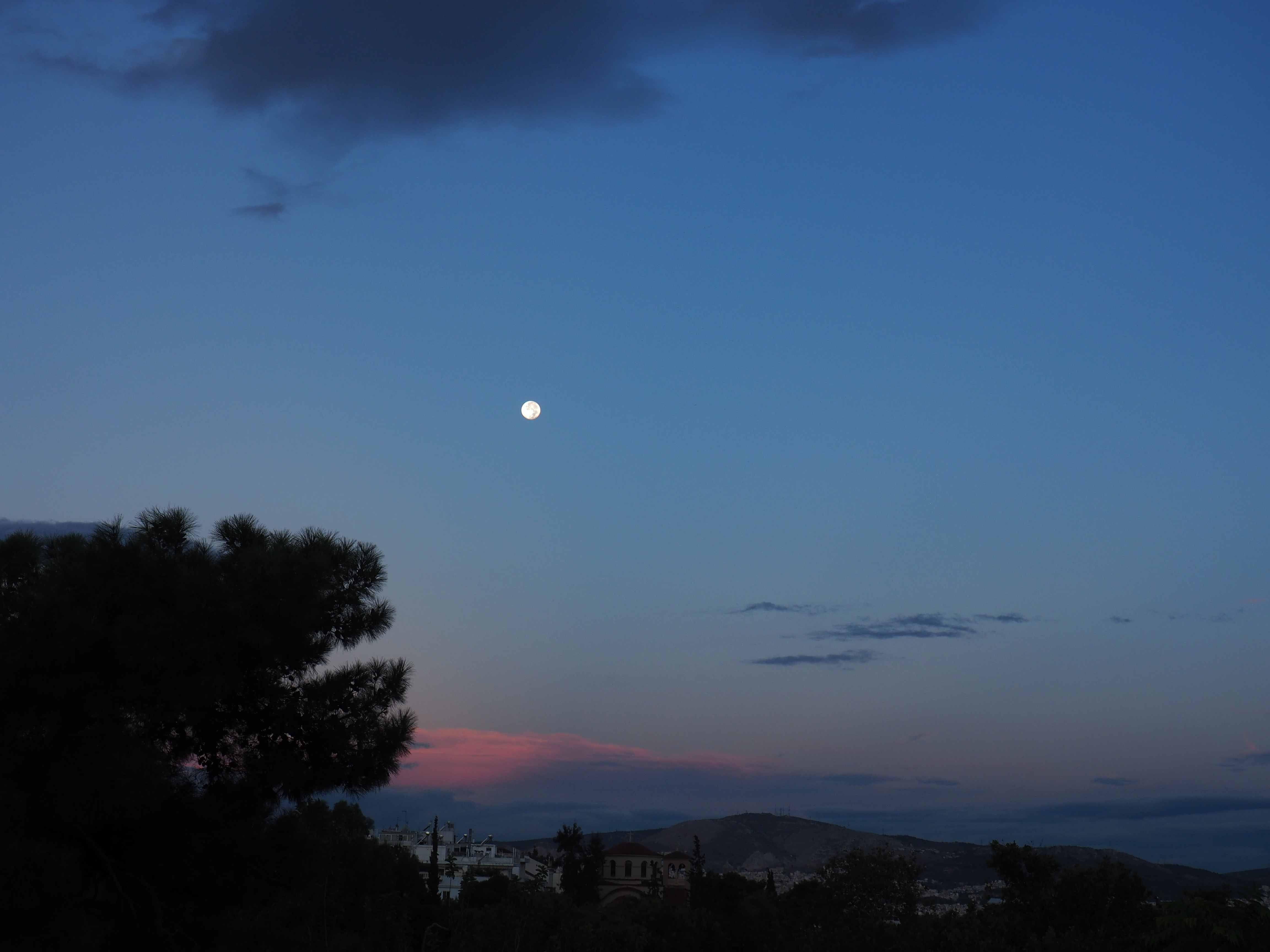
Greece feels both European and not at all. Juxtaposed at the intersection of the Middle East and Europe, Asia and Africa you get the sense of the influences of all of these cultures which clash and harmonize in a great chaotic symphony. And in this symphony, Athens is the conductor. The center of the beautiful chaos. So what better place to cap off and close out our Greek tour than at its center. Its center of myth, of democracy, of its storied gods, of philosophy, its alphabet and symbology, its food and music, and of this wonderful and proud, vibrant and out-loud people. Thank you, ευχαριστώ, Greece.
Sources:
- Greek Mythology, Olivia Coolidge, Houghton Mifflin Company, 1949.
- https://greekmythologytours.com/blog/percy-jackson/athena-vs-poseidon
- Athenian Tours Acropolis and Acropolis Museum tour, October 7, 2025.
- https://en.wikipedia.org/wiki/Theatre_of_Dionysus
- https://ancient-greece.org/greek-art/the-sculptures-of-the-parthenon/
- Rick Steves City Walk Athens.
 The Traveling Ridleys
0 comments on “What Athens in Greece, Stays in Greece”