

We were scheduled to visit Milan last year when, on a whim, we bought tickets to see Bruce Springsteen here for Melissa’s birthday. But the Boss had vocal chord issues and had to postpone and, well, so did we. When I got the reschedule notice for July, I thought “damn, we will be in the USA by then” but then I noticed the year: July 2025 and realized we’d be back in Europe, so rebook Milan we did to see the Boss.
For our trip we also re-booked a walking tour of Milan with City of Wonders, through Viator, which included it’s Duomo and, of course, da Vinci’s Last Supper. The first time we were to come, after booking our airline tickets, I realized that the Last Supper takes a break from feasting eyes on Mondays, our only full day in Milan. So, chock one up to karma, this time our tour (on a Wednesday) would include the masterpiece.
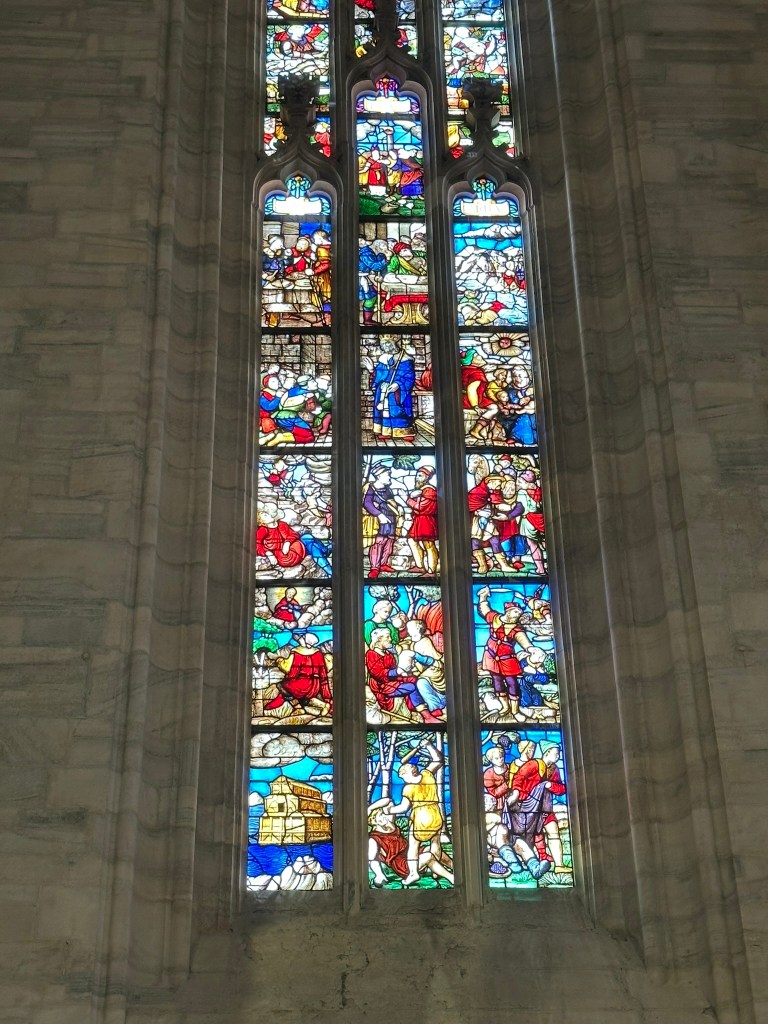
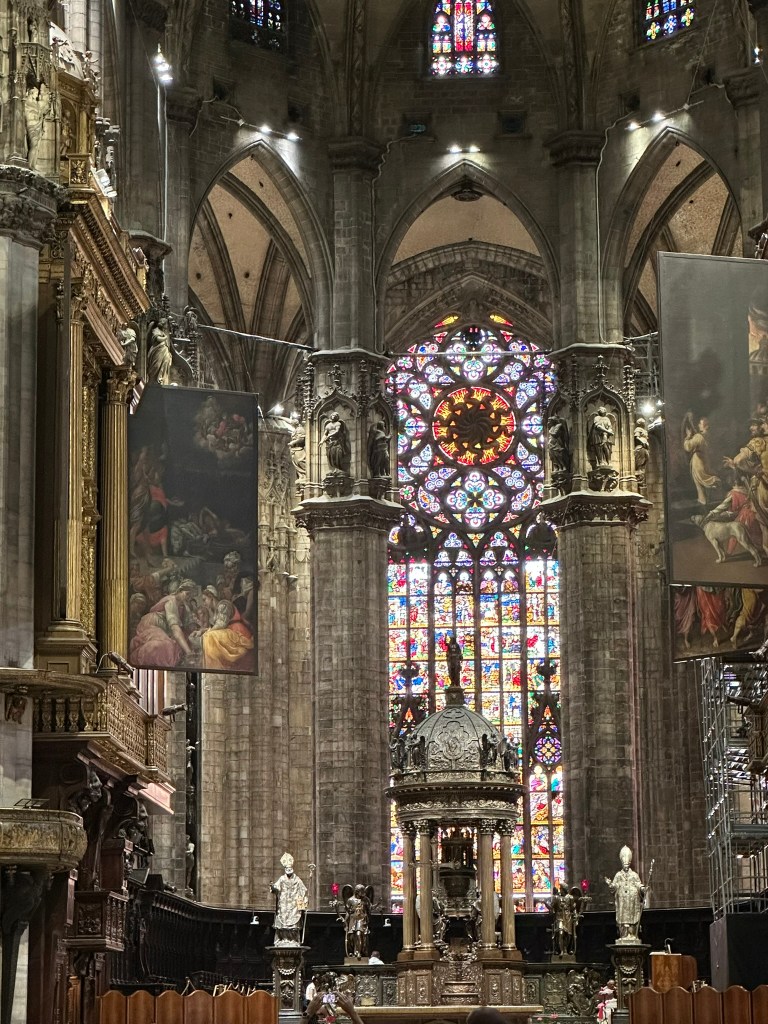
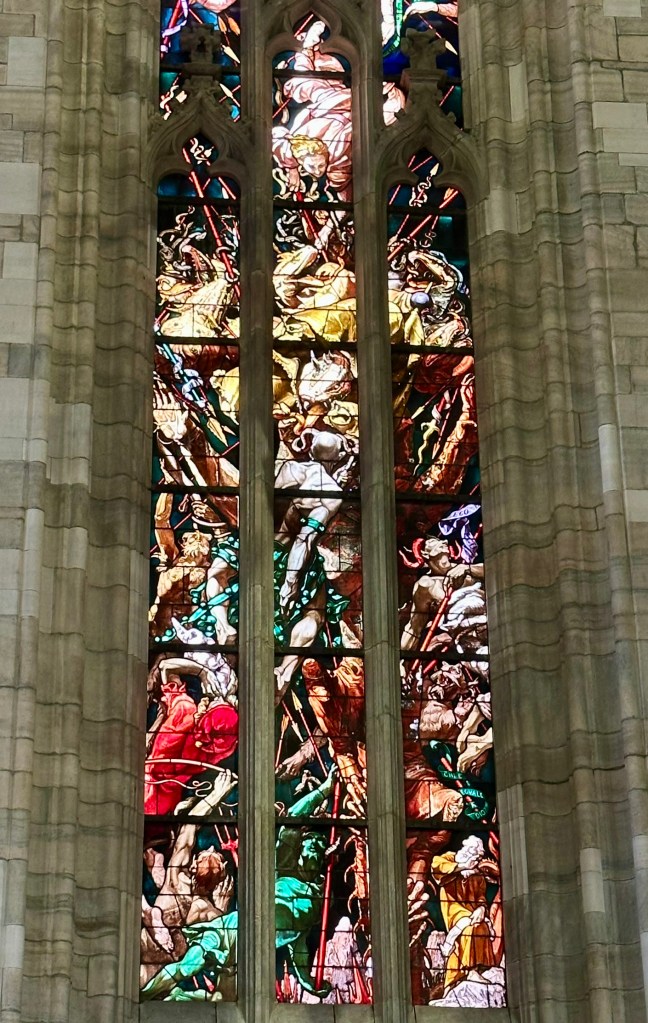
Milan’s Duomo. We began the tour at the Duomo, where we were met by our guide, Lara. We’ve been to a lot of Duomos and Italian Basilicas on our previous three trips to Italy; this one is special. There are 55 stained glass windows, 135 spires and pinnacles, 3,400 statues, 135 gargoyles and over 700 bas reliefs. Construction probably began in 1386 and has basically never stopped as it continues to be restored to this day.
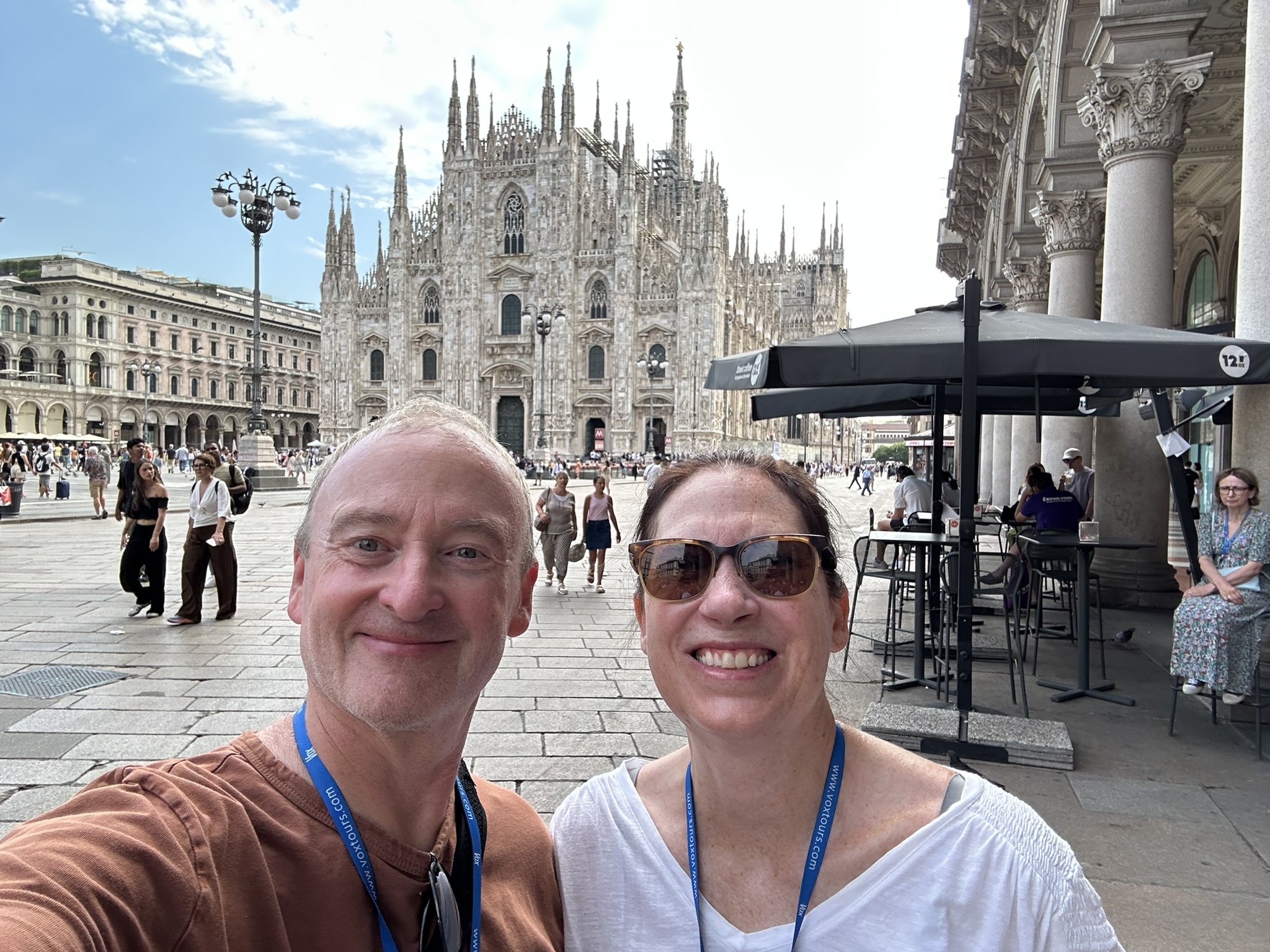
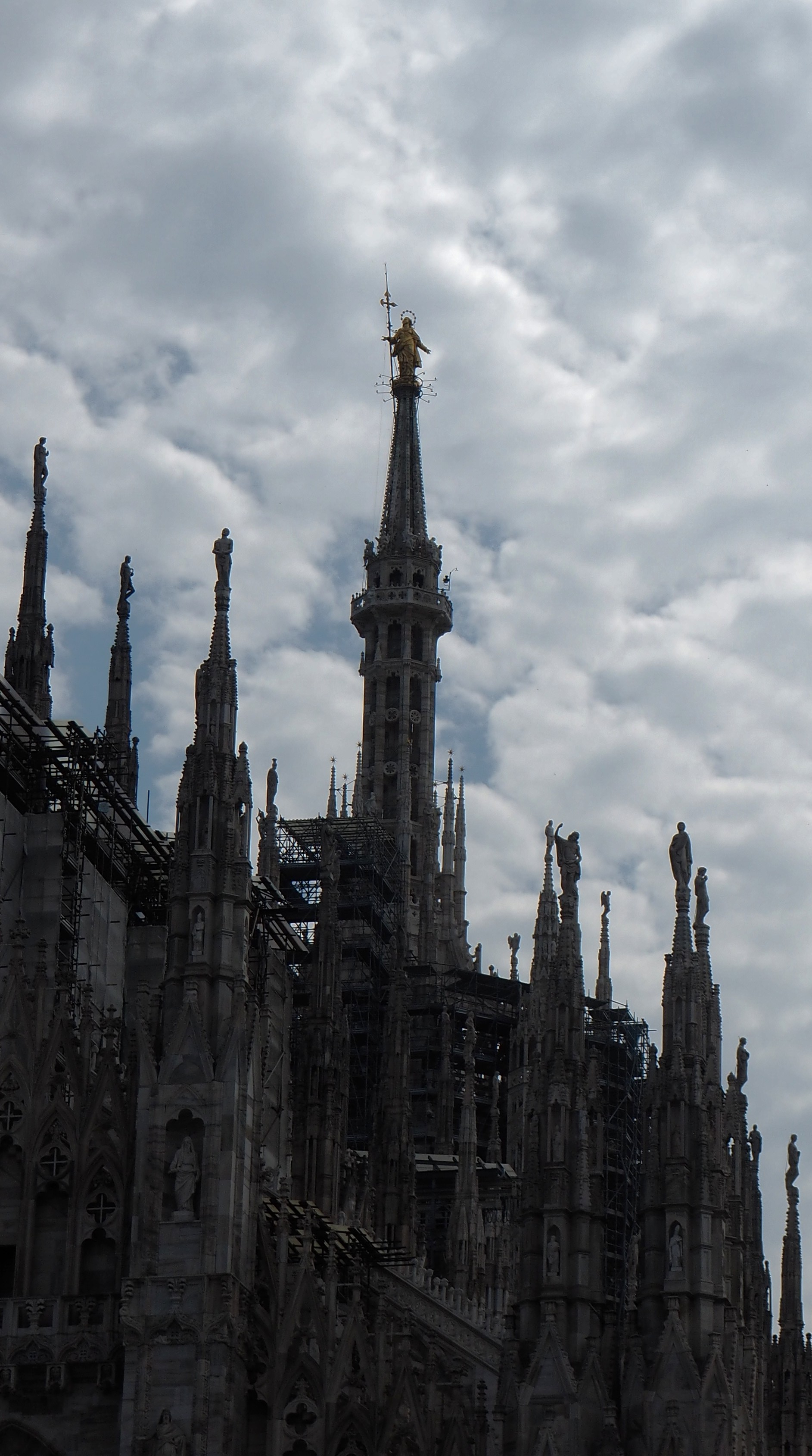
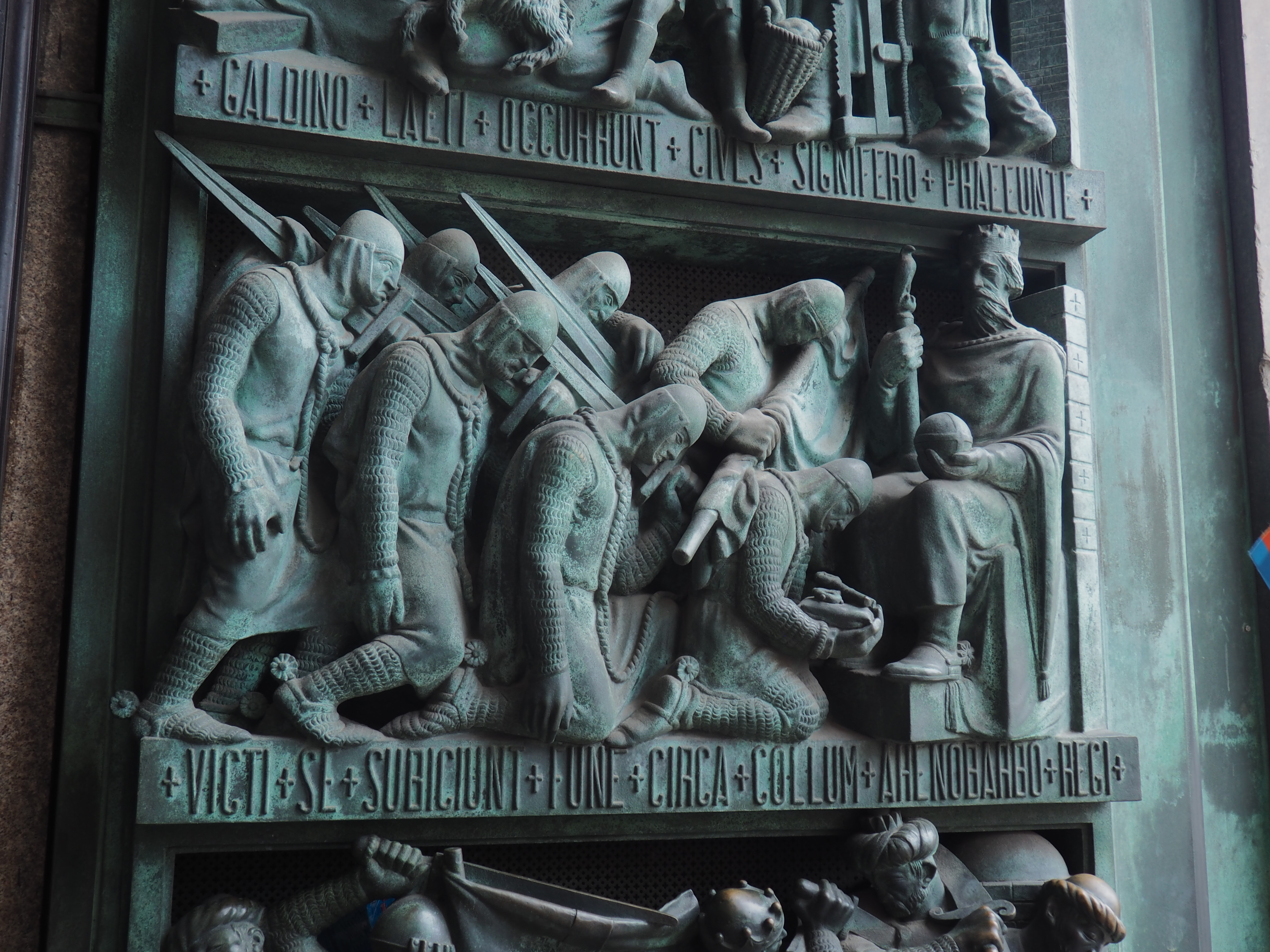
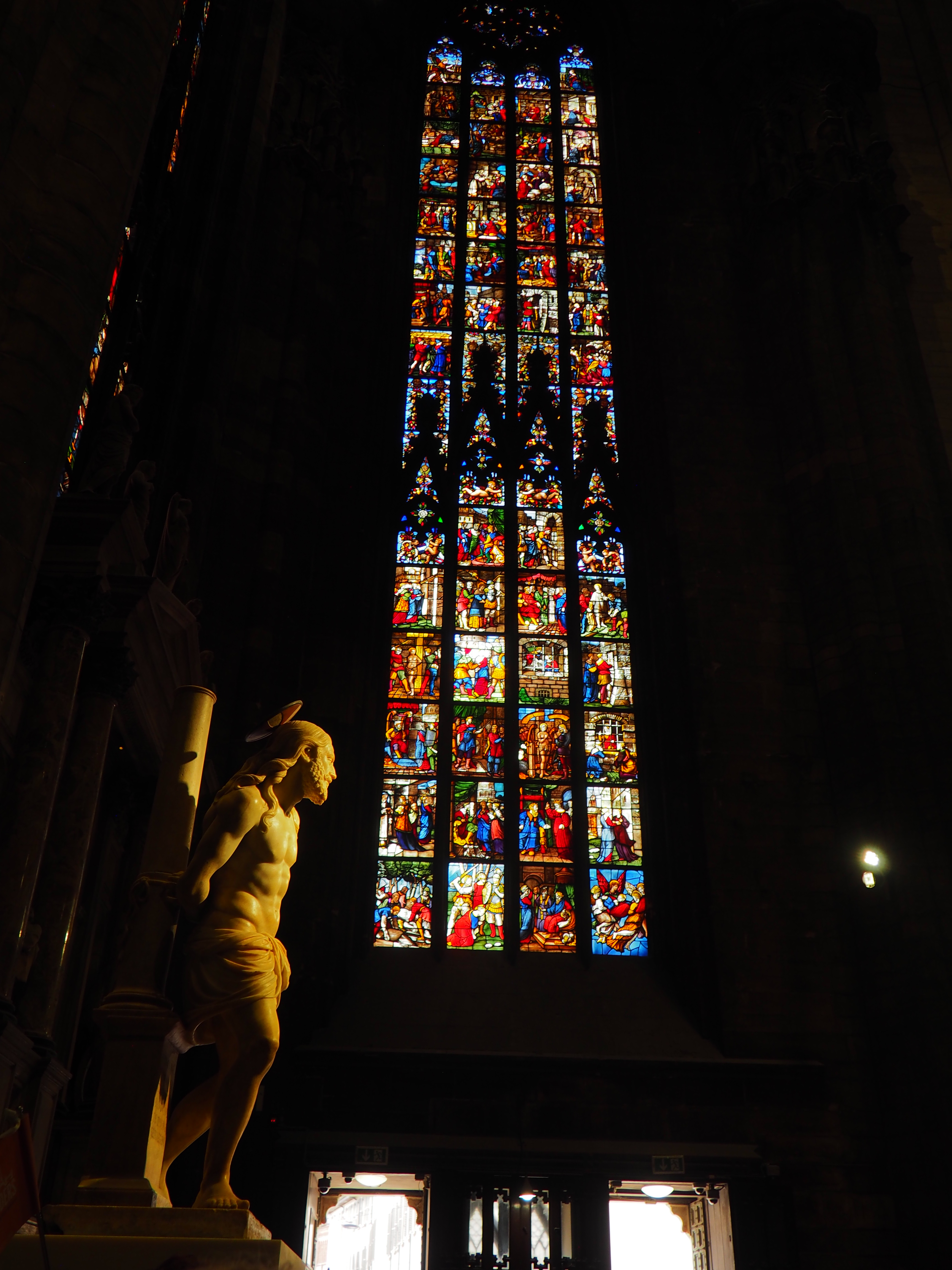
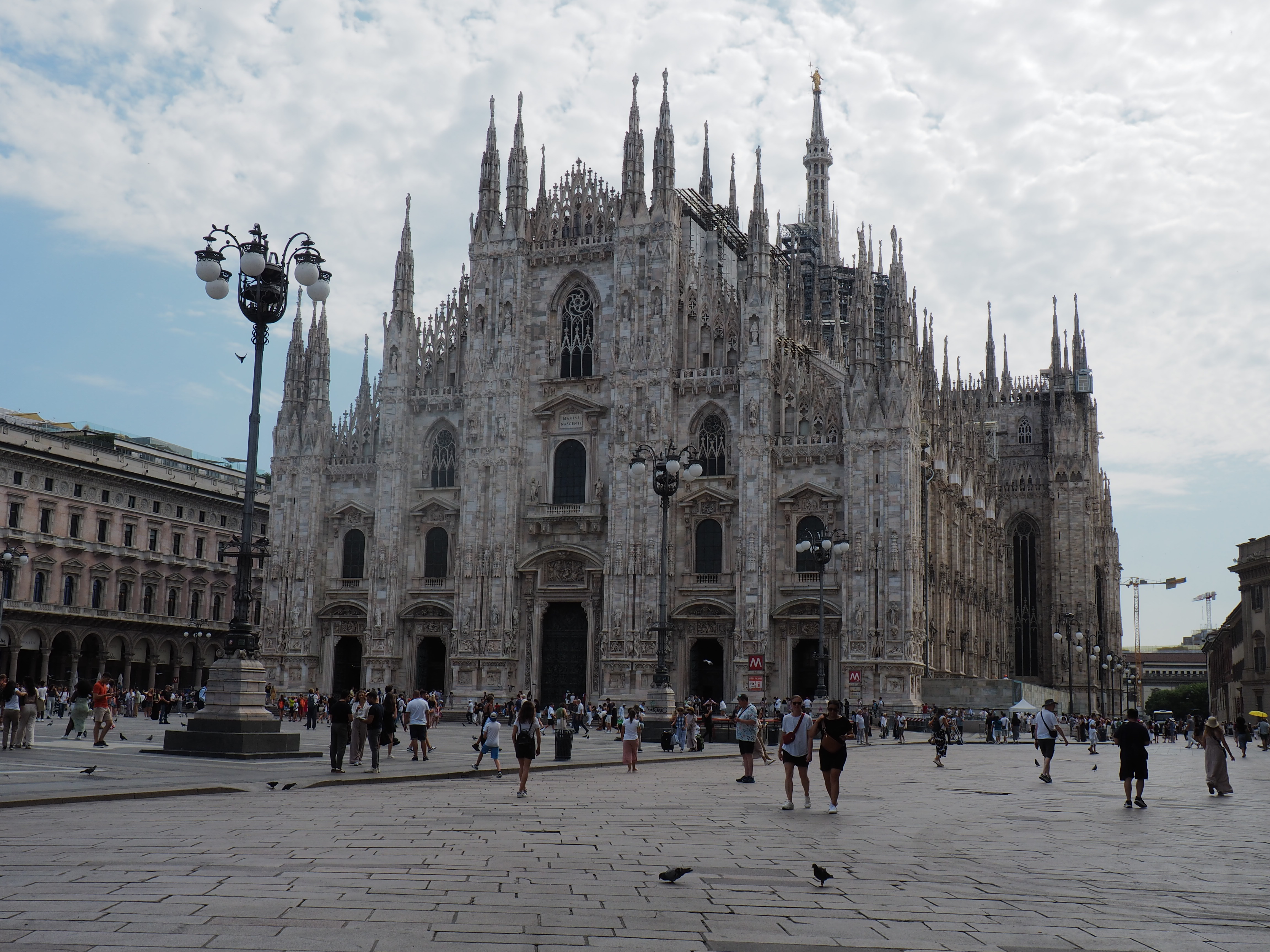
The Duomo was built on the site of two other cathedrals which pre-dated it, Santa Maria Maggiore and Santa Thecla, along with the Baptistery of San Giovanni alle Fonti. Its gothic design in marble was a revolution for the period, vs. traditional Lombardian brick, requiring hiring engineers, architects, sculptors and stone cutters from across Europe. The high altar was consecrated by Pope Martin V in 1418, and the façade construction didn’t begin until the end of the 16th century, moving the façade of Santa Maria Maggiore forward and expanding upon it. Its construction was not finished until 1813 thanks to a push by Napoleon to have it finished for his coronation as King of Italy in Milan at the Duomo.
During World War II, the stained-glass windows were deconstructed piece by piece, glass stored in an undisclosed location and then reconstructed after the liberation of Italy in 1943. Because of Milan’s climate and smog from traffic and the factories of the city’s industrial roots, the Duomo is constantly being restored and cleaned from its marble floors to its spires and its glass. Proceeds are raised from tours, tickets and donations, not from the Catholic Church.
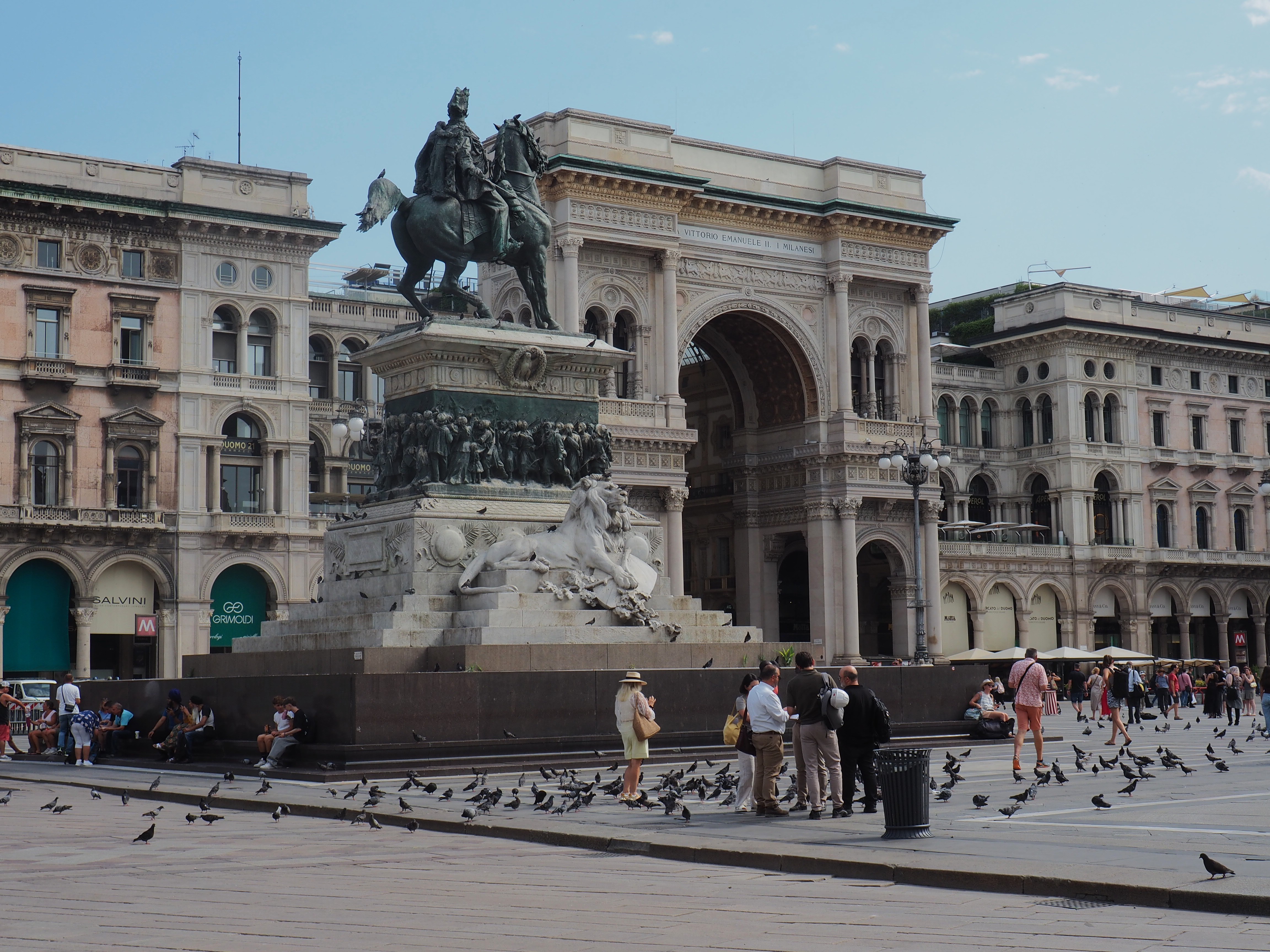
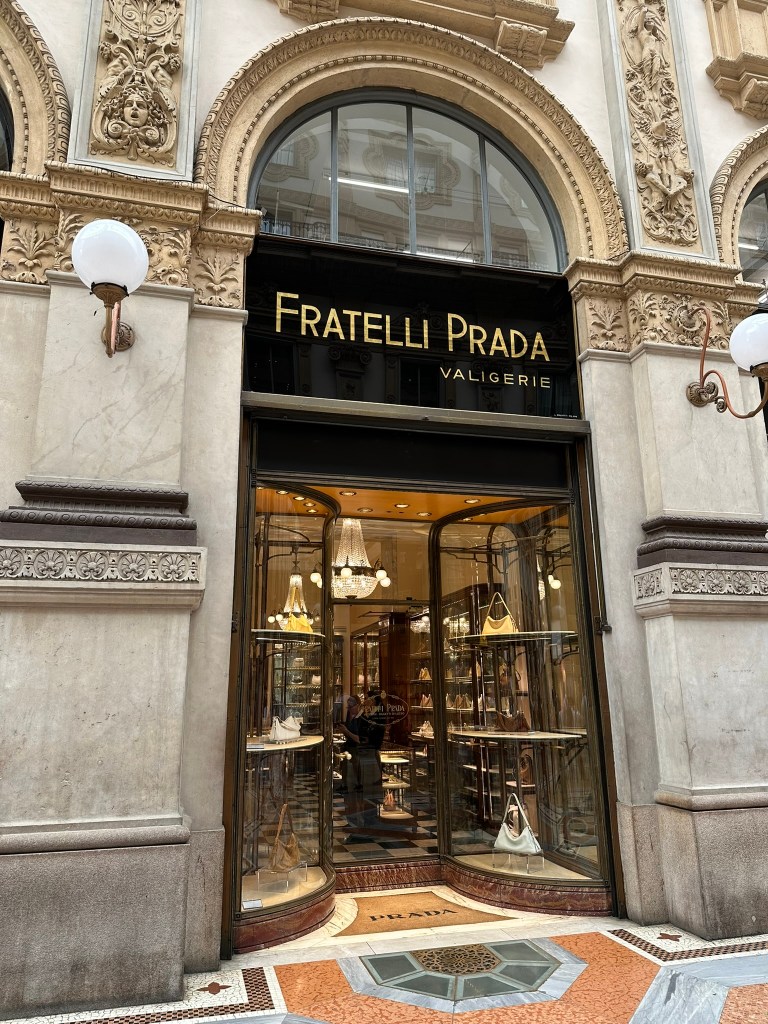
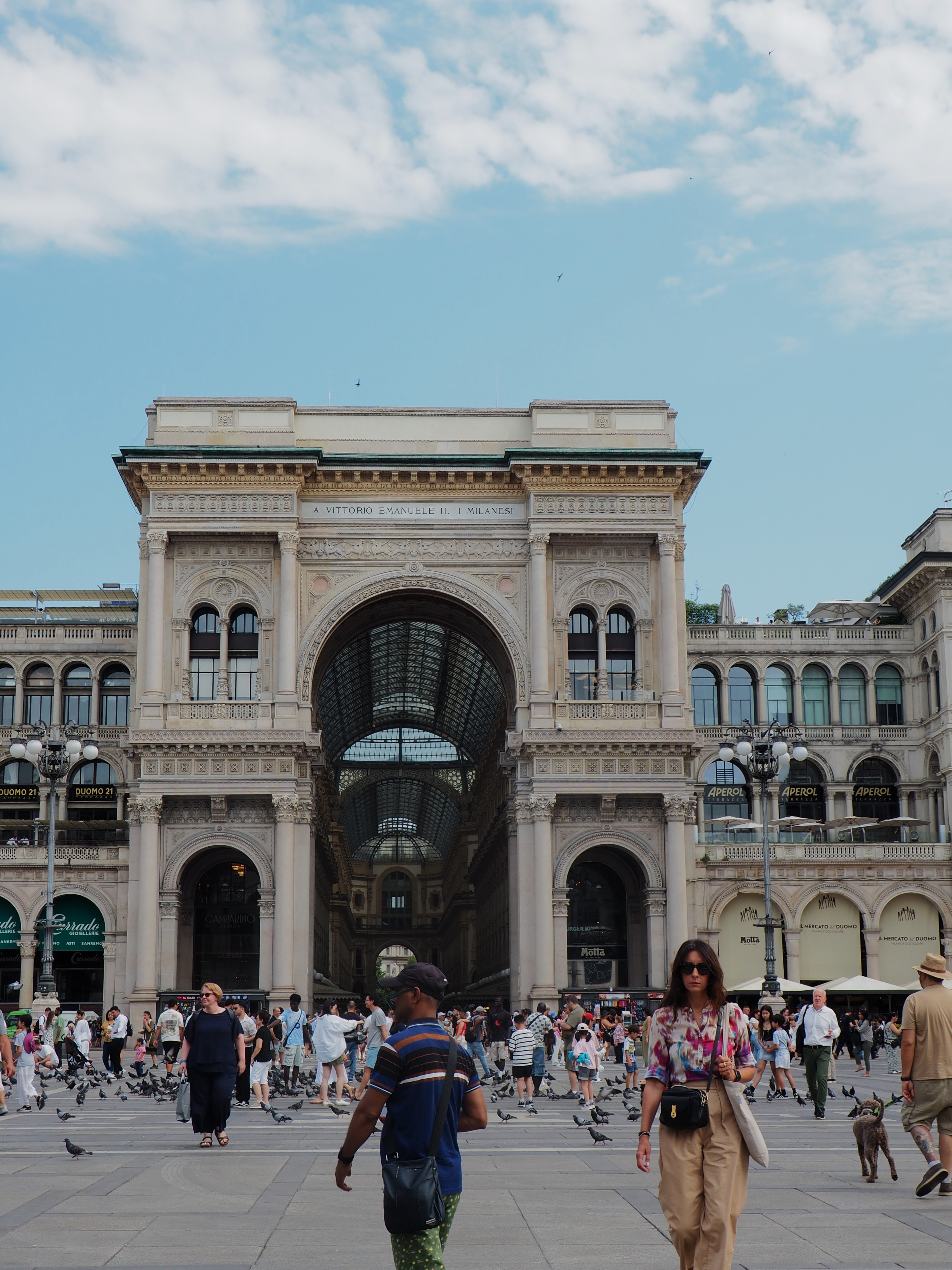
Galleria of Vittoria Emmanuel II. From the Duomo, we progressed under the arch off the piazza into the Galleria of Vittoria Emmanuel II (unified Italy’s first king). Initially built to house artisans of Milan, as the rents were raised and raised, most of them were pushed out to make way for higher end brands. Of the original artisans, only the original Prada store (obviously now also a high-end brand) location remains. In those days, Prada was more humble, just two brothers selling handmade bags from this shop.
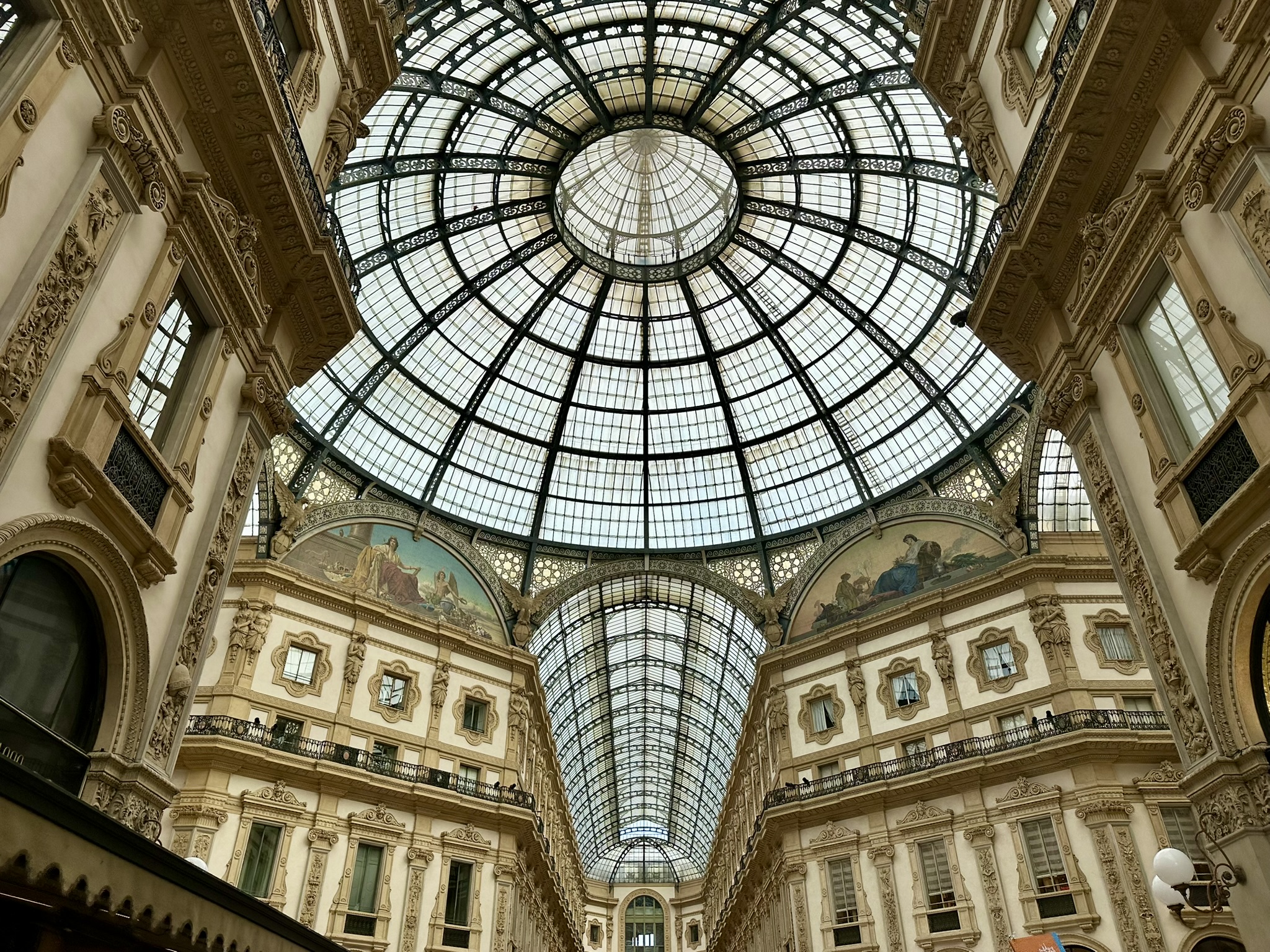
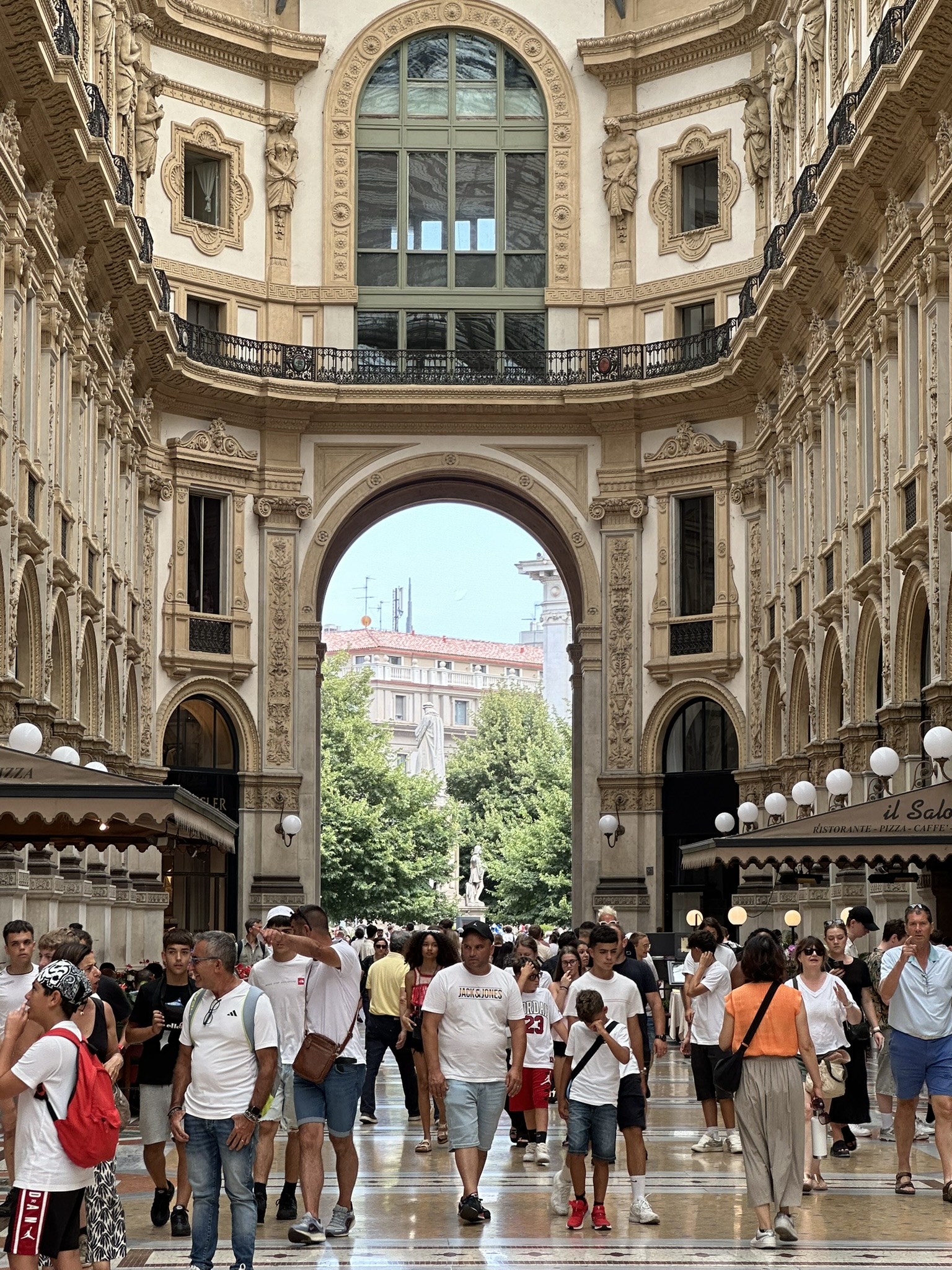
If the feel of the gallery reminds you of Paris, it should. Much of the original Milan was knocked down to reconstruct it with wide, tree-lined boulevards with Parisian style buildings.
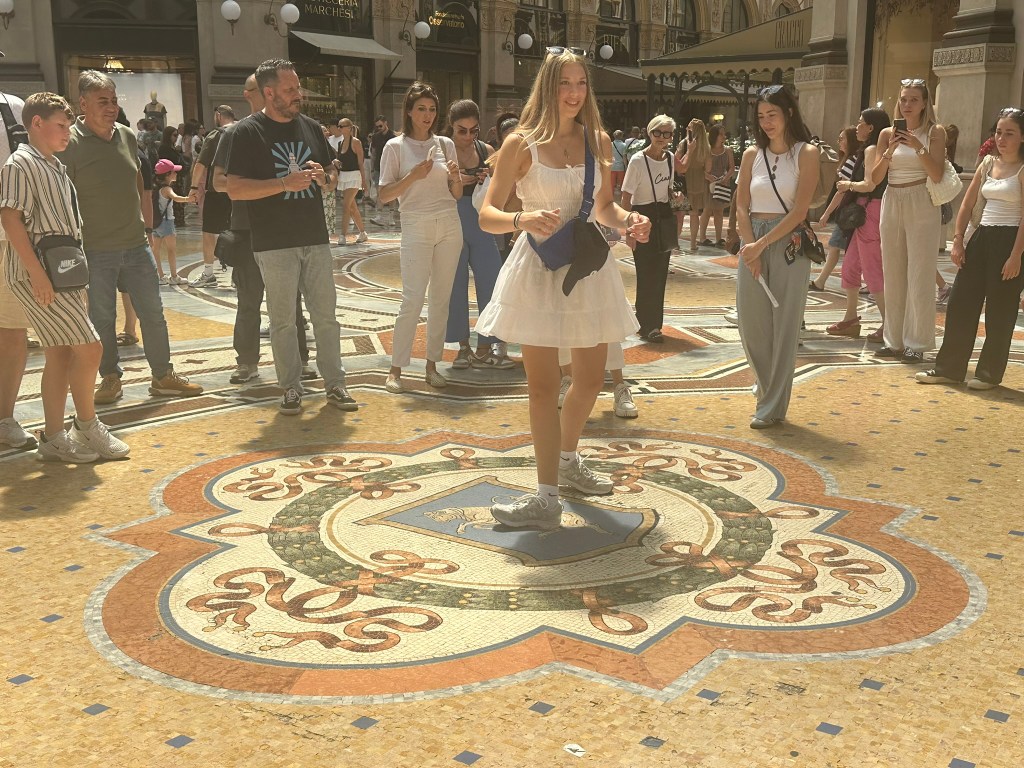
On a mosaic in the center, an image of a bull was placed on the floor, a slight to Torino (Turin) whose emblem is a bull. Since this one was on the floor, it could be stepped, or rather, stomped on. Apparently, some enterprising Milanese created a rumor that if you spin on your heel three times on the bull’s testicles it’ll bring you good luck, so you can watch tourists spinning away on the deep indentation in the center of the bull for sport. Who can say if it really brings them luck?
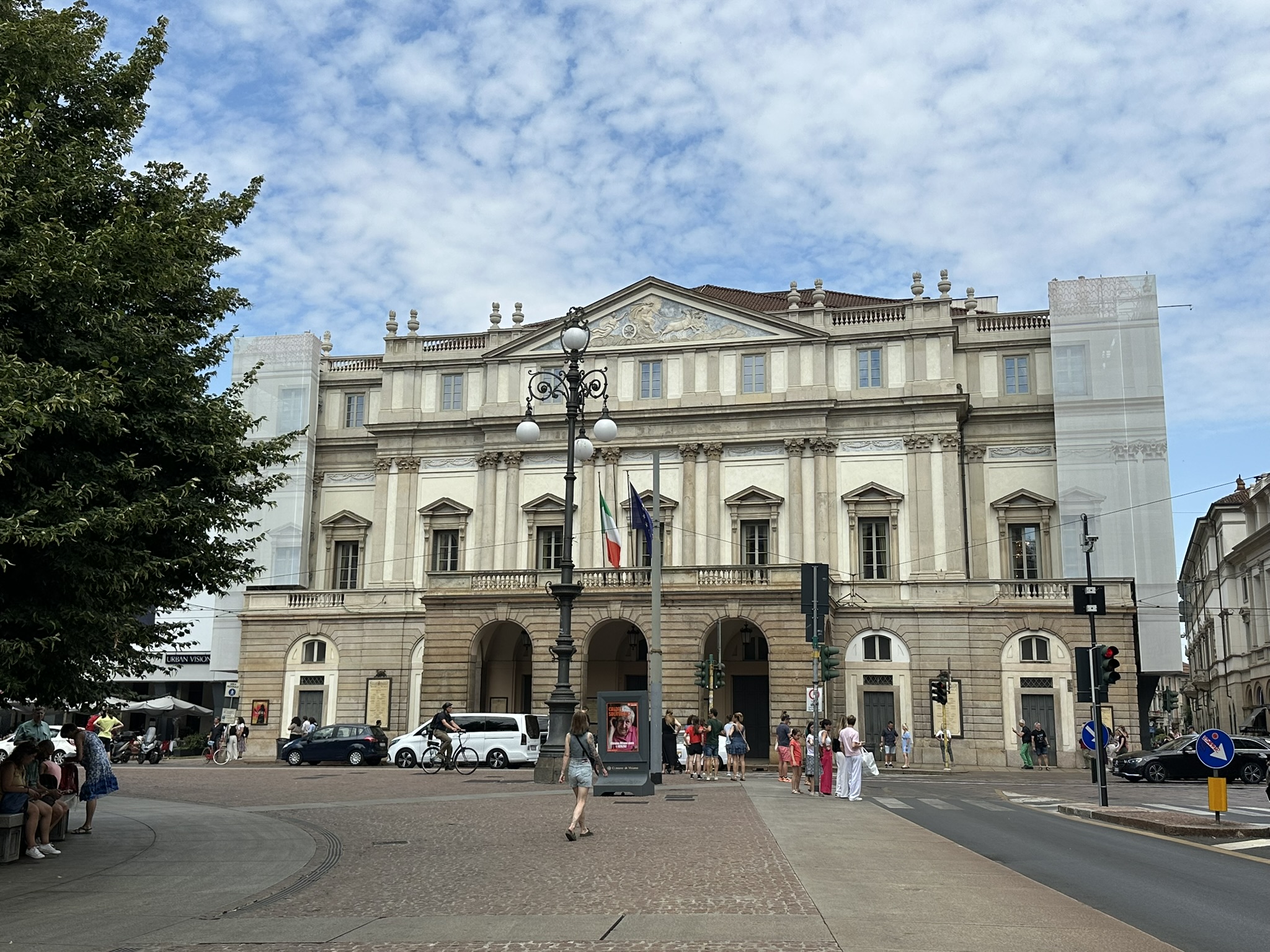
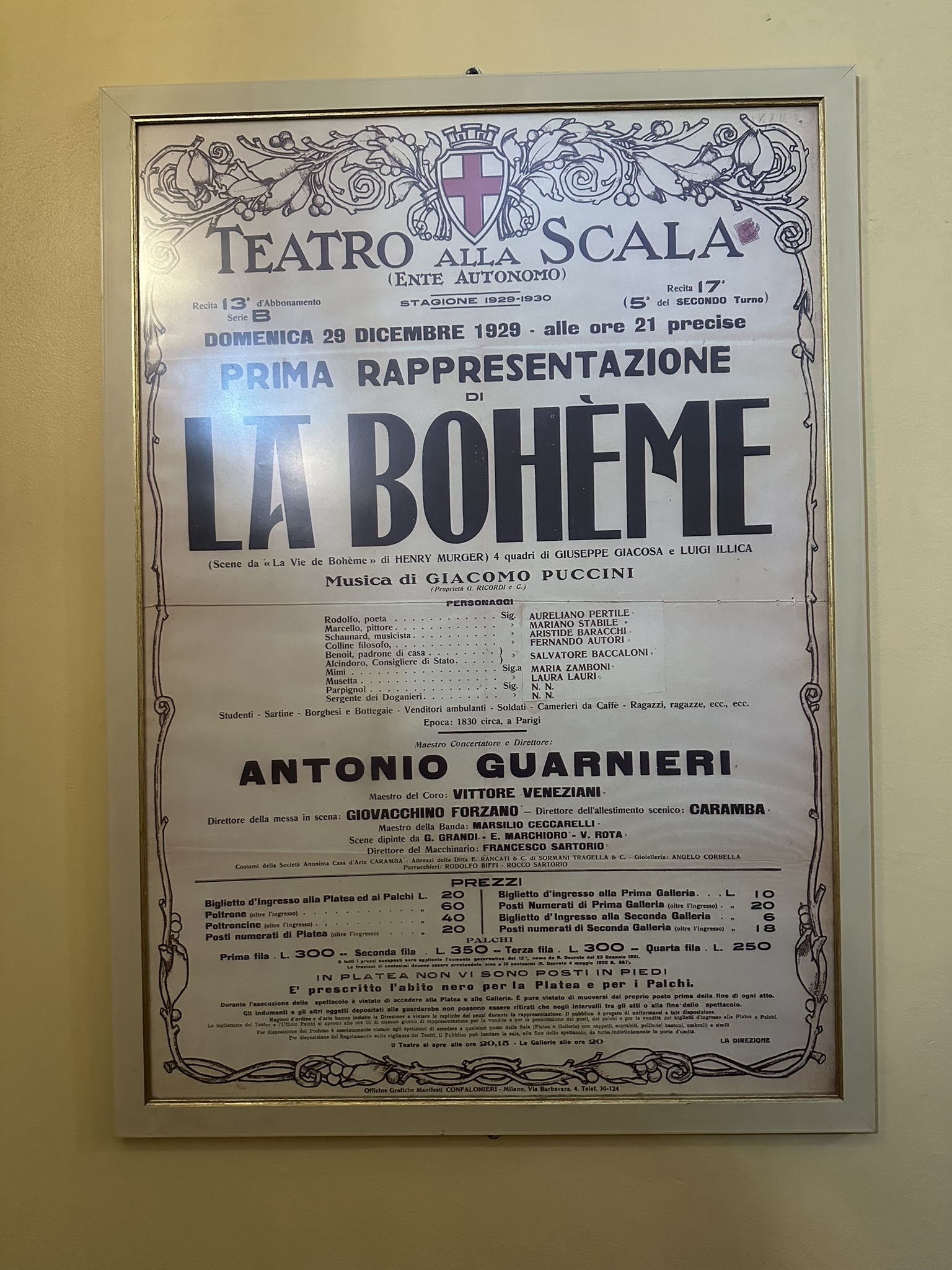
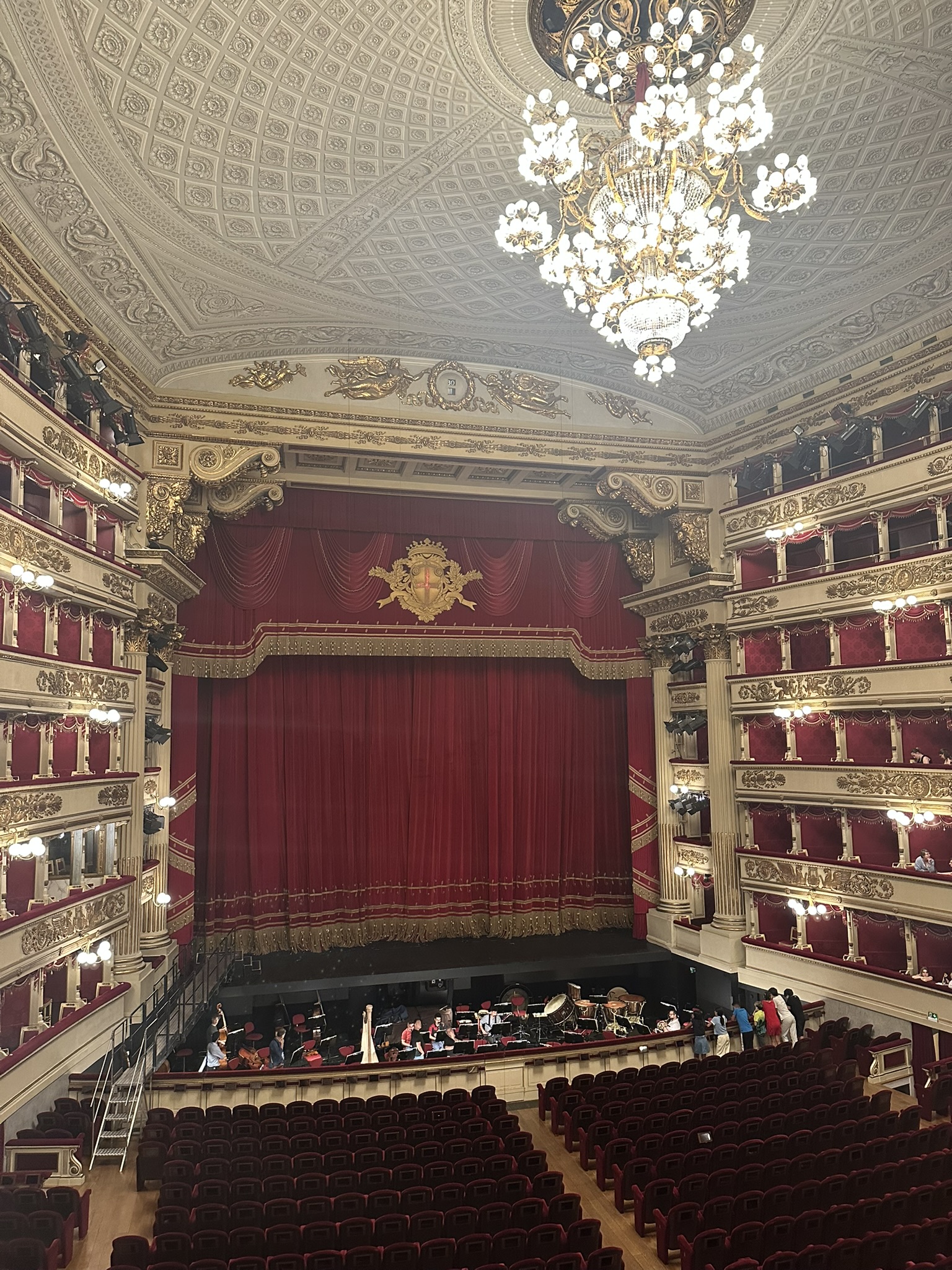
La Scala. Italy’s most famous opera house sits on La Scala Piazza. Opening night tickets can cost up to €3,000. According to Lara, if you purchase the cheaper seats, don’t expect to enter through the front door, rather the nondescript side door down the right side of the building.
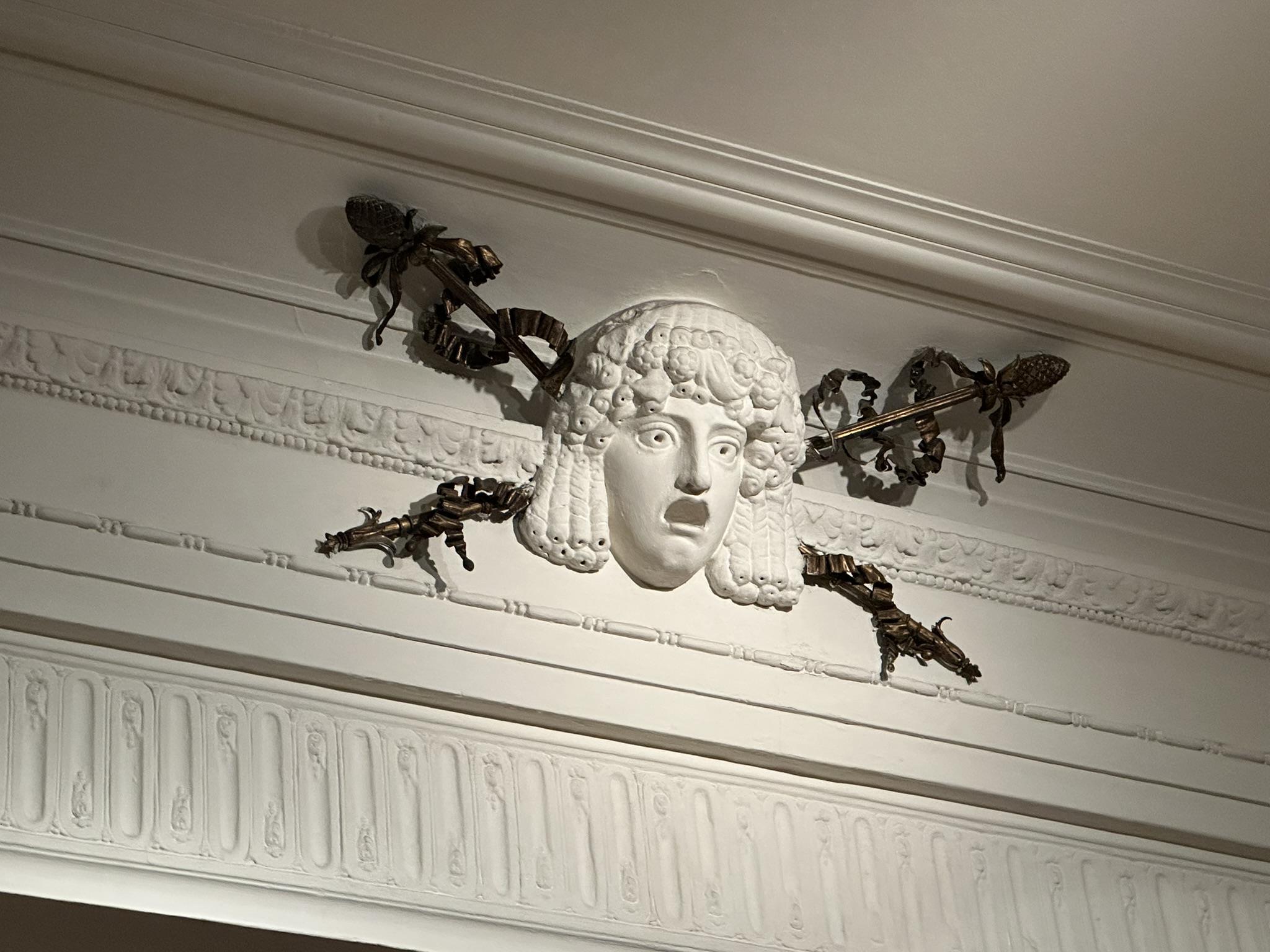
The day after our walking tour, we booked another guided tour, this one of La Scala opera house and the museum. This tour wasn’t quite so good, mostly for the slow cadence of our guide’s speech on a hot afternoon, but we did get to watch a ballet rehearsal for a short time and return to view the opera house fully opened up when rehearsal wrapped.
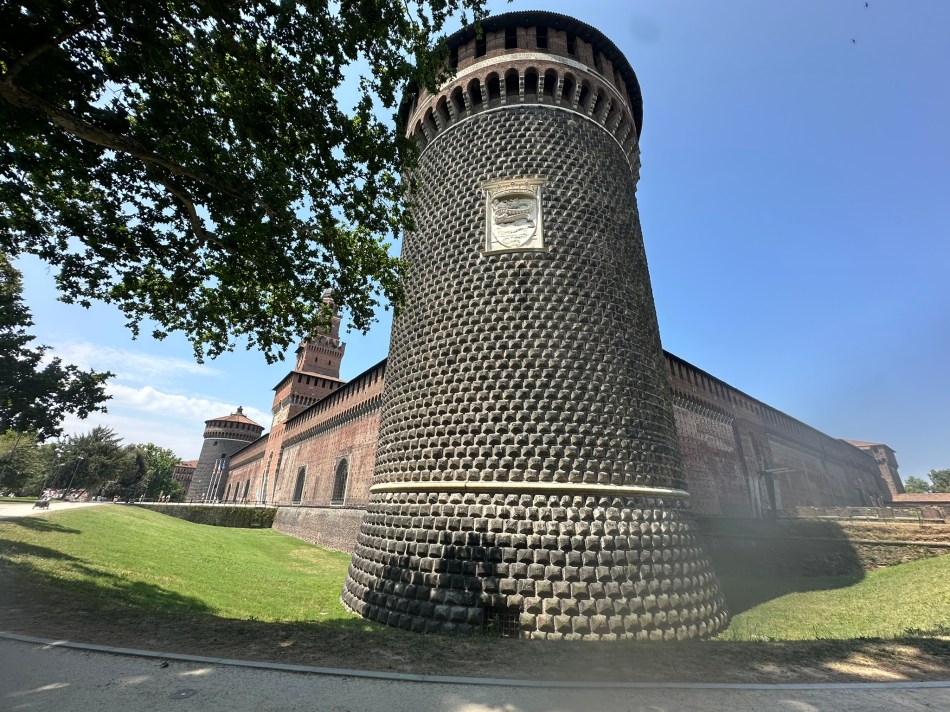
The Medieval Castle. Sforzesco castle was built by Francesco Sforza, Duke of Milan, on top of the remnants of a 14th century fort beginning in 1450. The castle changed hands over the years as France, Italy and the Austrians came to power in Milan. Once Italy was unified under King Emmanuel II, it was turned over to the Italian army. Severely damaged during World War II bombardments, it was reconstructed and now houses museums. We stopped there on our walking tour for a beverage in its courtyard and because the toilets are free to use.
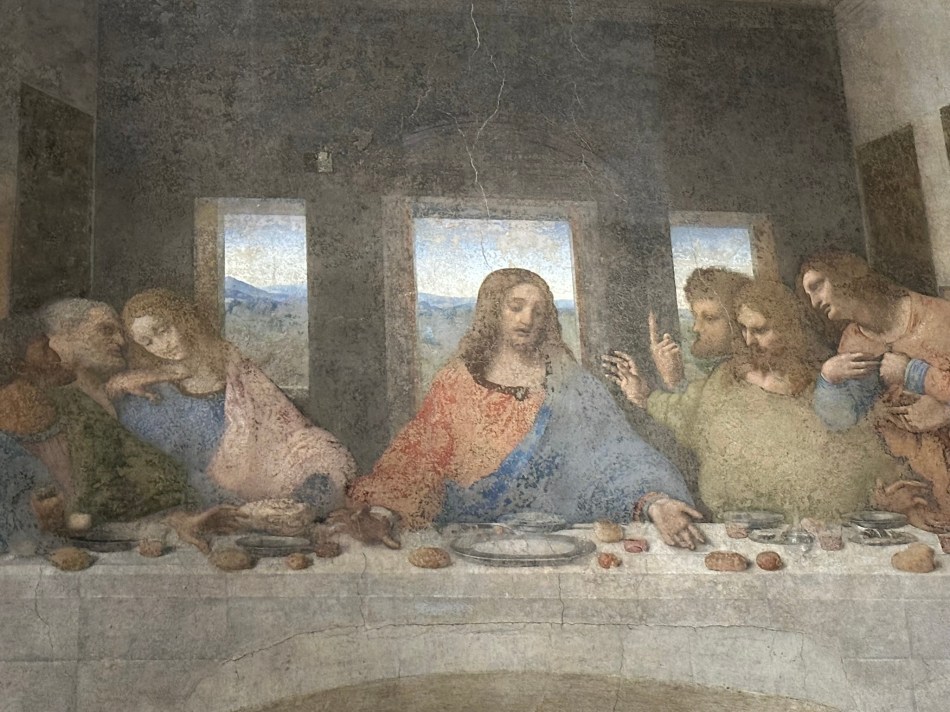
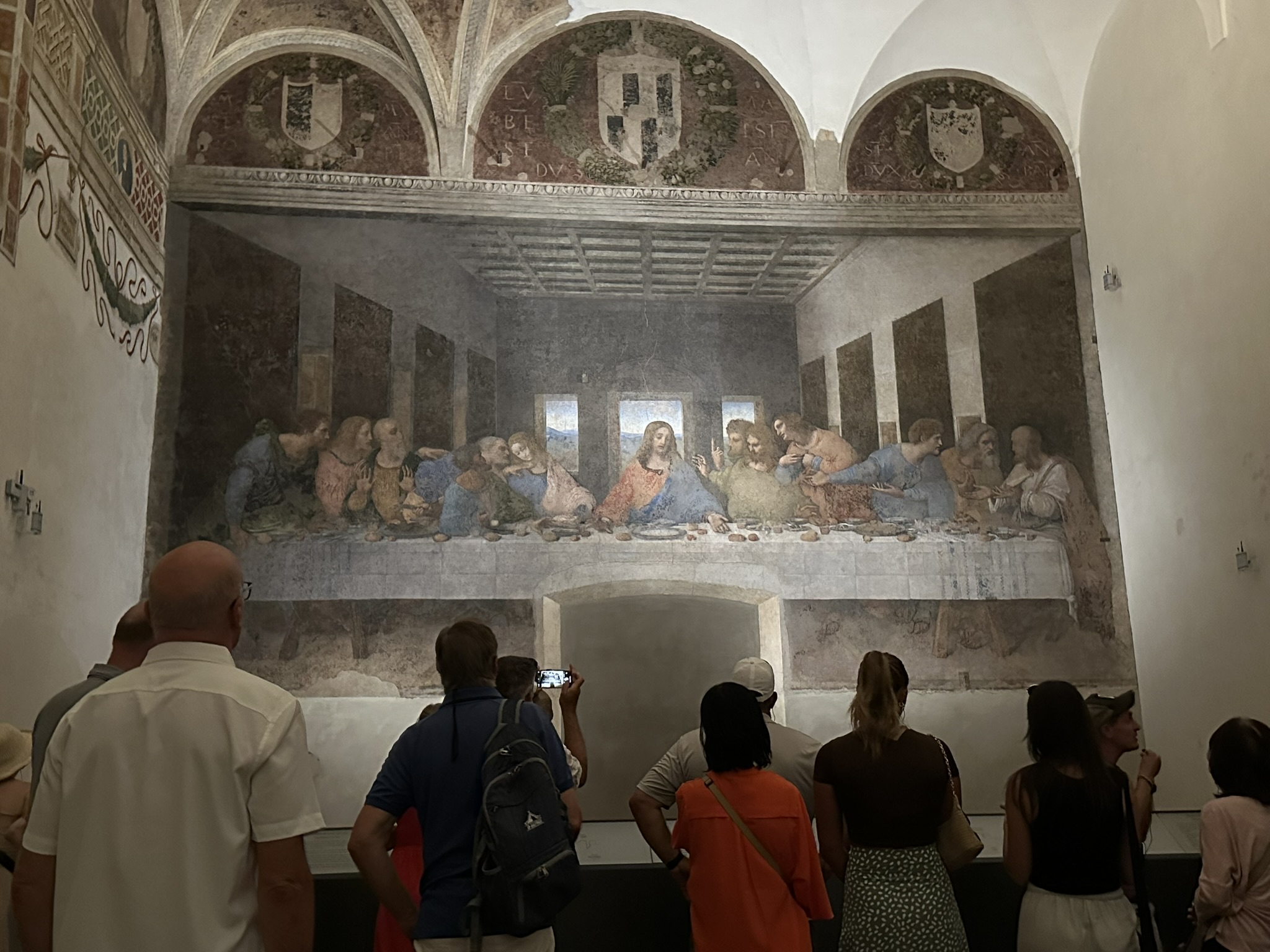
The Last Supper. It was because Duke Sforza asked Leonardo da Vinci to help decorate Sforza Castle, that da Vinci was here, in Milan. His Last Supper was absolutely the highlight of our touring in Milan. We visited it directly after visiting the Castle, replicating Leonardo’s commute as he worked on it for four years whilst also decorating the castle and building war machines for the Duke. It is not a fresco, though can be mistaken as such. Da Vinci was experimenting with a new painting technique using tempura and oil on gypsum when creating it (of course he was, he was Leonardo da Vinci).
Unlike other renditions of the Last Supper, da Vinci tried to capture the emotions of the moment Jesus tells his disciples that one of them would betray him that night. Judas’ bag of gold is barely visible, the sleeping John’s face looks remarkably like the Mona Lisa (by design, though don’t tell that to the Dominican monks who watch over it) and the face of Thaddeus, second from the right, may look remarkably like da Vinci staring out at you, because it is. Next to Judas, whose face is mostly hidden, is a spilled salt shaker (a sign of a bad omen) and Jesus’ body is painted in an equilateral triangle, a shape connected to the divine.
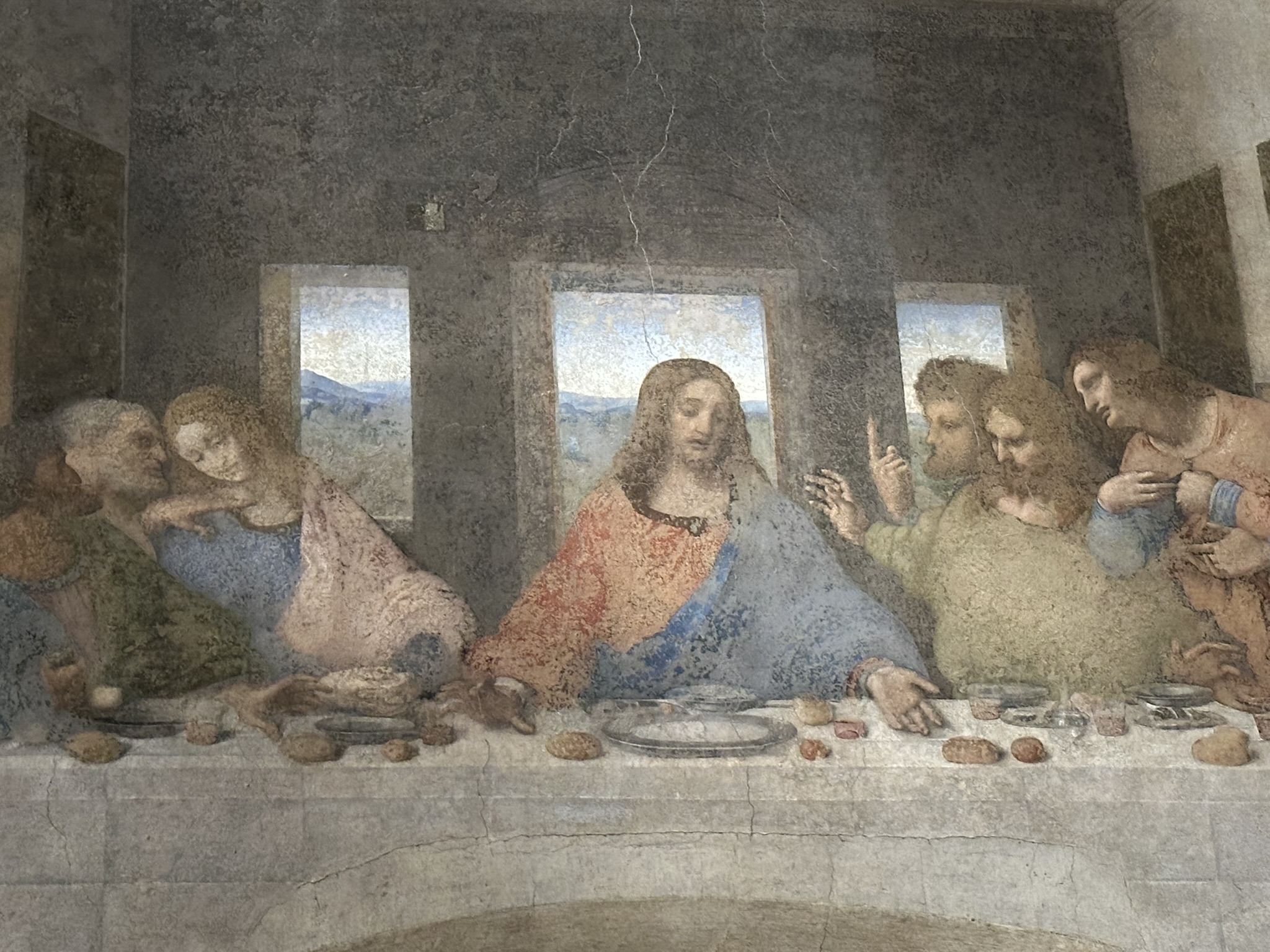
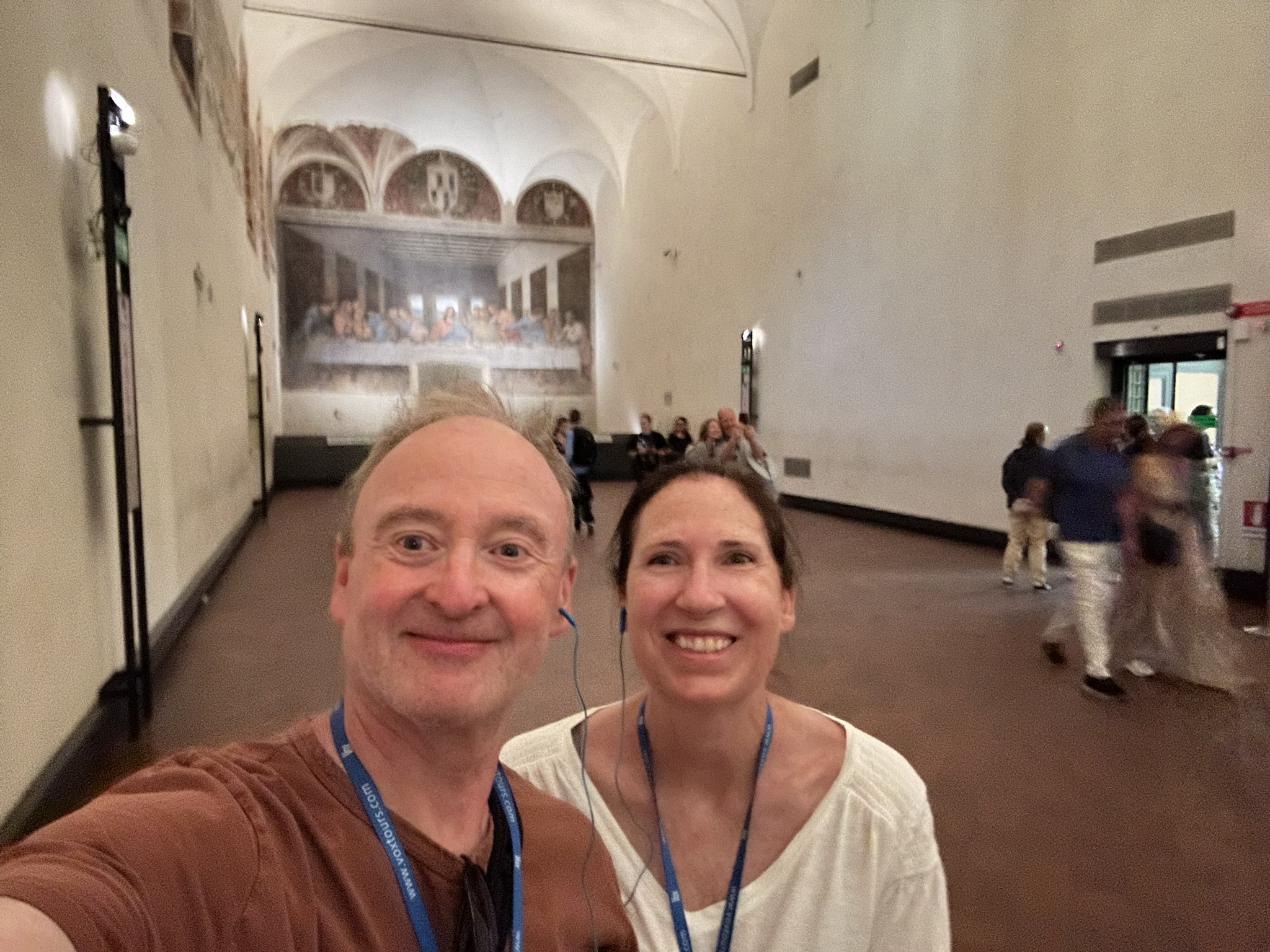
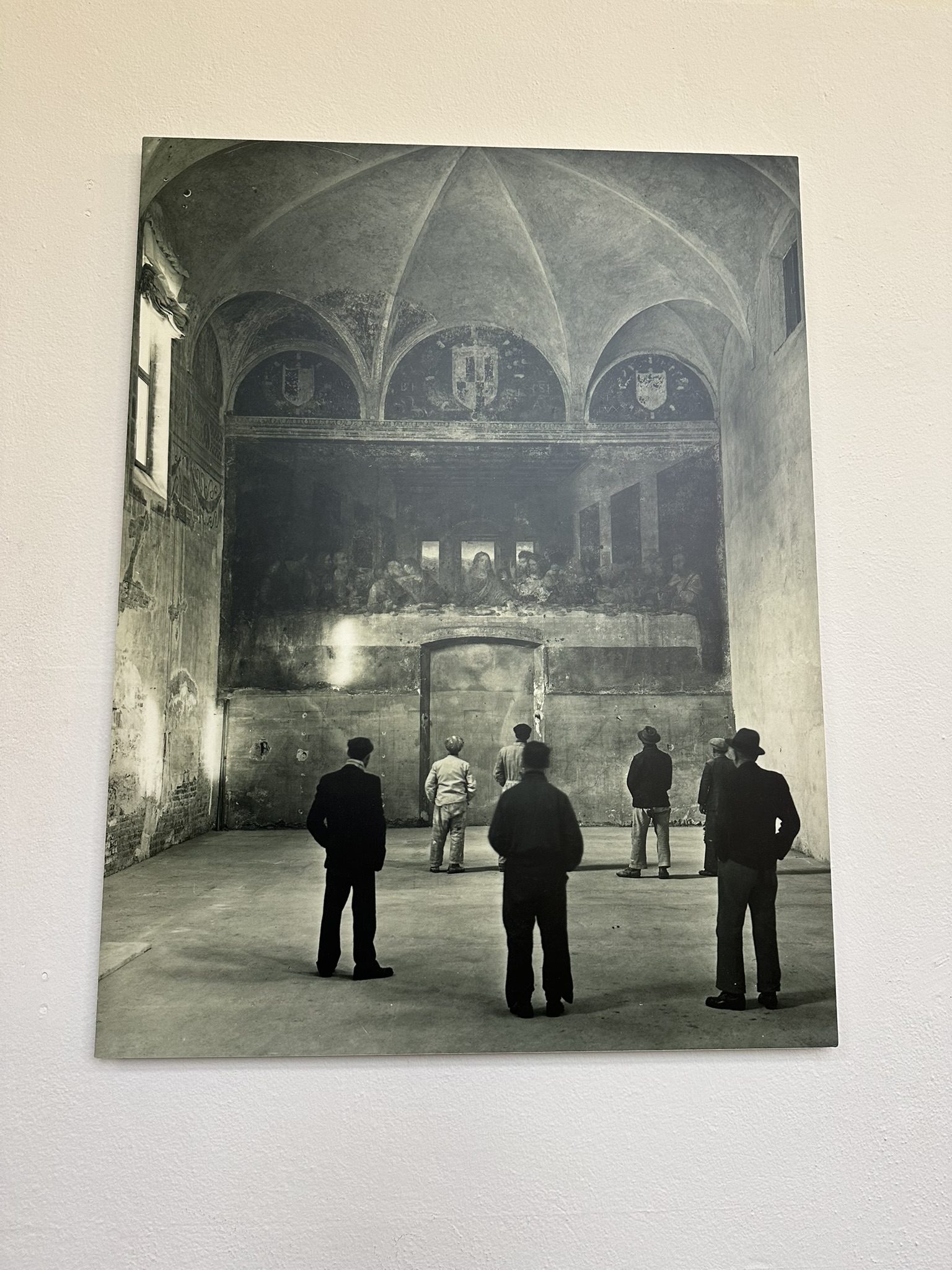
During Napoleon’s invasion of Milan, his soldiers used the rectory where the Last Supper is painted as a stable for the horses and later during World War II, bombings destroyed the church enclosure and exposed the painting to the open air where it remained on display for years until it was enclosed again. After all this, co-habitating with monks and horses, exposure to the elements from aerial bombings, the Last Supper has been restored about 20 times. To protect it for future visitors, they only allow you 15 minutes to visit with about 40 of your new-found friends at a time in order to cut down on the humidity to which it is now exposed. The museum rectory is staffed 24 hours per day by caretakers to prevent any future deterioration or damage.
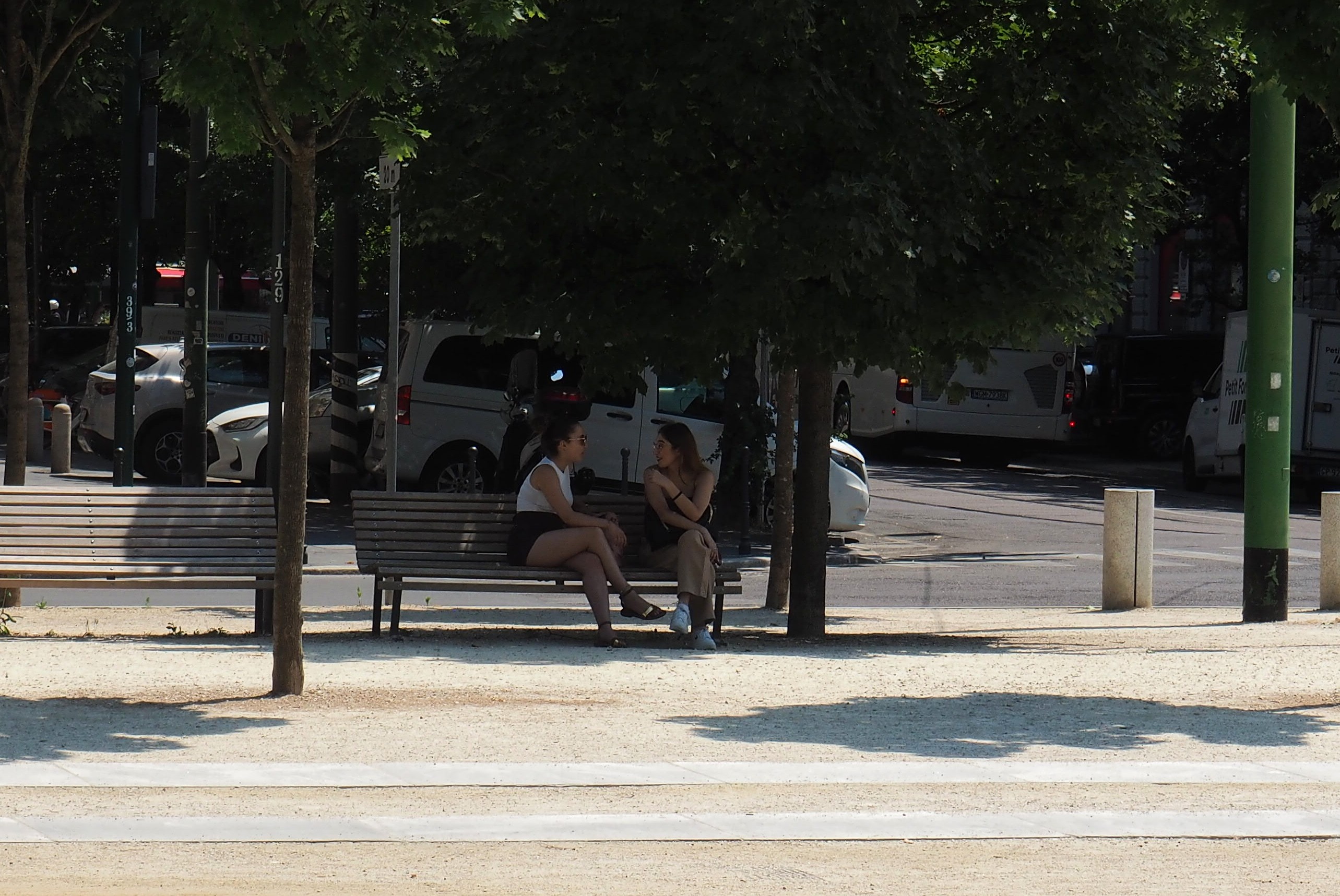
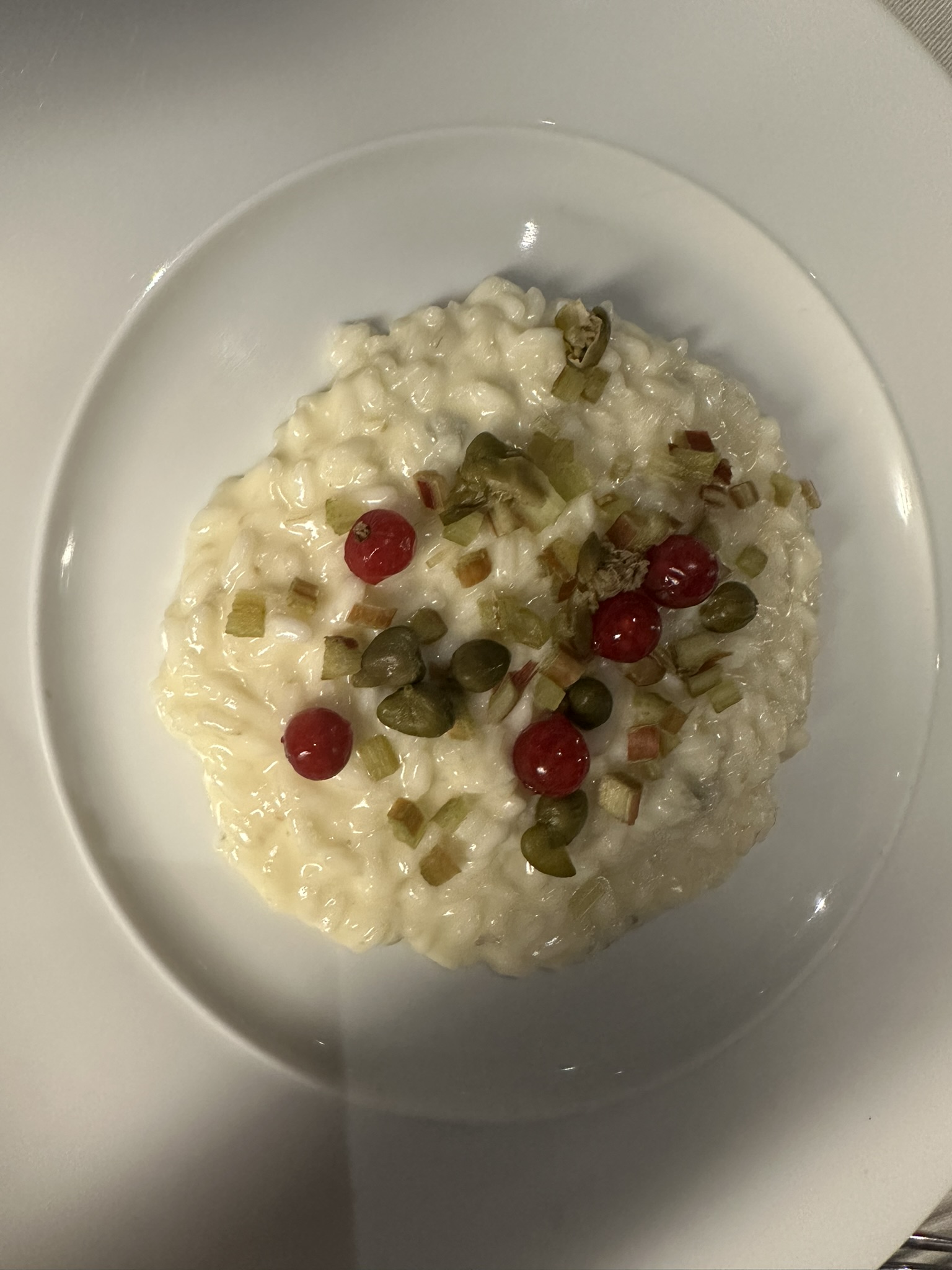
We enjoyed Milan more than we expected. I had pictured an industrial city and a financial capitol, not a safe, charming and friendly place. It lacks the swarms of tourists of Venice, Florence, the Cinque Terre and Rome and we enjoyed wandering (despite sweating in sweltering summer heat which proved challenging for our hotel room’s A/C) with the stylish Milanese for a few days. Risotto is a specialty, but we found each restaurant’s menu quite unique (unlike some other cities in Italy where many serve many of the same regional plates as their neighbors). We had dinner at Belé and lunches at Stendahl in Brera and at Autentico and recommend them all.
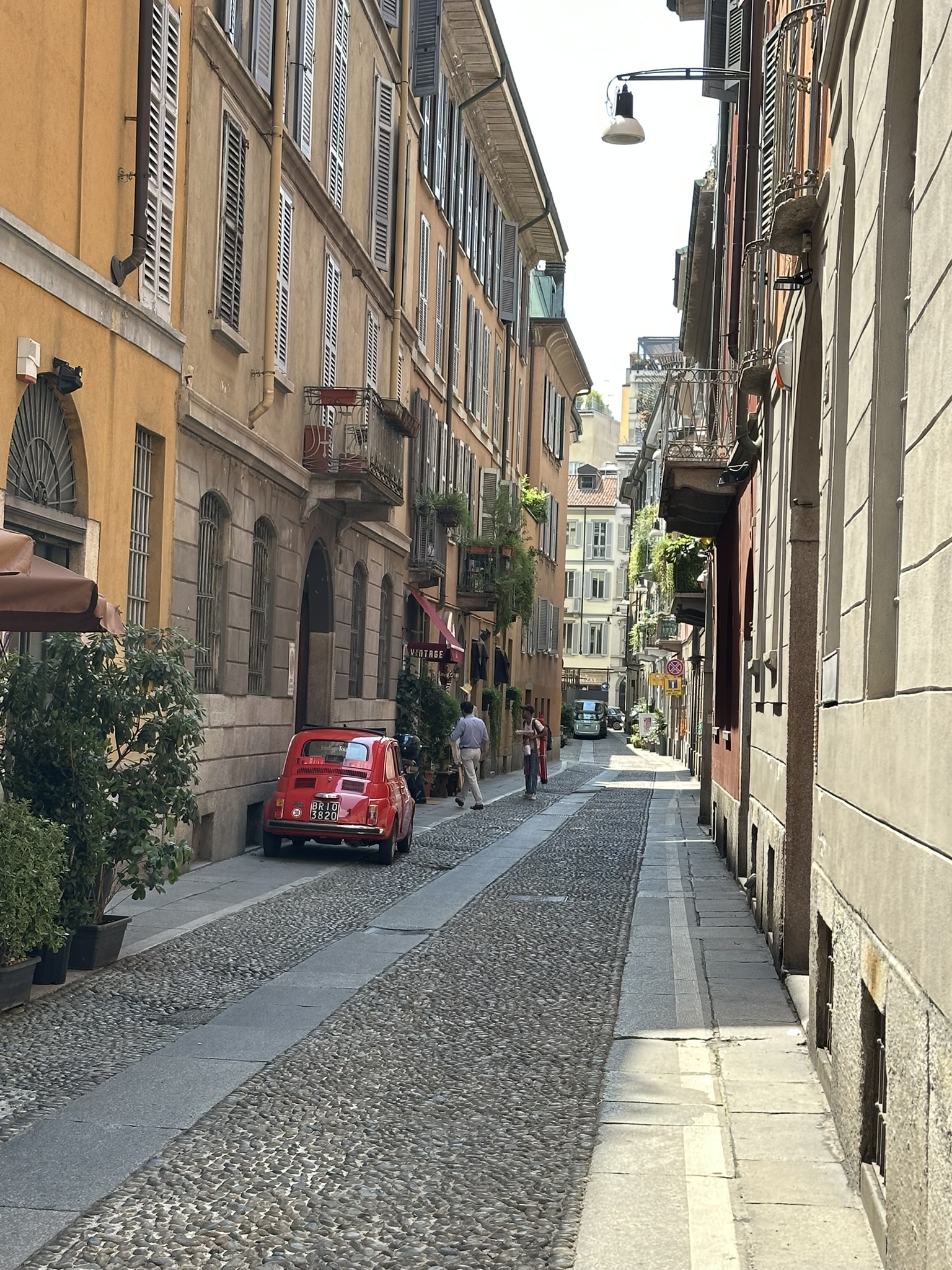
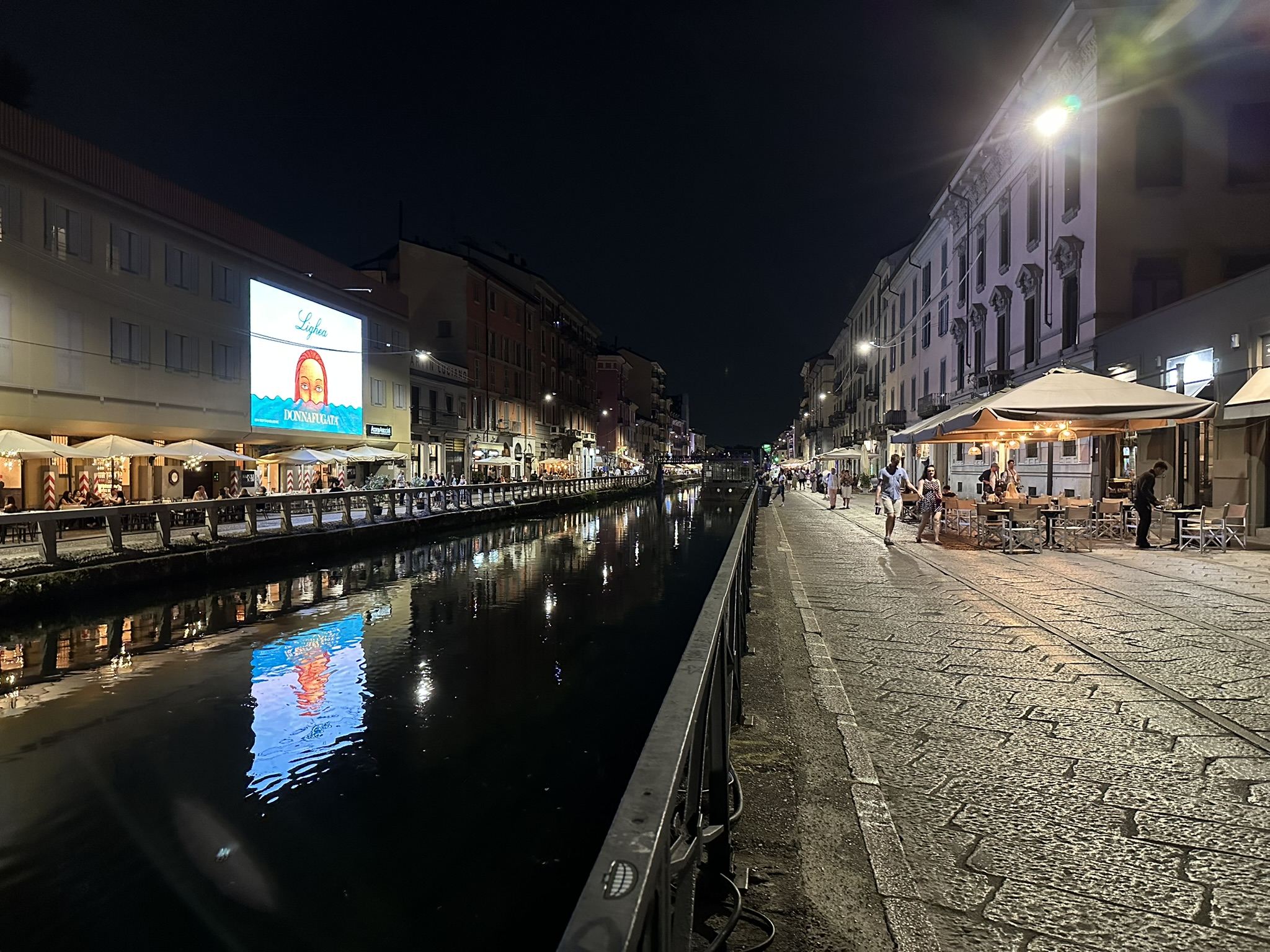
Walls and canals surround the city, the factories have all been pushed out of town and stylish shops line the streets. Behind La Scala, in some of the more affluent neighborhoods, wander the narrow streets of Brera in search of a shop, a quaint cafe or bar or a compact Cinque Cinque car, admiring the city’s charm and style. Newcomers to Milan, we vowed to return, in cooler weather, to catch an opera at La Scala, just not a multi-thousand-euro premiere.
Sources:
- https://www.duomomilano.it/en/art-and-culture/the-cathedral/
- Viator Walking Tour. 2 July, 2025.
- https://www.walksofitaly.com/blog/art-culture/milan-duomo-facts
- https://www.wantedinmilan.com/news/milans-duomo-in-10-amazing-facts.html
- https://corvinus.nl/2016/11/30/milan-the-duomo/
- https://en.m.wikipedia.org/wiki/Sforza_Castle
- https://www.contexttravel.com/stories/articles/the-last-supper-facts


0 comments on “Feasting on the Last Supper, and other things to do in Milan”