

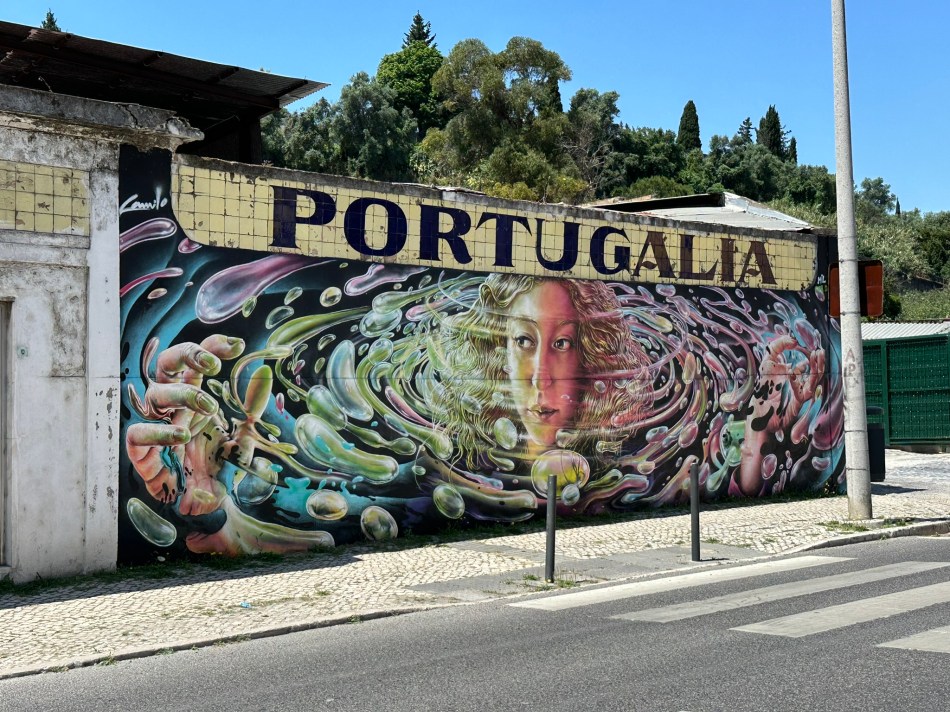
In our top 10 things we loved about Lisbon, way back when we were mere first-time tourists to this lovely city, we listed street art as one of our faves (yes, I go back and read our old posts to confirm that I still agree with what we said before as it is important to keep things fresh and accurate). It still is.
Lisbon’s street art is everywhere and much of it is fantastic. This post will highlight some specific work and give you some options for seeking it out. There is a ton out there, and one of the best ways to discover it is to just wander around the neighborhoods, back alleys, becos (alleys) and stairways, so as you visit make some time to wander, get lost and admire.
The history of street art in Lisbon really began when the wealthy bourgeoisie returned to Portugal from Brazil in the 19th century after the Peninsular War and wanted to show off their social status. They began to decorate their homes with ceramic tiles, which also helped insulate and moderate the climate of the homes inside (the history of Portuguese and Islamic azulejos actually goes way back before this, as you can read about here). According to this source (though this was disputed by our tuk-tuk tour driver), after the 1974 overthrow of the dictatorship, graffiti and markings of vandals began to appear on some of the plain white walls of Lisbon. In 2009, Lisbon initiated the Galeria de Arte Urbana (I don’t think you need to be a Portuguese scholar to translate that one) whose purpose was to attract international and local artists to produce mural projects all around the city.
Whatever the root cause, the art is abundant and fantastic.
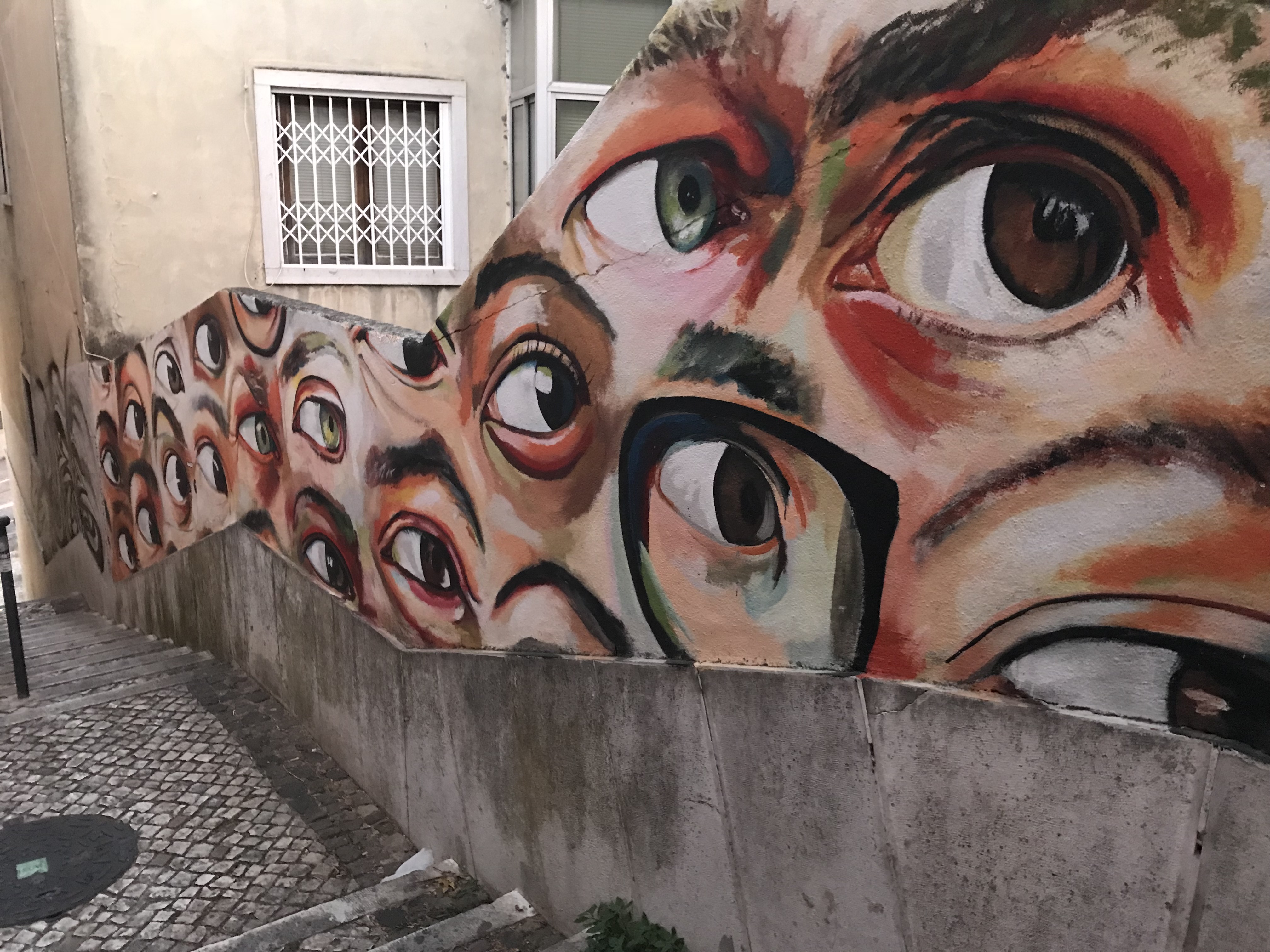
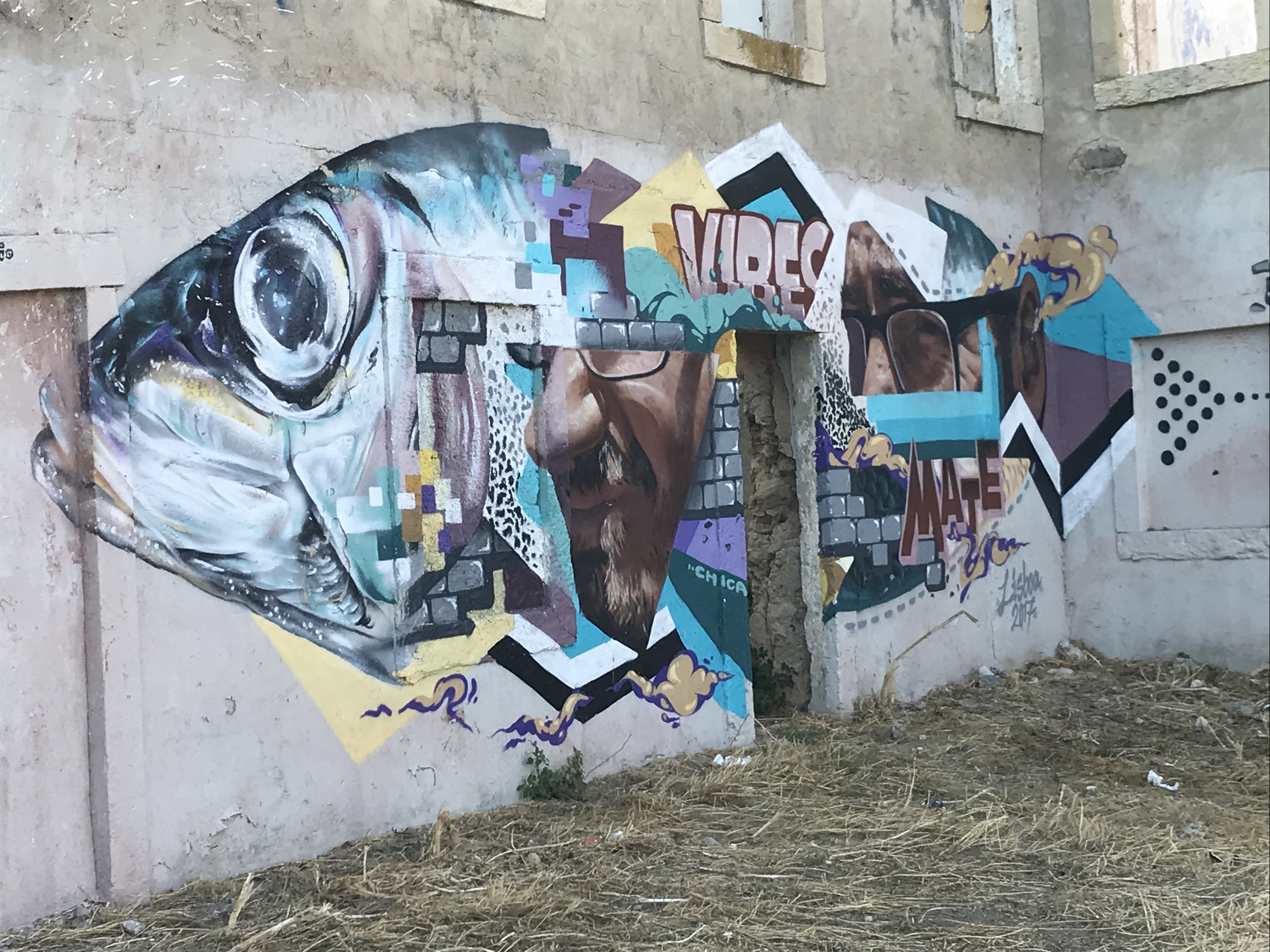

Some of the most prominent artists of Lisbon Street art are Odeith, Vhils (a world-renowned artist who uses a chisel to carve into the buildings) and Bordalo II a Portuguese artist who uses recycled objects and trash to help compose his work.
One option to check it out is to walk. There is so much of it, you couldn’t reasonably walk the entire city (well, you could, but it would take days), so the following route is a suggestion where you can catch some of our favorites and do so within a reasonable amount of time (several hours). Be prepared to climb and descend hills and steps.
A Walking Tour option.
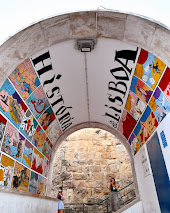
1. A good starting point: Mural of Lisbon/Portugal’s History, Alfama Neighborhood. A good place to start your tour, is with this mural by Nuno Saraiva. It is located just below the Miradouro das Portas do Sol (an easy navigation point) up the hill from the Sé (Lisbon’s cathedral). If you take the steps that descend from the overlook on the right side as you face the kiosk bar and take a quick left, you’ll find a fantastic mural painted on the walls and ceiling of a small tunnel which highlights significant points in Portuguese/Lisbon’s history. From the early founding by the Lusitanians, through the Inquisition, to the 1755 earthquake and reconstruction to more modern times. This mural offers a great little snapshot into the history of one of Europe’s oldest cities (Lisbon is Europe’s second oldest capitol, after Athens, and this source has it at #9 of Europe’s oldest cities).
A couple of years ago, this mural had been devastatingly tagged with graffiti and covered over with black paint but fortunately, it has been restored and adorned with a protective cover (some people…. why I oughta…). (Google maps reference: History of Lisbon Mural by Nuno Saraiva).
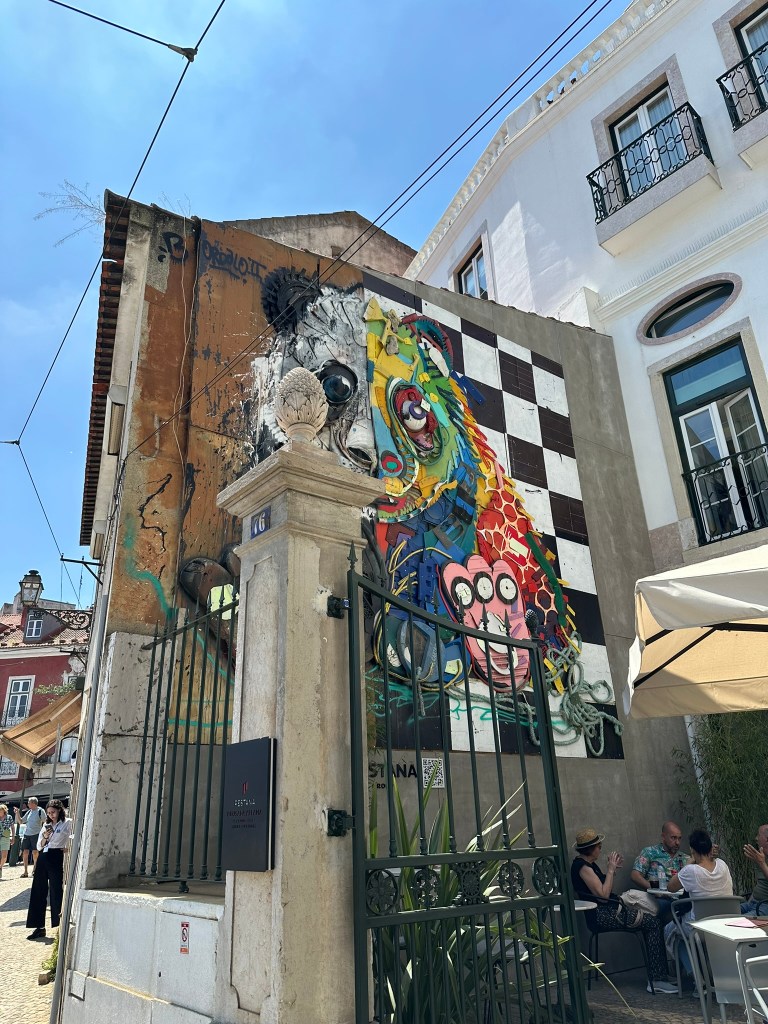
On your way to the next stop, just up the Largo Portas do Sol, on your left near the Alfama Pestana Hotel, you can see an example of Bordalo II’s work, a panda bear.
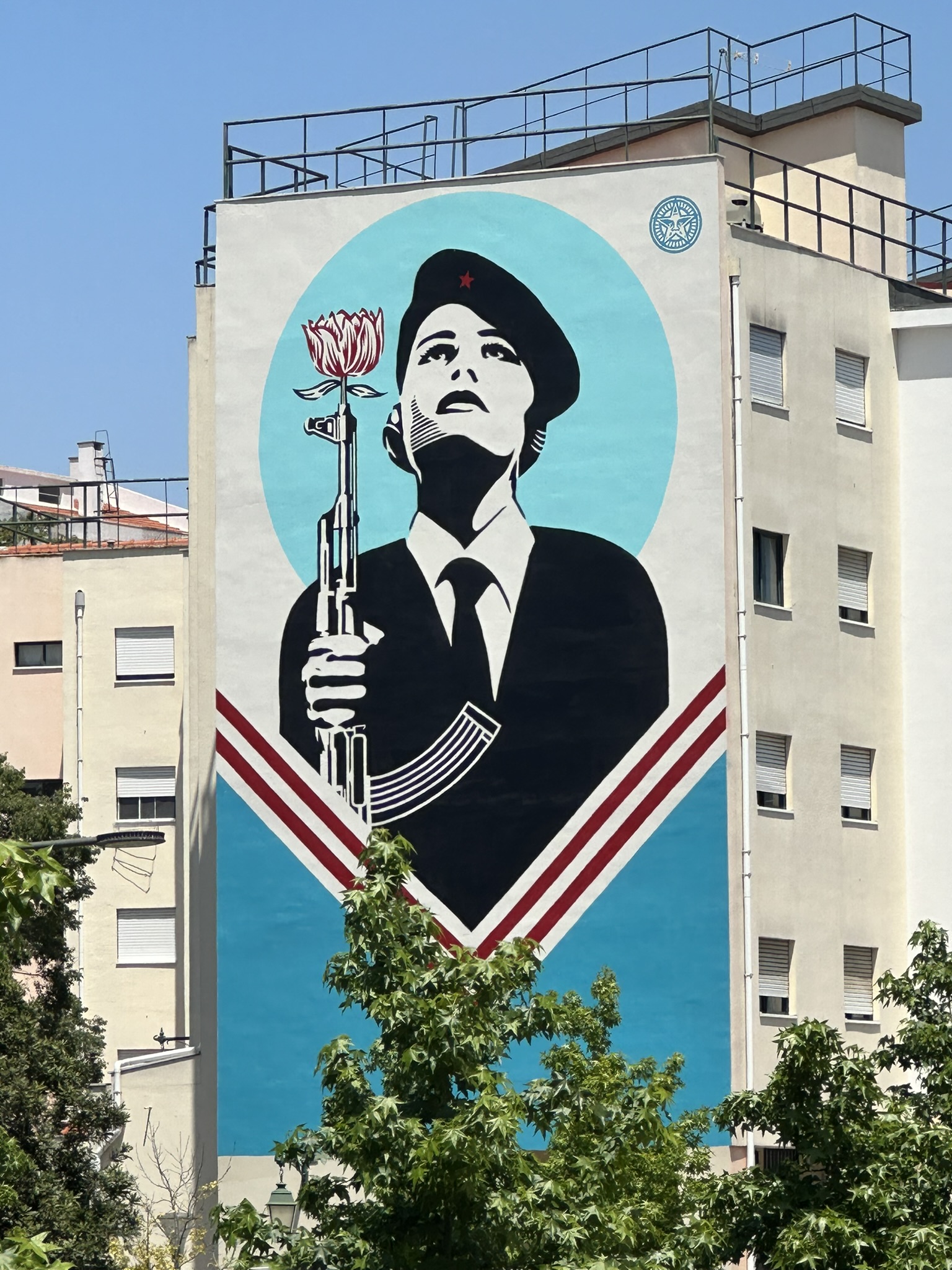
2. The Peace Guard, Graça Neighborhood. From the Miradouro das Portas Sol (or the panda), continue up Largo Portas do Sol as it winds its way towards the Graça neighborhood becoming Rua São Tomé and turn right at the Jardim da Graça (the Miradouro da Graça is to your left, if you need a rest, a beverage or just a good view) then follow Rua da Graça on your left until it meets Rua Natália Correia. Here you will find an iconic image of the Peace Guard from the 1974 “carnation revolution” the (mostly) peaceful overthrow of the Portuguese dictatorship on April 25th of that year. (Google maps reference: Peace Guard by Obey Street Art).
There is a ton of street art in the Graça neighborhood, so spend some time wandering around and checking it out (see examples at the end of this post).
En route to your next destination, backtrack from the Peace Guard and turn right on to Rua Damasceno Monteiro then right on to the Calçada do Monte underneath the Miradouro da Graça follow Largo das Olarias on your left to Largo do Terreirinho (another left) to Rua Marquês Ponte de Lima (a right) to pass by some Steet Art by renowned street artist Seb Bouchard.
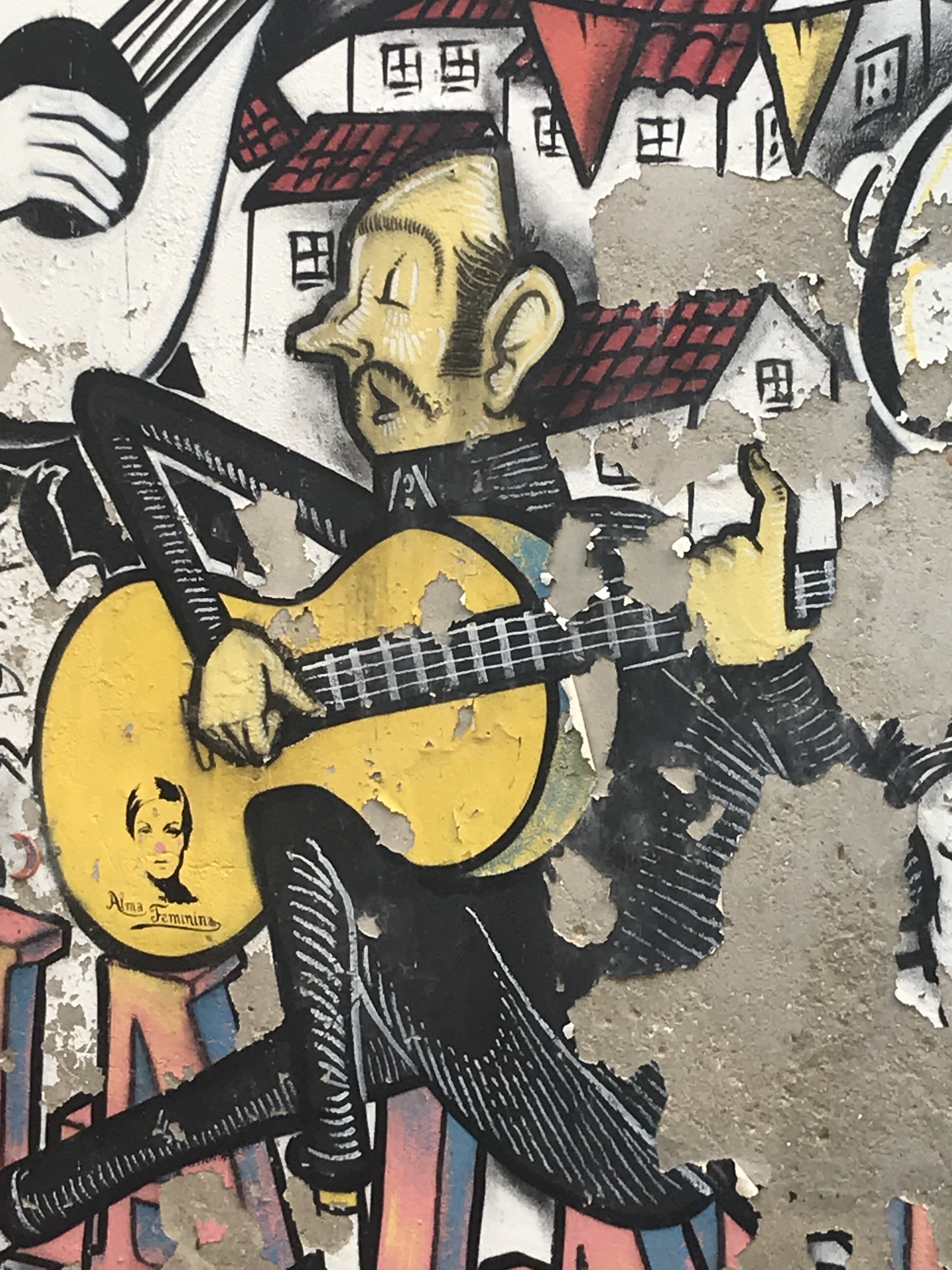
3. Fado Mural, in Mouraria between Alfama and Baixa. From the Seb Bouchard piece, continue down the street as the main road becomes Largo da Rosa and Largo São Cristóvão which drops you down from the shadows of the Castelo de São Jorge to Mouraria and Baixa. From here, you take the Escadinhas de São Cristóvão down to descend to the Fado Vadio mural, one of our favorites. (Google maps reference: Mural Graffiti Fado Vadio).


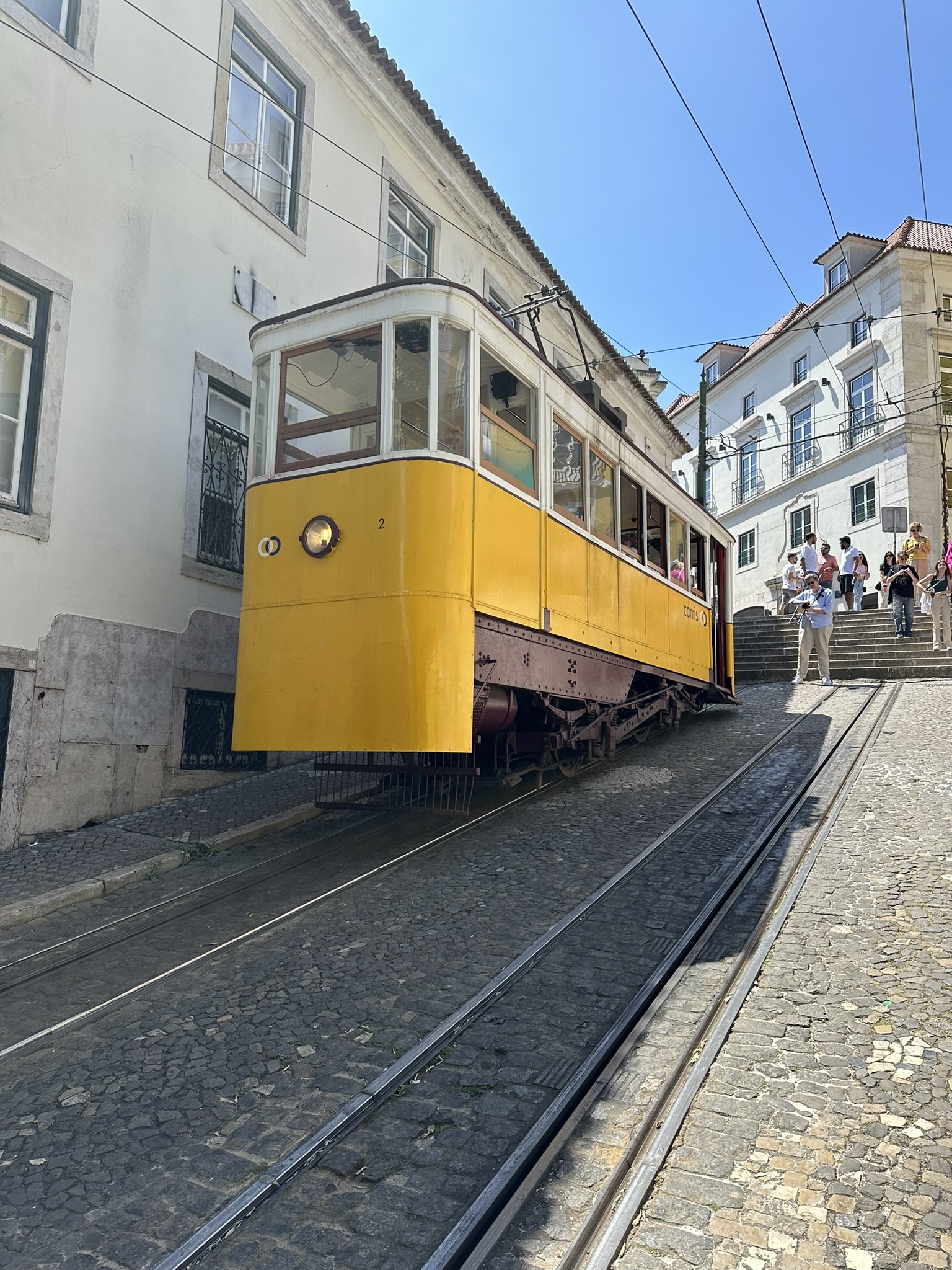
Finally, Galeria of Art Urbana. As you drop into Baixa, head for Rossio Square (to your right) and then across it towards the Calçada do Duque. Climb the many stairs and turn right after the Igreja de São Roque following Rua de São Pedro de Alcântara to the site of the Galeria of Art Urbana. (Google maps reference: GAU or Galeria de Arte Urbana). Alternatively, if you don’t want to walk the hills, navigate to and take the Ascensor Glória an “elevator” cable car. You can also walk up the sidewalks next to the tracks. The pathway of the cable car runs alongside the Galeria.
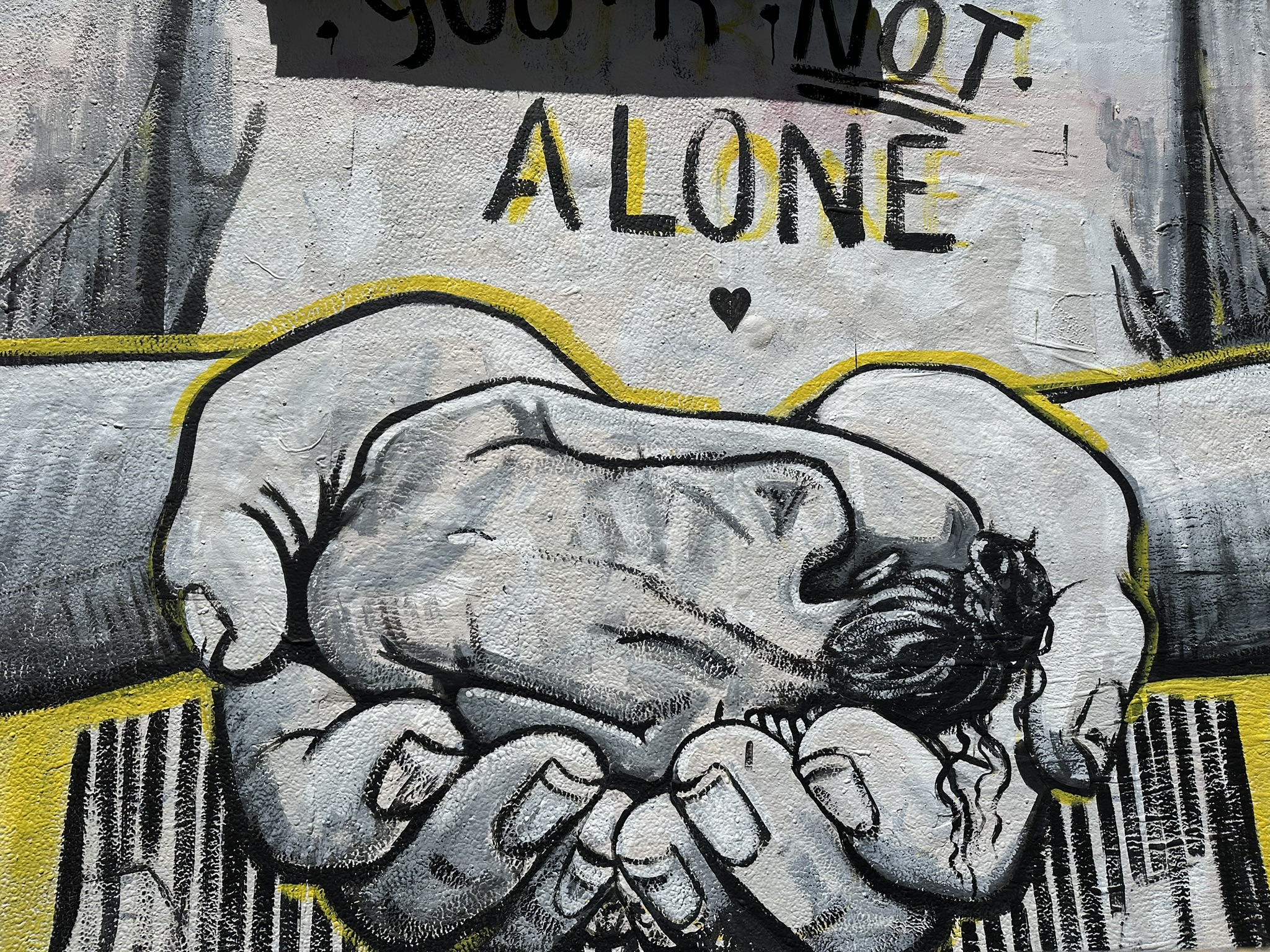
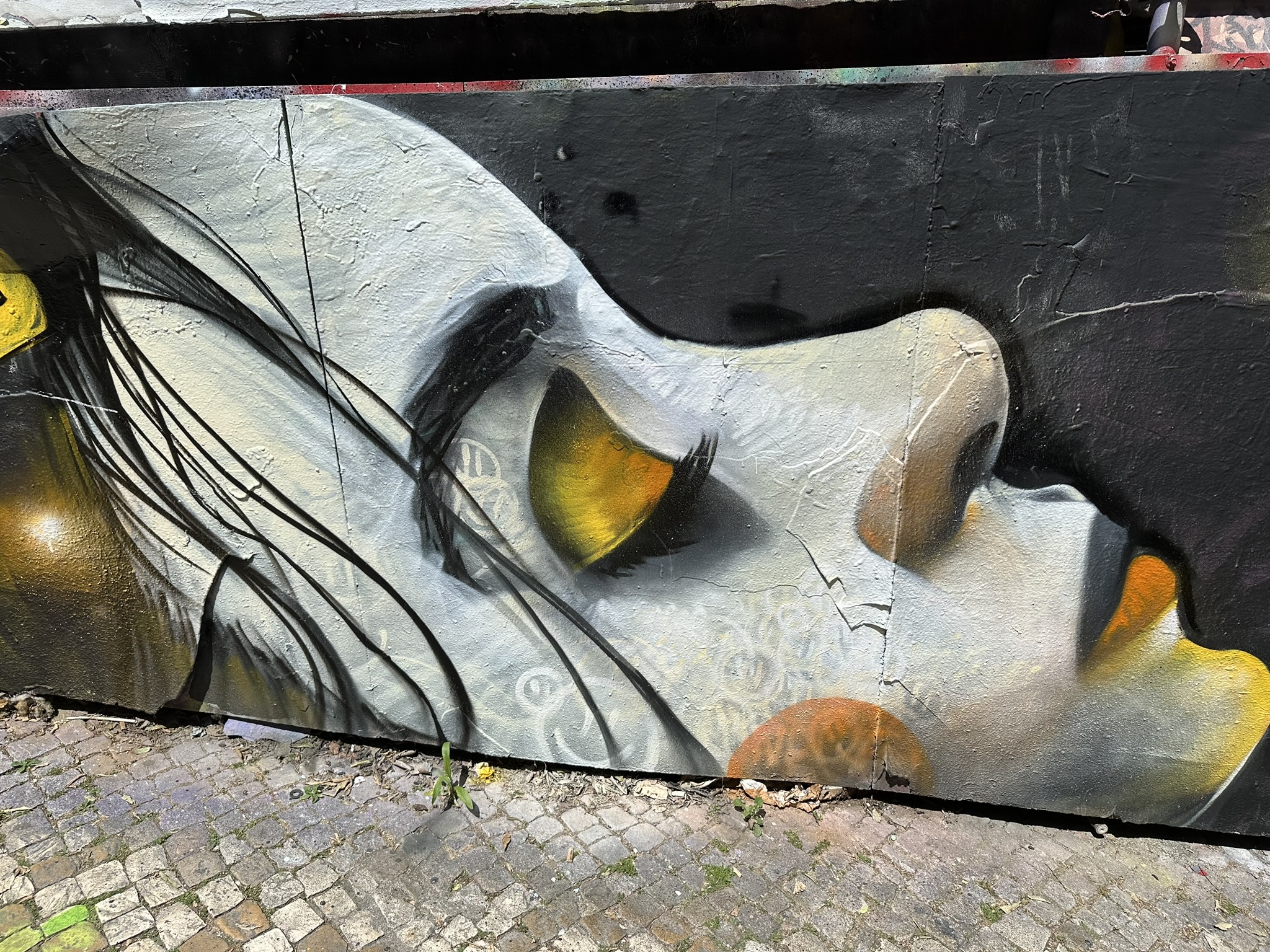
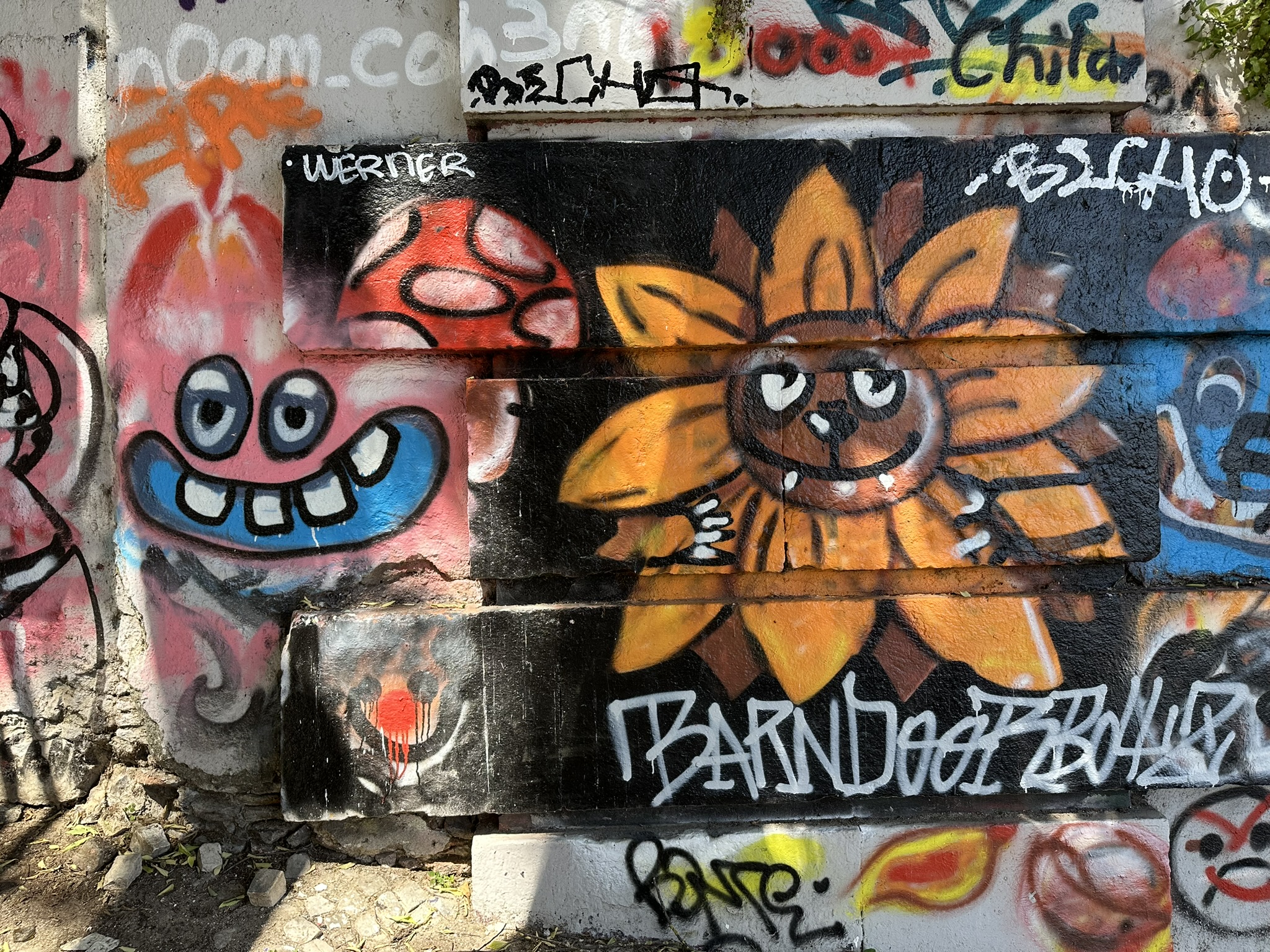
Finish off your walking tour with a well-deserved beverage at the kiosk in nearby Miradouro de São Pedro de Alcântara and enjoy the views of Lisbon: Alfama to your right, Graça straight across, Baixa below, and reflect on what you’ve seen.
A Tuk Tuk Tour.
On a recent visit into Lisbon, we took a tuk-tuk tour of Lisbon’s street art. Most of the drivers probably have a street art option, but we went with Carlos Borges (contact info below). He is a native Lisboeta and is very knowledgeable about Lisbon’s street art. He has options to take you across the bridge to Almada and to Belem, but we asked him to take us on a shorter route to some of his very favorites and to include the Graça area artworks, specifically the Peace Guard.
We set out from the Praça do Comercio area east alongside the Tagus River. He dipped into Bairro Beato, an area we hadn’t previously visited, where we visited Bordalo II’s studio and saw great street art lining the roads including a collaboration between Bordalo II and Vhils (the Museum of Azulejos is nearby this area, for a navigation point).
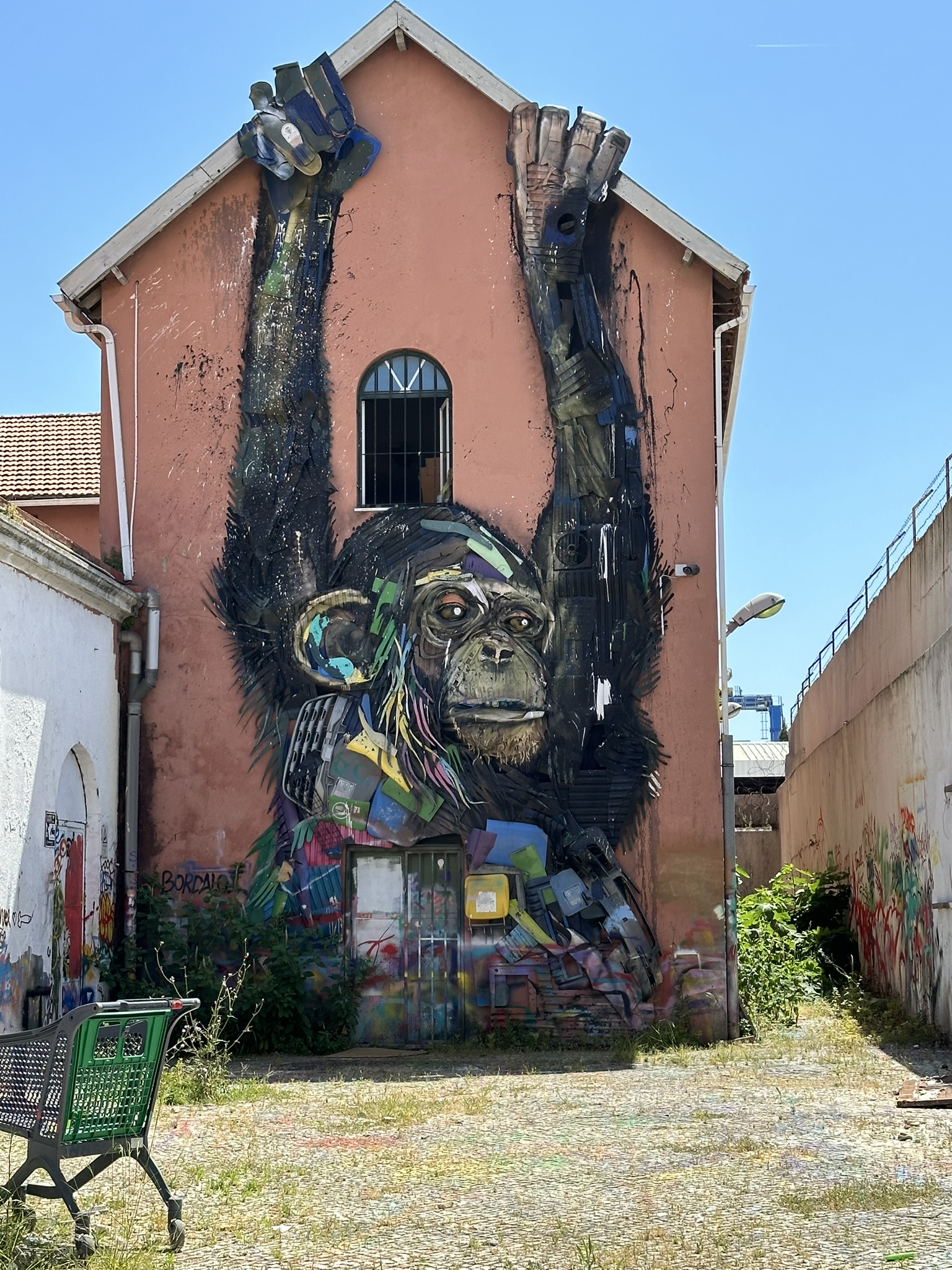
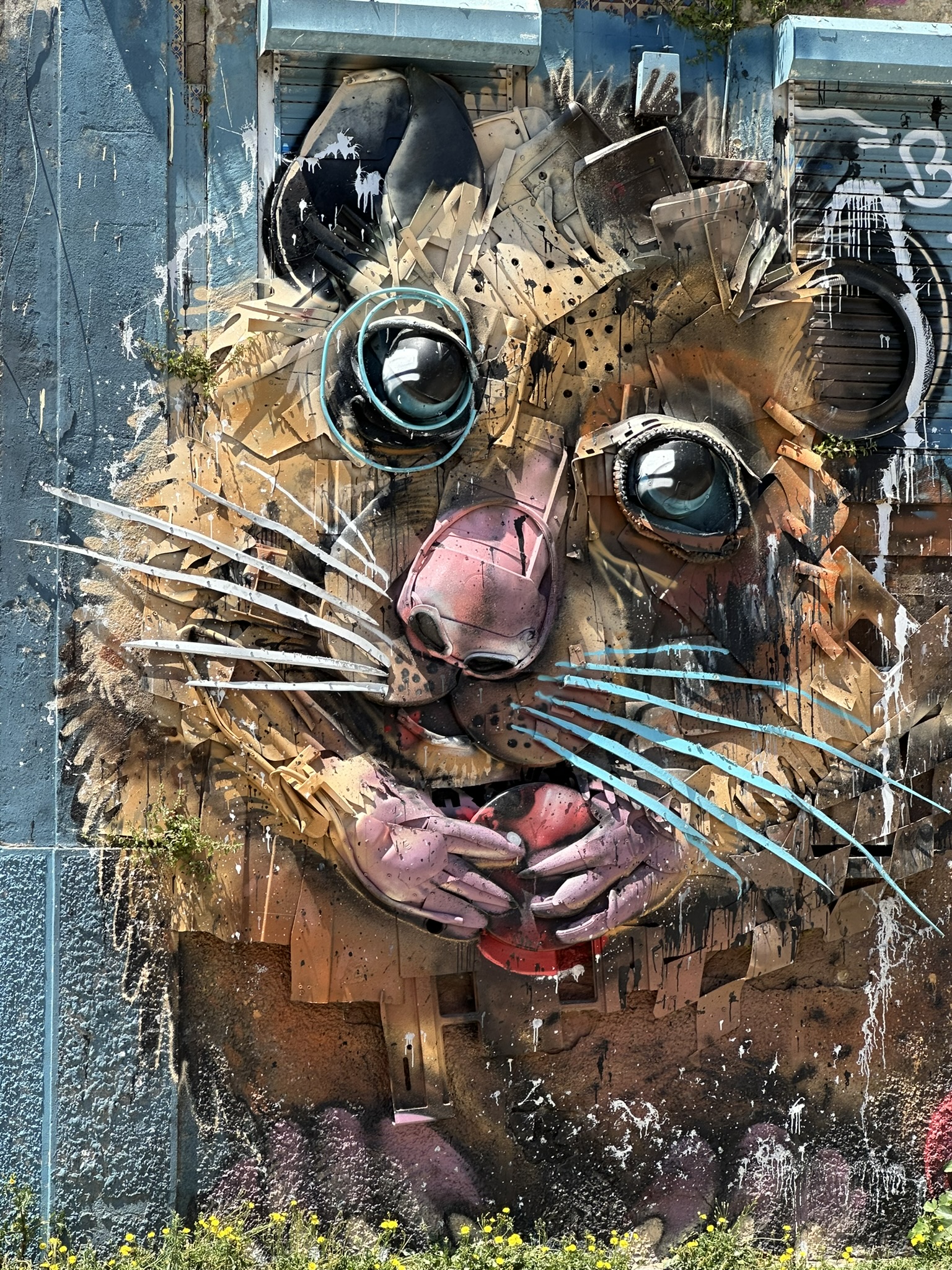
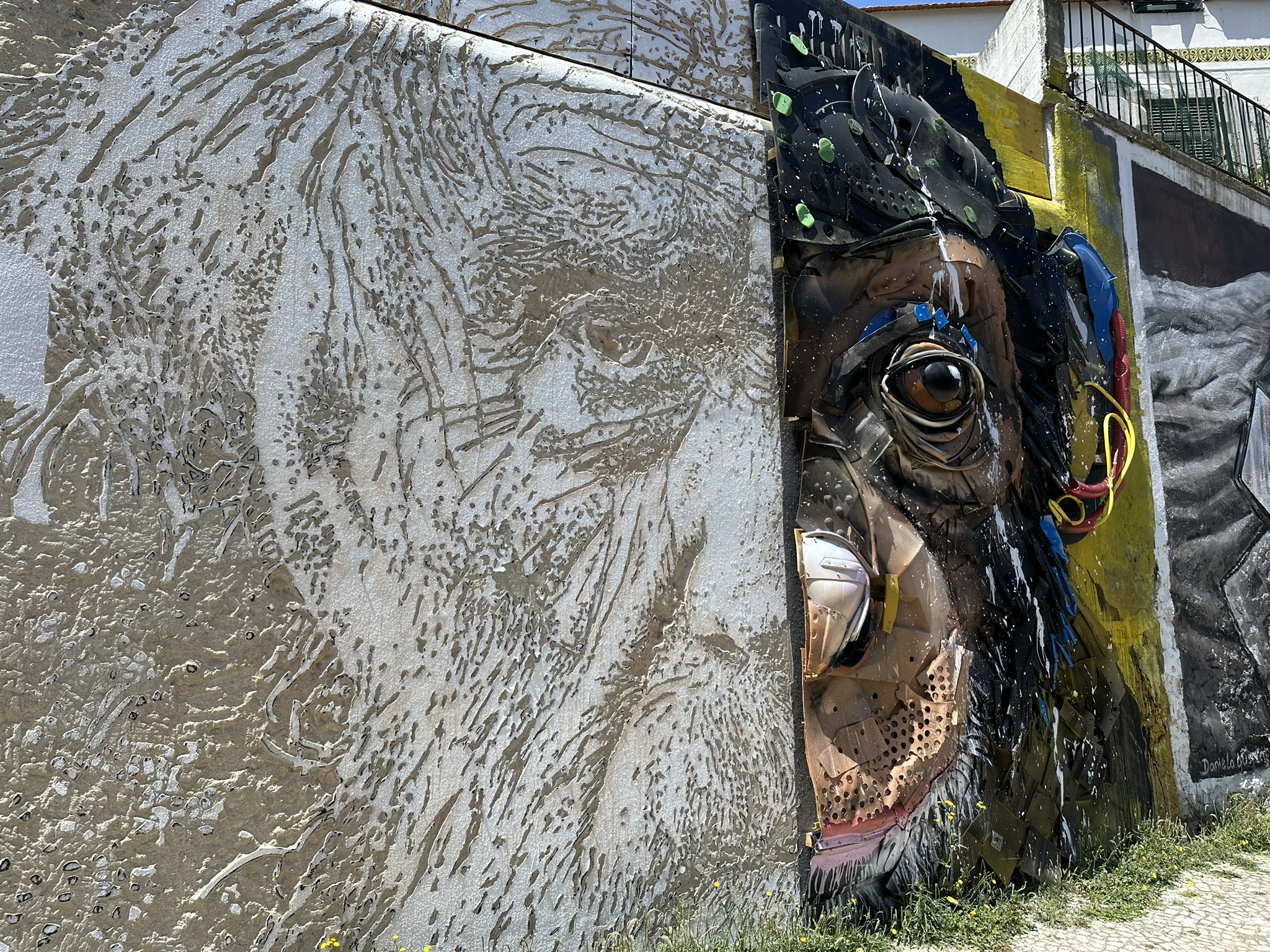
Works of Bordalo II including his studio (the gorilla) and the collaboration on the far right. We suggest you click on each image so you can really see the materials used to construct each one.
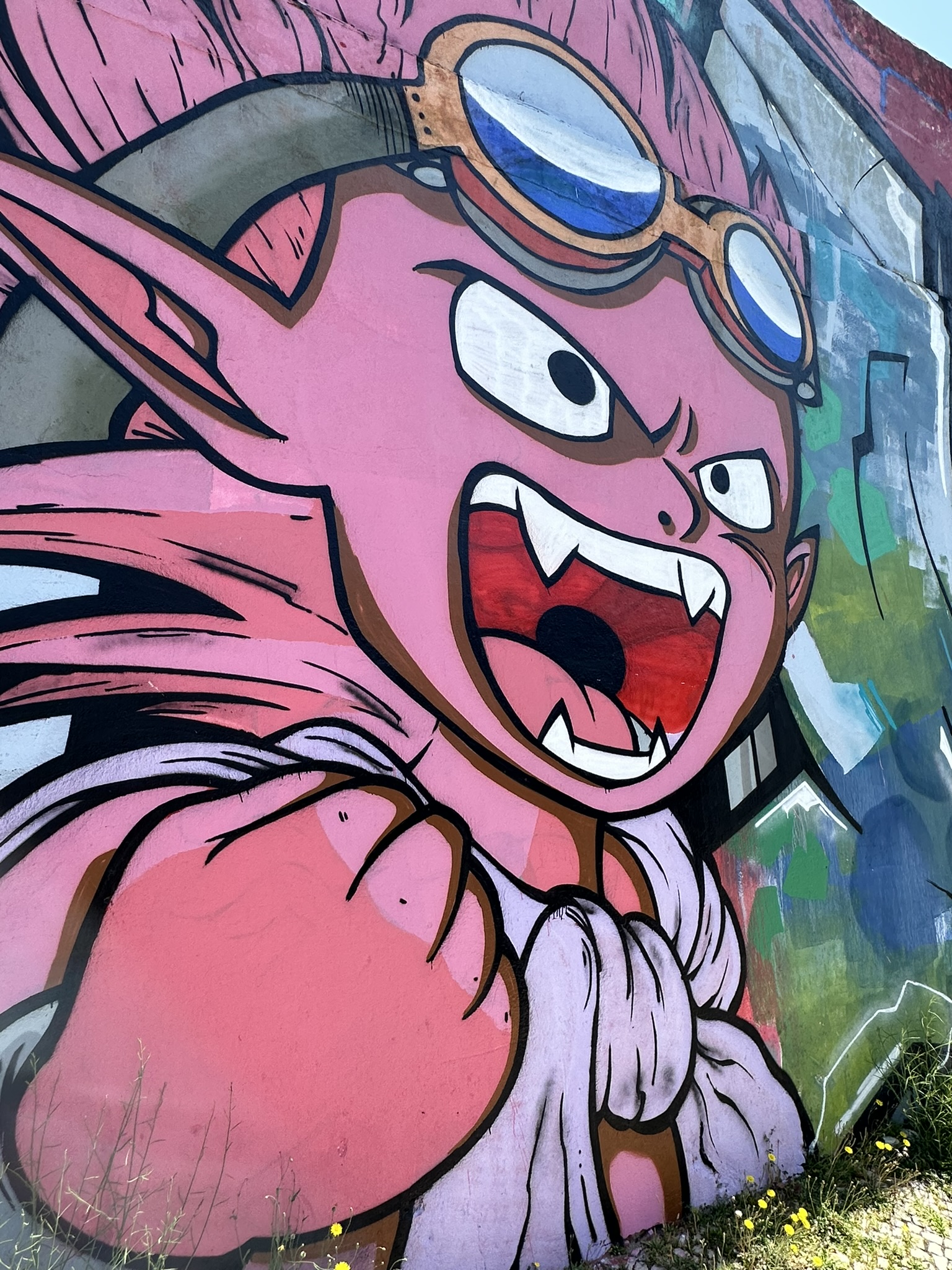
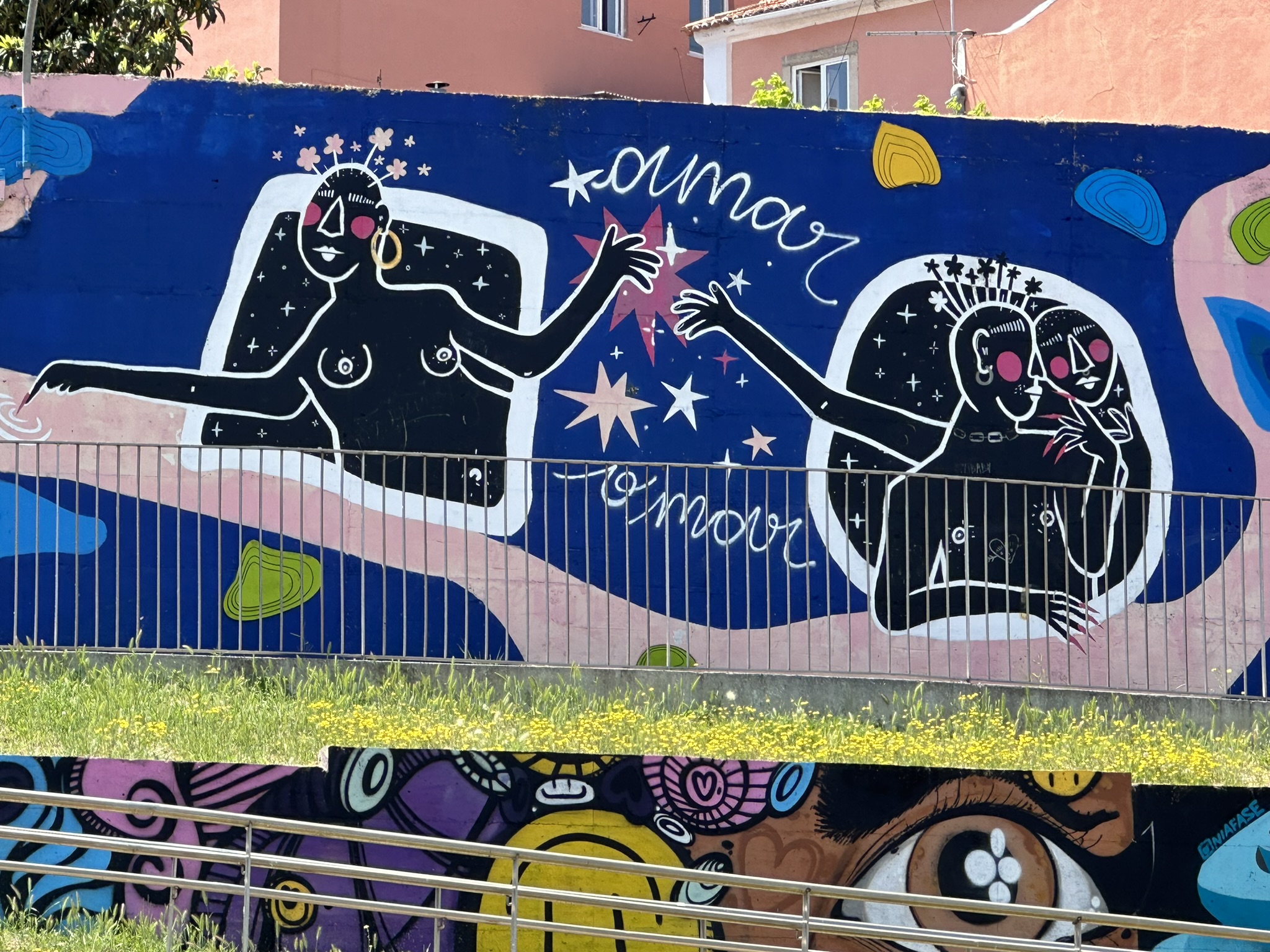
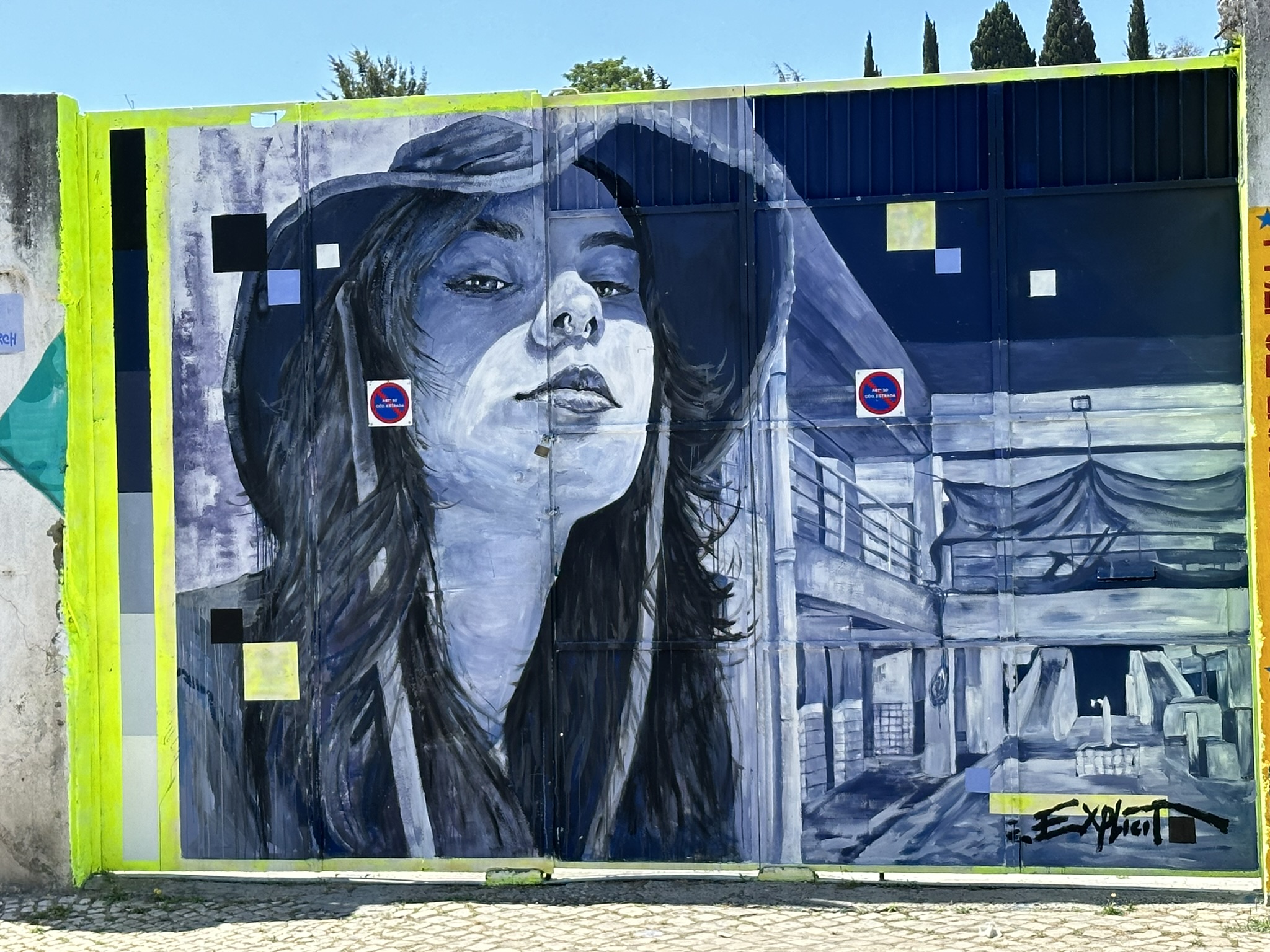
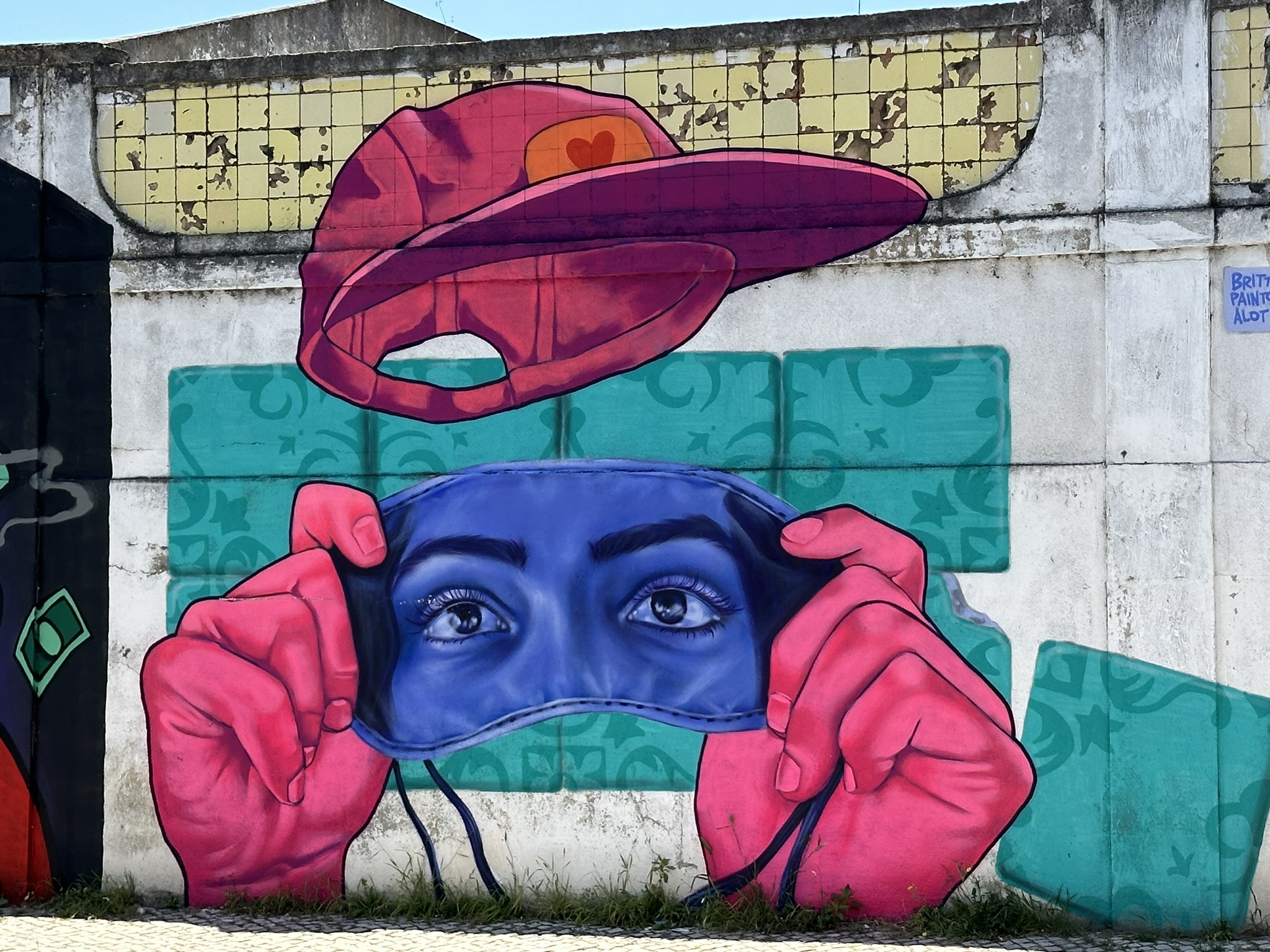
Other works in Beato.
From there, we wrapped back through Bairros Marvila and Olaias to Graça.
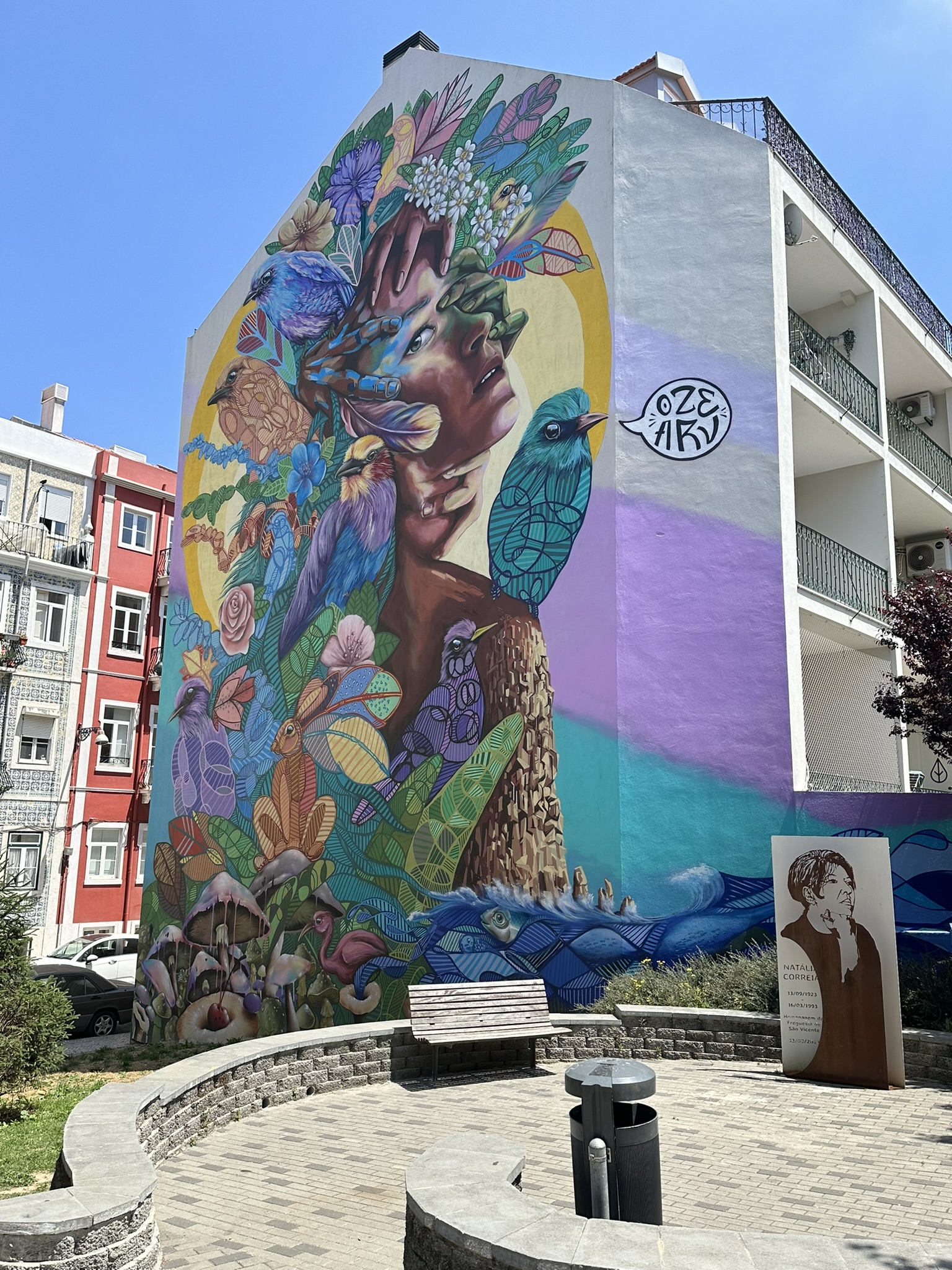
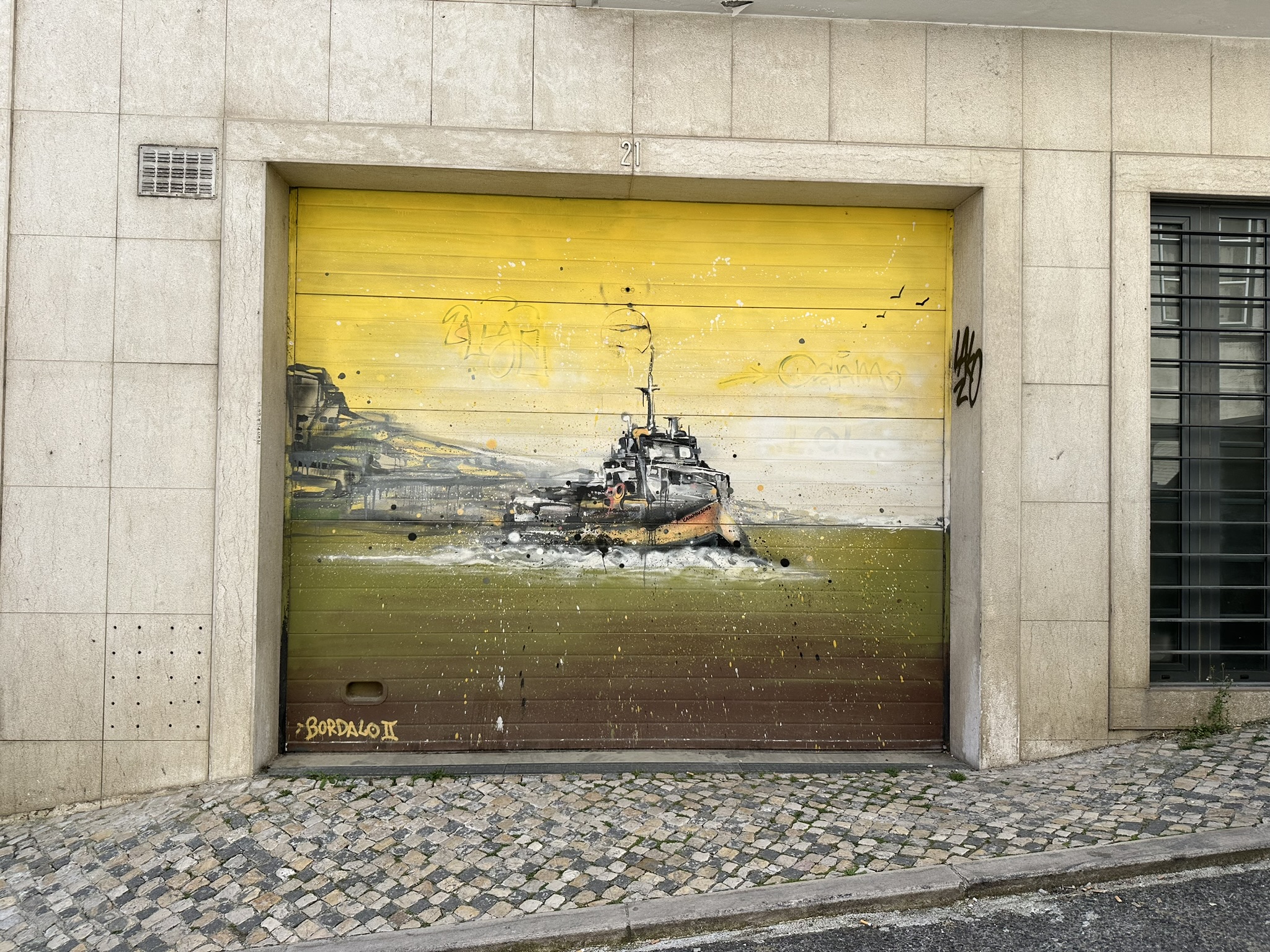
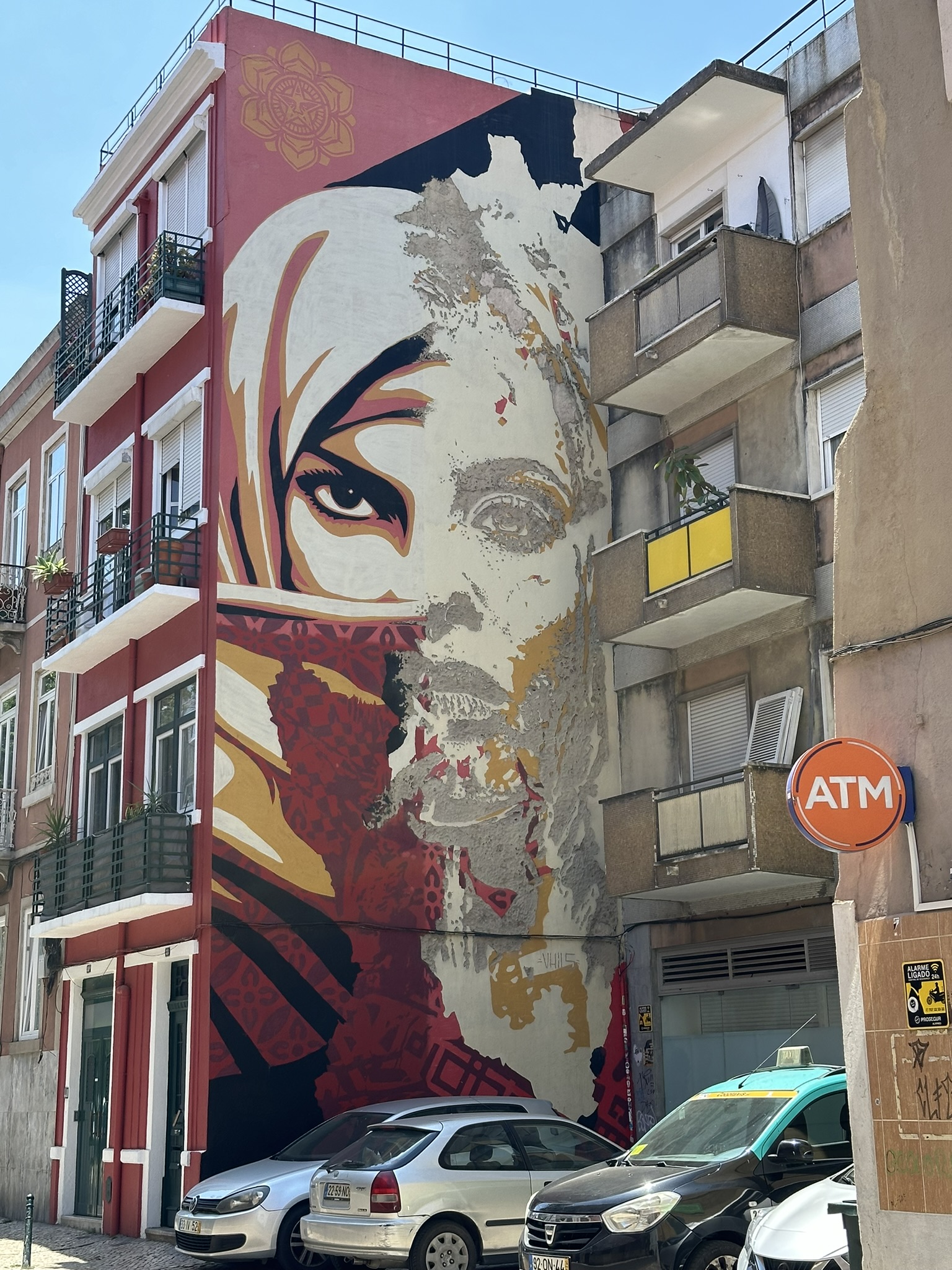
More work in Graça including a Vhils collaboration
If you don’t love walking or want to get further afield, we would recommend Carlos and his tour. He was very flexible with the route, with his time and with stopping so you can get out and take pictures (+351 96 123 5710 or Instagram).
Sources:
- https://www.worldhistory.org/article/1452/azulejos-the-visual-art-of-portugal/
- https://mandalameadow.com/lisbon-street-art-guide-best-neighborhoods-artists/
- https://passportsymphony.com/oldest-cities-in-europe/
- https://atelier49lisboa.com/lisbons-street-art-a-city-full-of-amazing-artists/#:~:text=From%20the%20traditional%20hand-painted%20tiles%20to%20the%20giant,his%20large-scale%20murals%20that%20often%20feature%20optical%20illusions.
 The Traveling Ridleys
Beautiful!
LikeLike
David and Melissa, Great shots of the street art!
LikeLike