


Near the Scottish border in England, Emperor Hadrian cemented one of his legacies: a border. Prior to Hadrian, the Roman Empire was in a period of expansion. Hadrian prioritized securing the northern border in Britannia vs. expanding it further. Across the modern day northern stretch of England, Hadrian built a series of fortresses, towers and a wall to, presumably, protect the northern border. The threat was not the White Walkers, but it was the period’s wildlings: the Scottish tribes and barbarians.
Hadrian was known as a “good emperor” of Rome for his good works and respect for the Senate (though he was not so popular with the Jews, having killed ten rabbis during Yom Kippur). As a boy, Hadrian was nicknamed Graeculus for his love of Greek culture and as Emperor he traveled the empire extensively, more than many of his predecessors, including spending a lot of time in Greece. He was taken on by Trajan as his heir after becoming successful in the Roman Army, eventually leading him to become Emperor.
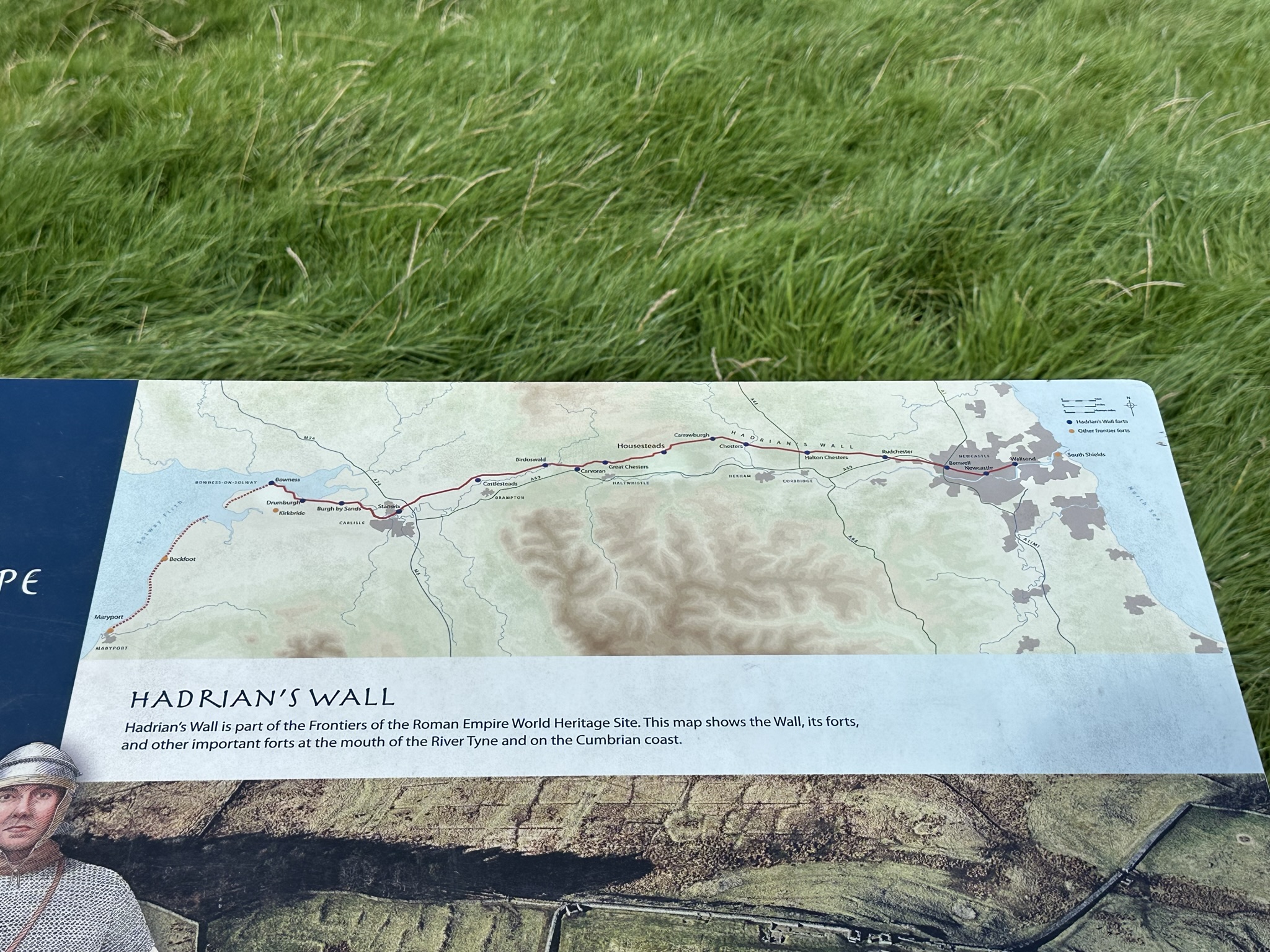
Many months ago, when I was reading Lonely Planet guidebooks from cover to cover and planning this trip, I’d read about sites to visit along Hadrian’s Wall. We didn’t budget time to walk the wall, as I’ve seen others do both on social media and during our visit (you can walk alongside it for all or parts of the 84 miles from Newcastle-upon-Tyne in the east to Bowness-on-Solway on the west coast) and from past experience Roman ruins can sometimes require a LOT of imagination to ascertain what that pile of rocks once was. The three I picked (from east to west, which was the order we did them) that sounded most interesting and best preserved were: Chesters Roman Fort and Museum, the Homestead’s Roman Fort at Vercovicium and the Roman Army Museum.
Chesters. This was a good place to start. Regular readers will know that we joined the English Heritage program before coming to the UK. Several of these sites were part of that network making admission and parking fees at their sites included in our memberships.
The museum is on the former household property of John Clayton, a Victorian era excavator of considerable wealth who bought up property along the wall in order to preserve it.
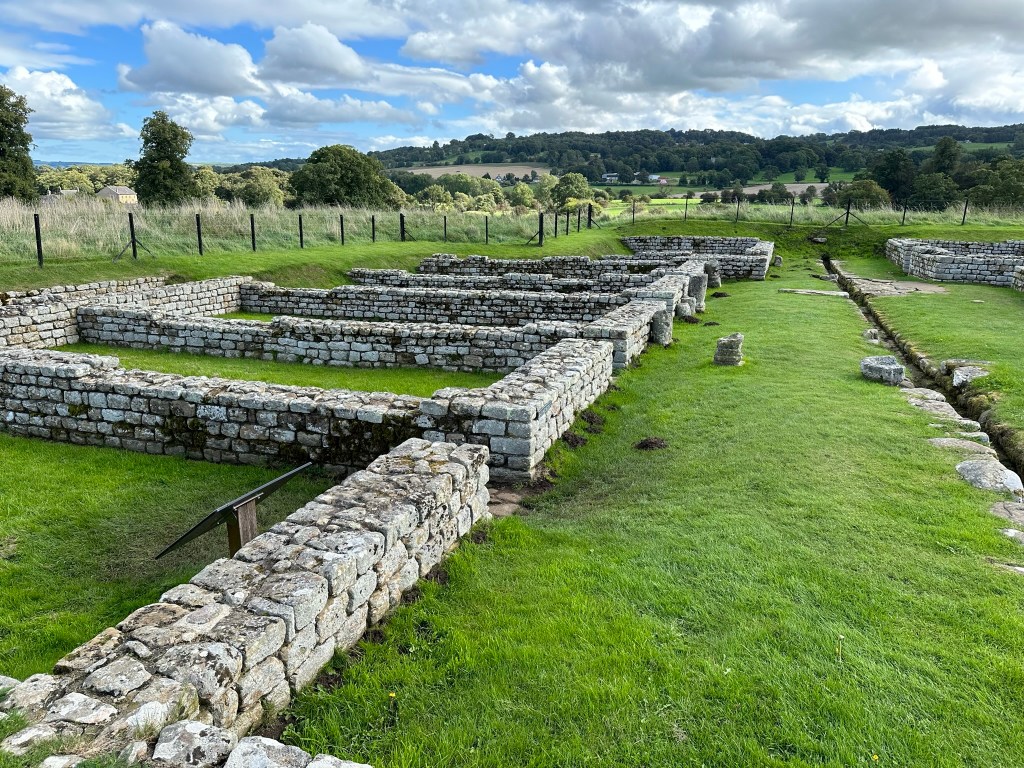
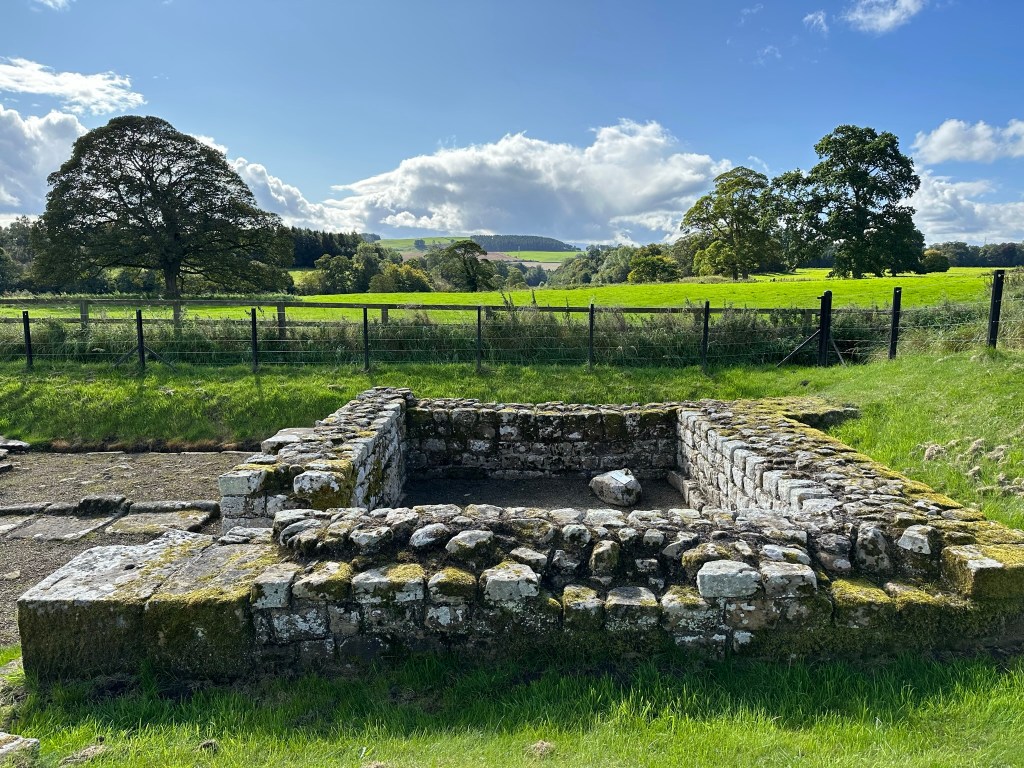
On the site, is a small museum built to house Clayton’s excavations, a former Roman fortress and one of the best-preserved Roman baths in Britain.
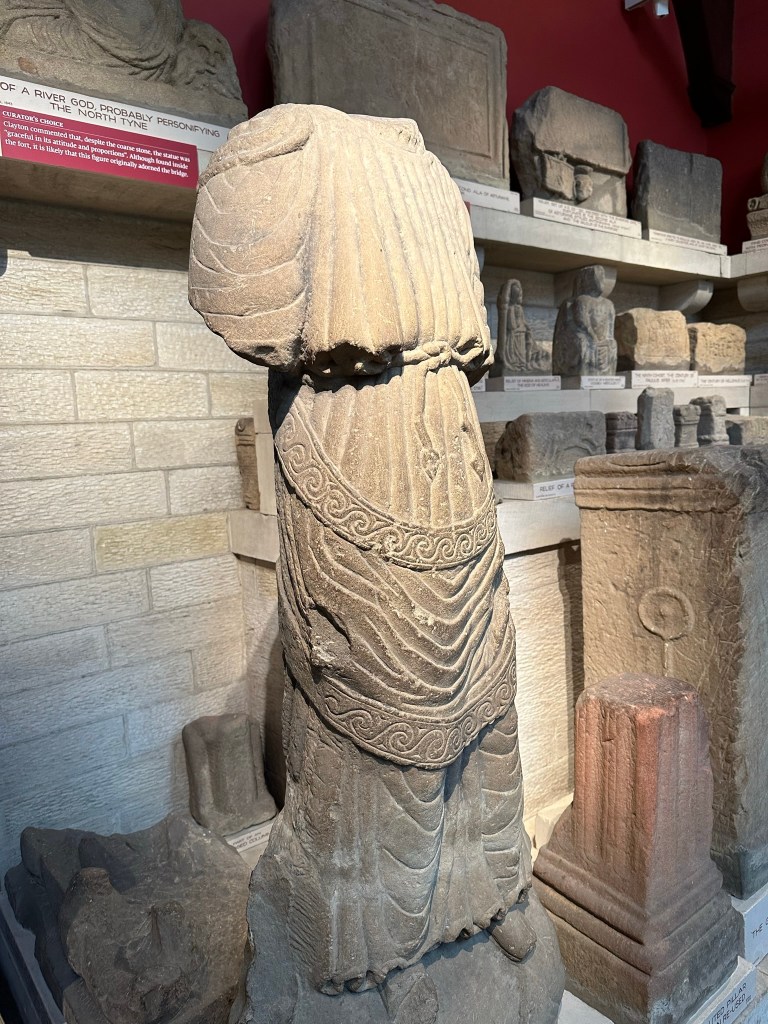
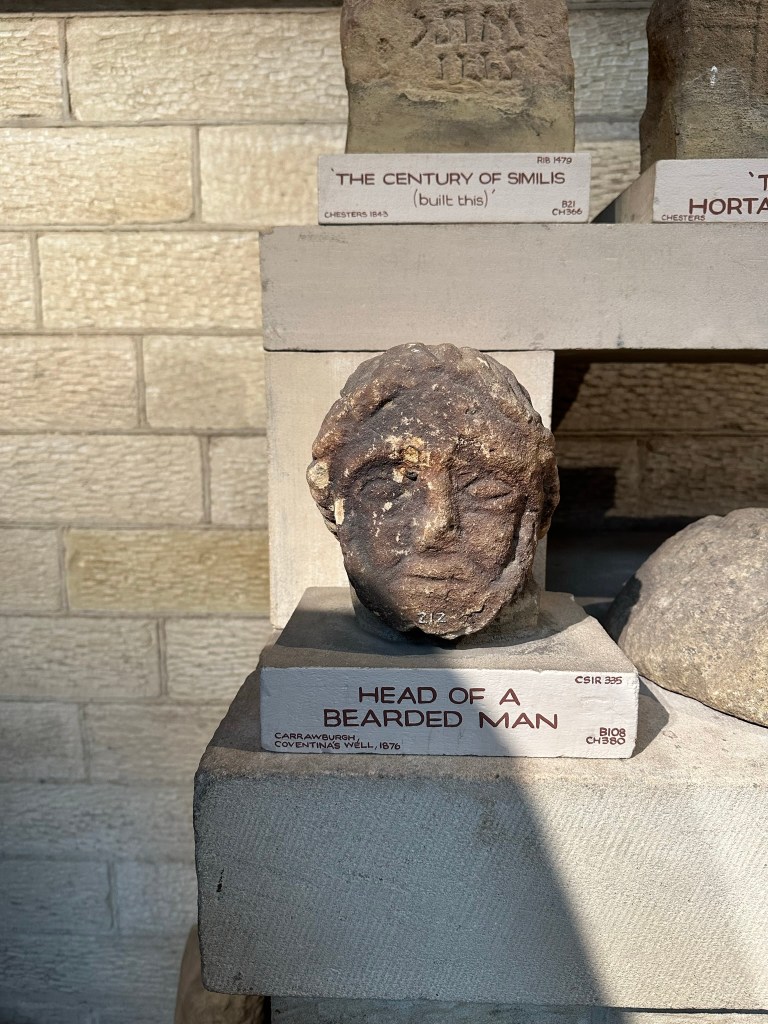

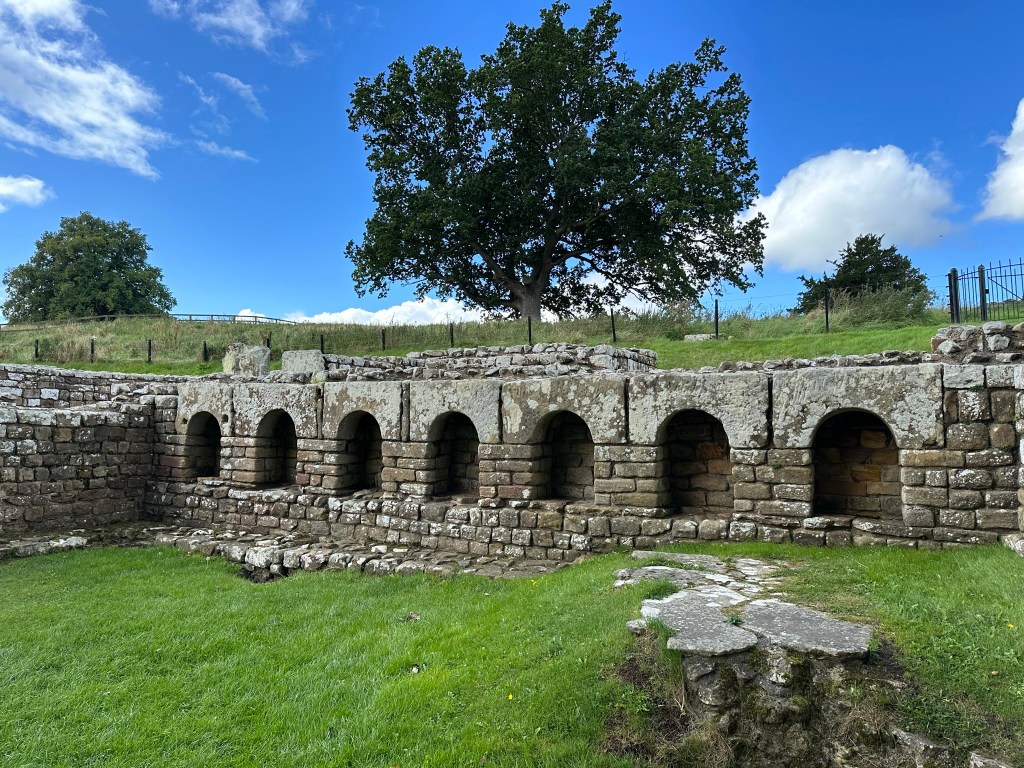
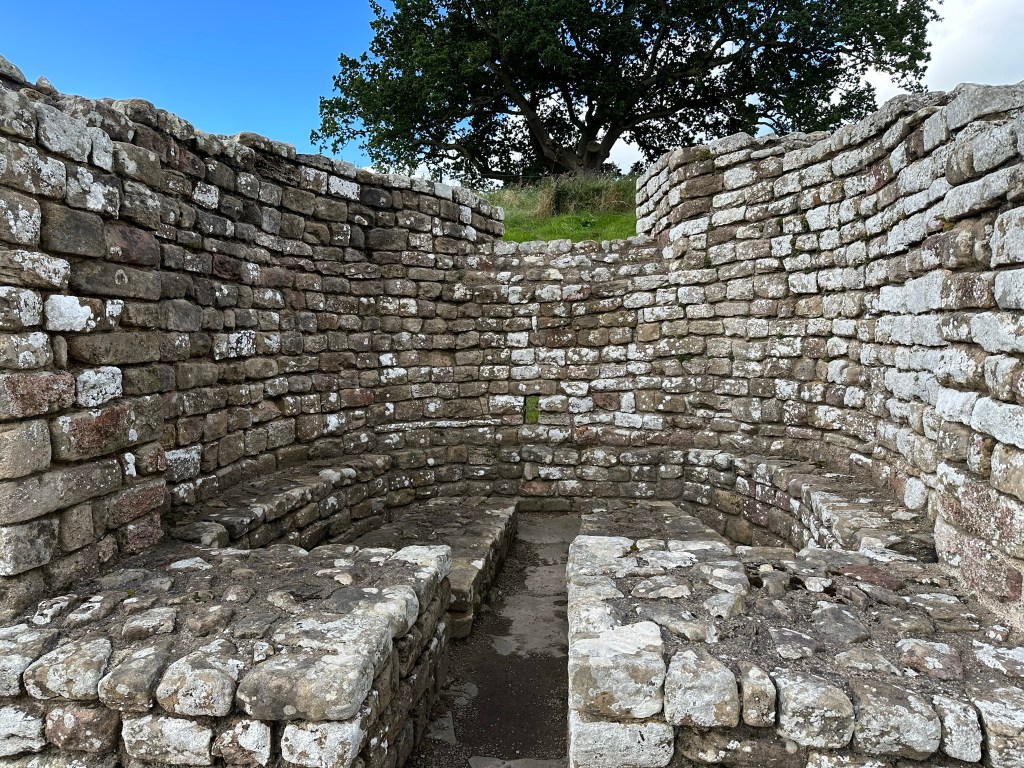
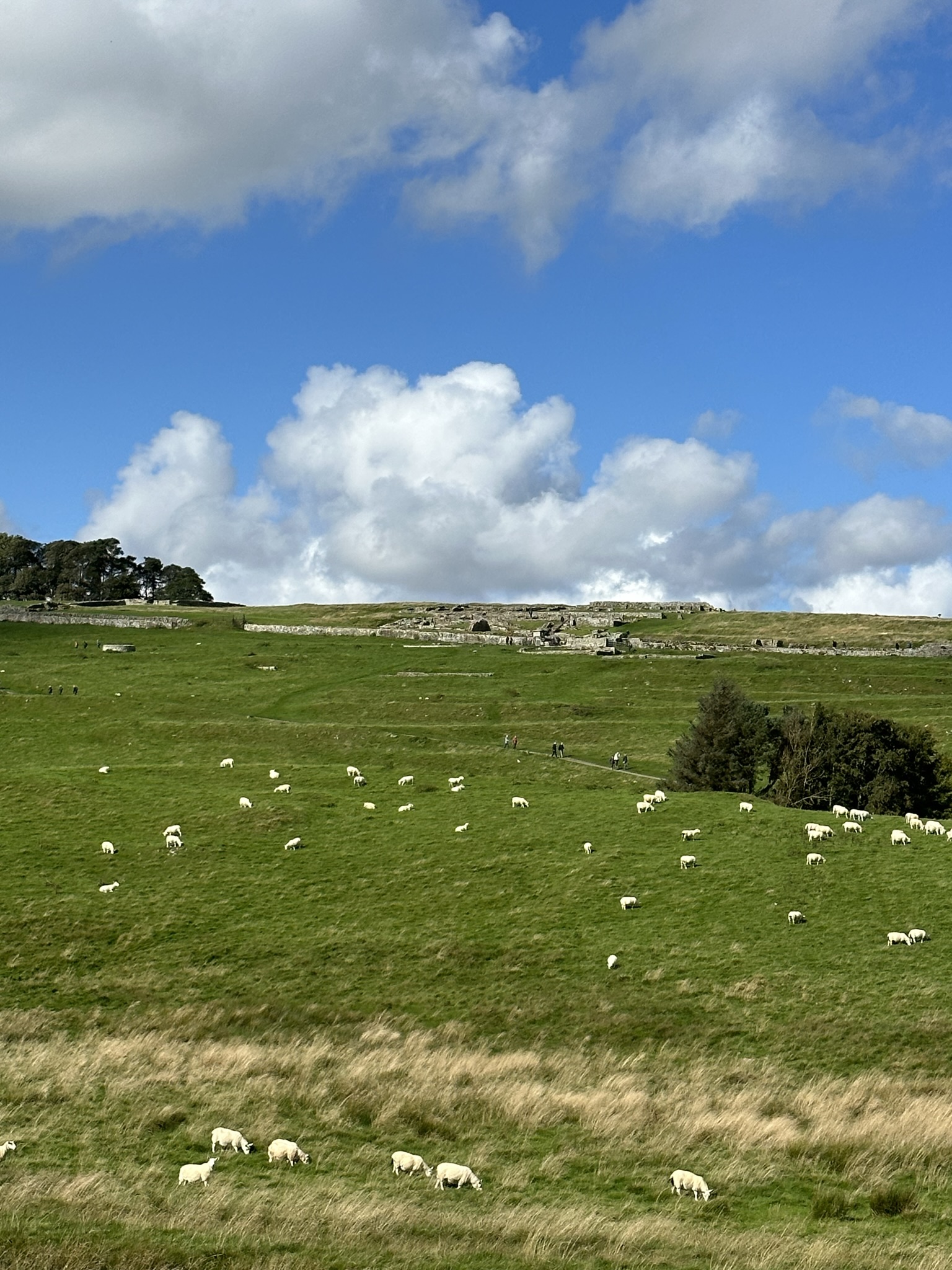
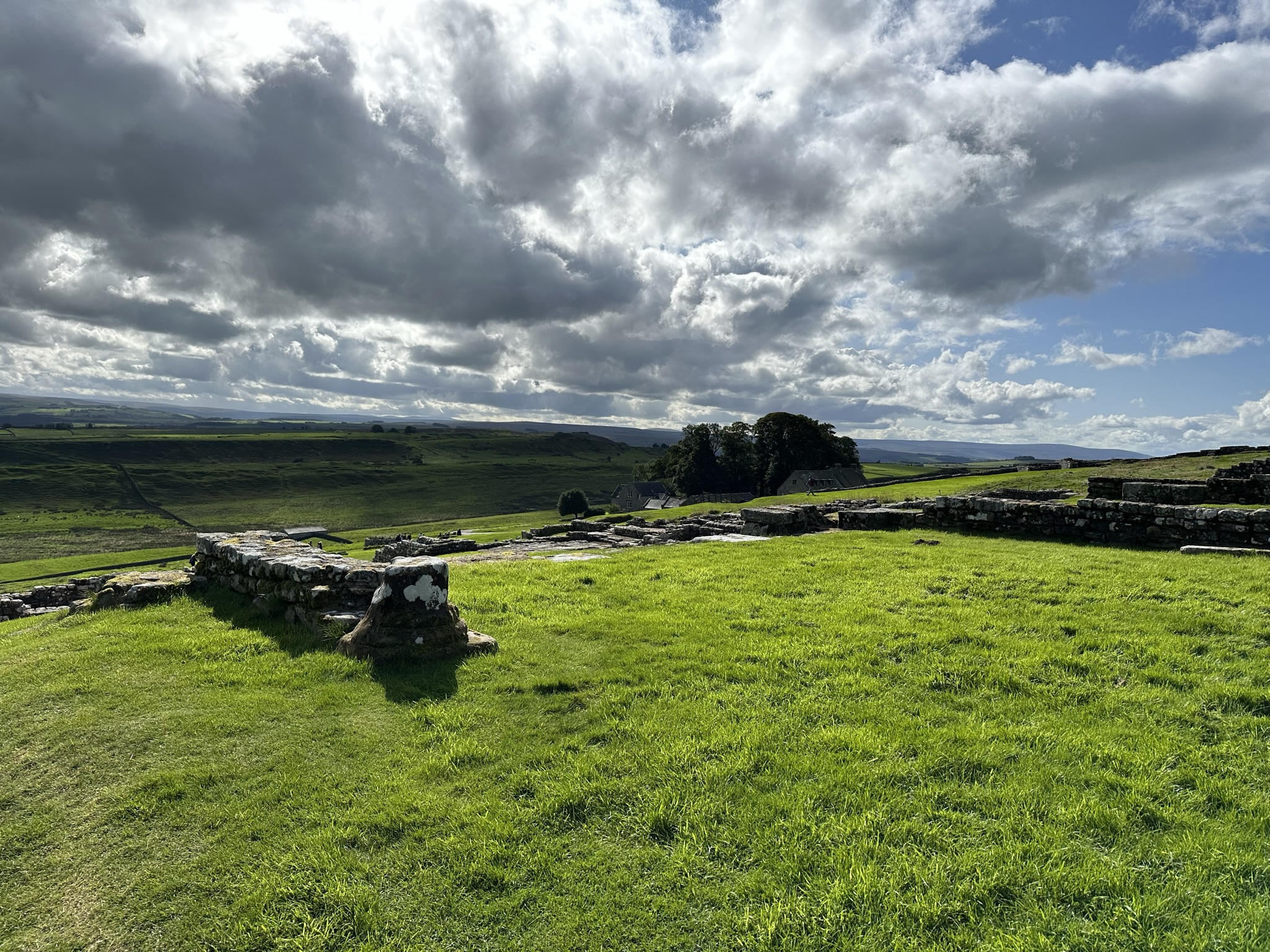
Homestead’s. It’s huge. Atop a hill you climb it expands out over the summit of the hilltop in both directions as you approach. There are some great preservations of floor joists which kept the floors of homes off the ground, and it has one of the best ways to visualize how the wall met the fortresses, towers and garrisons along its path with one of the better-preserved sections of wall we saw as we made our stops. This is also an English Heritage affiliated site, for the members reading.


Roman Army Museum. Follow the life of a Roman soldier and the daily routine in the garrisons as well as the life of Emperor Hadrian. The highlight, honestly, was their 20-minute 3D film in the harder-than-you-would-think-to-find “theater” deep within the exhibit. The film not only offered insight into life of a soldier but a great birdseye (or might I say droneseye) view of several spots along the wall.
More than forty years ago, my family came to Britain for a summer vacation. My mother taught Latin and knew (probably) everything there was to know about the Romans, their lifestyles, their religion, their empire and their bawdy bits. As a tween, I had little appreciation for these sites, but as a fully formed adult (at least physically and in age), I have newfound appreciation for them and think of my mom whenever we visit one: here, in Bath, at the National Archeological Museum in Naples, Italy, at the ruins of the Palatine Hill in Rome or at Pompeii. I only wish she could have been here and narrated them for us. Venimus, vidimus, hic eratis.
 The Traveling Ridleys
I am a born Australia, with an English mum and an Indian father from Singapore but raised in the states. With the name Hadrian not many Americans know it.
LikeLike