

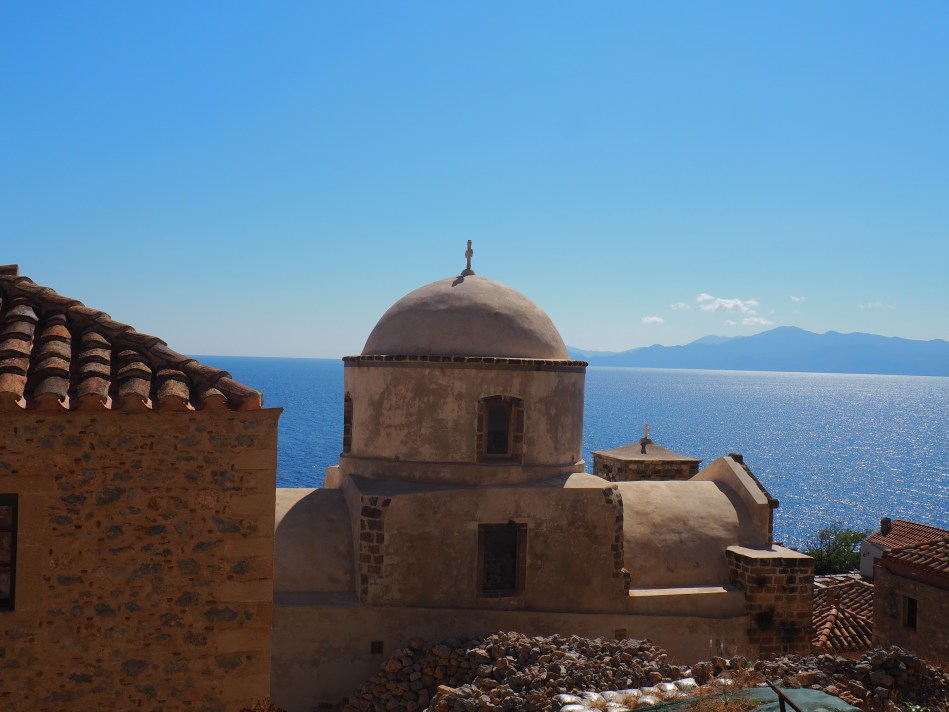
Greece’s major islands and Athens are frequented by millions of tourists annually, but the number of visitors to the Peloponnese is just a fraction of that huge quantity making it the ninth most visited region in Greece (2023 numbers, according to sources below. It is on the rise but not astronomically). This is a shame, and while overtourism is a serious problem in a lot of Europe and at the risk of promoting it here and “ruining” the Peloponnese, we love it and you should consider adding some time here to your Greek itinerary.
To prepare for our first trip to Greece we watched, what I believe was, our first ever episode of Rick Steves’ Europe PBS show which covered the Peloponnese. We heard about places like Mycenae and Epidavros and found out about this little town built on the side of a rock called Monemvasia. So we went. It was one of our three stops in Greece on a logistically complicated route where we visited the Athens airport four times in ten days (oh how far we’ve come). So, when we decided to return to Greece after 10 years we wanted to spend more time here on the peninsula of the Peloponnese.
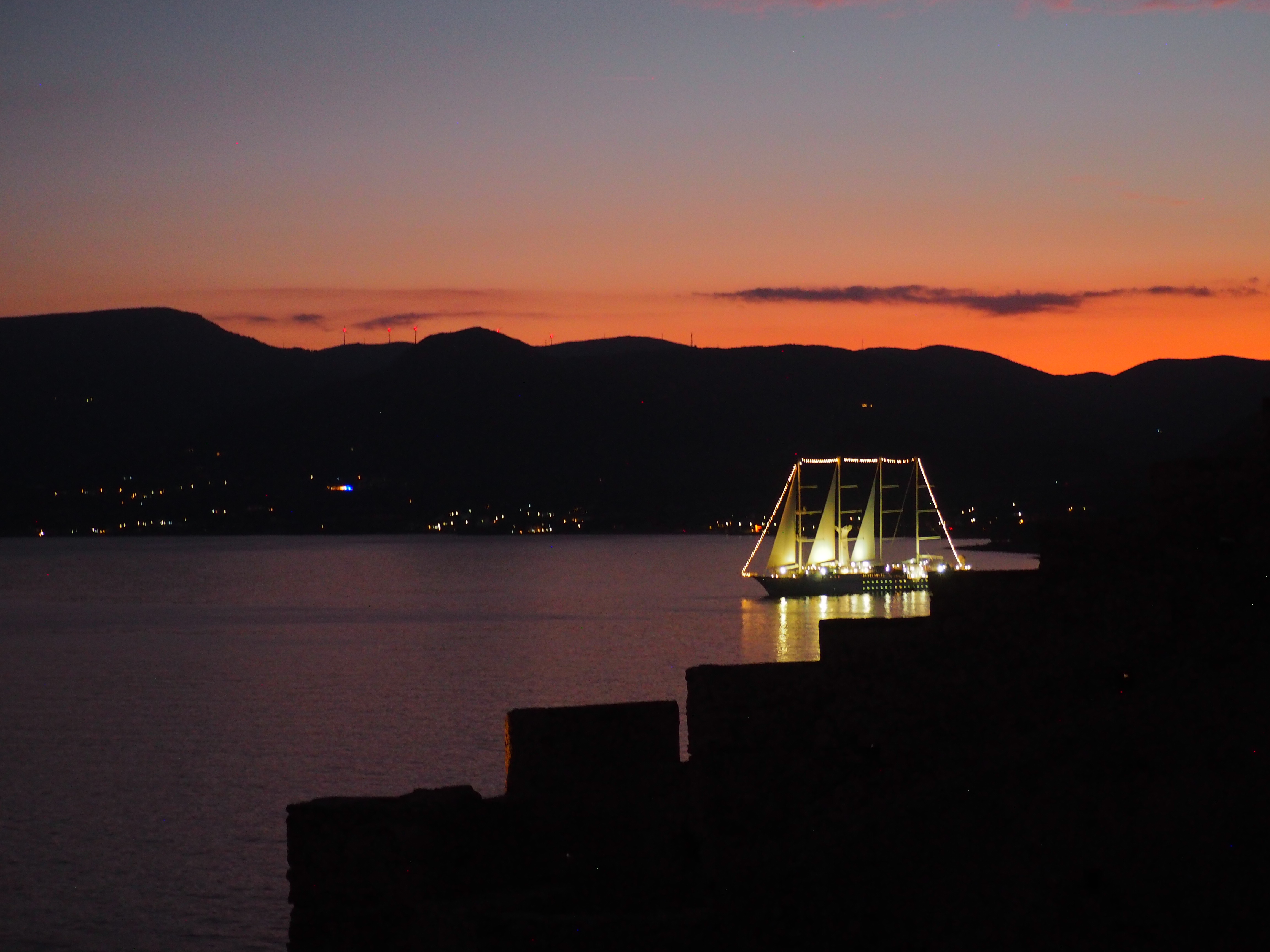
Napflion. We began in Napflion, a sleek little port town guarded by three castle forts: one atop the cliff overlooking town, one on an island in its harbor and a third on a hill just outside of town all lit up at night like something out of a movie. This once capitol of Greece is a huge contrast to its current one, Athens, from which we came.
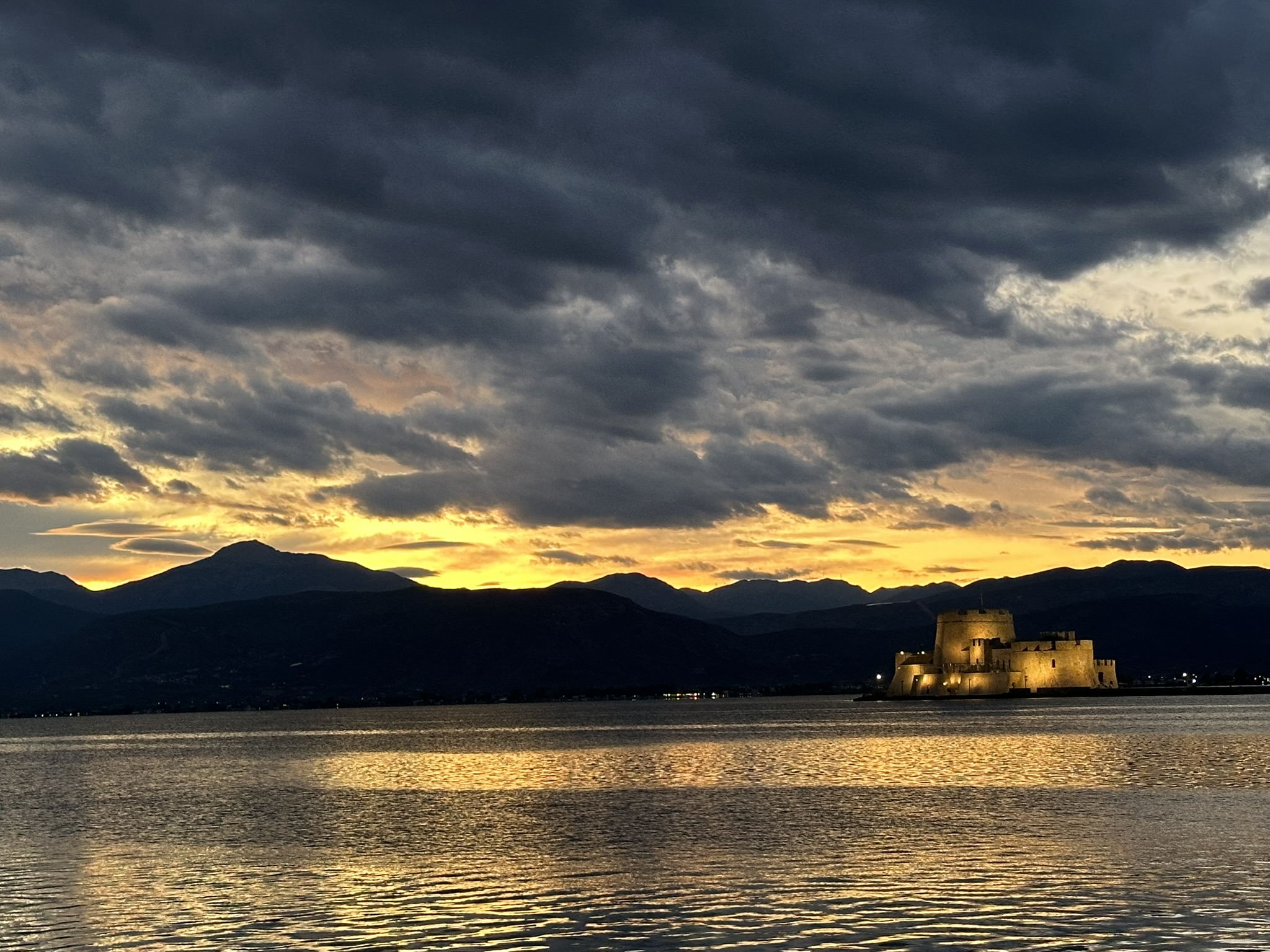
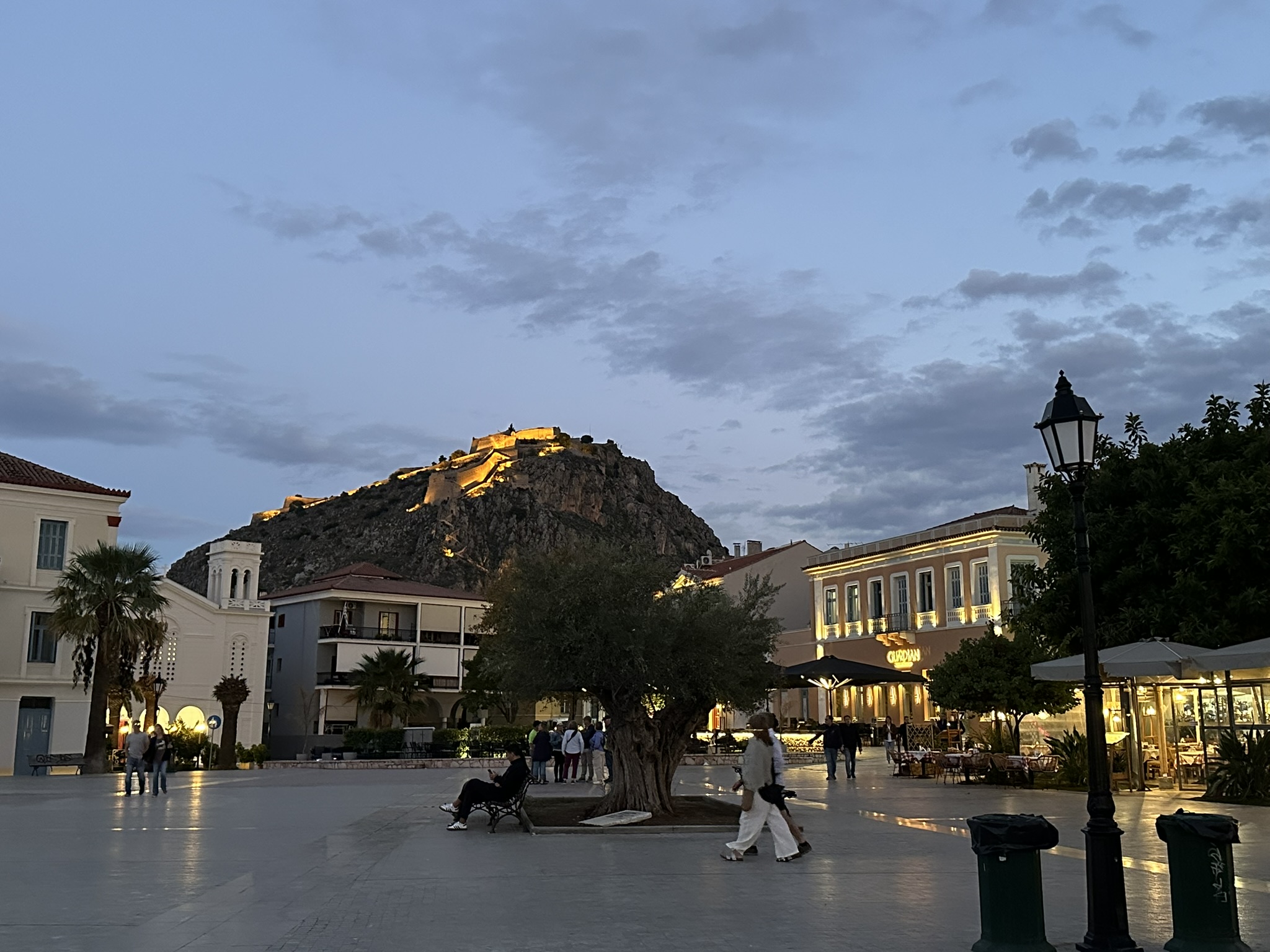
Napflion is named after the son of Poseidon who is said to have founded the town. Palamidis, hero of the Trojan War, was born here, built lighthouses on the bay and invented the Greek alphabet. When the Venetians occupied the area, in Medieval times, they fortified it with the construction of the Palamidi Fortress on the cliff above town and the harbor castle on the islet of Bourtzi at the entrance to the port. The Ottomans captured Napflion in the 16th century after several sieges. Napflion became the capitol city for a short period between 1823-1834 after the Greek War of Independence from the Ottomans and Ioannis Kapodistrias, the first leader of modern Greece was assassinated here by his political rivals in the church in old town.

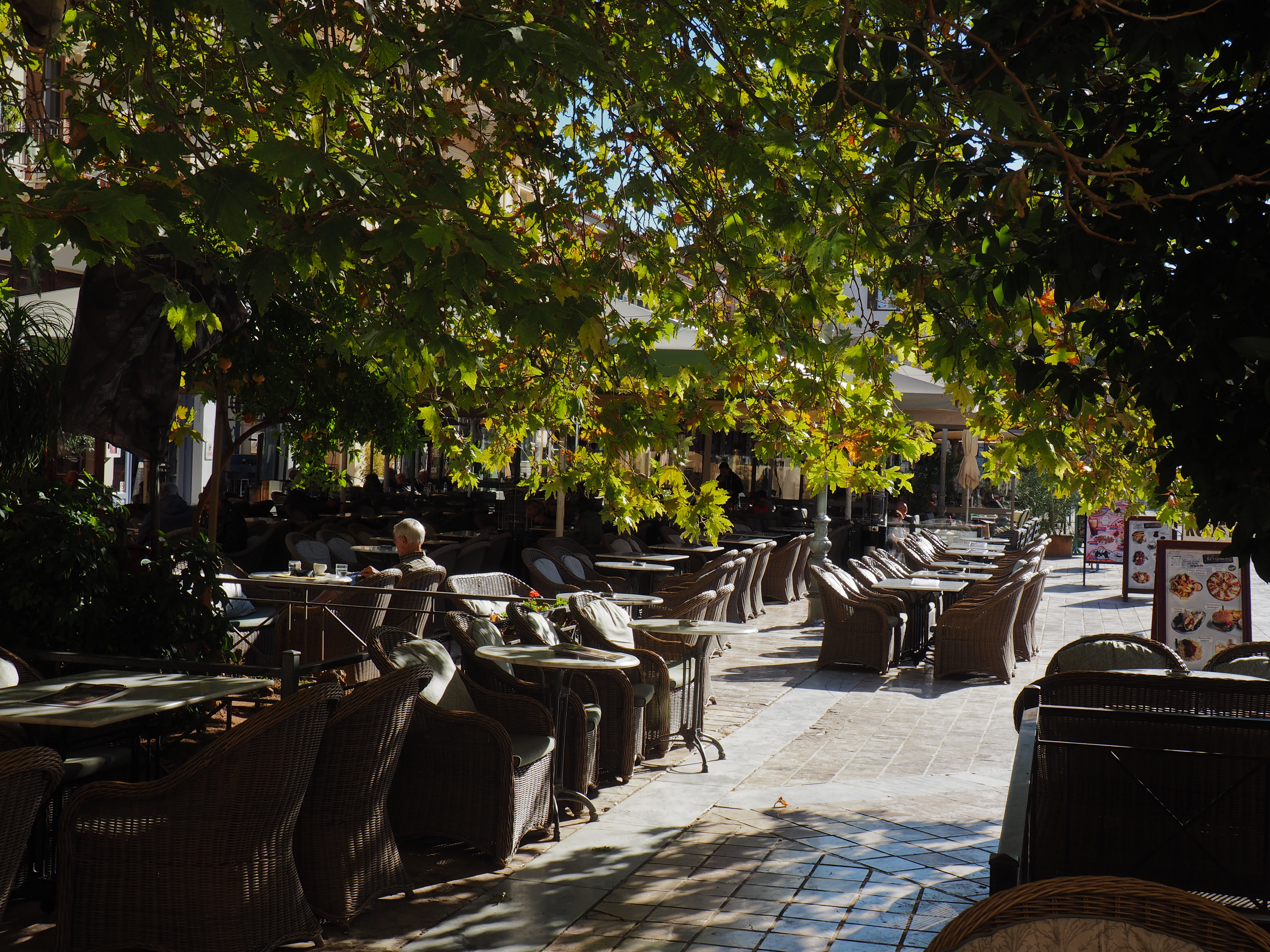
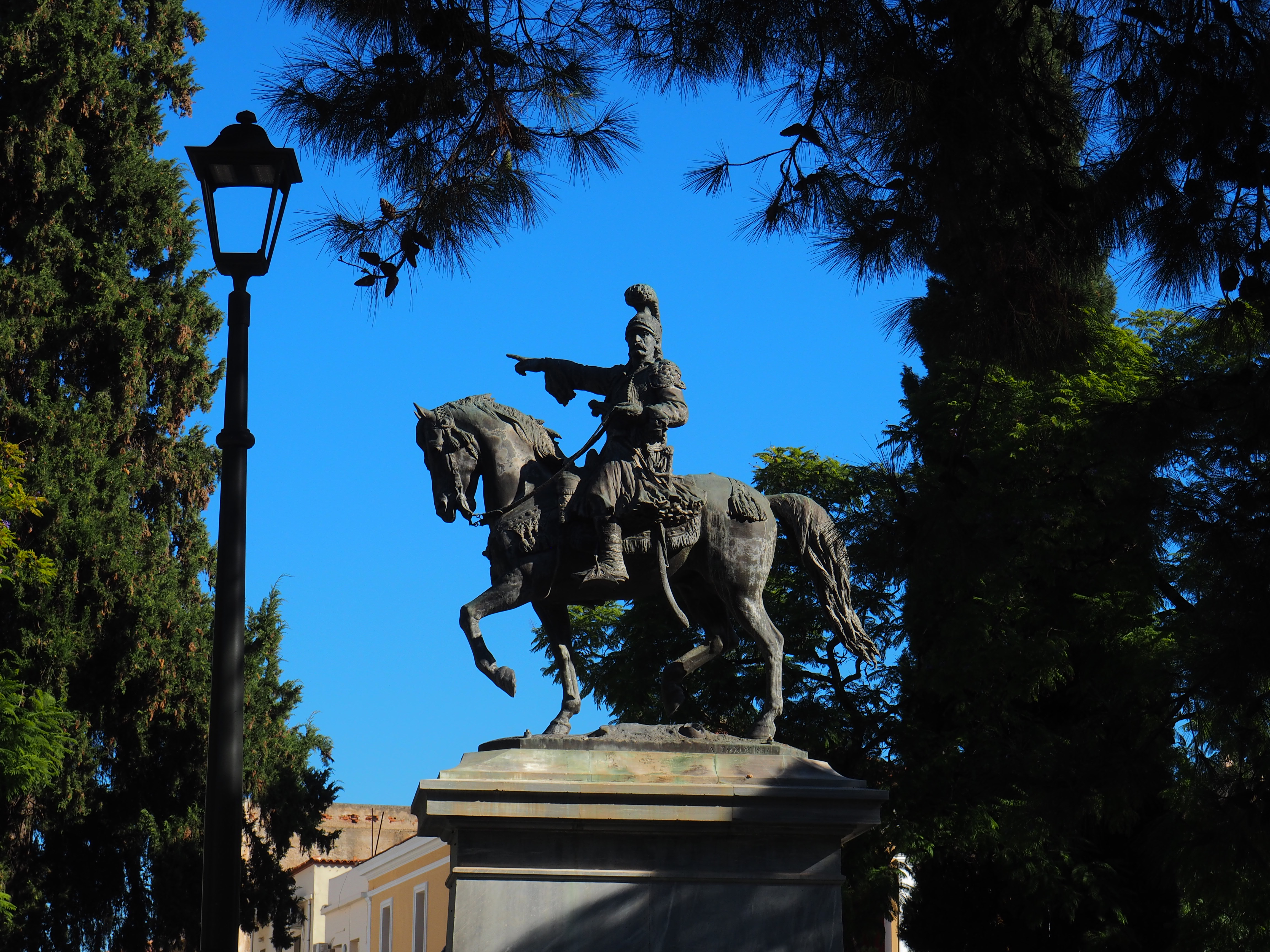

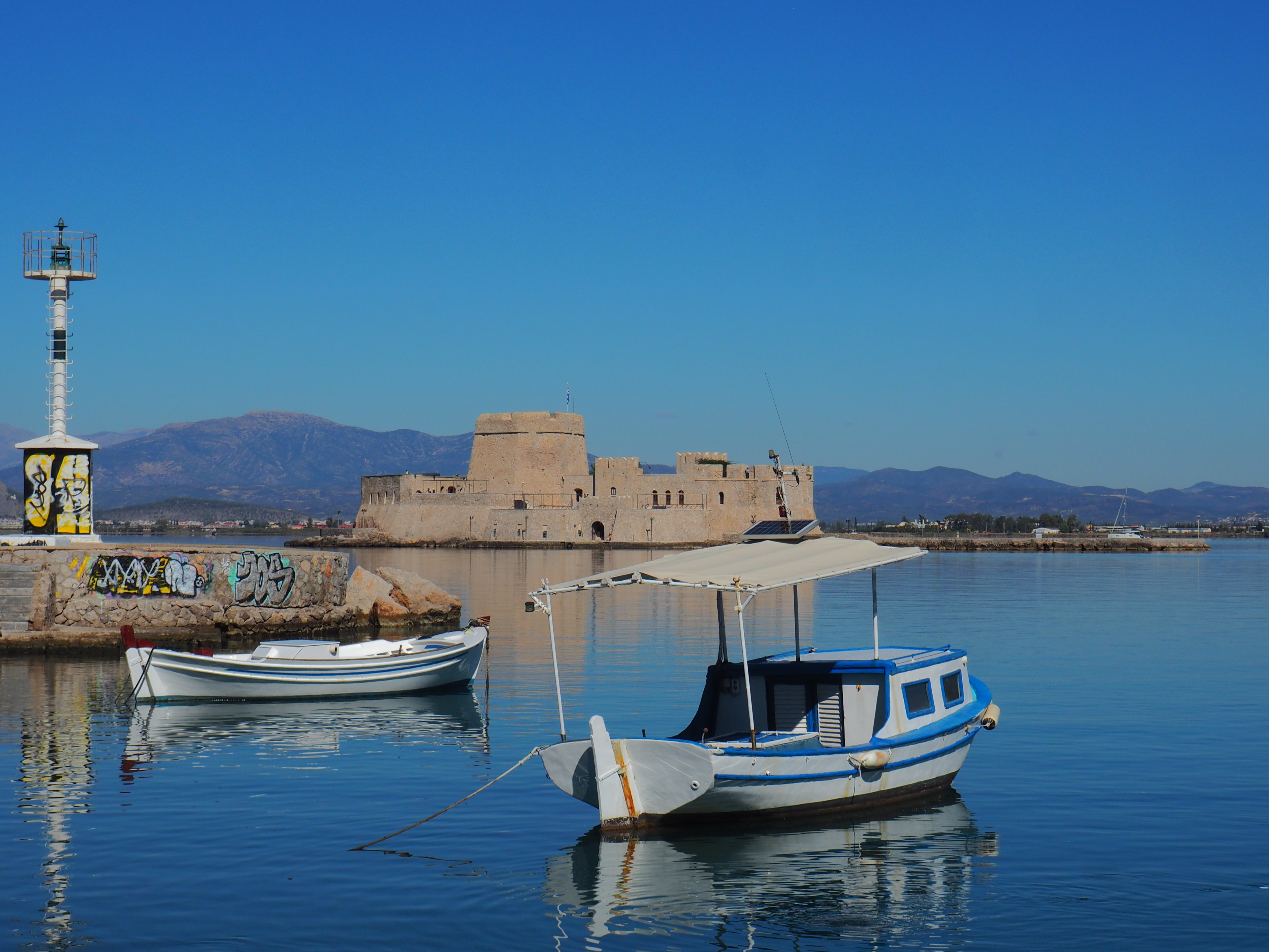
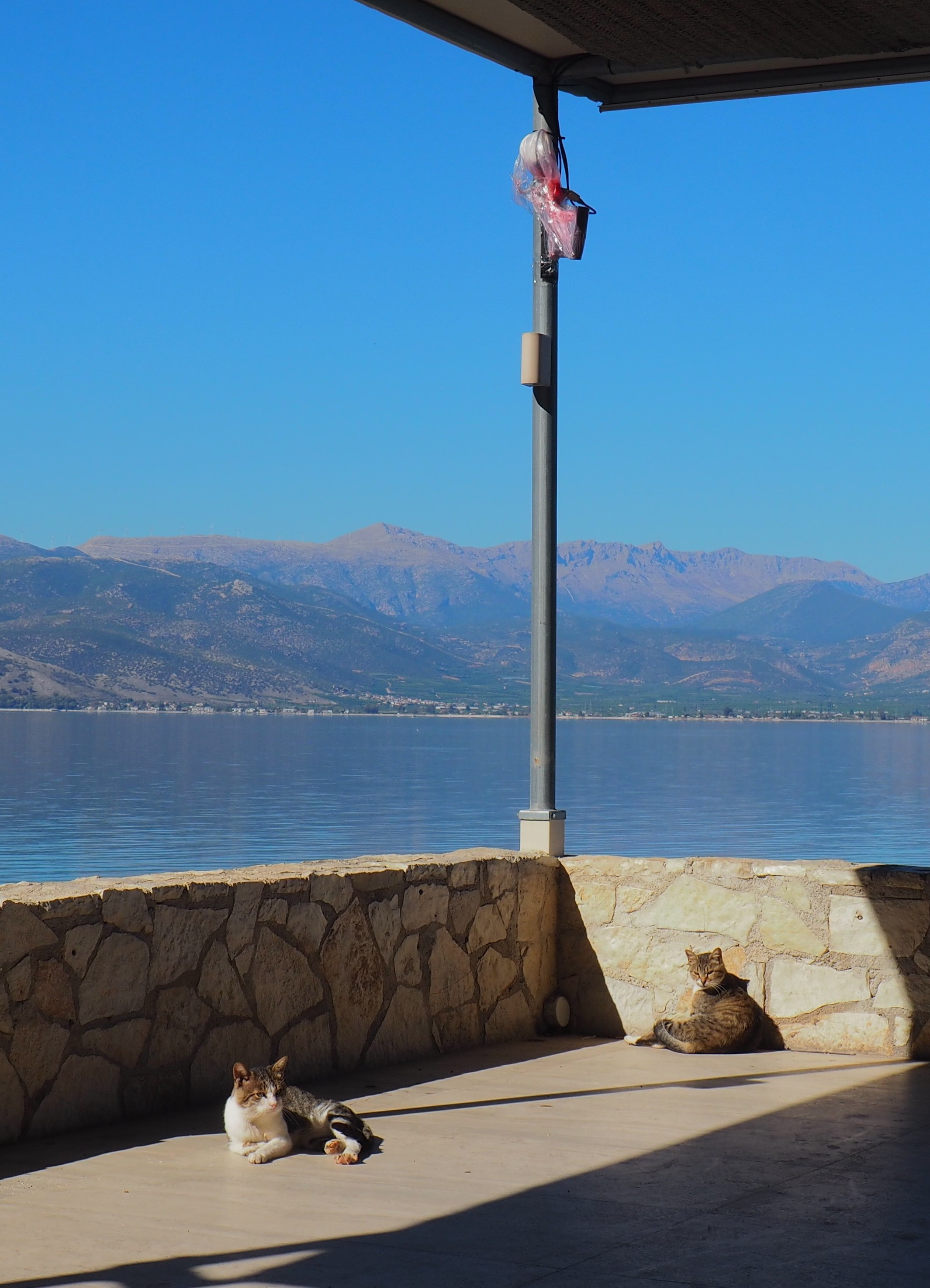
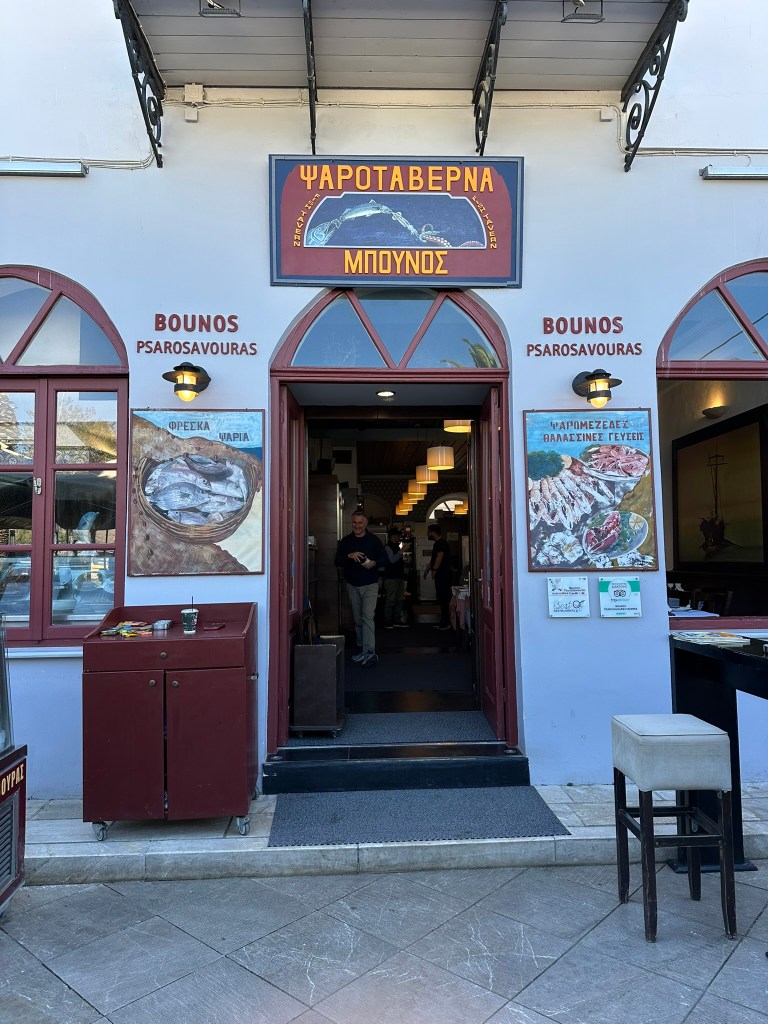
Naplion’s warring days seem to be behind them. We spent our two days wandering up and down the lanes of its charming old town, along the port and eating at three restaurants, two for dinner (port side Wild Duck and Valaora overlooking the Bourtzi fortress) and one for lunch. The dinner spots were great, but a little pricey. The lunch spot, Bounos Psarosavouras (say that 10 times fast), was a highlight with a bowl of mussels, a great grilled octopus and an amazing lemony fish soup and plenty of local color to take in as was the beautiful dinner at Valaora where we ate the best anchovies we’ve ever had and a wonderful watermelon and feta salad.

And if you’ve seen photos from the clifftop Palamidi Fortress of the sweeping views of old town and the harbor and are wondering why I provided none such images, it is because I was nursing a strained knee back to health with only flat surface walking, where possible. As regular readers know, I like to climb things. So in exchange for taking care of my knee like a proper adult man, I secured a promise to come back to Napflion to mount the hill one day. It wasn’t too hard though, as we both loved it here and it will likely land in our top 5 favorite places we went in 2025. If you’re headed to the Peloponnese, add Napflion to your list and consider a stay at the Epoch House in old town.
Return to Monemvasia. Our next stop on the circuit was a repeat: Monemvasia, which warranted its own post. For us, Monemvasia was a bit of a milestone celebration. Greece was the first international trip we posted about on this blog. It was also after that trip that we began planning to leave full-time work and put in motion “The Traveling Ridleys” plan. And it was here, this time, that we have now spent 365 days on the road and traveling since COVID ended. Yia mas! A lot to toast to.
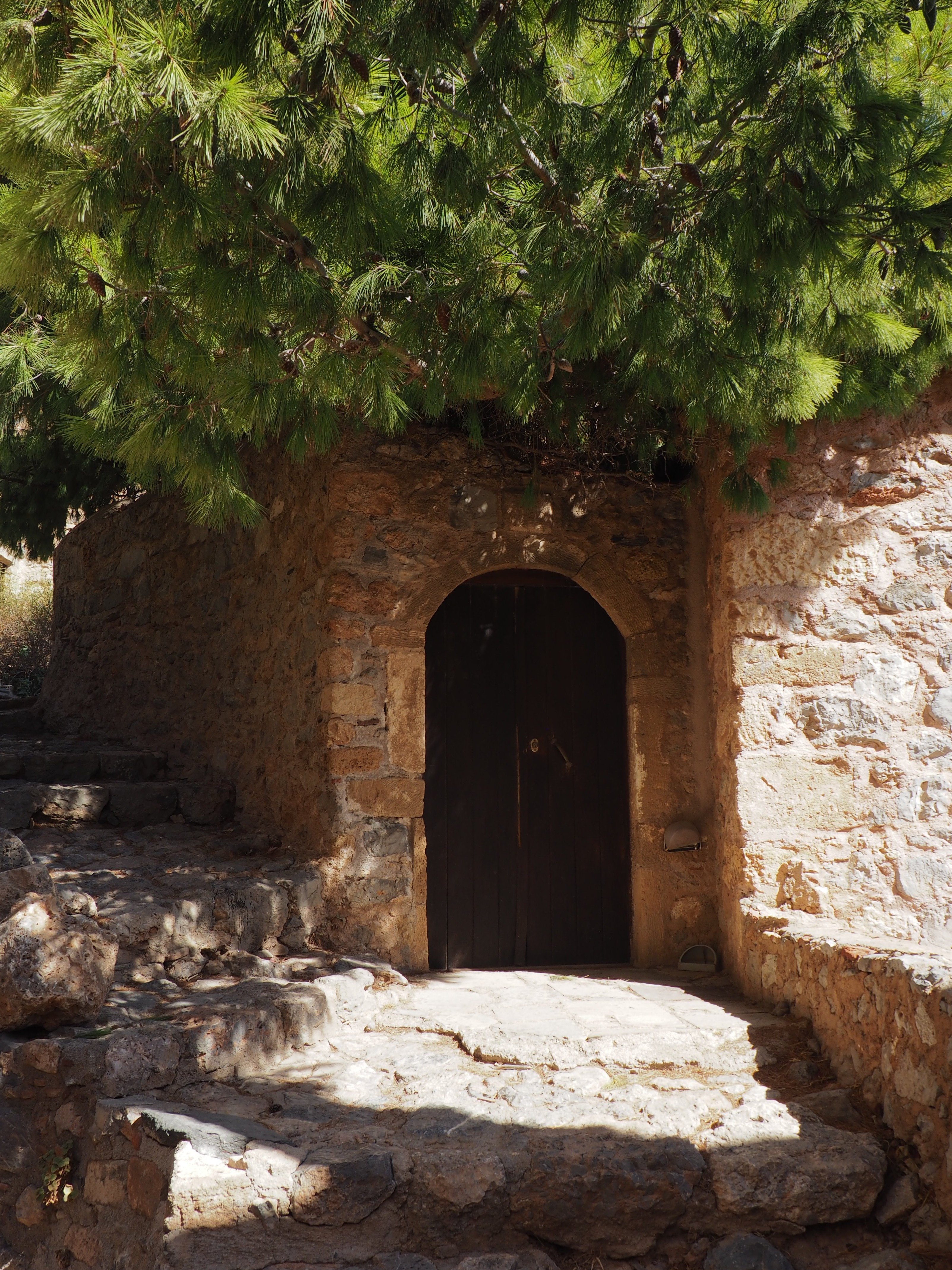
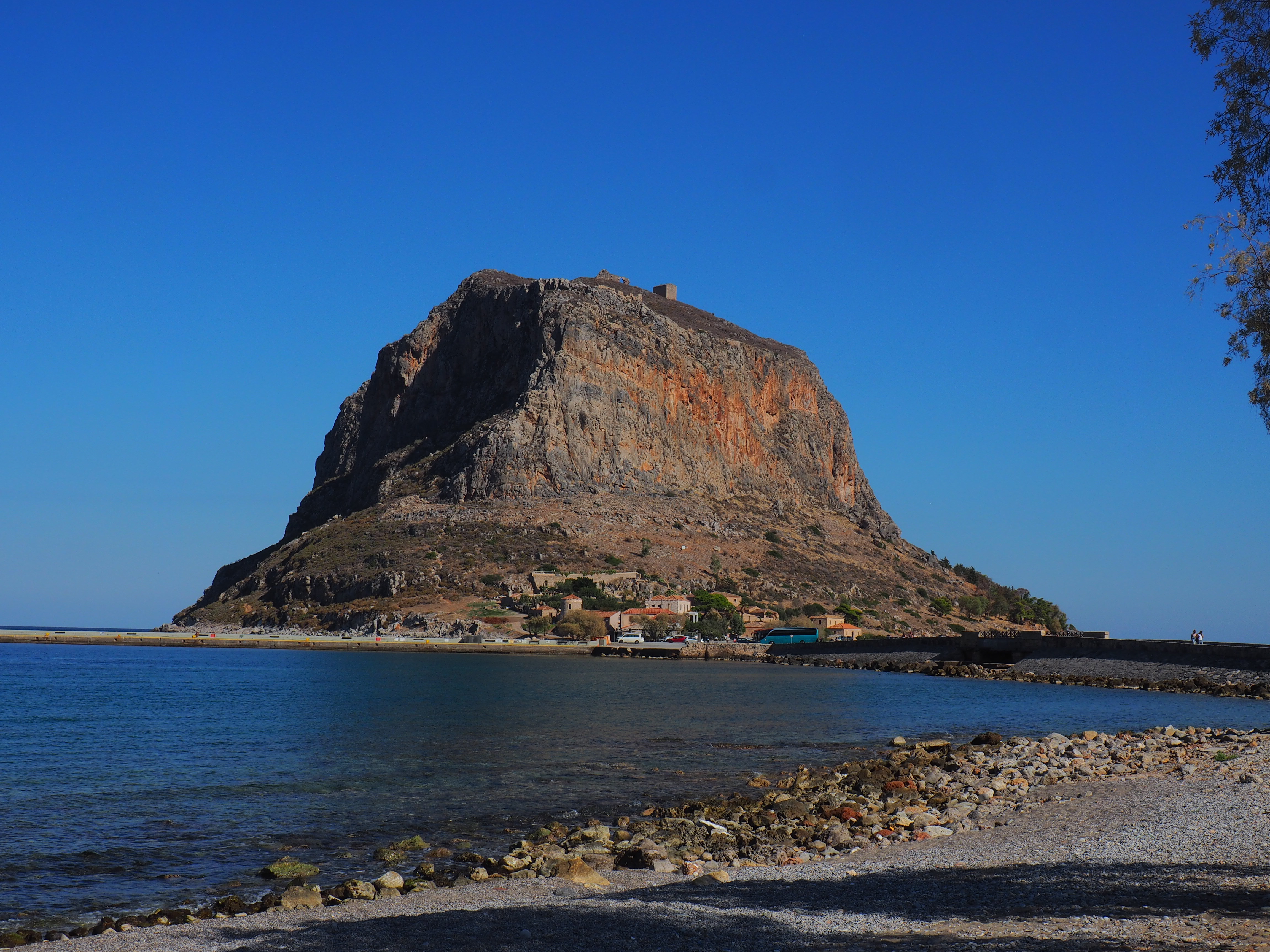
Monemvasia
The Mani Peninsula. From Monemvasia, we headed west and south towards the Mani Peninsula, and the southernmost point of mainland Europe. As we drove, the groves of olive trees changed to those of citrus. We wound along the coast and stopped off at Valtaki beach where a ship was wrecked in 1981 after the Greek Coast Guard beached it to stop a Turkish cigarette smuggling ring transporting smokes to Italy.
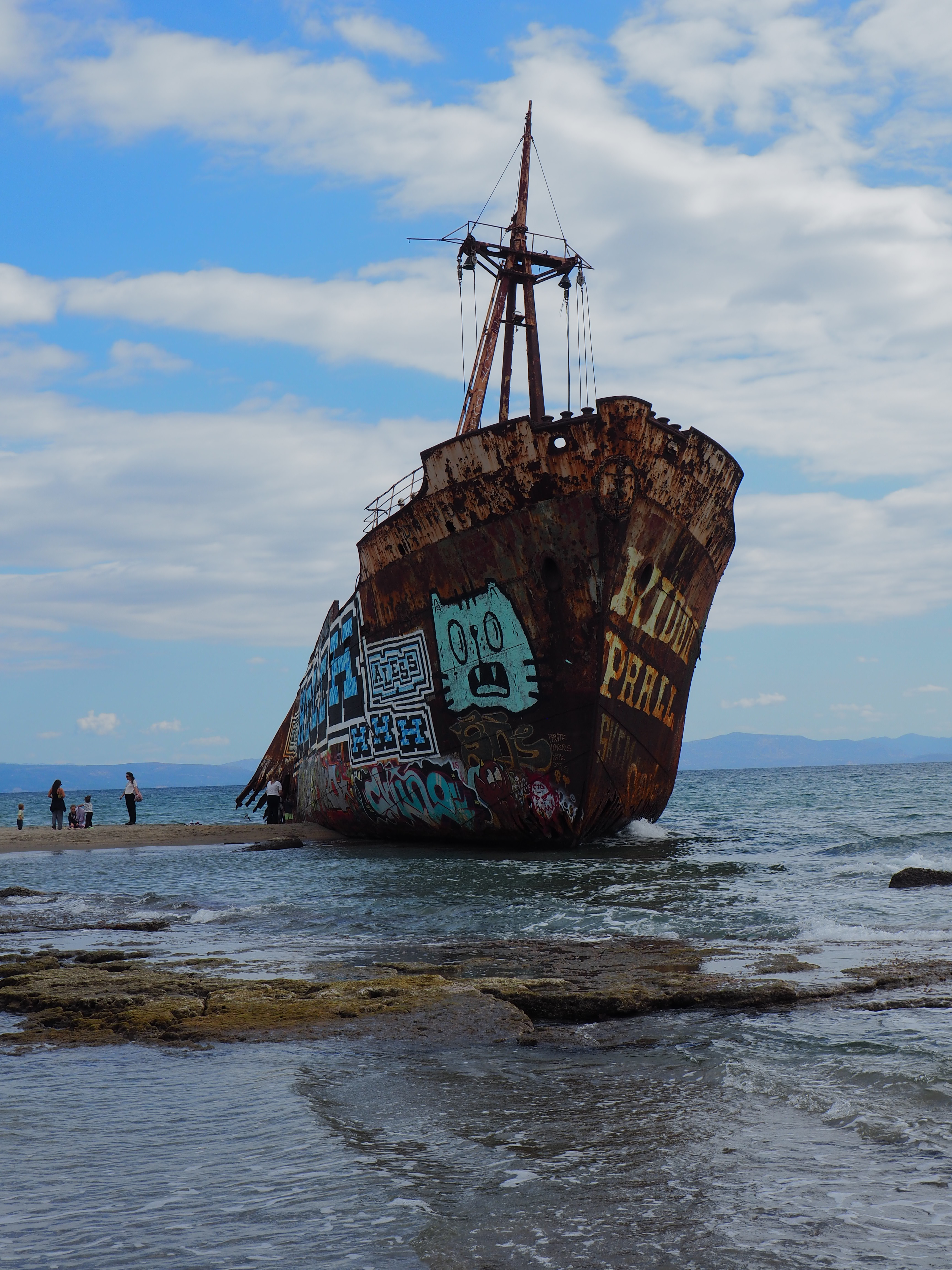
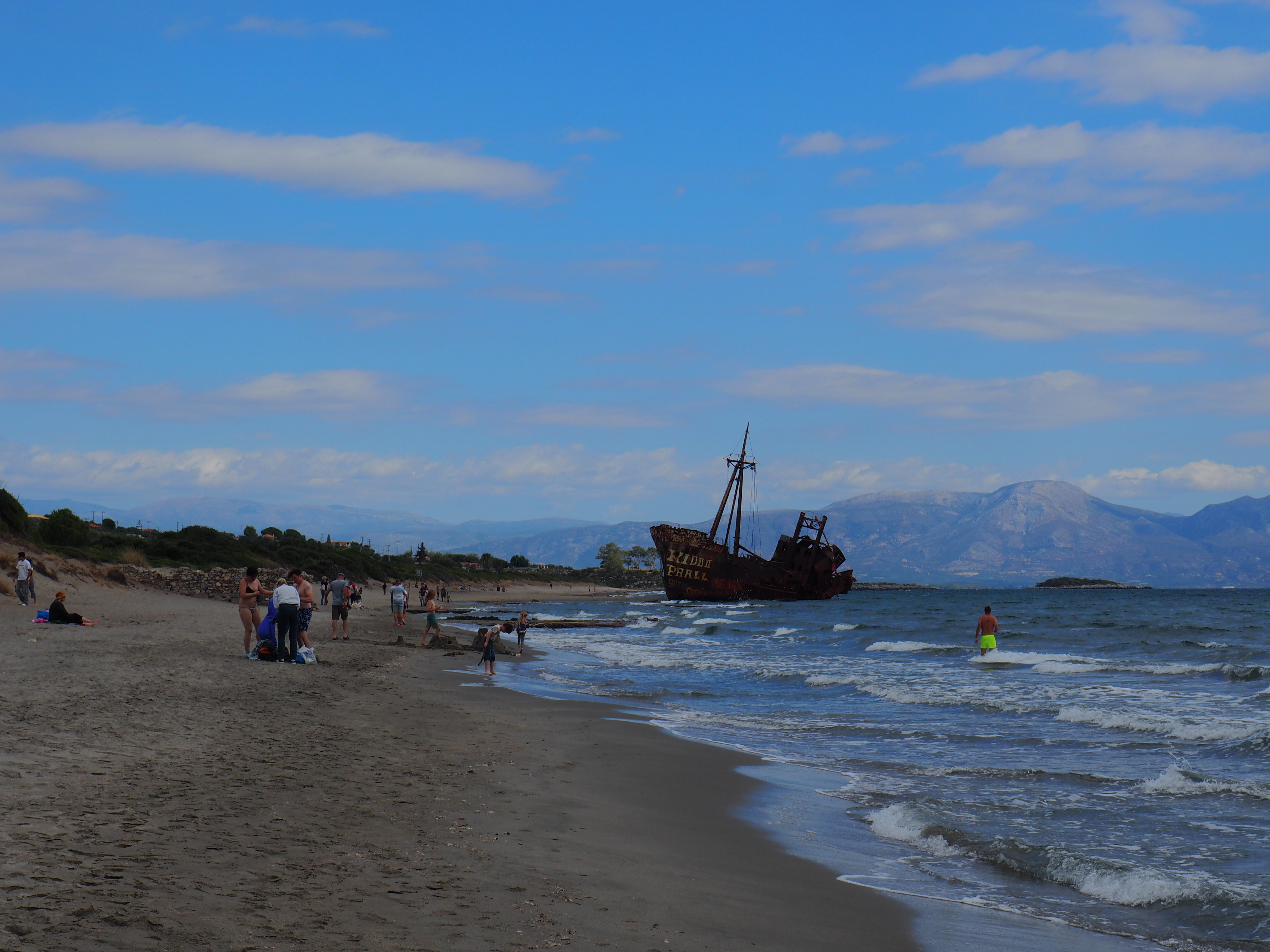
We turned towards the mountains and rose over them stopping off in cute little Lemeni for lunch before turning south and winding down the remote west coast of Mani.


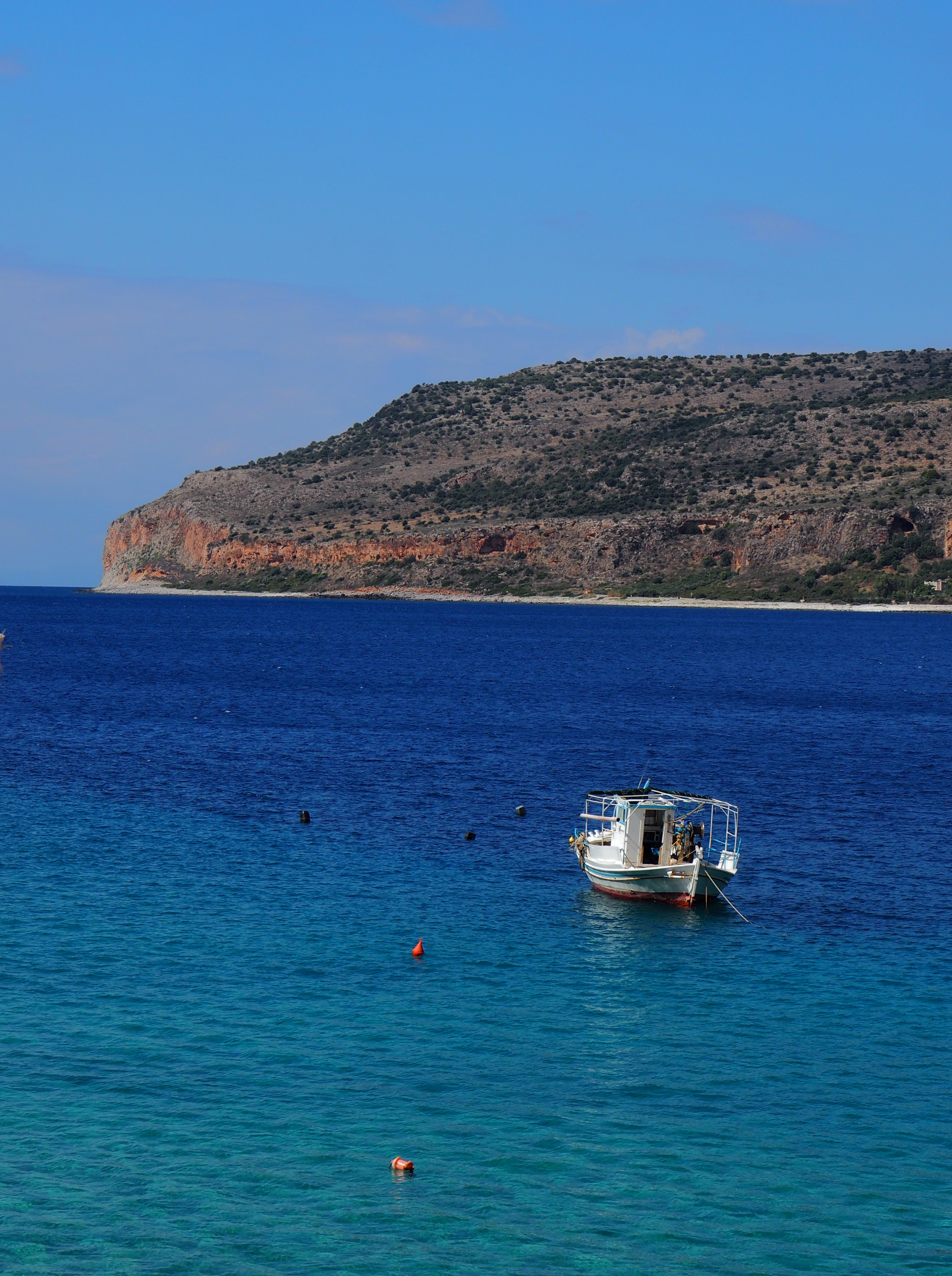
Lemeni
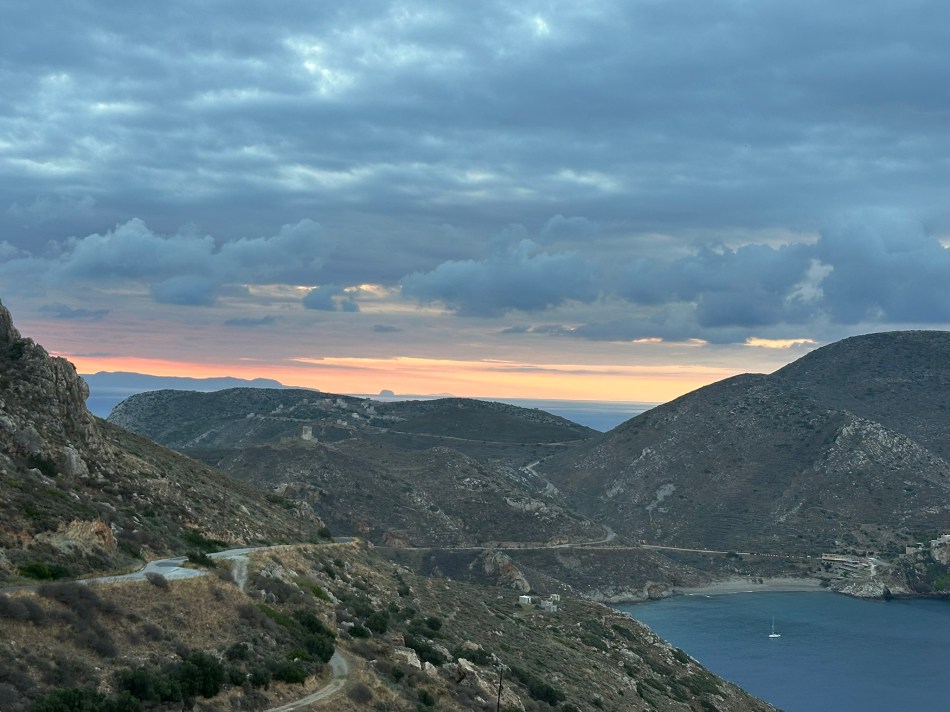
Sweeping views of the sea to the west and mountains to the east accompanied us as we zipped down a well-maintained and winding road up through hills and past camouflaged villages cut into the mountainsides. It was stunningly beautiful and something to behold. As we approached our accommodation, a three-room hotel with a gourmet chef and restaurant exclusively for the hotel guests called Tainaron Blue Retreat we noticed a preponderance of towers cut into hillsides and then realized (or remembered), as we pulled into our hotel lot, that we were staying in one. These towers, called “xemonia”, were built at crossroads and other key points in order to repel hostile attacks. In peacetime, they were used as residences. This part of Greece (the Mani peninsula) never came under Ottoman rule and the people of this region were a key part of the fighting force in the Greek war for independence.
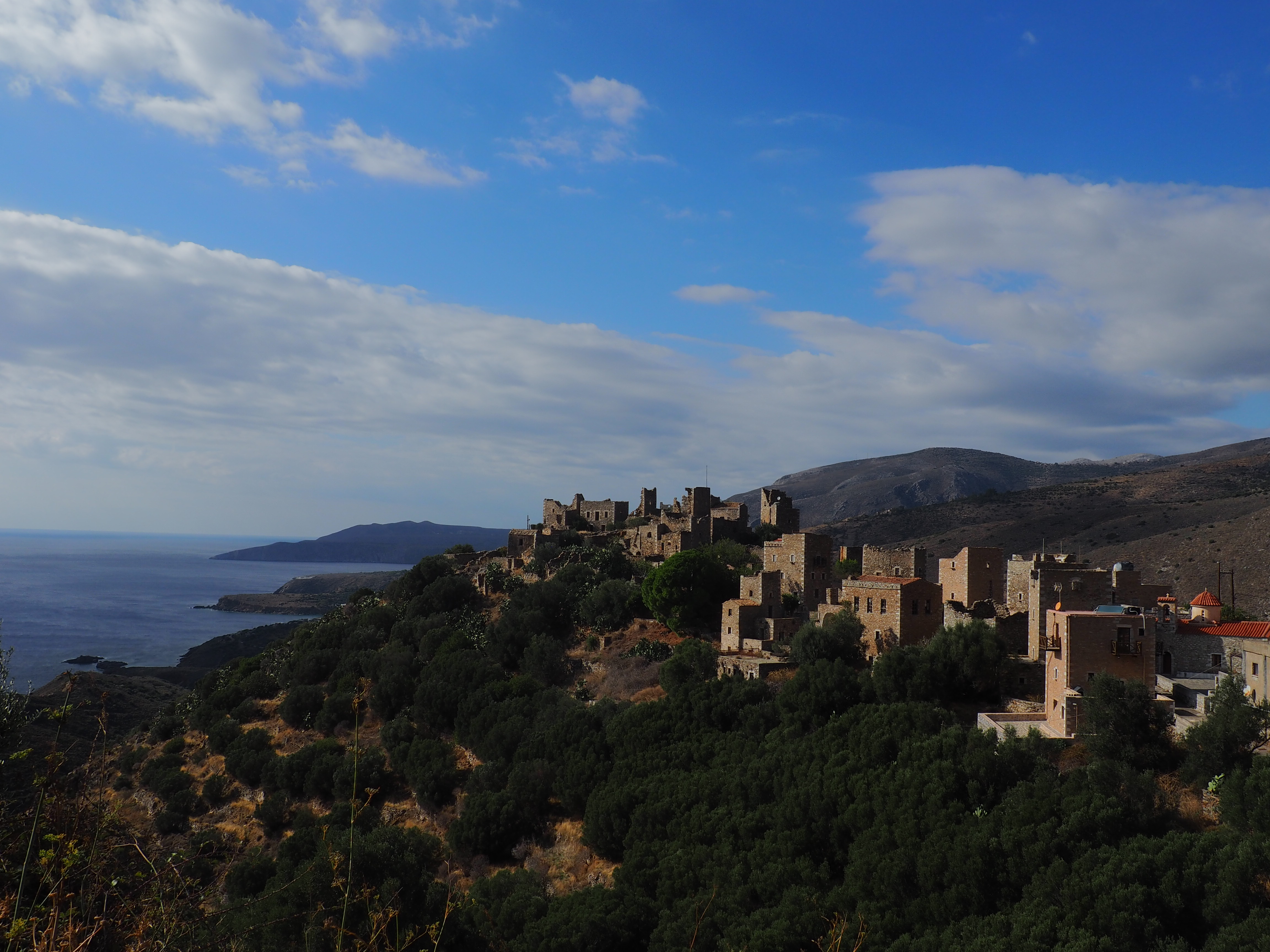
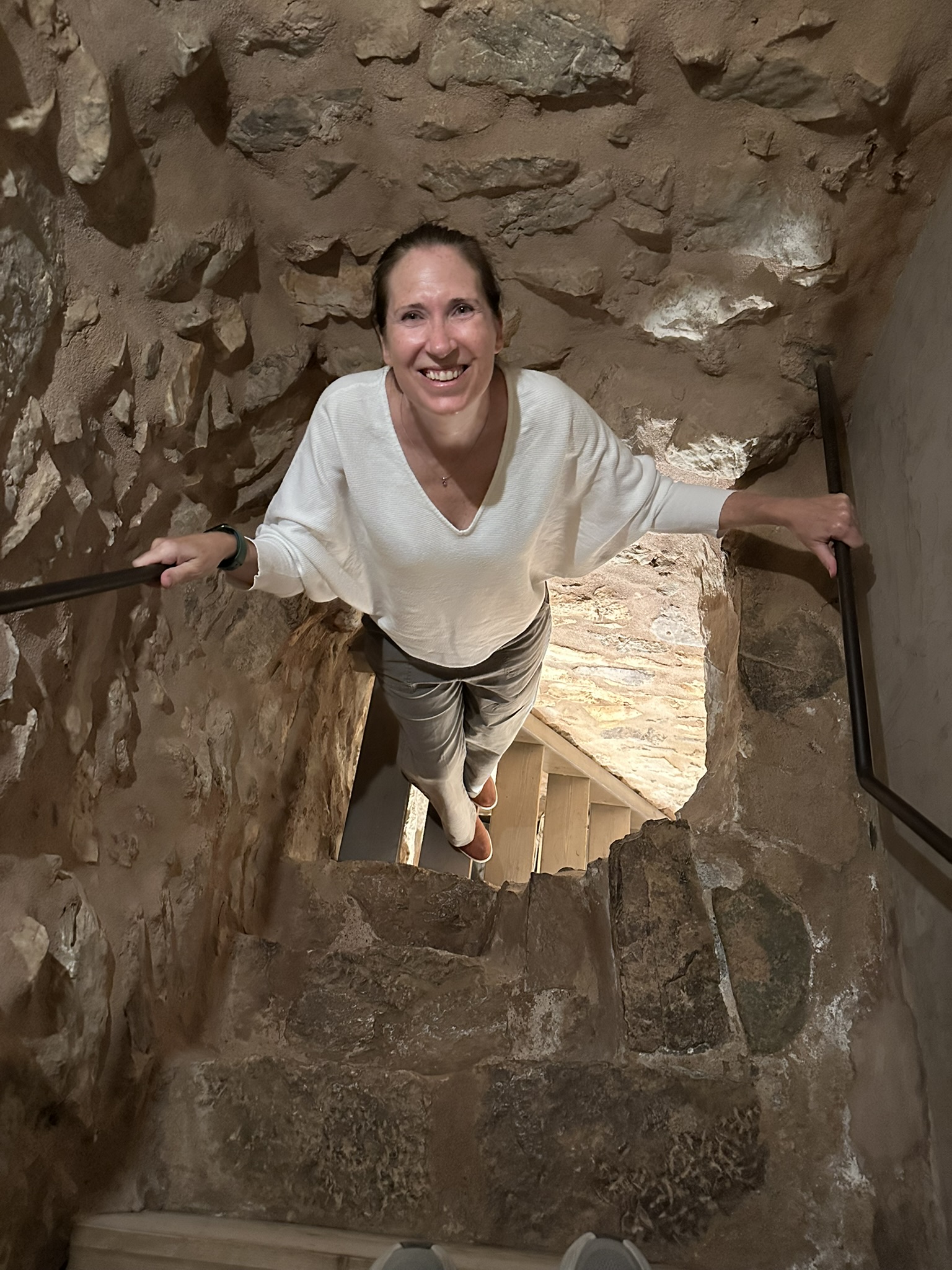
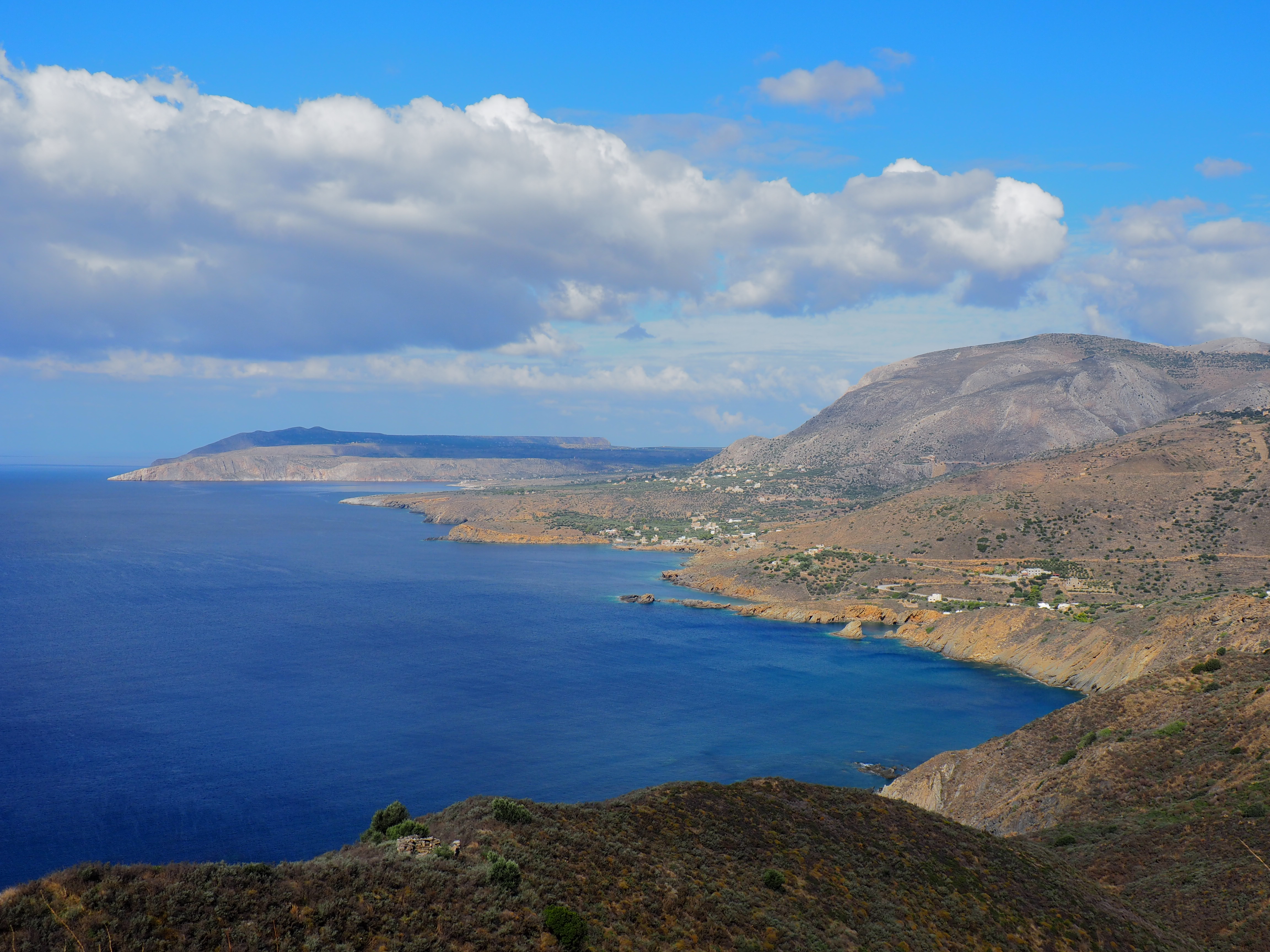
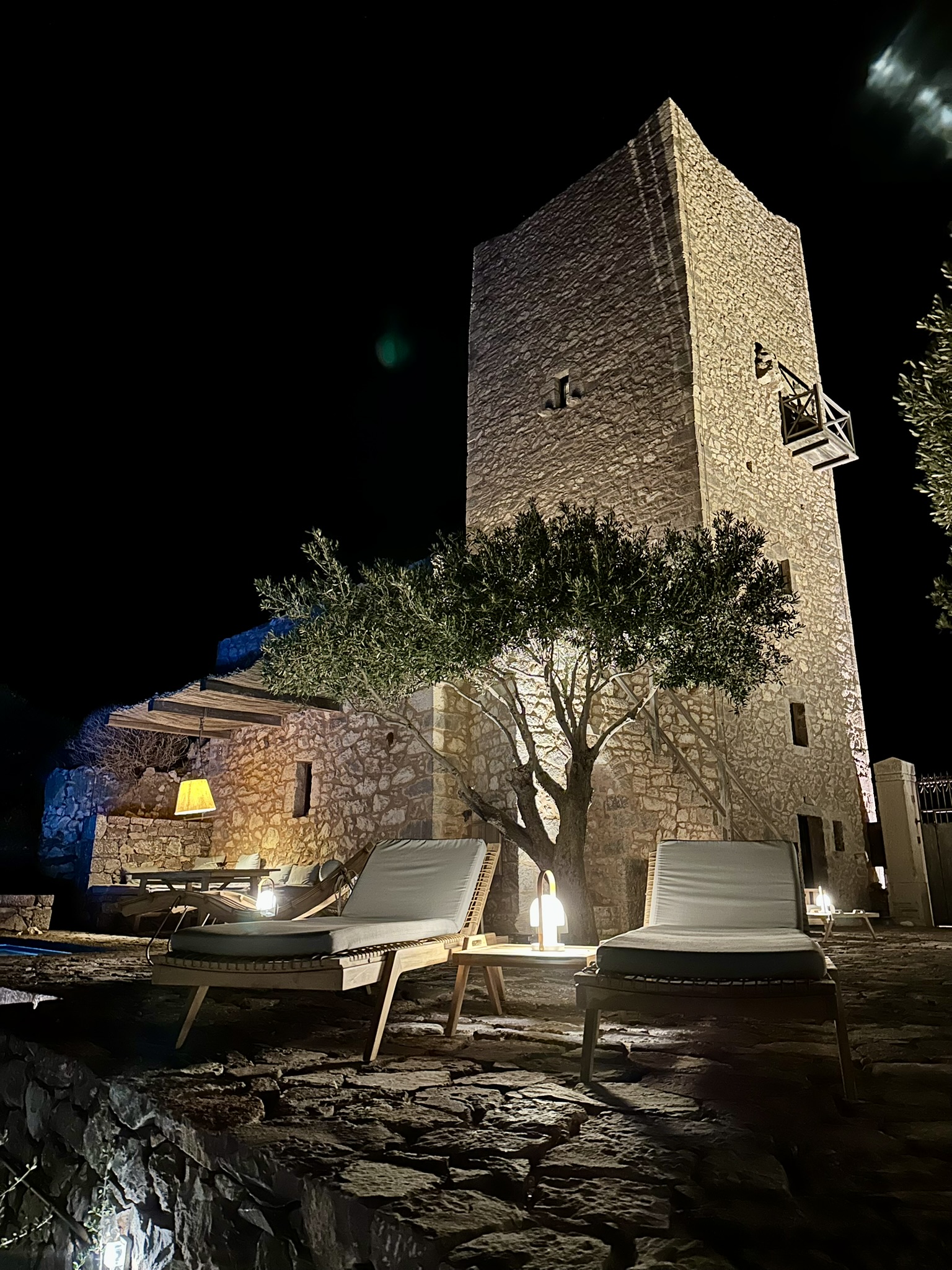

We spent our full day exploring the narrow and winding local roads perched on cliffsides and popping down to beaches and villages. There’s a lighthouse out on the end of the southern-most point of continental Europe, but the trail was too uneven and rocky for my still-recovering knee to safely navigate so we chocked that trail up for a return trip.
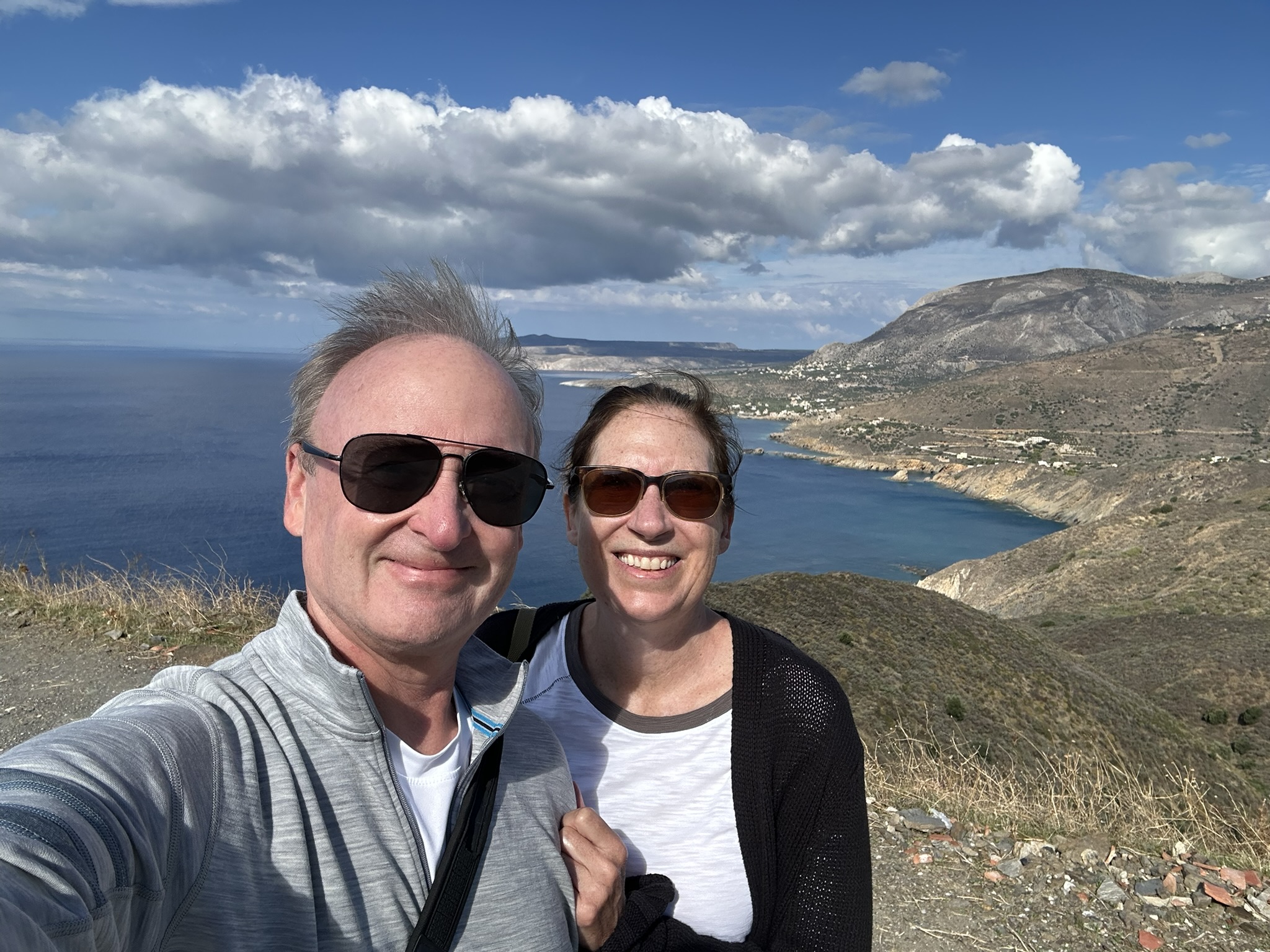

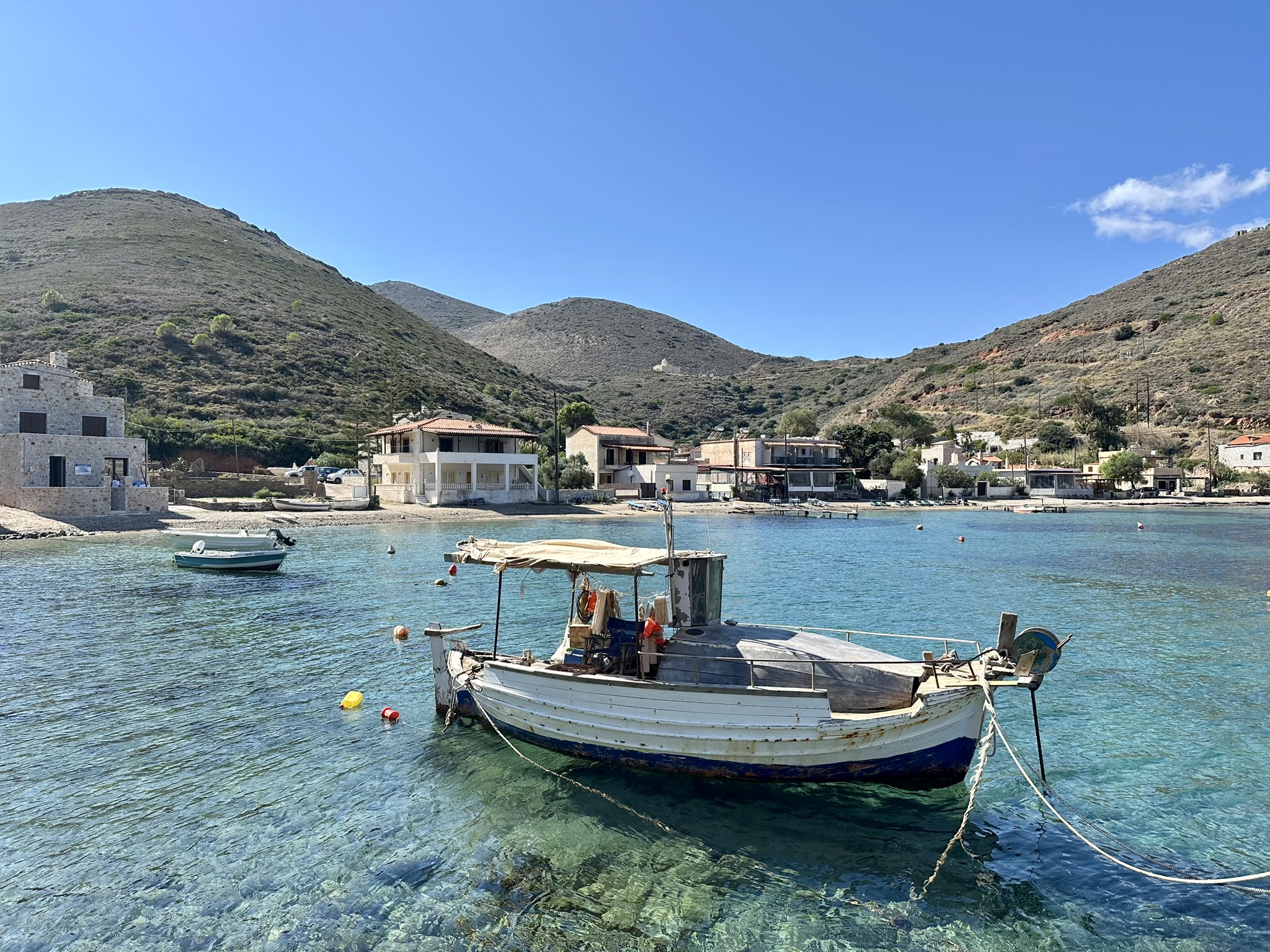
According to Greek myth, at the end of the peninsula there is a cave which was the home of Hades, god of the underworld, where his three-headed dog Cerberus would keep watch and keep the living from entering. While we didn’t find the cave (or try very hard as we ain’t done livin’ yet) it’s hard to believe that this tranquil little slice of heaven on earth could be the gateway to death.
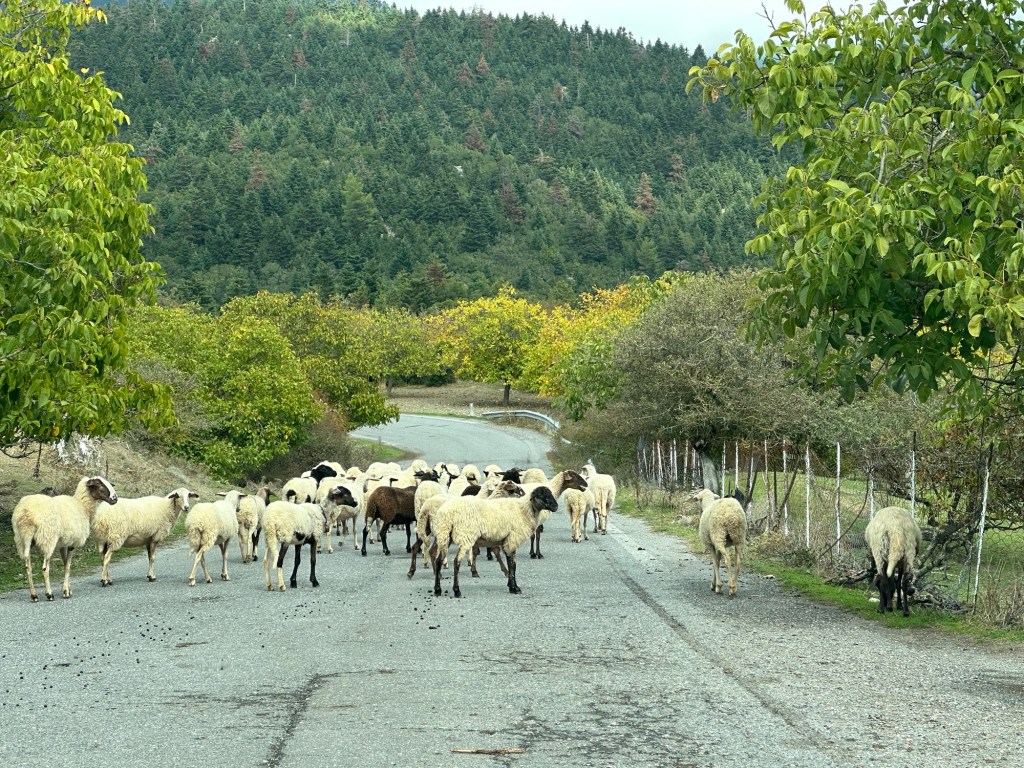
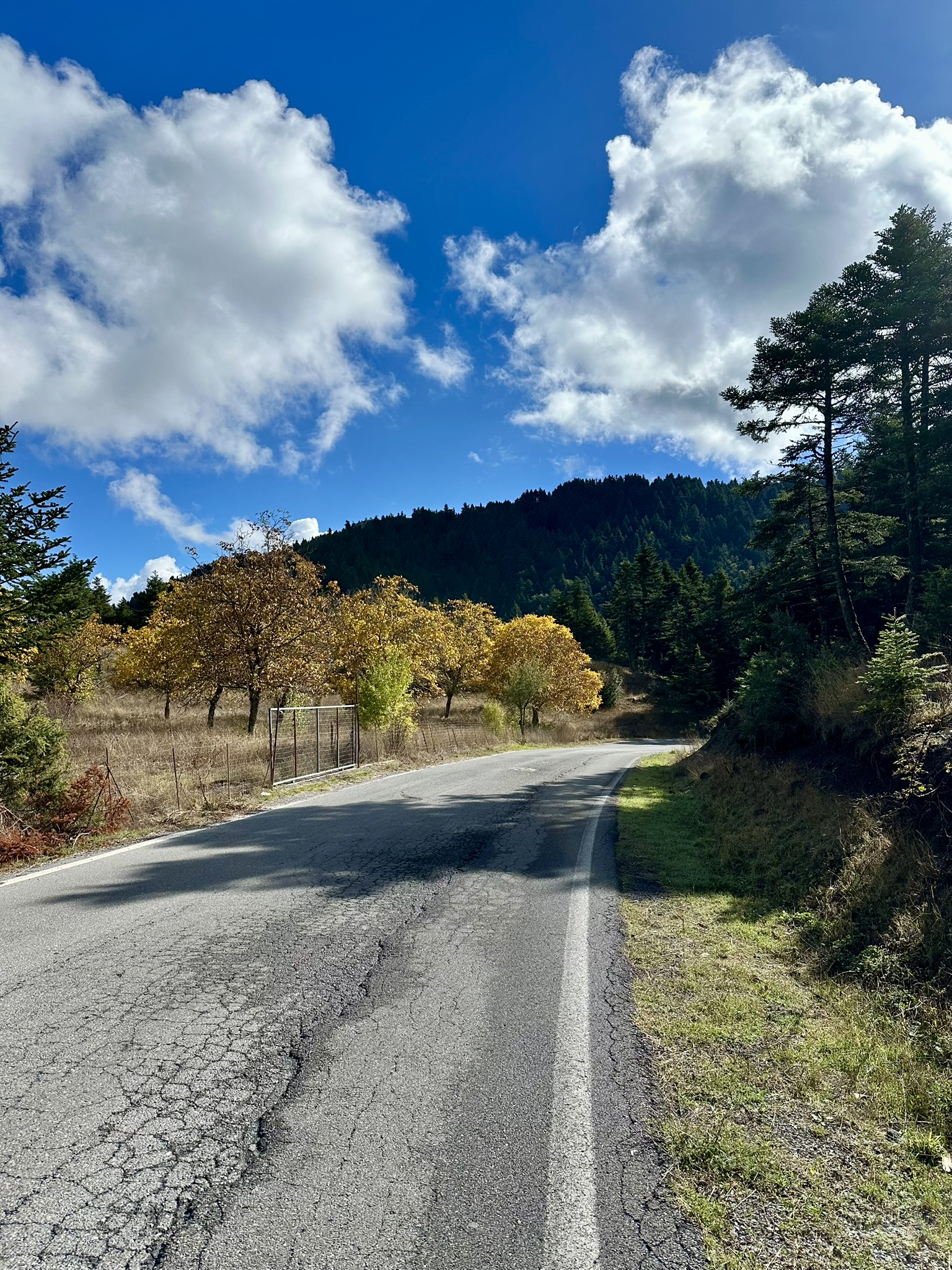
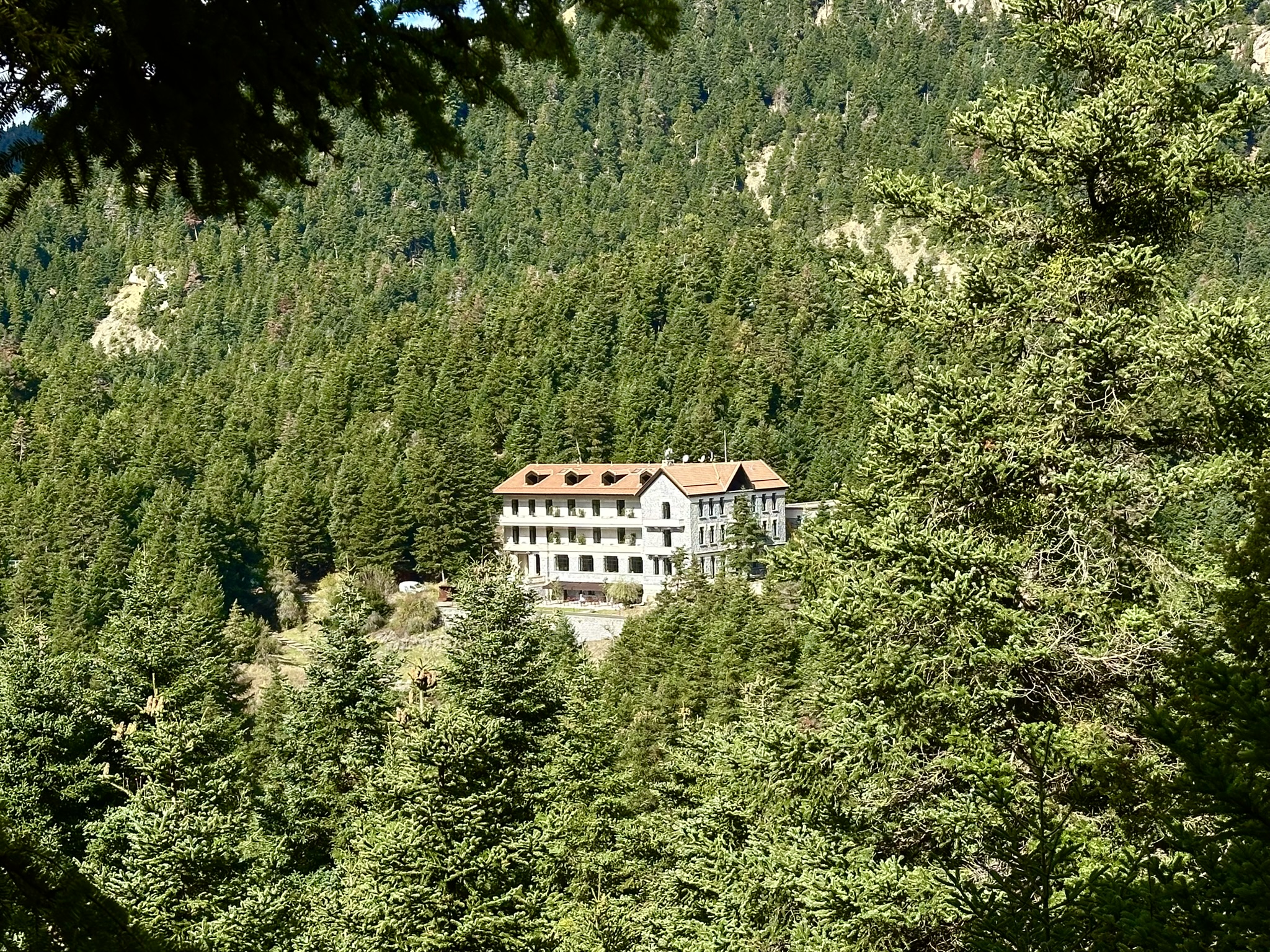
Up Into the Mountains. We escaped the rain on the peninsula to drive north through Sparta and Tripoli and up into the high mountains of the Peloponnese. We took a narrow and winding back road up through fields of goats and beekeeper hives with yellowing trees exposing the beauty of Greece’s alpine fall. As we checked into our hotel it felt more like a mountain hotel in Colorado than somewhere in Greece. We settled in for a couple of days at 4,000 feet in Arcadia.
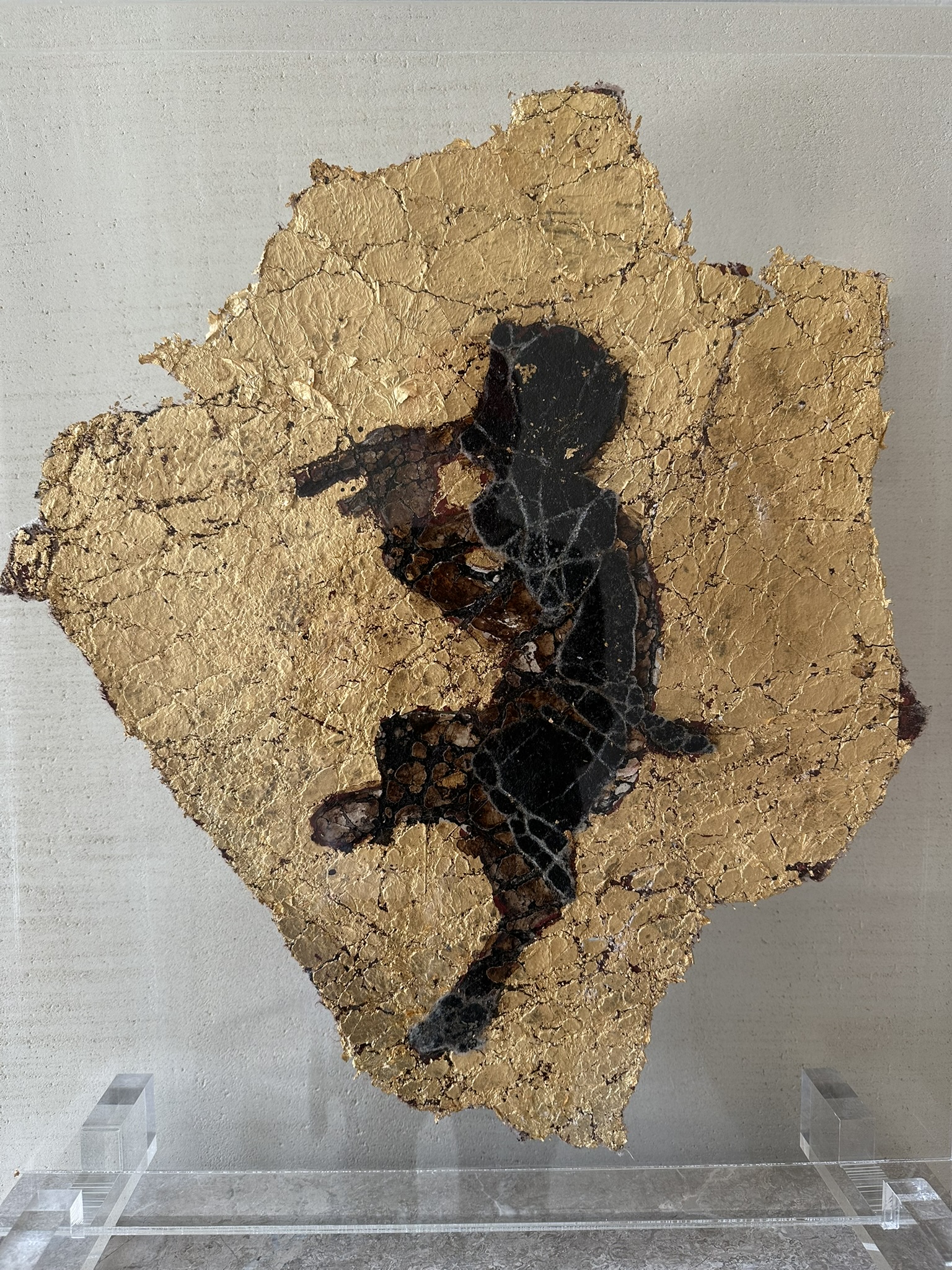
Arcadia is said to be home of the half-goat half-man god of fertility, Pan. Pan fell in love with Syrinx, daughter of the Ladonas River, who asked Zeus to save her and was transformed into reeds by the king of the gods. Remorsefully, Pan joined the reeds together to make his famous Pan-flute (I’m having trouble seeing how this equates to Syrinx’s salvation, frankly). Hoping not to be transformed into riverside plants, or subsequently into musical instruments, we set out for some walking in the mountains to check out the foliage. As luck would have it, we returned to our accommodation decidedly human.

Mycenae. We wrapped up, full circle, at Mycenae from which Agamemnon (the Greek king who sacked Troy) hailed. I don’t know what I was expecting. Probably more interesting history and fewer busses. The Lion’s Gate is super cool. Without a guide though it’s tough to visualize and appreciate, despite atypical helpful signage (at least in our experience, for example the signage at Knossos Palace on Crete was only emergency evacuation information which, while necessary, wasn’t particularly helpful from a historical perspective) and some advance internet research. I don’t know how many ruins we need to stare at to learn the lesson that a guided tour is pretty much necessary to truly appreciate 3,000 years old piles of rubble. I don’t mean to be derogatory but the €20 per person price is steep without an interpreter. Of course, the busses meant that lots of our fellow travelers did have just such a tour. If you go, get a guide and prepare for crowds even in the shoulder season.


As we crossed over a more modern feat of engineering, the Corinth Canal dug between the Ionian and Aegean Sea in 1893, we bid adieu to the Peloponnese. And while it may be the road (somewhat) less traveled, we find it our favorite part of Greece maybe, at least in part, because it is. There is such diversity in history, natural beauty, rugged mountains, gorgeous beaches, cool villages; it seems to have a little of everything. It is the part of Greece to which we are most looking forward to returning, whenever that may be.
Sources:
- https://www.ricksteves.com/watch-read-listen/read/articles/the-peloponnese-greeces-unspoiled-escape
- https://news.gtp.gr/2025/07/30/tourism-in-the-peloponnese-grows-amid-strong-demand-and-air-arrivals/
- https://www.quora.com/How-many-people-visit-Greece-every-year-and-which-Greek-Island-has-the-highest-number-of-tourists-visiting-it
- https://www.greeka.com/peloponnese/nafplion/history/
- https://www.visitgreece.gr/mainland/peloponnese/nafplio/
- https://en.wikipedia.org/wiki/Monemvasia
- https://tainaron-blue.com/the-towers-of-mani/
- https://www.thegreekfoundation.com/architecture/tainaron-blue-retreat-by-oikade-design
- https://faircompanies.com/videos/restoring-a-medieval-tower-house-near-sparta-as-life-project/
- https://www.britannica.com/place/Mycenae
- https://villa-agno.com/arcadia-greece-2/
- https://en.wikipedia.org/wiki/Fortifications_of_Mycenae
- https://ancient-greece.org/archaeology/mycenae-archaeological-site/
 The Traveling Ridleys
0 comments on “A Circuit of the Peloponnese”