

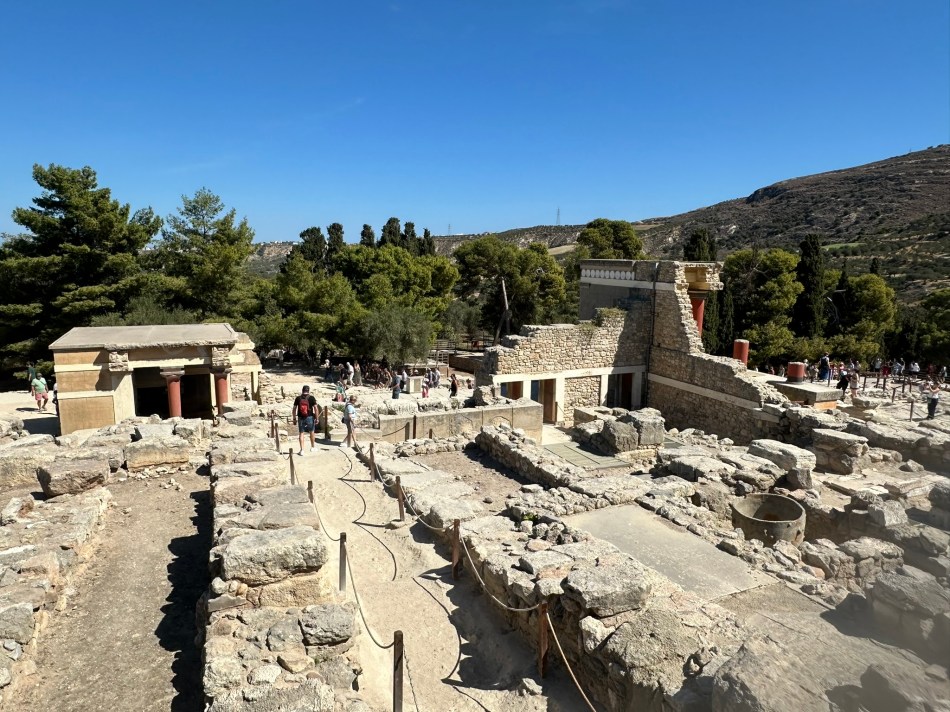
Our guidebook was not full of flowing reviews of Heraklion but it did say that the Archaeology Museum was a must-see and I also wanted to visit the Palace of Knossos, so on a day trip into Heraklion we visited both.
Palace of Knossos. About 3 miles from the heart of Heraklion, up on a hill, the remains of the Palace of Knossos sit waiting to be explored.
Knossos of Myth. In Greek mythology, Knossos was the site of the Minotaur, the powerful man with the bull’s head. King Minos, for whom the Minoan period is named, built the labyrinth, designed by Daedalus (before he flew off from Crete on a fateful journey in which his son Icarus flew too high and the sun melted the wax on his wings plunging him to his death in the sea below) in which the Minotaur was housed.

Every nine years, King Minos demanded that Athens send him fourteen young noble citizens (7 men and 7 women) to sacrifice to the Minotaur as penance for the killing of Minos’ son. One year, Theseus, son of the King of Athens, offered himself as one of the fourteen, sailed with the rest to Crete and slayed the Minotaur, escaping the labyrinth with the help of Minos’ daughter Ariadne who’d been smitten with Theseus.
The Palace of Knossos. Although the site was settled much earlier in the Neolithic period, the first Minoan palace was built during the Bronze Age around 1900 BC, making it Europe’s first city, and was destroyed by an earthquake in 1700 BC. A second palace was built on its remains at the height of the Minoan period. The palace was a rather sophisticated complex with several storied buildings with stone steps, timber beams, flushing toilets and a drainage system within (flushing toilets and sewage systems? Seriously?! How did that technology not transfer into the Middle Ages?). The Minoans were farmers, shepherds, potters and traders, sending agricultural products (olives, grains and wine) and pottery to Egypt, Syria, the Cyclades islands, Sicily and mainland Greece, as evidenced by Minoan pottery found during excavations in these and other areas. In return they received mined metals and raw materials. The Minoans even traded the skill of their artists with the Egyptians some of whom helped draw Egyptian hieroglyphics. The second palace was destroyed by fire around 1350 BC, though it’s unclear if its destruction was natural or intentional.
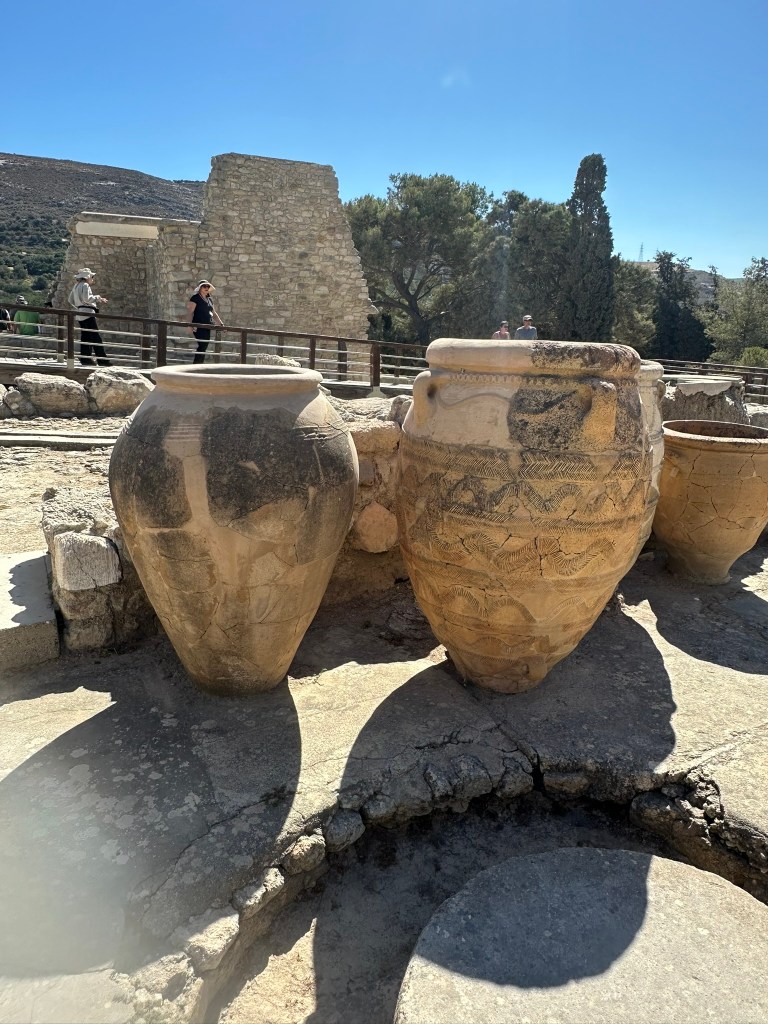
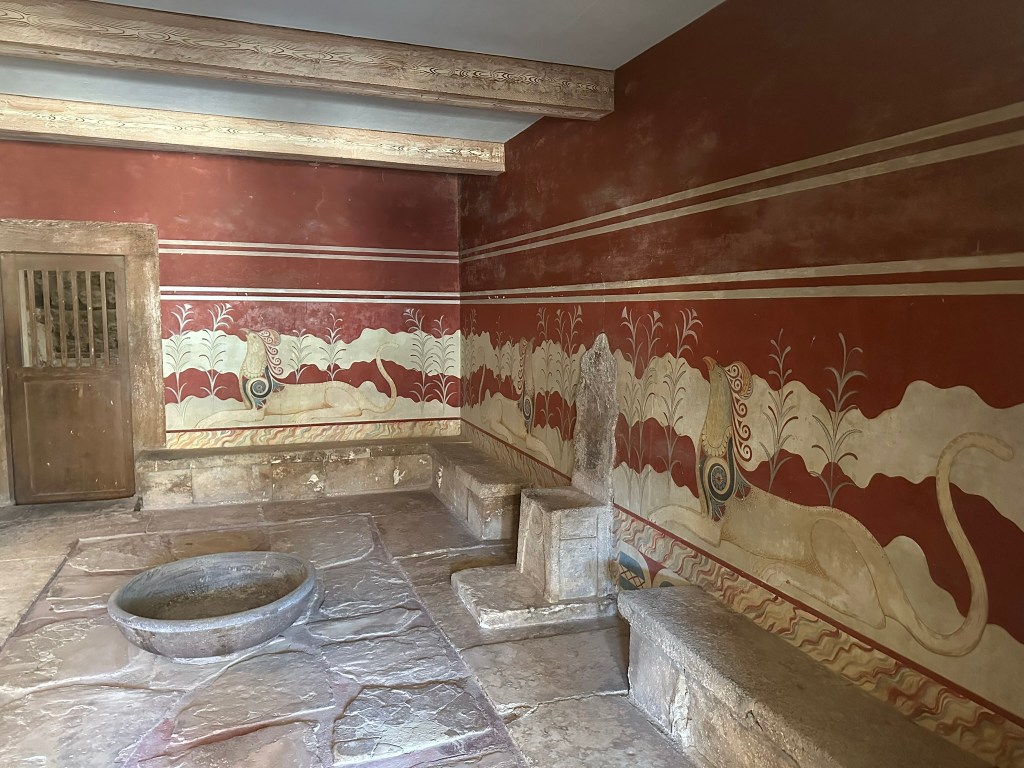
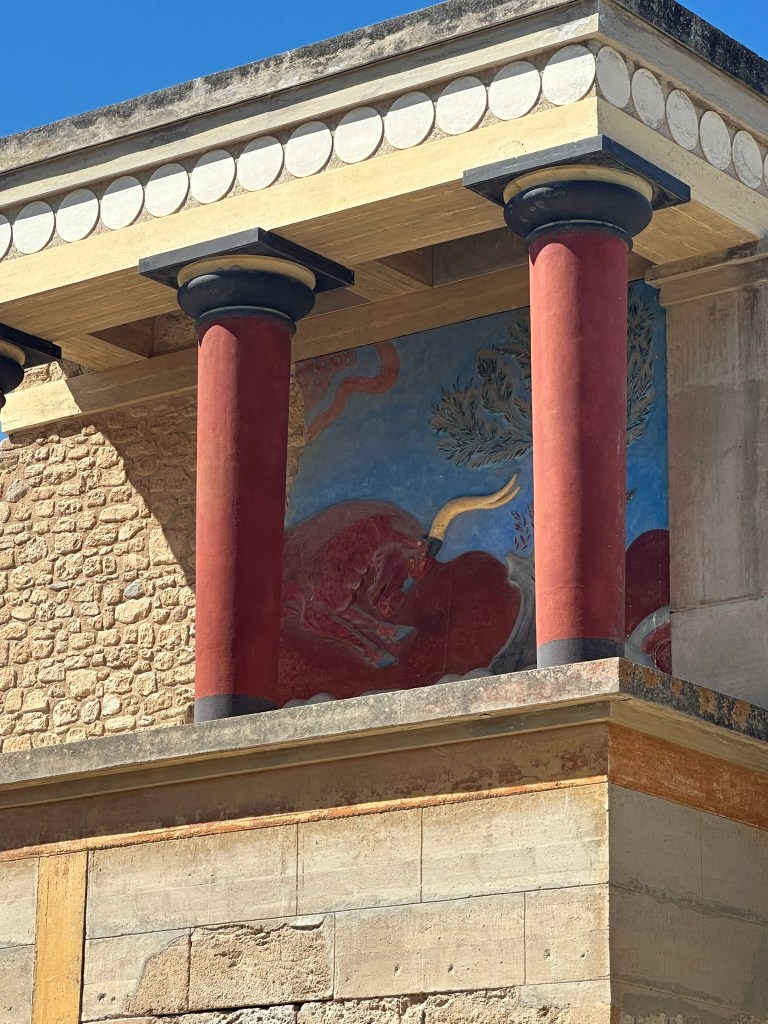
Post-palatial Knossos. Knossos continued to be a power center during the Macedonian and Roman times. The ancient site was first discovered by the Cretan antiquarian, Minos Kalokairinos in 1878 but most of the early excavation was done by British archaeologist, Arthur Evans, beginning in 1900.
Tips for visiting: 1. you can buy tickets online in advance, which if you come in summer I would. 2. There is ample parking, if you have a car, but if you’re staying near Heraklion take the bus or a cab. 3. Finally, and most importantly, get a guide. We didn’t have one and the signage around the site is mostly emergency evacuation information. A kind older Greek man was offering a (very affordable) tour as we walked up to the gate, and we were kicking ourselves for not taking him up on it. Instead, we found ourselves wondering what we were looking at and trying to read internet pages on our phones in the bright hot sun. Our loss, your gain.
Heraklion’s Archaeological Museum. It truly is amazing. If you’re in Heraklion it really is not to be missed. I would also visit Knossos first and then visit the museum. A guided tour there might also be helpful (maybe you can find one to take you around both), but you can visit the museum without one and still get plenty out of it.
The museum contains Minoan pottery, artworks, religious figurines and offerings to the gods, restored frescoes and funeral coffins. It also contains Roman statues and artifacts, but the Minoan areas are the good stuff.


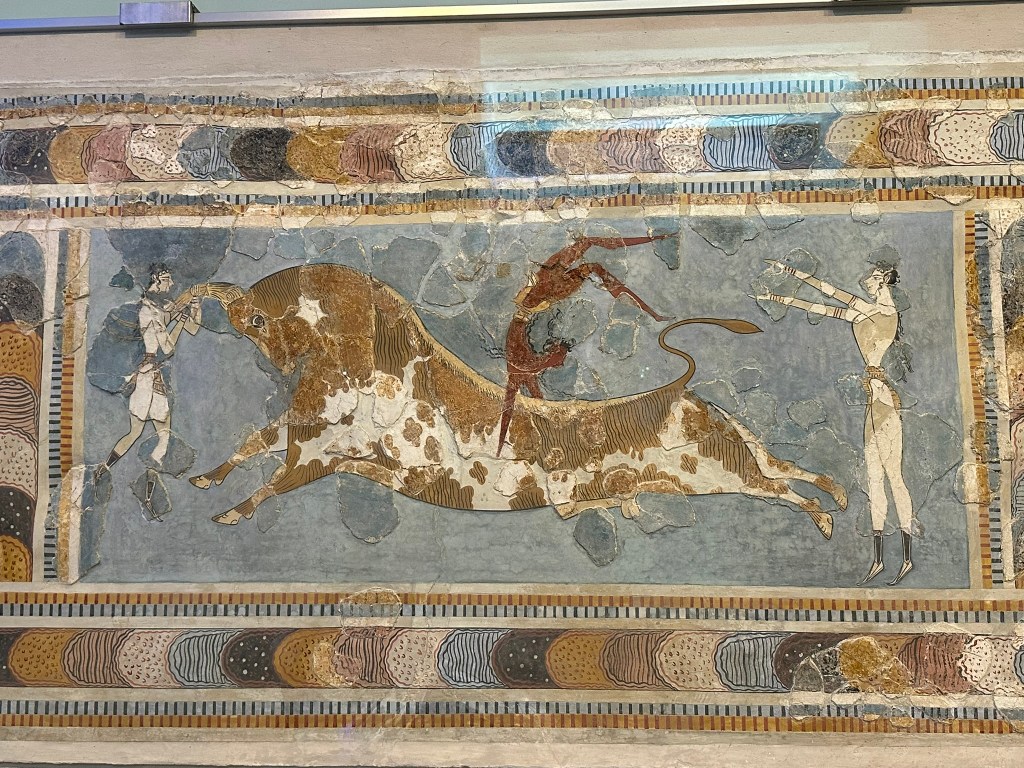
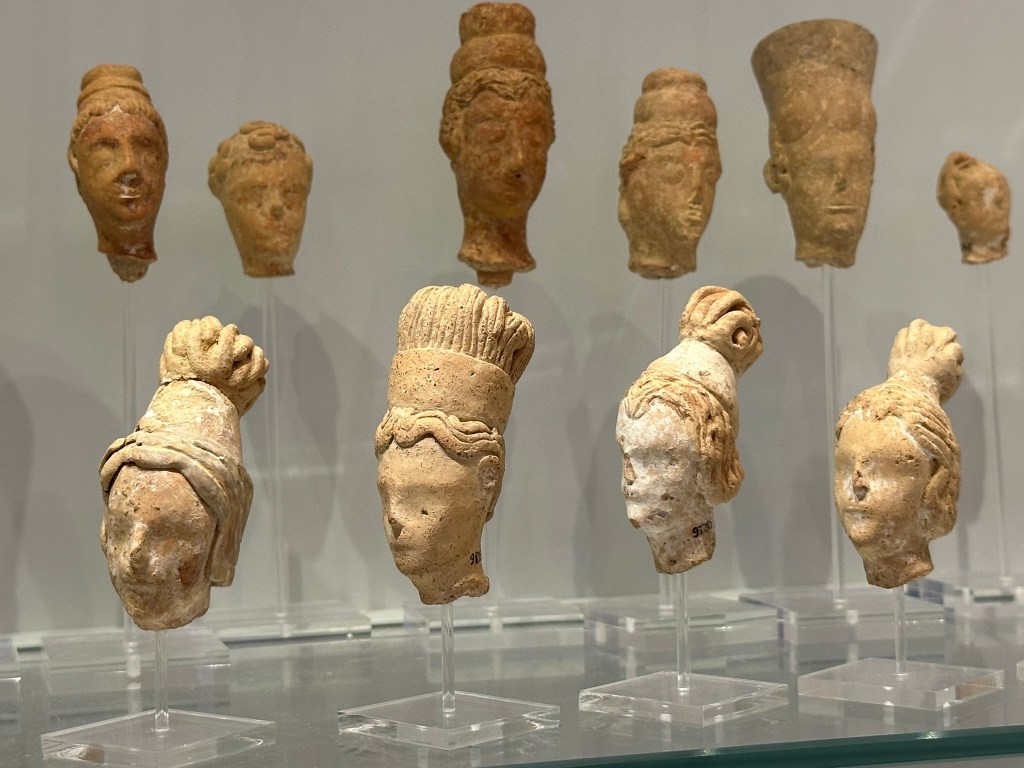
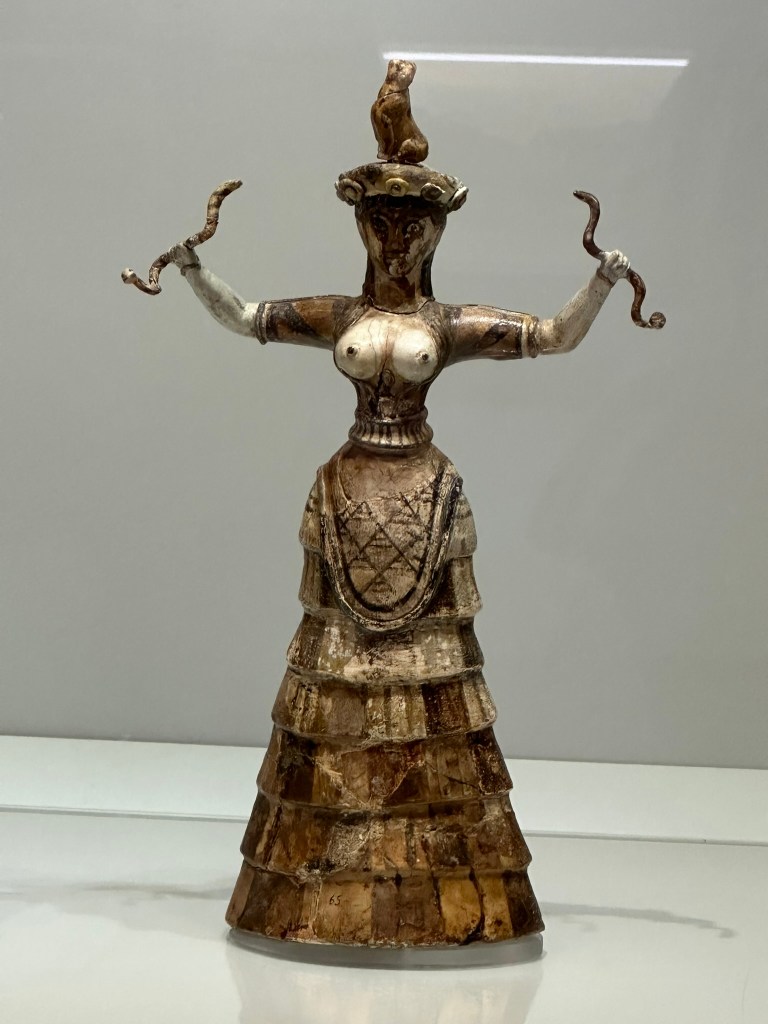
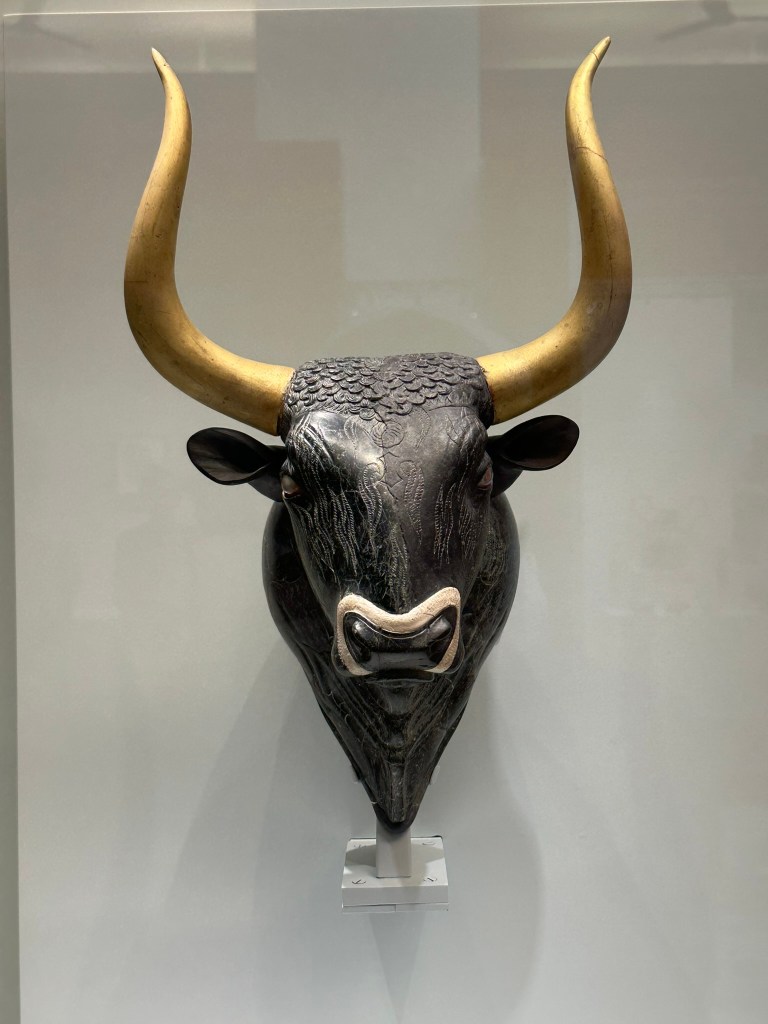
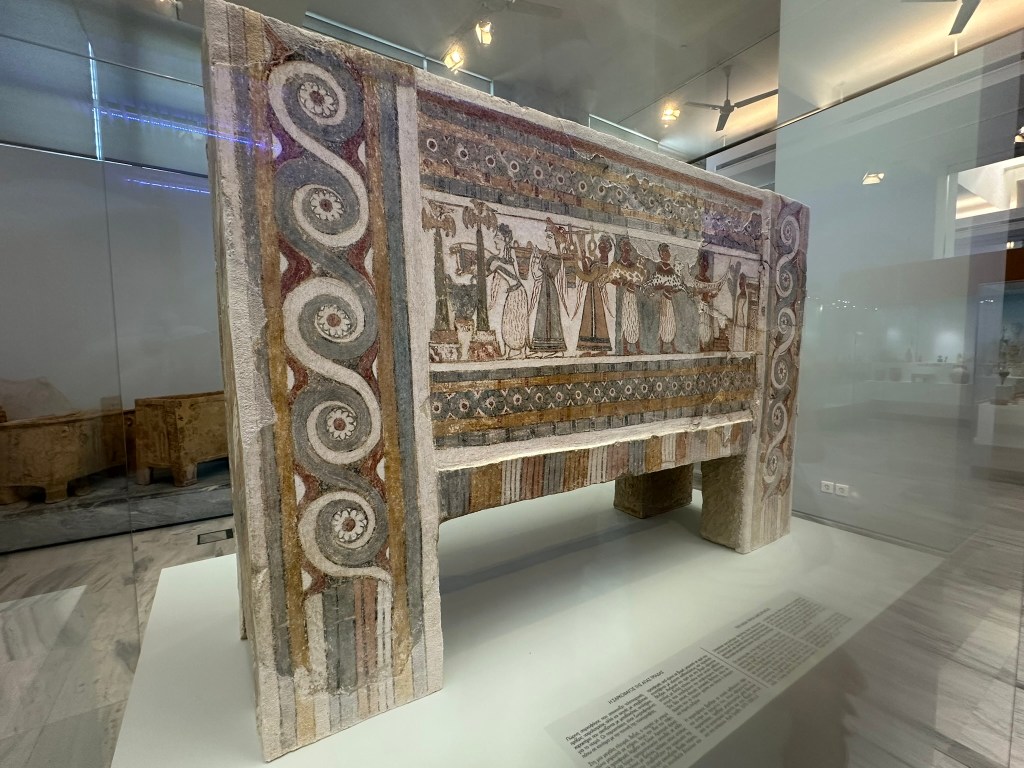
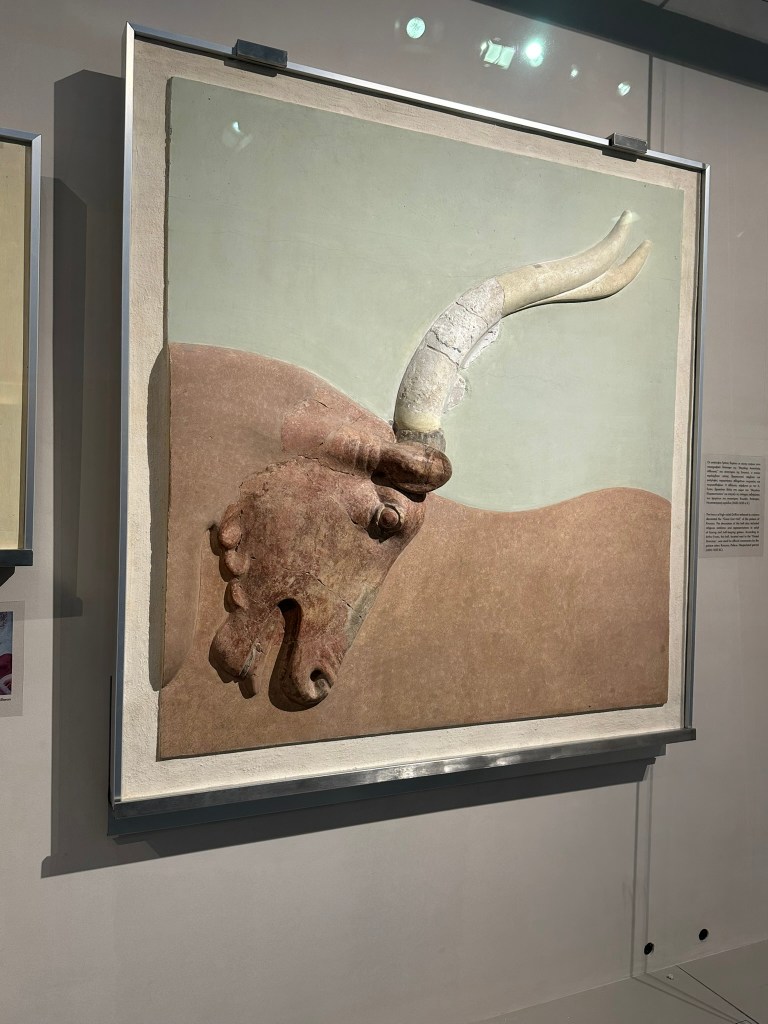
The museum visit helped us truly visualize the miracle of the Palace of Knossos and Minoan society.
Aside from the museum and Knossos, if you find yourself in Heraklion, old town and its pedestrian areas offered lots of cool bars, restaurants and cafes. You can also visit the port and Venetian fortress. It might even be worth an overnight if you stayed right in old town especially if you had an early ferry elsewhere. Despite the chaotic traffic, Heraklion and its archaeological sites exceeded our pre-set low expectations.
Sources:
- https://en.m.wikipedia.org/wiki/Minotaur
- https://knossos-palace.gr/
- https://en.m.wikipedia.org/wiki/Knossos
- https://facts.net/world/landmarks/14-astounding-facts-about-knossos/
- Heraklion Archaeological Museum visit, September 2025.
 The Traveling Ridleys
0 comments on “The Archaeological Sites of Heraklion Crete”