

“Long ago in days untold
Were ruled by Lords of greed
Kings and queens and guillotines
Taking lives denied
Starch and parchments laid the laws
When bishops took the ride
Only to deceive”
— Aerosmith
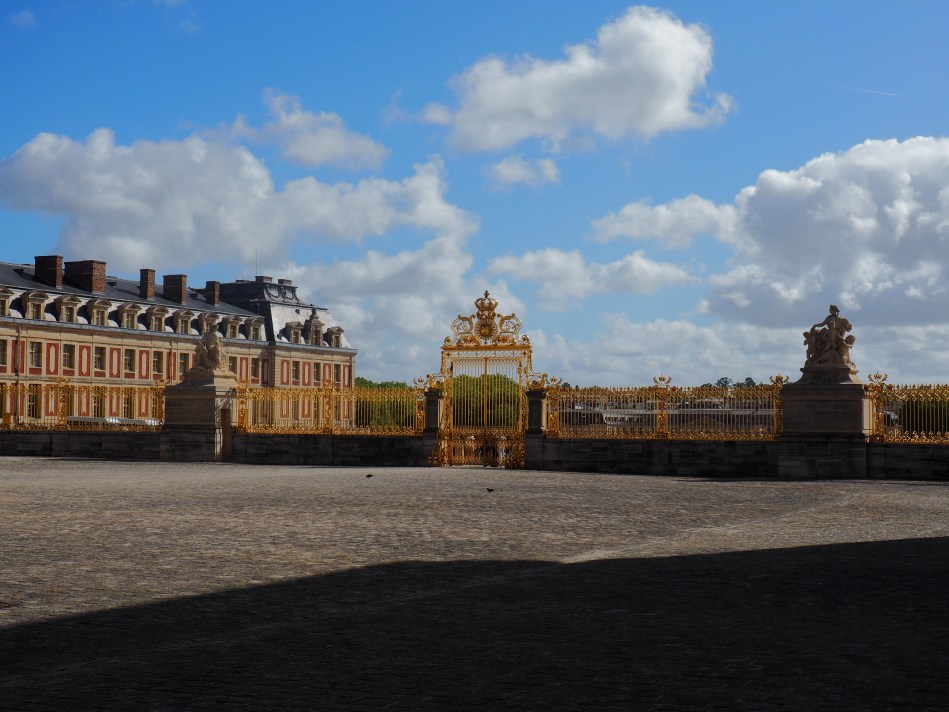
The hunting palace, swampland and forests of King Louis XIV’s father was transformed into a dazzling palace and a centralized government when the “Sun King” built the Palace of Versailles. He moved the aristocracy out from Paris to Versailles so he could keep an eye on them and was quoted as saying “L’etat c’est moi”, or the state is me. During his nearly 70-year reign he called himself the Sun King because, in his view, he gave life and warmth to all he touched (a humble guy, I guess). He was a charismatic leader who charmed the court and those who paid homage and built the elaborate, if not a little ostentatious, Versailles to host grand parties, dinners, private events and the seat of government.
Versailles’ gardens and decorations of flower bowls, perfumed furniture and fountains with visitors also doused with perfume created an overwhelming smell, so strong it allegedly made some guests ill and drove them away. The perfumification of the palace and grounds was, in part, because Louis XIV (along with much of the nobility of the 17th century) thought bathing would spread disease. The Sun King was reputed to have only taken three baths in his life (yuck). But that didn’t hurt his odds with the ladies. He was known to have several mistresses but usually returned to the bedchamber of the queen to sleep no matter what drew him away earlier in the evening.
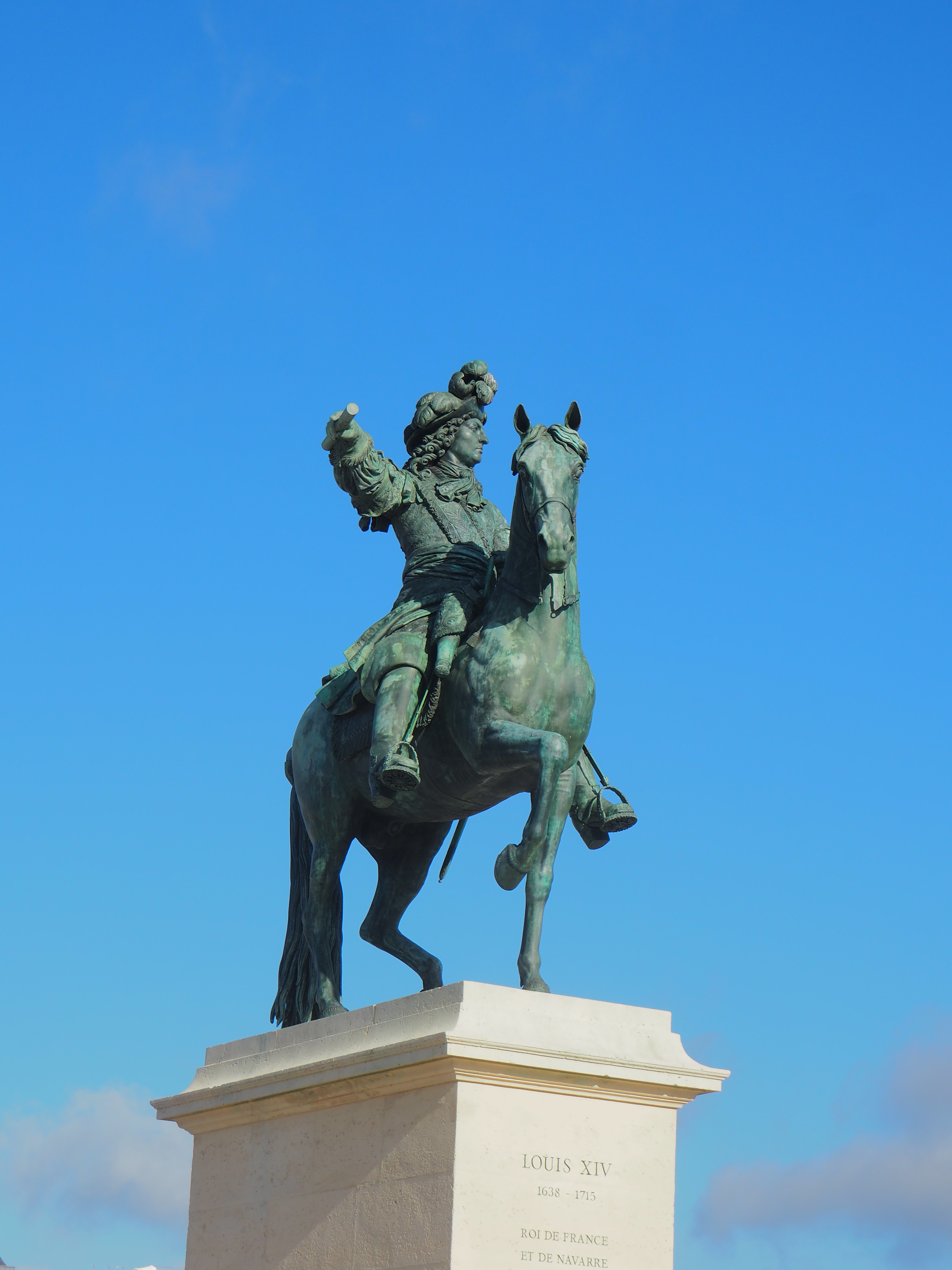
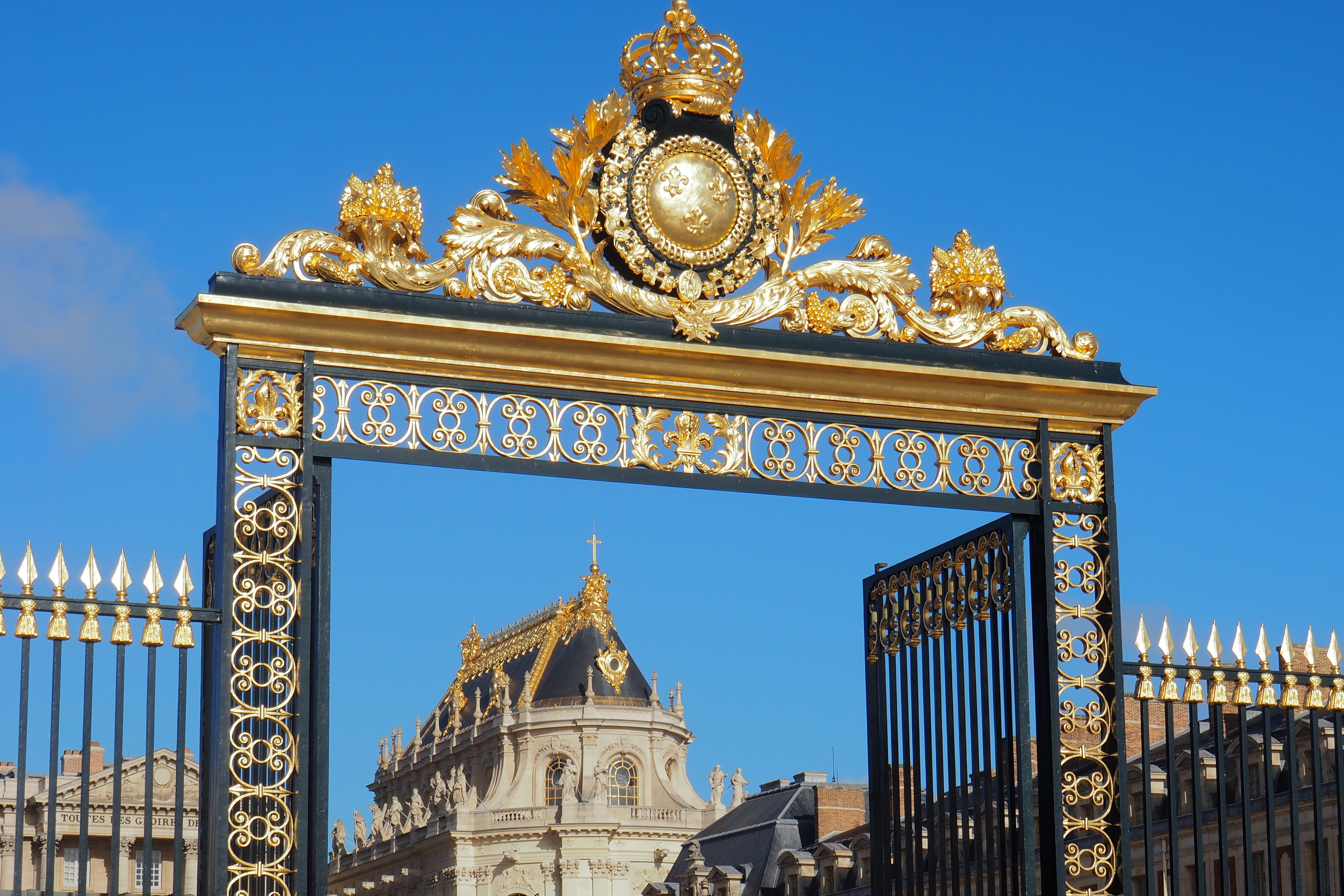
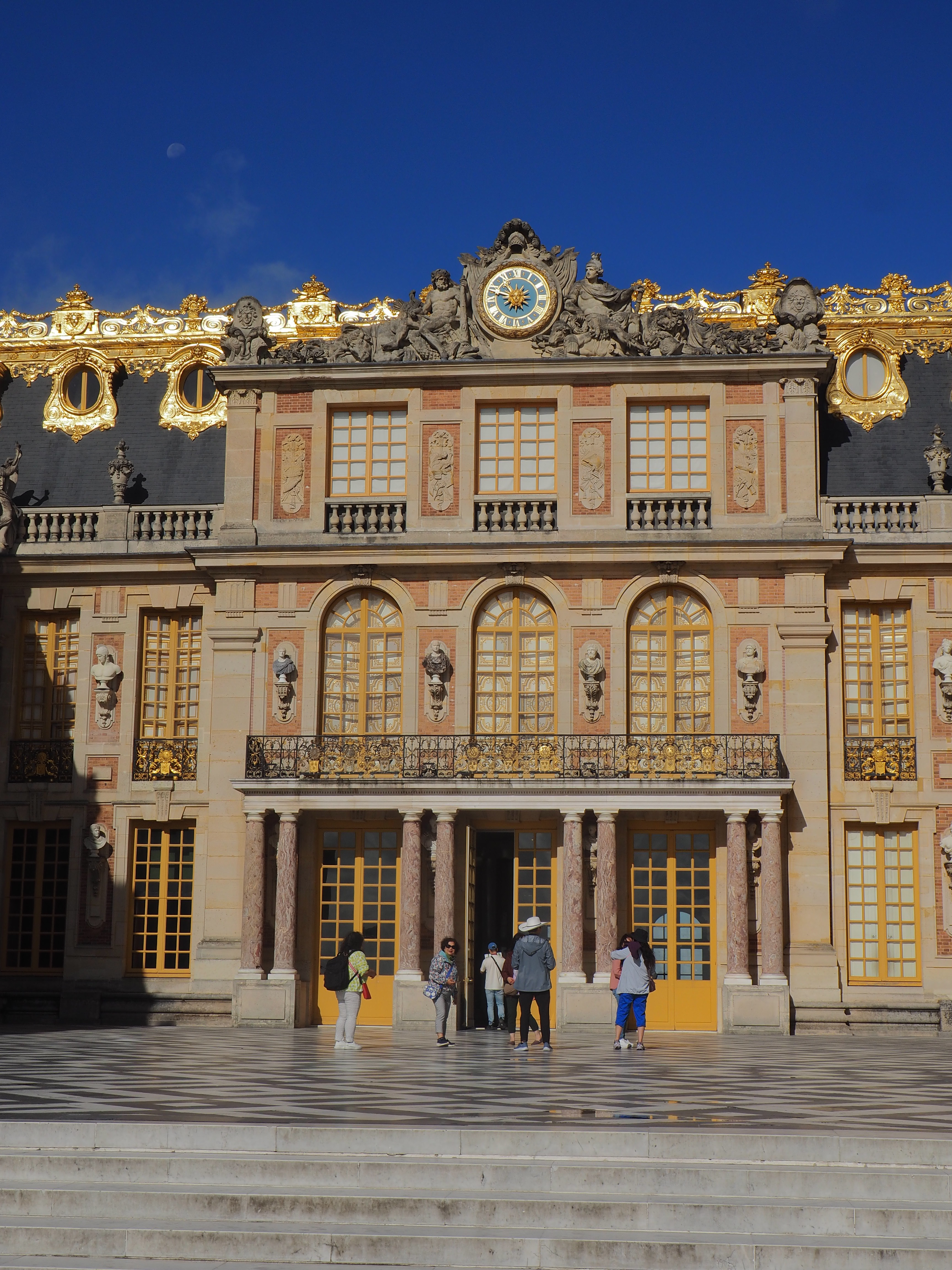

We broke our visit into three parts: The Palace, The Gardens and the Trianon Palaces.
The Palace of Versailles. We used Rick Steves to guide our tour of the palace. If you’re taking the Rick Steves tour, once through Security, cross the courtyard into the building across the way (follow the signage for the Hall of Mirrors). He starts his audio tour at the chapel on the second floor but when we visited, most of the stairways near the entry were closed. We found the chapel on the right first and then went to the end of the hallway and up the stairs on the left and backtracked to the chapel, bypassing lots of rooms with paintings and statues (which, if you were to stop and stare at each you’d probably be statued and paintinged out by the time you got to the good stuff), to where his tour proceeds from the chapel: the Hercules Drawing room. (If the front stairs access is open, you won’t need this tip).
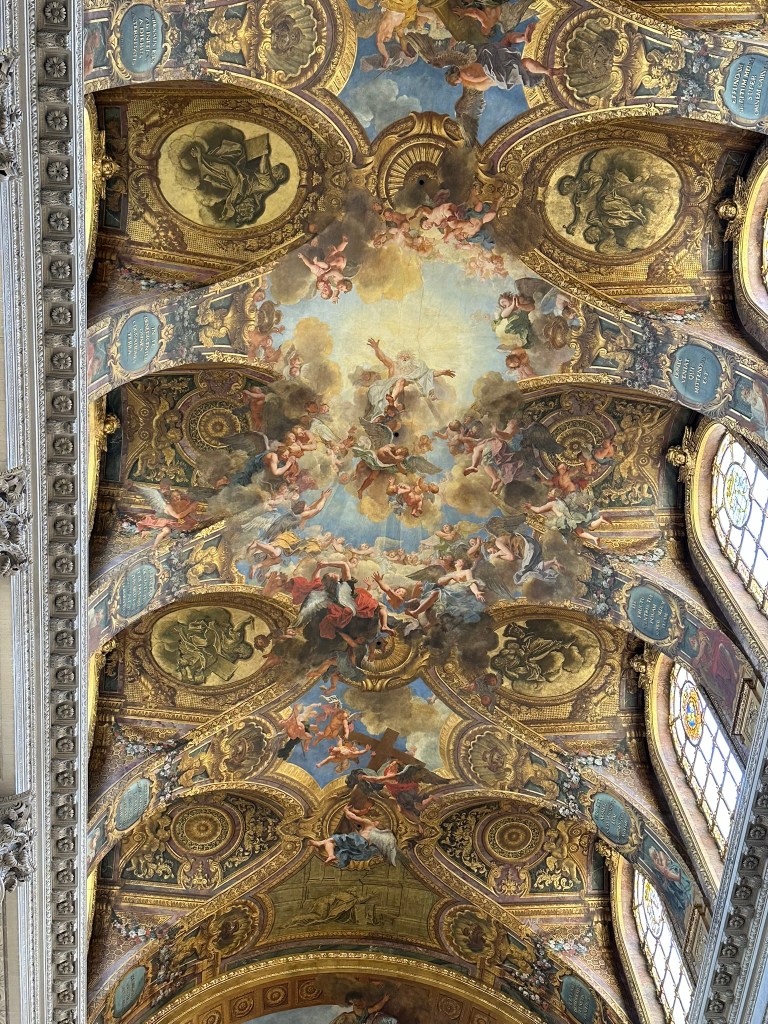
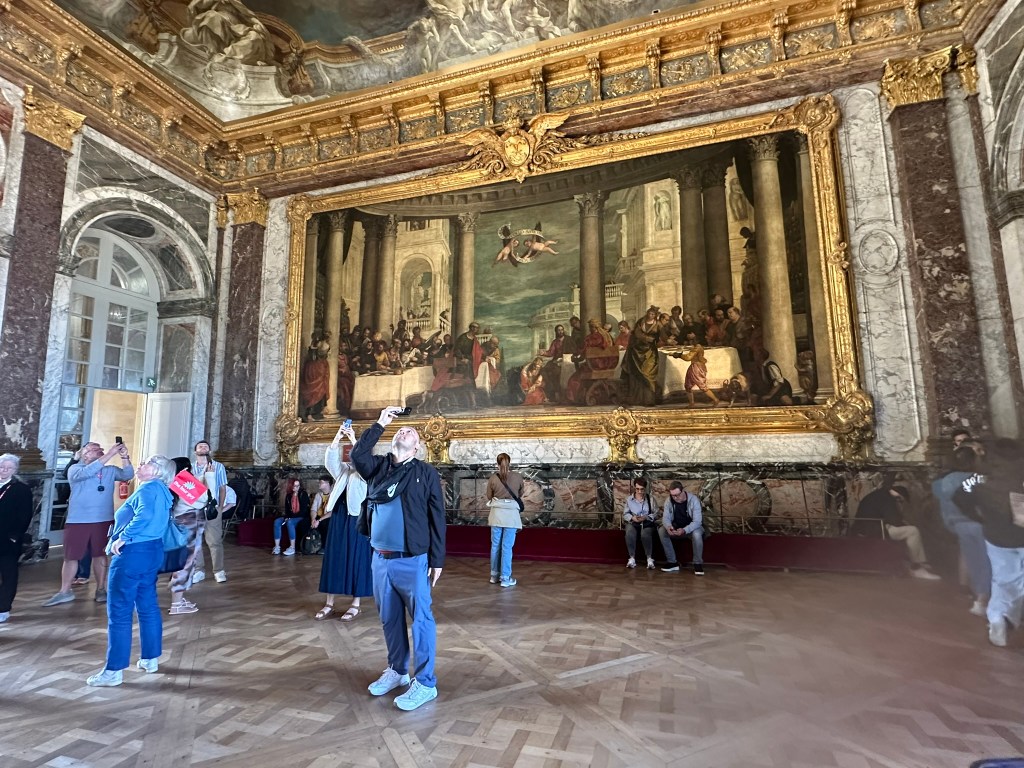
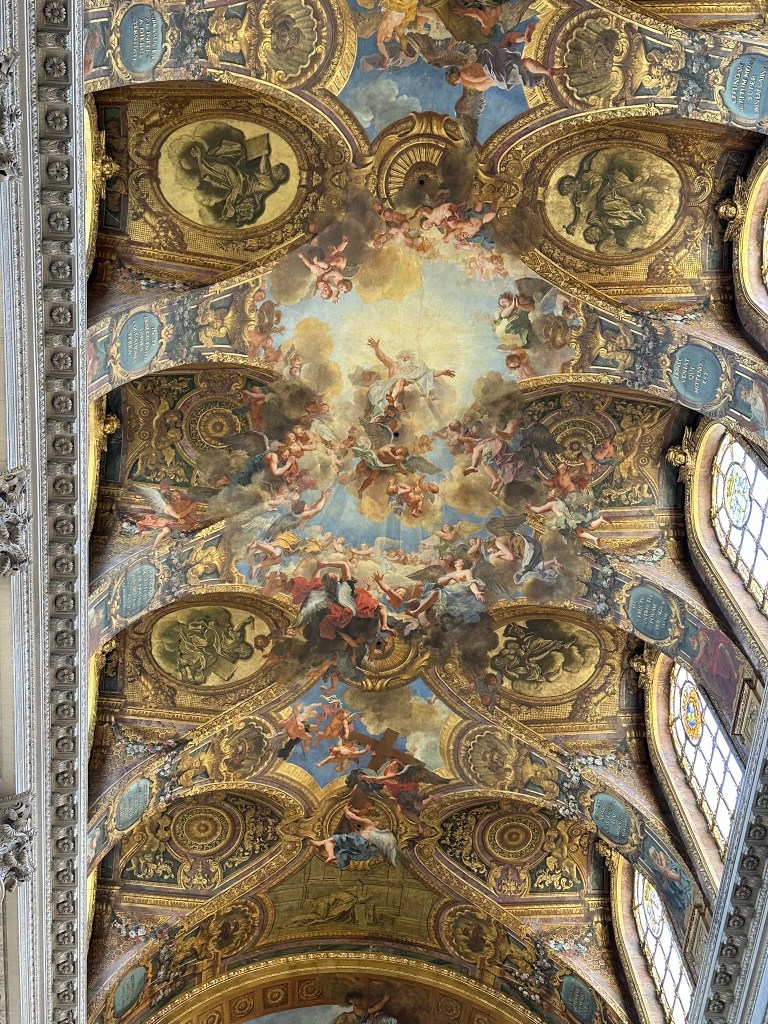
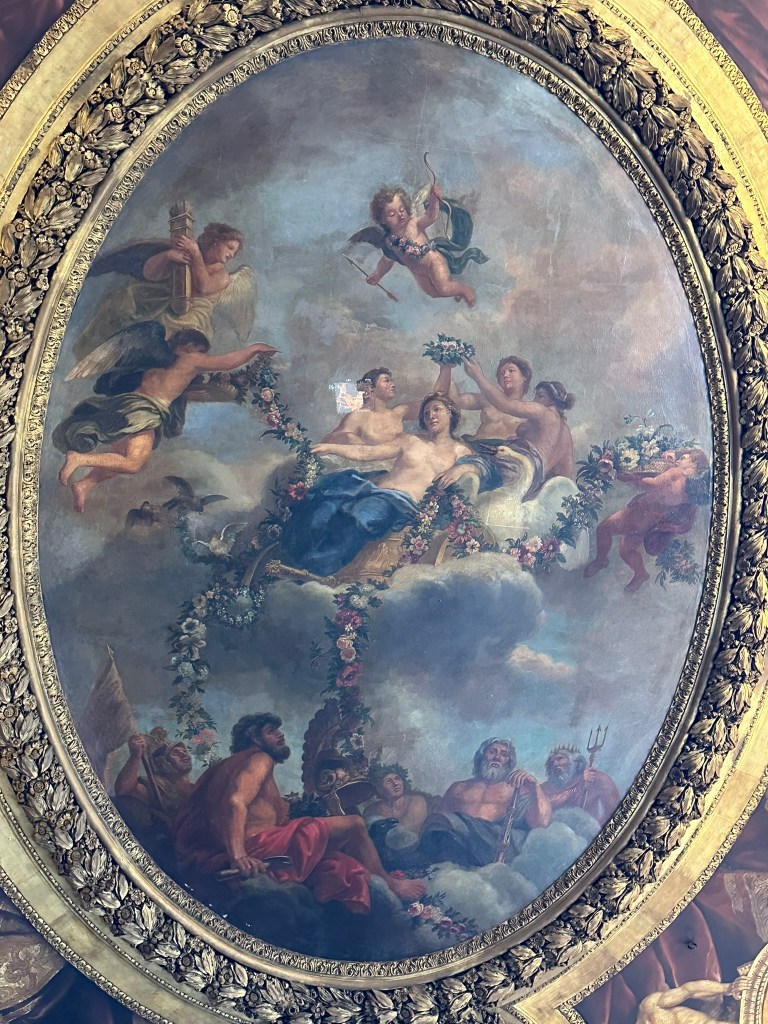
The Palace is mobbed. Some rooms more than others. The upside of the crowd is that your pace is slowed and permits you to really take in the decor and, especially, the ceilings. The chapel is where religion was relegated. At Versailles, the King was God and the chapel was the only place where the other God was acknowledged. Passing through the Hercules, Venus and Diana and Mars and Apollo rooms you’ll eventually find yourself in the Hall of Mirrors which contains 357 mirrors made by “stolen” Venetian mirror makers from Venice, who had the monopoly on mirror making at the time. In later years, the Treaty of Versailles ending World War I (and perhaps igniting the flame to start the second one) was signed. Later in the Coronation Room, you can gaze upon Napoleon Bonaparte ascending to the throne, succeeding in war and leading France.

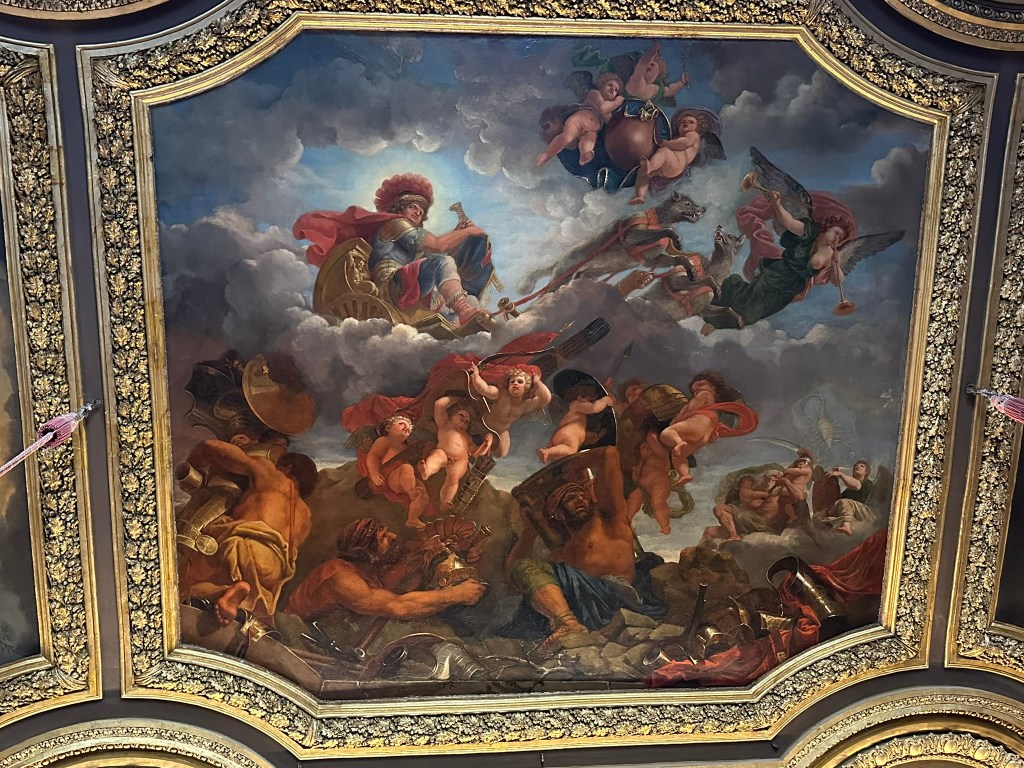
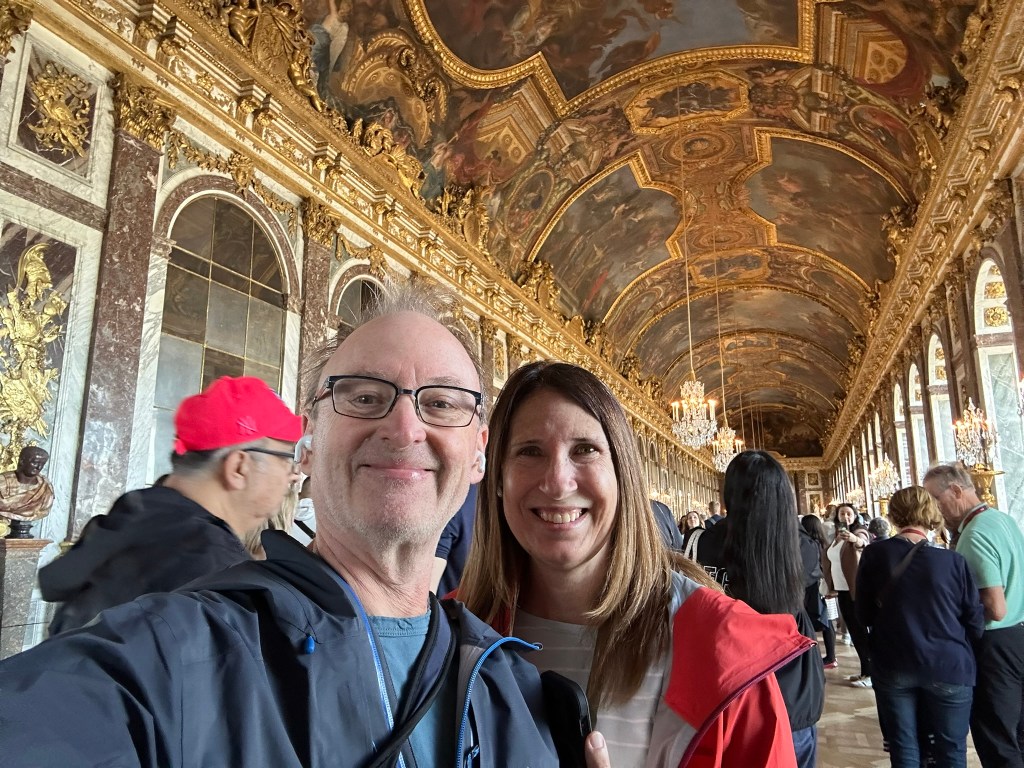
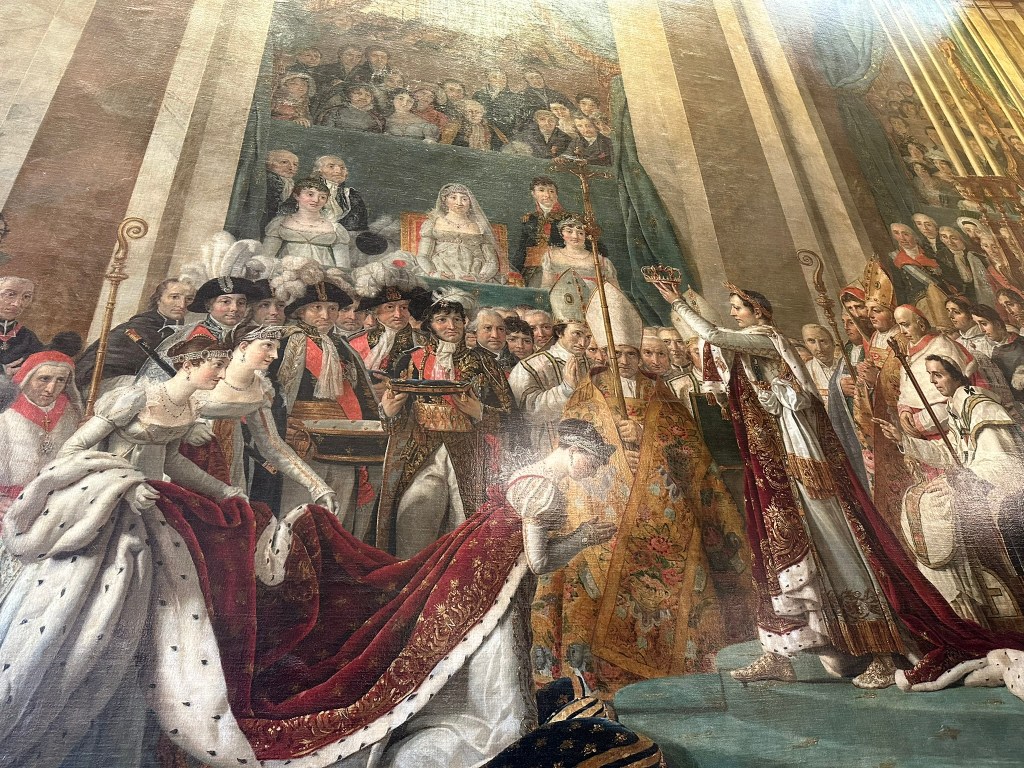
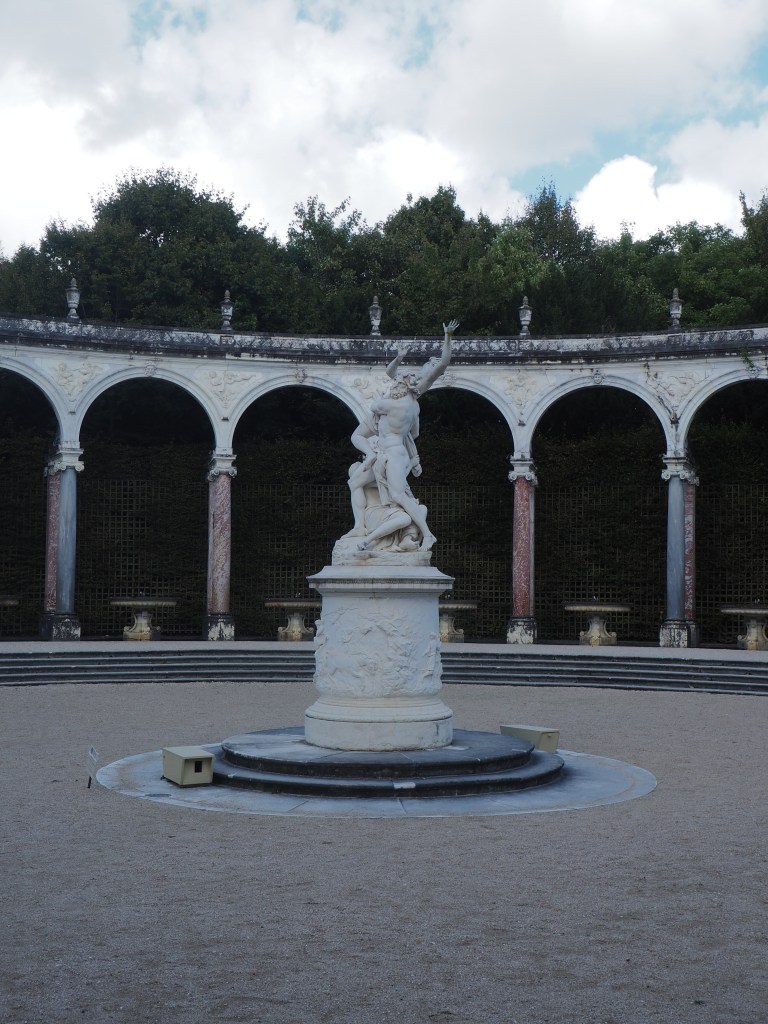
The Gardens. They are huge and expansive. They are twice the size of New York City’s Central Park. When Louis XIV was here, he had orange trees rolled out from the Orangerie (greenhouse) and placed throughout the gardens on sunny days.
As you look down from the Hall of Mirrors or the top of the stairway, you’re looking down what was called the Royal Drive. At the end is a wide body of water stretching out to the horizon. This was known as the Grand Canal complete with gondoliers pushing the court around on boats in homage to France’s Venetian neighbors.
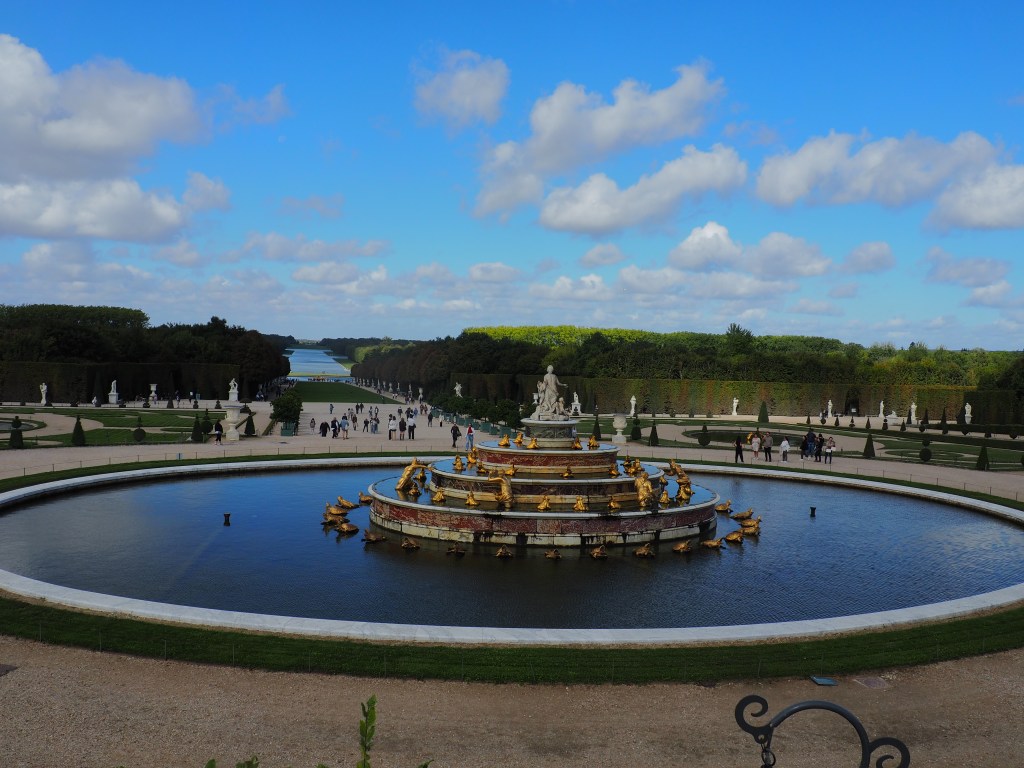
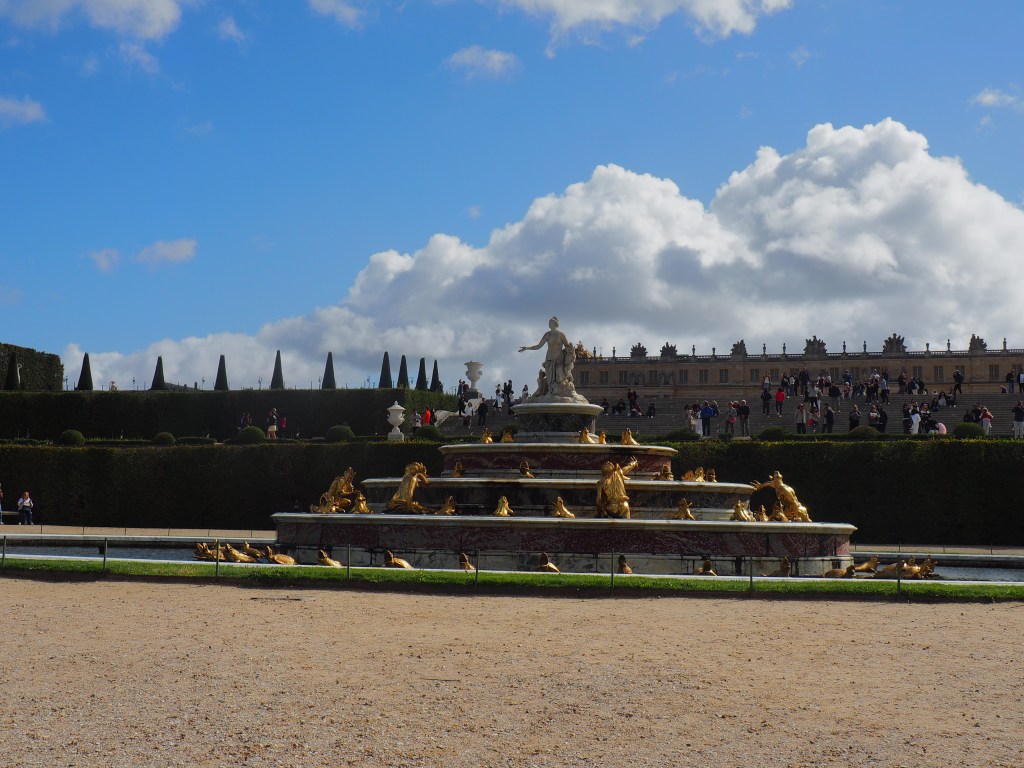
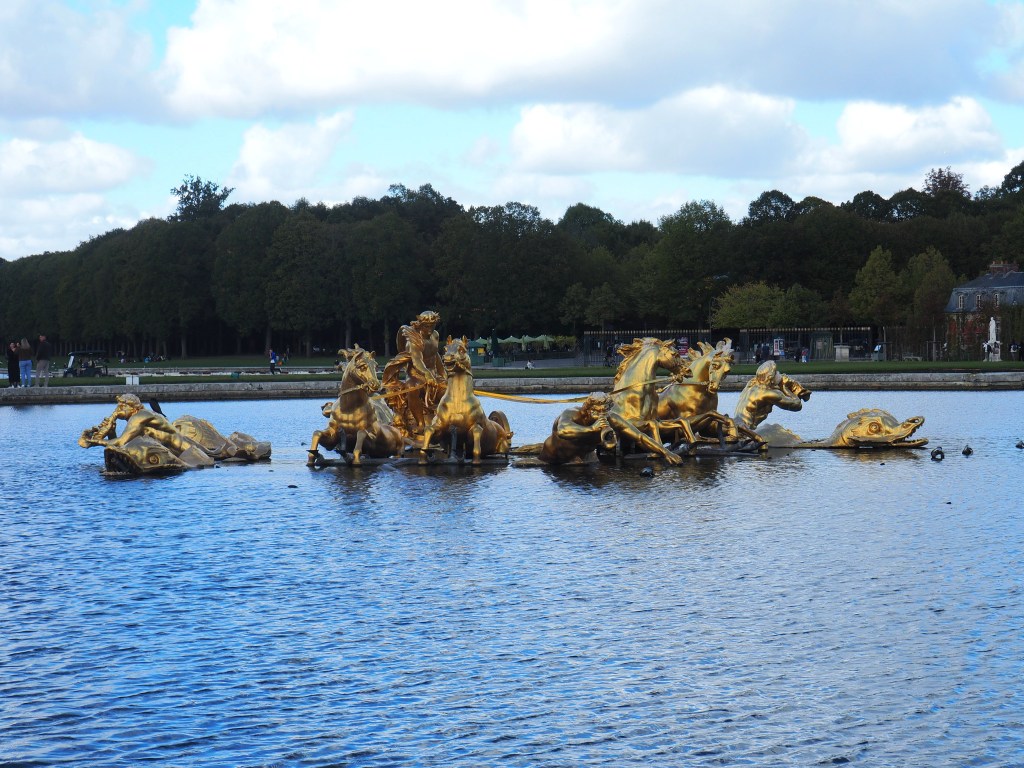
There were once 1,500 fountains in these gardens. Of them, 300 remain. The Sun King loved the sun god, Apollo. The first fountain depicts Apollo’s childhood with sister Diana and mother Latona. The frogs and lizards represent the peasants who were turned into reptiles by Zeus, father of Apollo and Diana, after insulting Latona, their unwed mother. At the other end of the Royal Drive is the Apollo fountain with Apollo’s chariot emerging from the water to drag the sun across the sky for yet another day.
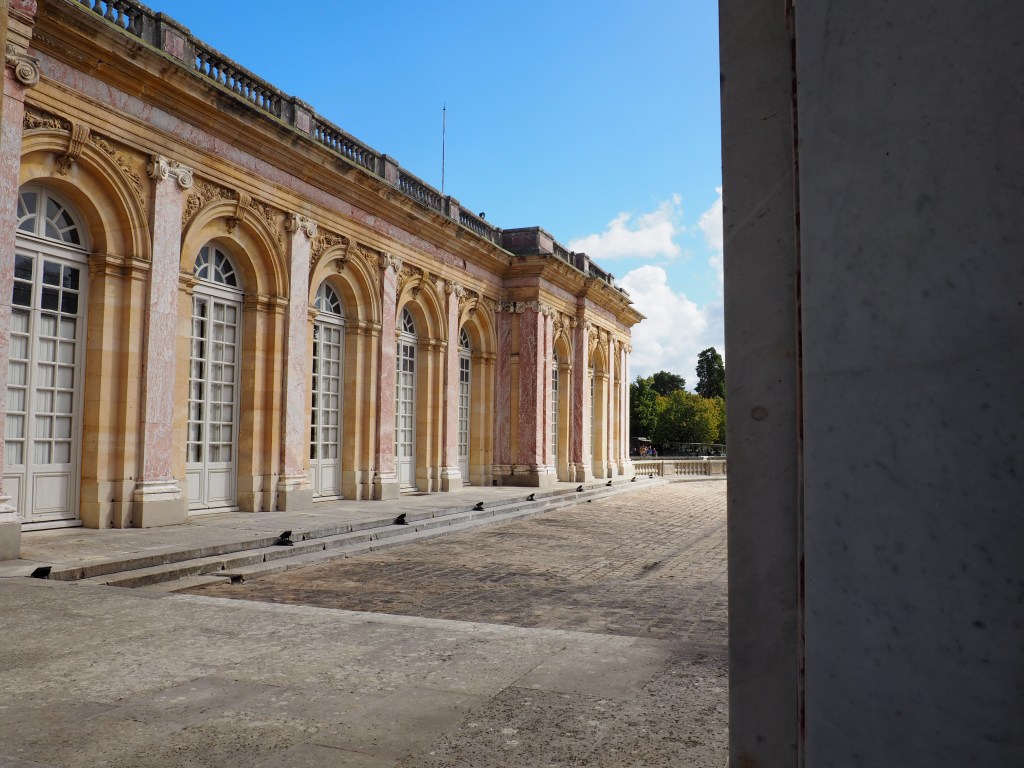
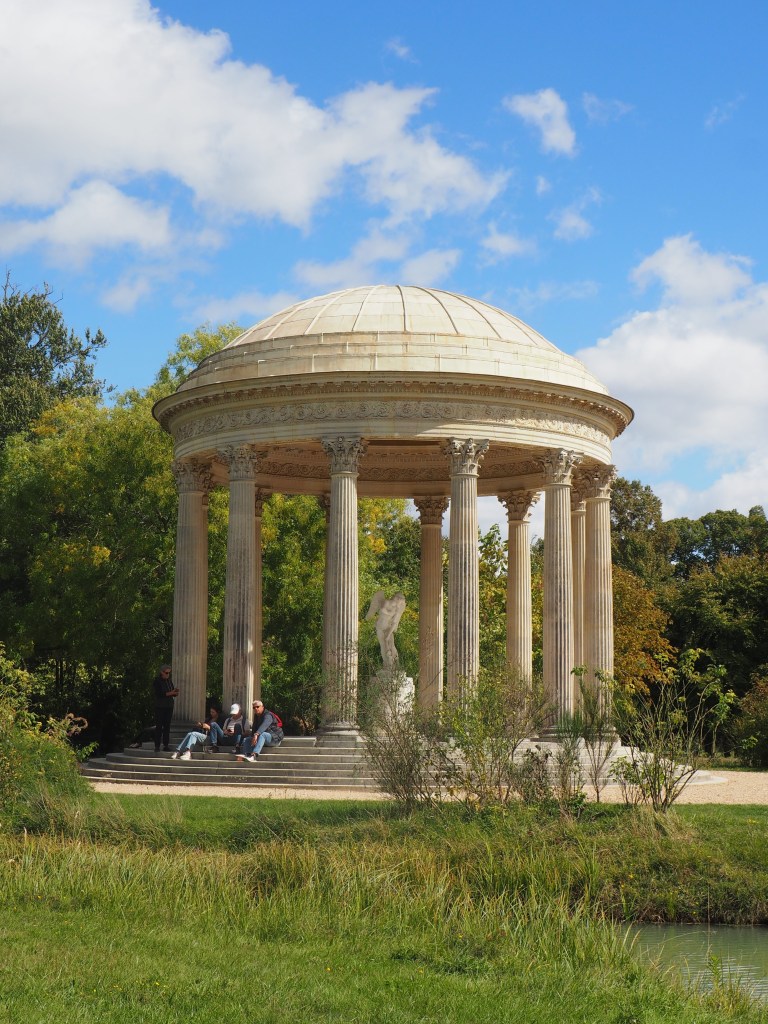
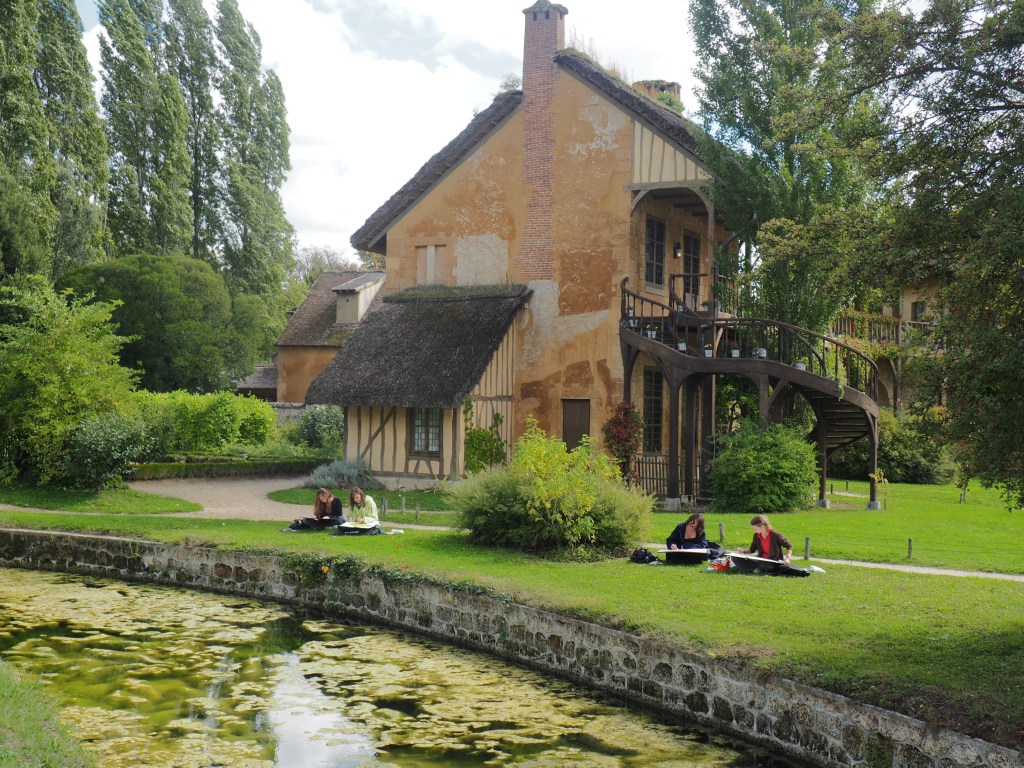
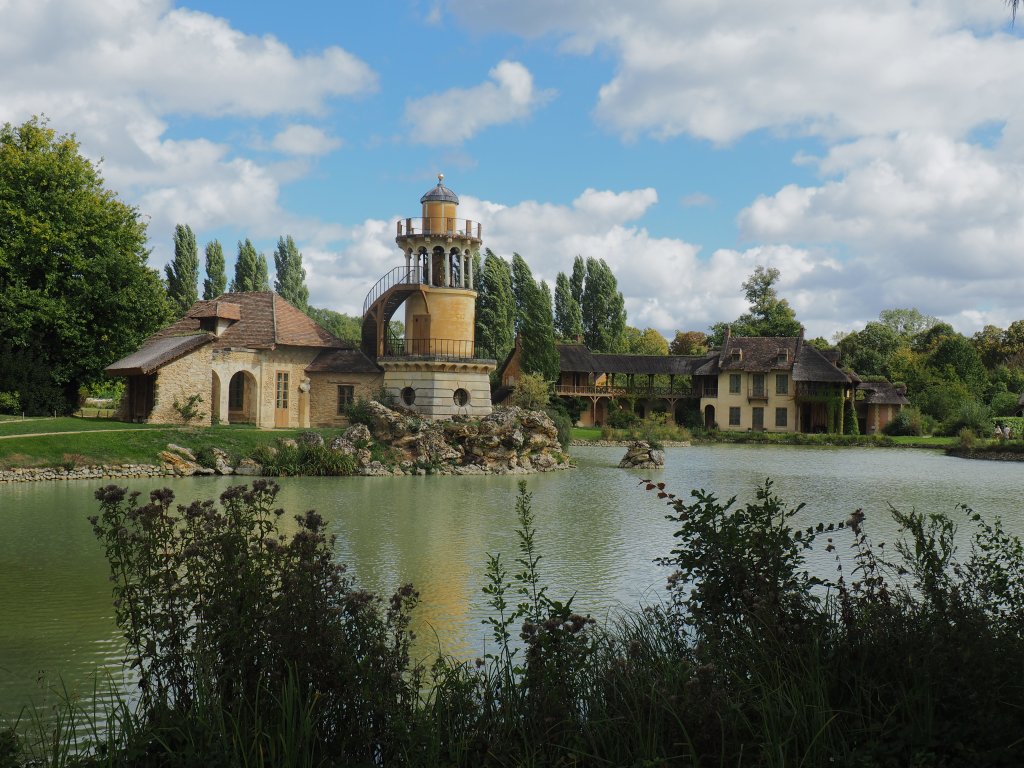
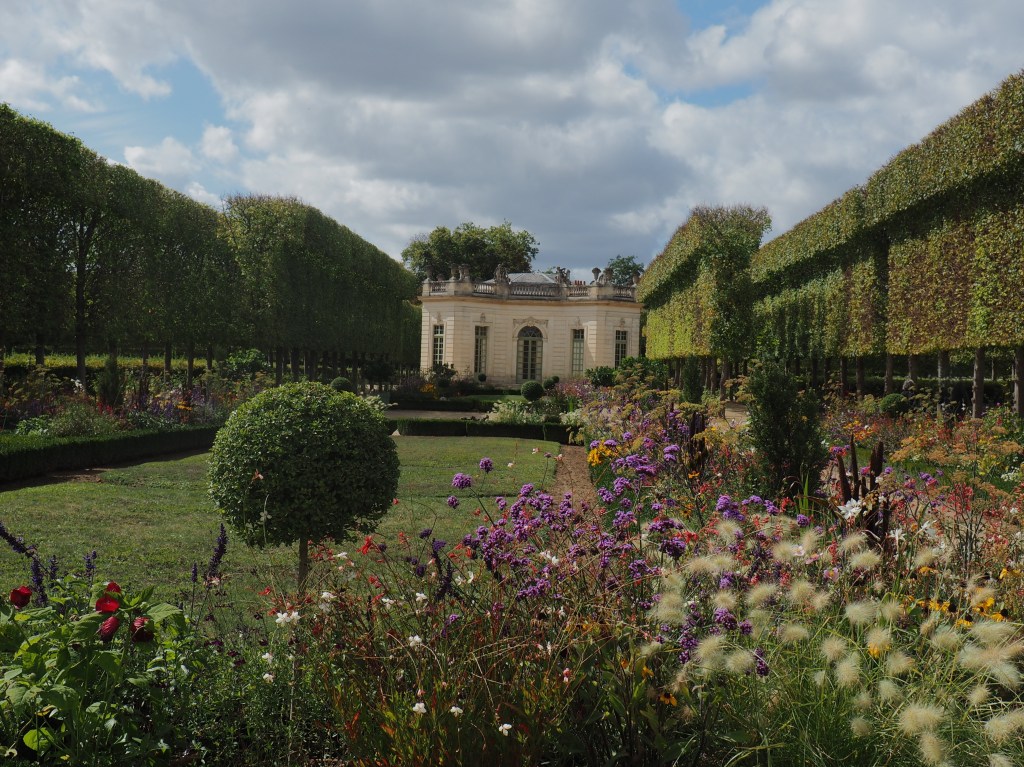
Trianon. Way back, about a 30–45-minute walk from the palace itself through the gardens and to the right from the grand canal sits the Trianon complex. There are two palaces: the Grand and the Petit Trianons, an “English garden” and a set of cottages called the Queen’s Chalet.
This complex of buildings was a getaway of sorts for the King and Queen (and their lovers) from the daily life and court at the main palace of Versailles. Constructed under Louis XVI, Trianon, especially the gardens and Queen’s Hamlet area, are a hidden surprise with fewer crowds. It’s worth the walk (or you can take the little train or a golf cart) but does make for a long day if you visit them after the Palace proper and gardens.
The End of the Monarchy. Alas, for Louis XIV’s successors not all days were happy and party filled. It was relatively good for the next 60 years under the Sun King’s direct successor, Louis XV, though he lacked the XIV’s charm. As time went on and France was undergoing drought, economic hardship, wheat shortages and bad harvests leading to bread price inflation an animosity arose with the lack of representation the populace had in its government. The feudal and tax system benefited the wealthy with the bourgeoise “haves” of the top 1-2% having it all and the rest of society paying the burden. Meanwhile, back at Versailles, King Louis XVI was building Trianon to the design of Queen Marie-Antoinette who disliked being in court and was ever more unpopular with the people. Not a good look to be building new palaces while the people are starving. In the heyday of the monarchy, the Sun King had spent the equivalent of half of France’s entire annual GDP for one year building Versailles, but a less popular and dynamic king (Louis XVI), the weakened economics driven by the challenges above and France’s debt from the American Revolution and Seven Years War and an unpopular queen (Marie-Antoinette) led to angst in the ranks.
The monarchy imploded and France exploded into Revolution and when they came for the king and queen at Versailles, crashing through the golden gate, their fate with the guillotine was all but sealed.
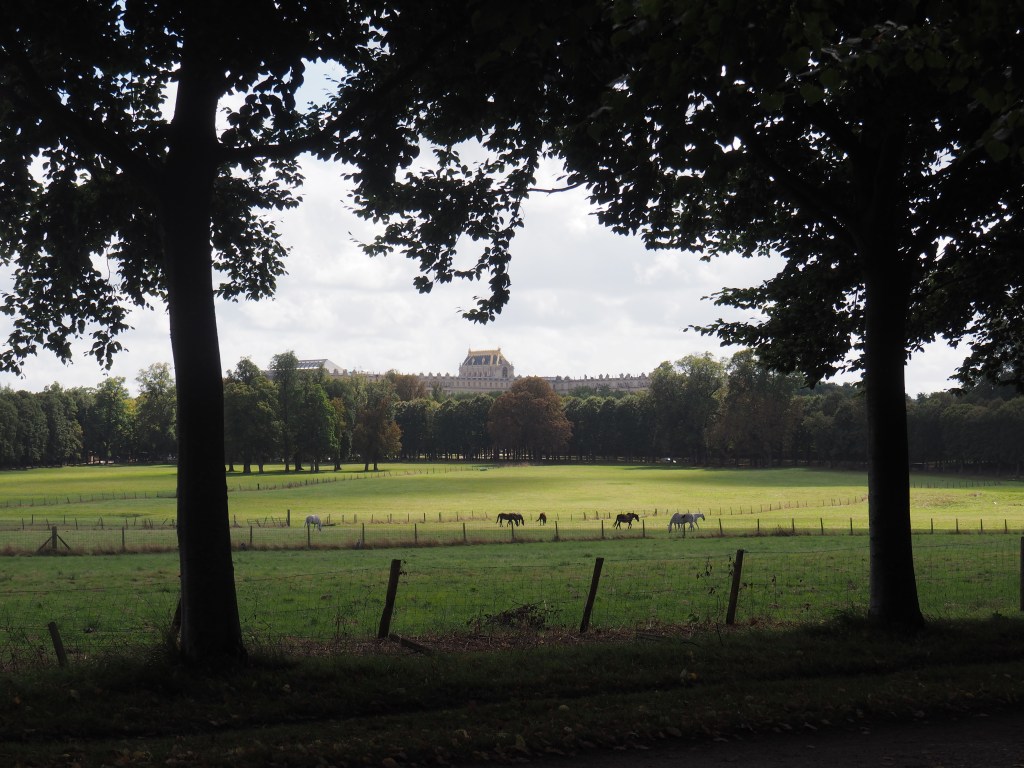
And Finally, Some Logistics: A tour of Versailles requires some planning, but it is not difficult, save for the crowds. Advance tickets are a must but are easy to obtain via the official Palace website. Guided tours are also an option, but you’ll need to get yourself to Versailles to meet most of them. That is also not too challenging as long as you can find a train station for the RER-C line which stops near the intersections of Boulevard St. Michel and Boulevard Saint Germain, in front of the Musee d’Orsay, near Pont des Invalides and the Eiffel Tower. Once on board and heading in the right direction (just make sure you are headed towards Versailles and the train is the one to Versailles as there are other lines that go elsewhere in the same direction), it isn’t hard just take the train to the end and follow the crowd (and signage) out of the train station to the Palace. There, you get into your queue for your timed entry. There are lines for the on-the-hour entry tickets and the on-the-half-hour entry tickets. Just make sure you’re in the right one and not more than 30 minutes. Et voilà, your tour begins!
Sources:
- Rick Steves Paris guidebook, June 2024.
- Rick Steves Walking Tour of Versailles Palace.
- https://artsandculture.google.com/story/11-secrets-from-the-palace-of-versailles/TgXhKfwJBLS9IA?hl=en
- https://en.chateauversailles.fr/discover/history
- https://perfumesociety.org/history/louis-xiv-the-sweetest-smelling-king-of-all/
- https://en.chateauversailles.fr/discover/history/key-dates/louis-xiv-and-his-women
- https://www.historyhit.com/the-6-main-causes-of-the-french-revolution/
 The Traveling Ridleys
0 comments on “A Visit to Versailles”