

“Neighbors, we have found, take on an importance in the country that they don’t begin to have in cities. You can live for years in an apartment in London or New York and barely speak to the people who live six inches away from you on the other side of a wall. In the country, separated from the next house though you may be by hundreds of yards, your neighbors are part of your life, and you are part of theirs. If you happen to be foreign and therefore slightly exotic, you are inspected with more than usual interest.” — Peter Mayle, A Year in Provence
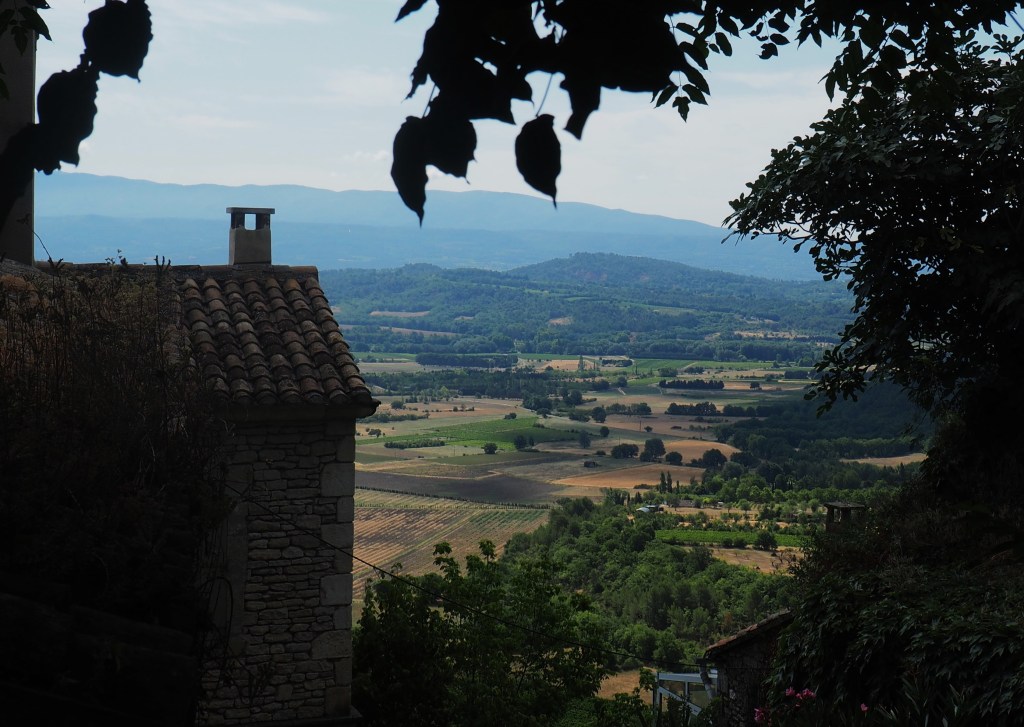
We rumbled northwest from the Côte d’Azur up over winding hills on back roads and into the heart of the Provençal countryside. We drove through fields of corn, sunflowers and fresh cut hay and, of course, grapes past this Domaine and that Chateau straight into Provence’s wine country. As we progressed towards our destination through cute little French towns we were in search of a boulangerie for a simple baguette. But centre ville after centre ville turned up empty for us. This is France, right? What’s a man gotta do for a baguette at noon on a Wednesday? We found a cafe in a small town and they’d stopped serving at 1pm. Hmmm. But then we continued on into delightful little Jouques where the boulangeries were aplenty and our faim (hunger) for bread was quenched. Onward.
We had timed this trip around the blooming of the lavender. When we were here in March three years ago we said “we must come back to see the rows of purple stretched out in lavender fields”. Alas, like our attempt to see the puffins off the coast of Scotland two years ago, we were told we were too late. By a week. The lavender, or most of it anyway, was cut due to the hotter than normal temperatures. Damn global warming. One can’t always rely on Mother Nature to cooperate with one’s travel schedule.
The mistral winds were howling the day of our arrival, which was fortunate to keep cool(er) in the hot sun and temperatures. I’d read about them in our Rick Steves Provence guidebook and wondered if we’d experience them. Wonder no more. But our Airbnb was sheltered from the worst of them sitting under a cliff with a small olive grove from which our hosts produce their own olive oil and surrounded by vineyards. The photos of the Airbnb don’t do it justice and we were pleasantly surprised by its size and how it lives. But the surrounds and physical structure itself are only part of the charm. Our hosts, Corrine and Alain (and their dog Vanina, which is how it’s pronounced but likely not how they spell it) met us with smiles (and wags) from the moment we arrived. We shared our first dinner by their wood fired barbecue, each contributing a bottle of wine, his, from Domaine des Jeanne a small local wine not available in the shops, ours a Châteauneuf du Pape found at the local grocery. After came a small cake delivered that day by their friend who owns the local patisserie, fresh French and Corsican cheese and a blueberry liqueur made by a friend from Corsica. We were off to a good start.
We arranged our week around market days, hitting the towns and their associated sights around when they each had a market.
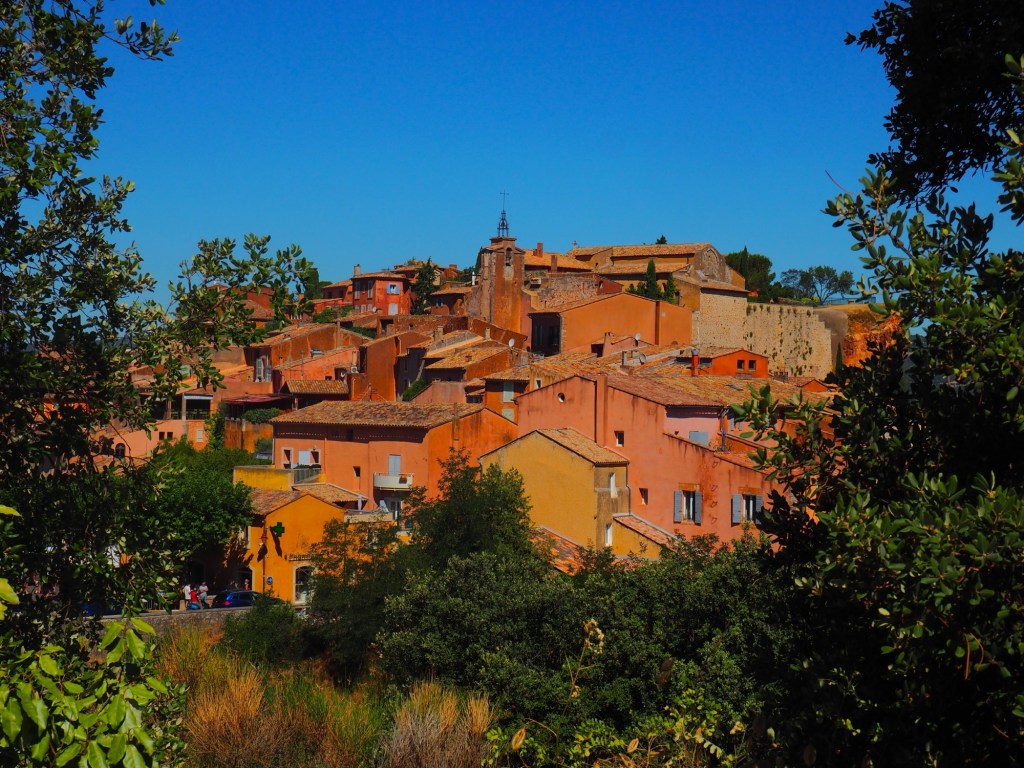
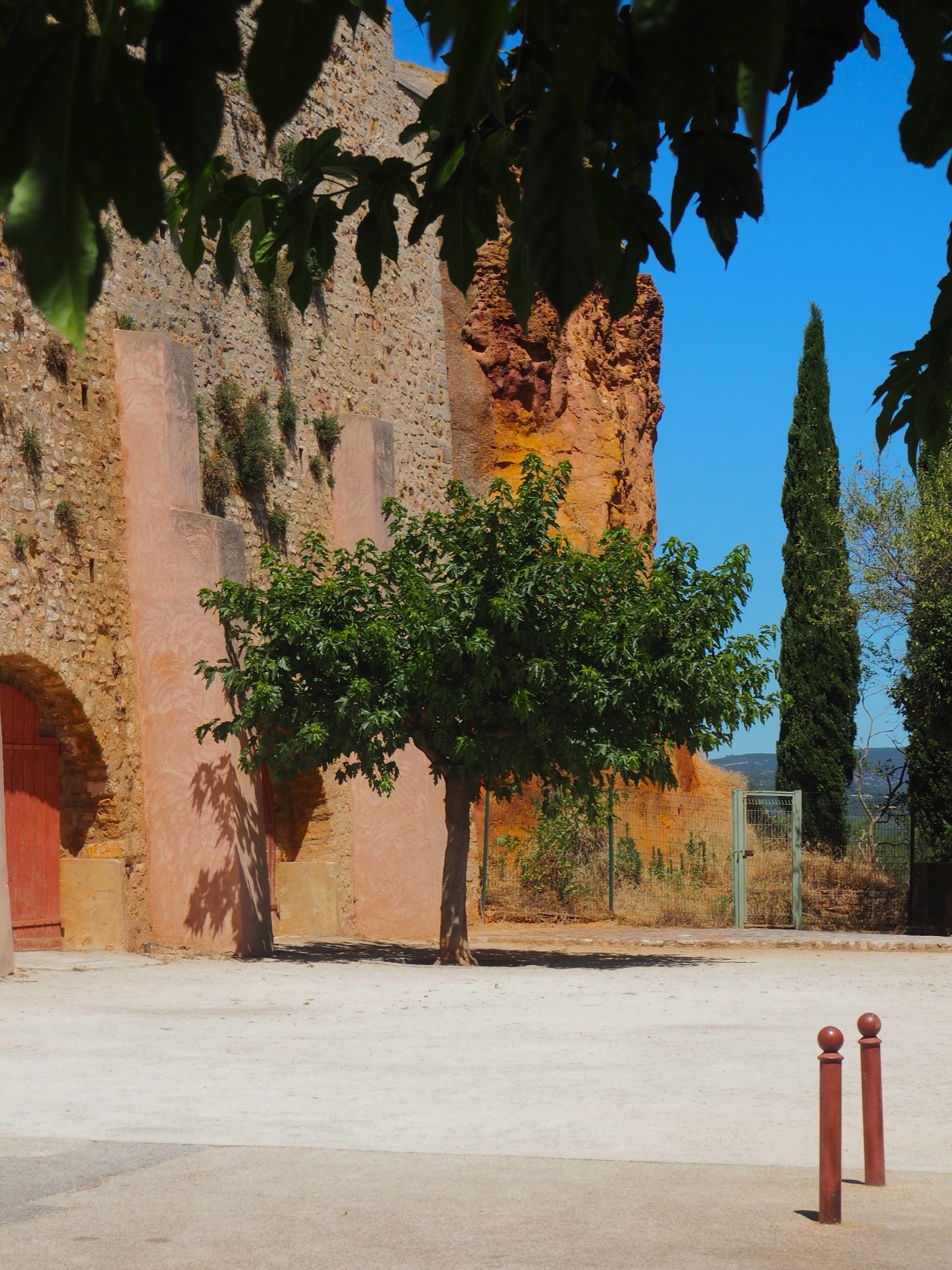
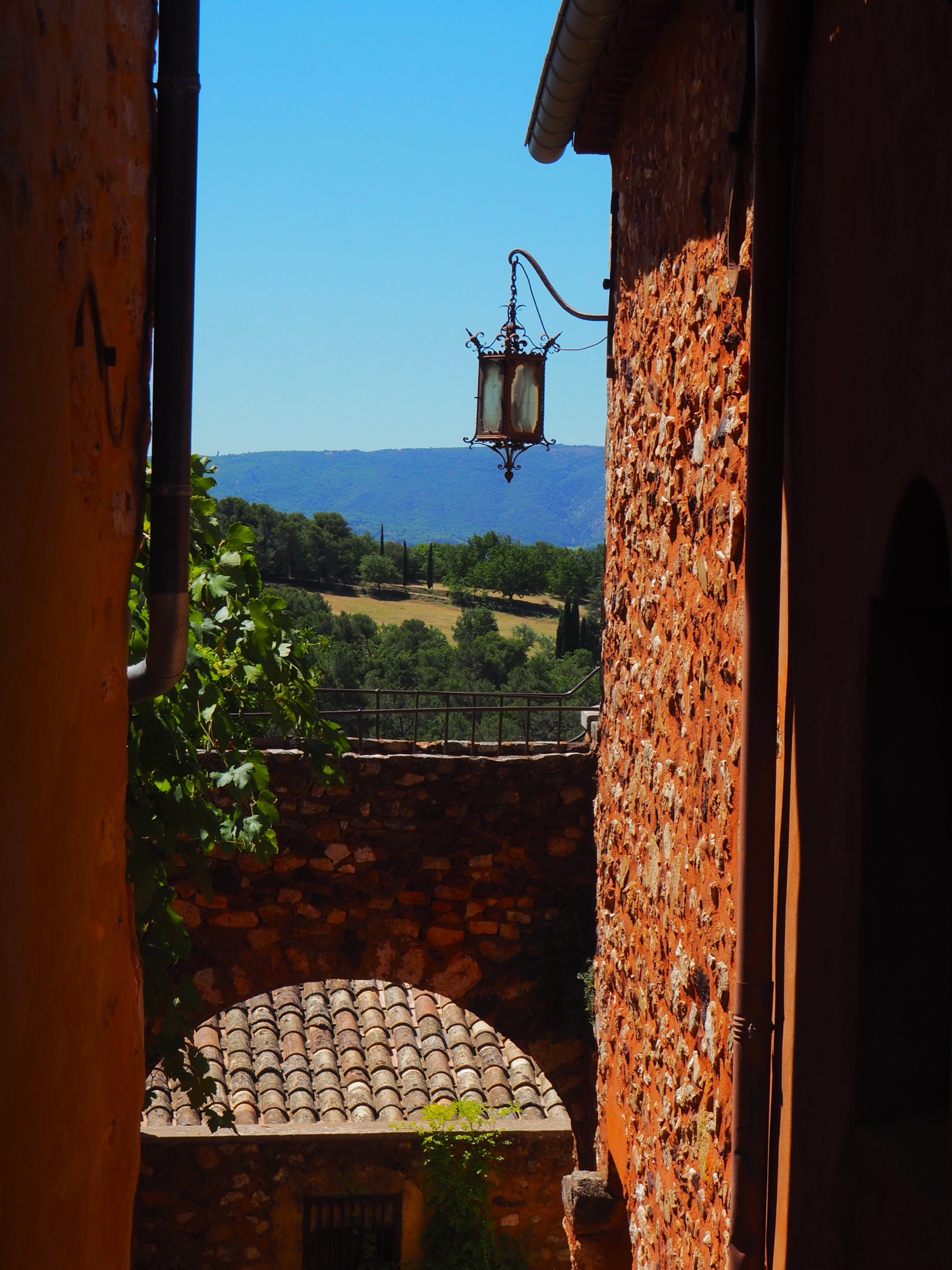
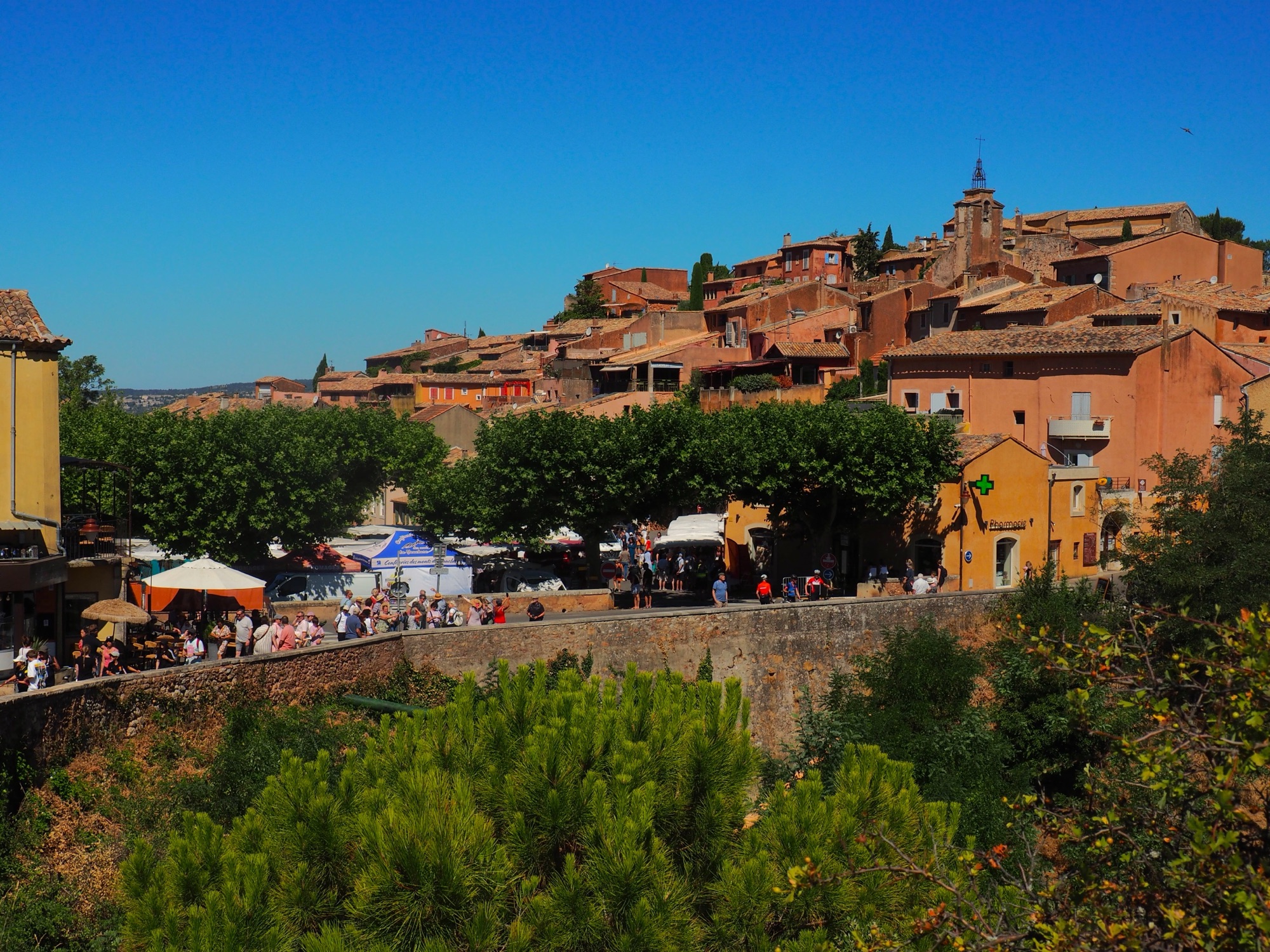
Roussillon (Market Day: Thursday). Appropriately named, the red village of Roussillon, voted one of France’s prettiest villages, stands out against the surrounding fields of grapes and olives. The red tinge of the village comes from its construction with materials from the nearby ochre cliffs, which are a must-visit when you make your way to Roussillon.
We began at the cliffs. There are two trails you can take after paying your admission (no reservations required), one takes about an hour and the other about half the time. 230 million years ago, this area was covered by the sea and the sediment left later formed the white limestone which is characteristic of Provence and Mont Ventoux which towers over the area with its white cap. As the sea receded, the tropical rains transformed this particular area into red and yellow, orange and white ochreous sands. The ochre was mined here from the 1700s to 1930.
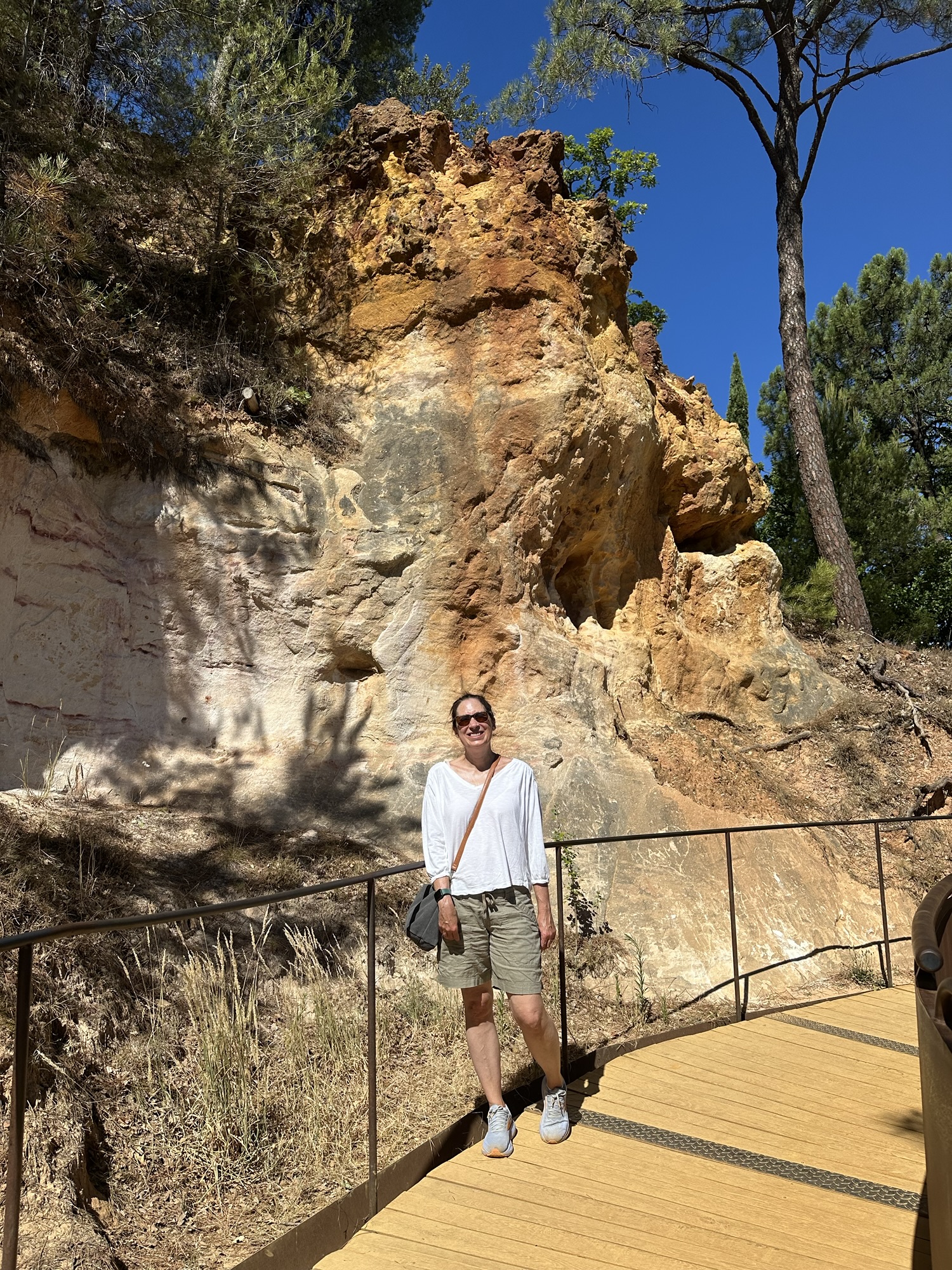

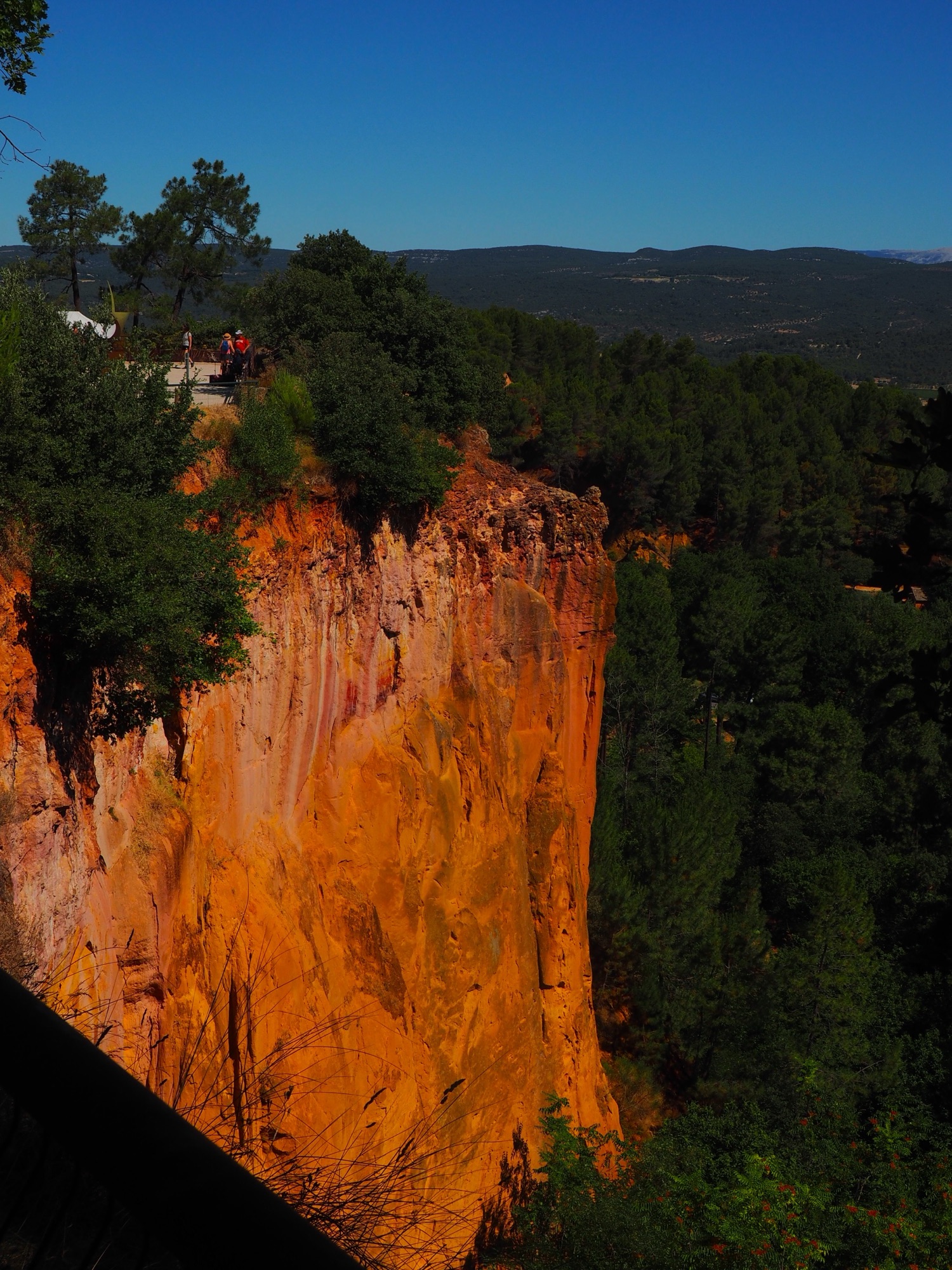
Of course, there are less geological explanations for the colored cliffs and rocks. One legend goes that Lady Sermonde, who was left alone by her husband regularly for hunting expeditions, fell in love with the page Guillaume de Cabestan who had been hired to apprentice at their castle in Roussillon. When Lord Sermonde discovered their affair, he invited Guillaume to a hunt, stabbed the young page in the back, severed his head and cut out his heart serving it to Lady Sermonde for dinner who subsequently threw herself over the castle walls when she learned about the sourcing for the meal and the blood of Guillaume spread over the land turning it red.
The village itself was bustling with the market, bikers and tourists buying local produce and crafts, visiting churches and eating baguettes and sandwiches or sit-down meals in the midst of red-colored buildings. Le village rouge est très beau!
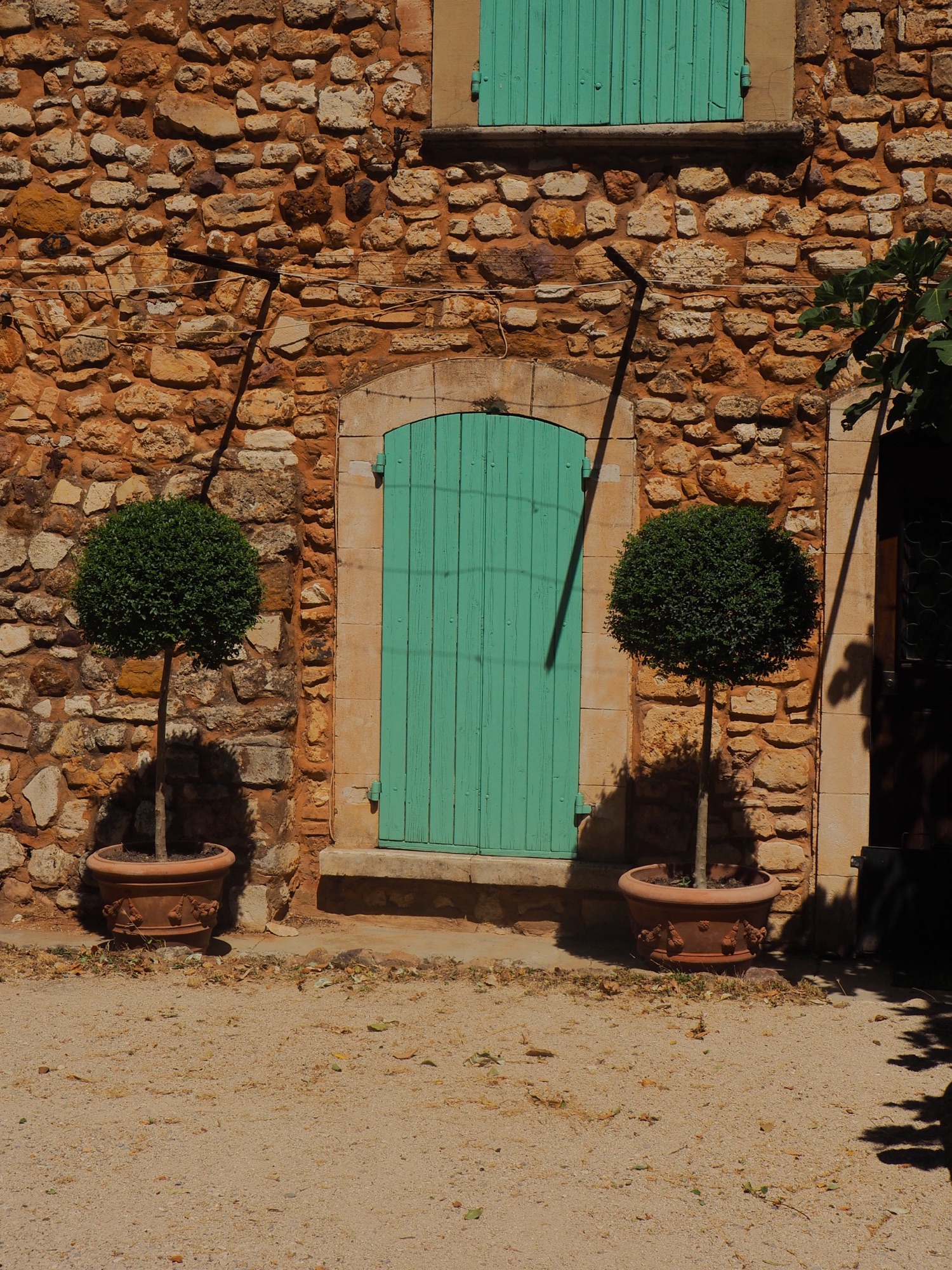
Lourmarin and Bonnieux (Market Day: Friday). We had driven by Lourmarin on our way in, had not planned to visit but it looked cool and worth seeing so I was excited to read in our Airbnb guidebook that its market was on Fridays which we’d set aside as a day with no plans when we mapped out our stay before coming.
We set off, but a bus with different plans had the road blocked in the tiny S-curved roads that snake through Bonnieux and everyone was making a U-turn. Not knowing, at the time, the cause of the blockage and the duration with which the clog would remain (10 minutes, an hour, half the day, who could say?), we followed suit and parked. We’d driven through Bonnieux when we visited Gordes and Provence three years ago and had almost stayed here this time, so we decided that fate was intervening and telling us we needed to visit. As it turned out, Friday was also a market day in Bonnieux so our market habit would not face any withdrawals.
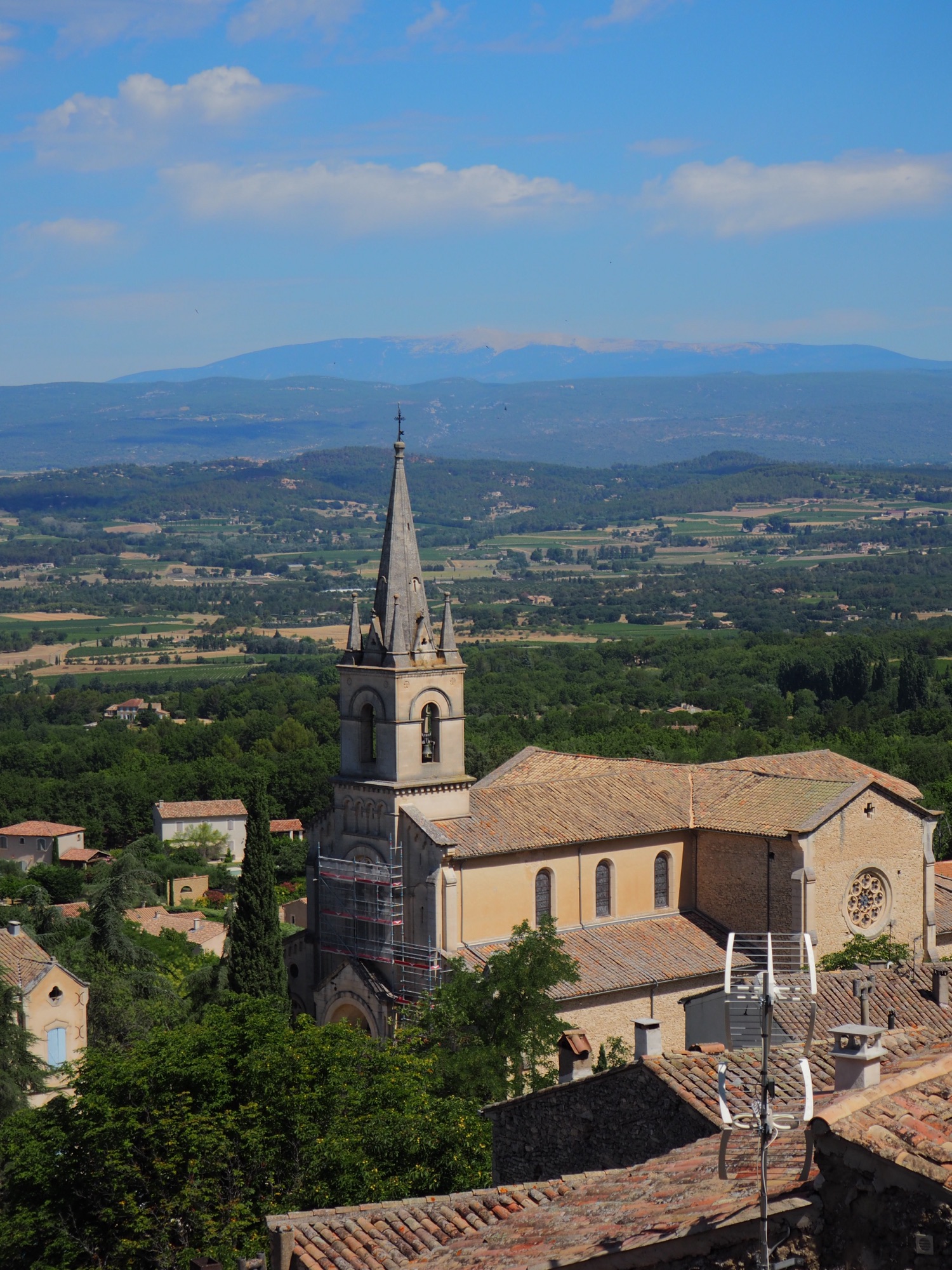
Perched on a hilltop, like many area villages, Bonnieux is best discovered by wandering, up and down and around. It feels more “lived-in” than some of the other hilltop villages and offers several hotels and restaurants on its various layers as you snake your way up, around and through the town.
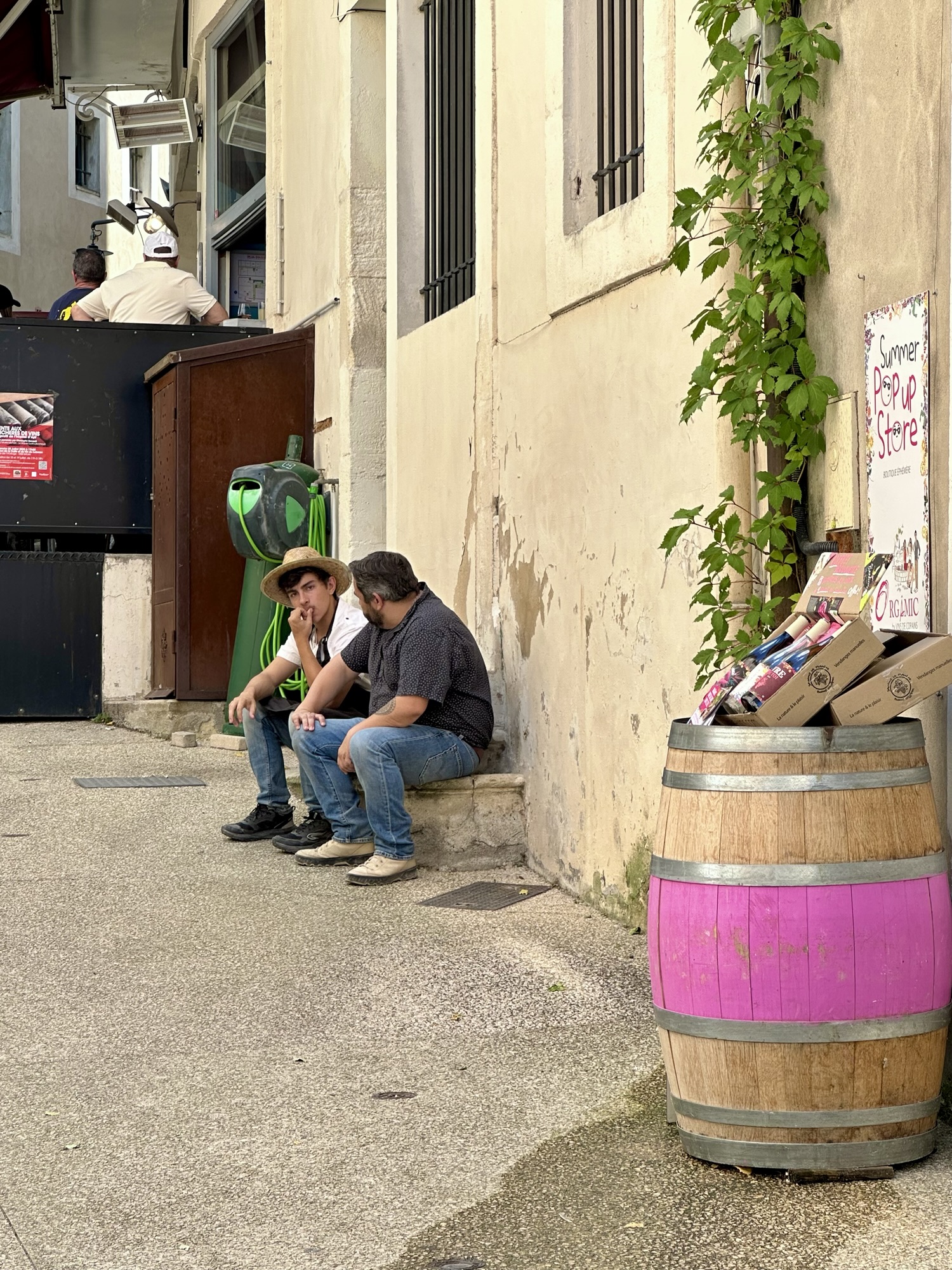
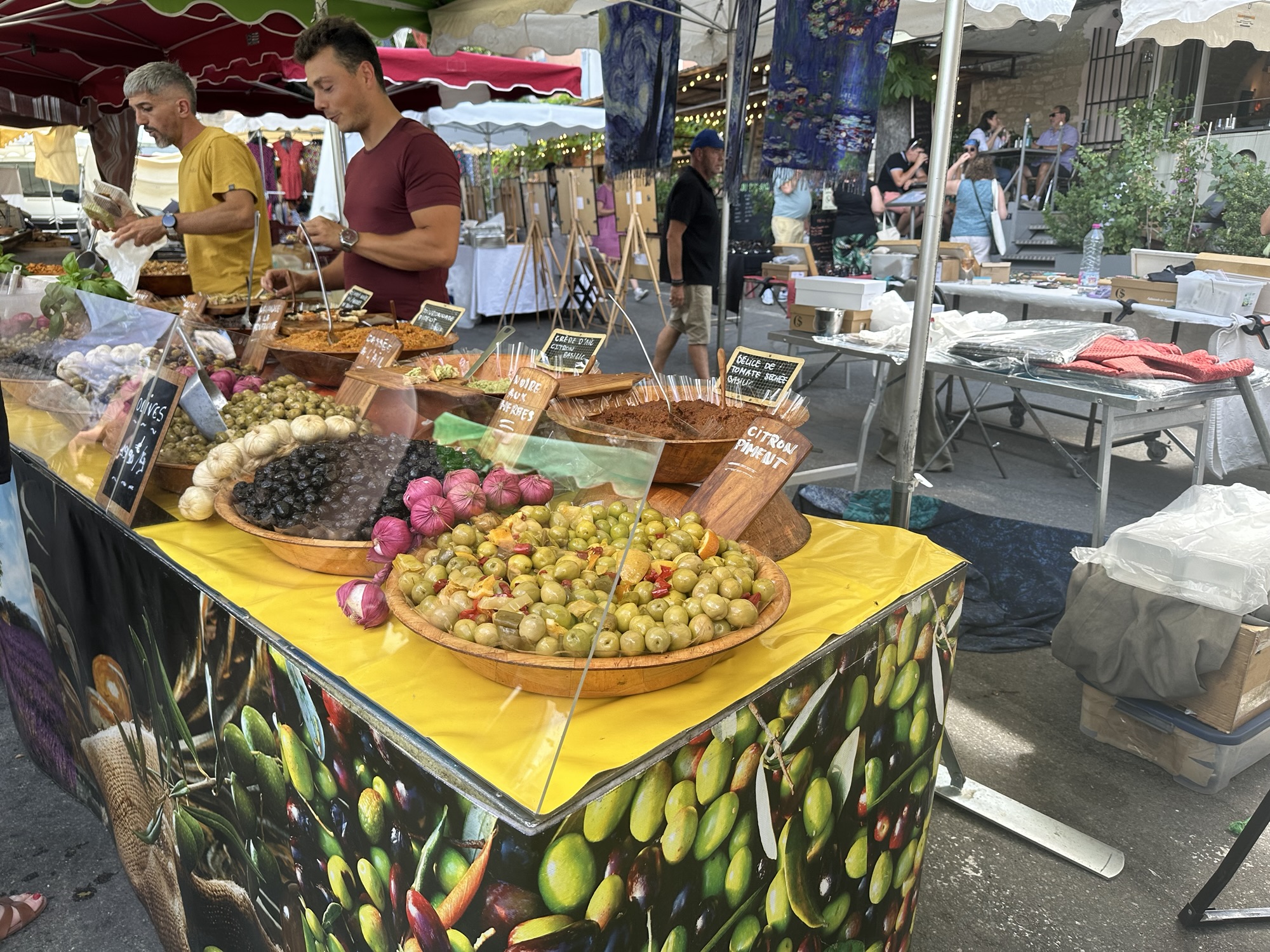
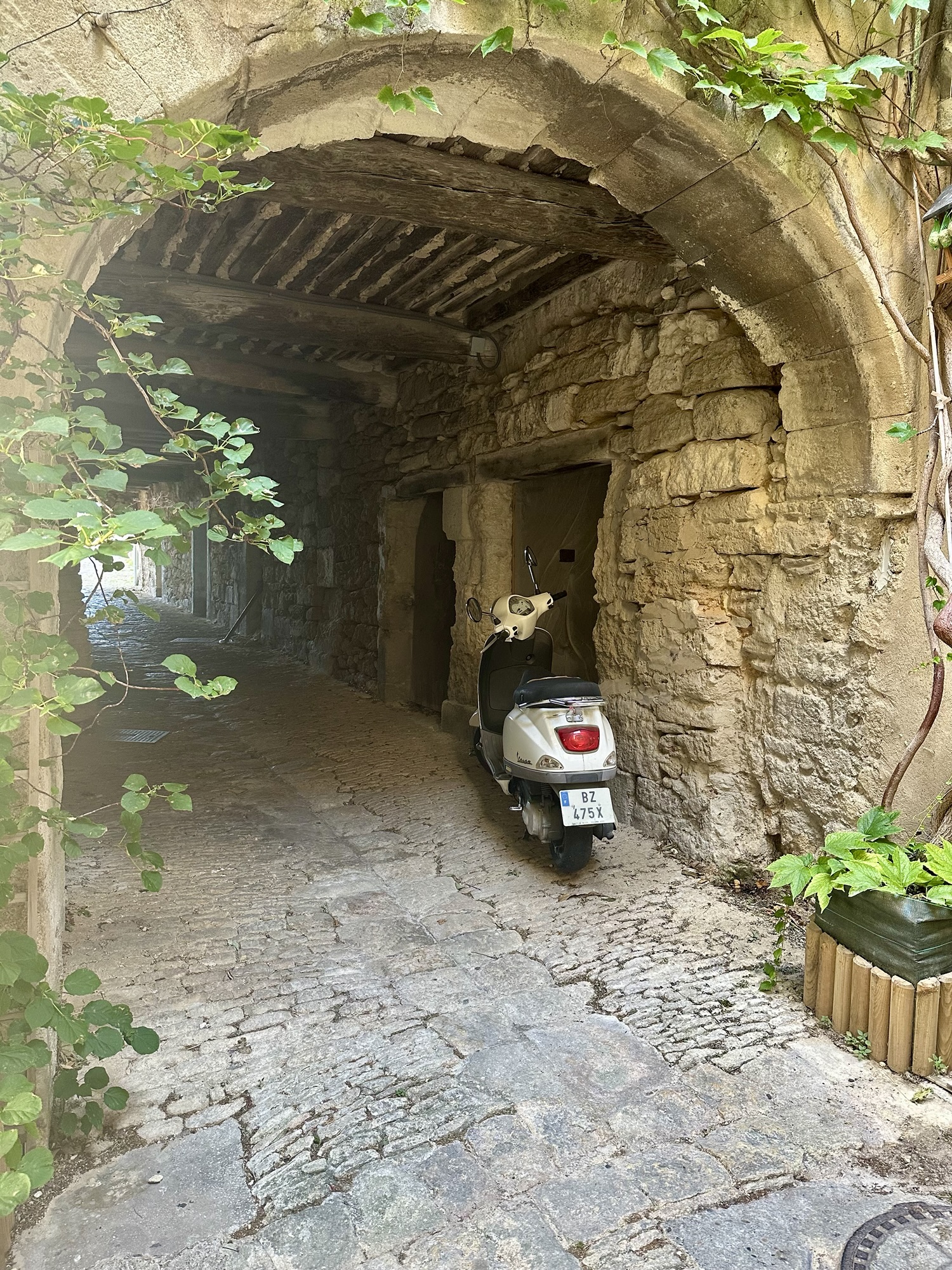
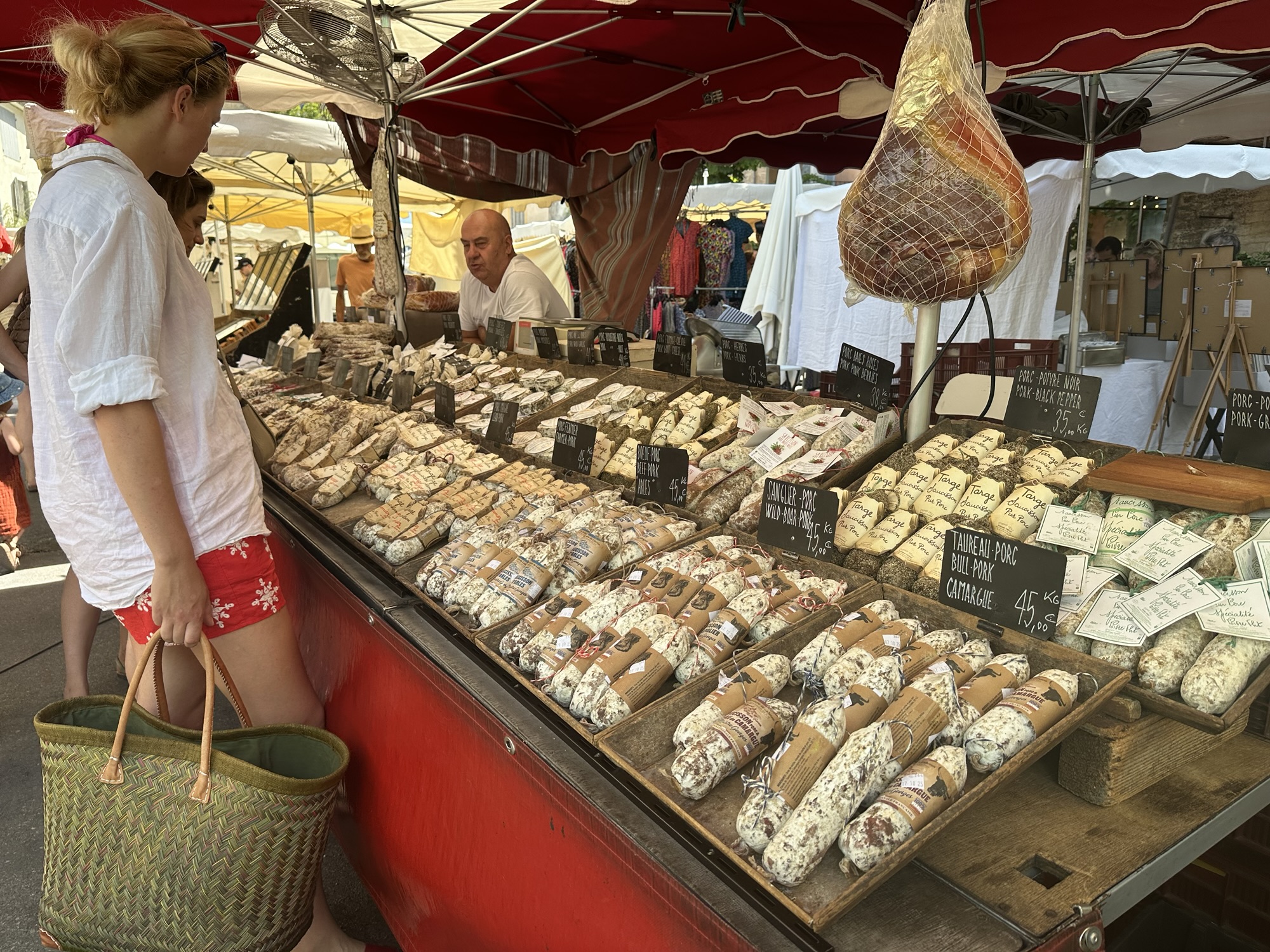
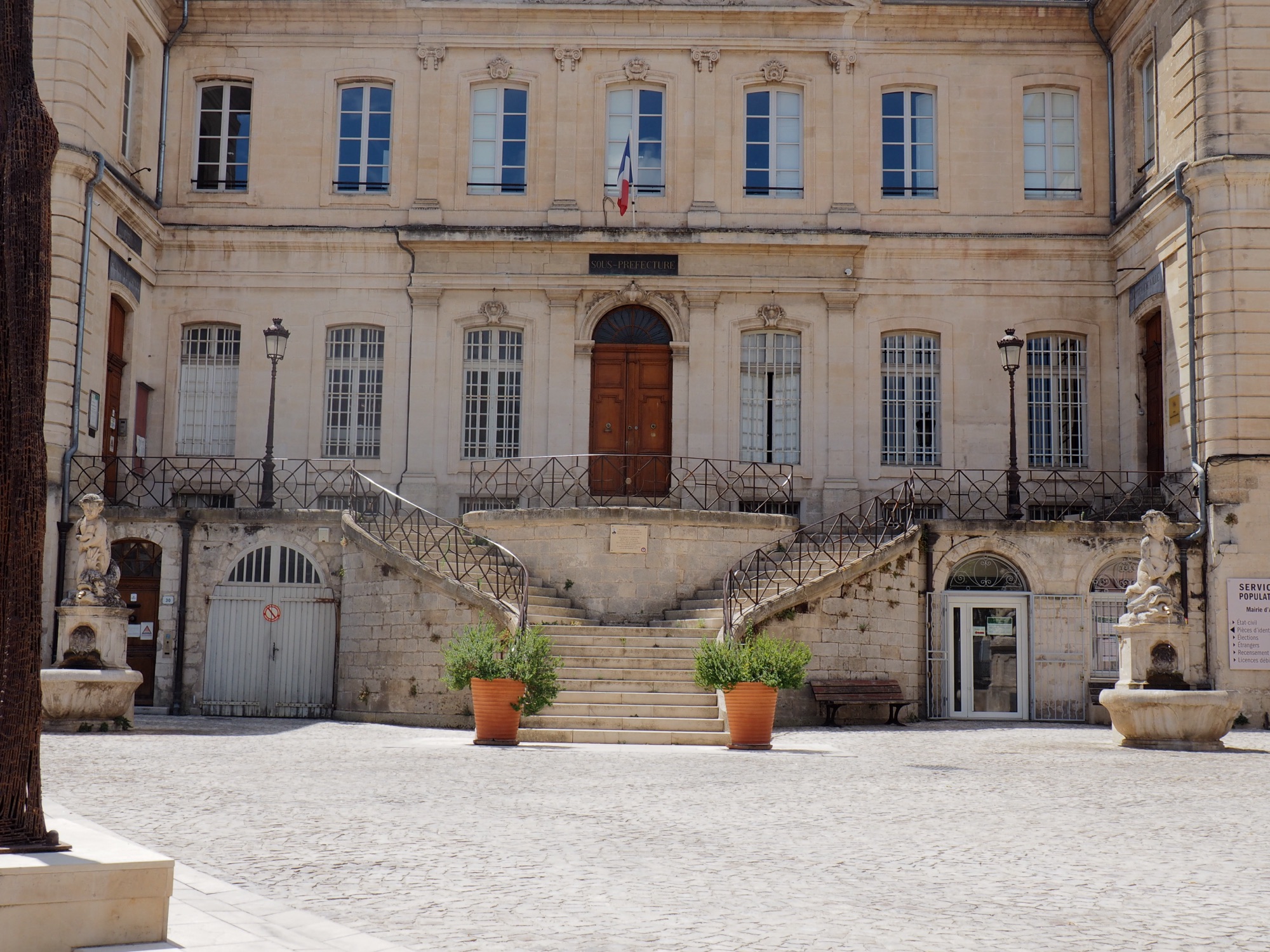
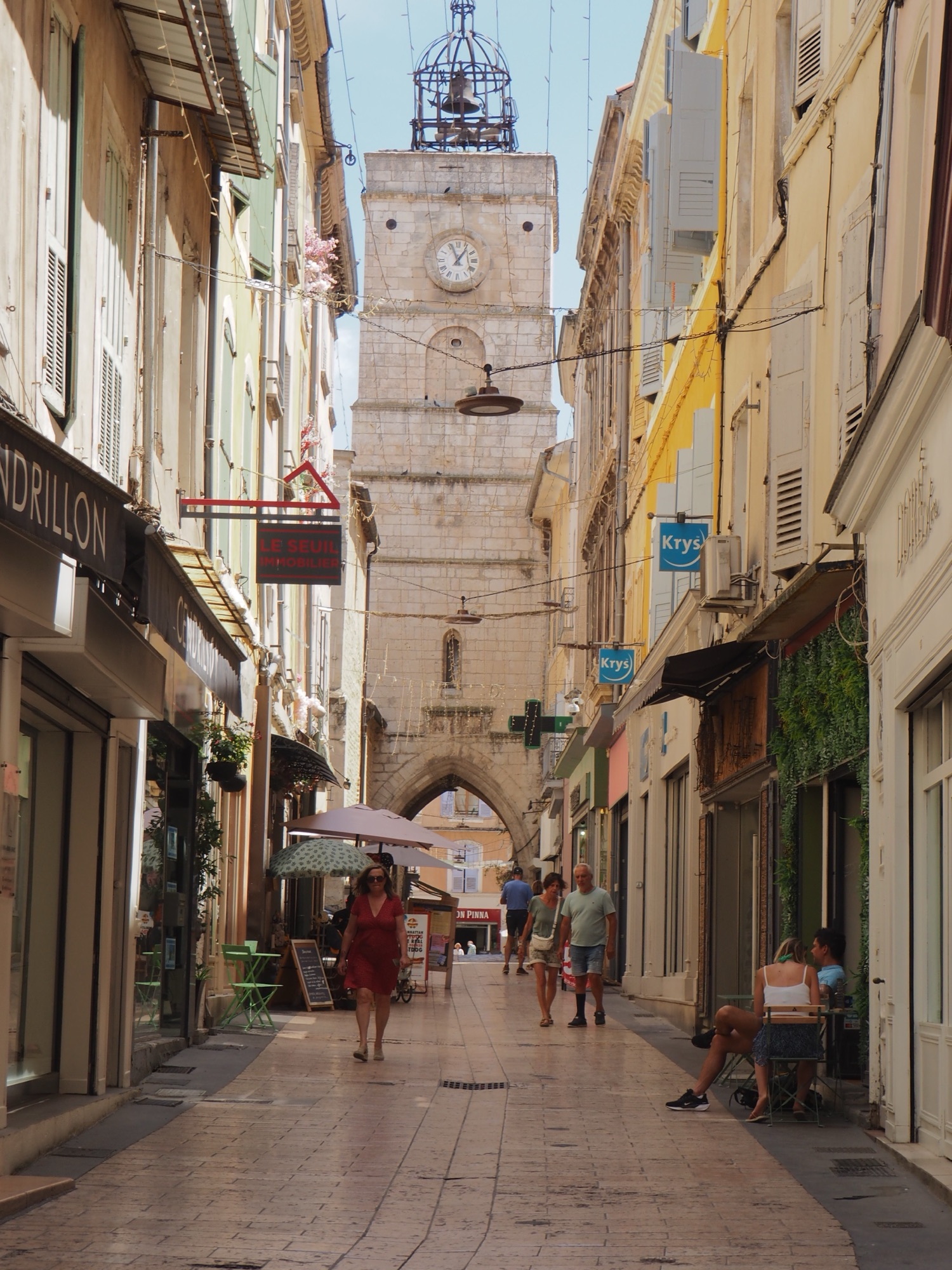
Apt. Not having driven as far as planned, we decided to also check out Apt. Apt’s market day is on Saturday, but we had a date at a vineyard for Saturday so opted for Apt on Friday. Driving in, initially, we kind of wondered why it was on our hosts’ list. It seemed larger and urban, almost. Kind of like a smaller, perhaps grittier, version of Aix en Provence. We parked before reaching the center of the town and strolled up to see what it was all about.
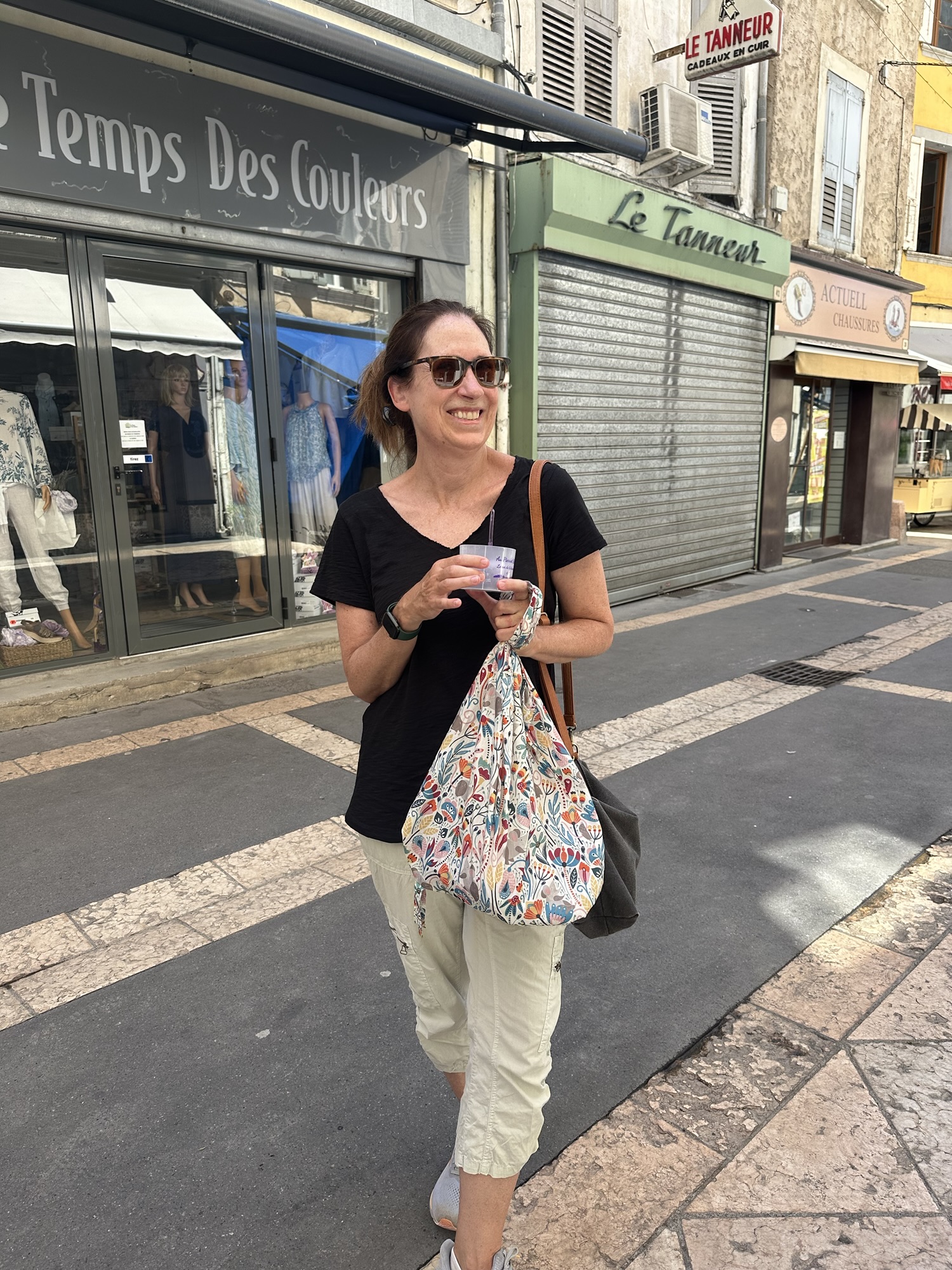
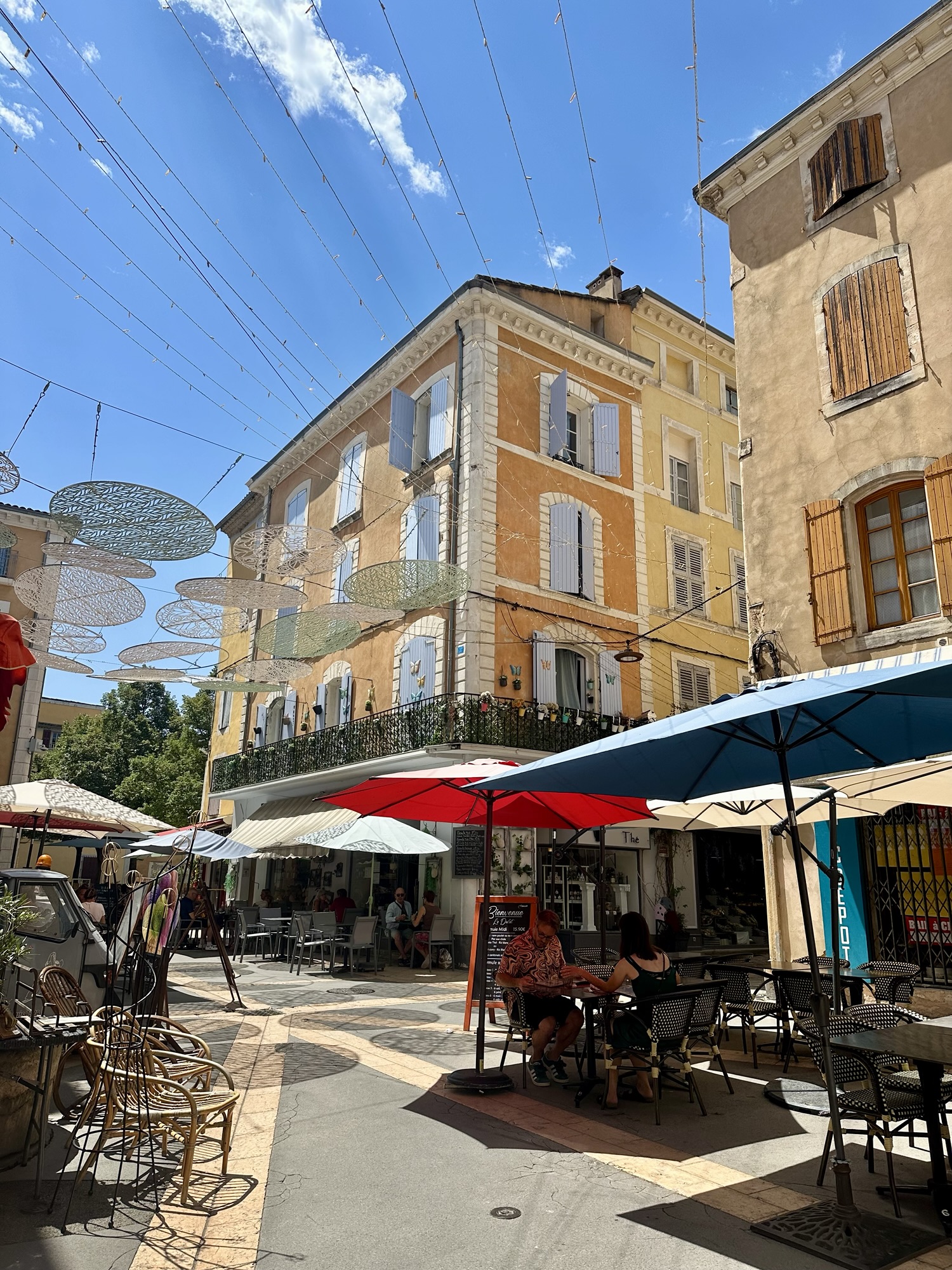
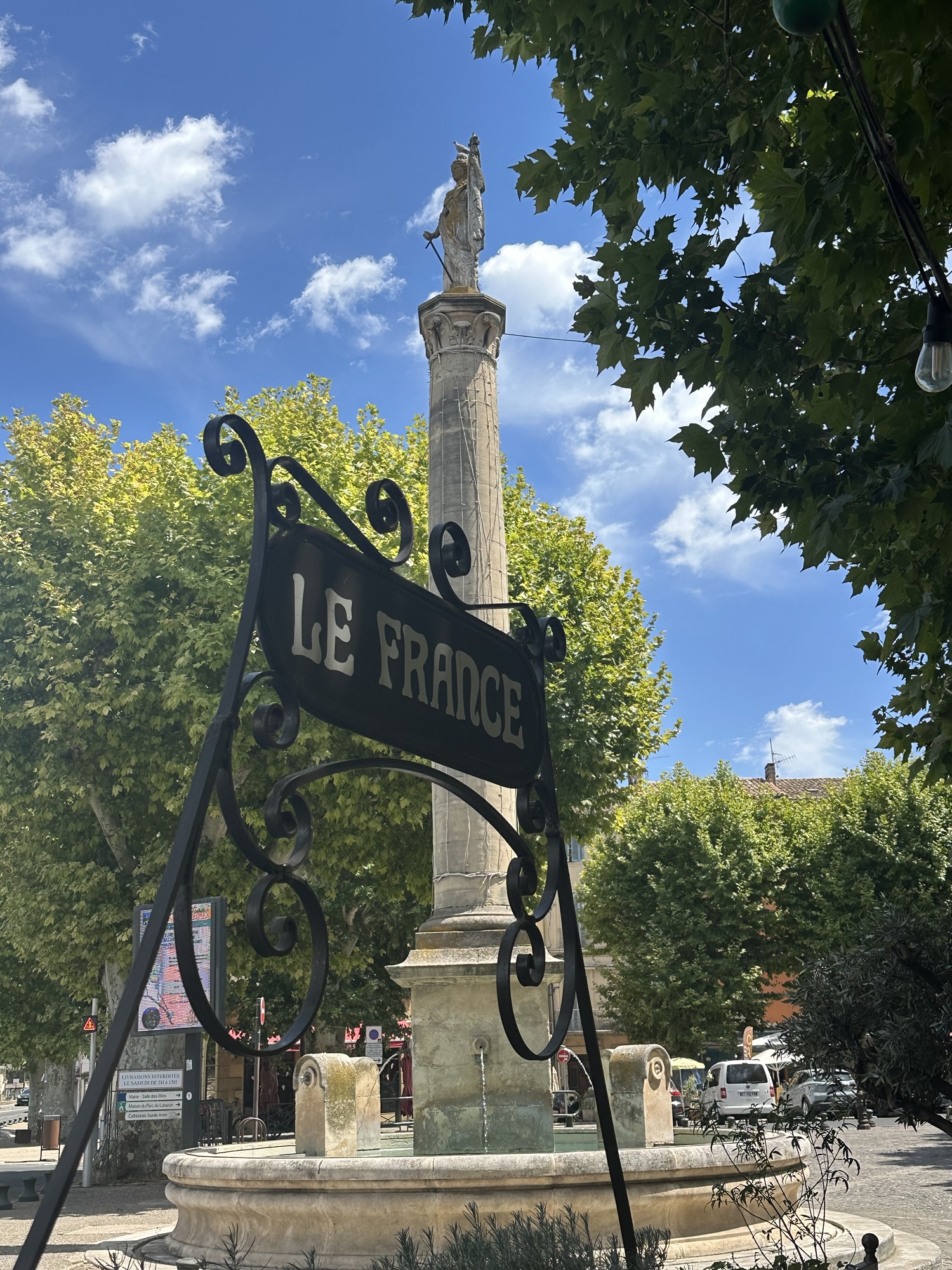
It is far more charming than our initial impressions permitted. Exploring the old town beginning at the Hotel de Ville and central square in each direction offers boulangeries, fromageries, restaurants, cafes and bars in which you could while away the hours over a verre du vin, une biere or a cafe au lait. And we finally broke down and had our first taste of la glace (ice cream), of the lavender-flavored persuasion.
If you like a larger town as your home base then Apt would be, well, apt.
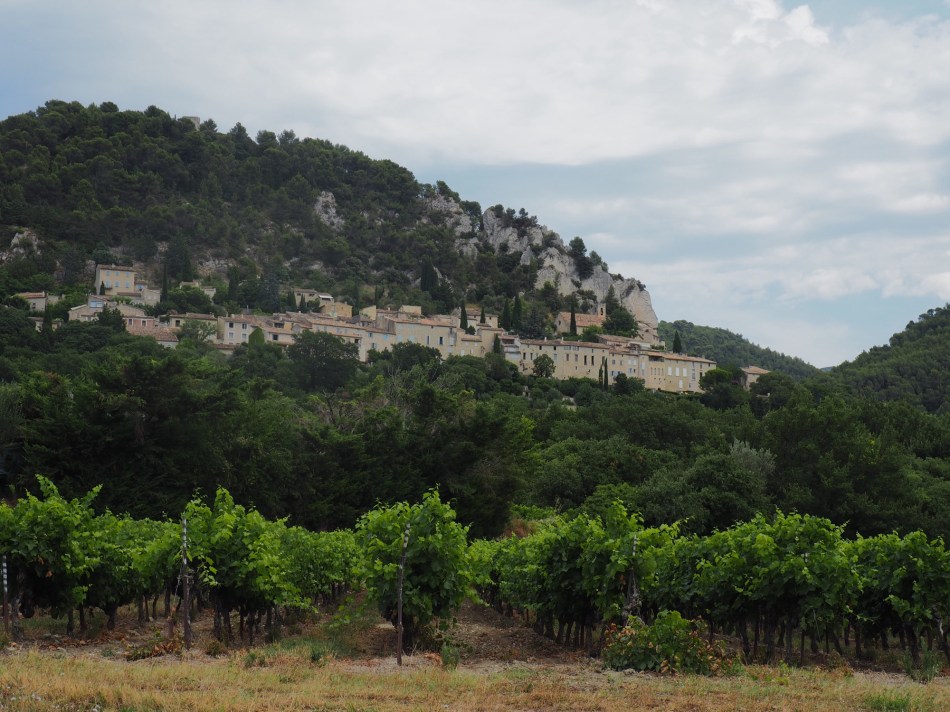
Domaine de Mourchon. On Saturday, we skipped our marketing for wine tasting. I’d read about a few of the vineyards in the aforementioned Rick Steves book and chose Domaine de Mourchon because it was family run and sounded low key. It was about an hour’s drive from “home”, and we passed through Séguret on our way by and up on a road which, without Google maps and the helpful Domaine signage, we surely would have said couldn’t be right, but it was. We arrived a couple of minutes late for our appointed noon tasting and joined a family from Denmark celebrating a daughter’s 21-year birthday and a couple from Oregon.
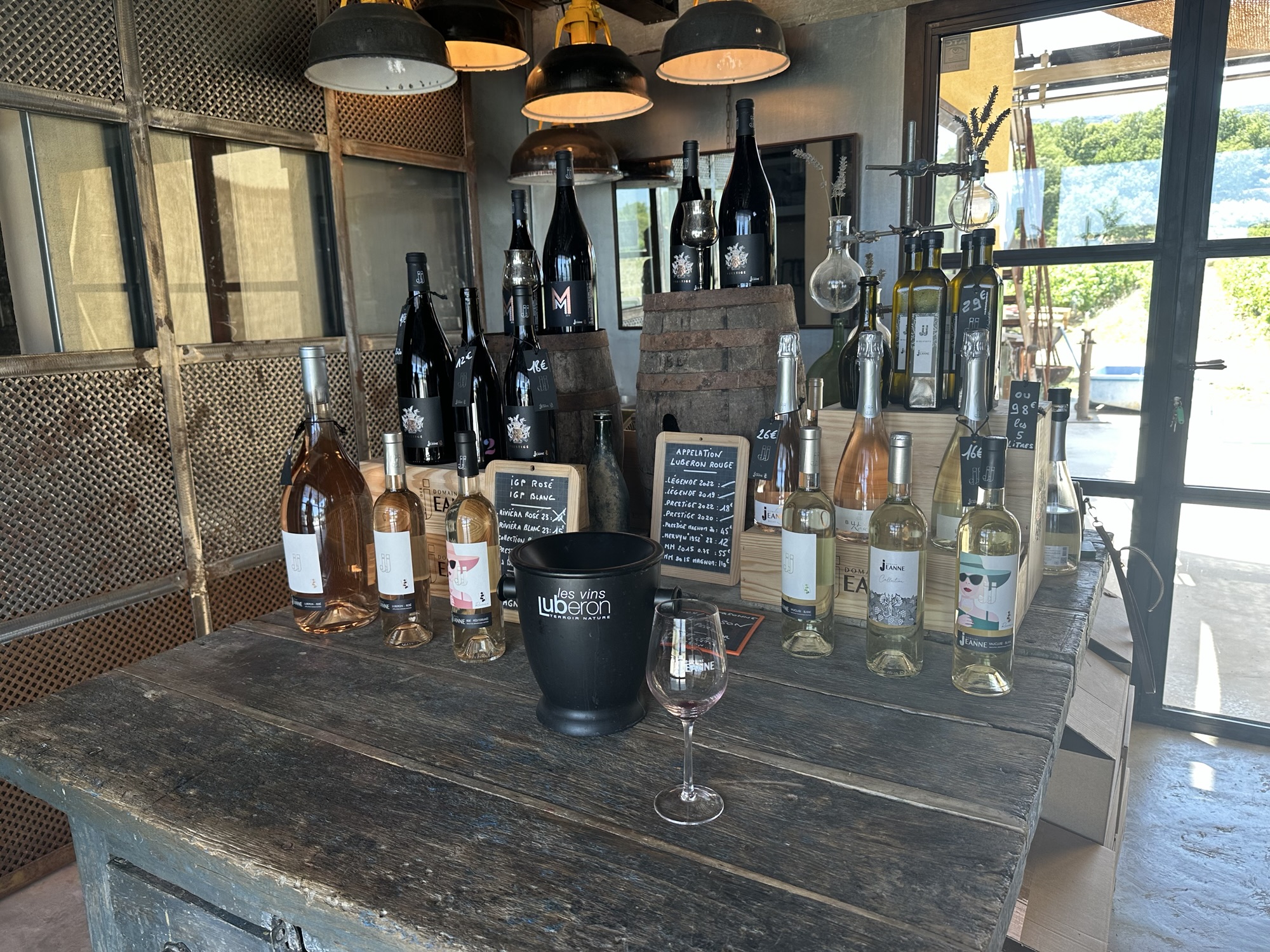
The vineyard is owned by Kate, daughter of the original owners, Walter and Ronnie McKinlay and the tasting is generous with 8 different varieties of reds, whites and roses to quaff.
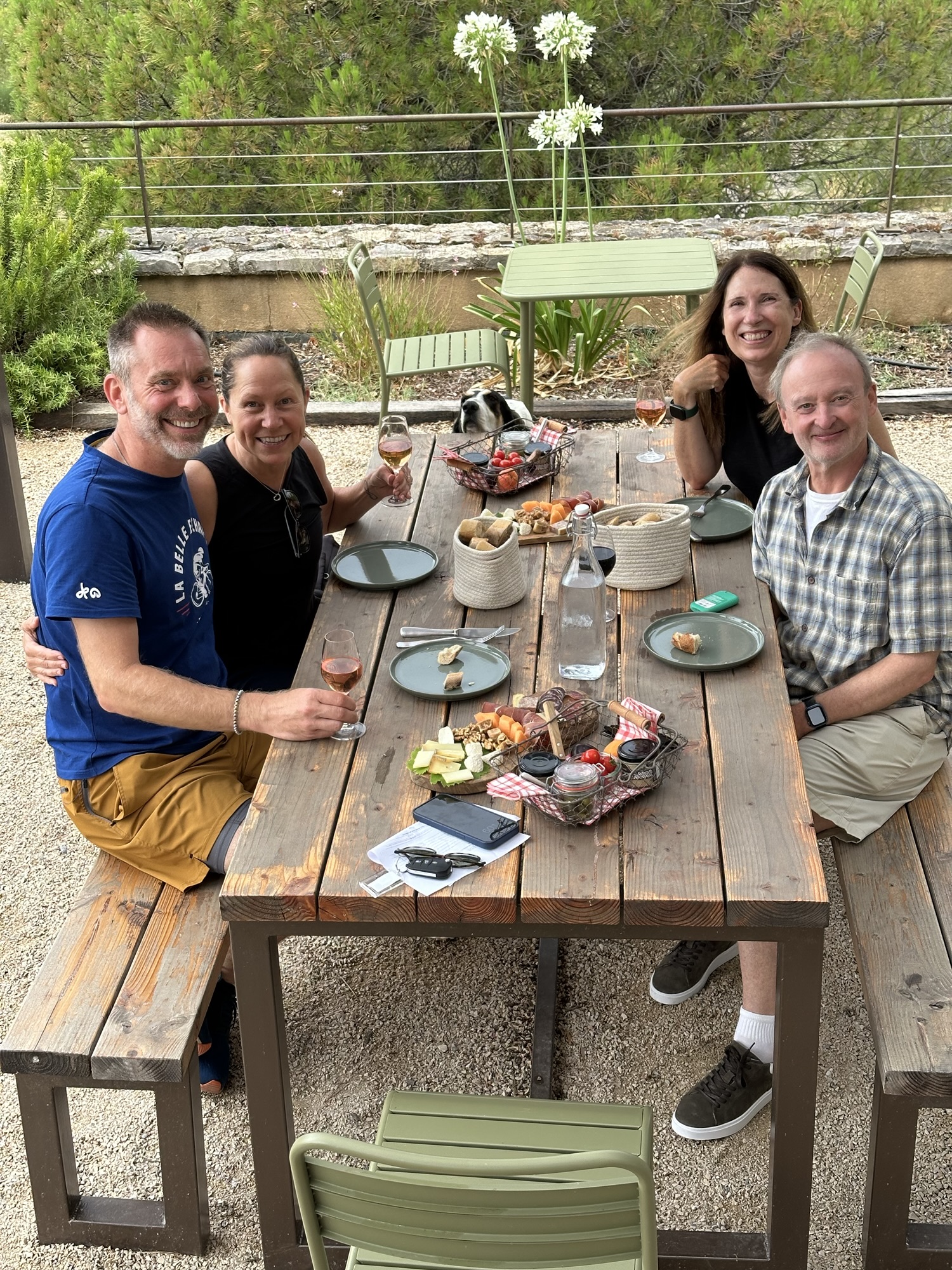
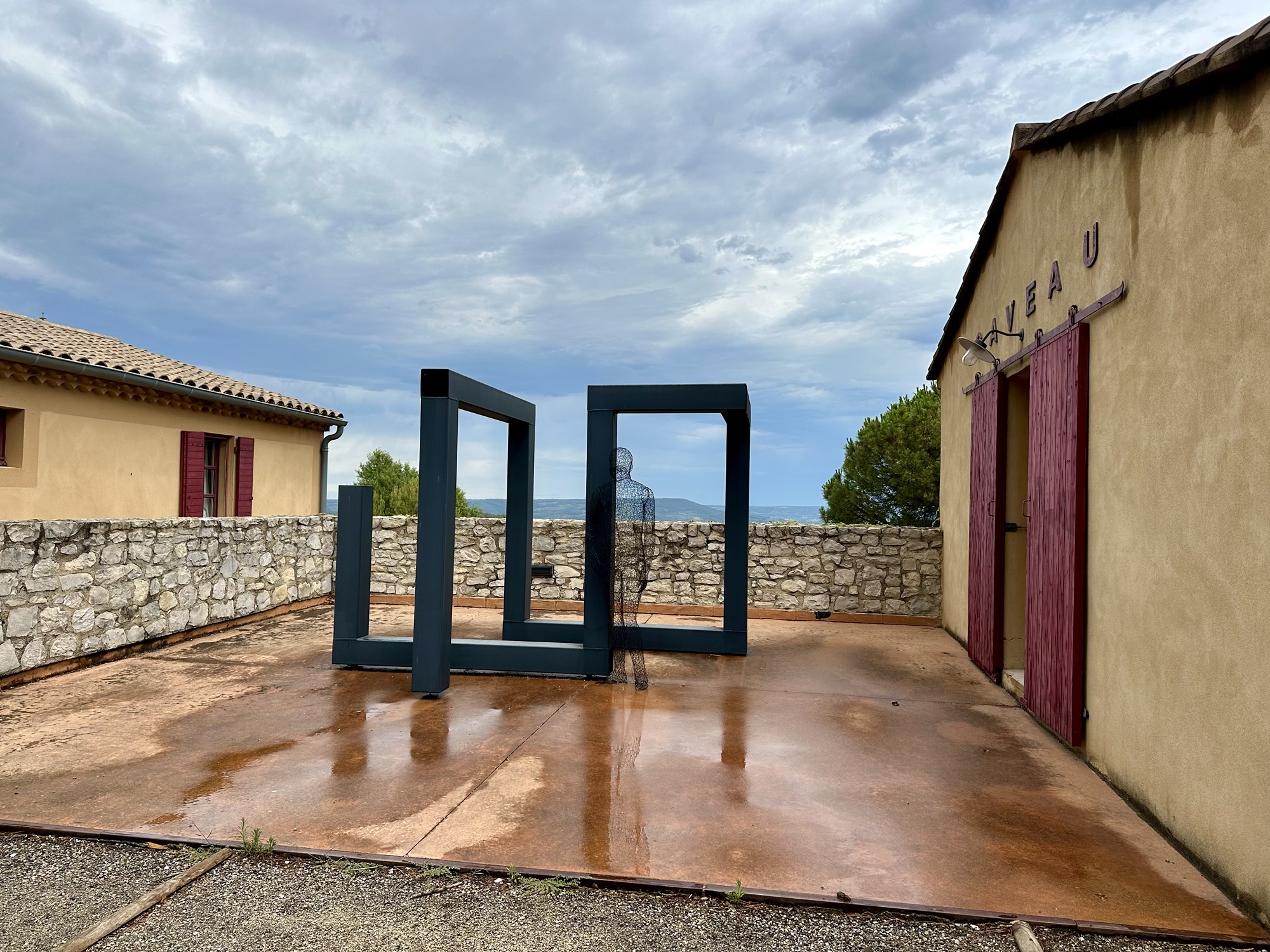
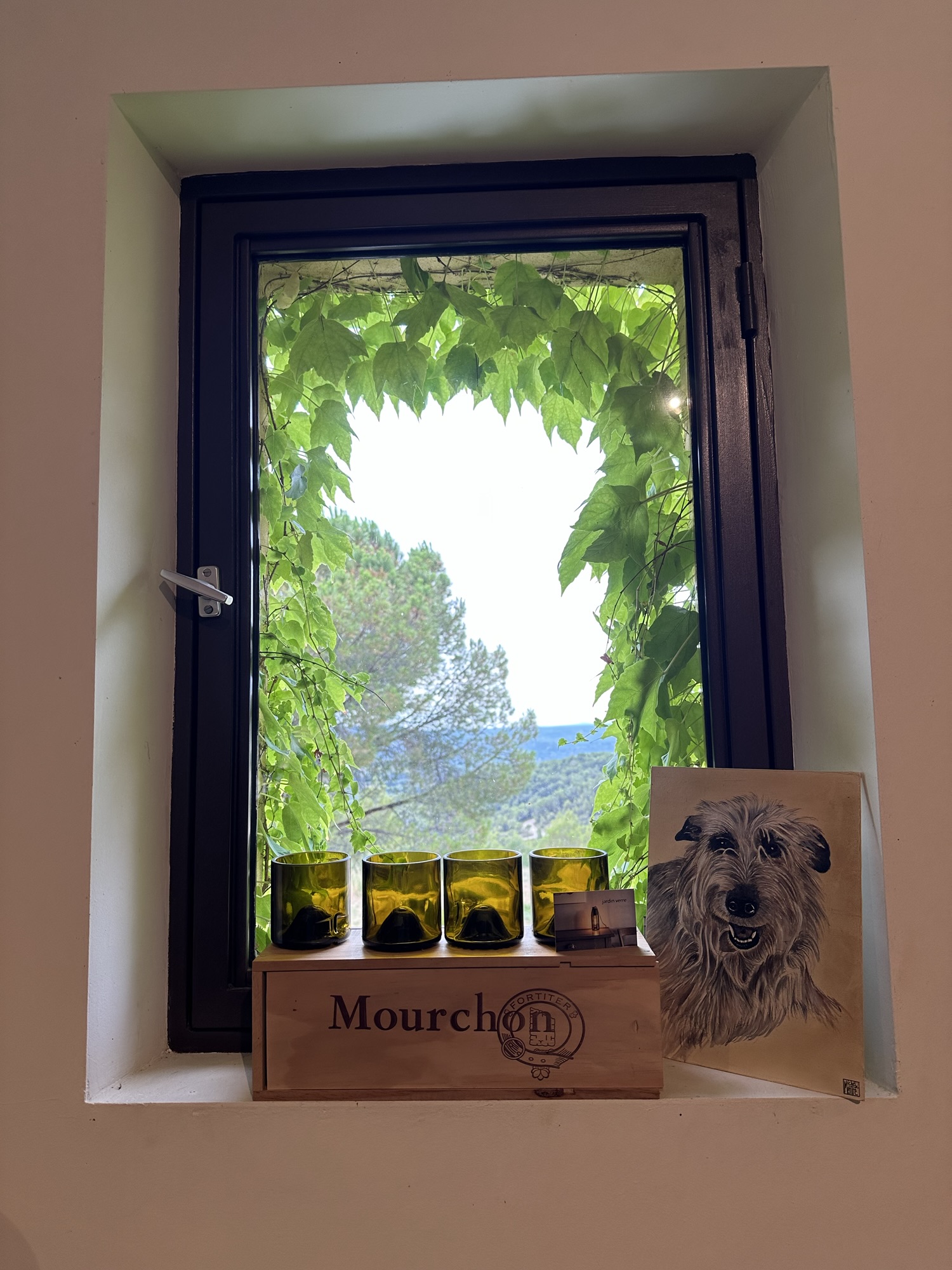
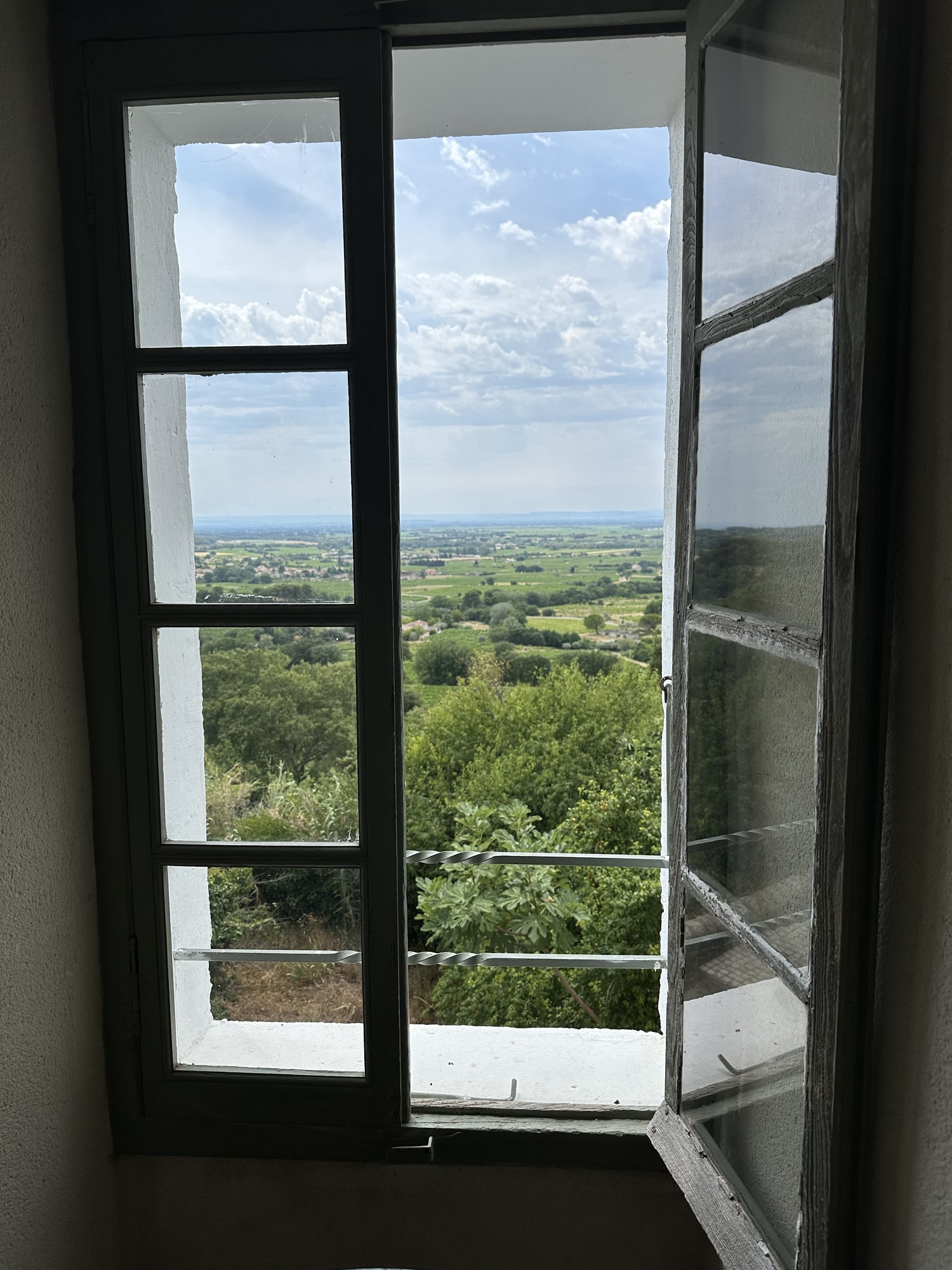
Afterwards, we had a picnic lunch of bread, cheese and charcuterie with the Oregonians on the terrace overlooking the Cote de Rhône valley below with Nana, the friendly bloodhound, keeping watch to ensure no nefarious doings occurred.
Following lunch, we parked in the lot by Séguret and wandered around, working off a little cheese and stopping for a cappuccino before making the hour-long trek home to Oppède.
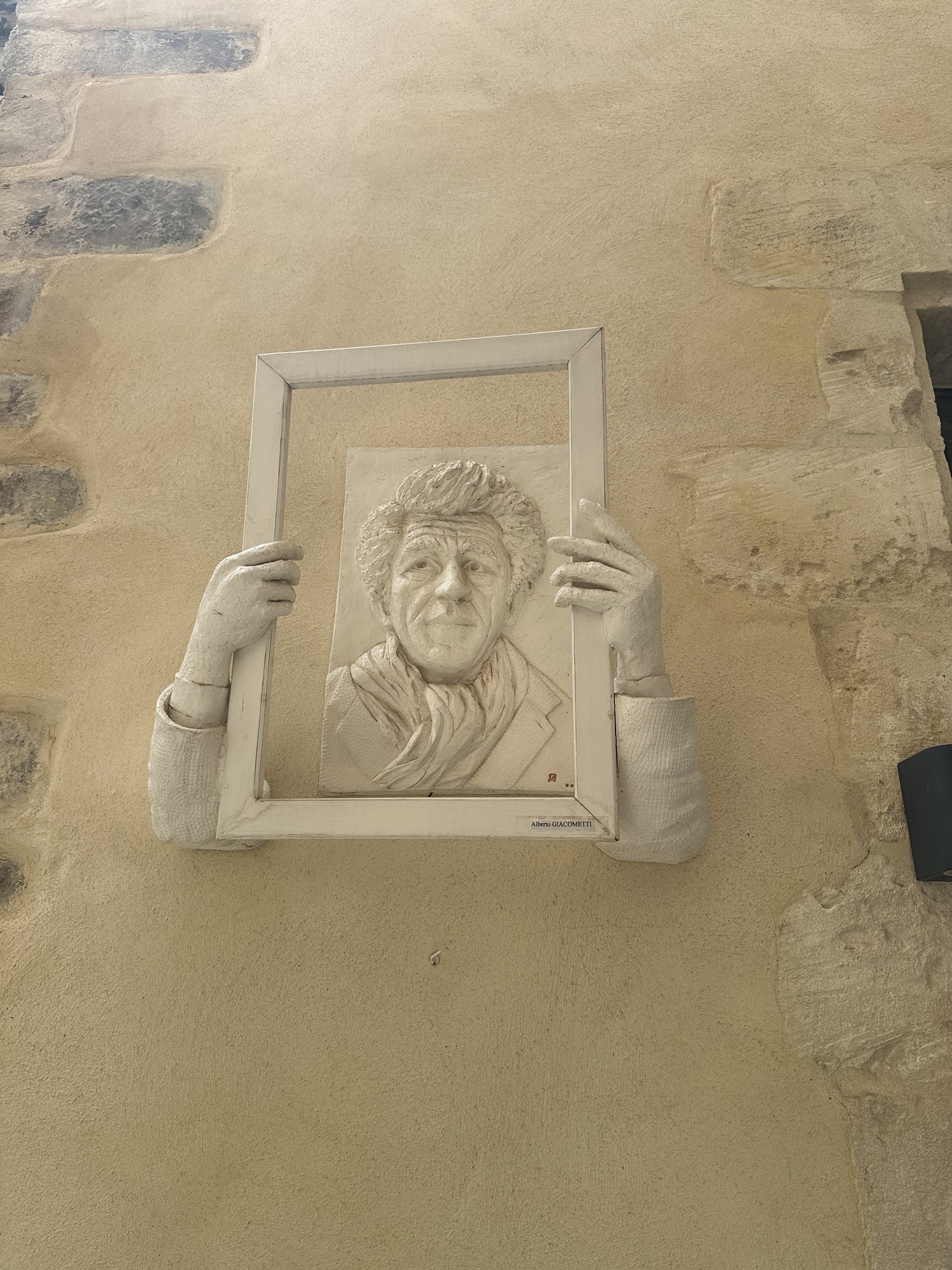
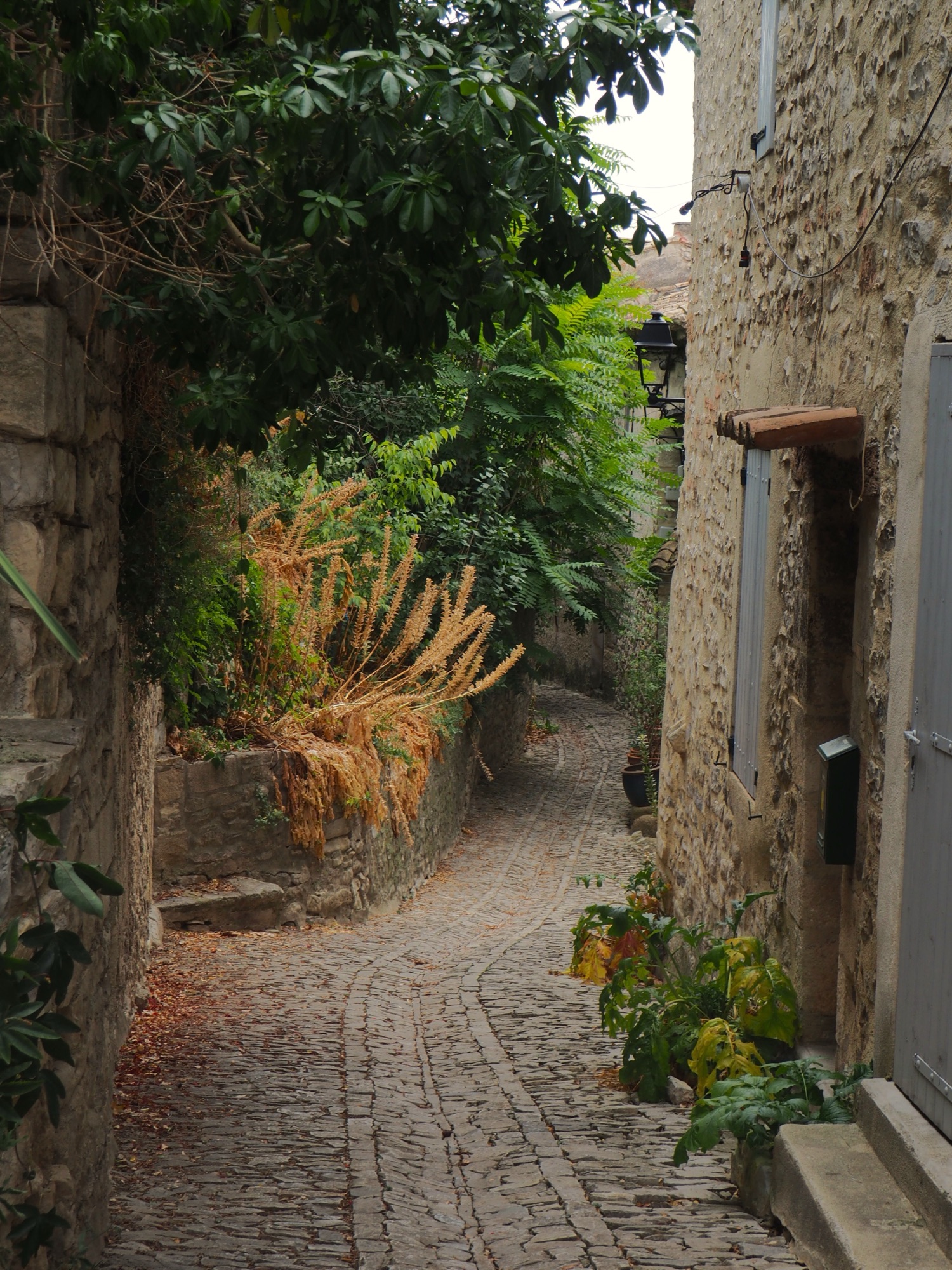
L‘Isle-sur-la-Sorgue (Market Day: Sunday). We set off for L’Isle-sur-la-Sorgue for their Sunday market. I’d read about doing a float down the Sorgue but then saw that there was a once-a-year demonstration of traditional fishing techniques (La Pêche d’Antan) organized by the brotherhood of the Pescaire Lilen. Following the fishing demonstration, the fishermen process to church to receive the blessing from Our Lady of Sorguette, patron saint of fishermen, while the women distribute the fish.
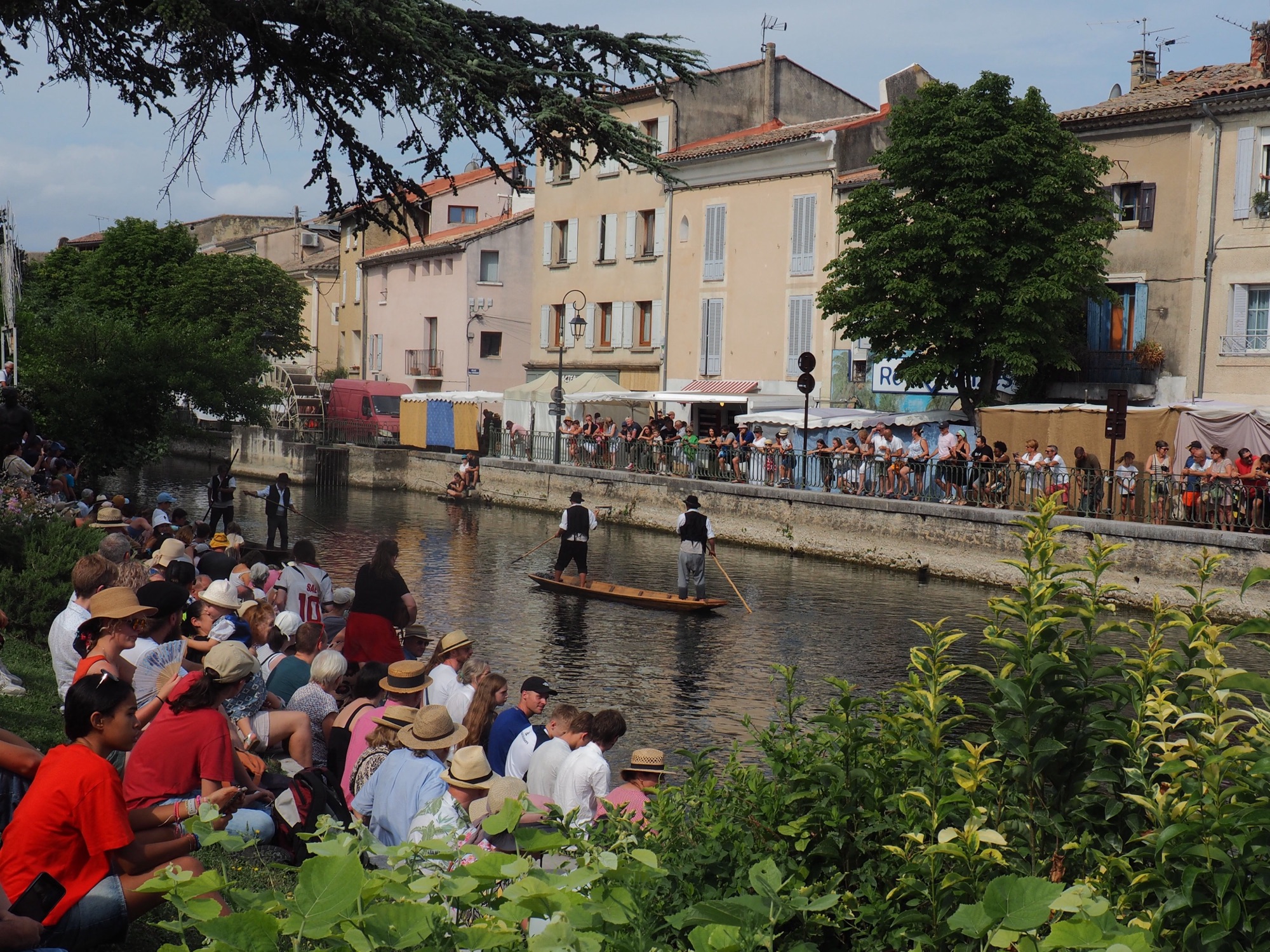
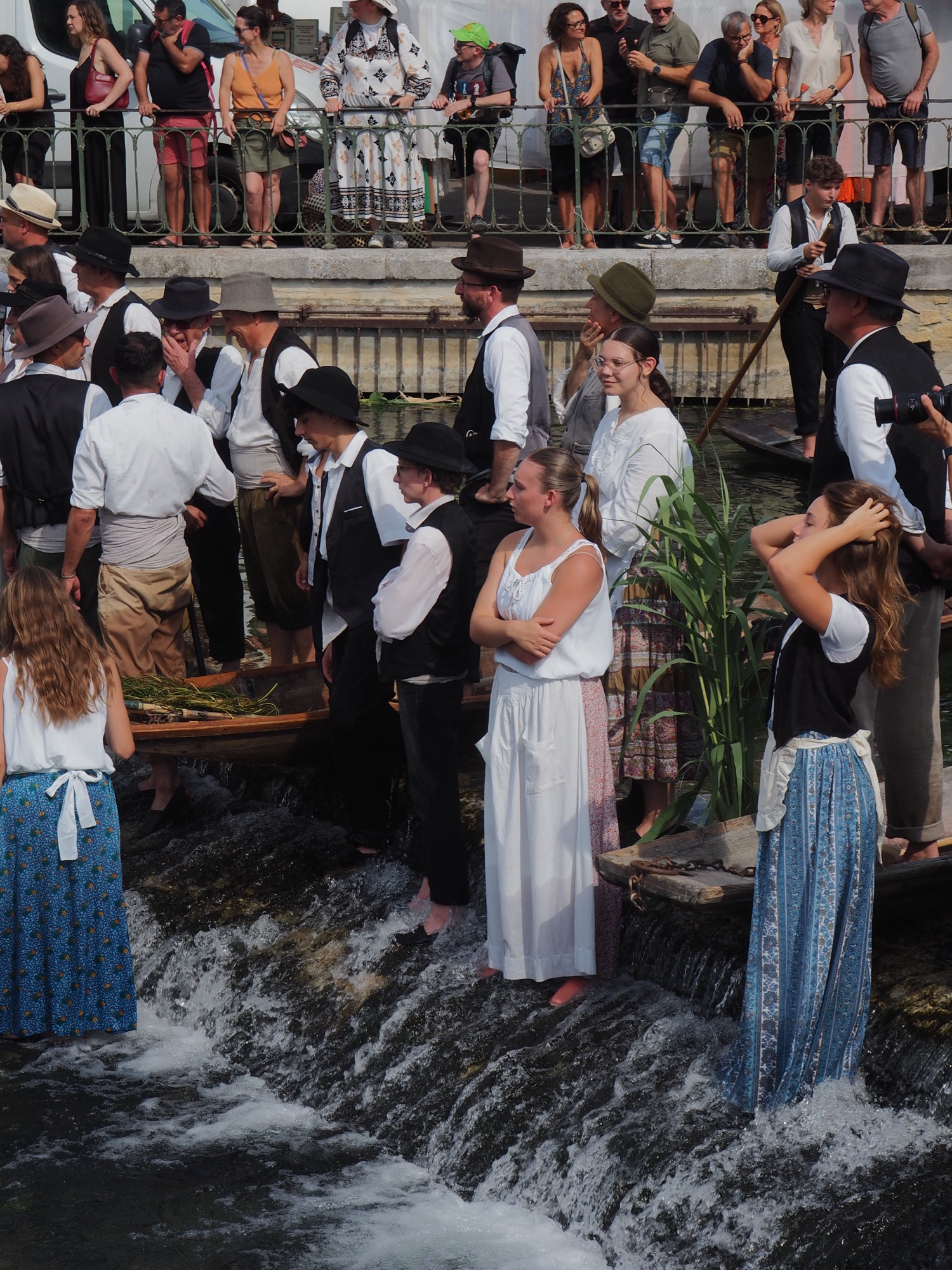
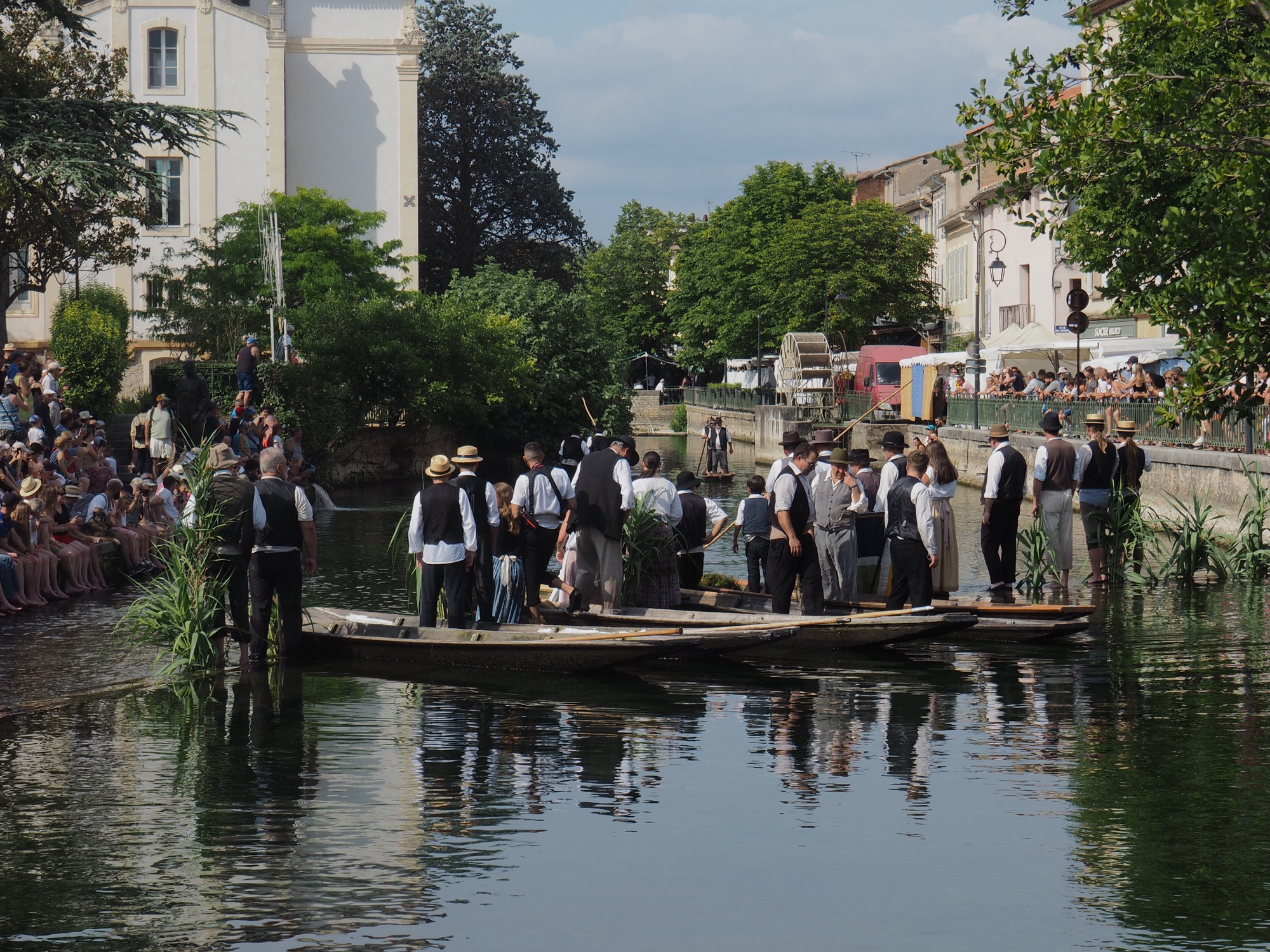
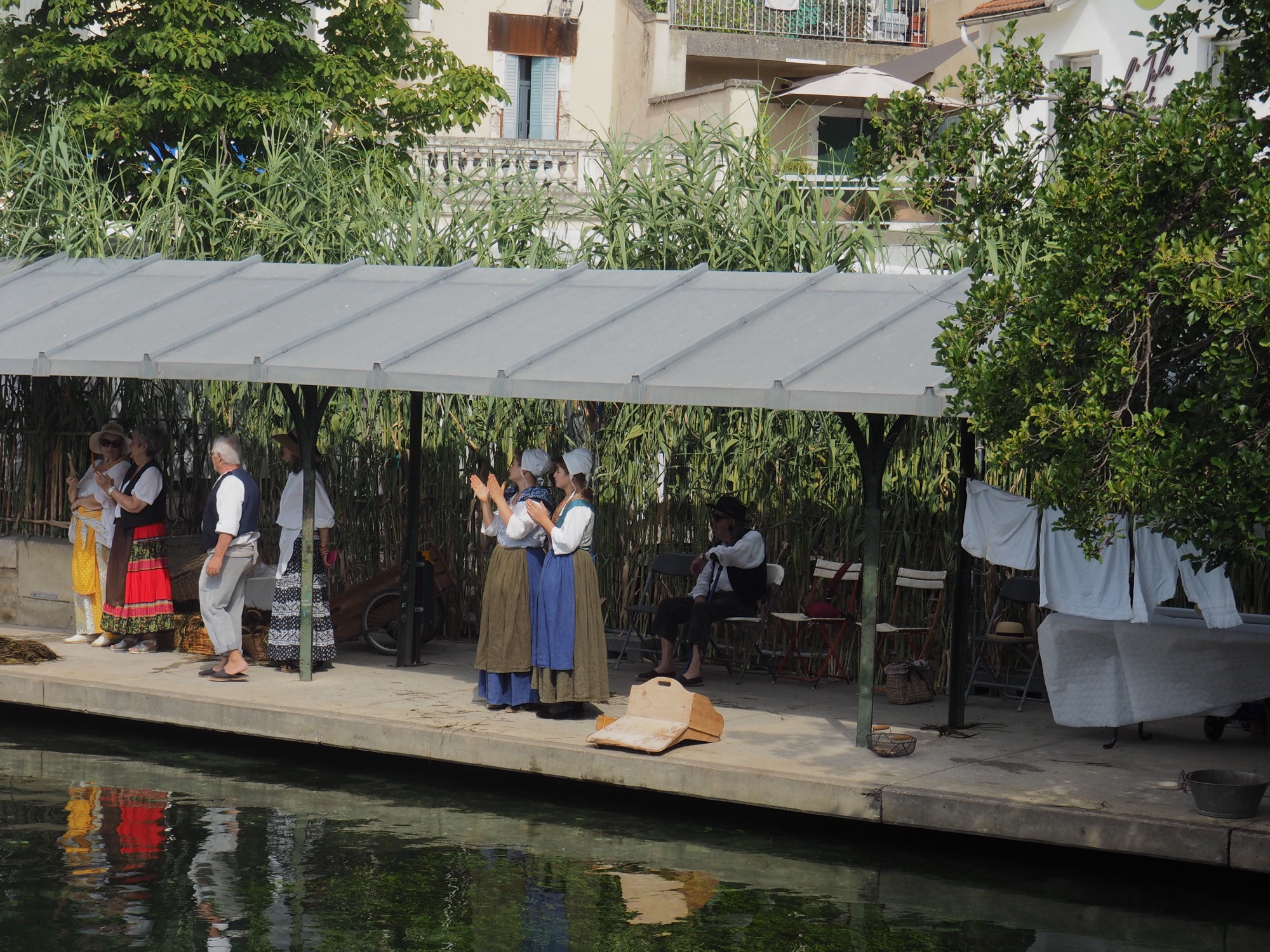
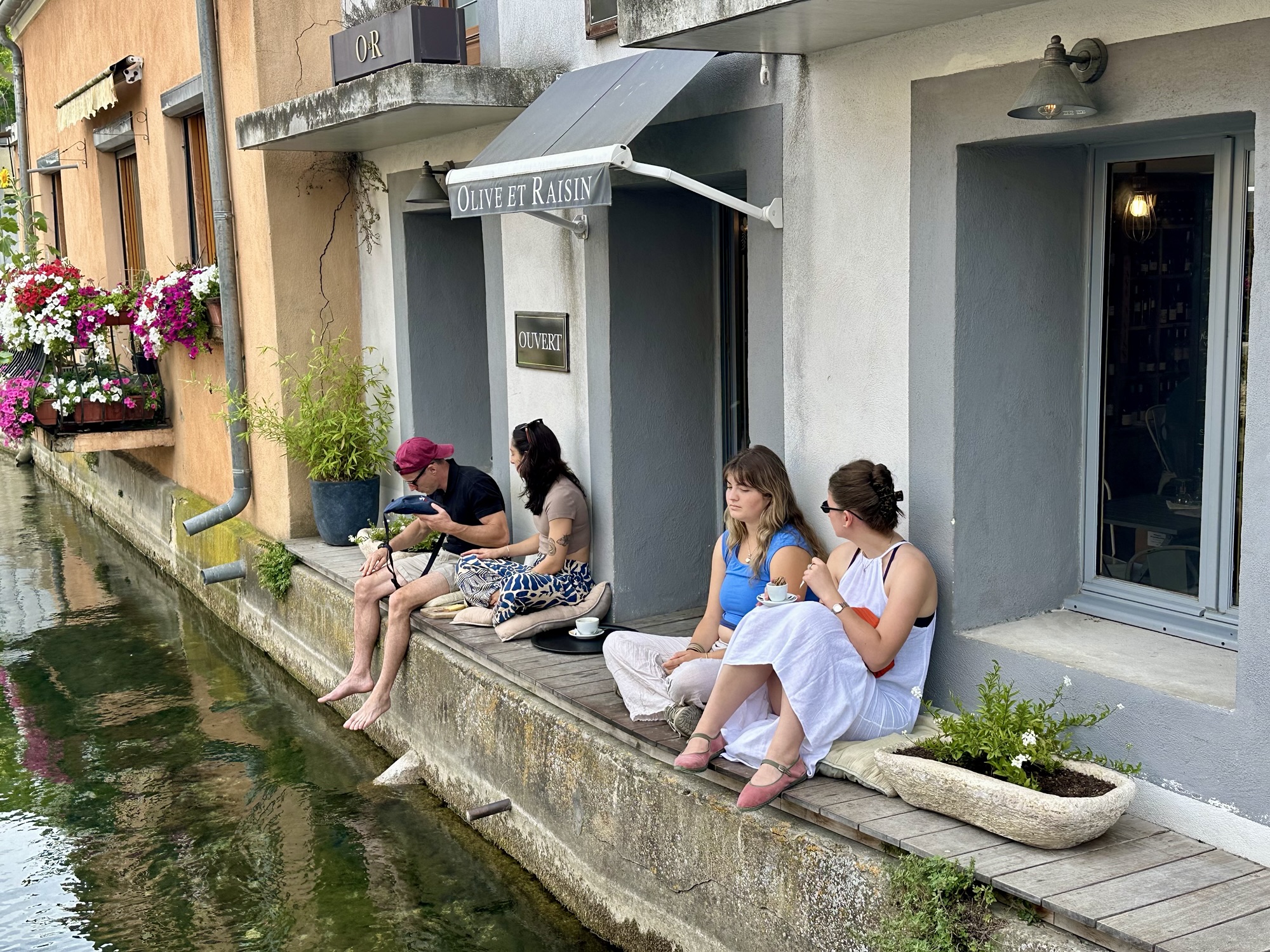
The area was once marshy and swampy and in the Middle Ages fishermen settled here living in stilted huts. In the 1100s it was referred to as Insula, or the island, from which “L’Isle” is derived. But today, while rivers run through the town and waterwheels are common, the Isle is decidedly on dry land.

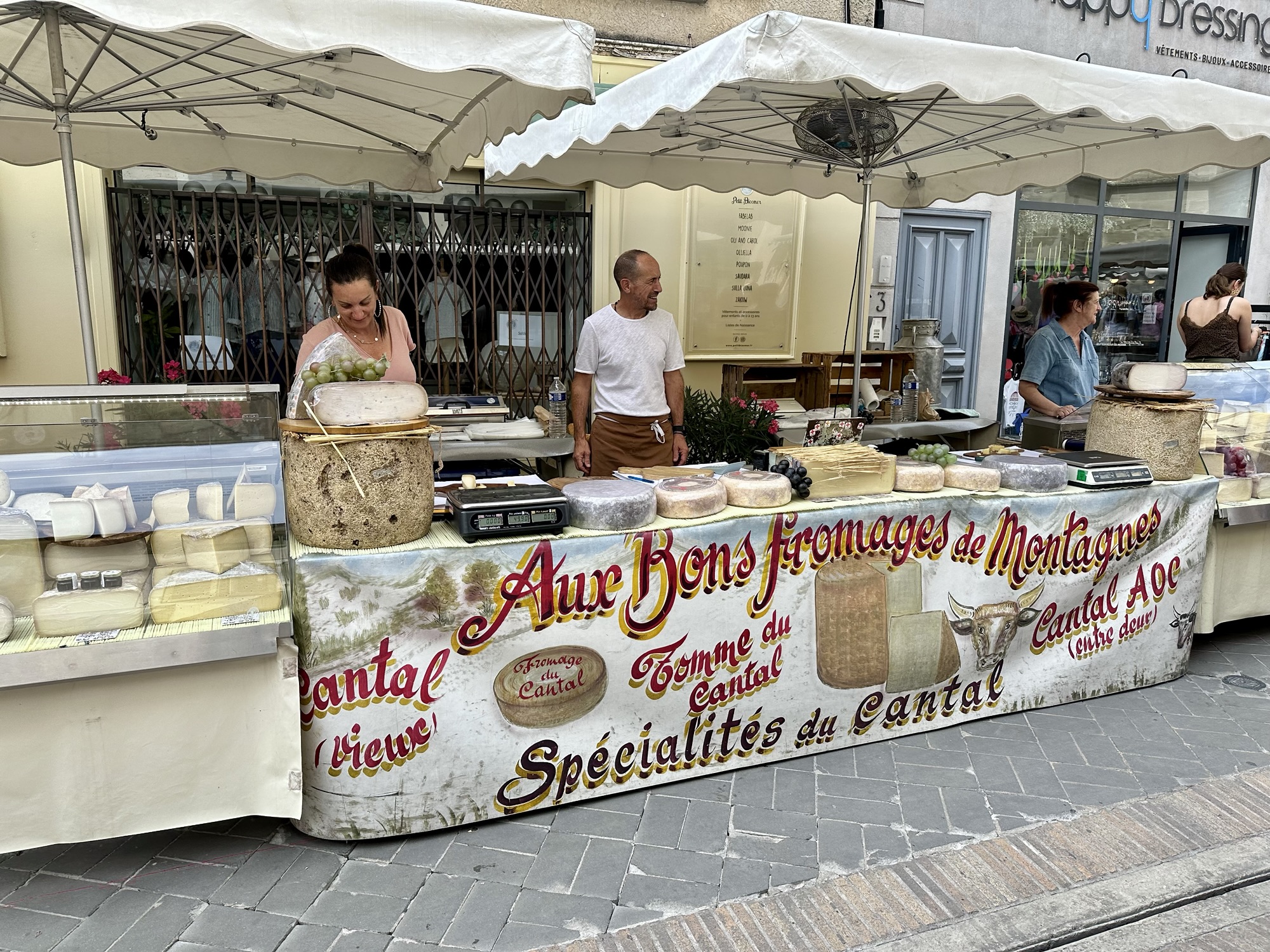
After watching the fishing for a bit, we made our way back into and through the market. It is massive, much larger than the others we visited, frankly, overwhelmingly so. It could have been the fact that it was the day of the annual fishing demonstration, or that it was a Sunday market in the middle of summer, or that the market snakes through all of the streets of L’Isle-sur-la-Sorgue, but it was crowded and cramped, hard to move through and, while impressive, we bought some vegetables we needed and left. The free parking lot we had parked in easily when we’d arrived was jammed with cars jockeying for spaces being slowly evacuated by market leavers. Our tip: go, but early. And if you’re looking for that float we didn’t do, this is the one I found.
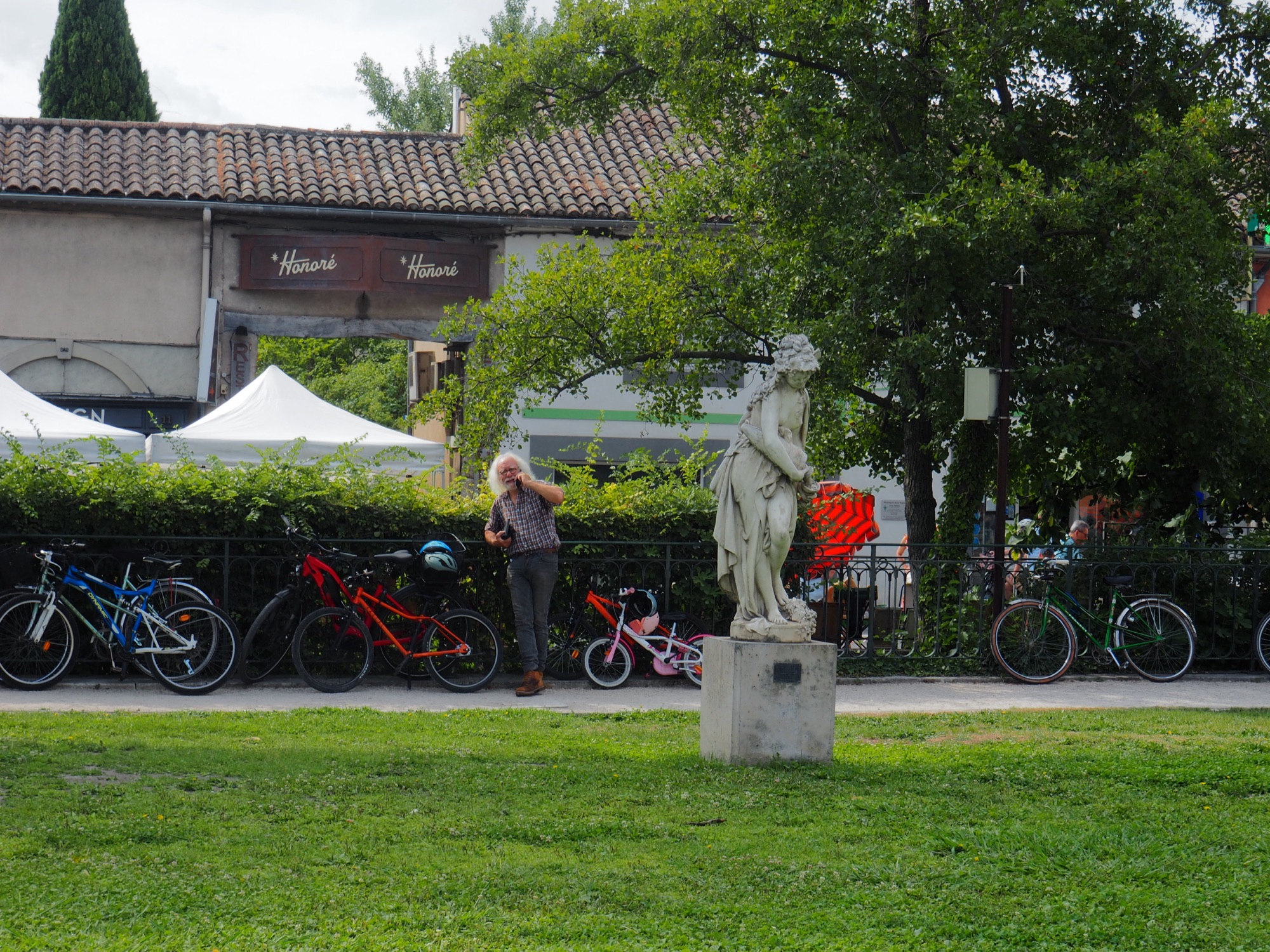

Return to Gordes (Market Day: Tuesday). We stayed in Gordes the last time we came to this region and adored it. Gordes was named “most beautiful village in the world” by Travel + Leisure magazine and is also named one of the prettiest villages in Provence so it is très popular.

We had tried to go after abandoning the market at L’Isle-sur-La-Sorgue on Sunday to have lunch, but it was equally (and unsurprisingly) crowded with a long, rarely moving line to pay for parking at the more-difficult-to-operate-than-necessary-causing-unnecessarily-long-queues machine. We bailed on Gordes, pledged to skip its Tuesday market for fear of being overwhelmed by the crowds and to come back early on Monday morning.

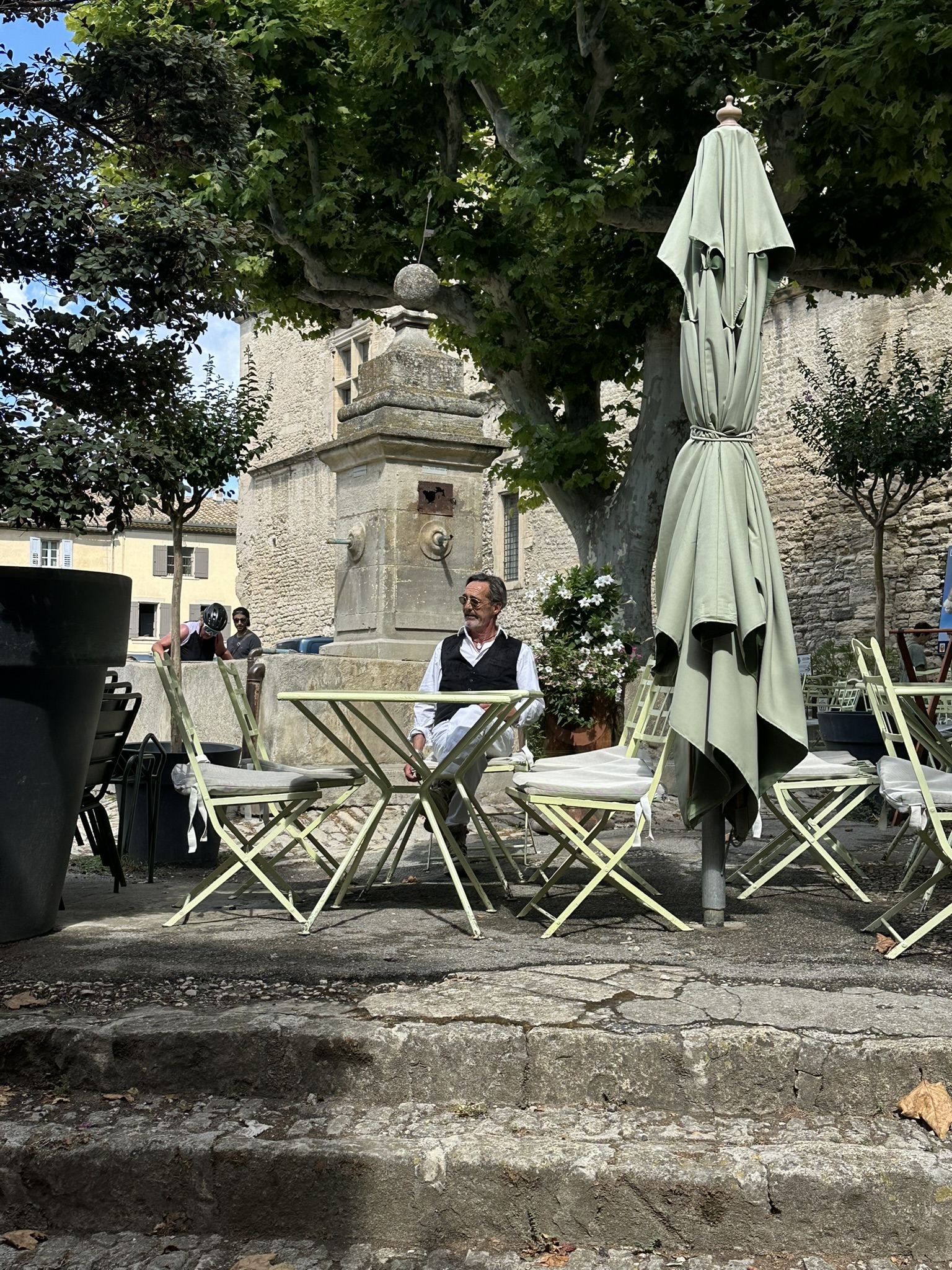
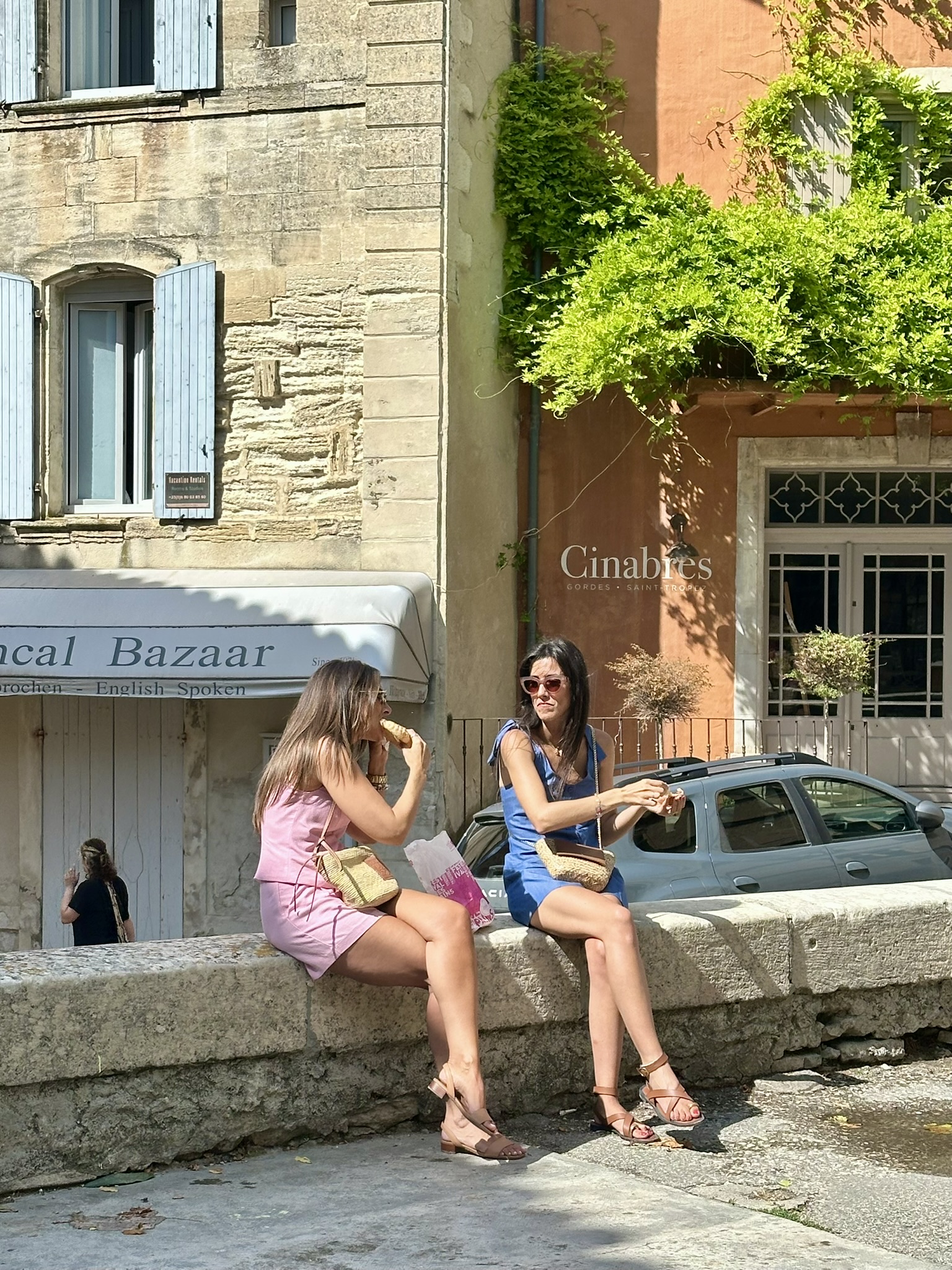
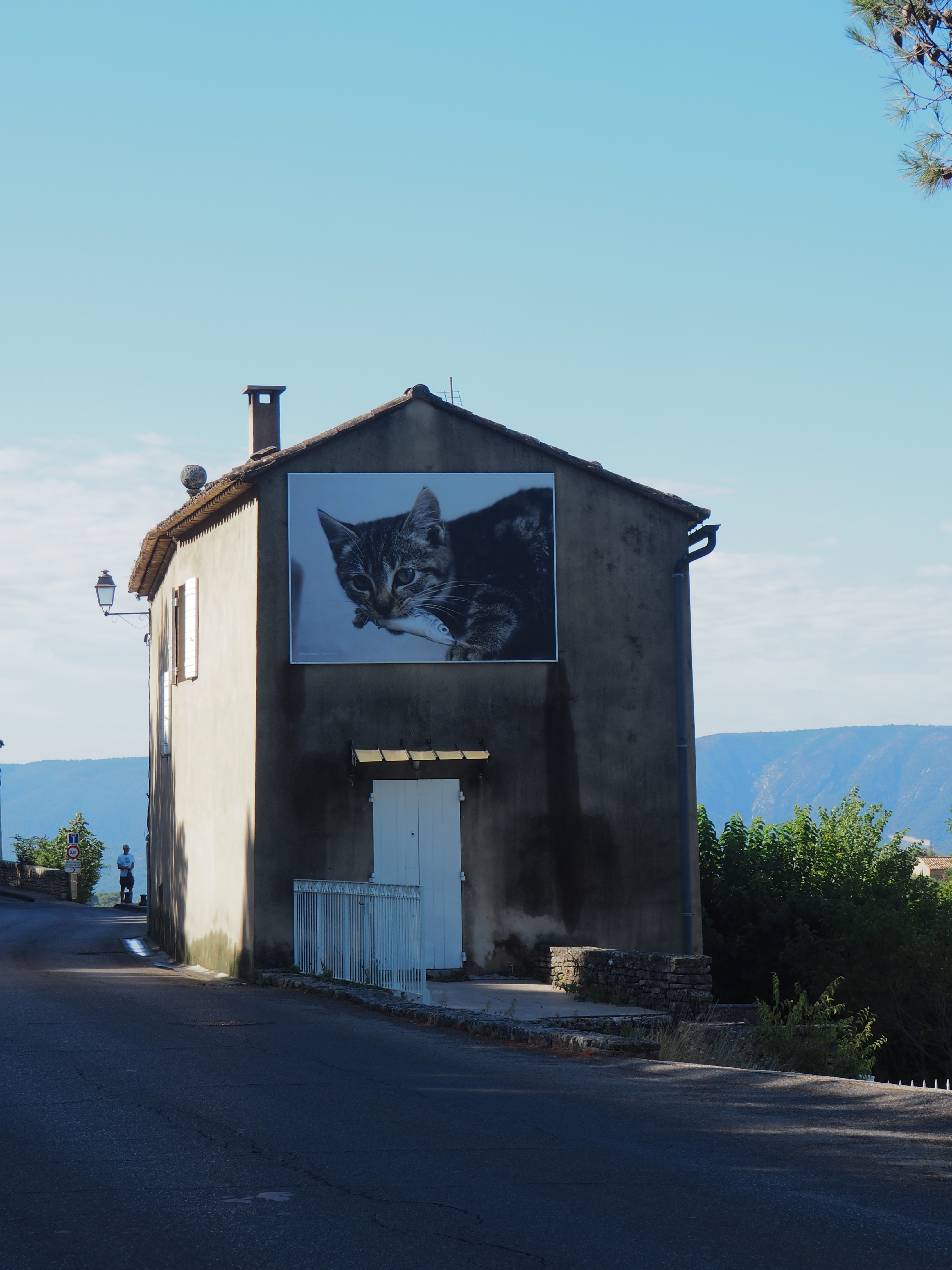
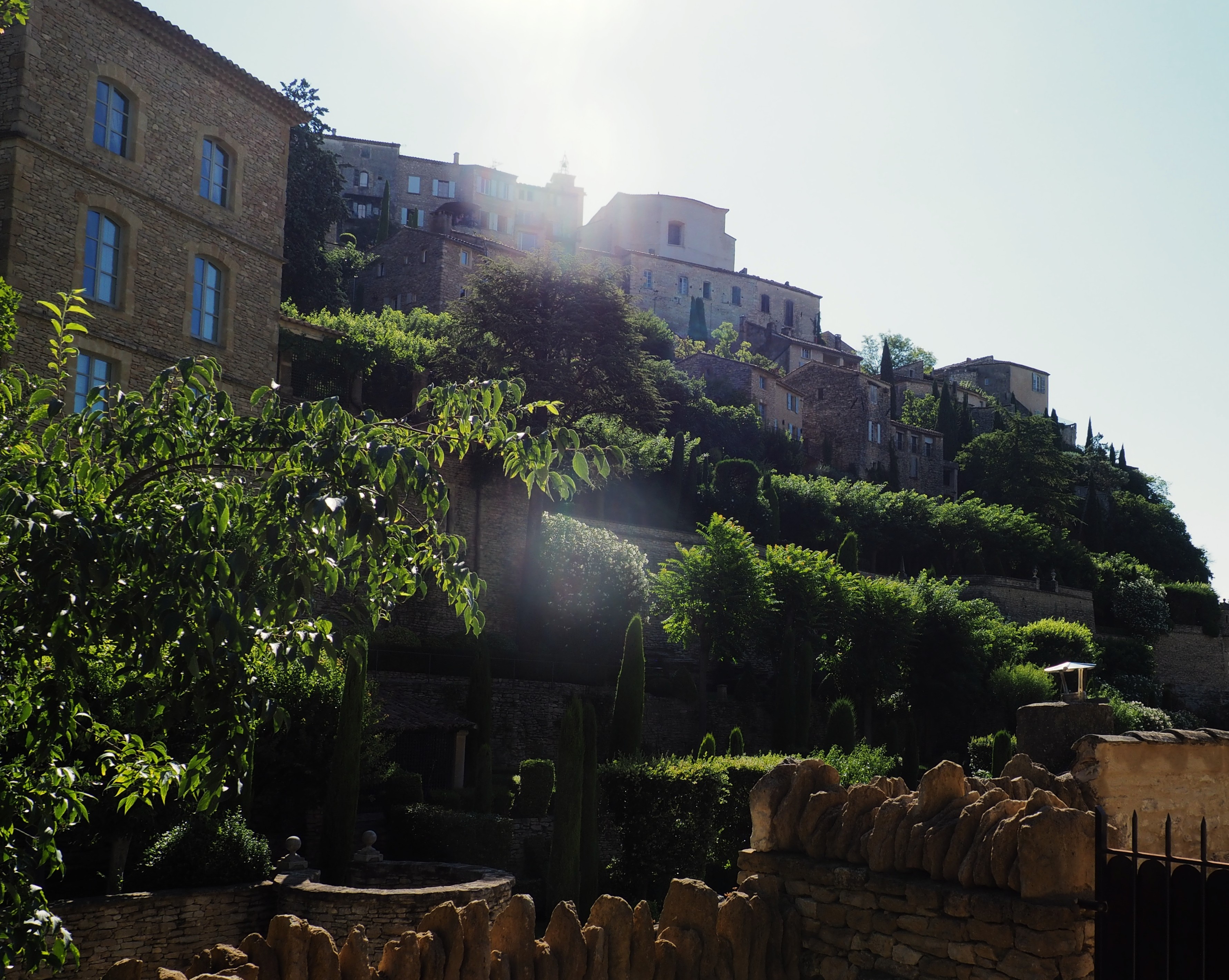
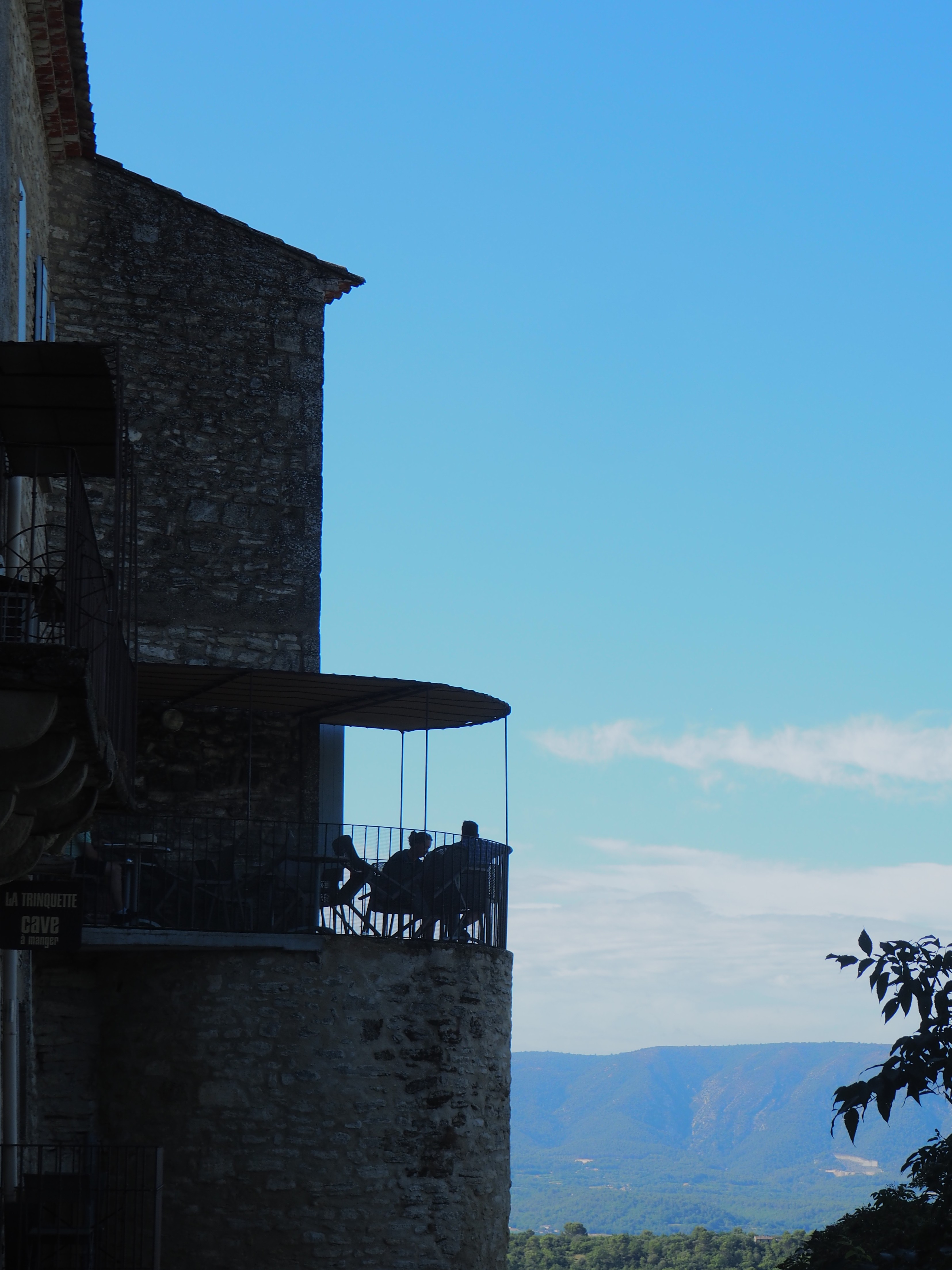
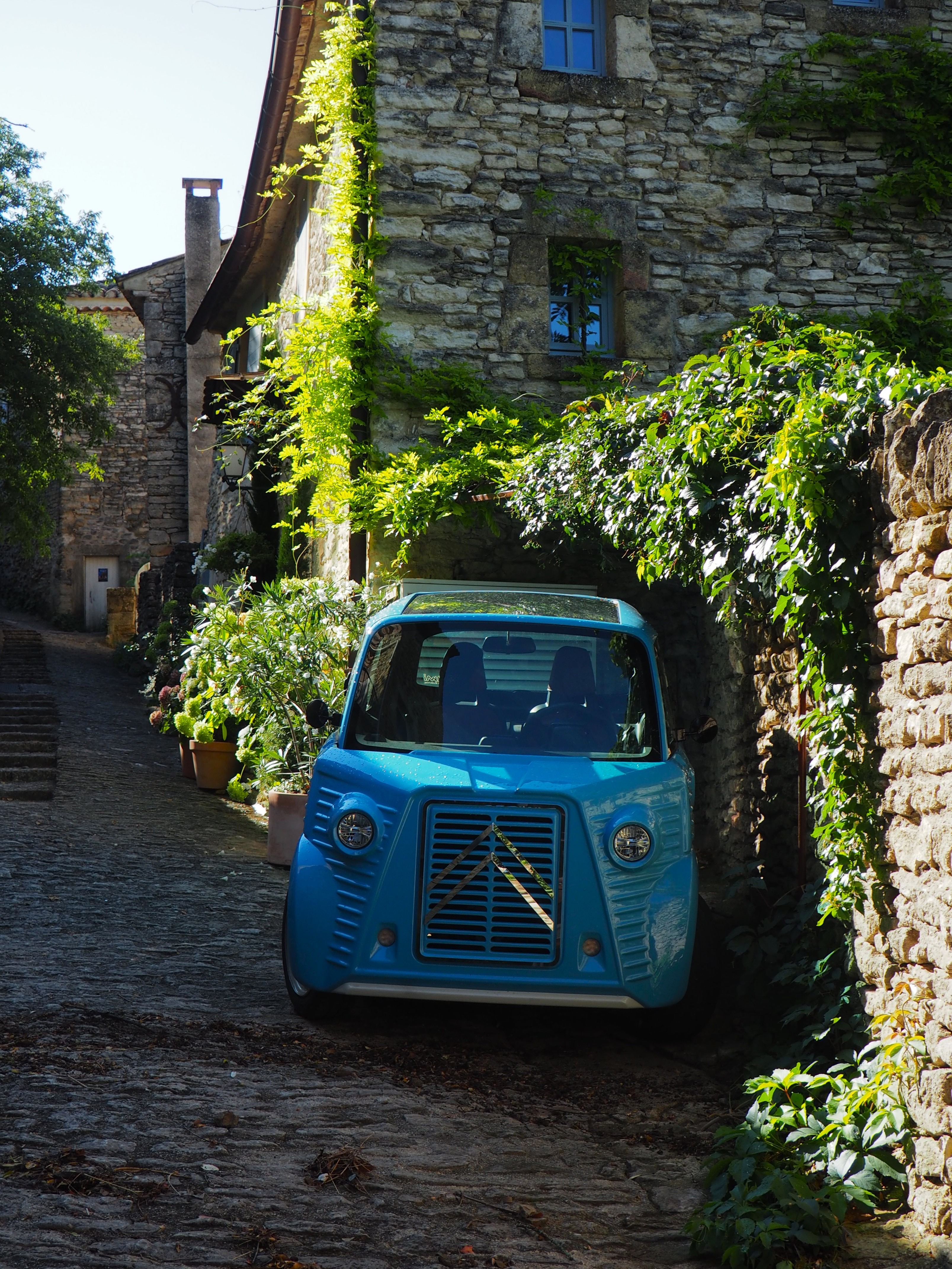
We arrived before the hoards and spent hours wandering up and down stairways around to viewpoints, winding our way and poking into shops and galleries. We waited for La Crepêrie to open, having arrived hours and hours earlier, and were glad we did. Our first crêpe of this trip was très délicieuse.
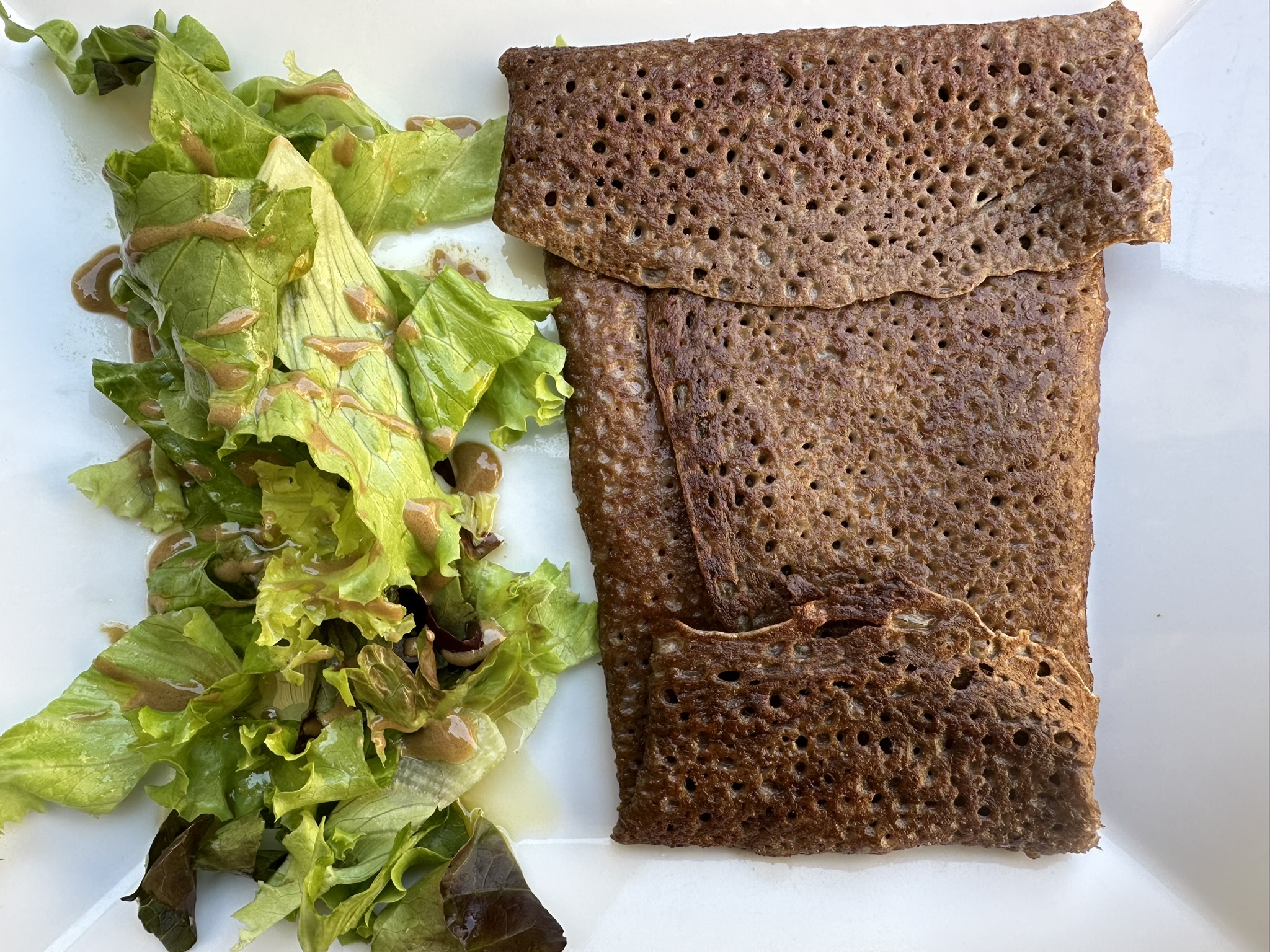
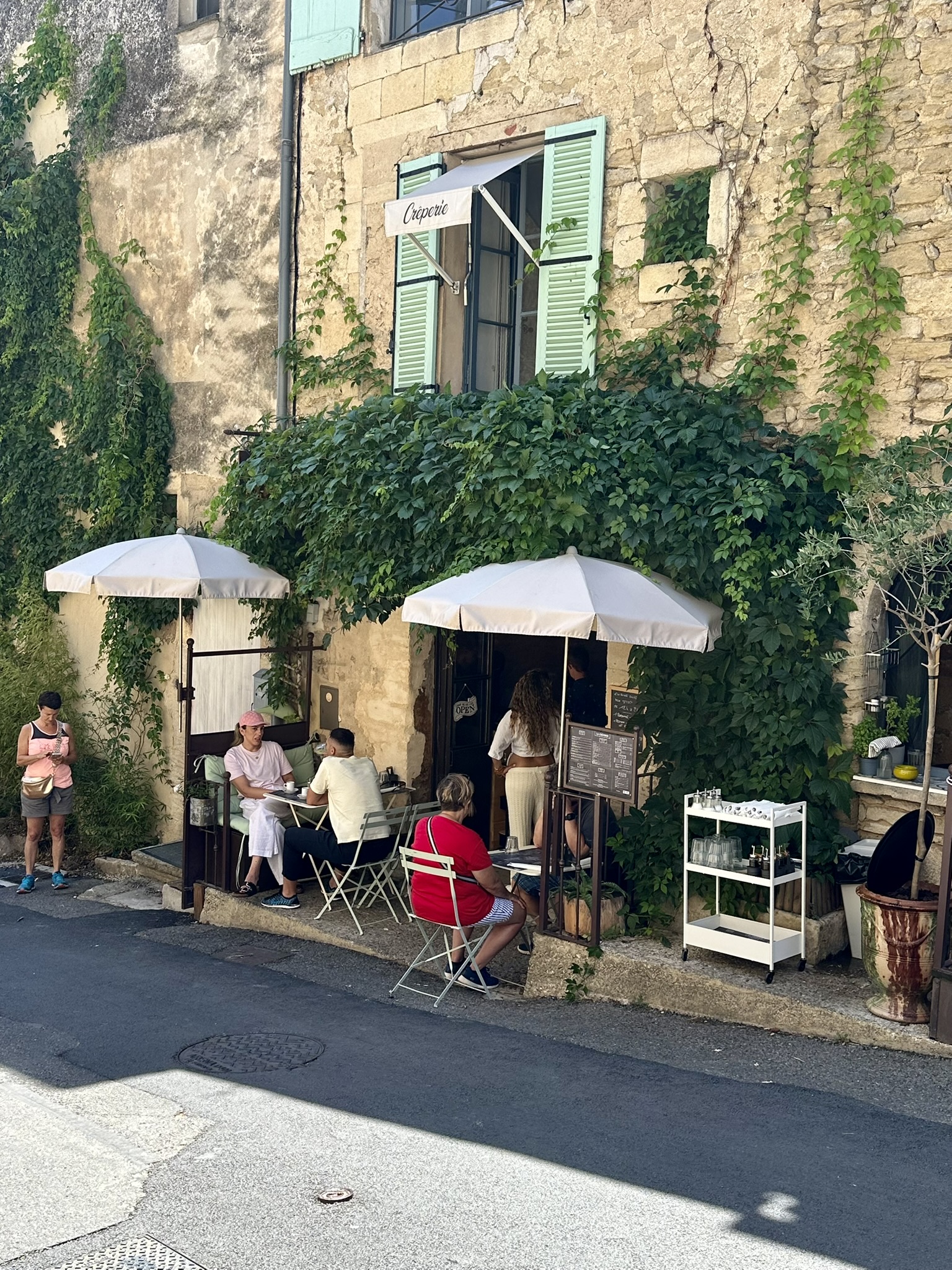
Gordes is hugely popular and crowded and frequently photographed but does live up to the hype. We were worried we’d like it less in the on season than we did in the off and fortunately we liked it just as much.
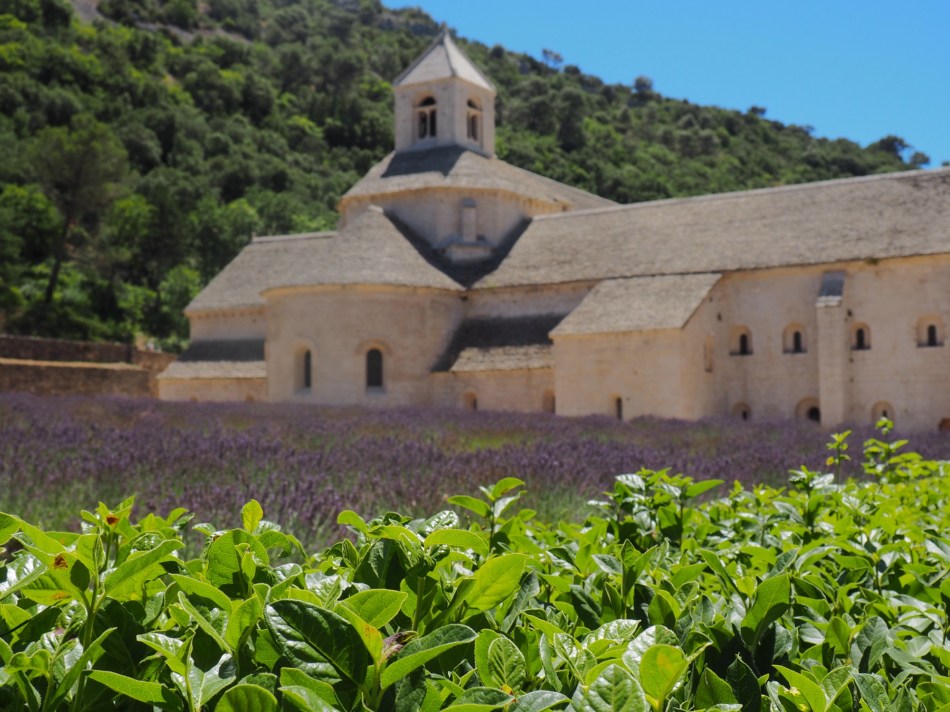
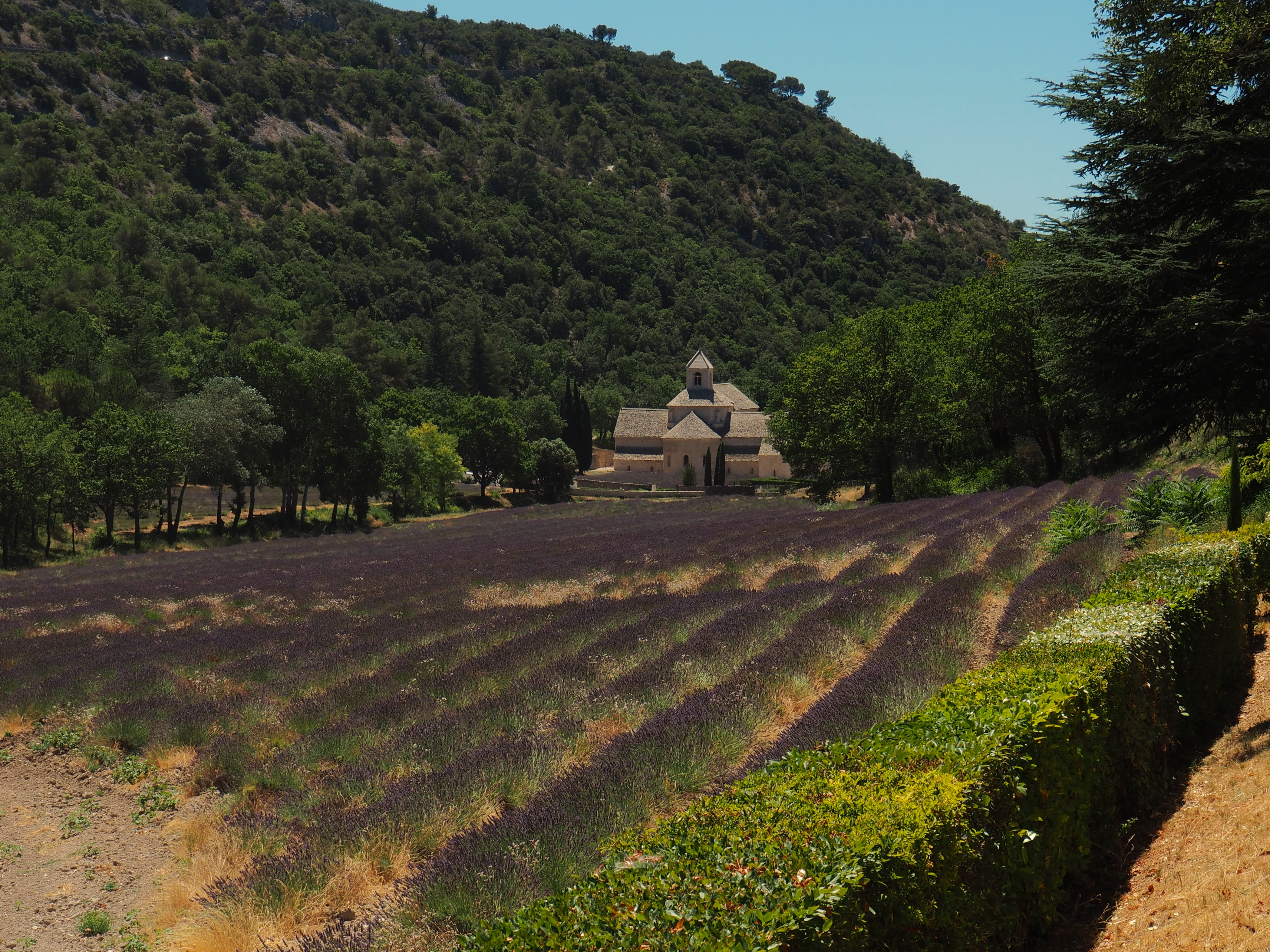
The Abbaye Notre Dame de Sénaque. Just down the hill (on a very narrow winding road on which you pray no camper van or bus is ascending as you descend) from Gordes you’ll find another of the most photographed things in the area, the Abbaye Notre Dame de Sénaque. The cars were all lined up to the street, so we parked on the side of the road and walked in with rows of lavender (yes, lavender) bushes to our right and an only half-full parking lot on our left.
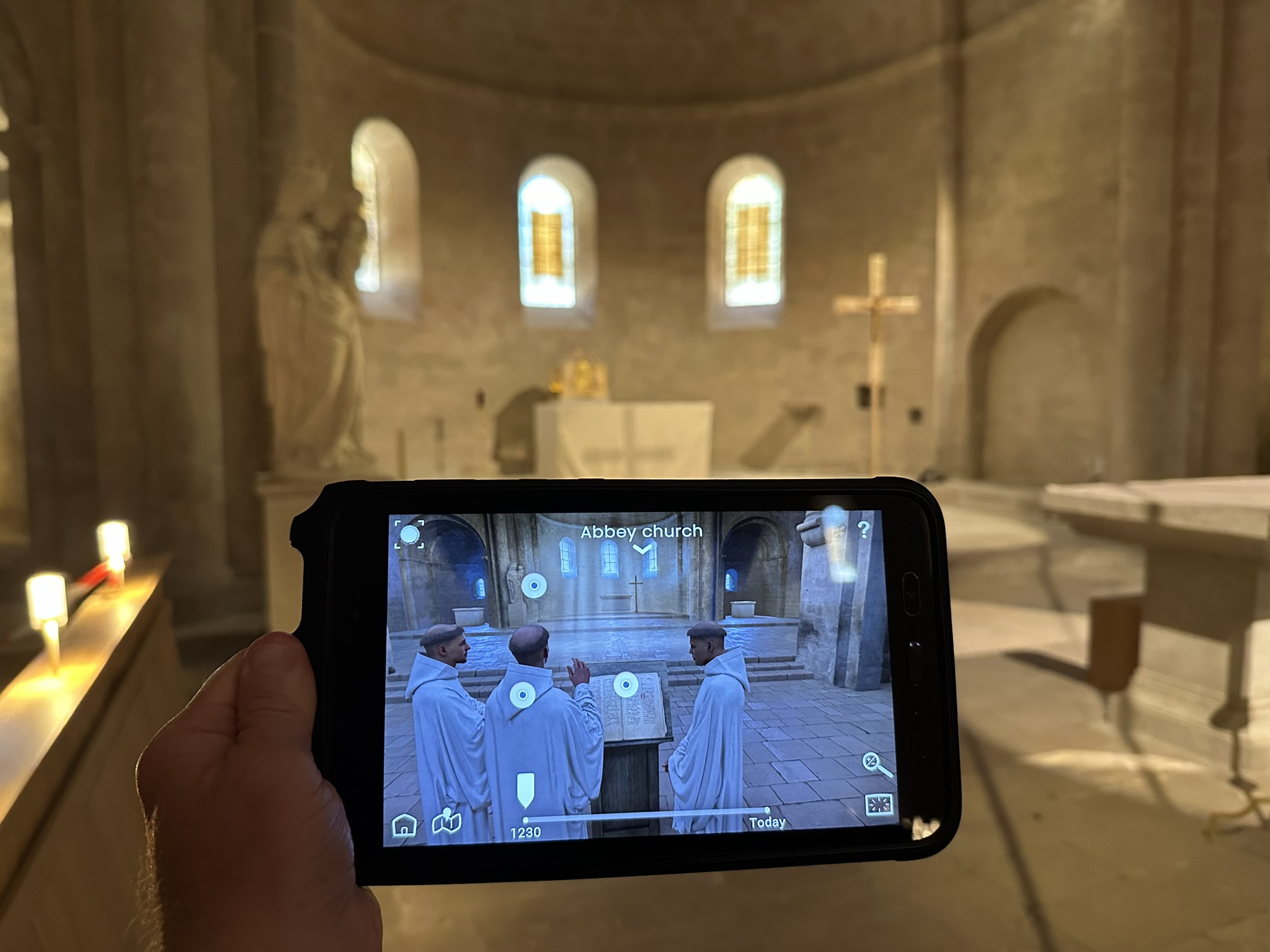
The Abbey was founded in 1148 by Cistercian monks and is still active today, with a small number of monks whose days are filled with prayer and meditation, maintaining the abbey and farming the surrounding lands. With your admission ticket, they provide a small tablet (like they do at the Palais du Papes in Avignon) which permits you to see what life was like at the abbey several hundred years ago.


Oppède. We stayed in Oppède in our aforementioned Airbnb. After a day of touring it was nice to cool down and swim a few laps in the heated (not hot but not freezing, like most Portuguese pools) pool.
Old town, Oppède le Vieux, sits atop the hill perched on limestone cliffs and hills overlooking the valley. White-domed Mont Ventoux sits on the horizon on the other side. The old town area has been inhabited for ages, it was ruled by the counts of Toulouse, then by the papacy and then by a private family during medieval times subsequently falling into disrepair until artists retook the village during World War II.
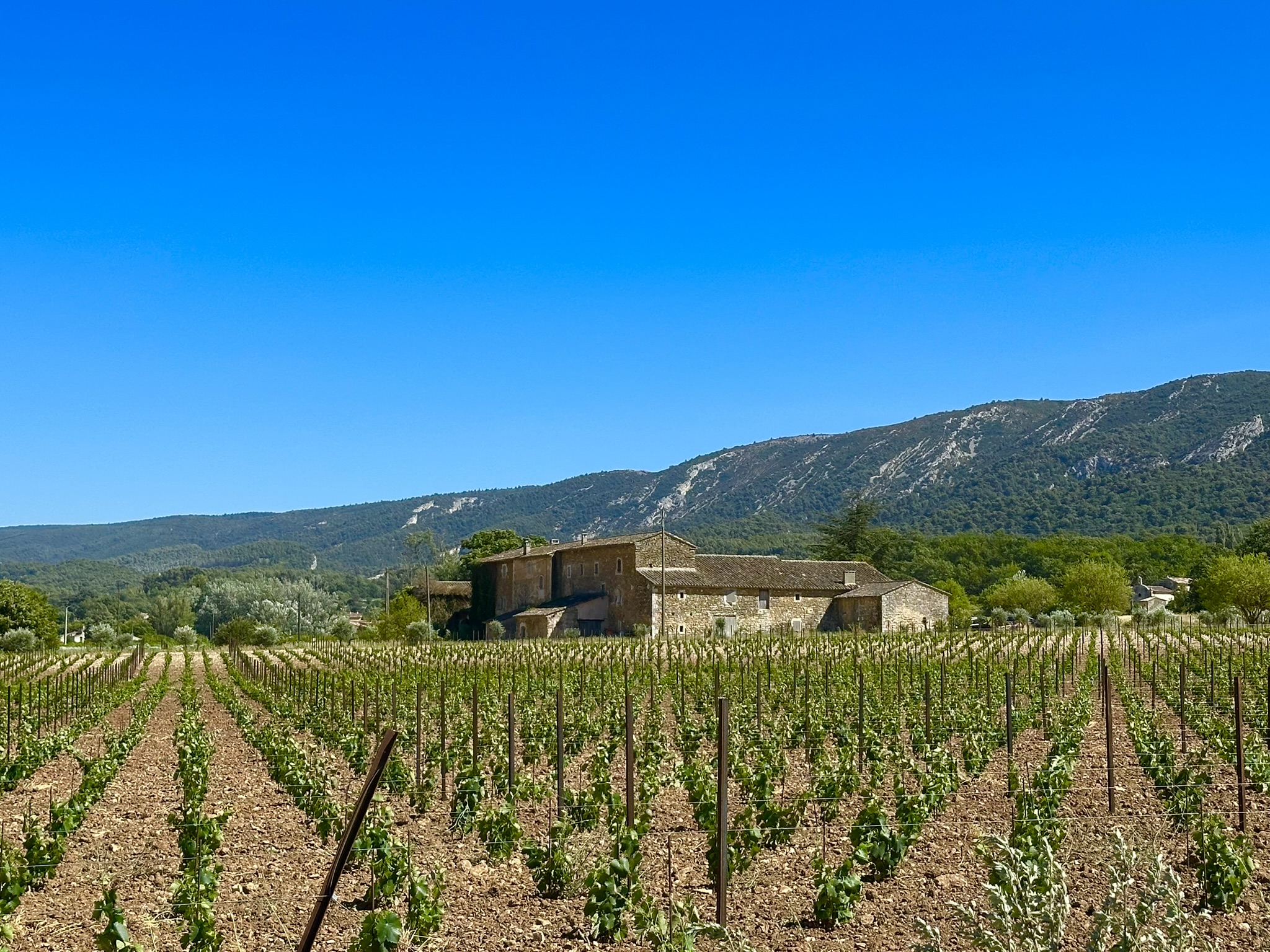


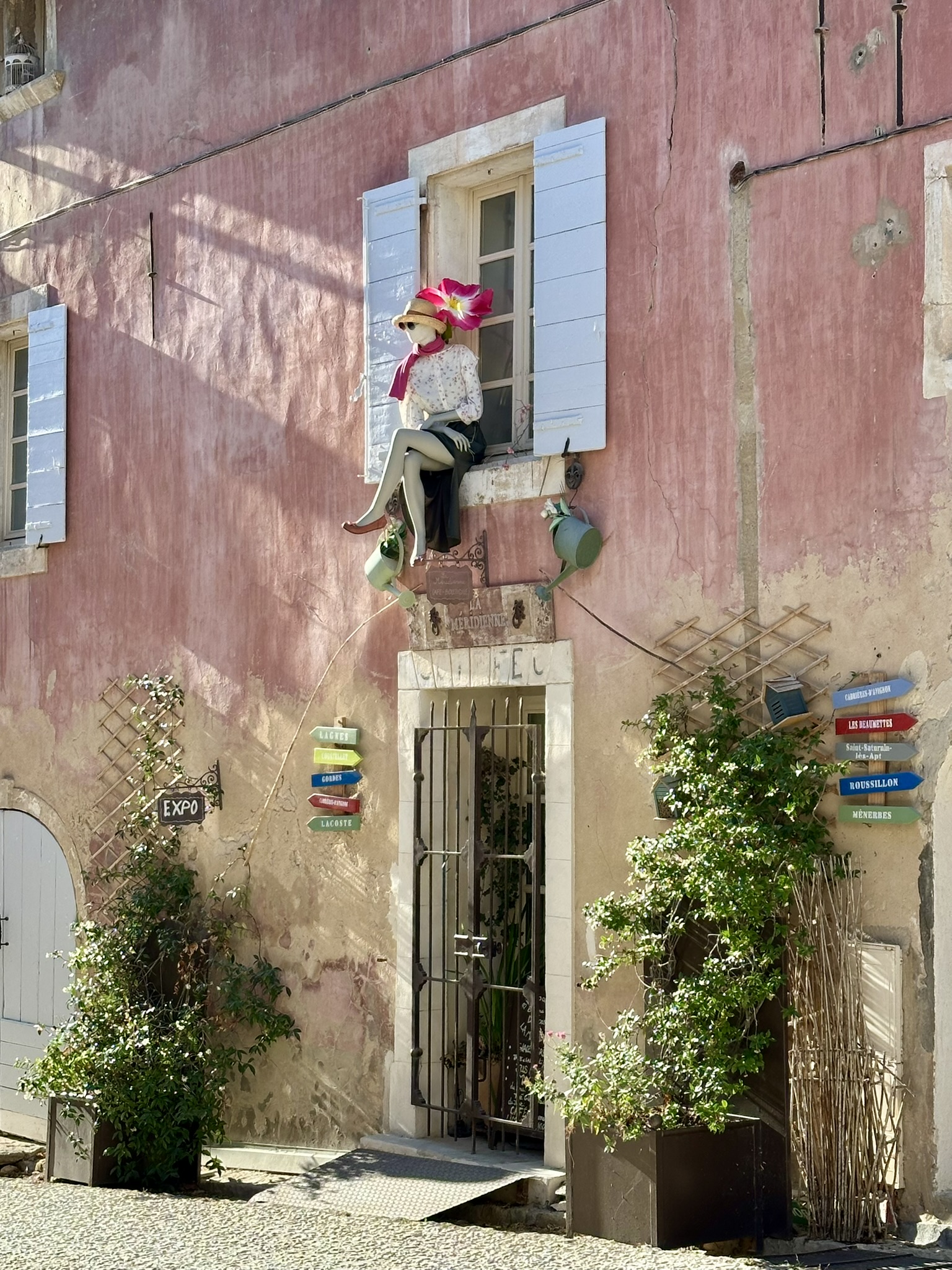

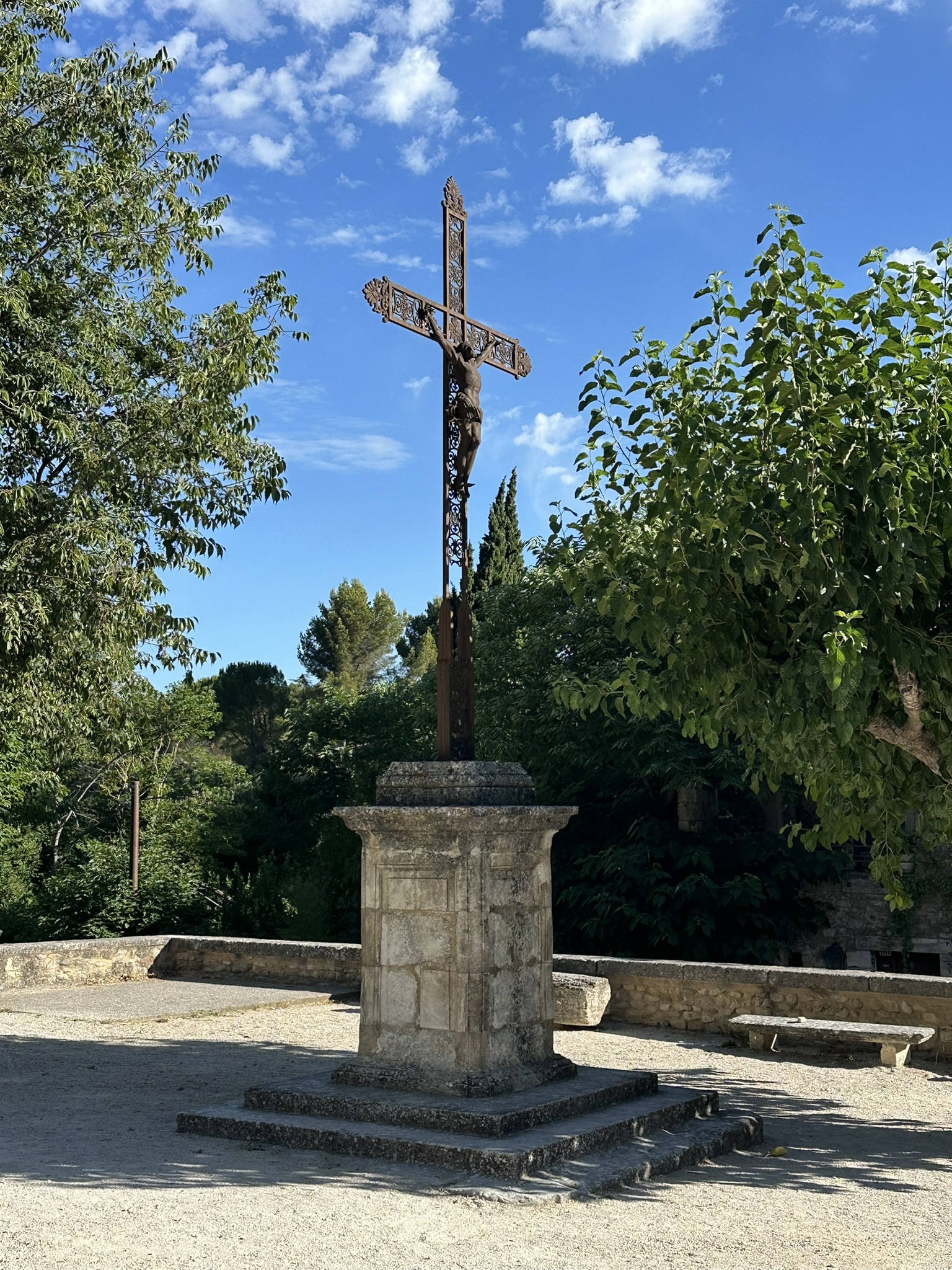
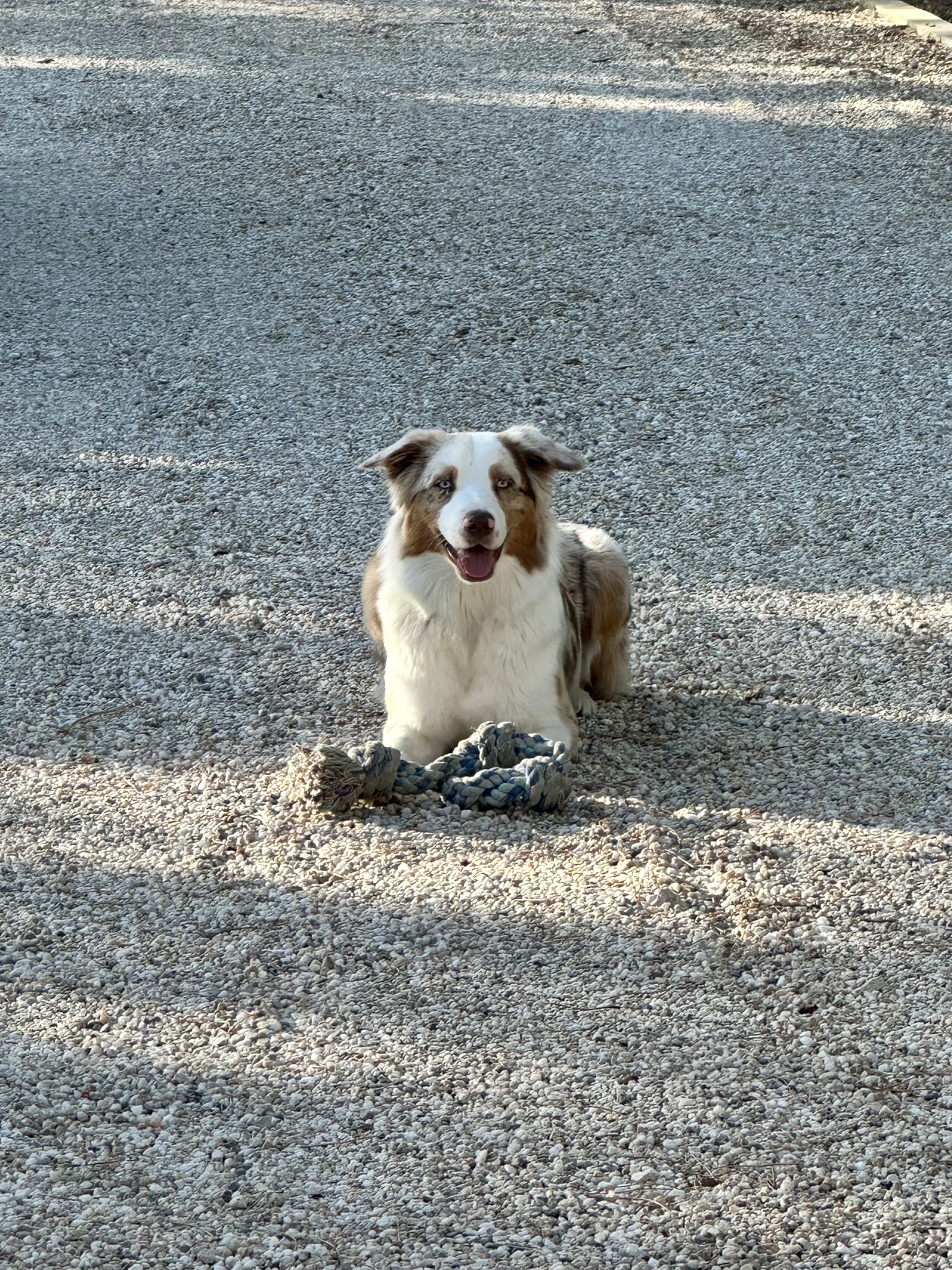
Below the old town, is the small “new” village, surrounded by fields of grapes and olives. We patronized the local shops recommended by our hosts, buying wine at the aforementioned Domaine des Jeanne and delicious fruit and nut bread at the local boulangerie. Far more low-key than the other Provençal villages we visited, it was a great home base, and we would recommend a stay if you’re looking for a quieter place to lay your head.
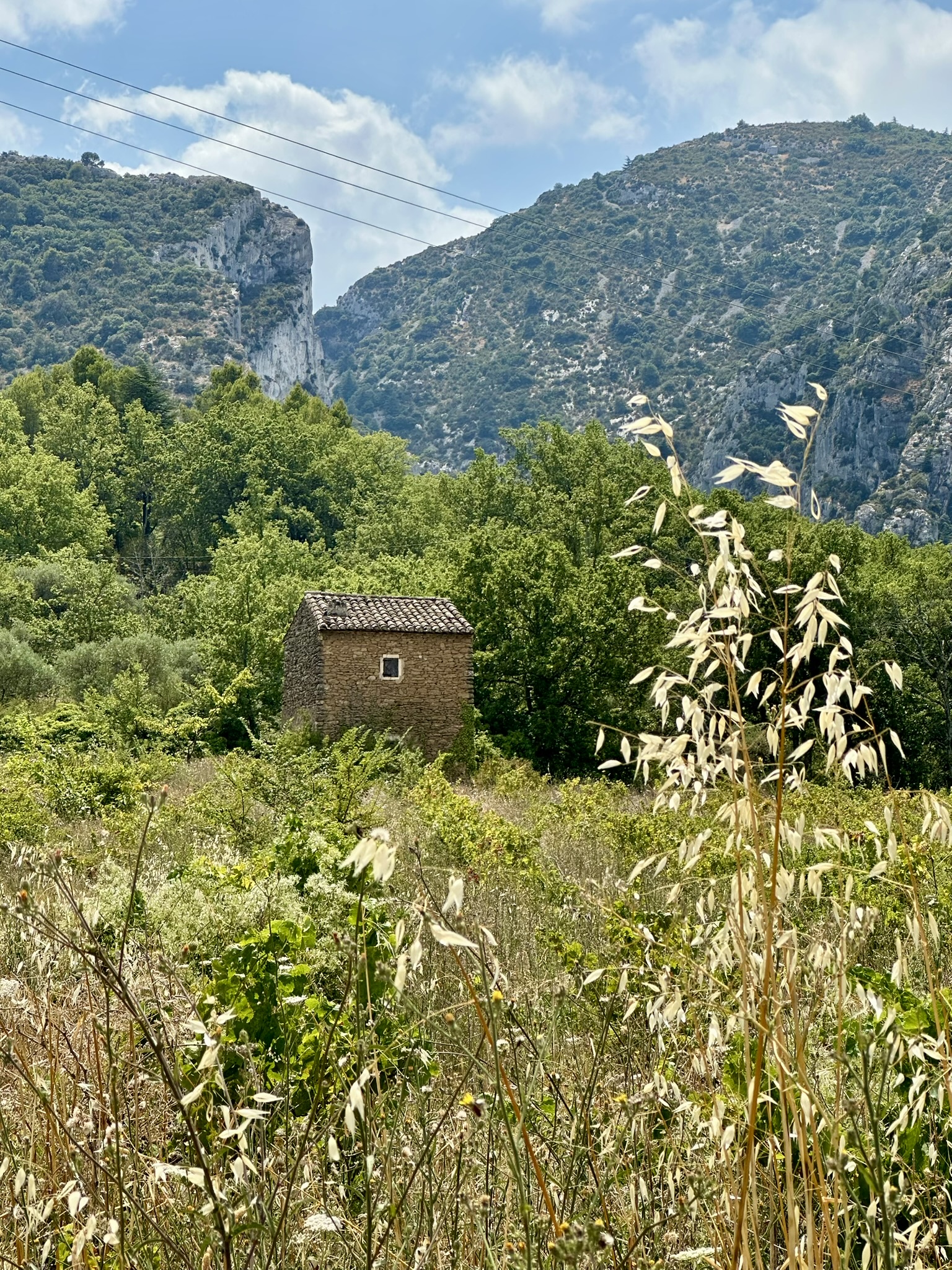
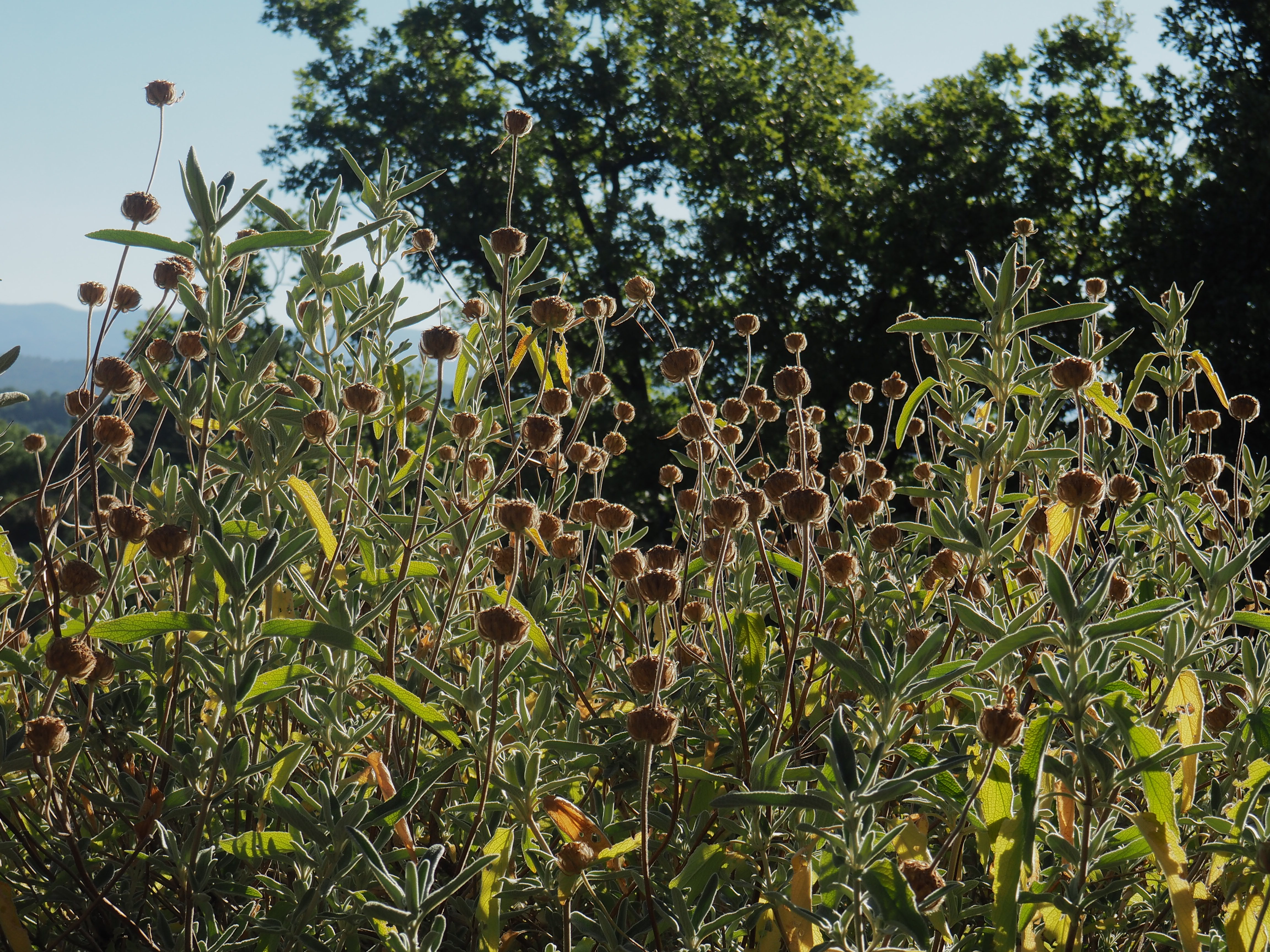
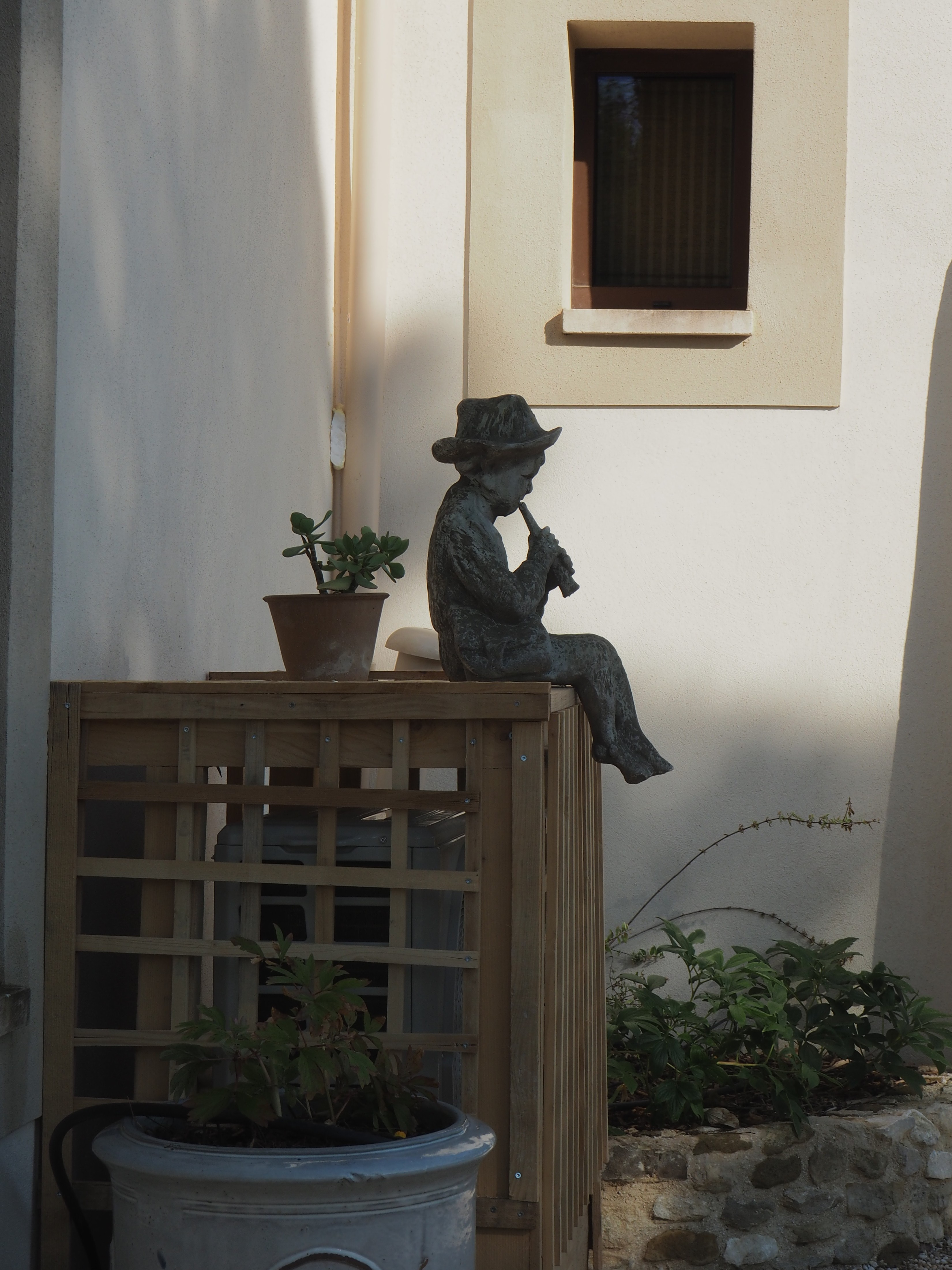
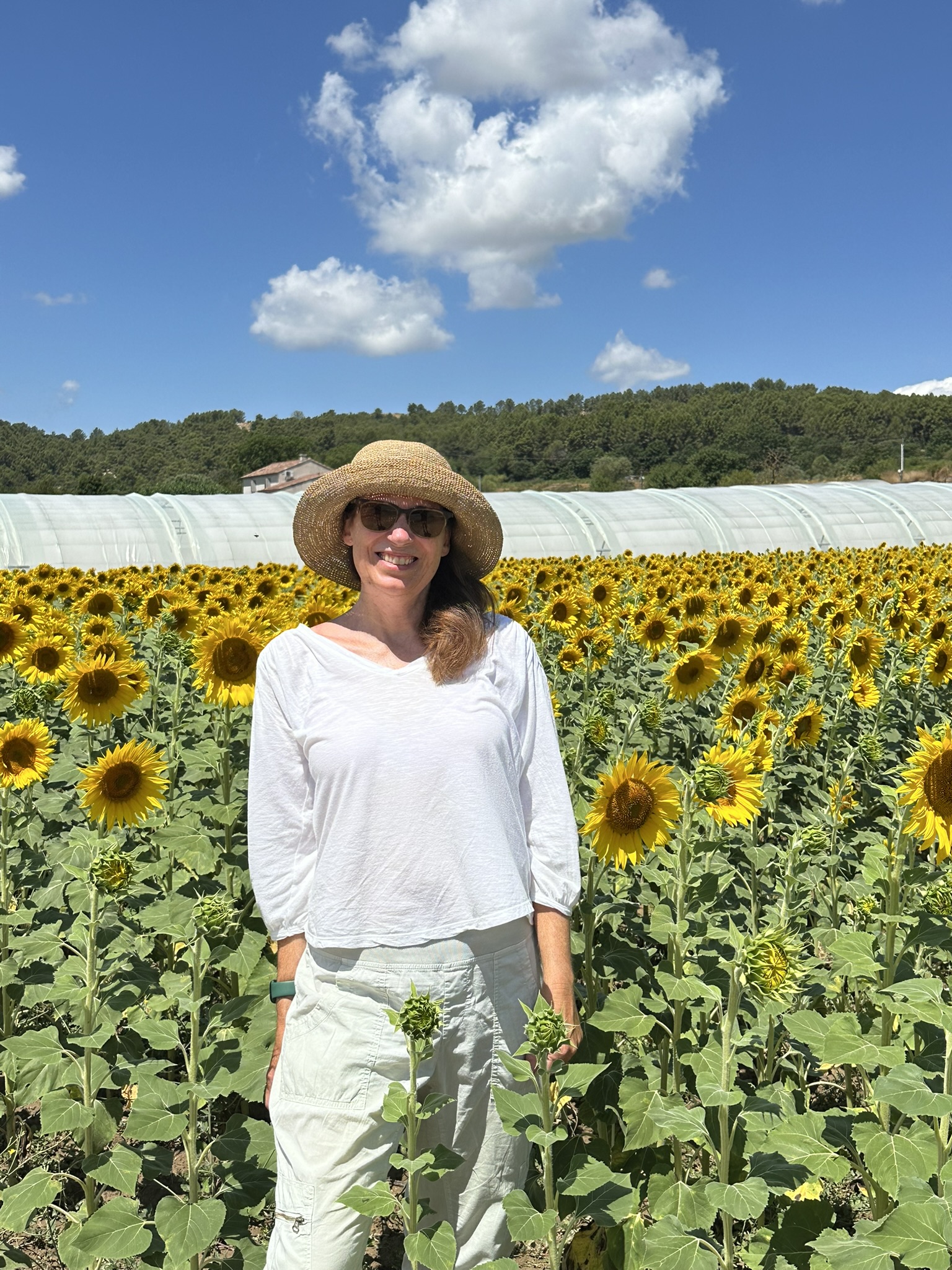
Le Tour. de France, of course. If you find yourself near the running of France’s national exposition of les velos (bikes) shouldn’t you at least try to go stand on the roadside, maybe procuring a bell to clang and cheering on the riders as they blaze by in the hot summer sun? Oui, I say, oui, you should.
I downloaded the Tour app and used it to try to locate and approximate good viewing spots. From this, we chose to head out for Châteauneuf du Pape for Stage 16 just before the riders climb Mont Ventoux, so off we went. You can read about our experience on our Sunday Journal site (to be published soon).
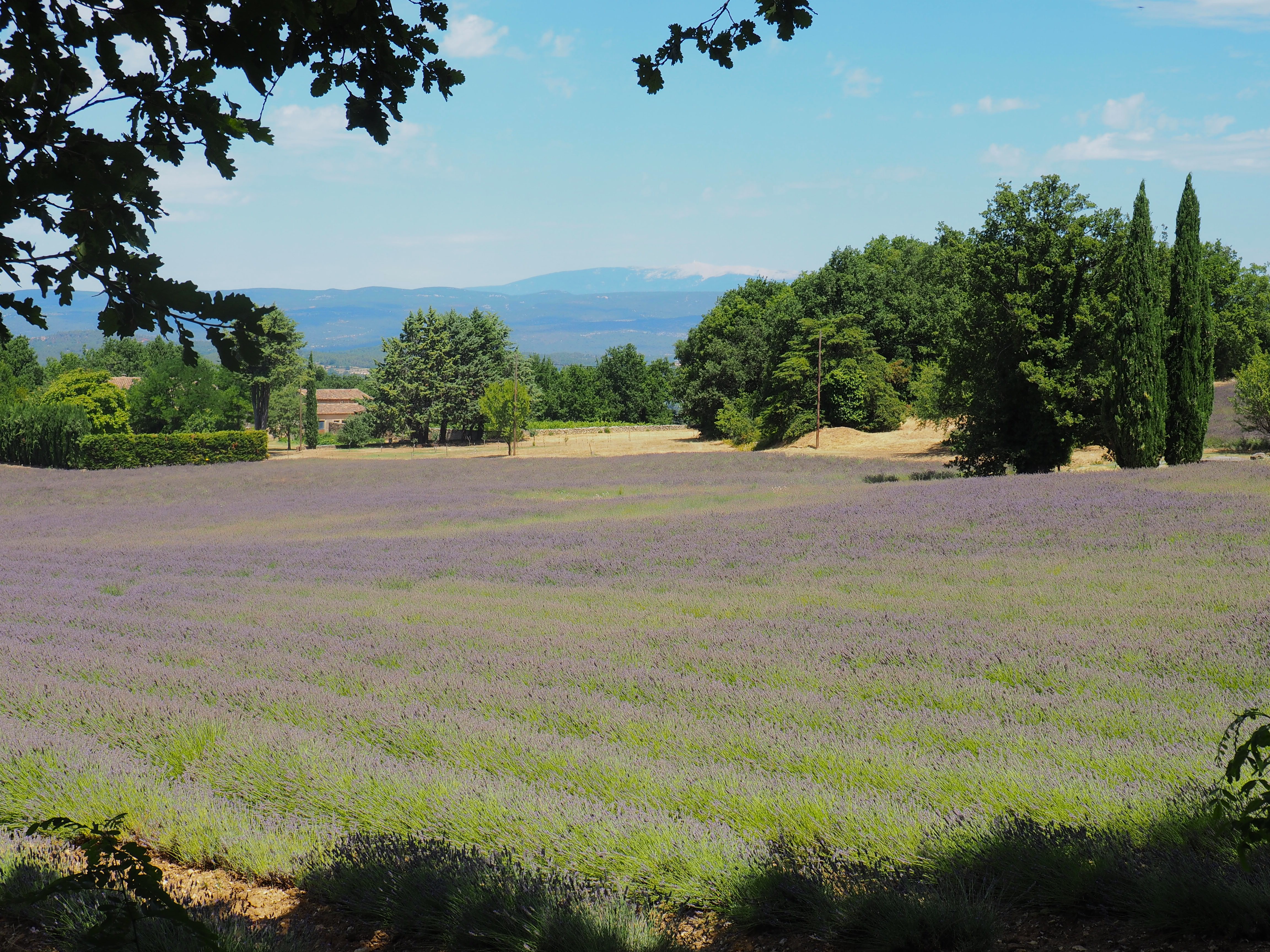
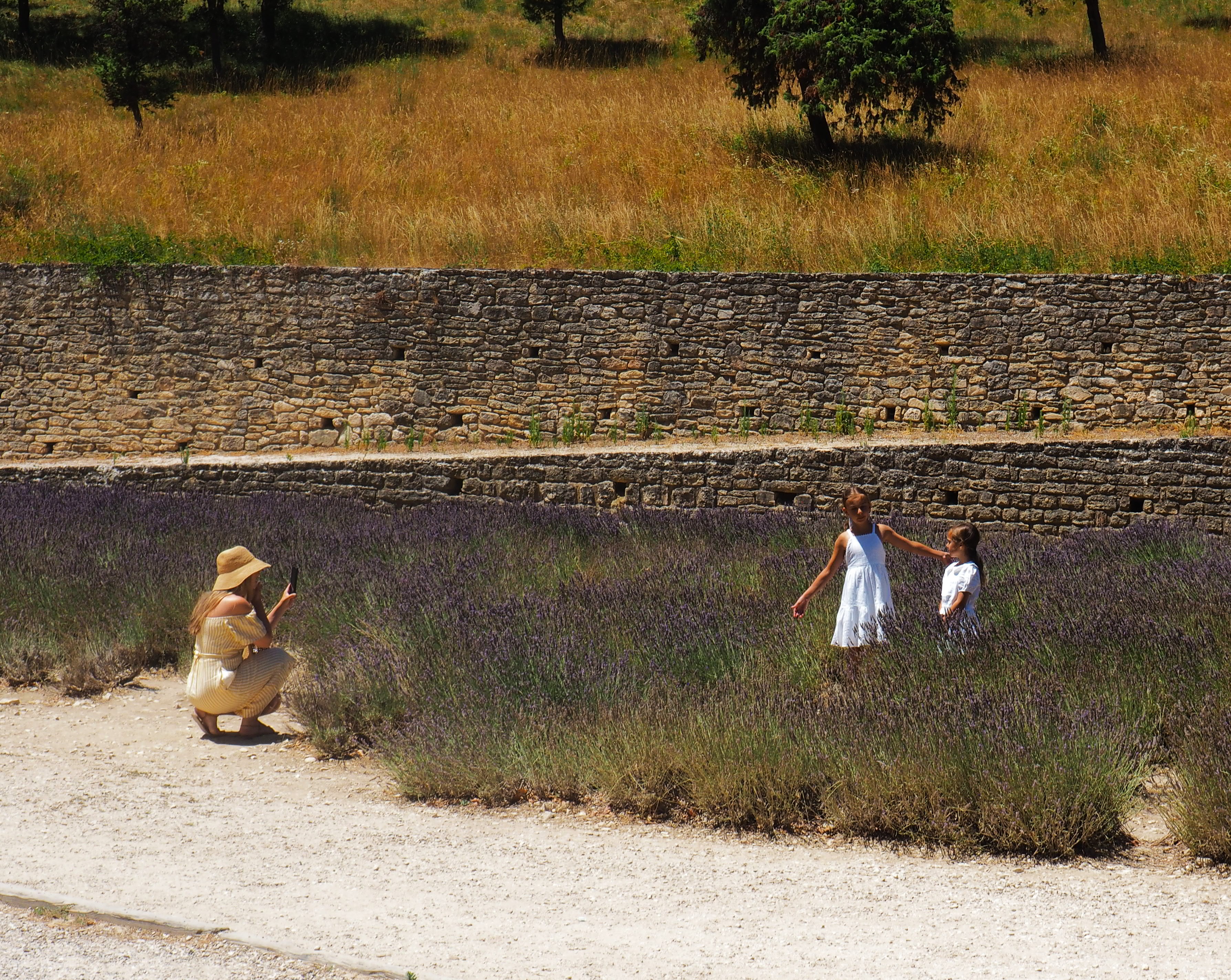
Finalement, le Levande. We weren’t totally out of luck on the purple flower front. While most had been trimmed or lay dying in the fields in the hot sun of full summer, in some fields here and there and at the Abbye Notre Dame de Sénaque the lavender still remained, a bit washed out, but we got our taste. Enough to wet our appetites for sure. And as this has been our best trip to France so far, twist our arms, we’ll just have to come back when the blooms are full before the heat of summer and the harvest washes and plucks them away.
Sources:
- https://www.oppede.fr/visite-oppede-0
- https://www.villagesetpatrimoine.fr/village-de-gordes/
- https://www.provenceweb.fr/e/localite/senanque-abbey.htm
- https://roussillon-en-provence.fr/decouvrir-2/histoire/
- https://www.onlyprovence.com/roussillon-france/
- https://islesurlasorguetourisme.com/decouvrir/terre-de-culture/la-sorgue-samuse/la-peche-dantan
 The Traveling Ridleys
0 comments on “A Week in Provence”