

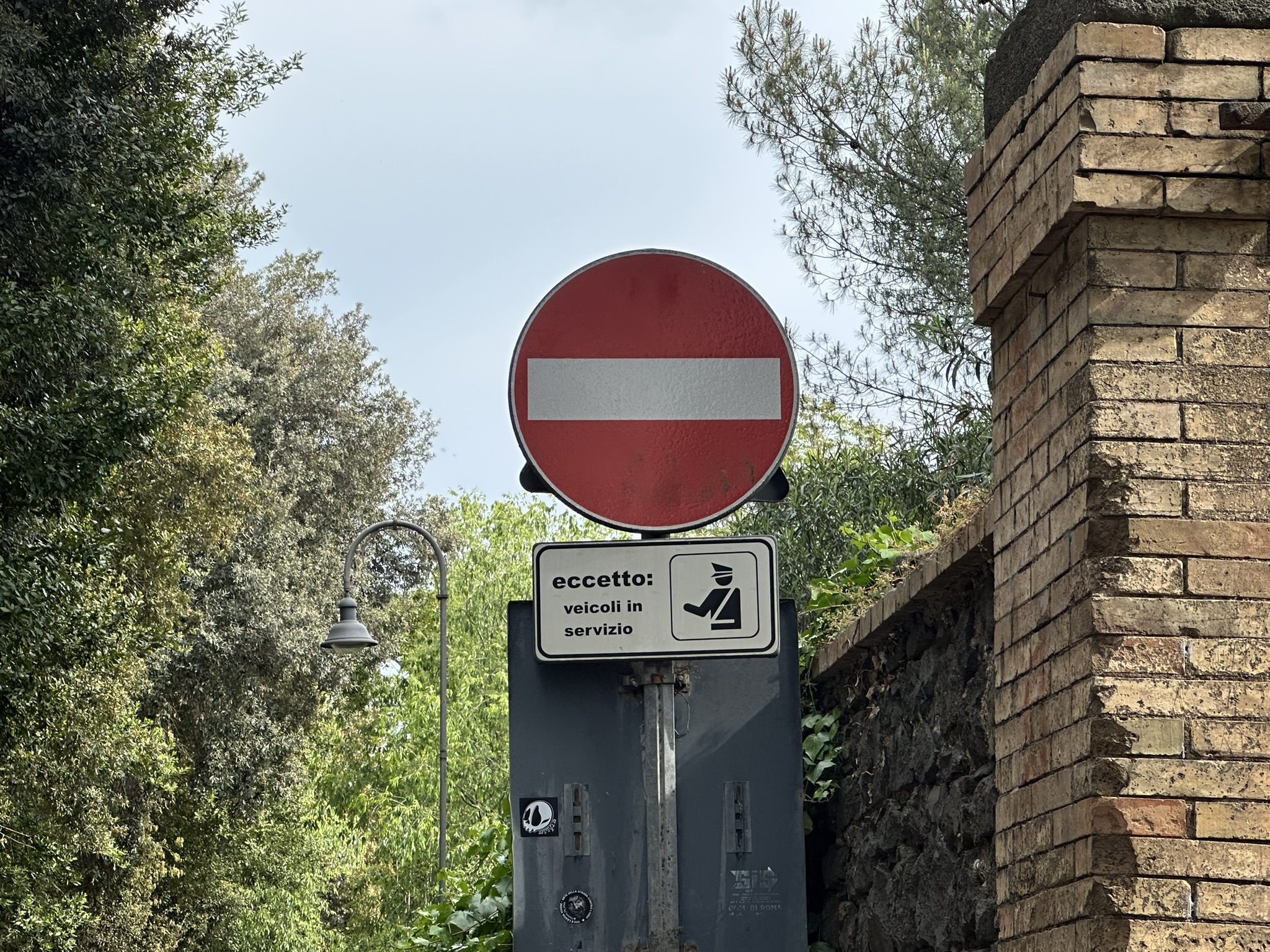
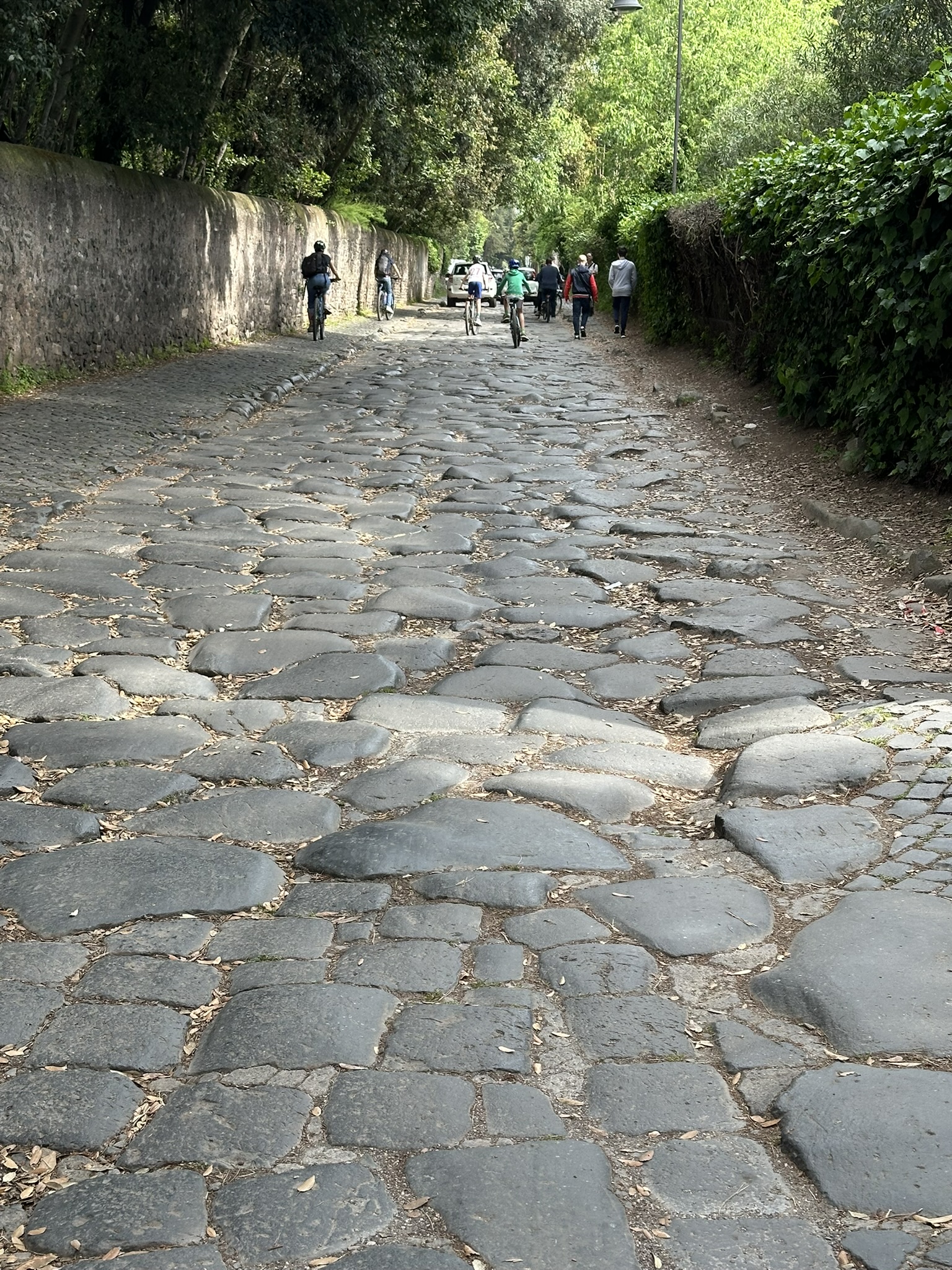
The Appian Way. Rome’s Appian Way was a 350-mile stretch of road which was built starting in 312 BC from Rome southward, ultimately extending to Brindisi in southern Italy. It was constructed as a military transport route using lava stones and came to be used as a trade route as well. Today, you can visit about 10 miles of the ancient road in the Appia Antica regional park. We booked a tour of the Catacombs and Appian Way (which turned out to be more of a driver to take us places at a premium rate) and visited one end of the road. Cars (except for service vehicles) are not supposed to drive on the road, but as you can see below not all rules are followed by everyone. The best way to visit it might be to take a bike or e-bike, but it’s out of town, so you’ll need to get there first.
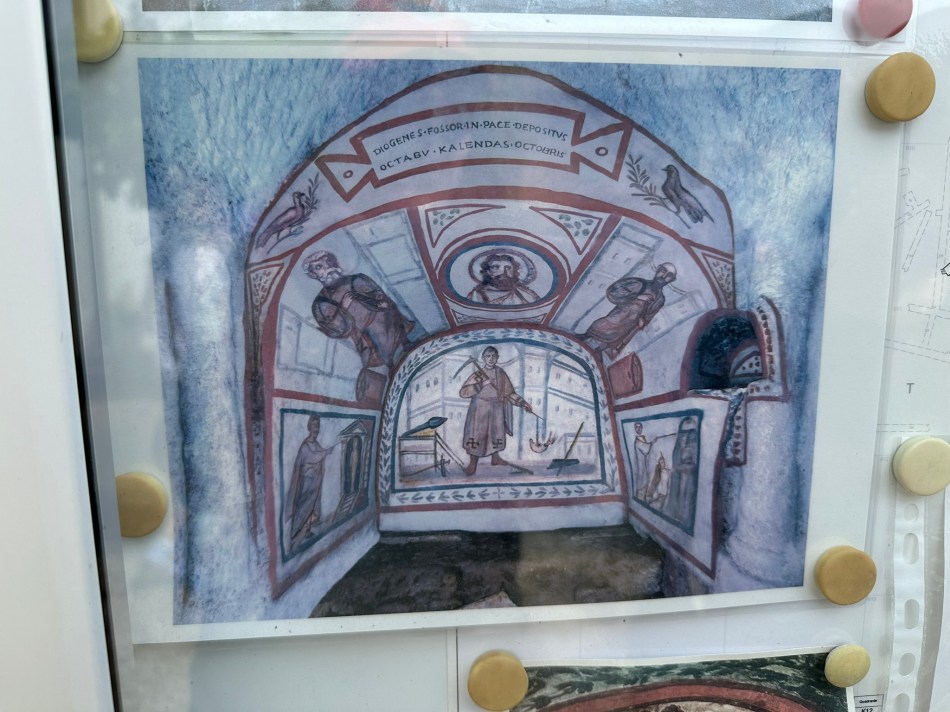
The Catacombs. From the Appian Way, we visited one of Rome’s Catacombs. This was the highlight for sure. There are around 60 catacombs in total, about 7 of which are available to tour. If stretched out end to end, they would reach a distance of 186 miles (300 km). About 27,000 bodies were buried in the catacombs.
The catacombs began as pagan burial grounds. The pagans cremated the remains of the dead and stored them in urns in underground burial sites. Christians and Jews preferred burials to cremation in order to preserve the body for the resurrection. Due to lack of real estate and overpopulation in 2nd century Rome, Roman law forbade burying the dead within the city, so burial places outside the city walls, including the catacombs, were used. Many early Christians used symbols to mark the tombs, and many, of the more affluent deceased, were decorated with elaborate wall art. In death, early Rome’s catacombs were a melting pot where pagans, Christians and Jews were all buried together within the expansive network.
One of the most famous catacombs is that of Saint Callixtus (which also makes it one of the busiest) which occupies 90 acres of land with a 12-mile-long network of tunnels on four different levels more than 65 feet (20 meters) deep. At St. Callixtus two small basilicas known as the “Trichorae” exist. Within this underground cemetery complex is a “little Vatican” which is the official burial place of nine popes and other dignitaries from the Roman Catholic church.
Vandalism became a problem in early 4th century catacombs as the tombs were pillaged for relics. By the end of the 4th century Christianity had become the state religion and more people were buried in church cemeteries. When the barbarians invaded Rome in the 8th century they began looting the catacombs and began bringing the bones of alleged saints to churches for purchase and many of the catacombs were ultimately sealed off to prevent looting. By the 10th century, they were mostly abandoned, holy relics were transferred above ground and the catacombs fell into disrepair. In the Middle Ages, they were covered over and people didn’t know of their existence.
The catacombs were accidentally rediscovered in 1578 by Antonio Bosio who spent years exploring and uncovering the catacombs and their secrets documenting them in his book on subterranean Rome.
Domitilla Catacomb. We visited the Catacombs of Domitilla, one of the largest and oldest of them. You enter through an above ground reception area and descend into the underground Basilica dedicated to the Holy Martyrs Nereo and Achilleo. Entering the narrow, winding passageways, we visited several tombs, learned about the burial traditions and visited some amazing frescoes and artwork. No photographs are allowed. Our tour guide was excellent.

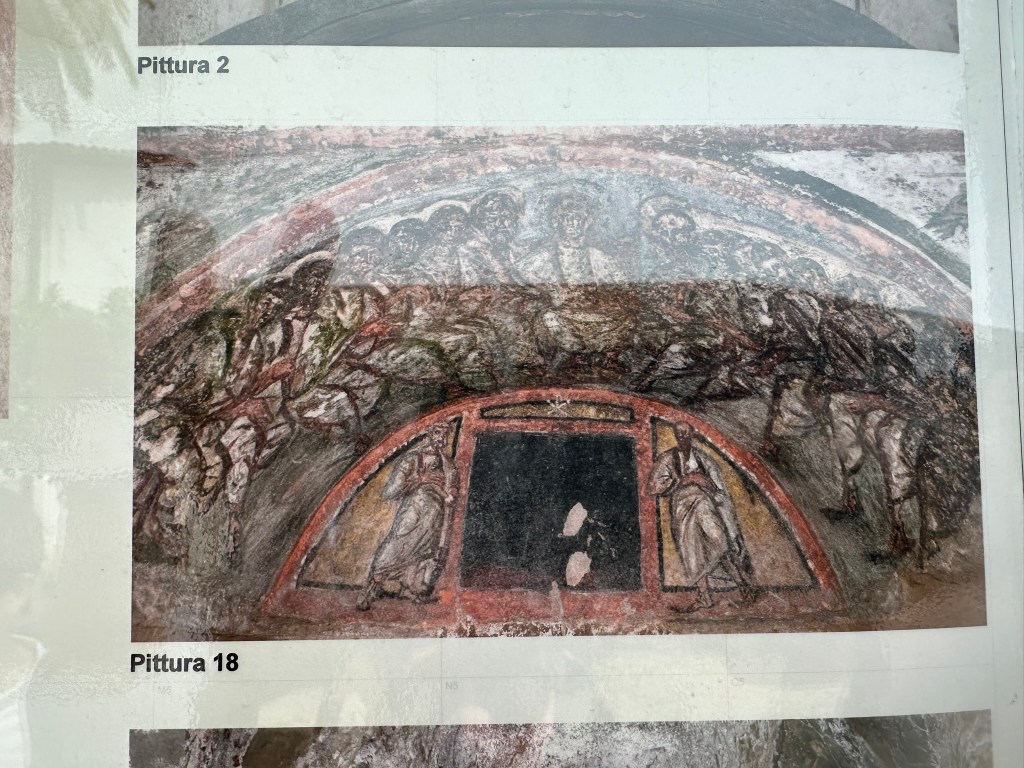
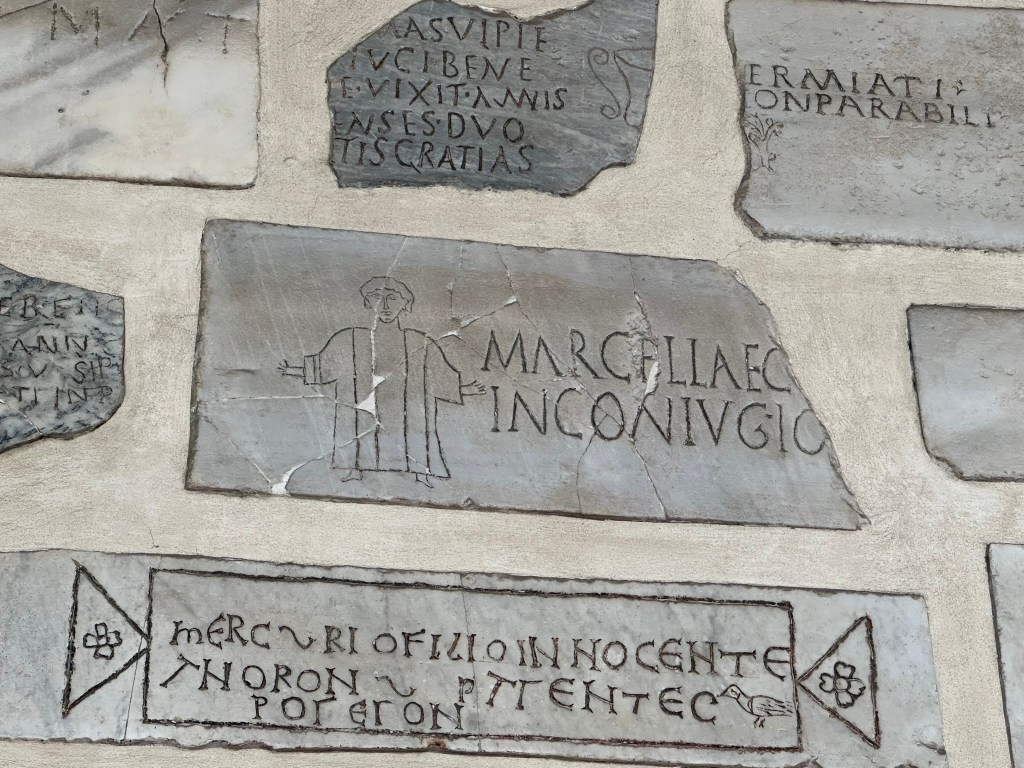
This being our third time to Rome, we decided it was time to visit its underground city. A visit is a fascinating look back across centuries of time.
Sources:
- Tour of Domitilla Catacombs.
- https://www.romaexperience.com/post/rome-catacombs#viewer-dshlf
- https://www.catacombesancallisto.it/en/le-origini-delle-catacombe.php
- https://www.catacombedomitilla.it/en
- https://en.wikipedia.org/wiki/Catacombs_of_Rome
- https://en.wikipedia.org/wiki/Appian_Way
- https://rome.us/ancient-rome/the-appian-way.html
 The Traveling Ridleys
0 comments on “Along Rome’s Appian Way and into the Catacombs”