

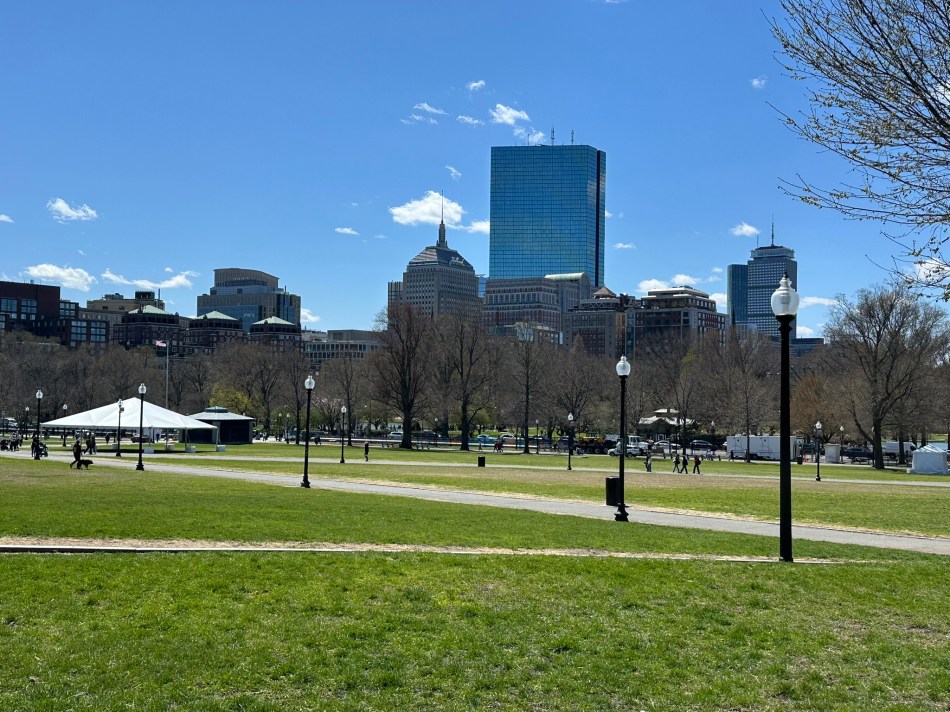
What is the Freedom Trail?
While transiting this 2.5-mile-long path through the streets of Boston you’ll visit famous landmarks along the path to America’s independence. If you follow the red painted line, beginning in Boston Common, along the ground you’ll visit 16 nationally significant historic sites including museums, churches, cemeteries, parks, meeting houses and a ship.
What are its origins?
After John Hancock’s house (yes, that one whose prominent signature is front and center on the Declaration of Independence) was unceremoniously destroyed for future development of Boston, several Bostonians were shocked into a need for preservation. The Freedom Trail was established in 1951 to help preserve landmarks essential to the history of Boston and the American Revolution.
The original Freedom Trail was just over a mile long and began at Boston Common and ended in Boston’s North End. In 1958, the painted red line supplemented signage which marked the path and in 1974, in time for America’s bicentennial, the trail was extended into Charlestown, growing the number of sites to the current 16.
We started out, this most recent time, on an April morning near the date of Massachusetts’ personal revolutionary holiday, Patriots Day and shortly before the 250th anniversary of Paul Revere’s ride to Concord and Lexington. It was a sunny but cool New England spring day in Boston. We began at the beginning: Boston Common. Several of the stops require an admission ticket, and if you were to visit inside every site it would make for a long day. We chose to visit the Charlestown Navy Yard and the U.S.S. Constitution at the end and Paul Revere’s house in Boston’s North End. The ship and navy yard are operated by the U.S. National Park Service and are free to visit, the Revere house was a relatively inexpensive $6. Both were worth it.
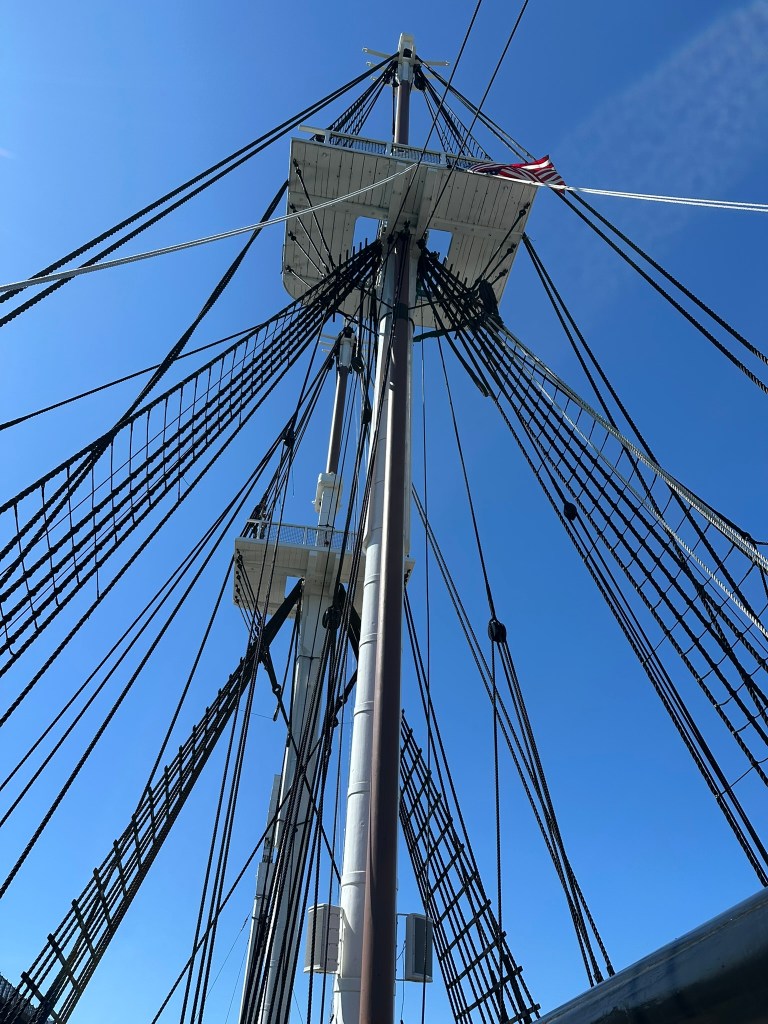
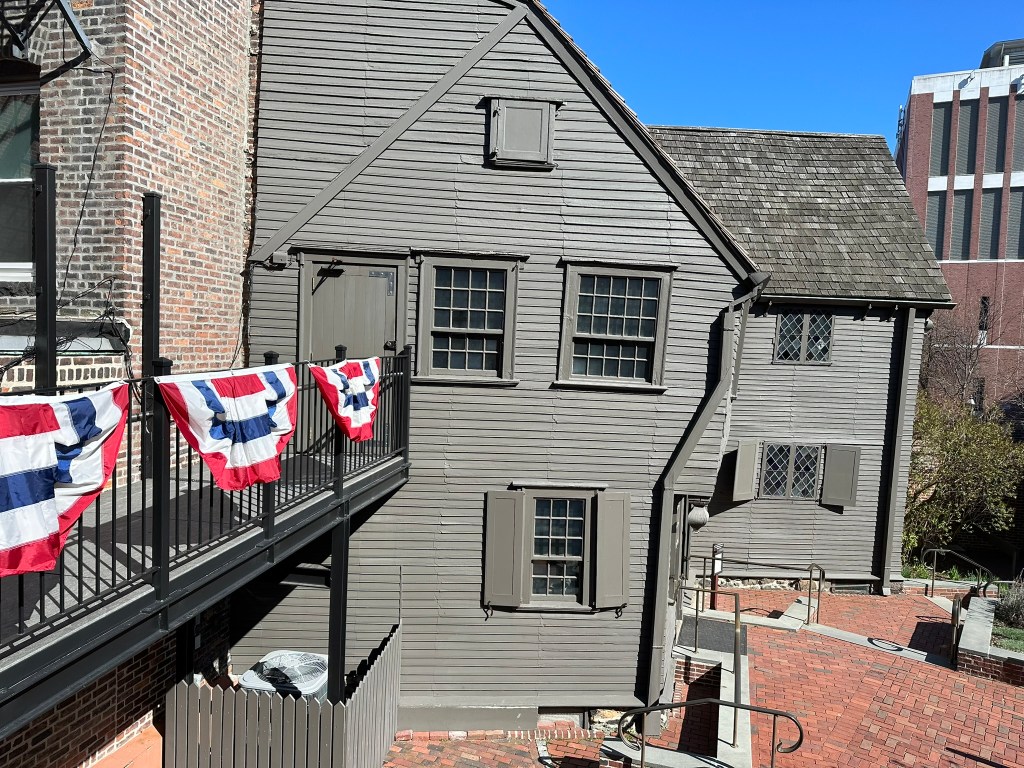
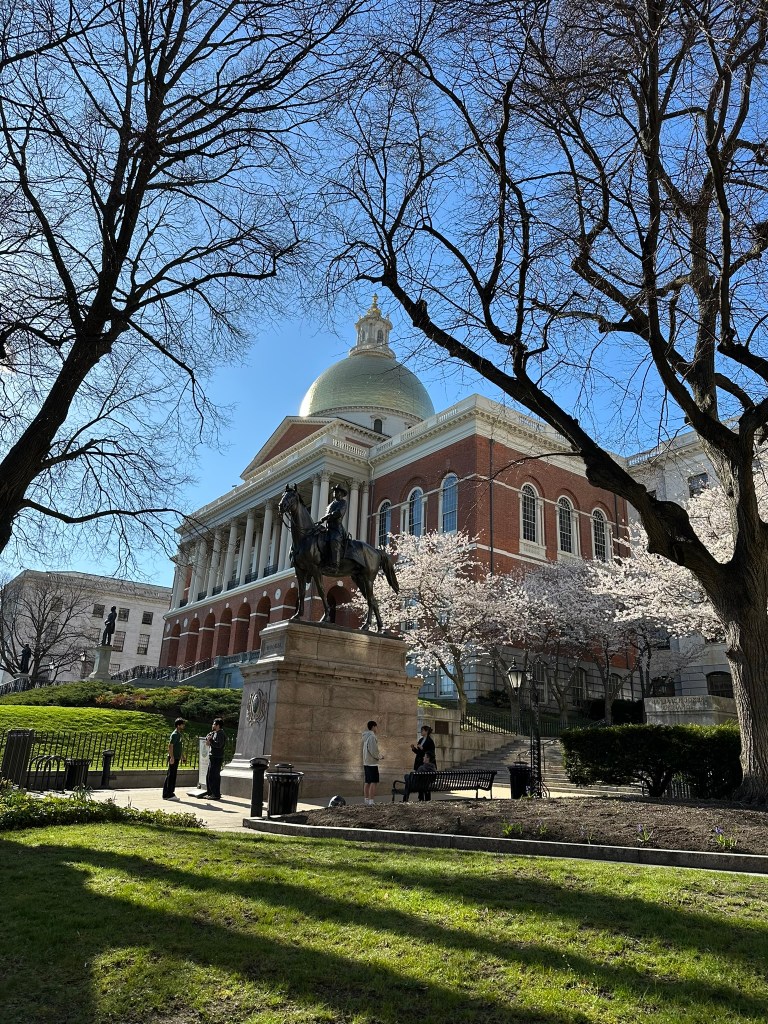
These are a few of the other things we noticed and appreciated at stops along the way:
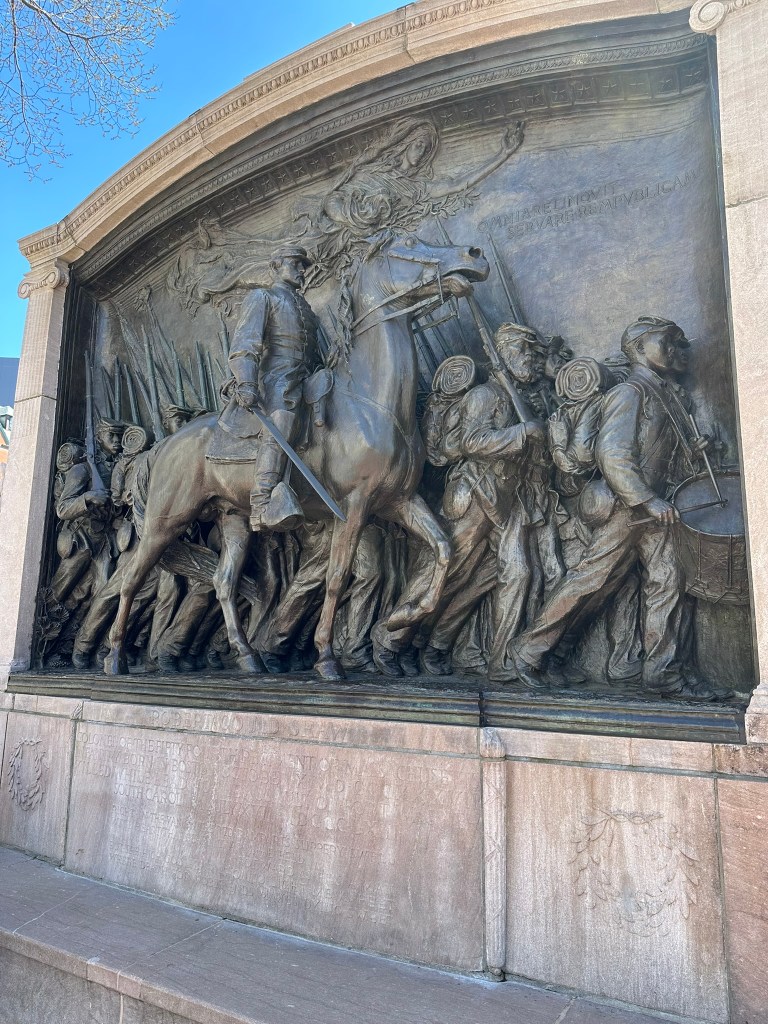
- The Robert Gould Shaw and 54th Massachusetts Regiment monument in Boston Common across from the Massachusetts State Capitol building. The 54th was an all-black regiment led by Shaw as portrayed in the movie Glory starring Denzel Washington and Matthew Broderick.
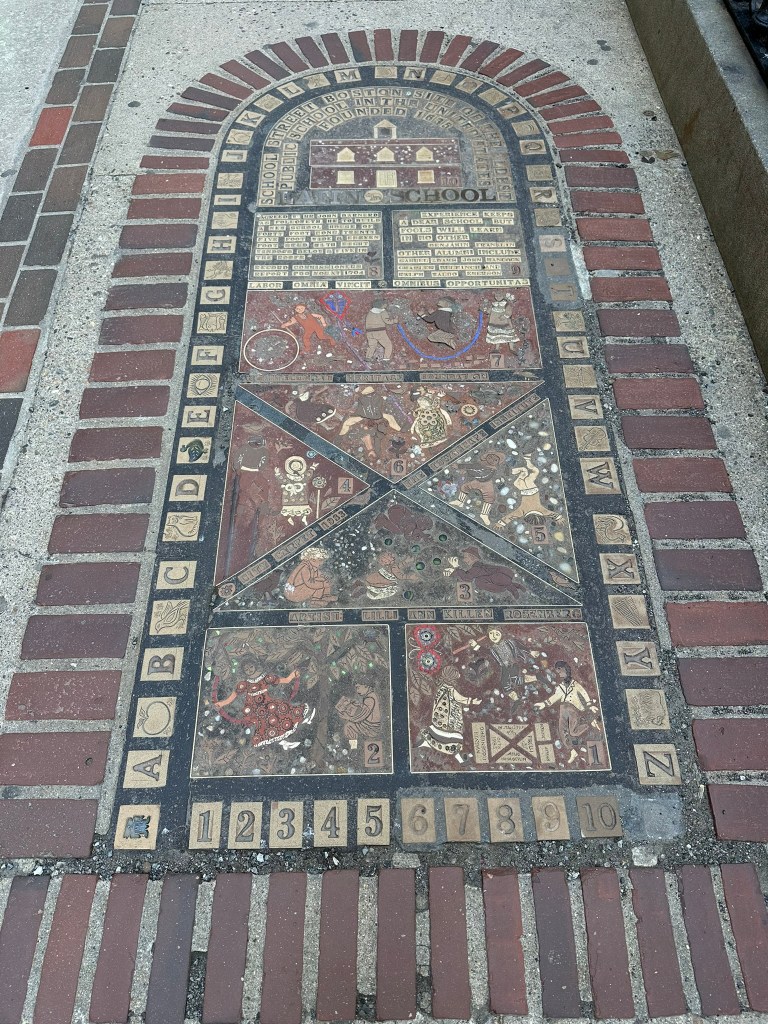
- The sidewalk art commemorating the first public school in the United States (Boston Latin school) in front of the Old State House.
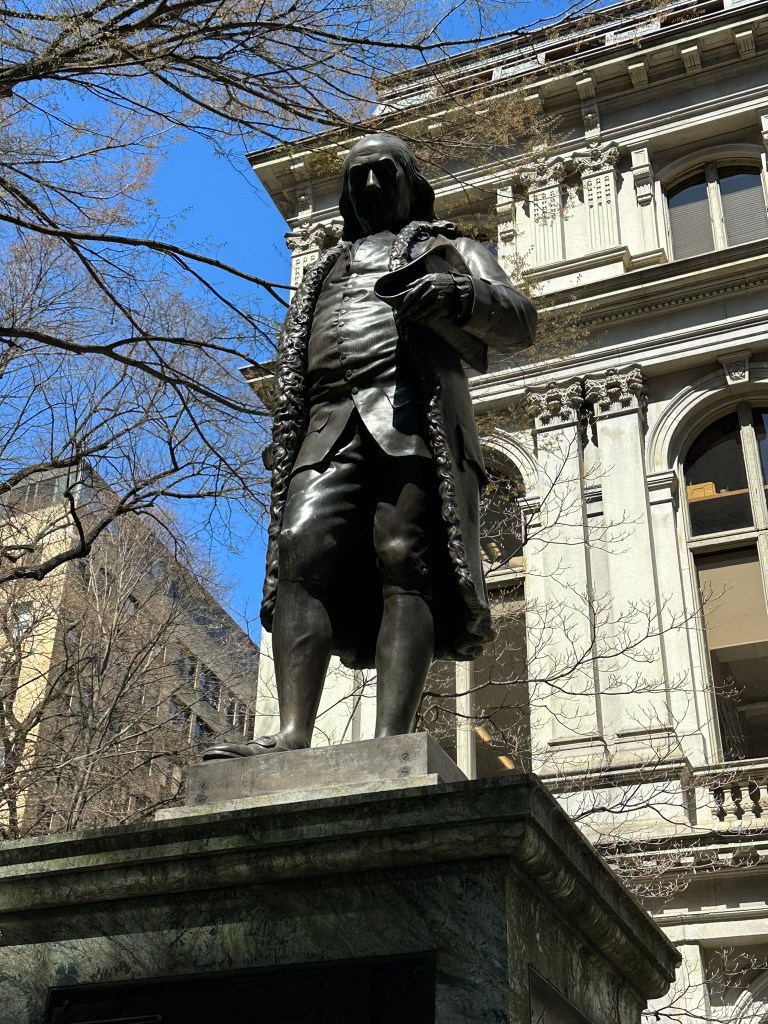
- The courtyard of the Old State House itself is an oasis in the middle of the high rises of downtown Boston with its Benjamin Franklin statue (a Boston Latin student) and sculptures depicting the beginning of the use of the Donkey and Elephant as mascots for the Democrat and Republican parties.
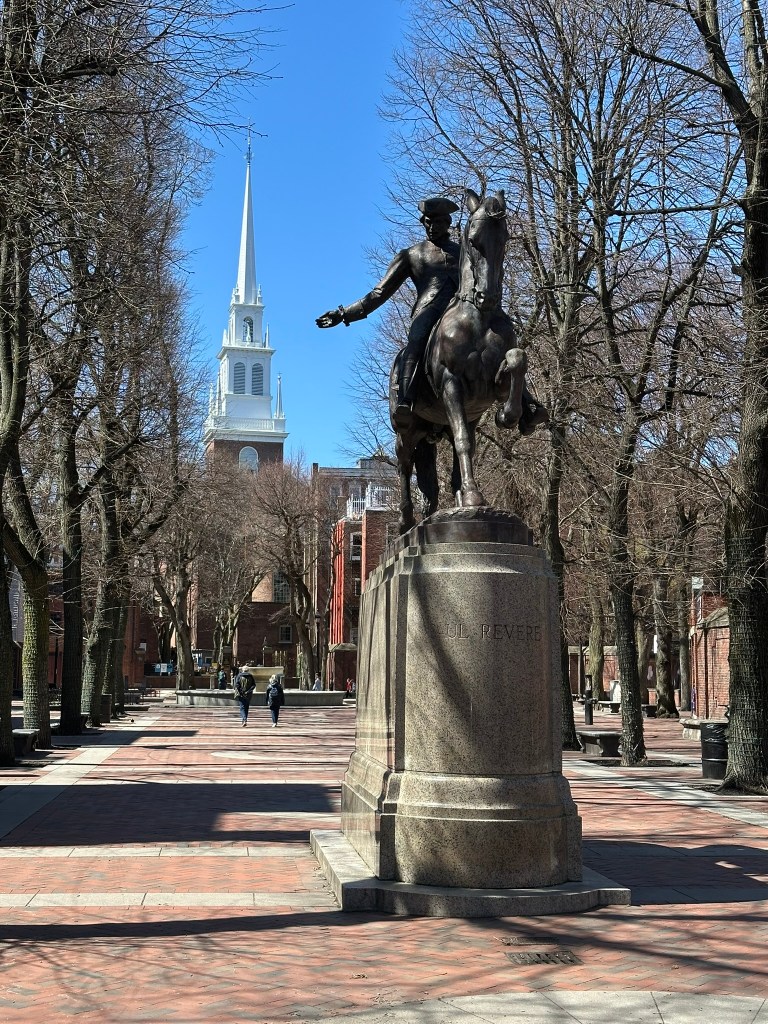
- The walk through Boston’s predominantly Italian north end to Paul Revere Square and the old North Church in which the “one if by land, two if by sea” signal was lit at the initiation of Revere’s midnight ride.
- The Paul Revere House itself is small but worth the visit and reasonable admission fee.
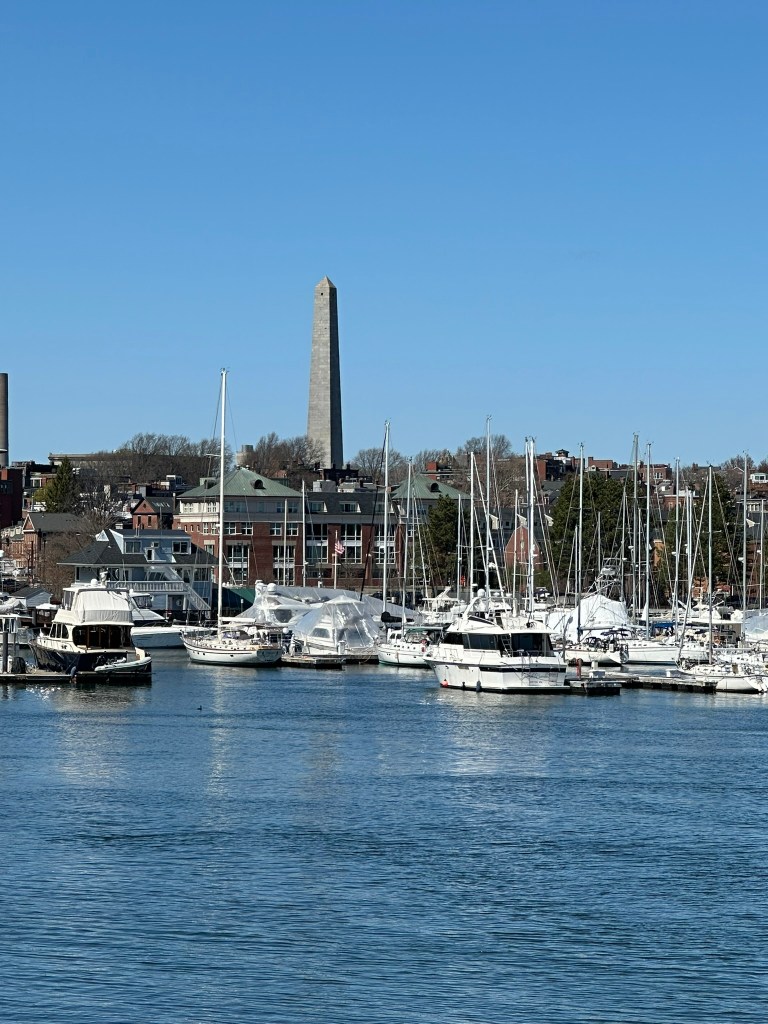
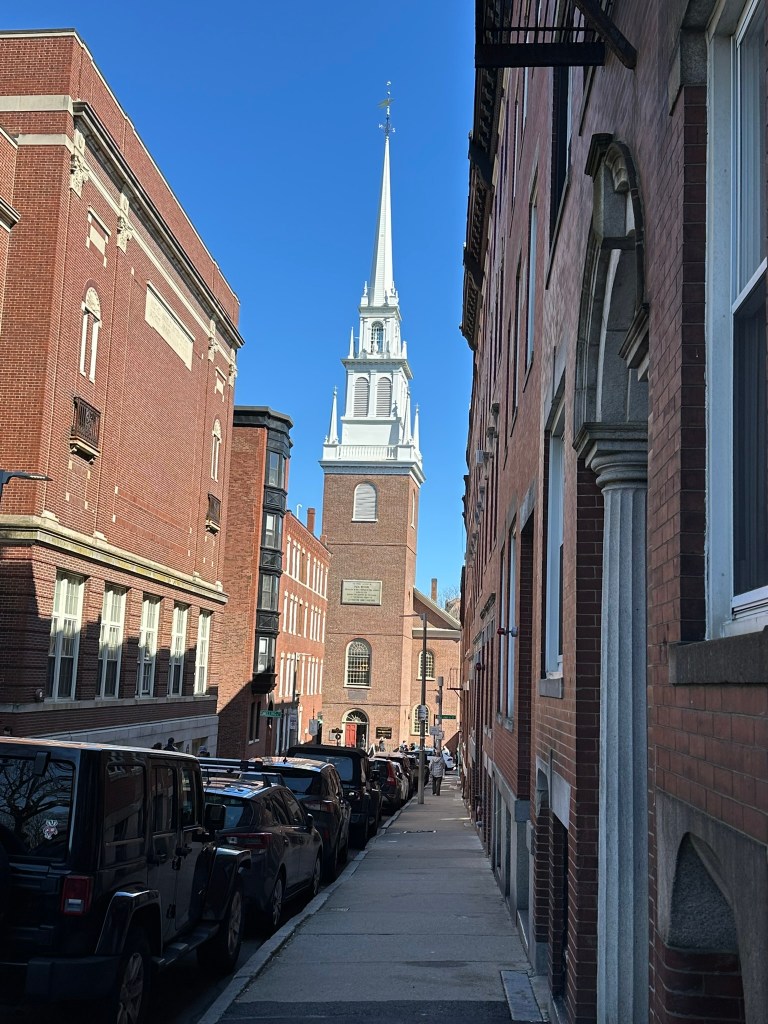
We chose a self-guided tour, but there are several options including one around Halloween to get a more macabre view of Boston’s history or a pub crawl version where you can hoist a glass to your patriotic forebearers.
This site is also helpful to use to identify the stops and get some information for your walk.
 The Traveling Ridleys
0 comments on “Following the Red Line of Boston’s Freedom Trail”