

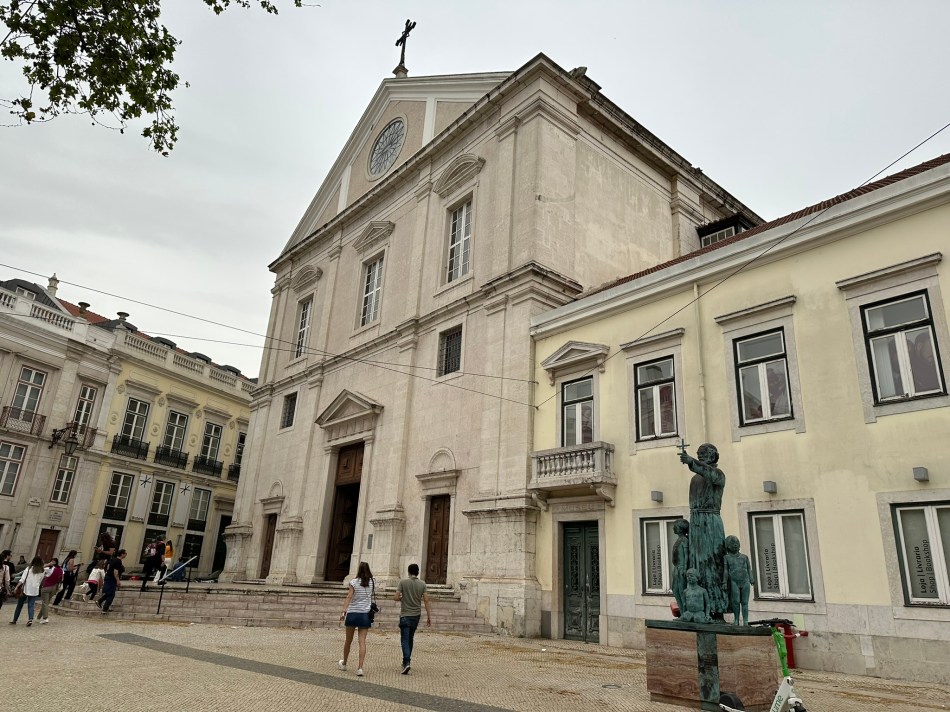
The church of São Roque (Saint Roch) sits atop the Calçada do Duque, the stairs from nearby Rossio Square into the Chiado and Bairro Alto neighborhoods. This relatively plain and non-descript appearing church contains a fabulously painted vaulted ceiling and several interior chapels. But, before your visit, it is best to read up on a little history to fully appreciate it.
The site where São Roque now sits was once outside of the city walls of Lisbon. During the plague and famine of 1505, which led to the Jewish Massacre in Largo do São Domingos and Rossio Square, this area became a cemetery for plague victims. King Manuel I wrote to Venice requesting a relic of St. Roch, patron saint of plague victims. Upon receipt of the relic, it was marched up the hill to the cemetery. A shrine to house the relic was built on this spot. The Brotherhood of St. Roch was formed and, to this day, maintains the present-day church.
Later on in the 16th century, after the founding of the Society of Jesus (the Jesuits), King João invited the Jesuits to Lisbon. The Jesuits ultimately built a church here beginning in 1555 which is now the oldest Jesuit church in Portugal. The church is constructed in the “Jesuit style” providing an auditorium ideal for preaching.
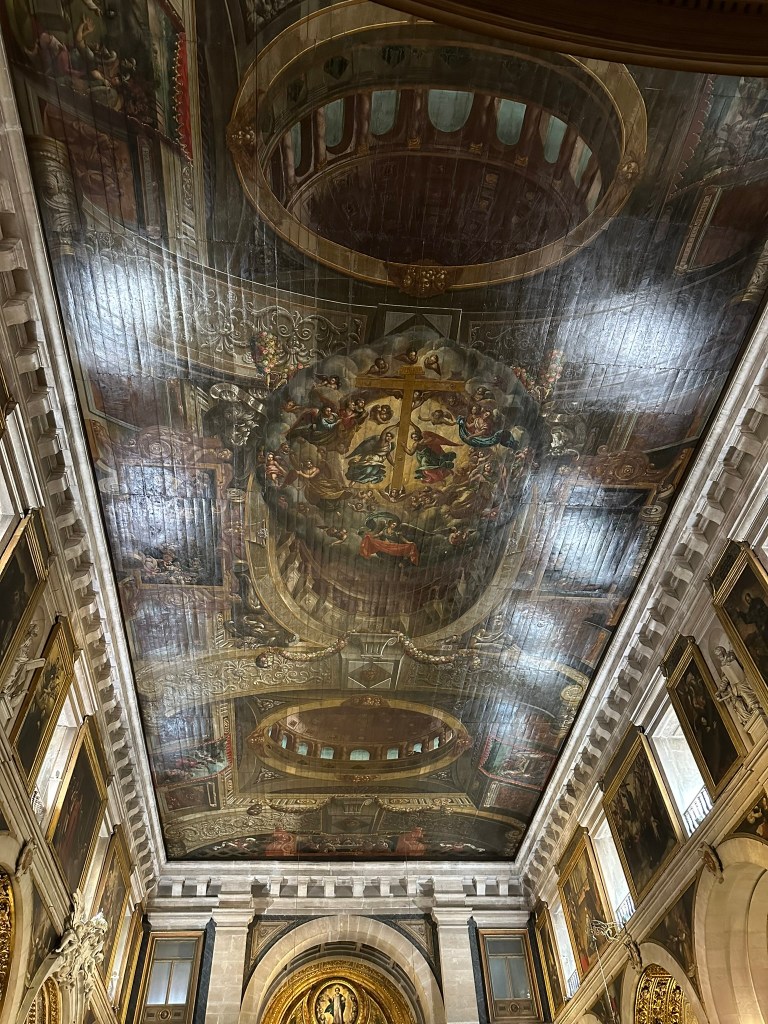
The church was initially open-air, as the Jesuits wanted a vaulted ceiling but later decided it would be flat and made of painted wood. The ceiling was painted between 1584 and 1590 and was done so with “feigned architectural details” to make it look like there were three domes in the roof. The painter who made the domes, Francisco Venegas, painted himself into one of the windows of the dome nearest the altar (see him peering over the edge wearing a cape). The centerpiece depicts the exaltation of the Holy Cross and at its corners are the symbols of the evangelists: the Eagle (John), Man (Matthew), Bull (Luke) and Lion (Mark). Among the panels on the edges of the ceiling and at the altar you can find the Miracle of Loaves and Fishes, the Last Supper and the Sacrifice of Issac. These and the centerpiece of the Exaltation were painted by Amaro do Vale. For more, check out this cool site which zooms in on various pieces. It will help you prepare to appreciate it when you visit.
The chapel of St. John the Baptist is known as the “world’s most expensive chapel” for its lavish decorations of gold, ivory, lapis lazuli and agate and the fact that it was ordered from Rome, took 5 years to build and its materials were transported by three different ships.
Also of note is the Chapel of St. Roque with its paintings depicting “the miracle of St. Roch”. The Chapel, and the maintenance of Sao Roque as the patron saint for the church, were part of the deal that the Jesuits made in order to build their church on this spot.
Alas, for the Jesuits, after the 1755 earthquake when the Marques do Pombal was reconstructing Lisbon, his mistrust and wariness of the church led to their arrest and expulsion from Portugal and the seizure of all of their assets, including their churches.
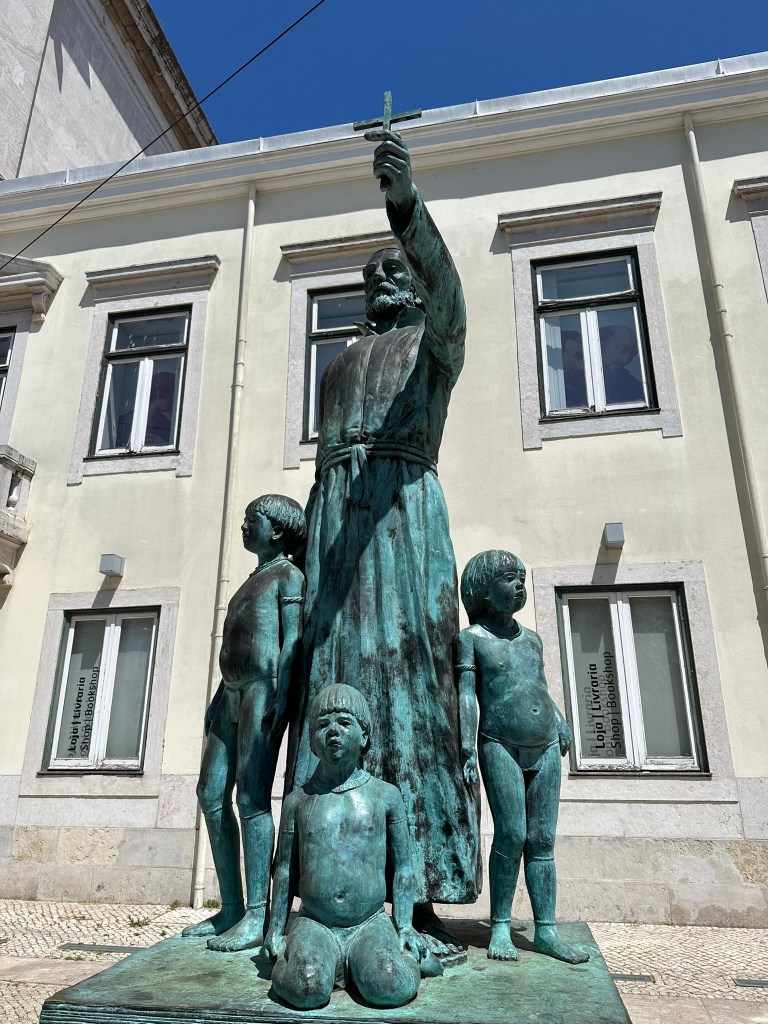
In front of the church, in Trinidade Coelho Square, stands a statue of António Vieira. Vieira was a Jesuit priest, missionary and tutor to the prince. He denounced the inquisition (or at least preached about tolerance towards the converted Jews: the “new Christians”. See more about Lisbon during that time period here) and slave-owning, forcing him to leave his missionary work in Brazil for Portugal. His anti-inquisition preaching and prophesizing the return of Saint John landed him in prison. His status is somewhat controversial. He has been condemned by some for his support for Portugal’s colonies, and being “selectively pro-slavery”. After the George Floyd protests went global in 2020, his status was defaced and covered with red paint.
Today, you can visit the church for free and its adjacent museum with its collection of Roman Sacred Art will cost a couple of euros.
Sources:
- https://en.wikipedia.org/wiki/Igreja_de_S%C3%A3o_Roque
- https://www.lisbonportugaltourism.com/guide/igreja-de-sao-roque-church.html
- https://www.lisbon.vip/lisbon-essentials/history-heritage/the-expulsion-of-the-jesuits-from-portugal-in-1759
- https://www.britannica.com/biography/Antonio-Vieira
- https://en.wikipedia.org/wiki/Statue_of_Ant%C3%B3nio_Vieira#:~:text=A%20statue%20of%20Ant%C3%B3nio%20Vieira%20stands%20in%20Trindade,in%20Colonial%20Brazil.%20It%20was%20unveiled%20in%202017.
 The Traveling Ridleys
0 comments on “The Roch of Bairro Alto: Lisbon’s Church of São Roque”