


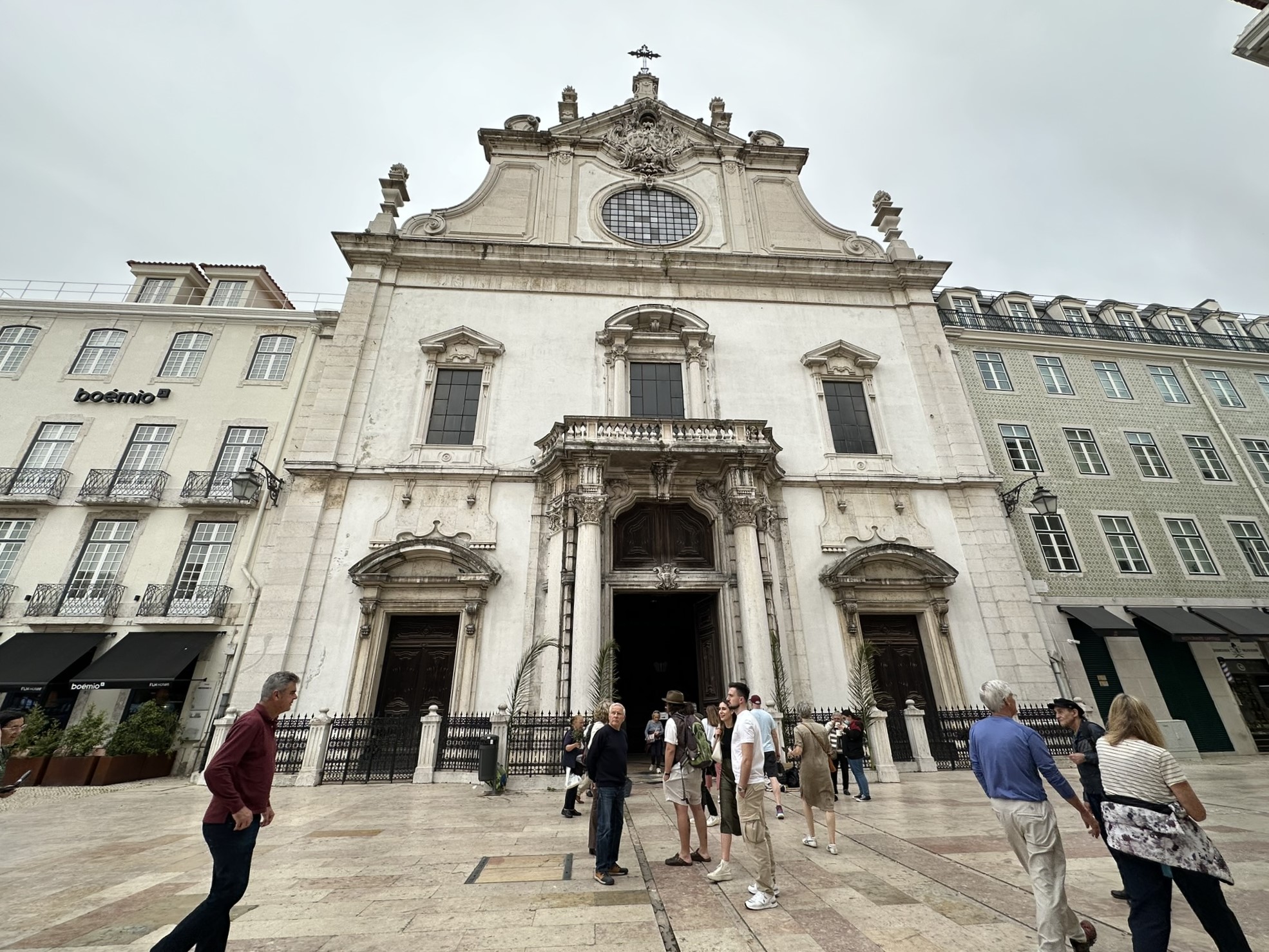
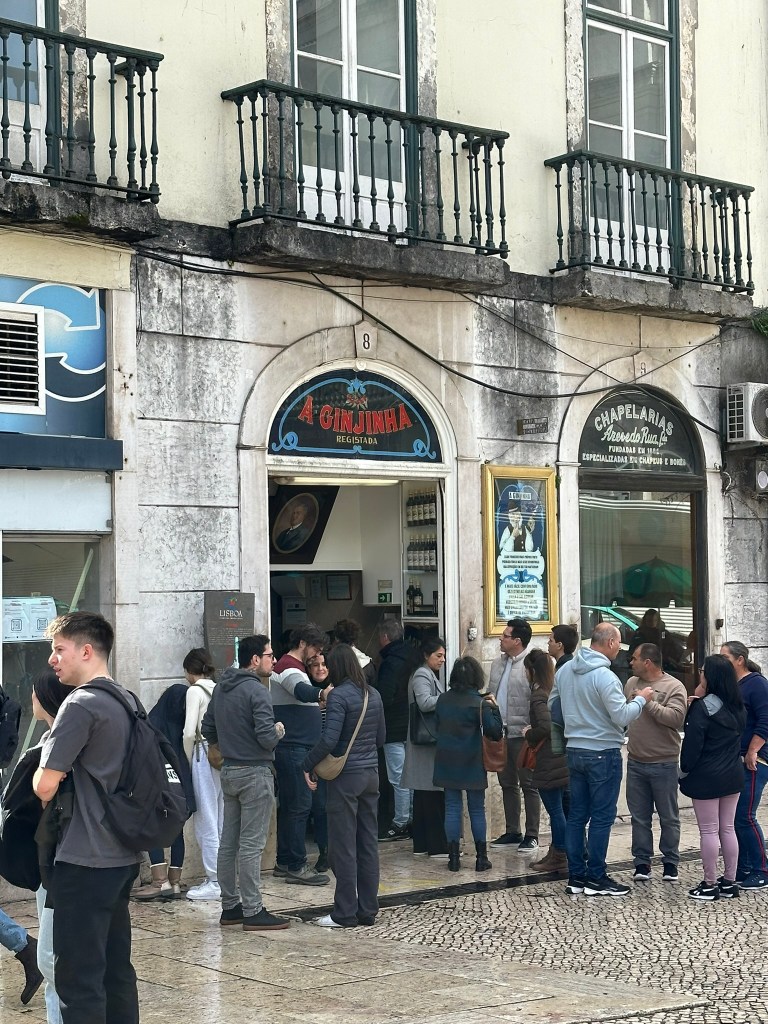
Just off the northeast corner of the black and white tiled Rossio Plaza in Lisbon, sits a small but busy square with a ton of history: São Domingos. Today, as you enter the square from Rossio, you’ll likely see groups of mostly African migrants and immigrants, tour groups in front of the church to your right or in front of the orb in the center of the square, along with queues of tourists ready to taste Ginjinha, Portugal’s cherry liqueur.
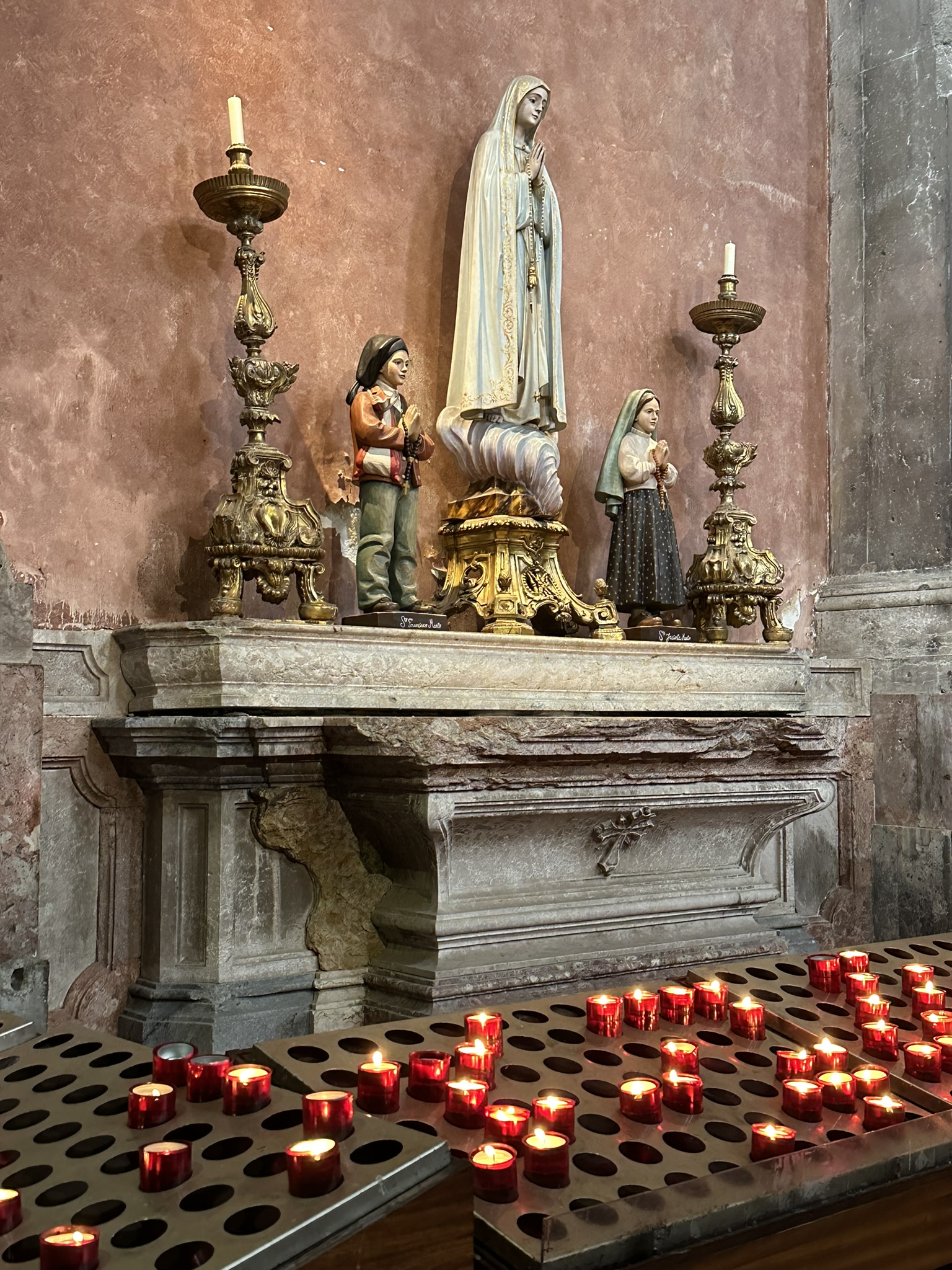
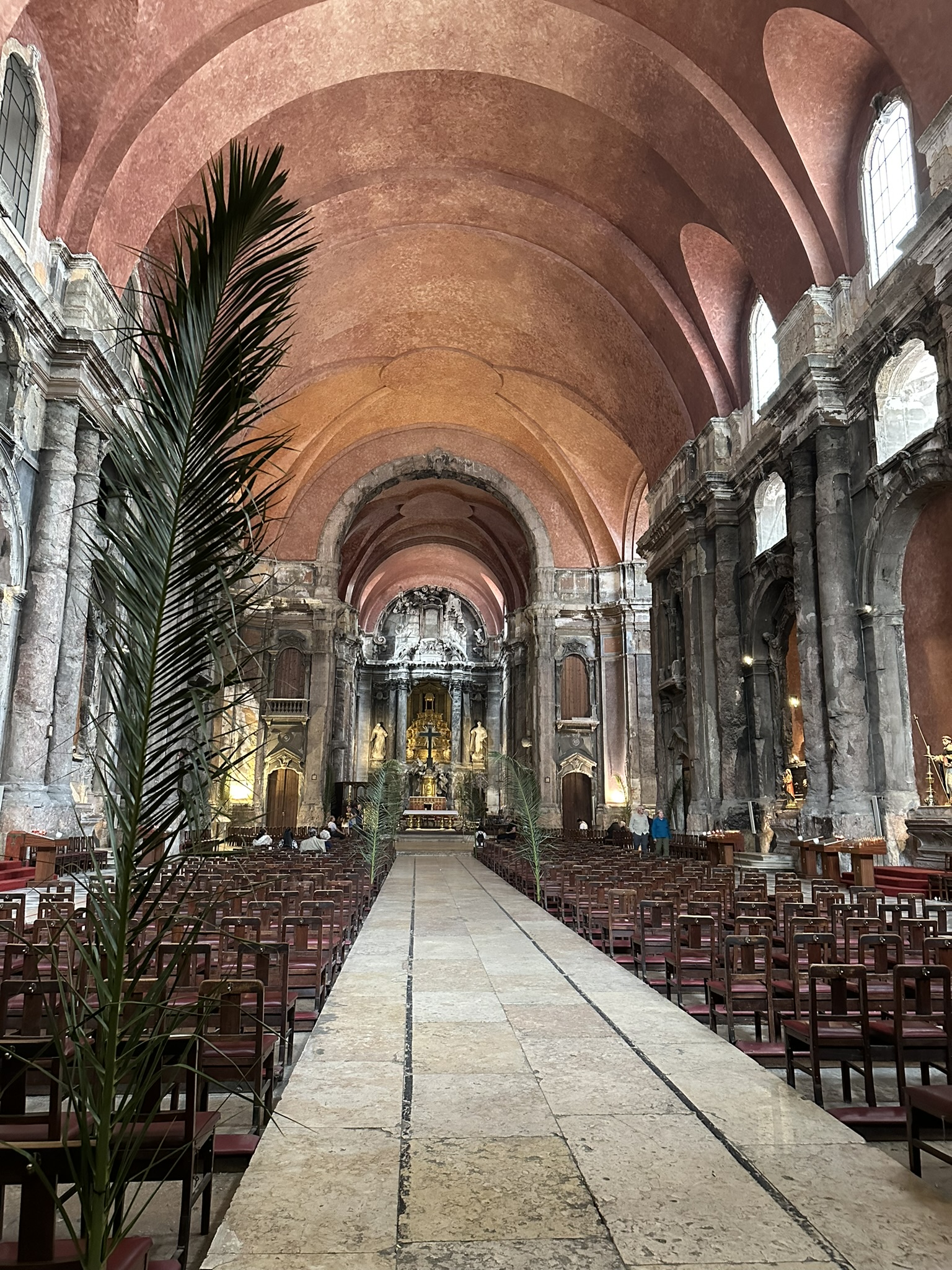
The Church. The square is named for the São Domingos church, the aforementioned church on your right. São Domingos is now a National Monument. It has been destroyed and rebuilt several times during its lifetime. Originally built in the 13th century and once host to royal weddings, it was first destroyed in the 1531 earthquake, it was rebuilt in 1536 only to be nearly destroyed again in the massive 1755 earthquake and fires which also destroyed much of Lisbon. The 1755 earthquake rumbled on All Saints Day and, as such, the parishioners were amassed to worship in candlelight, whose flames ignited the church fire sending terrified worshipers out into the streets to be met by the inundations of the tsunami which followed the earthquake and killed so many of Lisbon’s residents. After being, yet again, reconstructed, a fire in 1959 destroyed the interior decorations of the church: altars, engravings and valuable paintings, and when the church reopened in 1994 the reconstruction was done so as to not hide the scars of the fire. Today, in a visit to the church you can see the blood red marble walls and visit the statue of “Our Lady of Fatima”, the Virgin Mary with two of the children to whom she appeared in May of 1917, in the depths of World War I, at Fatima, Portugal with a hopeful promise of peace.
1506 Massacre. But the story of São Domingos does not end there. It was here that the 1506 Holy Week Massacre of Lisbon’s Jews began. In the late 15th century, approximately 100,000 Jews fled Spain’s expulsion for the refuge of Portugal but in 1497, under the administration of King Manuel I, Jews were forced to convert and become “New Christians”. On April 19, 1506, parishioners gathered at São Domingos to pray for an end to the plague and drought which was punishing Portugal. One worshiper claimed to have seen the face of the Messiah appear above the altar as a message to the faithful, but a “New Christian” argued that it was merely a reflection of light. Not to be denied their miracle, the gathered Christians beat the denier to death.
These “New Christians”, already under suspicion, were blamed for the drought, famine and plague and were rounded up for a three-day Holy Week massacre fueled by Dominican friars who promised absolution from the last 100 days of sins for anyone who killed the heretics. Adjacent Rossio Square became the site of massive make-shift bonfires used to burn the “offenders”. And it was here that the Portuguese office of the Inquisition was established shortly thereafter on the site of the current National Theater.
The sins of the massacre are remembered by two monuments in the square. The first, a small stone orb in the center of the square adorned with the Jewish Star of David remembers those killed on those horrible 1506 days and along the wall is a monument to remind us to never forget and claims Lisbon as a “city of tolerance” in 34 languages.

Gathering Place. Today, the population of São Domingos Square is a mix of tourists and immigrants, many of whom have arrived from the former Portuguese African colonies of Angola, Mozambique and Portuguese Guinea. Ironically, they choose this square: a former 1500s slave market, to gather.
But today, the square is a peaceful place with tour groups, local Lisbonites and immigrants alike mingling and socializing, learning the history or tasting that famous Portuguese cherry liqueur at A Ginjinha at the square’s southwest corner.
Sources:
- Rick Steves’ Audio Europe, Lisbon City Walk.
- https://amensagem.pt/2022/04/19/largo-sao-domingos-rossio-lisboa-massacre-judeus-historia-comunidades-africanas/
- https://www.portugalvisitor.com/lisbon-churches/domingos#:~:text=History%20Igreja%20de%20S%C3%A3o%20Domingos%20dates%20originally%20from,also%20the%20home%20of%20the%20Inquisition%20in%20Portugal.
- https://pt.wikipedia.org/wiki/Igreja_de_S%C3%A3o_Domingos_(Santa_Justa)
- https://pt.wikipedia.org/wiki/Massacre_de_Lisboa_de_1506
- https://lisbon-a-love-affair.com/2020/10/03/the-church-of-sao-domingo-where-the-stones-cry/
- https://www.urbstravel.com/post/history-of-igreja-de-sao-domingos
- https://lojascomhistoria.pt/shops/a-ginjinha
 The Traveling Ridleys
0 comments on “Lisbon’s Largo de São Domingos: A Whole Lotta History in One Little Square”