

For Christmas week, we elected to spend much of it south of home in Portugal, in Tavira Portugal of the Algarve and the capitol of Andalusia: Sevilla (Seville) Spain.
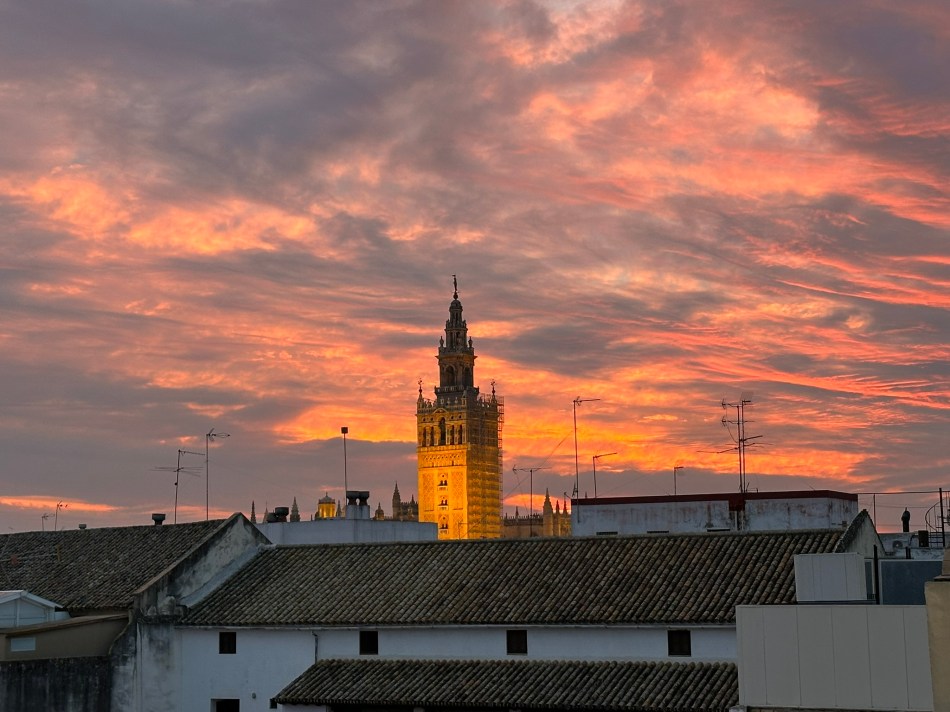
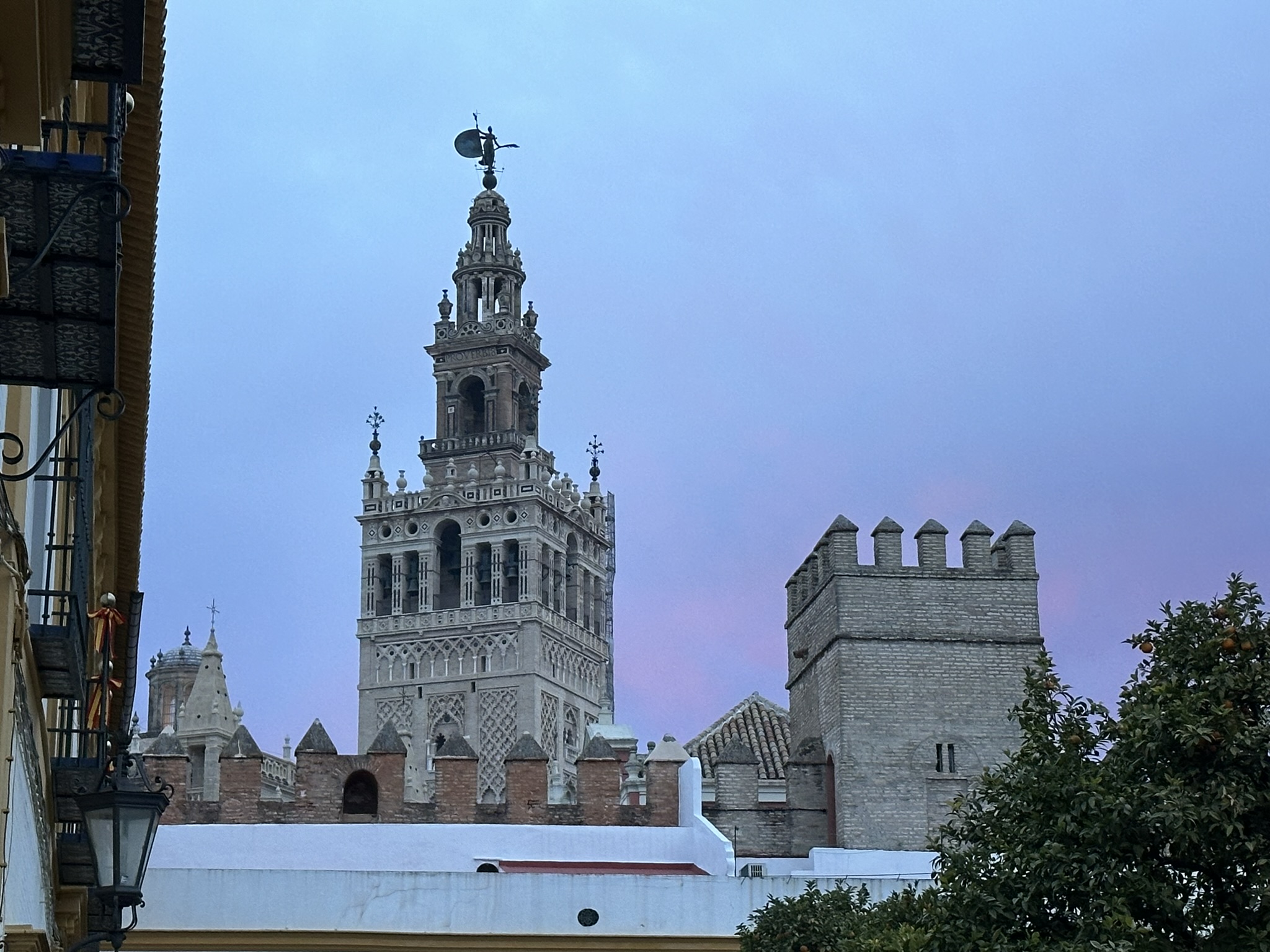
Starting Out. As is our custom, when we arrived in Seville, we struck out to get oriented to the city. As is often the case, we did this with the sounds of Rick Steves buzzing in our ears. His walking tour is a little more than an hour long and takes you around Seville’s Cathedral, pointing out interesting details about the cathedral and, especially, the Giralda tower with Roman bricks as its base, moorish designs running up its sides to its top where the call the prayer was once issued by the muezzin and now is executed by the Christian bell tower.
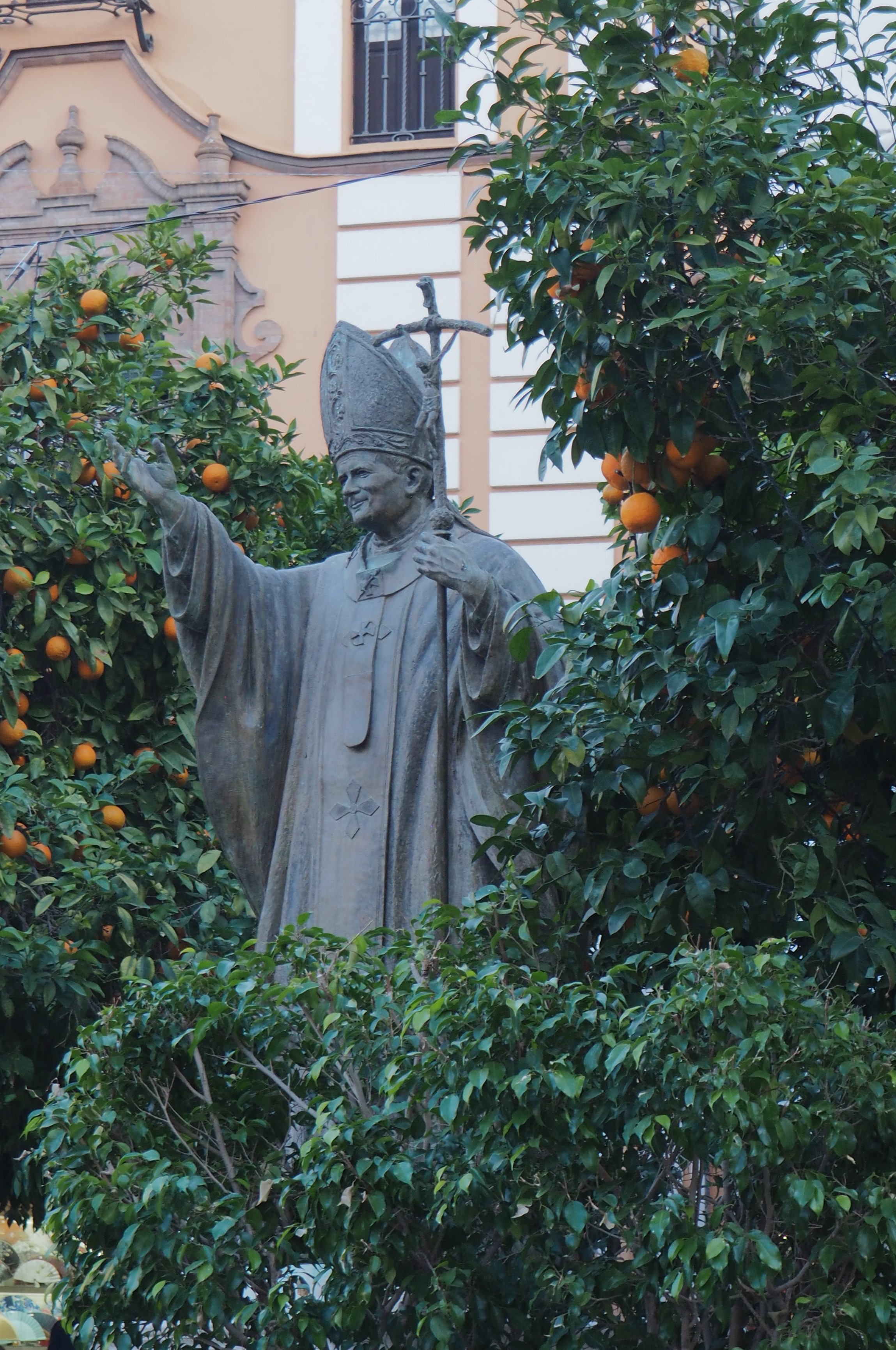
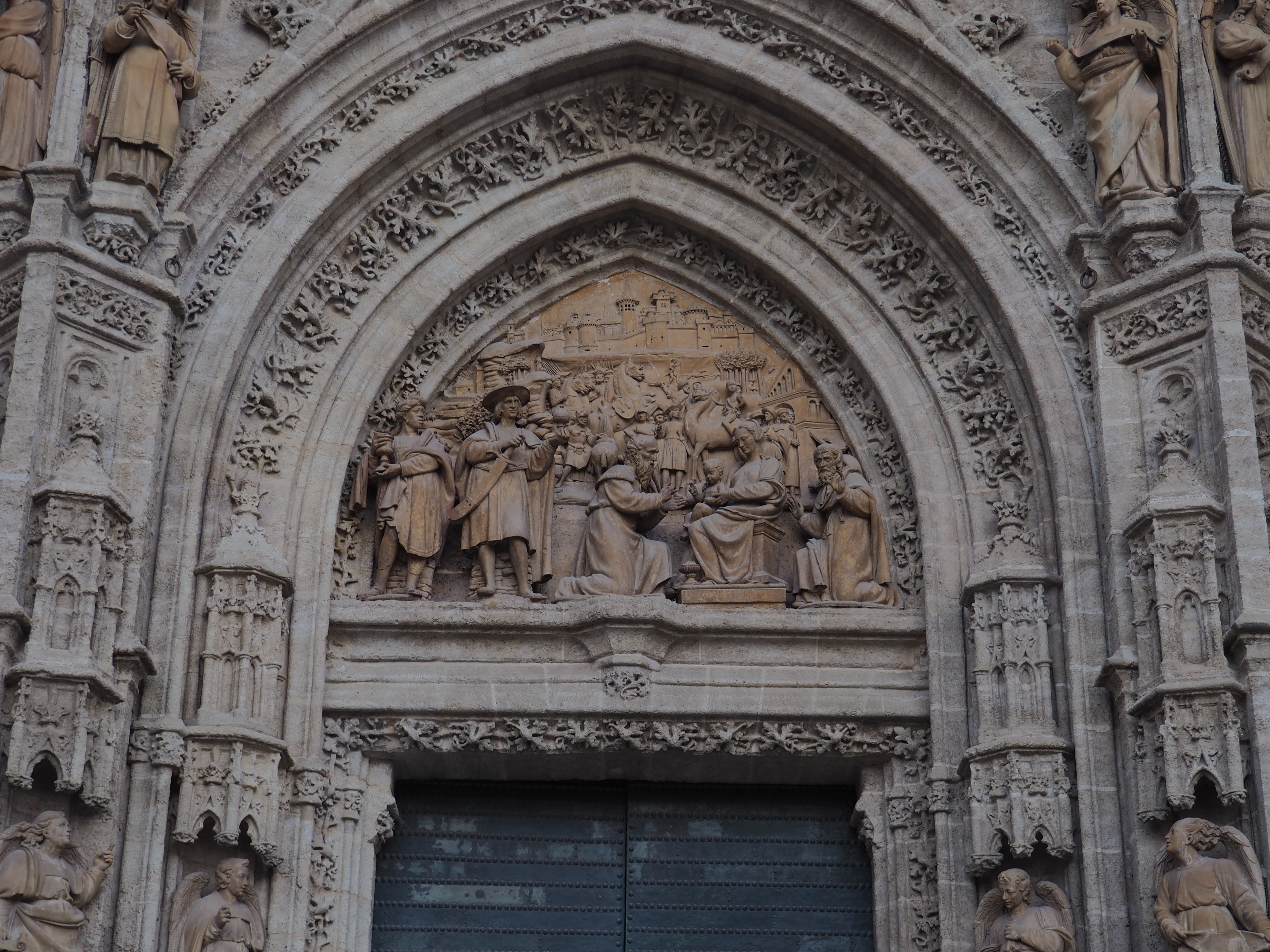
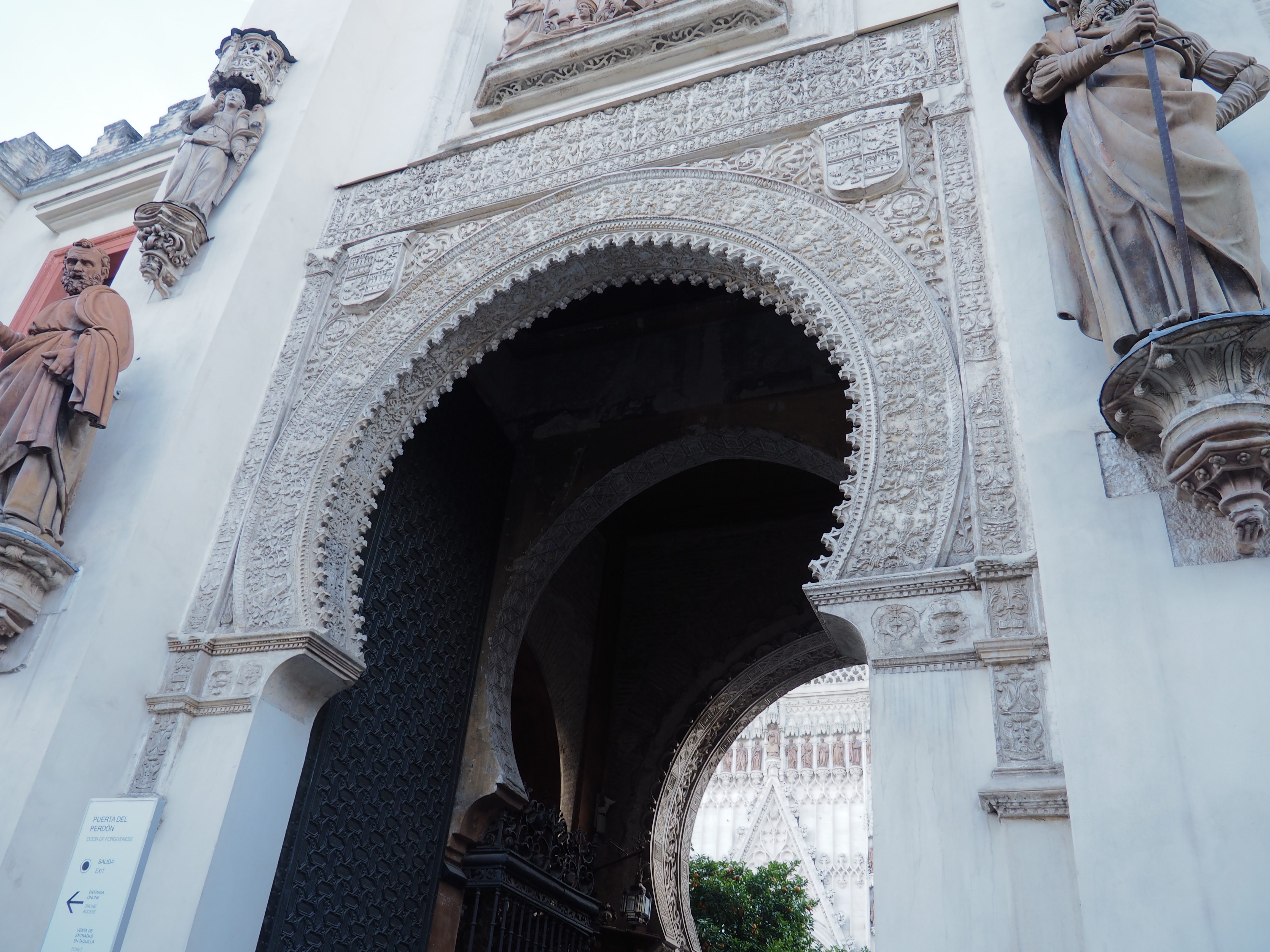
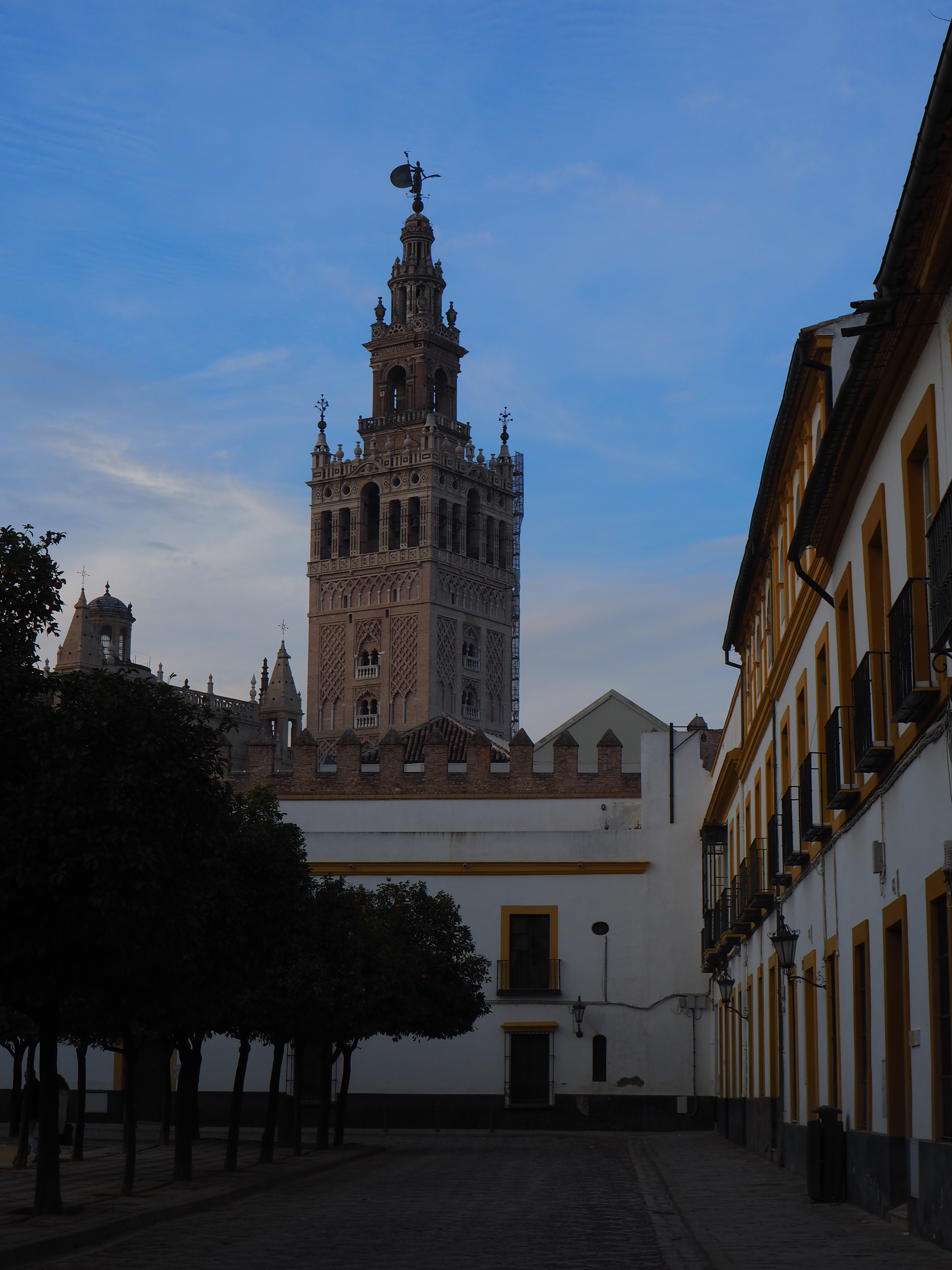
Around Seville’s Cathedral
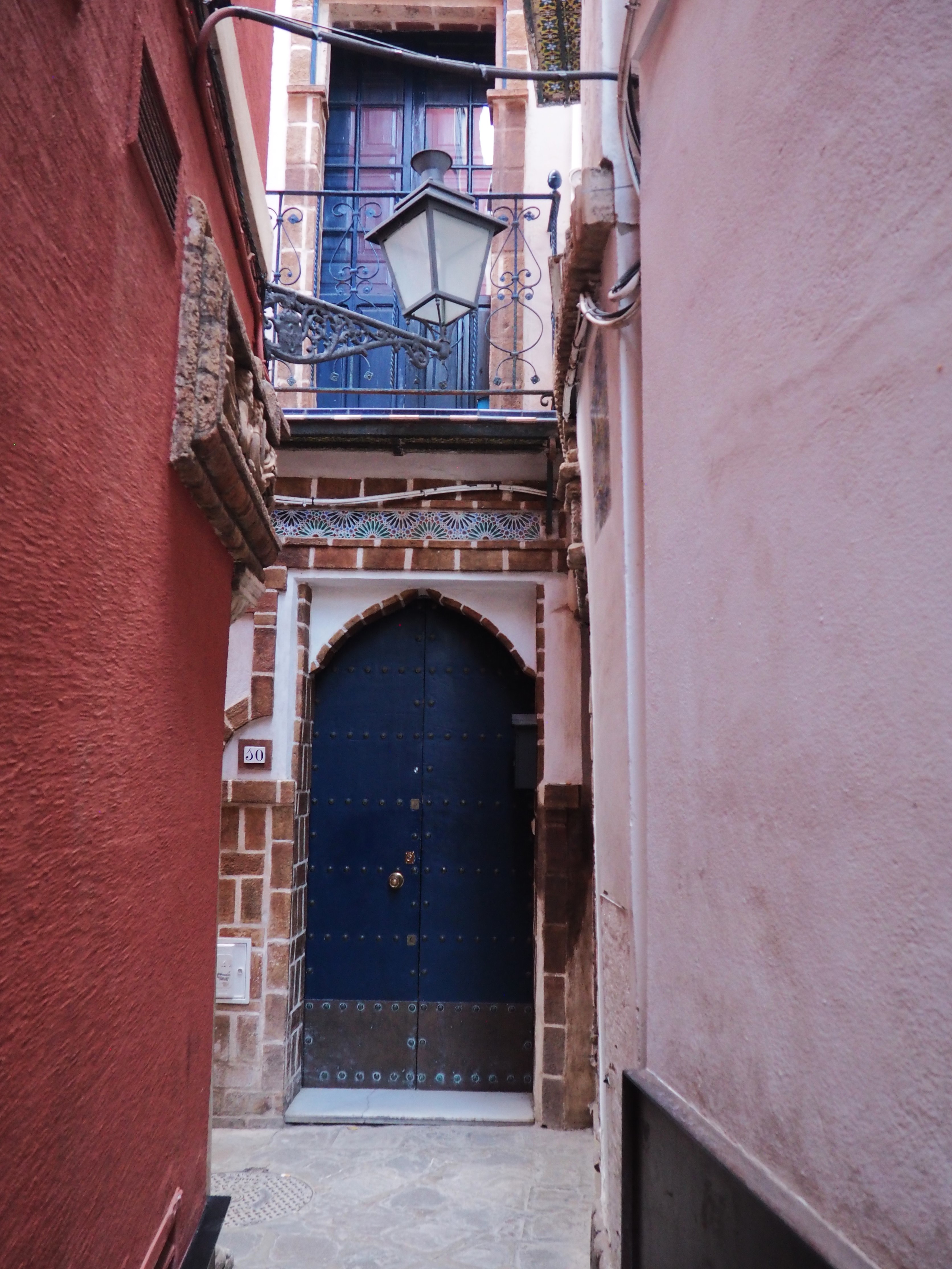
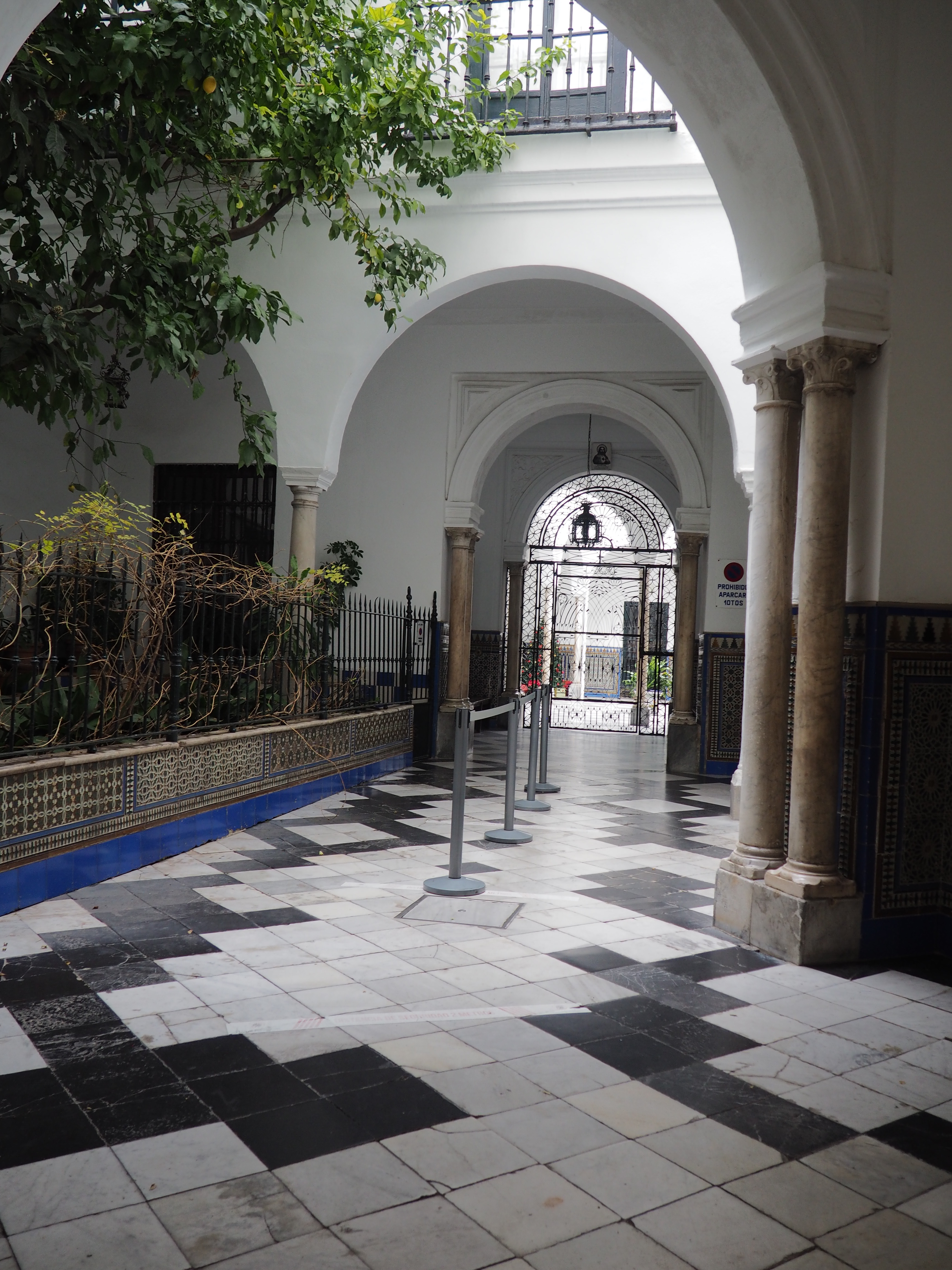
The walk winds you past the Alcazar, through the Jewish quarter and drops you into hidden squares and plazas as you wind your way, circuitously, back to where you began.
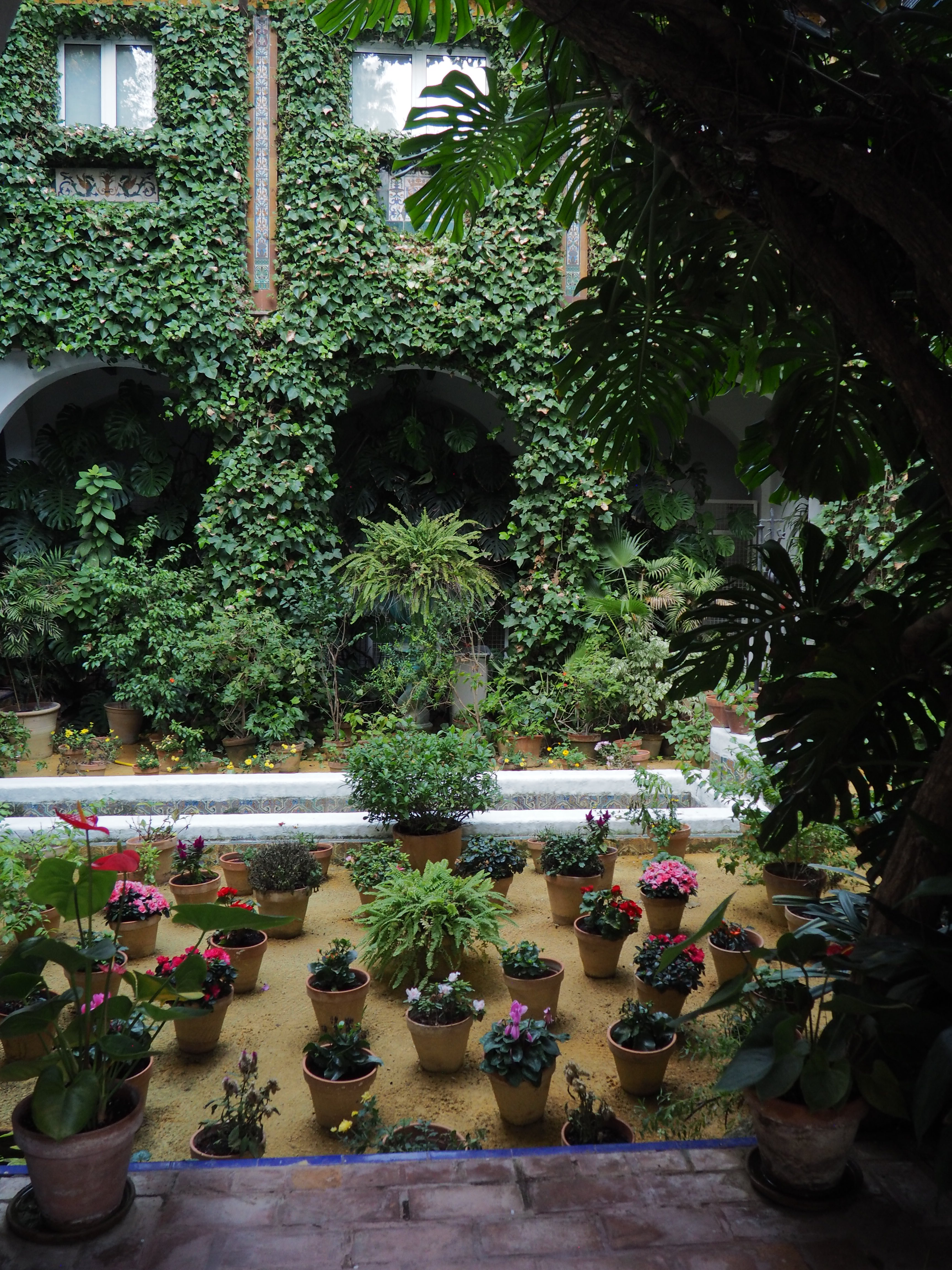
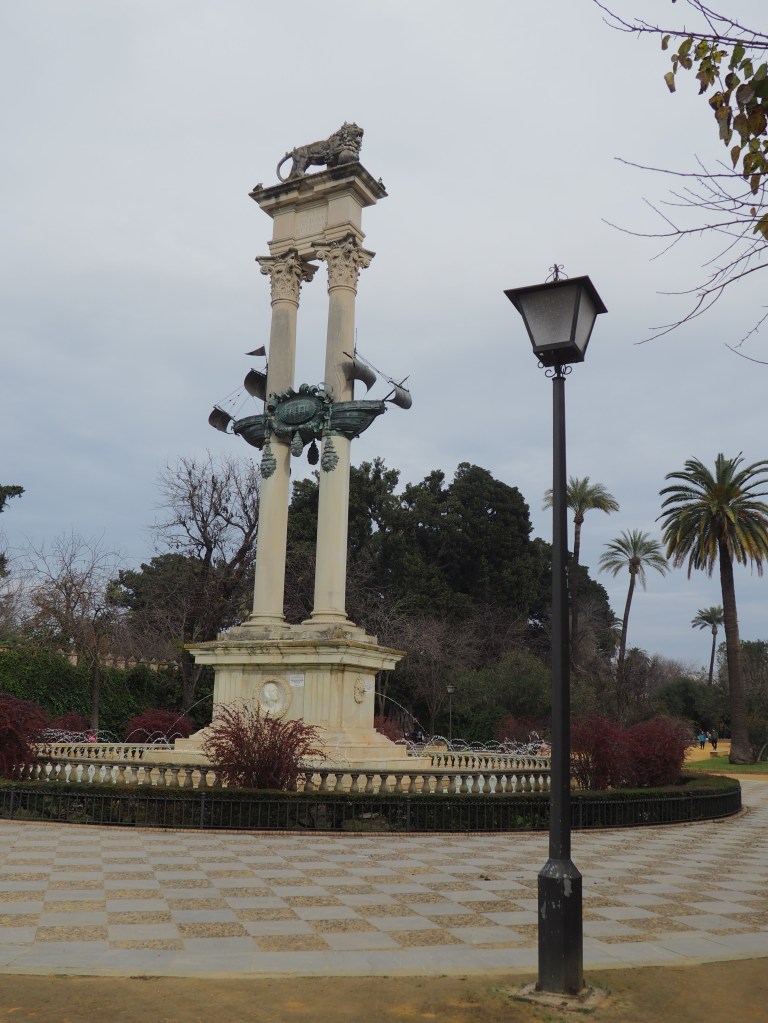
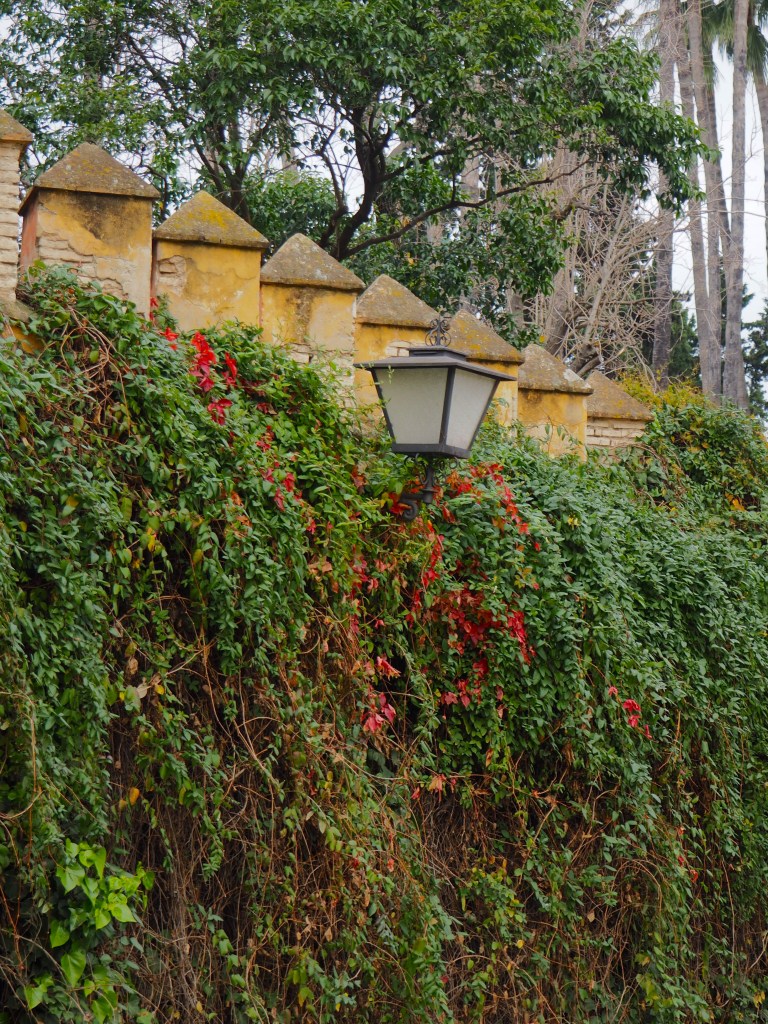
If you like a good garden, there are lots of public garden options as well, adjacent to the Alcazar, is the free Paseo de Catalina de Ribera park with its monument to Christopher Columbus and the gardens around the Plaza de España are extensive.
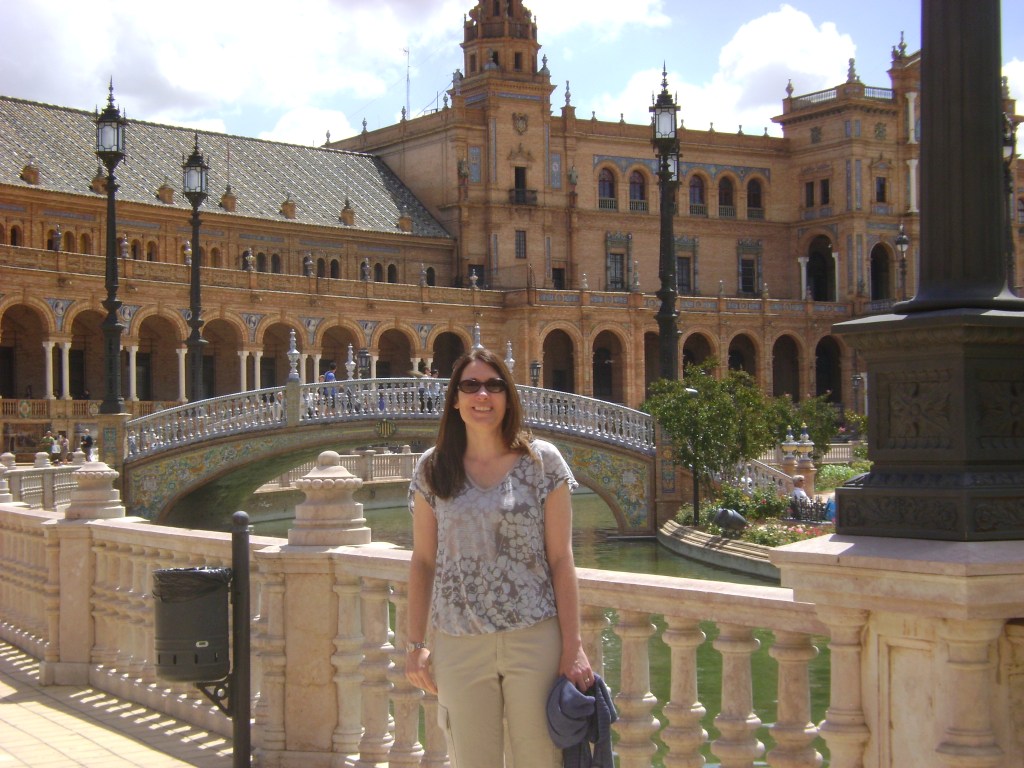
Real Alcazar. Poor planning. All online tickets were sold out until after the New Year. All guided tours as well. Hmmm. I guess a lot of people visit Seville for Christmas? Seemingly so. Last time we came to Seville, our recollection was that we marched right in to the Alcazar without pre-planning. That must be wrong.
Same day tickets go on sale at 9am. About 400 are available daily. No advance purchase for the next day available for the waiting crowd. Our hotel told us to queue up between 7:30 and 8am so we were there as the Giralda tower struck 7:30 fresh off a night’s sleep to the lyrical music of dumpsters being emptied at 1 and 6am outside our window. Twice we were counted while in line as the countdown to opening of the ticket office slowly crawled by in the cold of pre-dawn December. More than twice the people after ticket #400 or so were shooed away with no hope of admission that day. It was an experience. Cold and bleary eyed we gripped our tickets like Roald Dahl’s Charlie and Grandpa Joe for our late afternoon admission and headed for our apartment for breakfast, coffee and a bit of a lie-down.
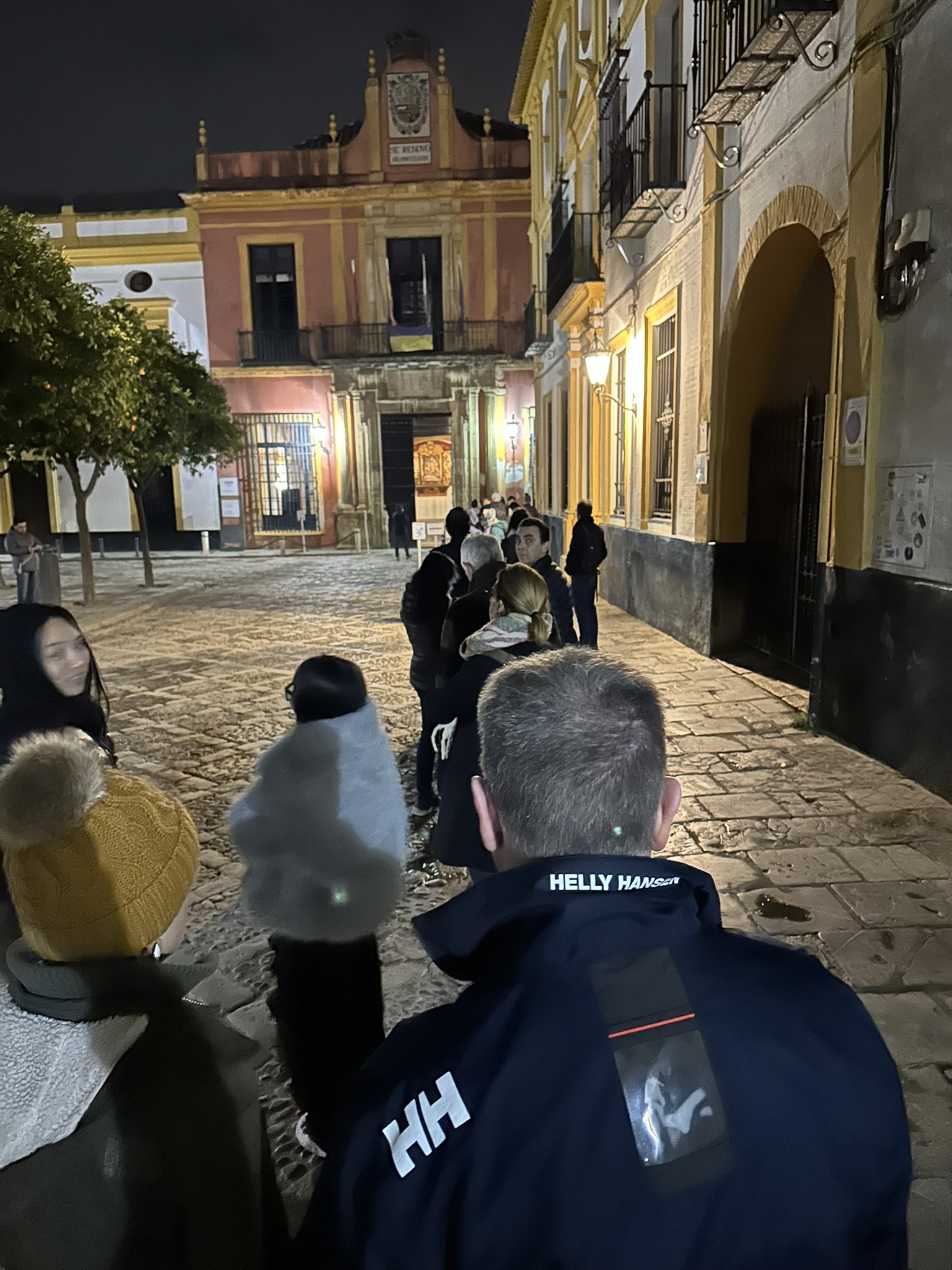
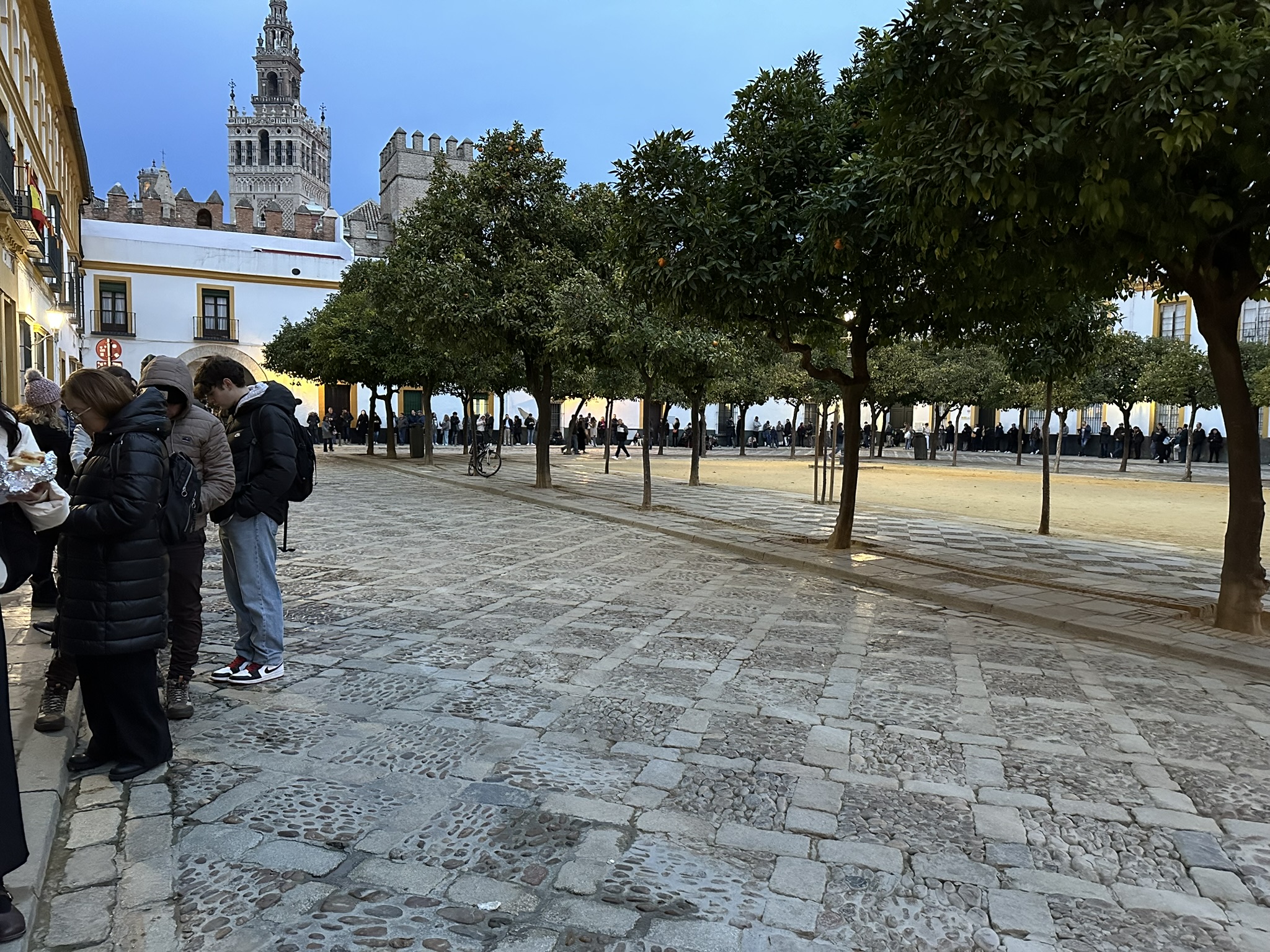
Passports are required (or another form of ID, including an EU citizen card or a driver license, but I’d play it safe and bring your passport as you wouldn’t want to get to the front of the queue after a couple of hours and be turned away for lack of proper identification). Disabled people, so the sign says, need to “prove their disability” to get their discount, but we didn’t see anyone trying to either get a discount or fake a disability. Sales are by credit card only. Or, just plan ahead and book online and save yourself the early morning hassle.
The Alcazar is the oldest royal palace still in use in Europe, the upper stories still being occupied by the royal family, and it is huge. We didn’t remember it as being as big. We must have hit the main rooms, strolled through the garden and left. Give yourself time to wander through rooms of Islamic decorated designs and azulejos, into gardens with water features and fountains and through the extensive garden. I bought the downloadable audio guide which wasn’t really worth it, except for the descriptions of the ambassador’s hall, including a description of the Game of Thrones scene filmed there and that it turned us on to seek out the baths of Doña Maria de Padilla (lover of Pedro I) where she is said to have bathed and entertained her lovers. Legend has it, Pedro would require visitors to drink the water from the bath to gain admission to an audience.
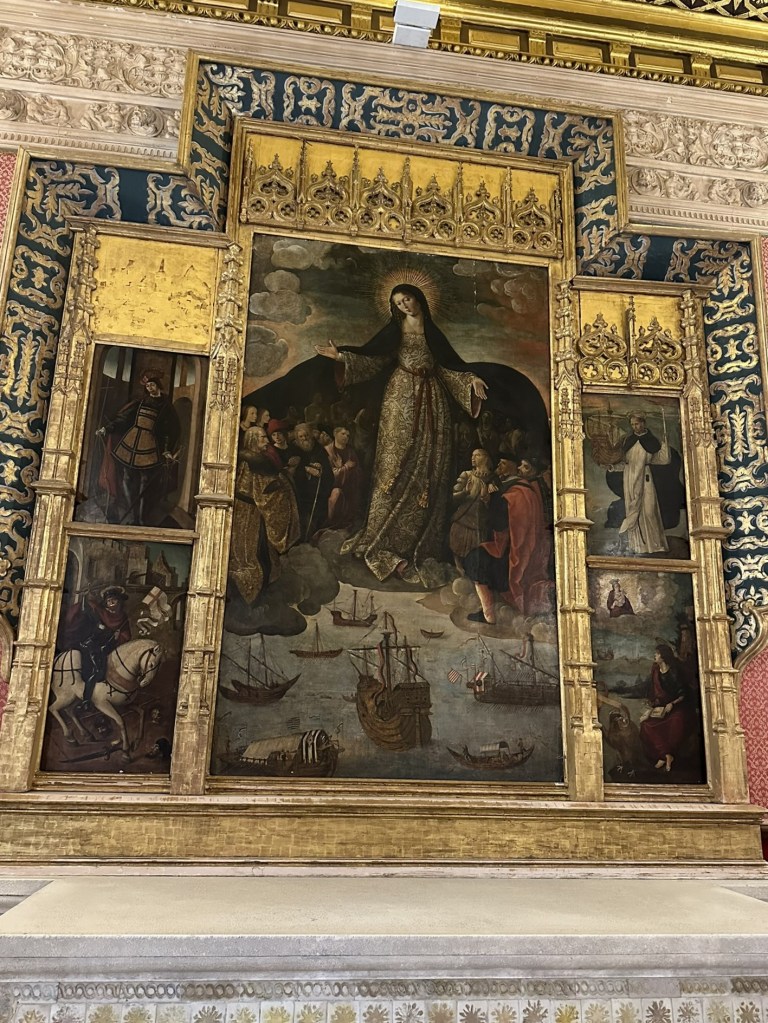
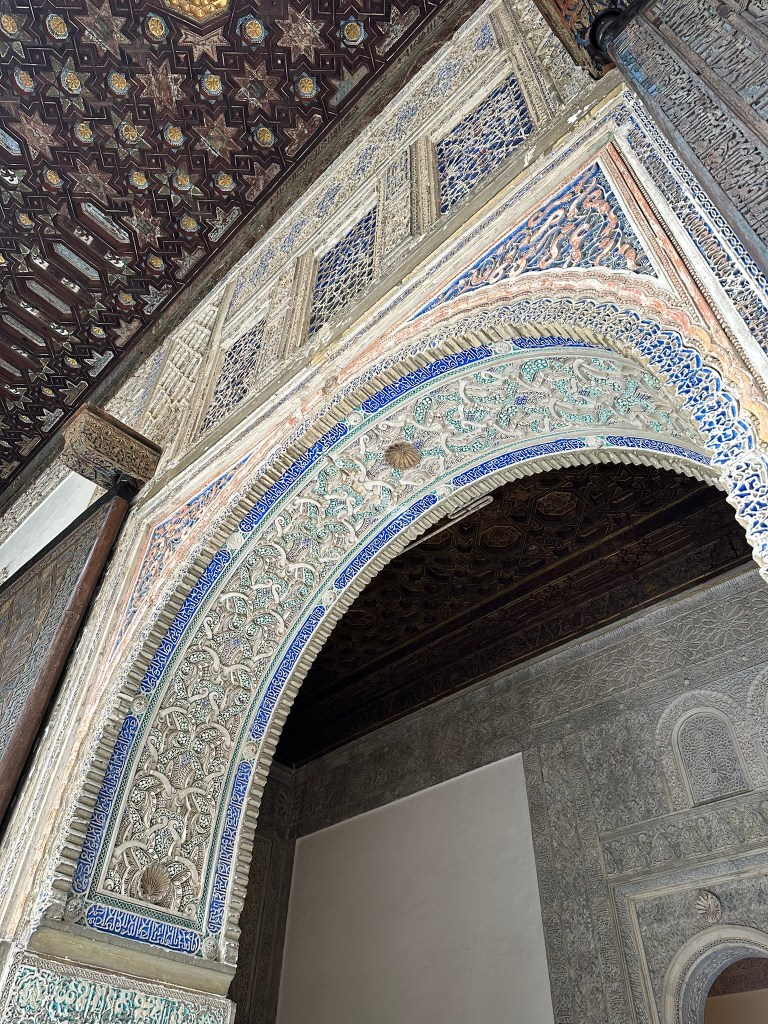
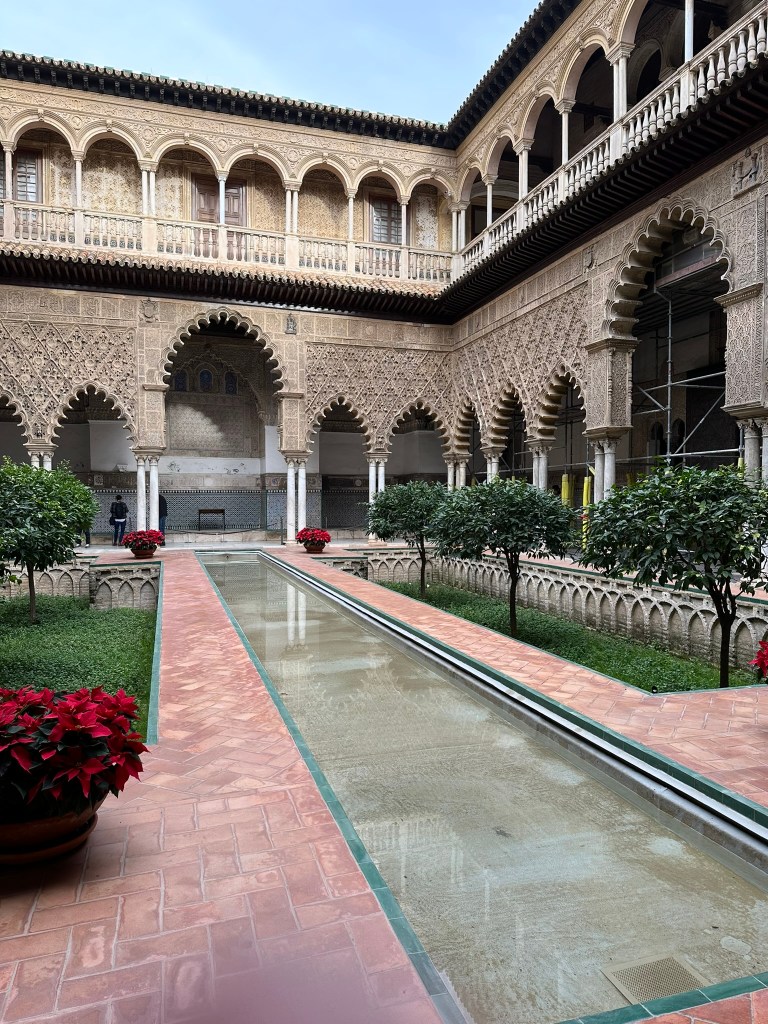
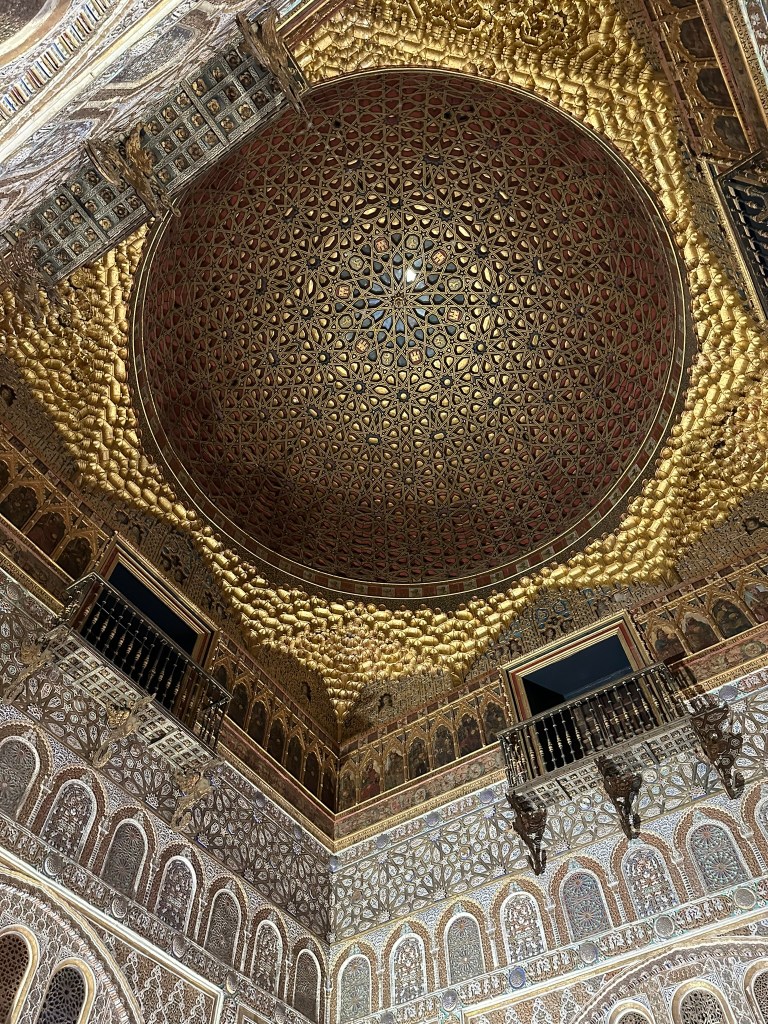
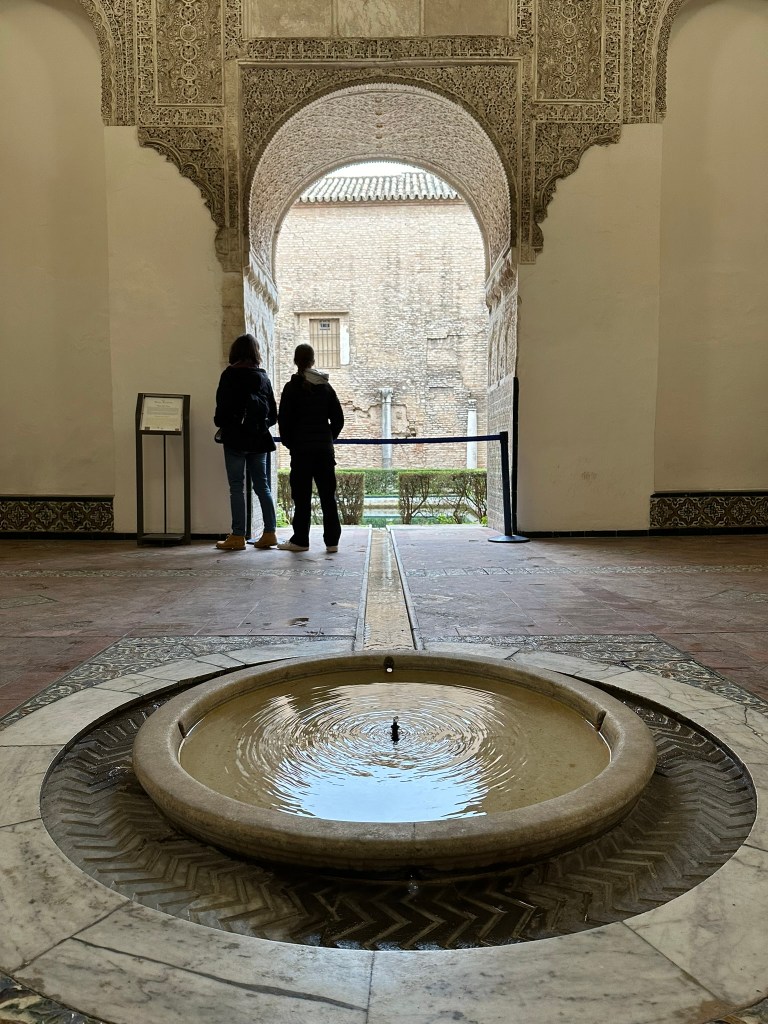
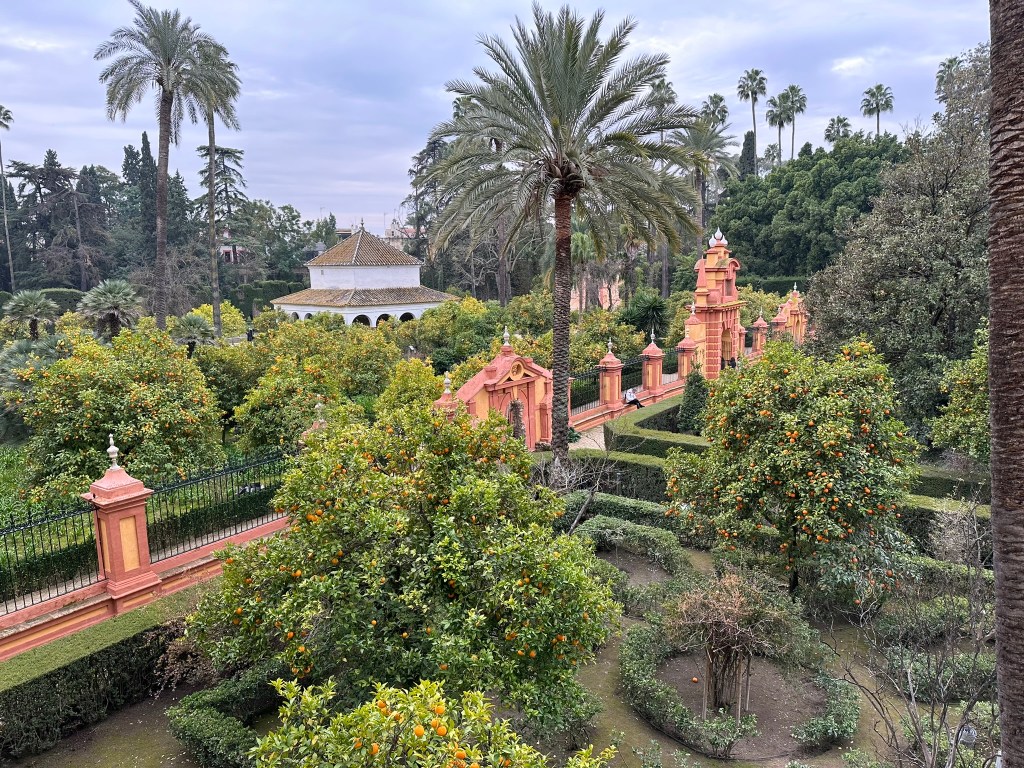
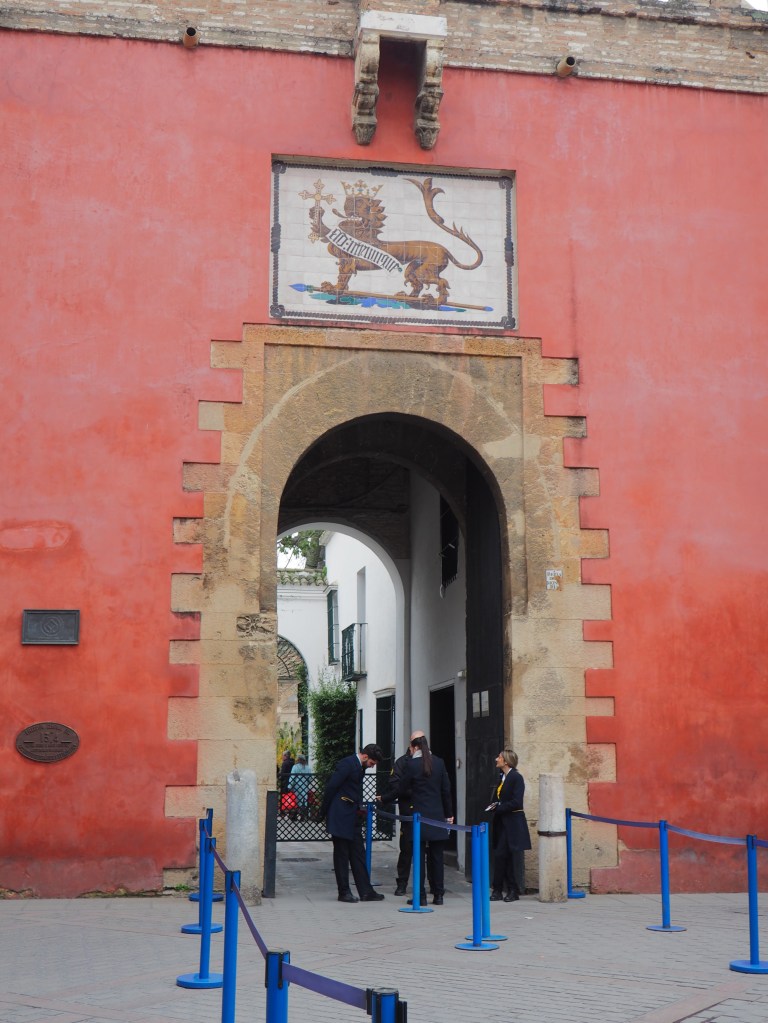
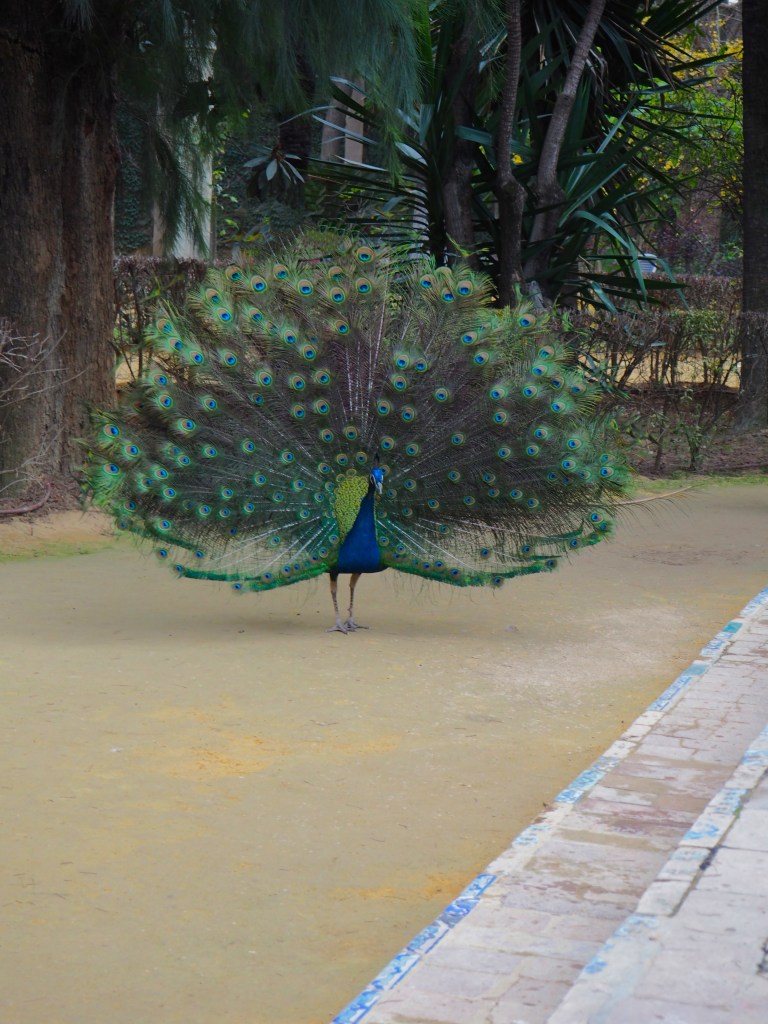
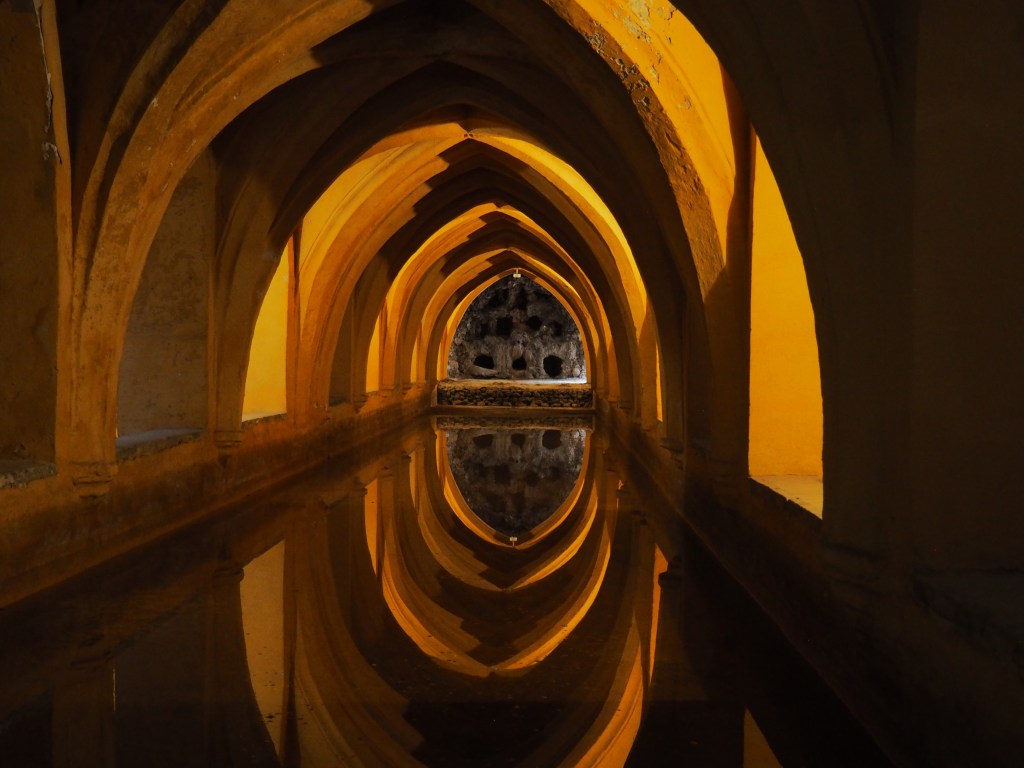
The Alcazar was once the Islamic citadel of Sevilla dating to the 10th century. It became a more elaborate palace complex under the Abbadid dynasty. After the reconquest in 1248, the Castillian kings continued to add and replace palace buildings and gardens to the complex in the “mudéjar” style of architecture. We overheard the Irish guy in front of us in line sarcastically quip to his wife that after the wait, it better be (expletive deleted) amazing. It was. I hope he thought so to.
Flamenco. While in Sevilla, we thought we best check out Flamenco. We asked our hotel to book us a reservation at a “more authentic” show (they are all touristy). We landed at La Cantaora and authentic it seemed to be. While we had declined the dinner option, there must have been some miscommunication as tapas awaited us upon arrival and a plato of carne soon followed. Such is life. We moved our tapas reservation to the next night.
Flamenco has an interesting history. A music and dance of the Roma gypsies it feels it with almost carribbean flair and a dash of moorish incantations. Once scorned by the elites as low brow and by the church as ribald and pornographic, it was nearly purged from Spain during the reign of the dictator Franco. But, to encourage tourism, Franco began promoting Flamenco to attract visitors much to the dismay of the elites, intellectuals and church leaders. Now, Flamenco can be found in most major Spanish cities, but its roots still lie in Sevilla and Andalusia.
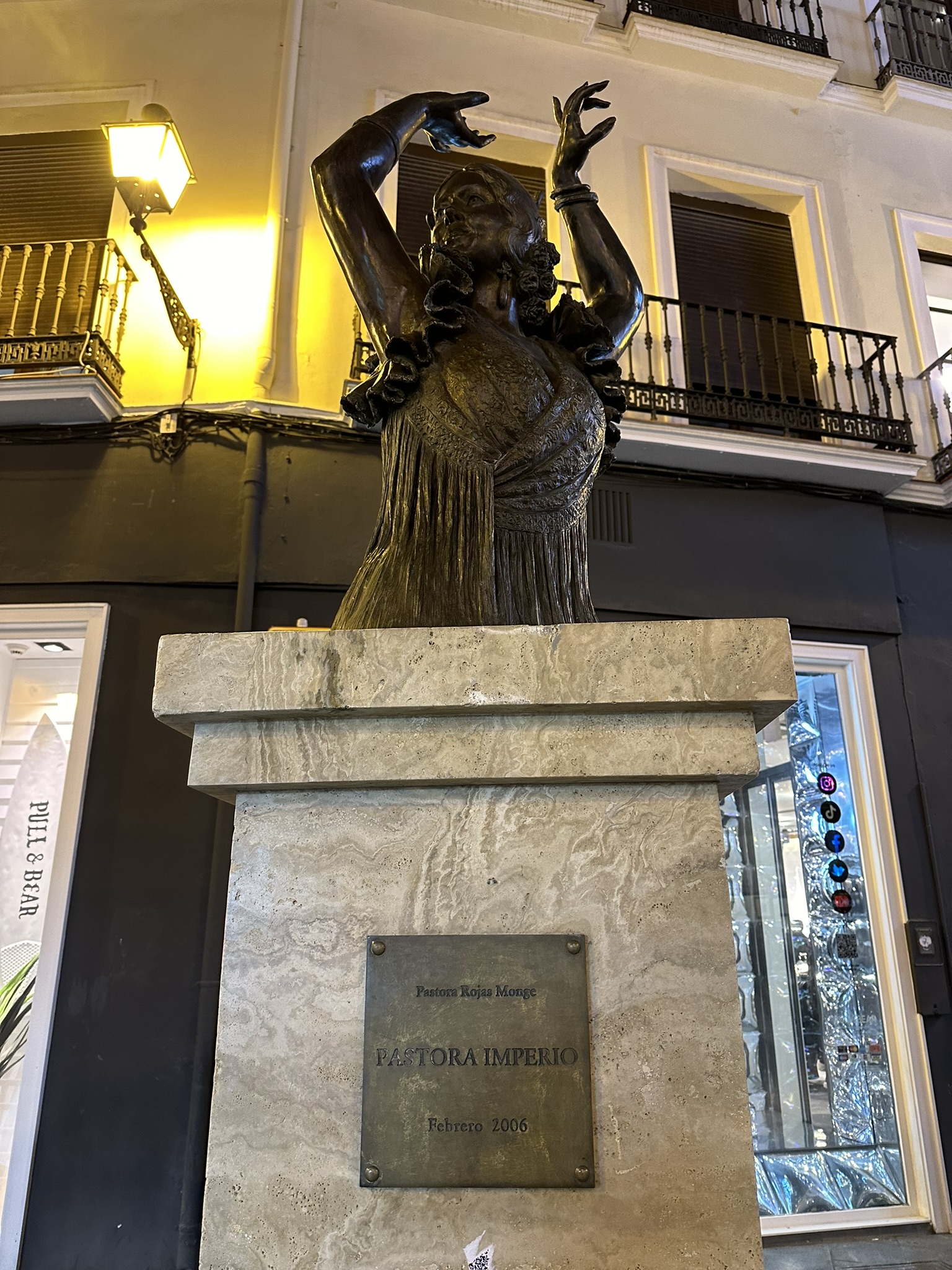
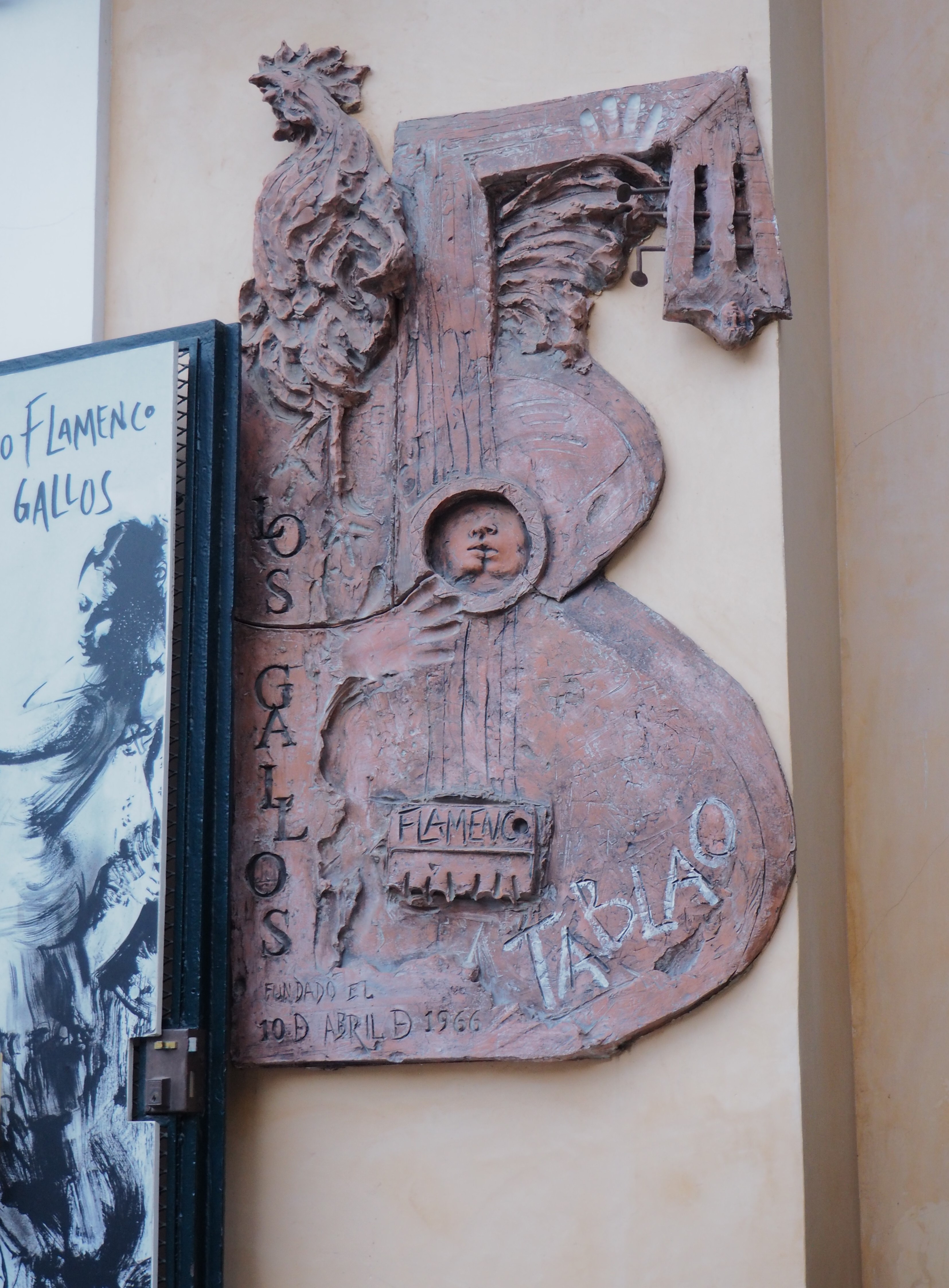
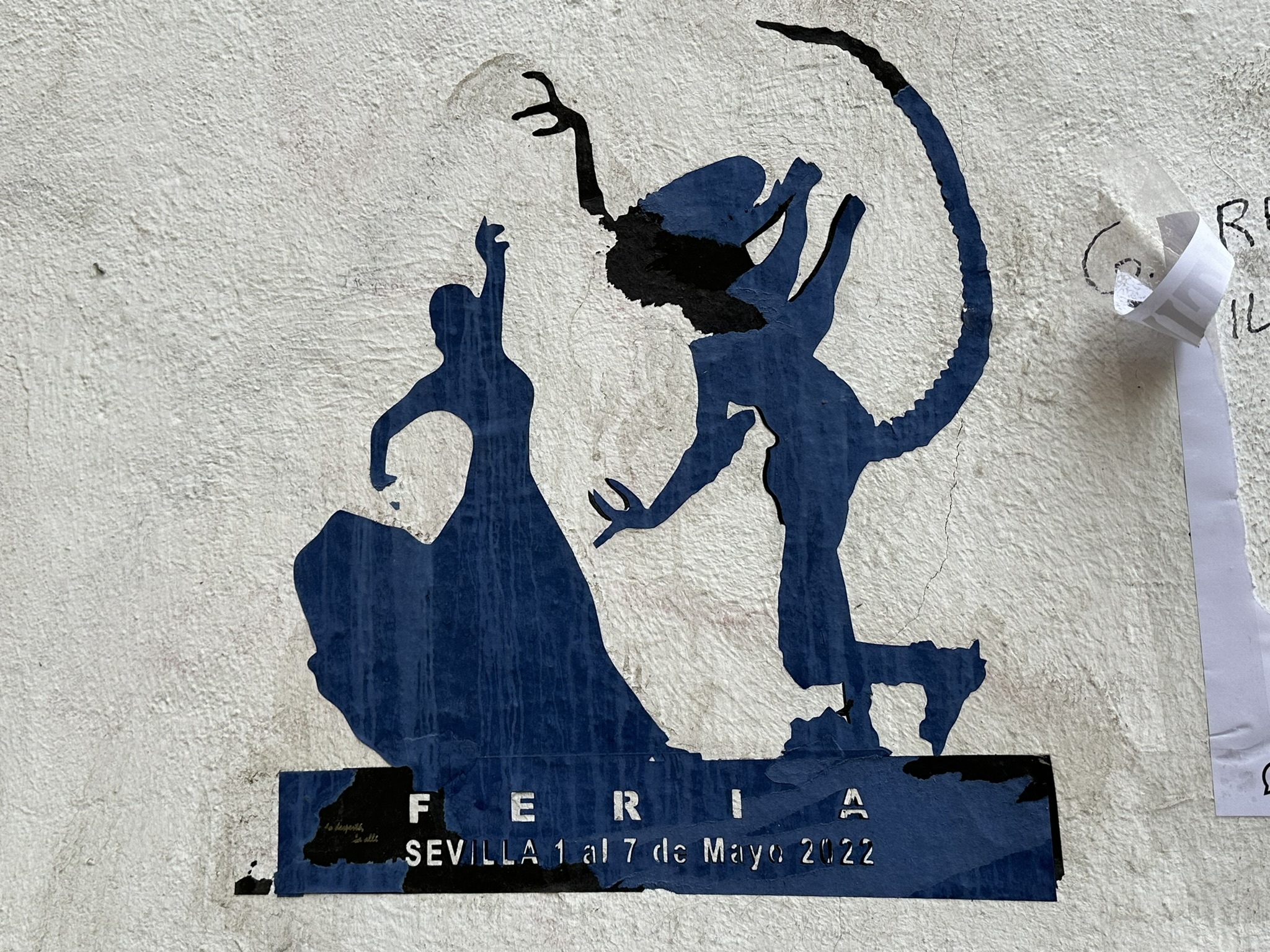
The show was a mix of strange, passionate and emotional and entertaining. With plenty of stomping, clapping, slapping and oles to go around.
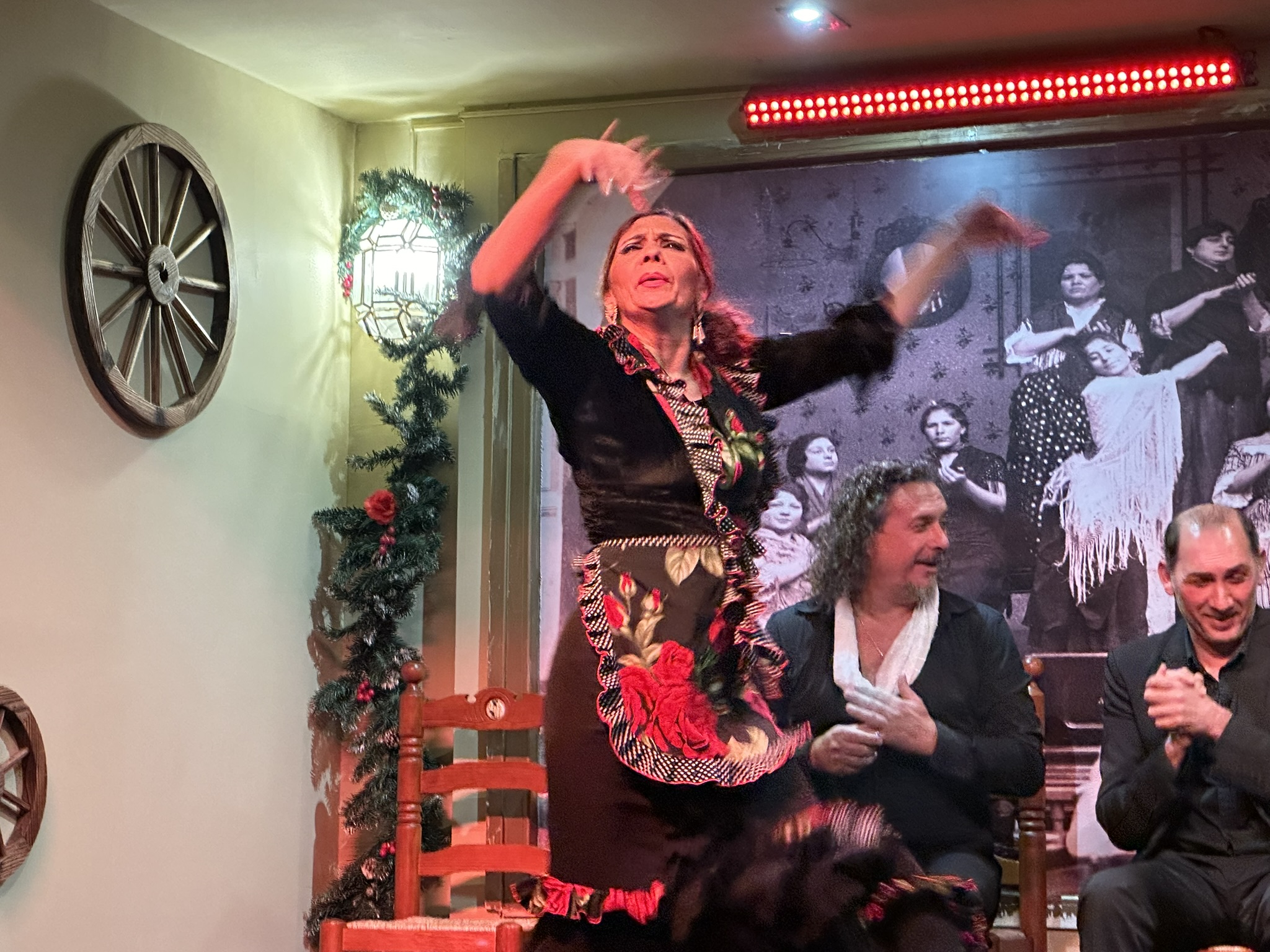
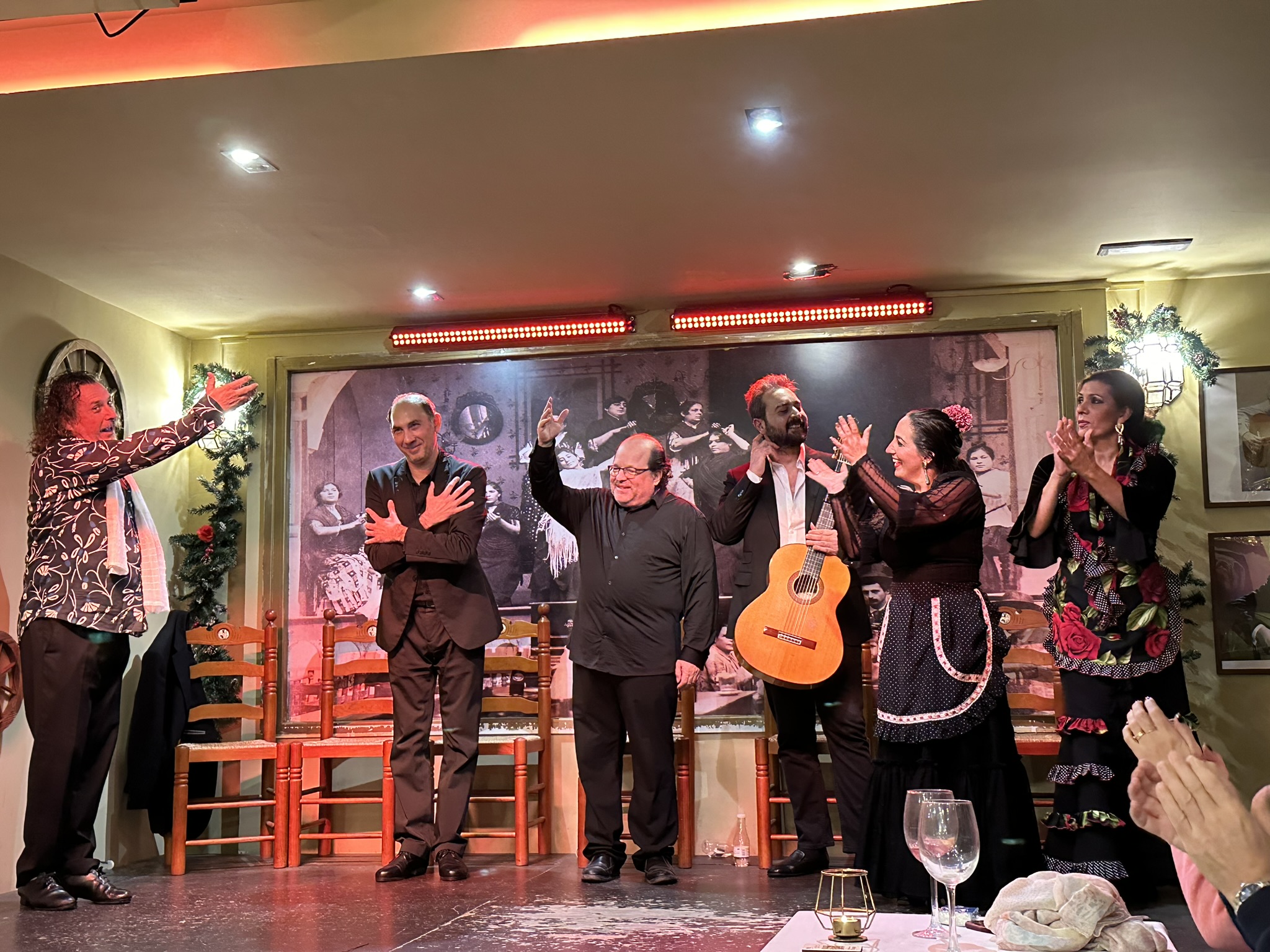
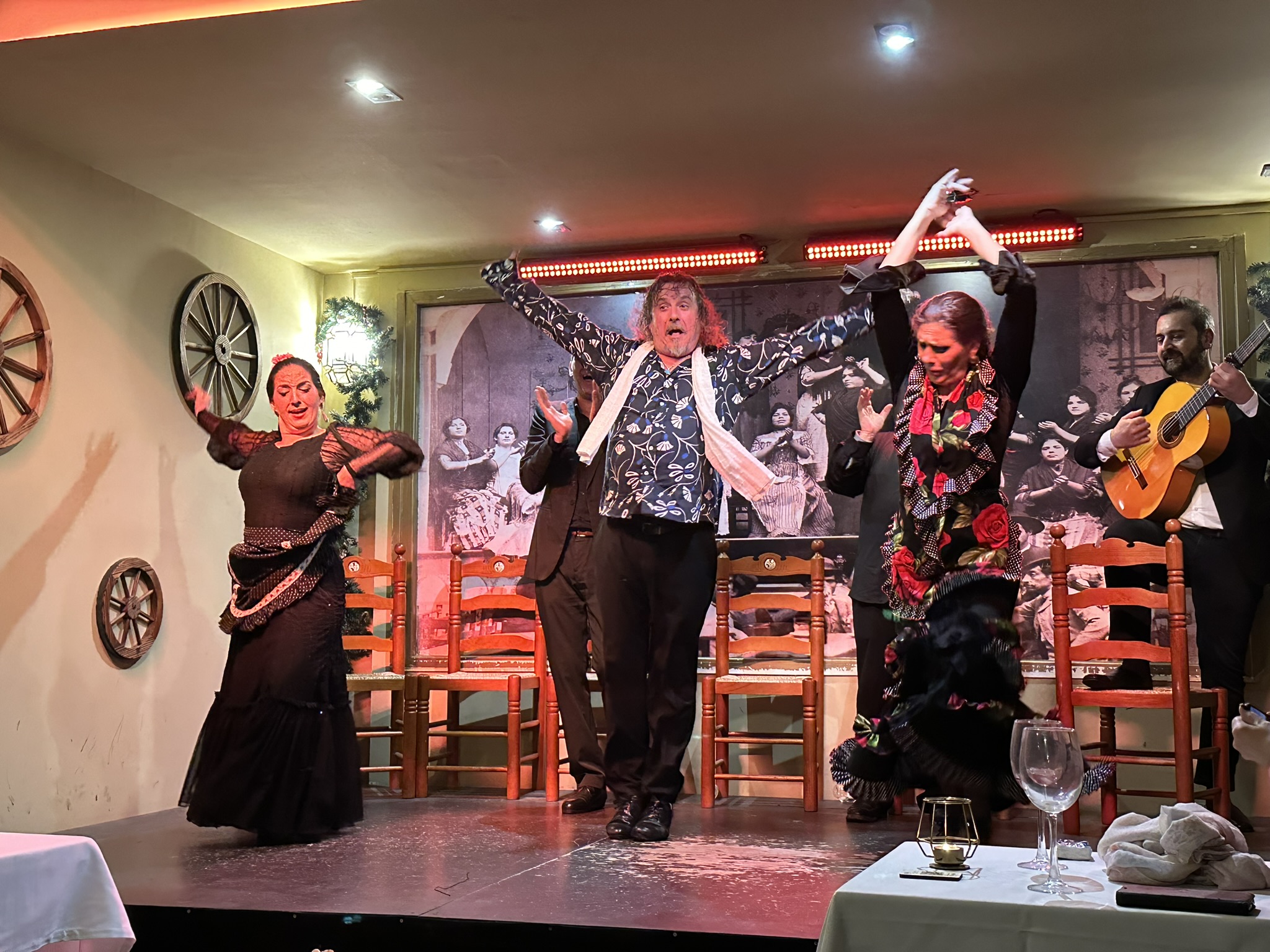
Alas, the crud, flu or Covid or whatever everyone seemed to have (like literally everyone in Seville was coughing) caught us too. It took Melissa down for our last full day and shortened our trip as we skipped the Flamenco Museum, a stroll around the gardens near Plaza de España (it was cold and foggy anyway), and a visit to the Archives of the Indias and postponed our planned stops on the way home (including a Casablanca Night dinner for New Year’s Eve in Vila Real de Santo António which, like the non-refundable nature of the celebration, we won’t ever get back). It’s a good thing too, as we were both trying to sleep with chills, coughs and fevered dreams at home by 10pm on 123123.
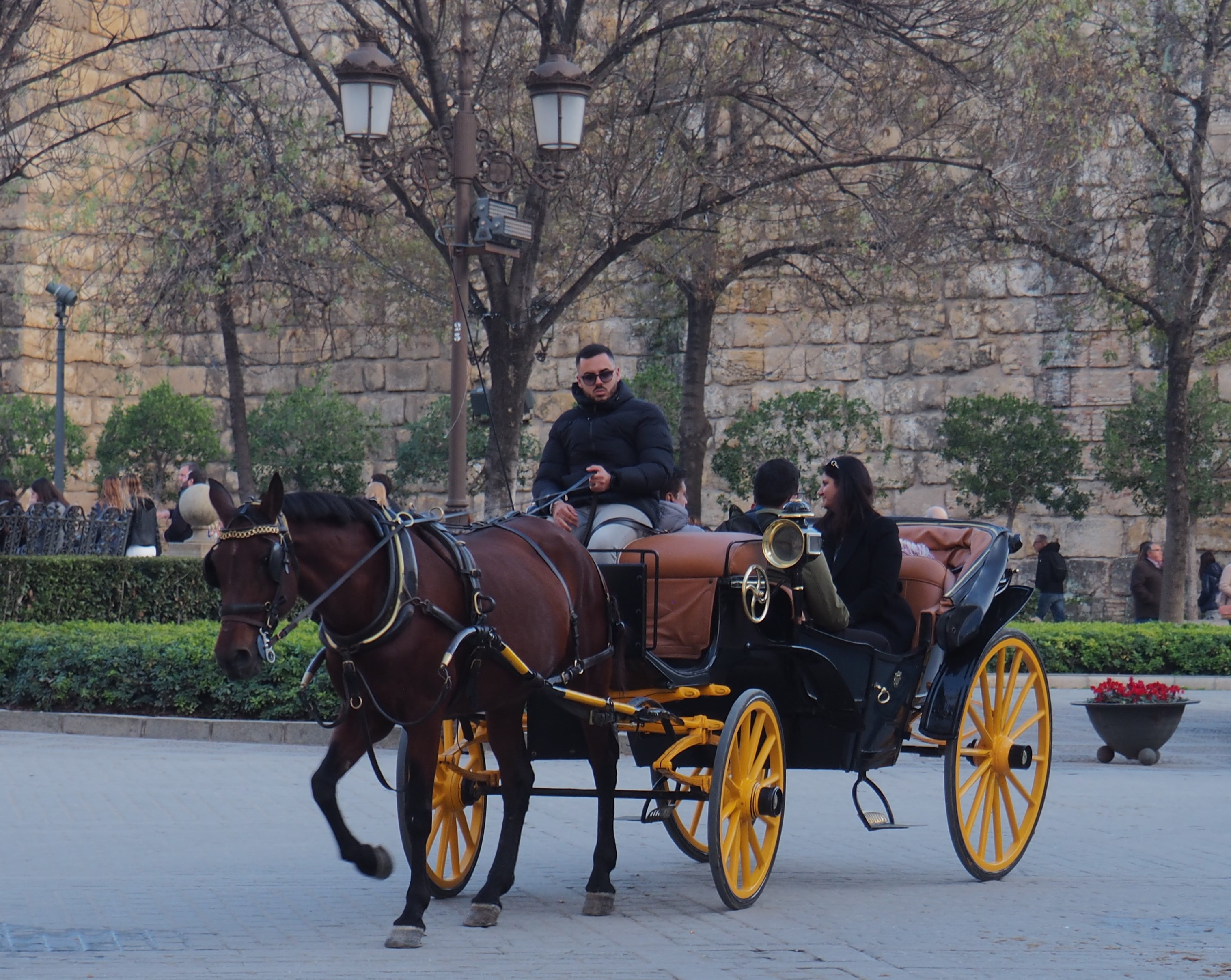
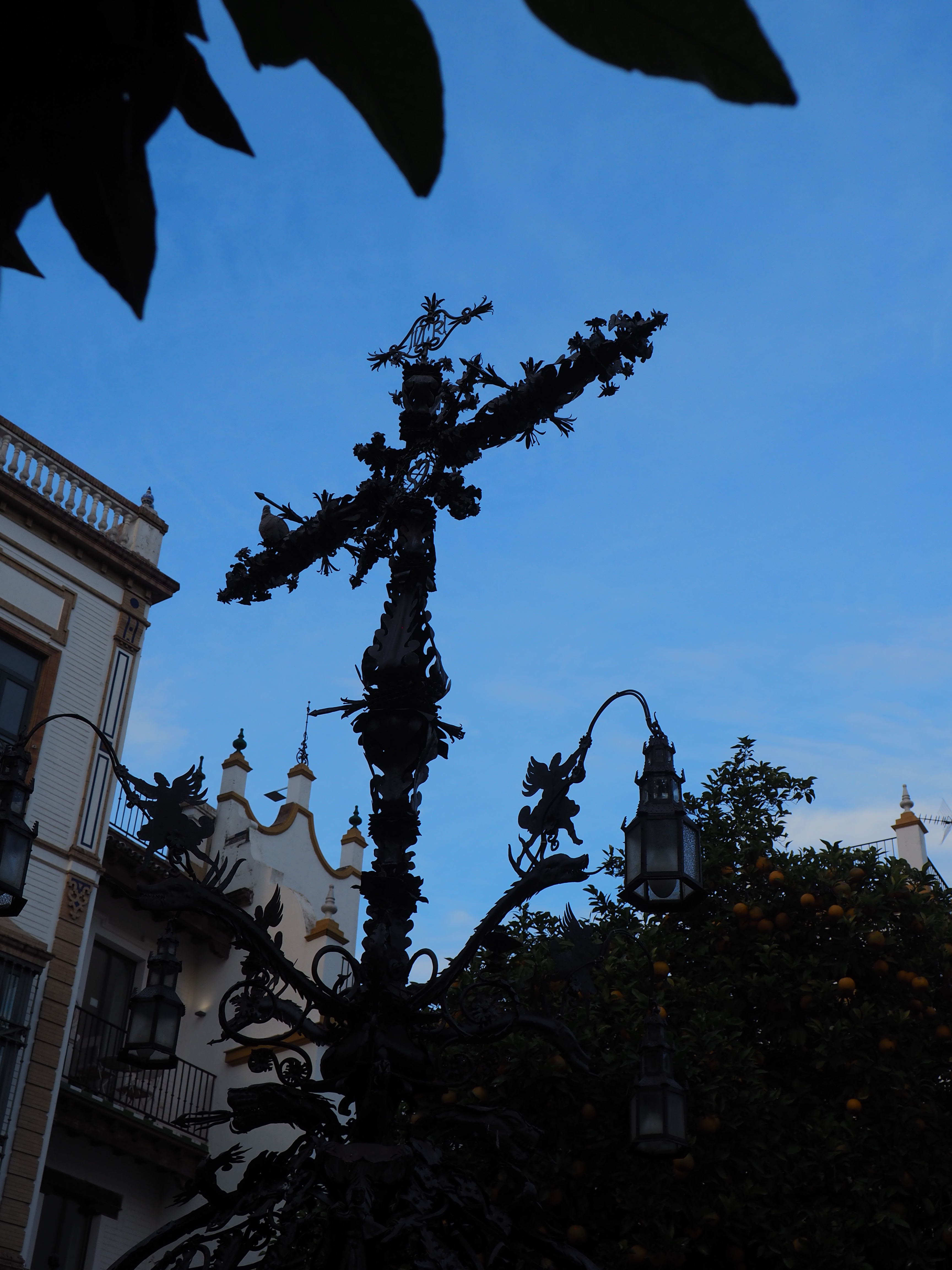
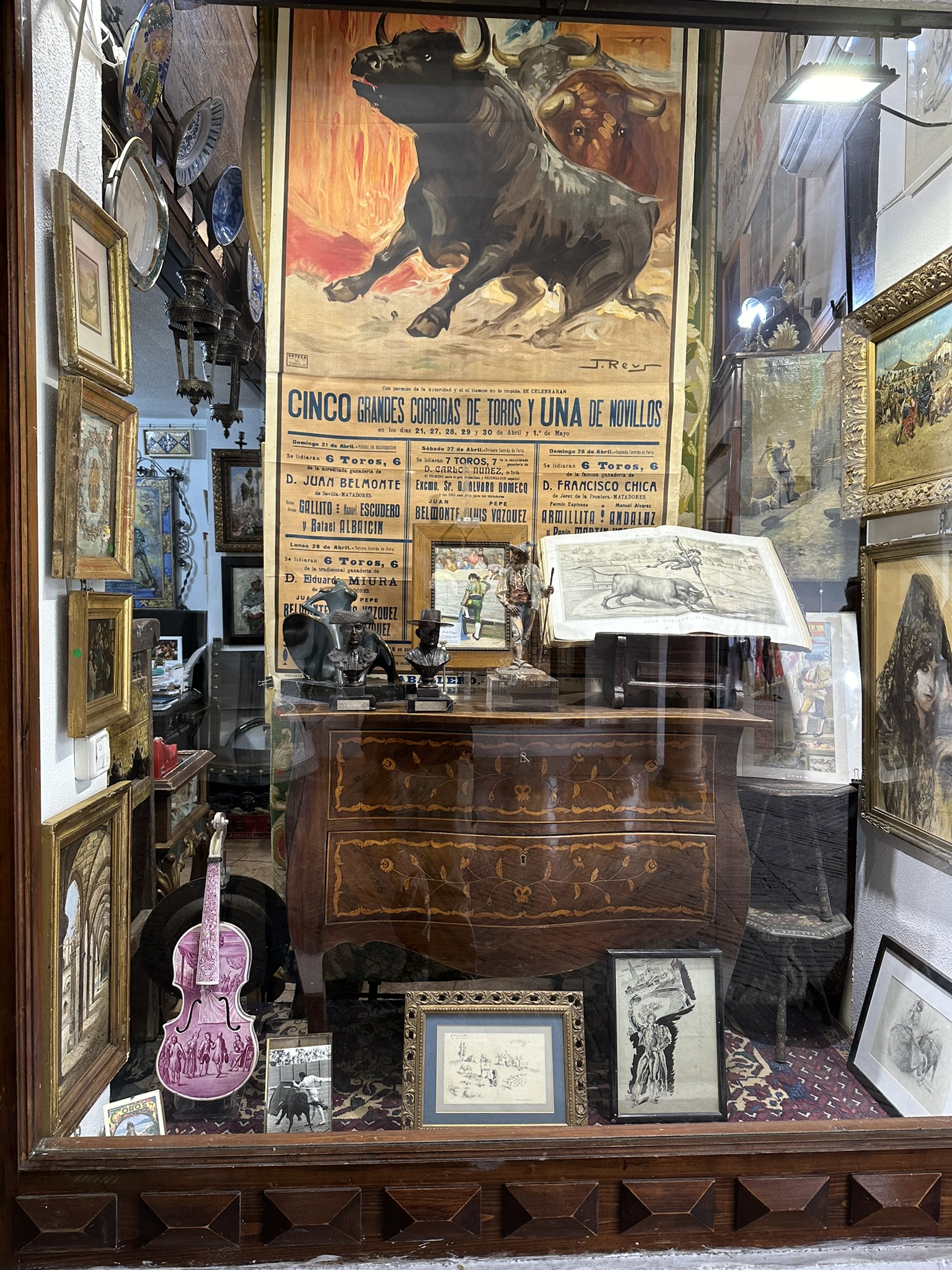
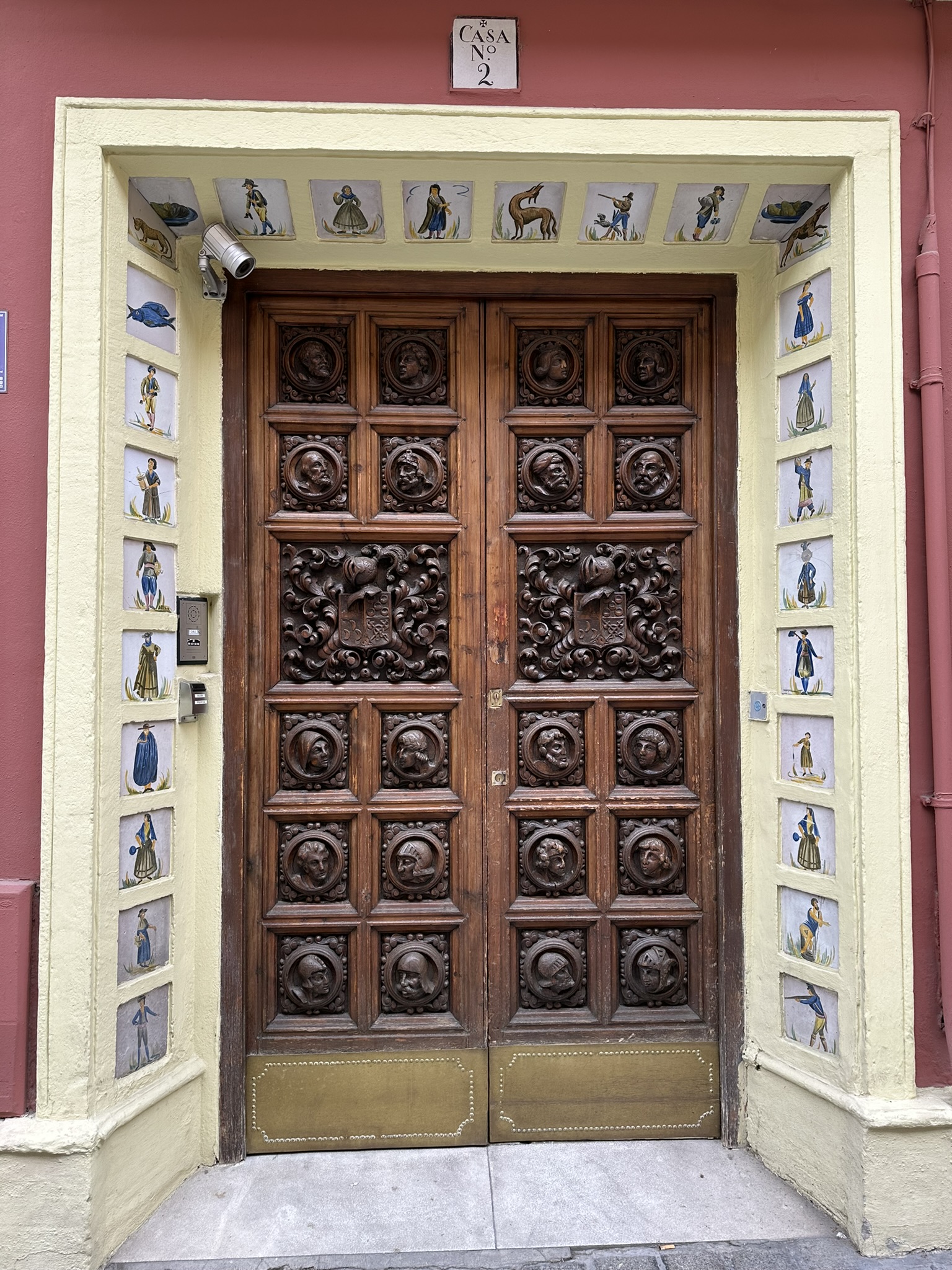
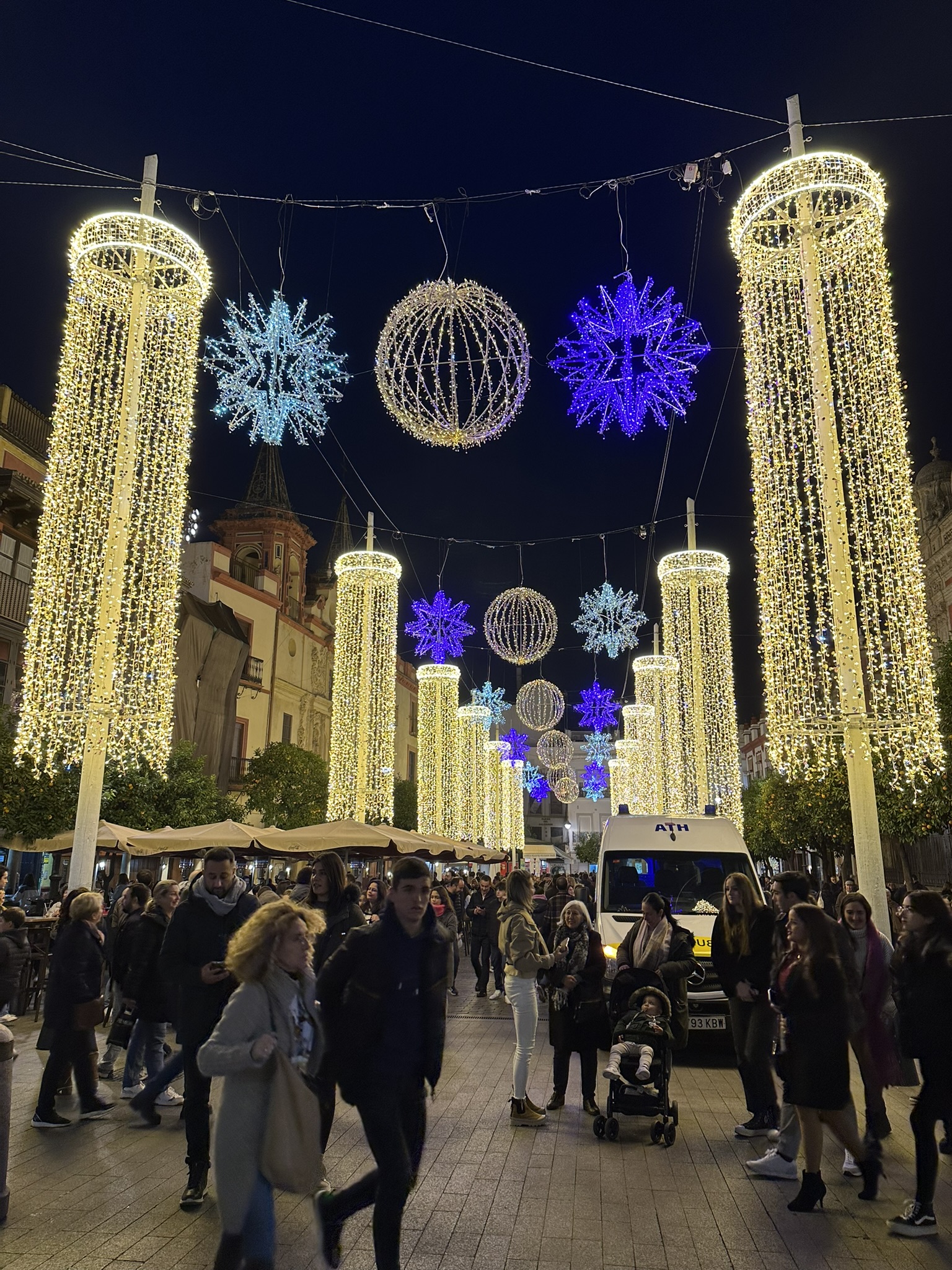
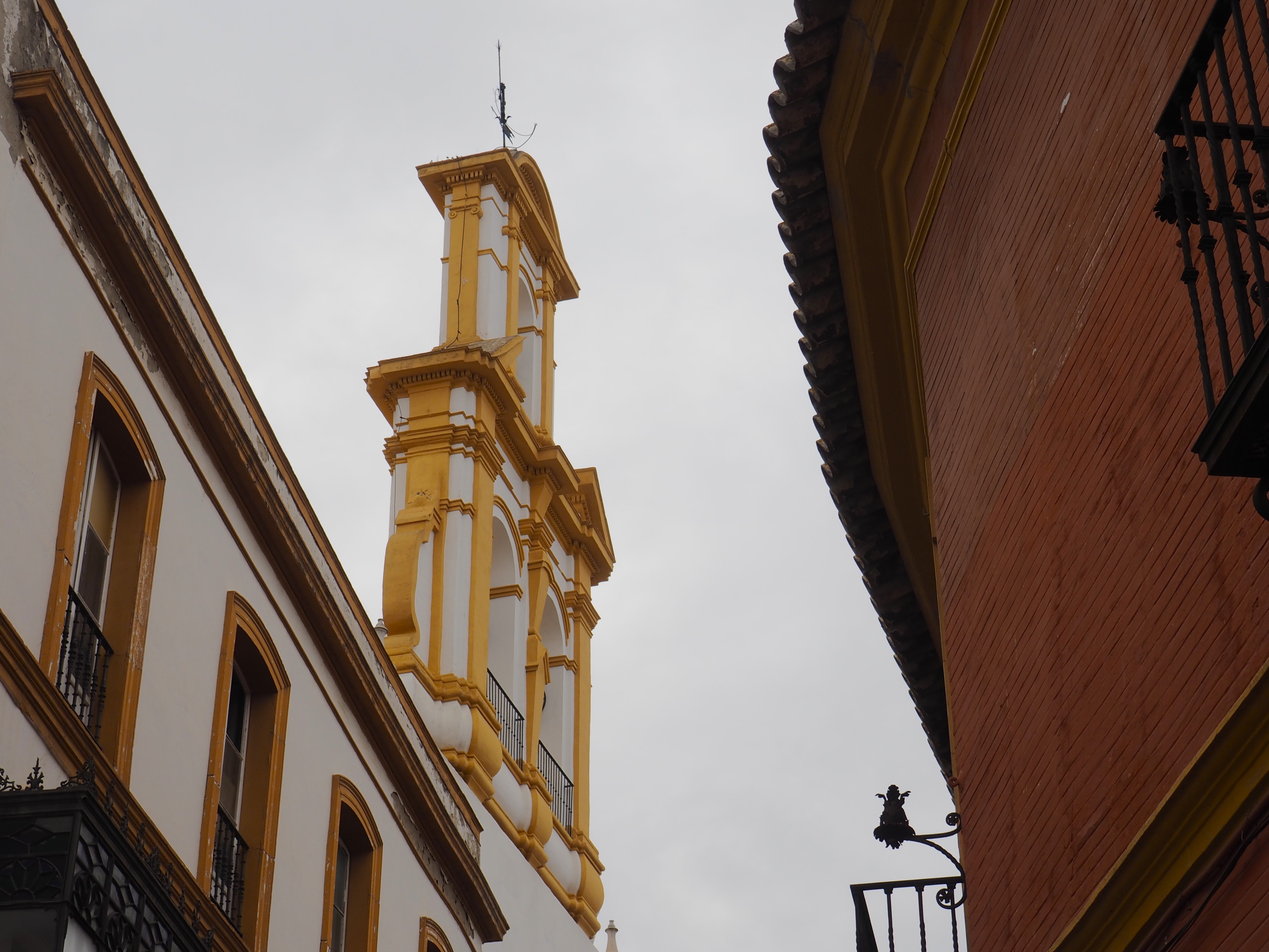
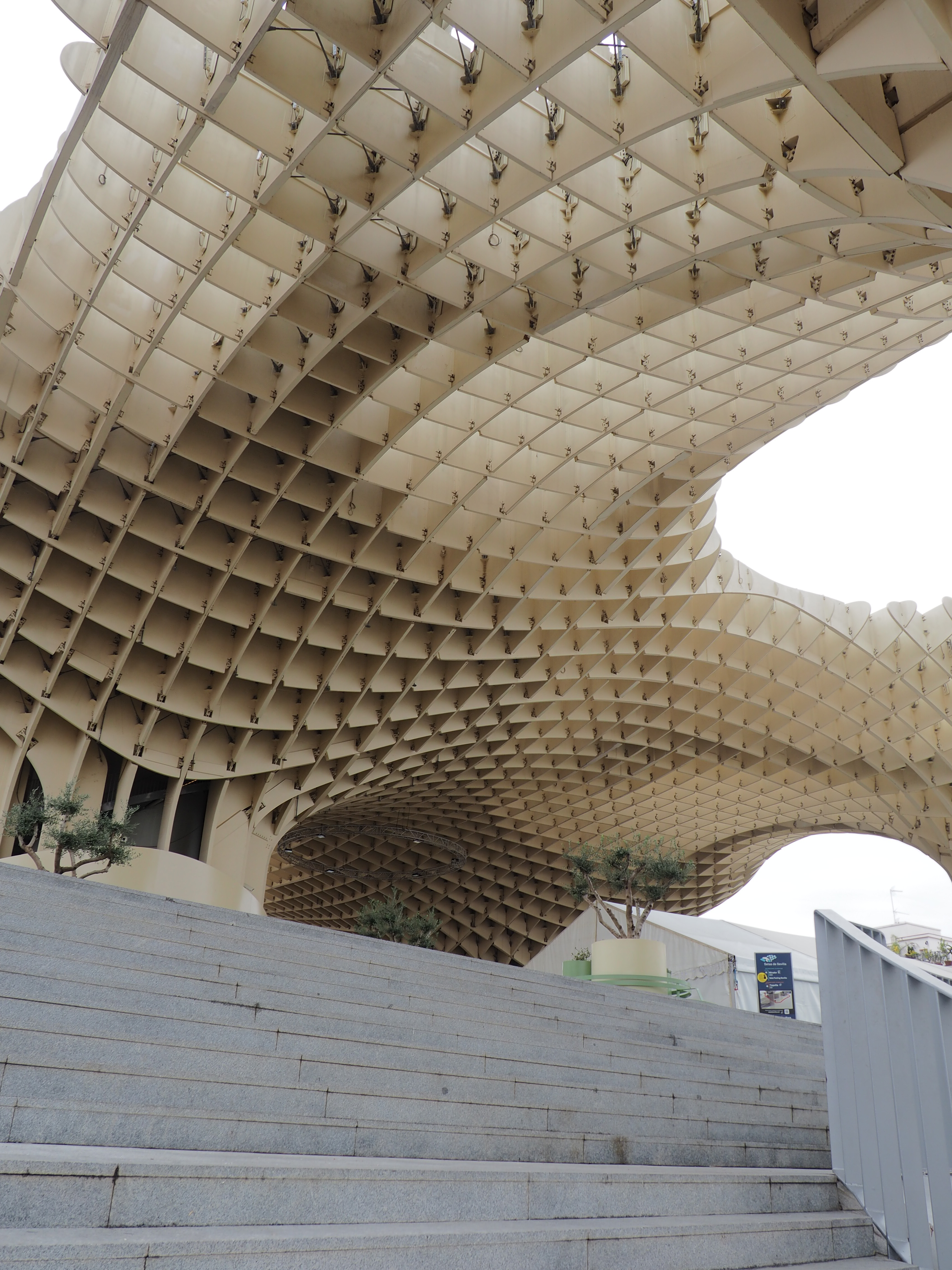
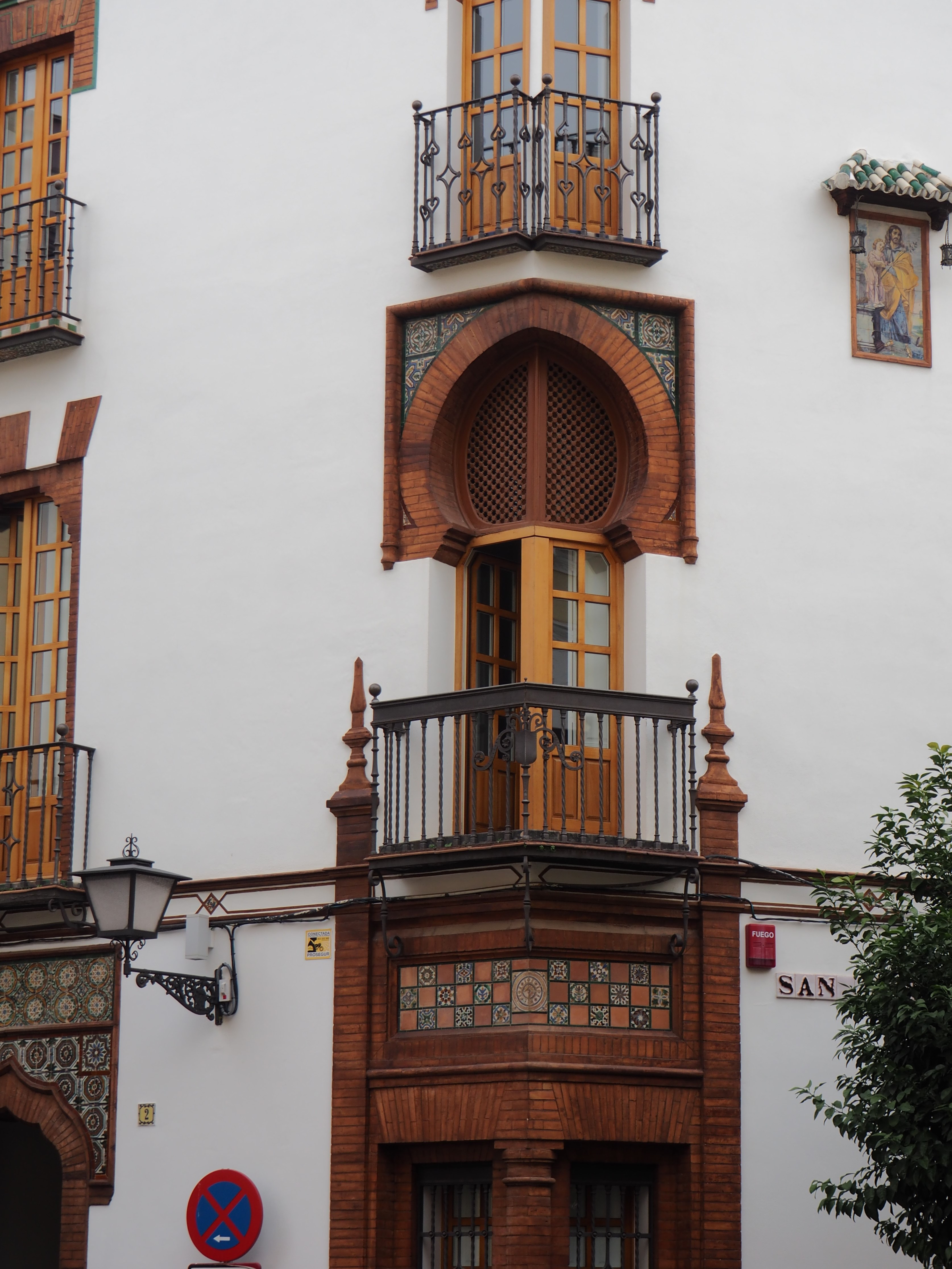
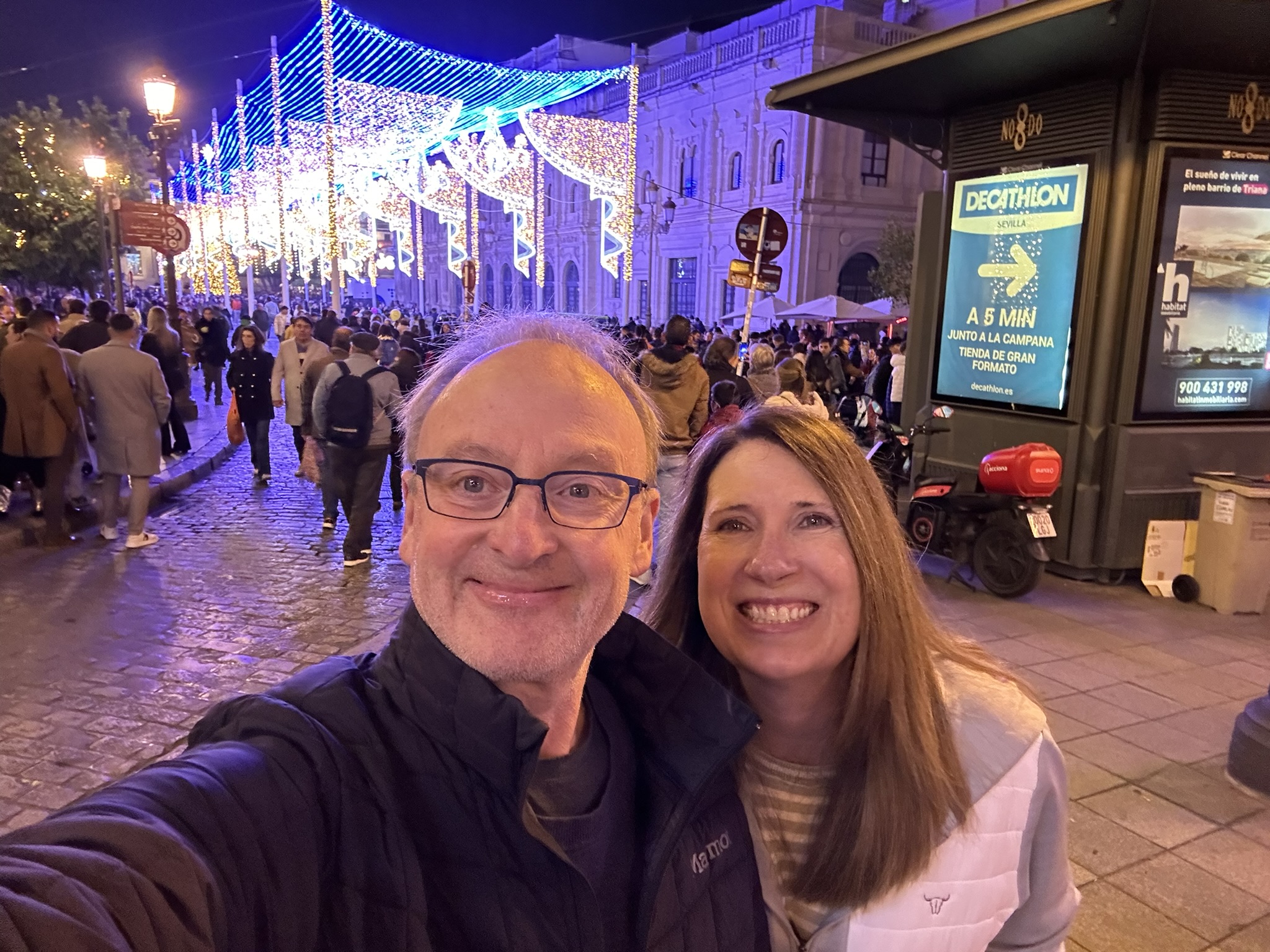
Sevilla is a magical place. Patrons of tapas bars spill into the streets, horse drawn carriages ferry tourists around old town, bougainvillea spills over walls and from rooftops, plazas and streets lined with orange trees invite you to stop and sit, flamenco music pours out of flamenco tablaos, little doorways and gates open into flower filled or fountained gardens inviting you to take a look. It charmed us when we came here in summer many years ago and did not let us down when we returned in winter again, when the streets were ablaze with Christmas lights. Just spending time getting lost among the calles of old town and finding a secret garden or tapas bar brings the city to life. Muchas gracias Sevilla y feliz Navidad.
Sources:
- https://www.smithsonianmag.com/travel/complicated-history-flamenco-spain-180973398/
- https://www.discoverwalks.com/blog/spain/top-10-fascinating-facts-about-real-alcazar-de-sevilla/
- https://timelesstravelsteps.com/historic-secret-baths-of-maria-de-padilla-alcazar-seville/
- https://www.alcazarsevilla.org/en/history/
- https://en.wikipedia.org/wiki/Alc%C3%A1zar_of_Seville
 The Traveling Ridleys
Pingback: Return to the Grand – The Traveling Ridleys: Sunday Journal