

“One pill makes you larger. And one pill makes you small.” Keep your head, Alice. Keep your head.
We began our stay in the land of double and adjacent consonants in Llandudno (pronounced clan-did-no, yes, we had to ask). When I saw the painted collage of Alice in Wonderland scenes along the promenade in Llandudno I thought it interesting but not out of place. Our visits to the boardwalks of the UK seaside towns have taught me to never be surprised by such things. Then we passed the statue of the Mad Hatter. Ok, it’s time to hit Google. “Did Lewis Carroll live in Llandudno”. Turns out no, but his model for the Alice we know from the story was a girl, and daughter of friends, named Alice who did.
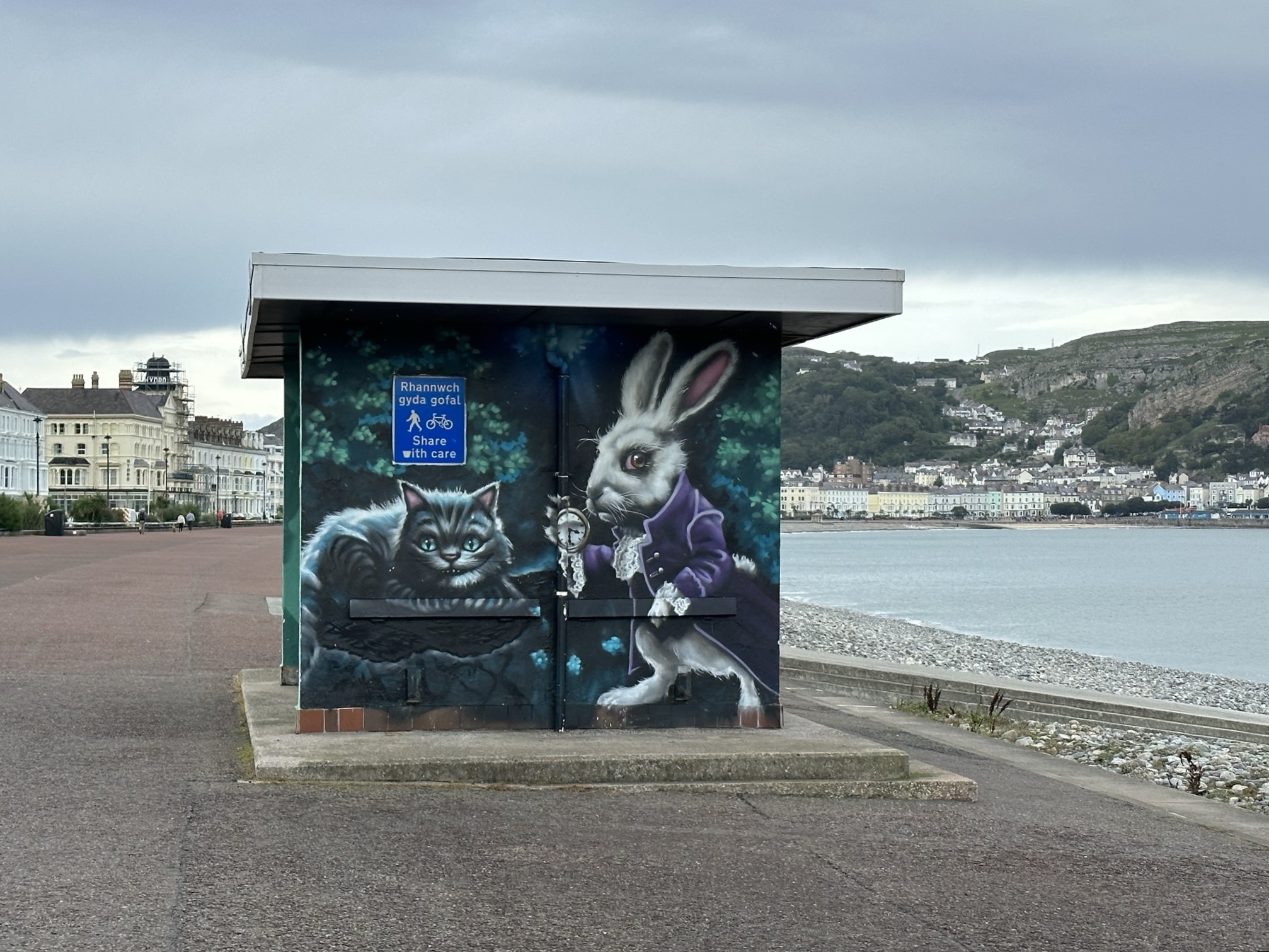
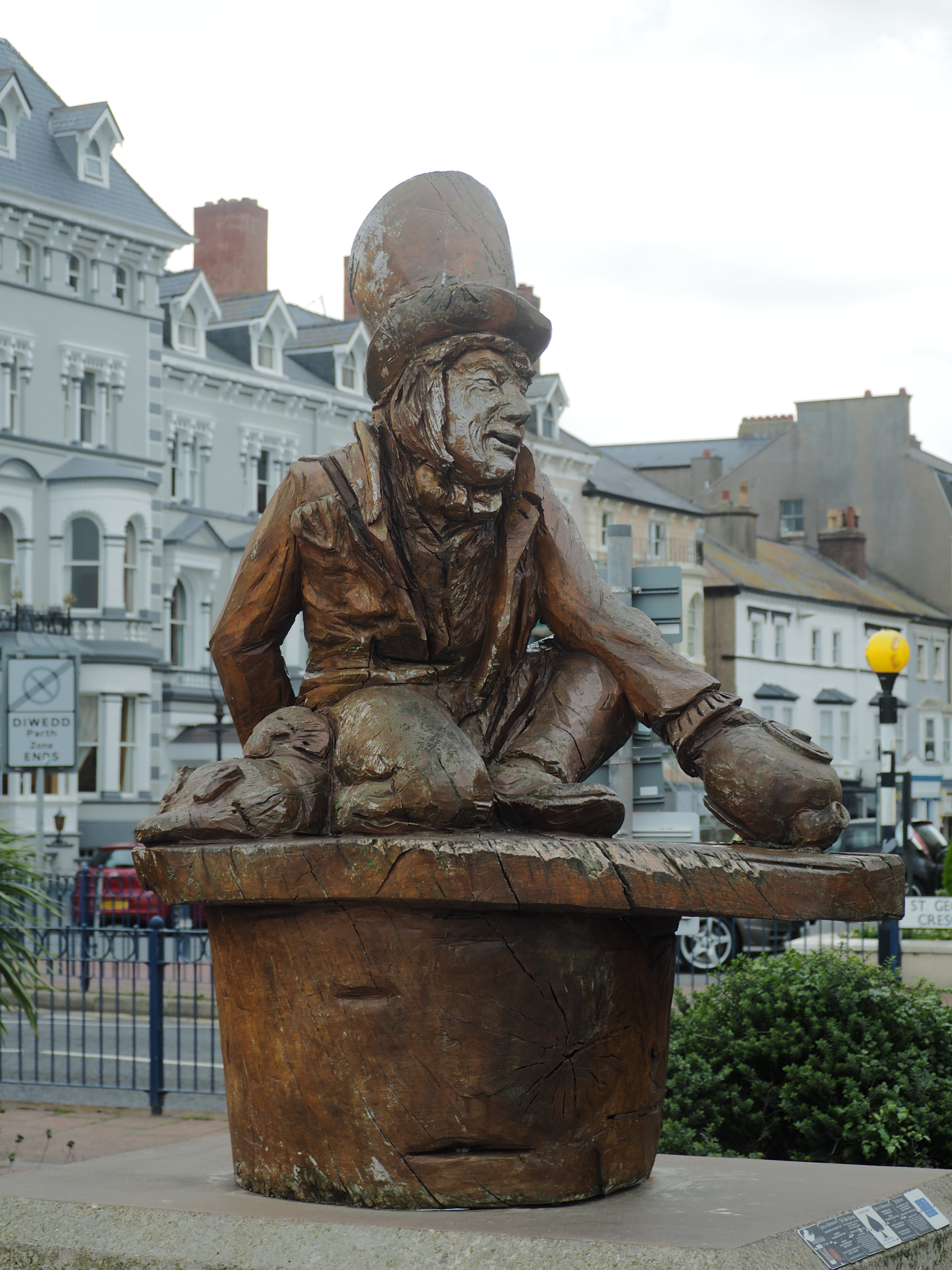
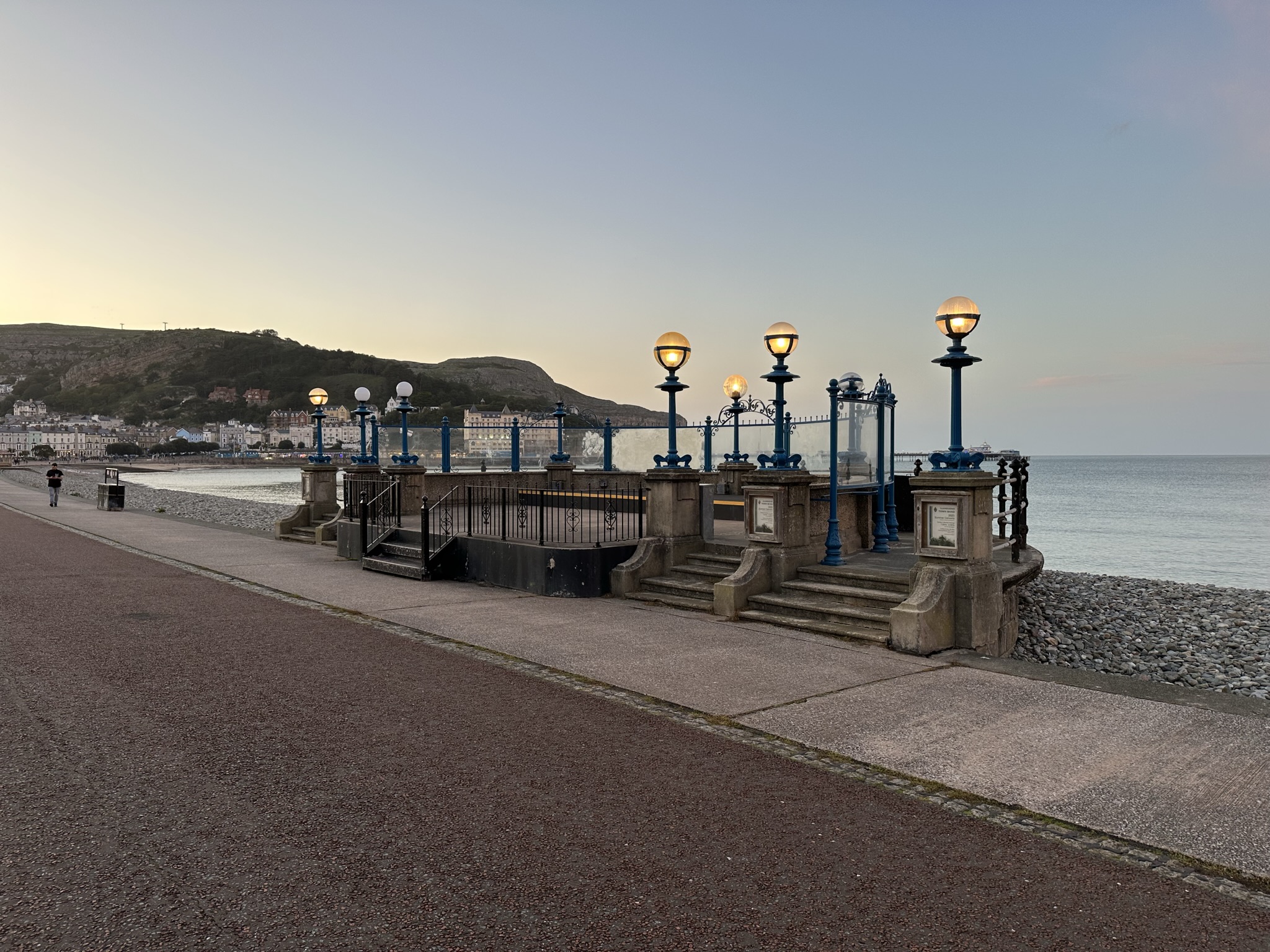
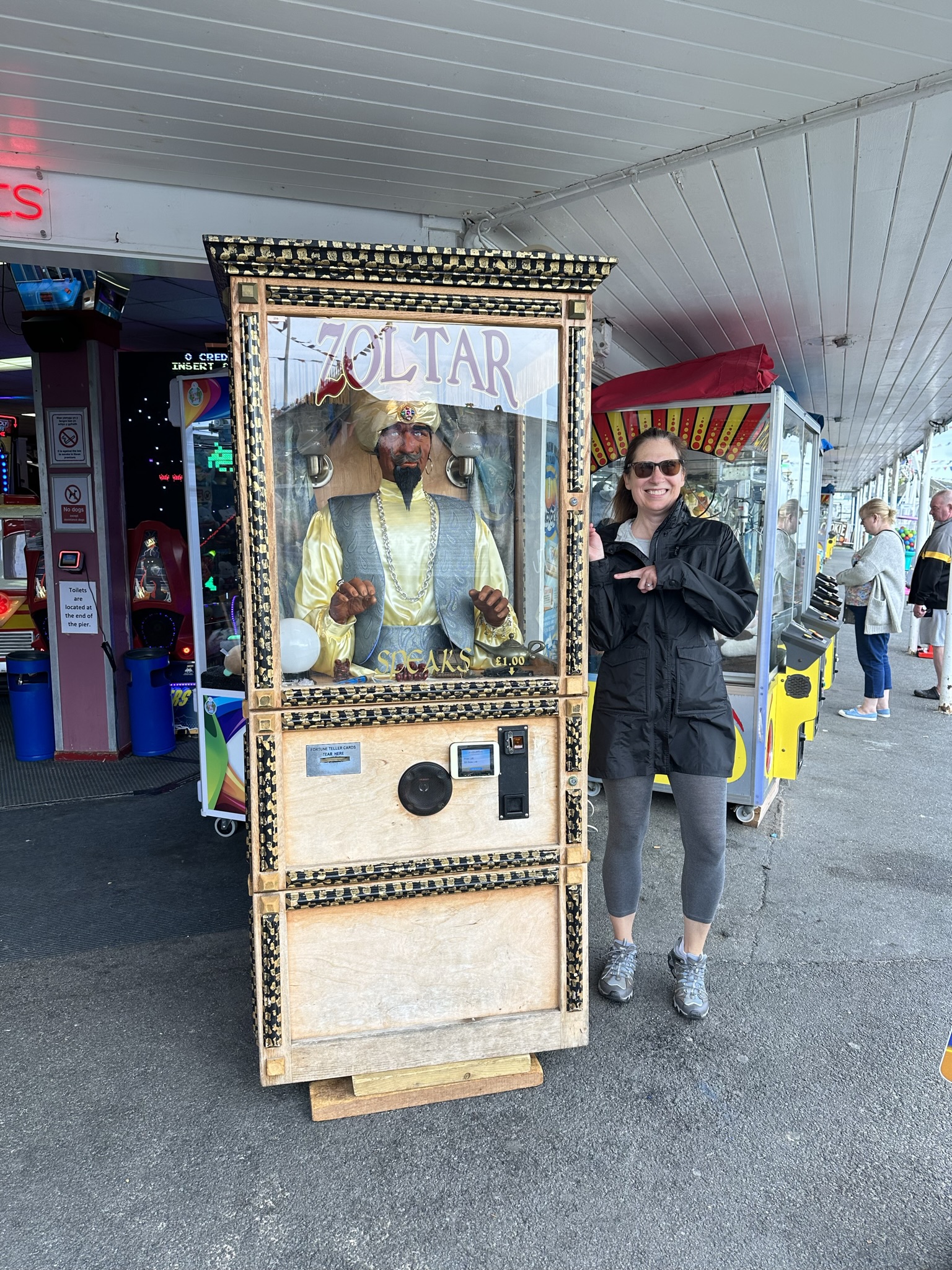
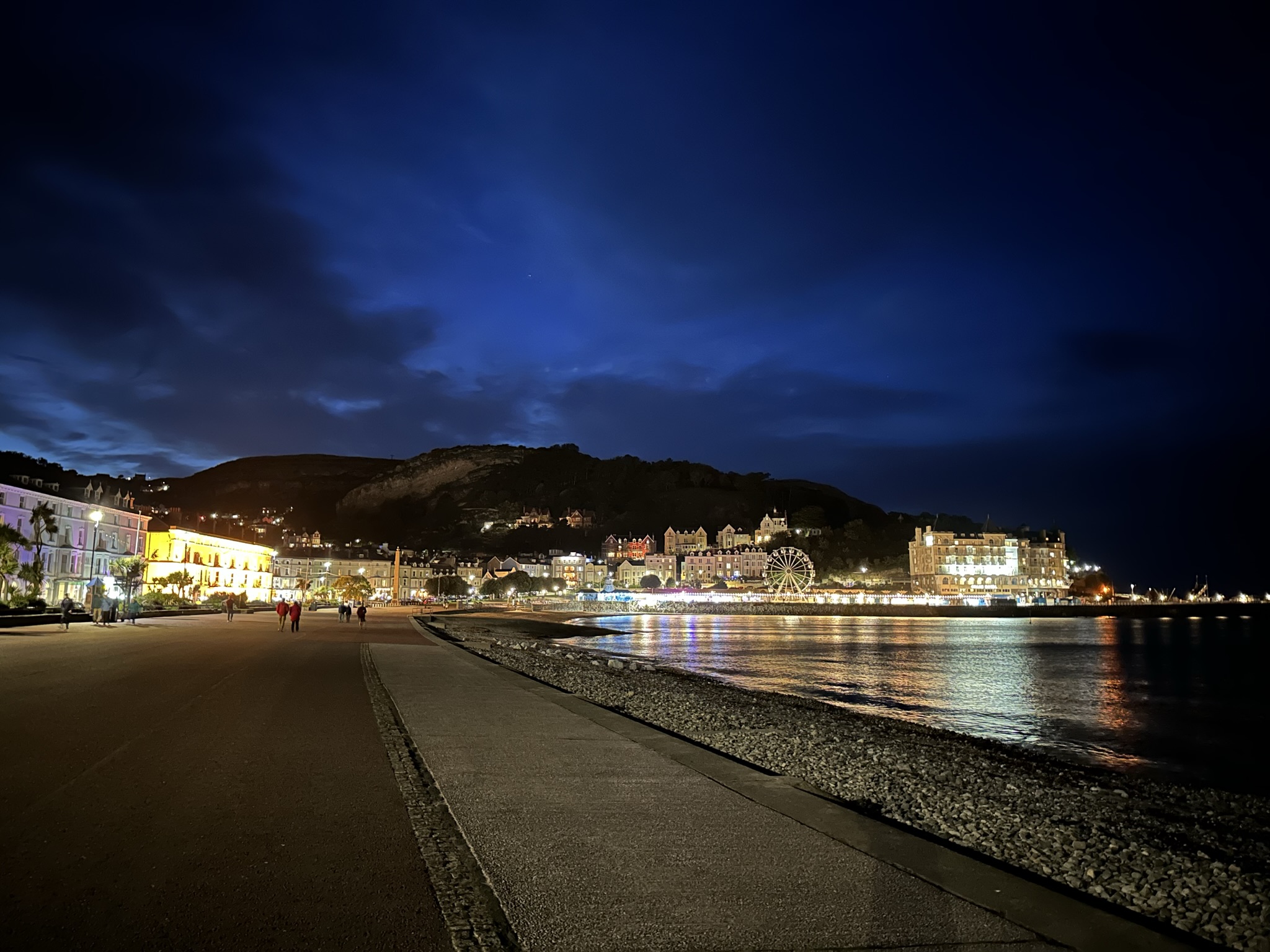
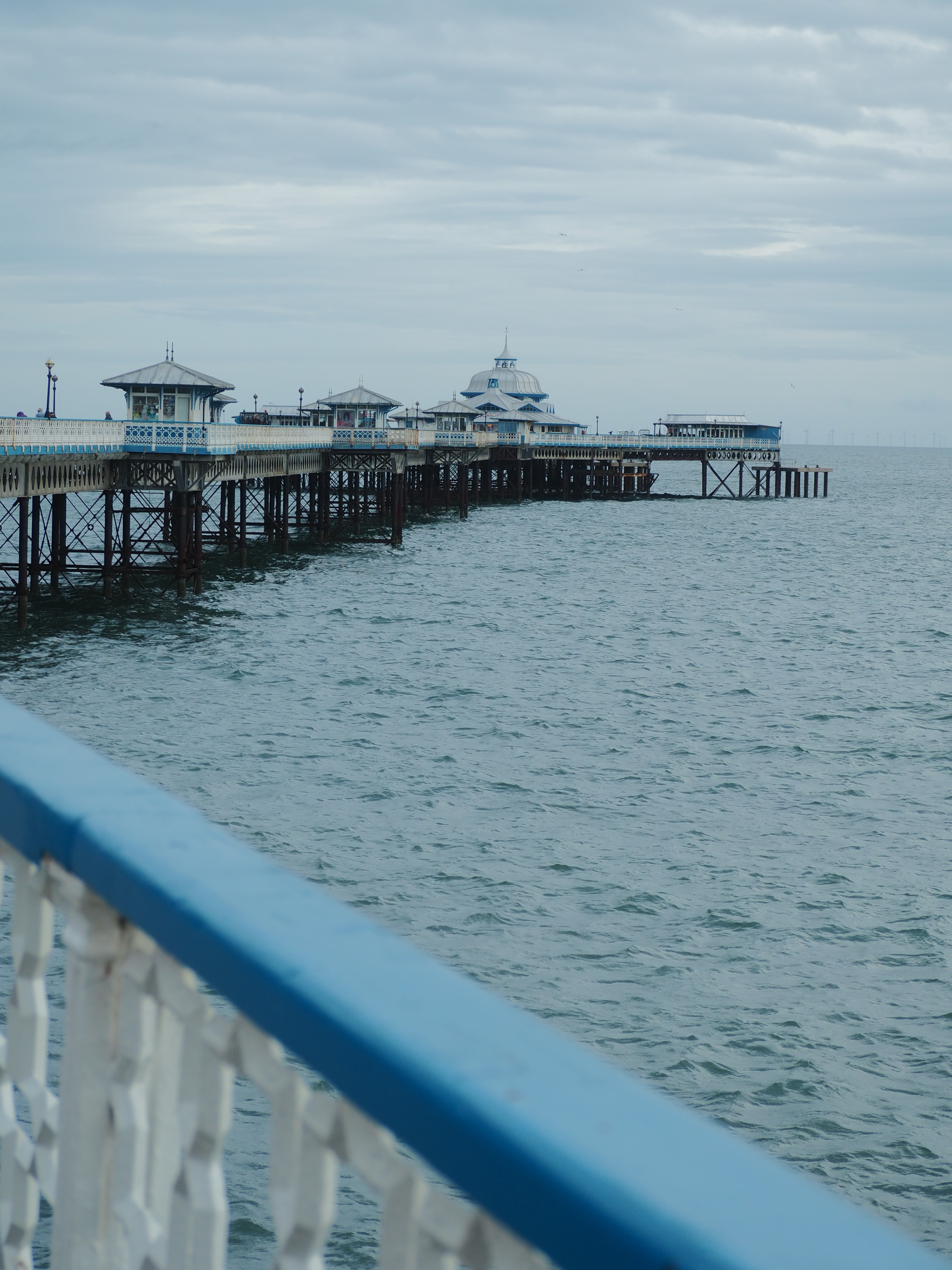
Llandudno. Llandudno is a seaside resort from a bygone day. Tall Victorian-era hotels, filled with pensioners and retirees piling in by the busload (at least in mid-September), line the half-moon seaside promenade. A throw-back Coney Island-like boardwalk, complete with a Famous Zoltar machine (no, we didn’t wish to be either Big or younger) lies below the cliffs at the northwest end, an homage to the golden days. Llandudno was Bill Bryson’s “favorite resort town in the UK” (source) twenty years ago. I don’t think much has changed in the past twenty years, and a refresh may be due. While the town was nice enough, and it is set in a spectacularly beautiful area and we loved the boardwalk strolls, were we to do it again, we’d likely stay in Caernarfon or one of the little villages in Snowdownia Park.
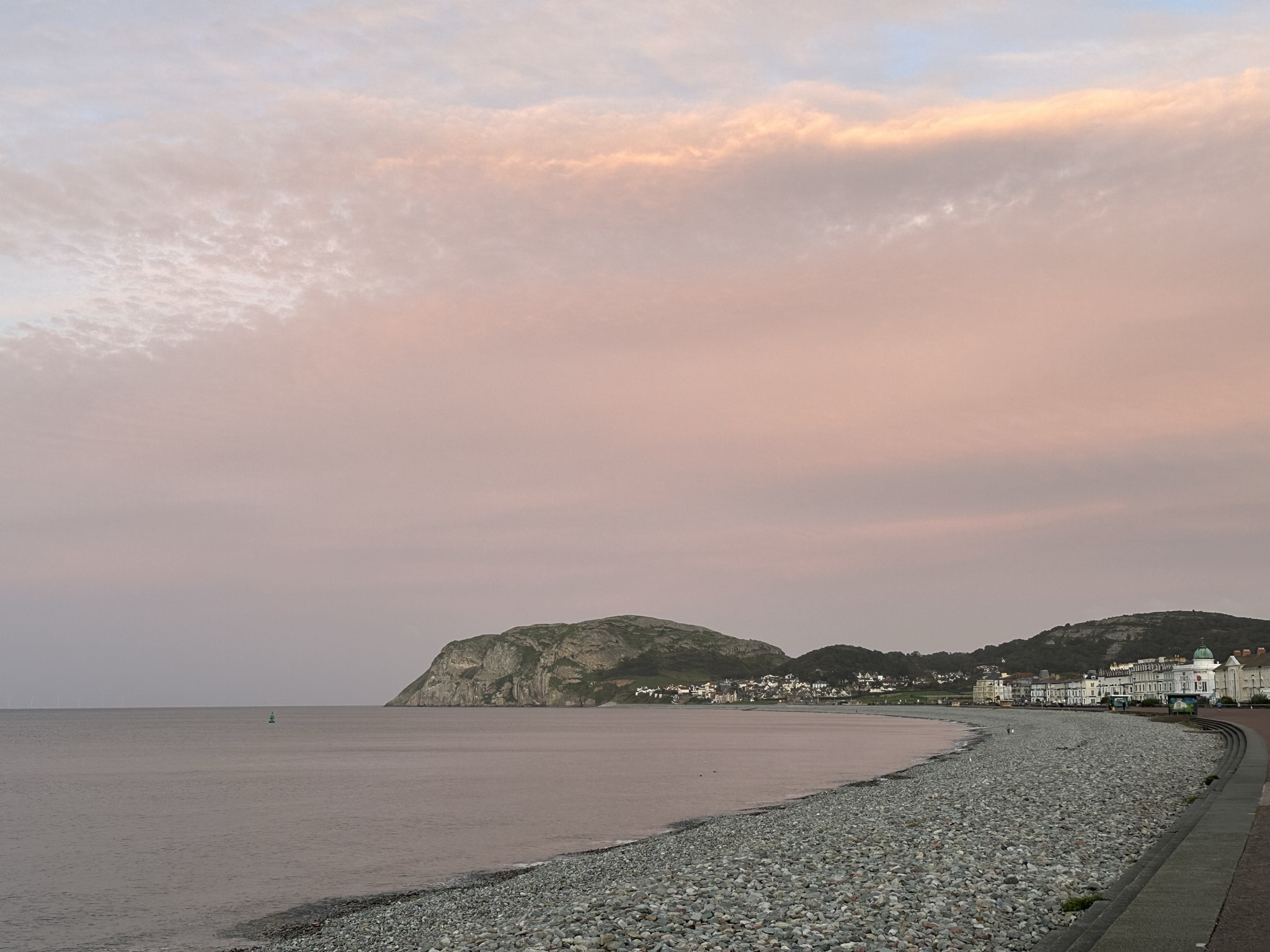
Snowdonia (Eryri, in Welsh) National Park. As you wind along narrow roads through little stone villages of buildings tight to the roadside and up into forests and fields within Snowdonia, you feel as if an elf might just pop out as you turn the next bend. It’s, in a word: enchanting.
I chose a hike to Swallow Falls to ring in autumn mere days after the equinox. I’d looked into climbing Cader Idris but all the trails I could find on AllTrails were rated as hard, even the ones my guidebook had said were the easiest ascents. Most descriptions and reviews described scrambles, really really steep inclines and scree. One even said: “do not attempt”, not exactly a ringing endorsement. After my experiences in the Scottish Highlands and on the Isle of Skye climbing AllTrails “hard”-rated trails and with wind and a slight chance of rain in the forecast (the wind materialized, the rain did not), I opted for something mellower and rated “moderate”. AllTrails needs a rating beyond hard, in my humble, something like “hard with some moments of terror”. Just a suggestion.
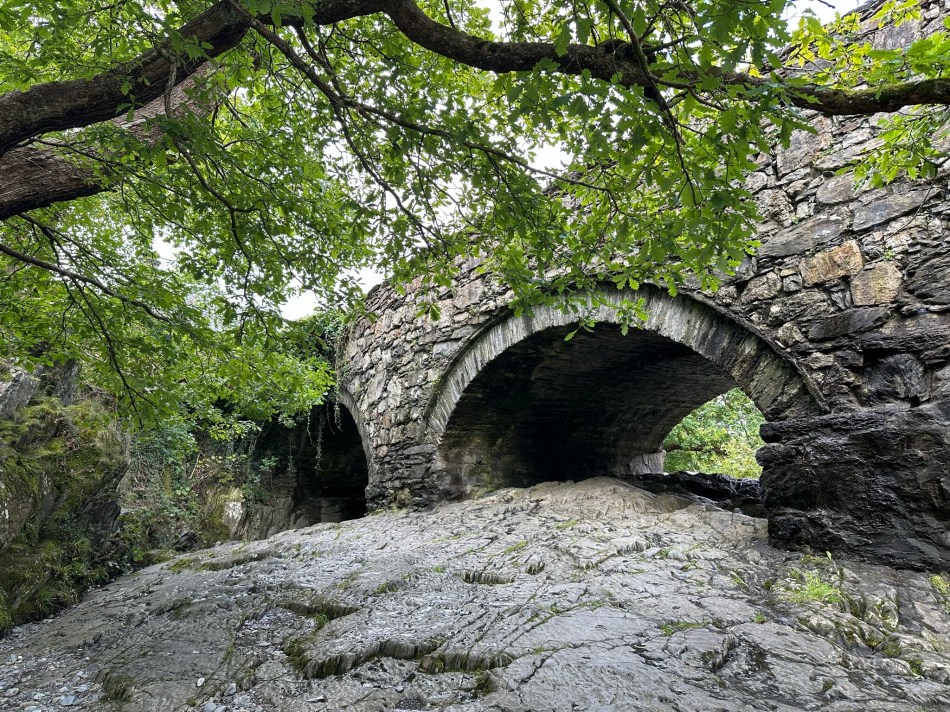
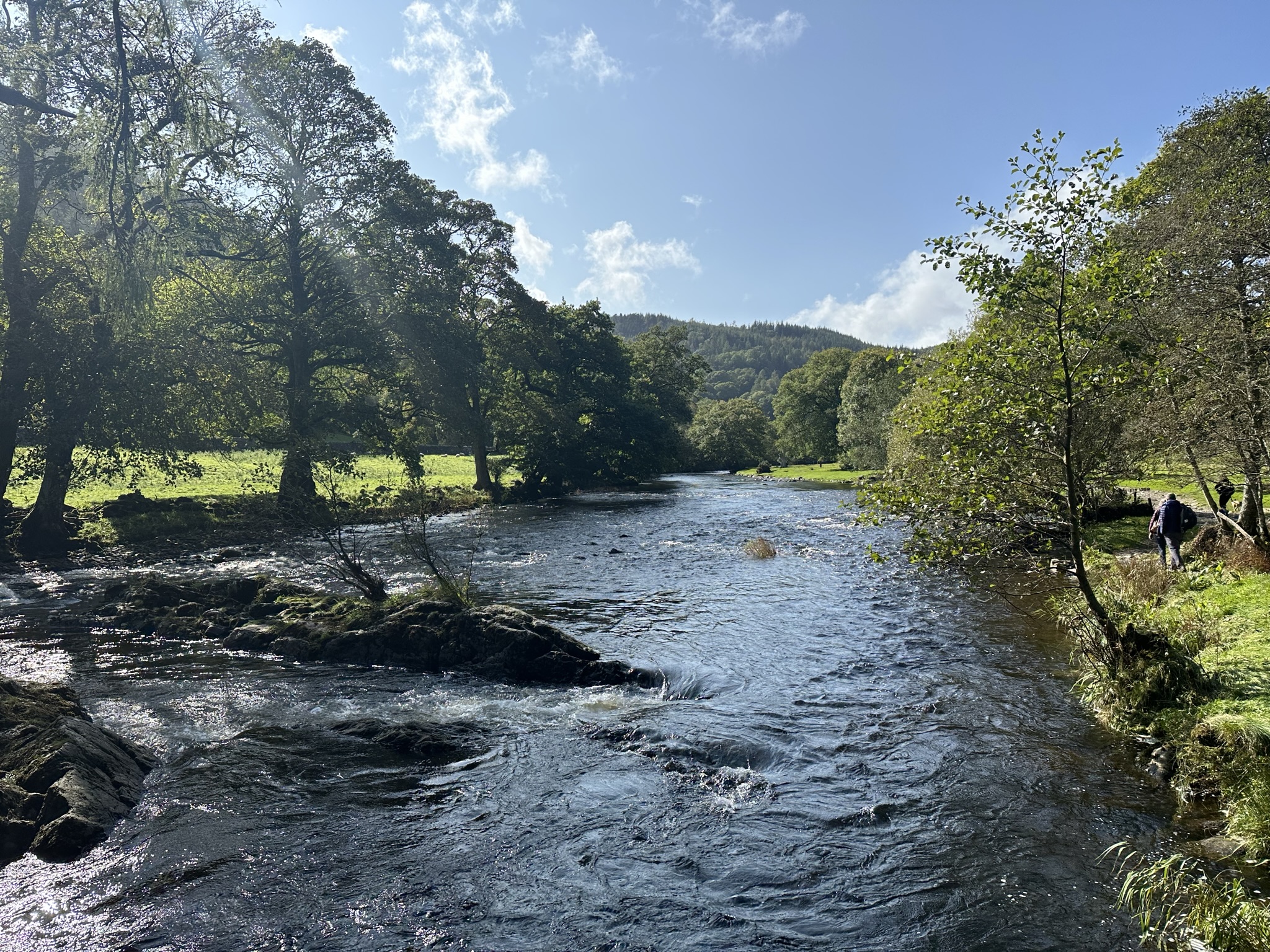
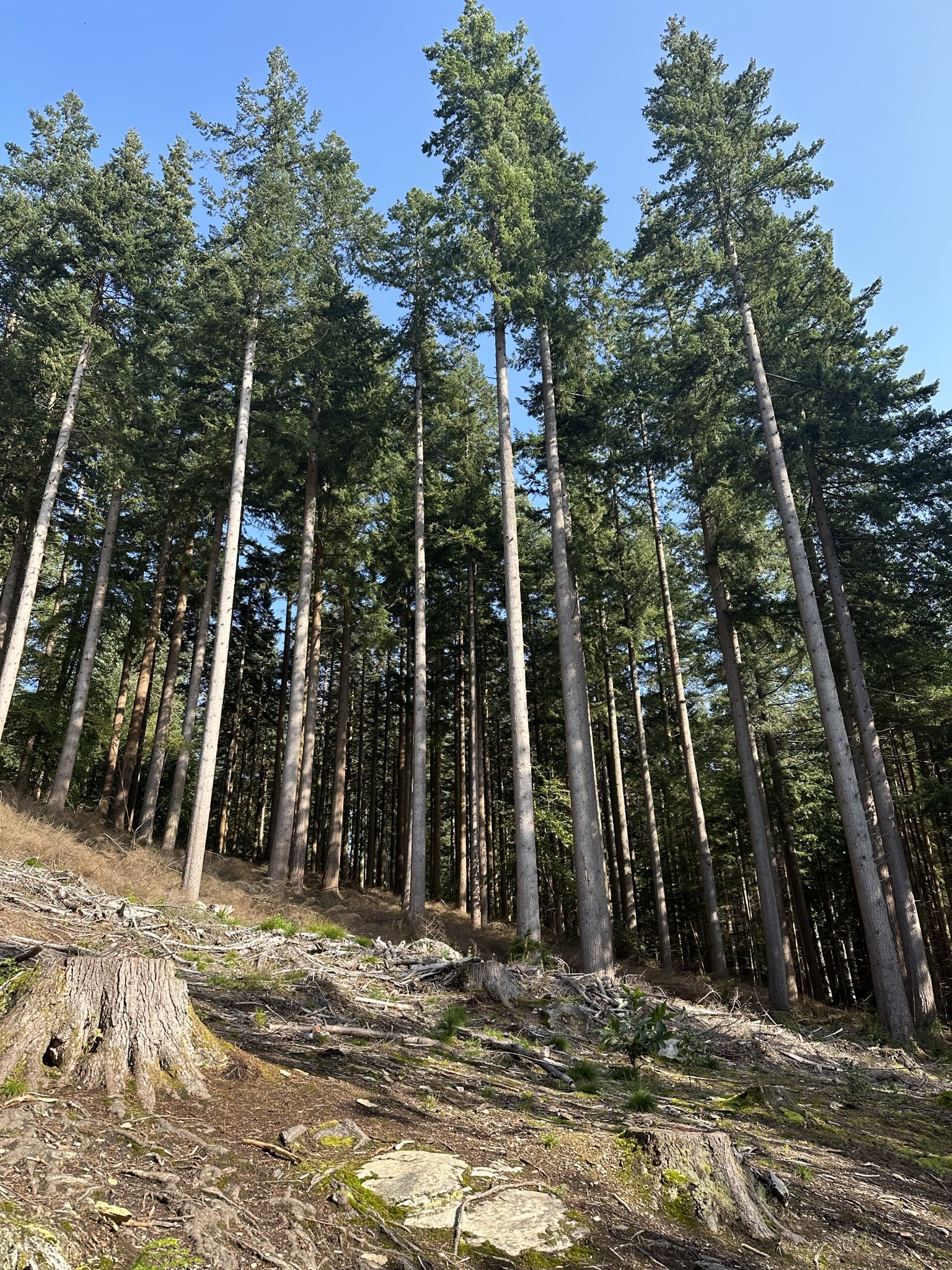
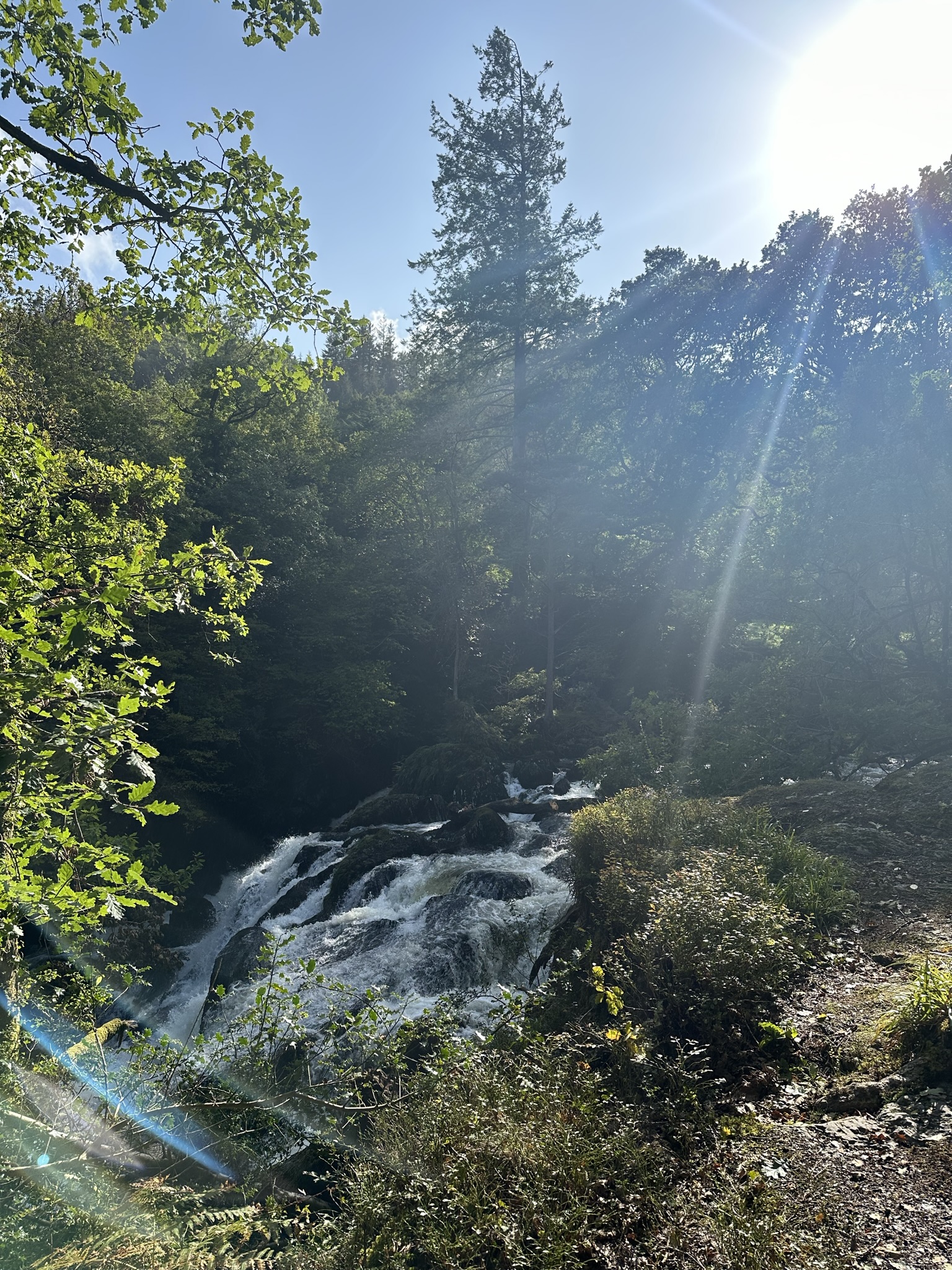
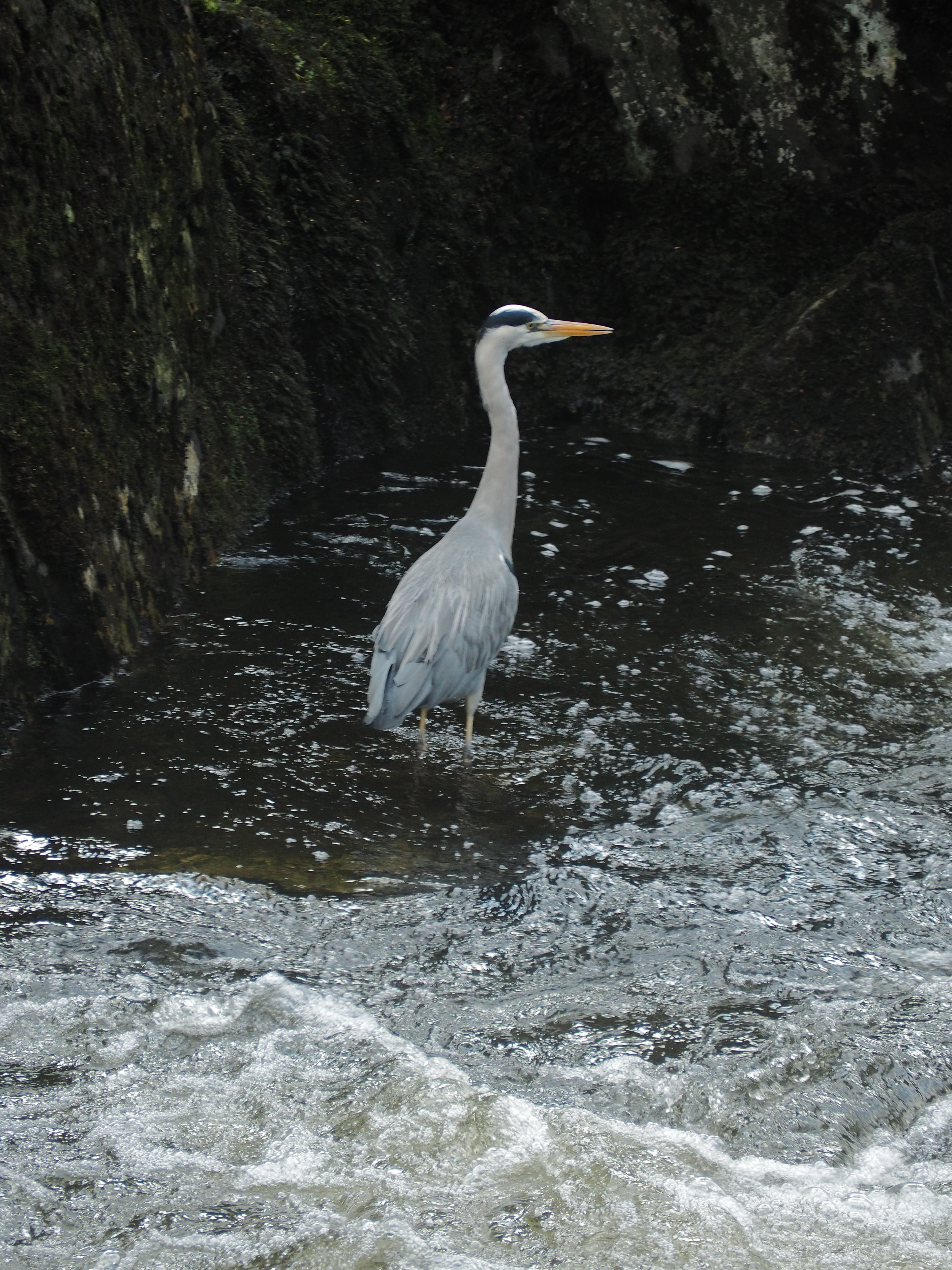
But I digress… my selected “moderate” trail was. It started off at a parking lot by a bridge and waterfall in charming Betws-y-Coed. The first bit was on a boardwalk and then through a pasture along the Llugwy river. The trail departs the riverside climbing through a field with marvelously tall Douglas Fir trees and ascends to a paved single-track road for a spell then winds back down through the forest to run cliffside above the river dropping you into the area of the falls which are peaceful and beautiful. The trail, as mapped on AllTrails, continues on to another parking lot, but I turned at the falls returning to the town and caught up with an amazing grey heron (I think) wading in the churning waters of the falls under the Pont-y-Pair bridge.

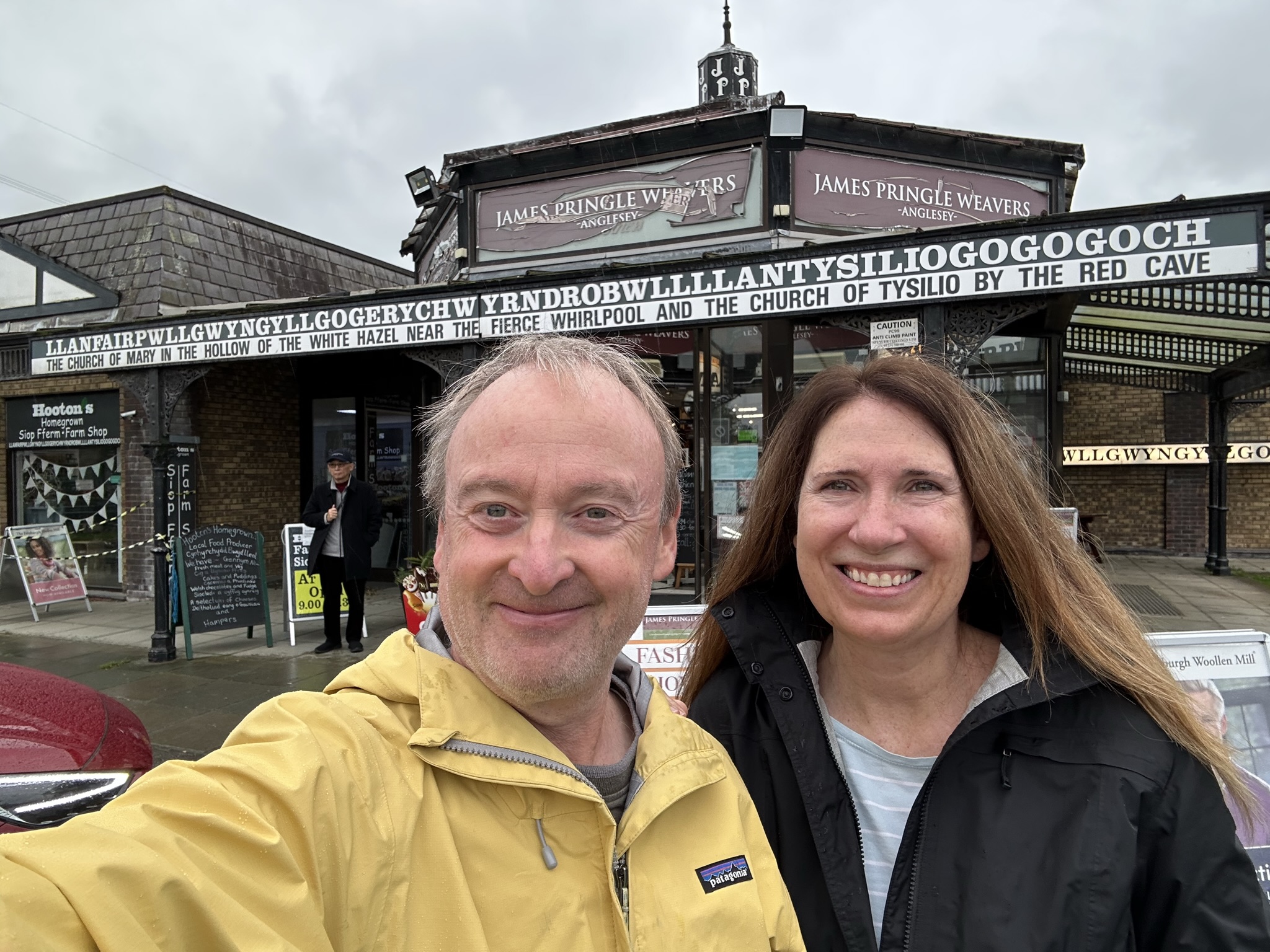
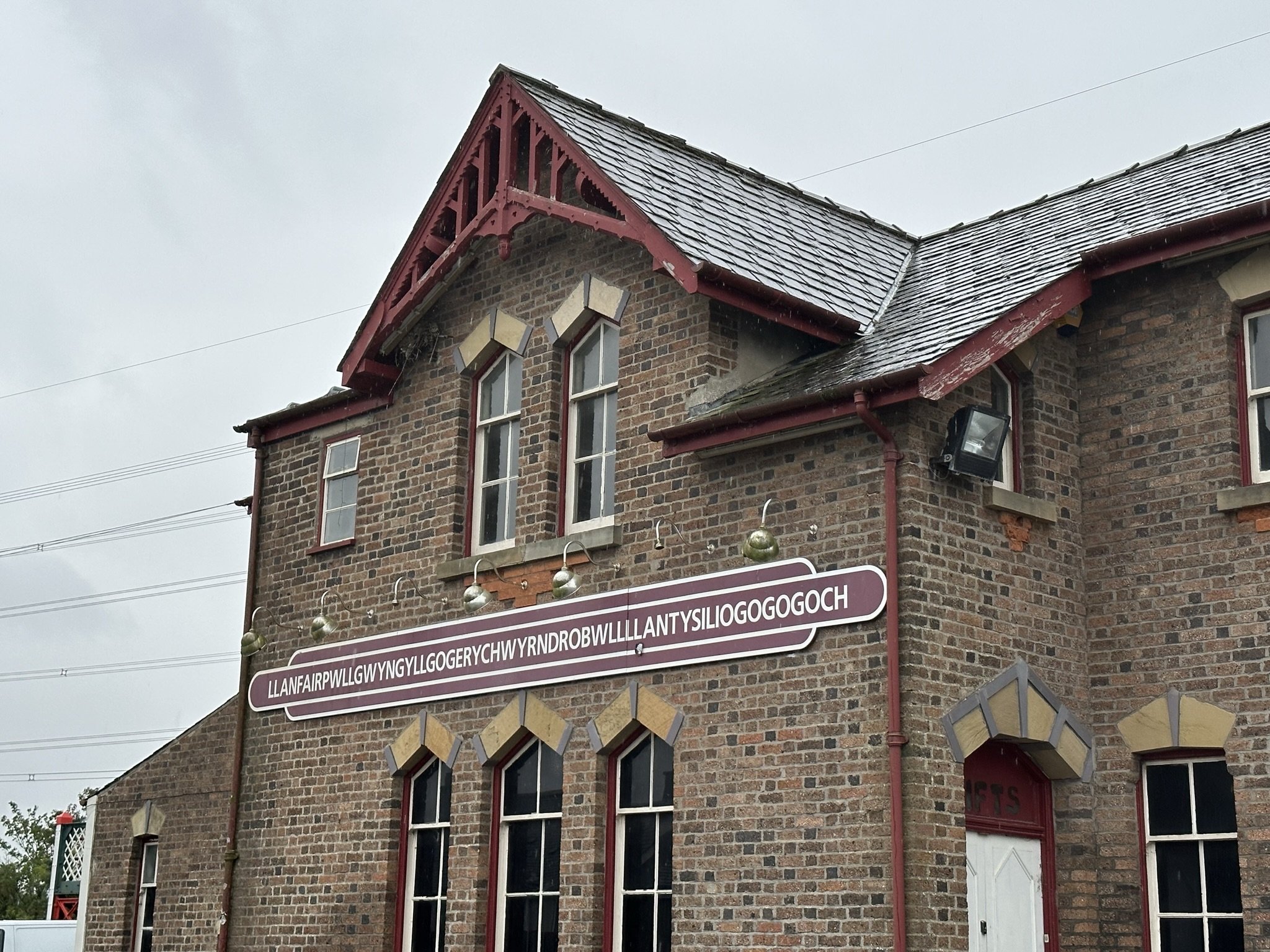
Anglesey. As Storm Agnes approached with her winds and heavy rain, we tried to beat her to take in the isle of Anglesey. We navigated to several towns in the “Anglesey Area of Outstanding Natural Beauty” at the north end of the island and then turned back to check out the easy-to-spell town (and longest name in all of Europe) of Llanfairpwllgyngyllgogerychwyrndrobwllllantysiliogogogoch. Whew. Glad I don’t have to put that down on every form I fill out even with their adopted abbreviation of Llanfairpg. To be honest, while it was pretty, I wouldn’t rank Anglesey in the top of our views of “outstanding natural beauty” on this trip. Perhaps it was the weather, but if I had it to do again, I would have ventured south into the Snowdonia Park again with that time.

Northwestern Wales was long a bastion of Welsh resistance to English rule. In the 1st century AD this region, then known as the Welsh state of Gwynedd, one of three Welsh states with (most of the time) separate rulers. Much of the many generations and years of wars: civil, with the Vikings and with England and rebellion of English rule, played out in this region of Wales. When King Edward I sought to rule Wales, he built a circle of castles along the edges of present-day Snowdonia Park to try to tame the Welsh. One of these castles was Caernarfon.
Caernarfon Castle. Before departing for the UK, we learned on an episode of Dan Jones’ Secrets of Great British Castles that Caernarfon is where the title “Prince of Wales”, given to the first-born son of the monarchs of England originated. We thought, well, we’ll be right there, we ought to go check that out. Allegedly, Edward I (the same Edward who fought the Scots at Stirling in their war for independence) “promised the Welsh that he would name ‘a prince born in Wales, who did not speak a word of English’ as Prince of Wales”. When his wife, Eleanor, a Castilian from Spain who was instrumental in the design and construction of the castle at Caernarfon (hence its three-towered Castilian-looking “Eagle tower”), was pregnant with their 14th (yes, 14th) child, Edward summoned her to come to Caernarfon to give birth here. Many of the 14 children had not survived and when Edward II (the eventual heir) was born at Caernarfon only one male heir remained (he died shortly after Edward II’s birth). Edward’s birth was a relief to the royal couple, and as newborn Edward the heir, who was born on Welsh soil and spoke no English being fresh from the womb, was proclaimed the “Prince of Wales”, the trick was complete (the Welsh would get their day in the sun in the games of one-ups-manship, however, when Henry VIII’s Tudors of Welsh descent came to the English throne).
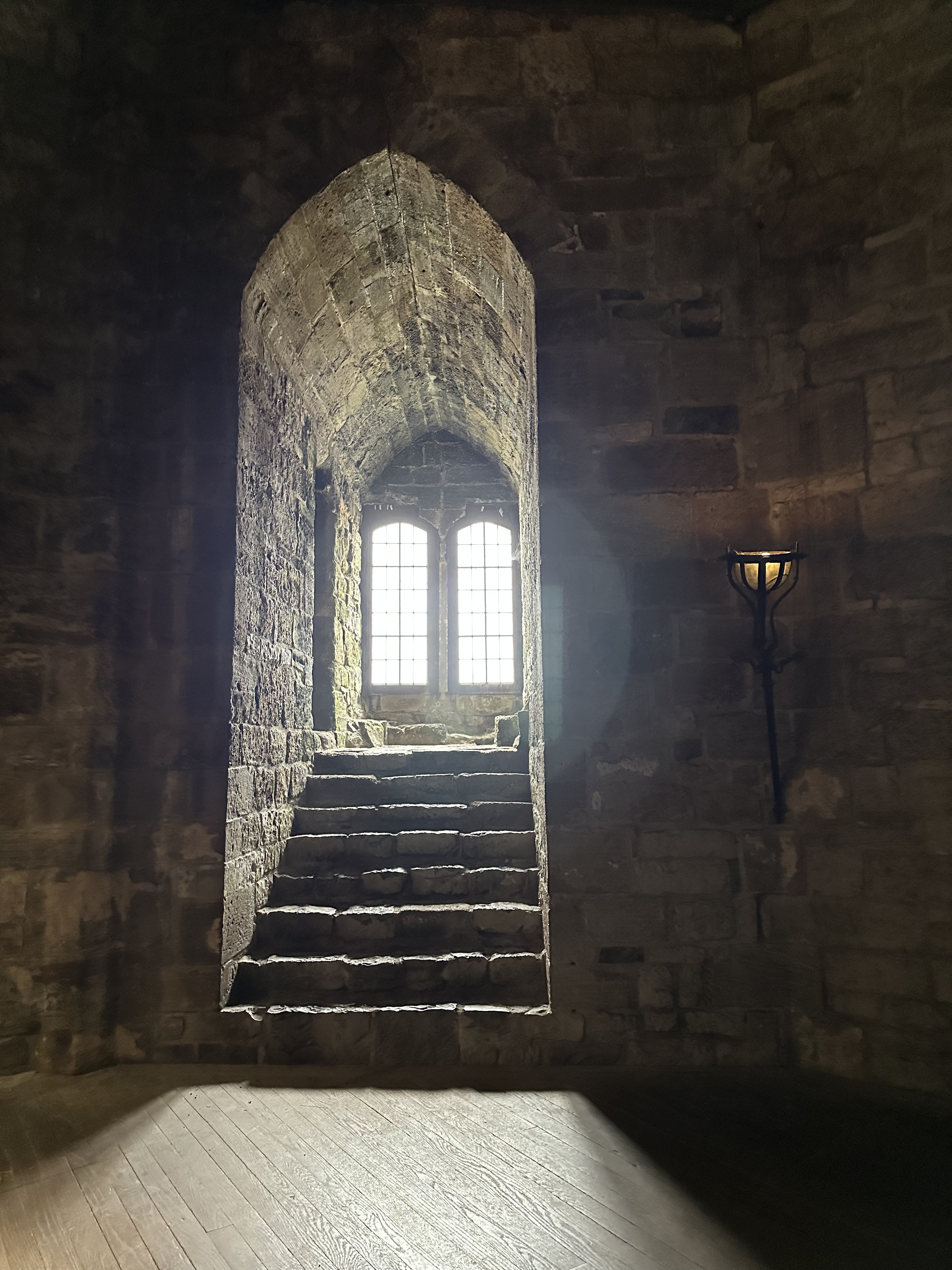
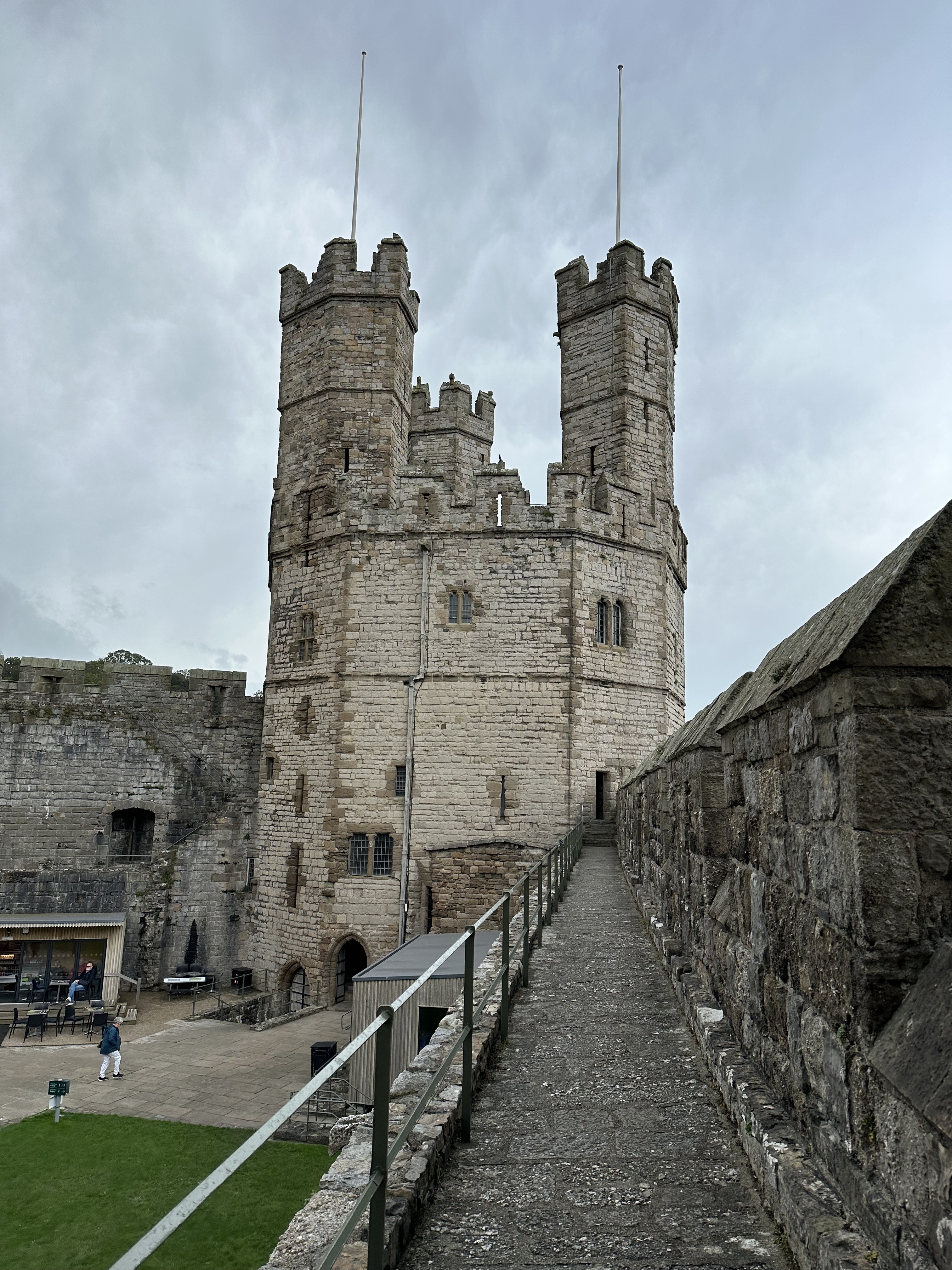
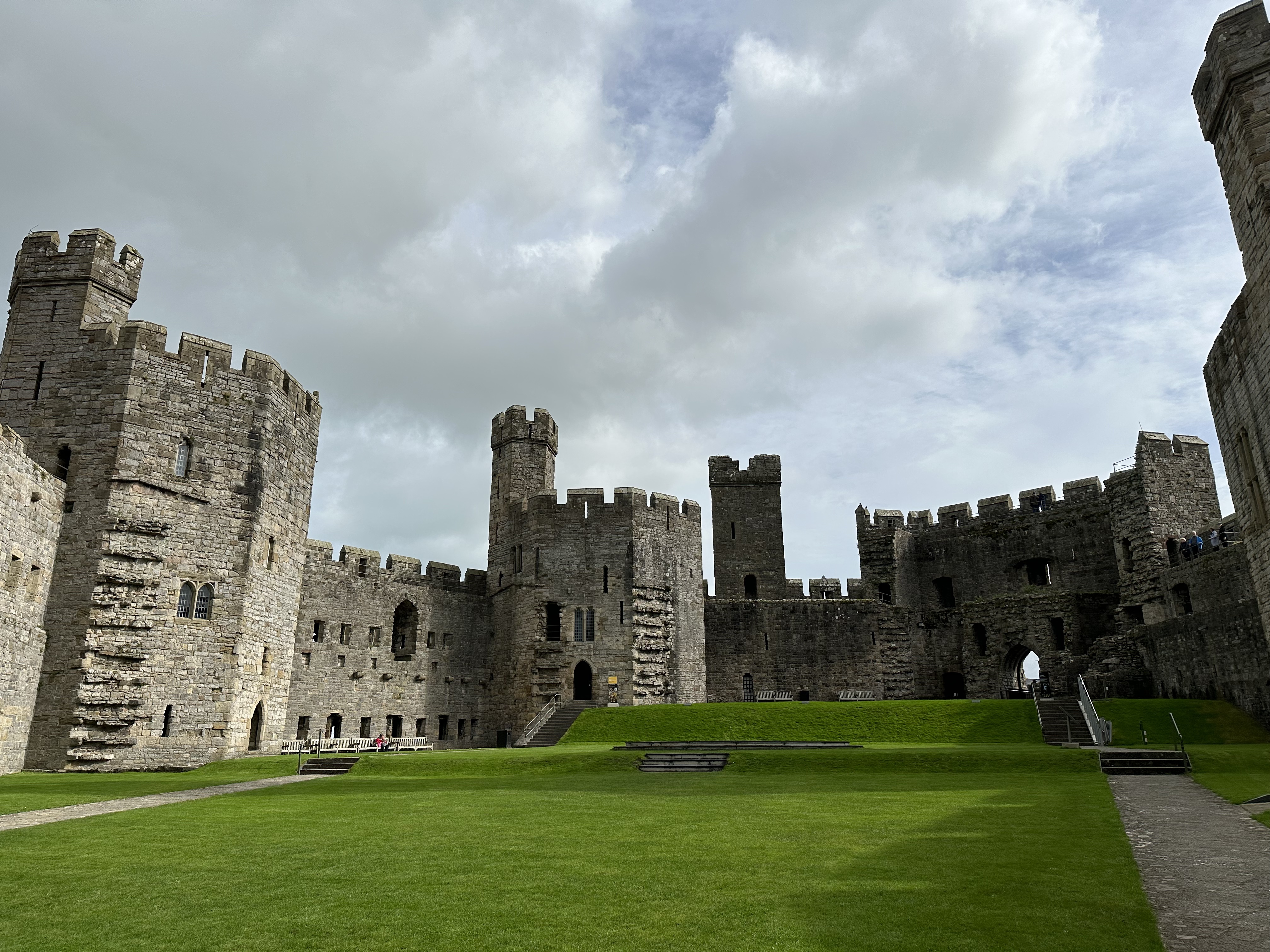
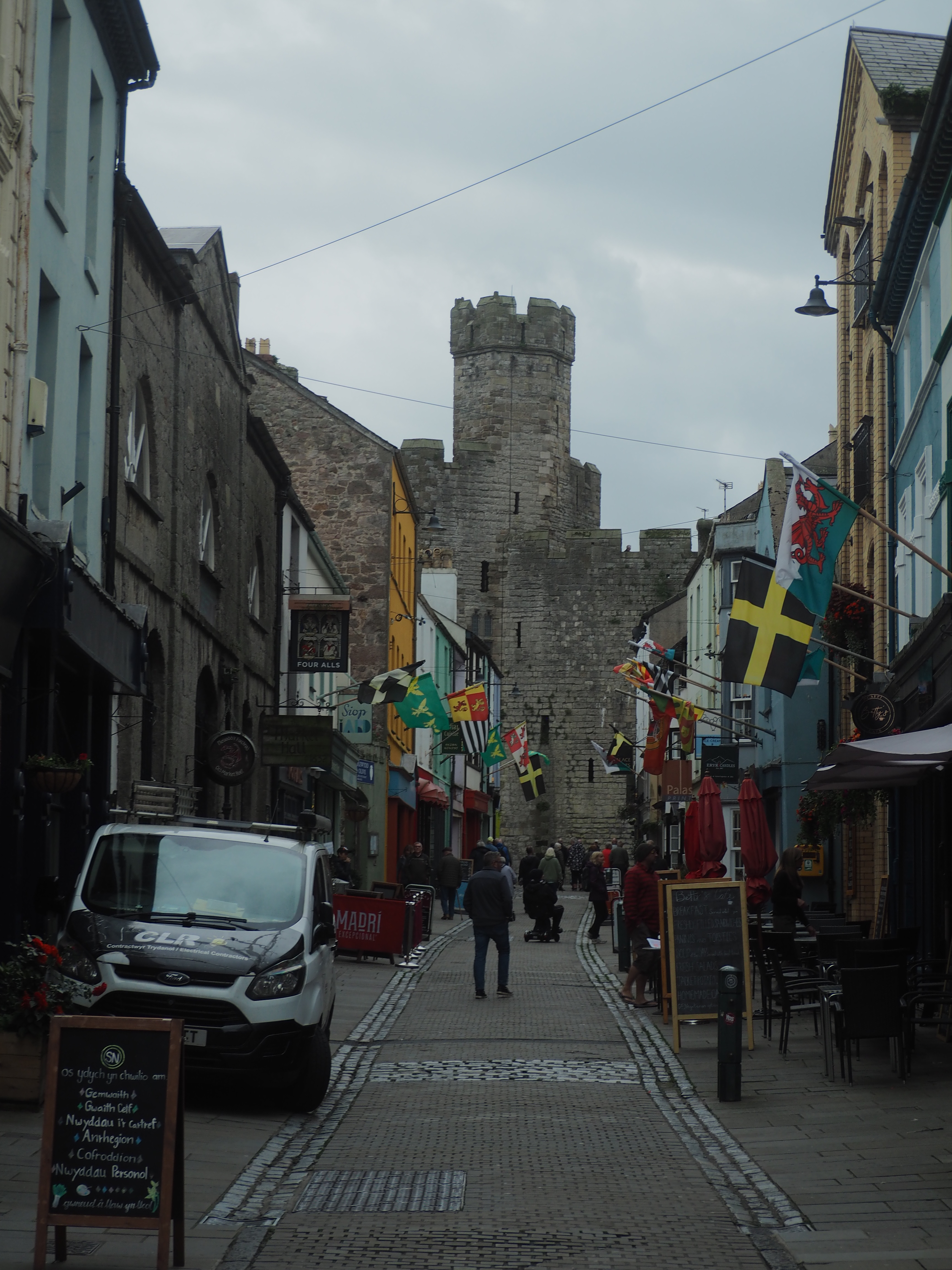
Caernarfon was built to, essentially, be impenetrable. The main gate, the King’s Gate had two drawbridges, five sets of doors, six portcullises, murder holes (through which hot sand was dropped to sift into chain mail, ouch), arrow slots and right angles. It withstood many uprisings and attacks, but was overtaken in 1294 by the Welsh, only to be taken back one year later by Edward who then built the aforementioned defense system to prevent it from being taken again.
The castle is an unusual one with many towers, many interconnected with tunnels and each with separate exhibits on the history of the castle or Welsh military history. In more modern times, King Charles (then Prince) was invested as Prince of Wales at Caernarfon in 1969.
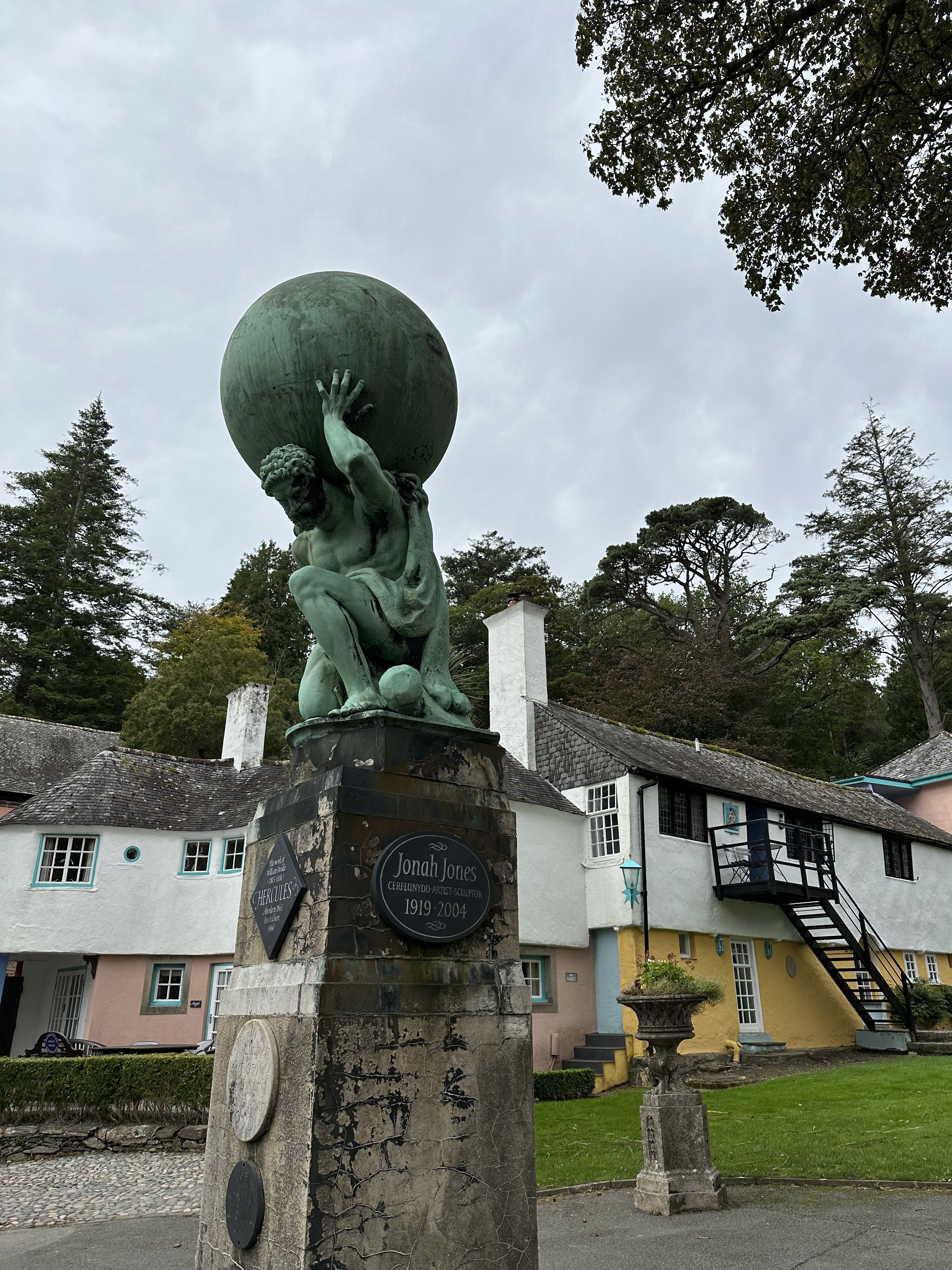
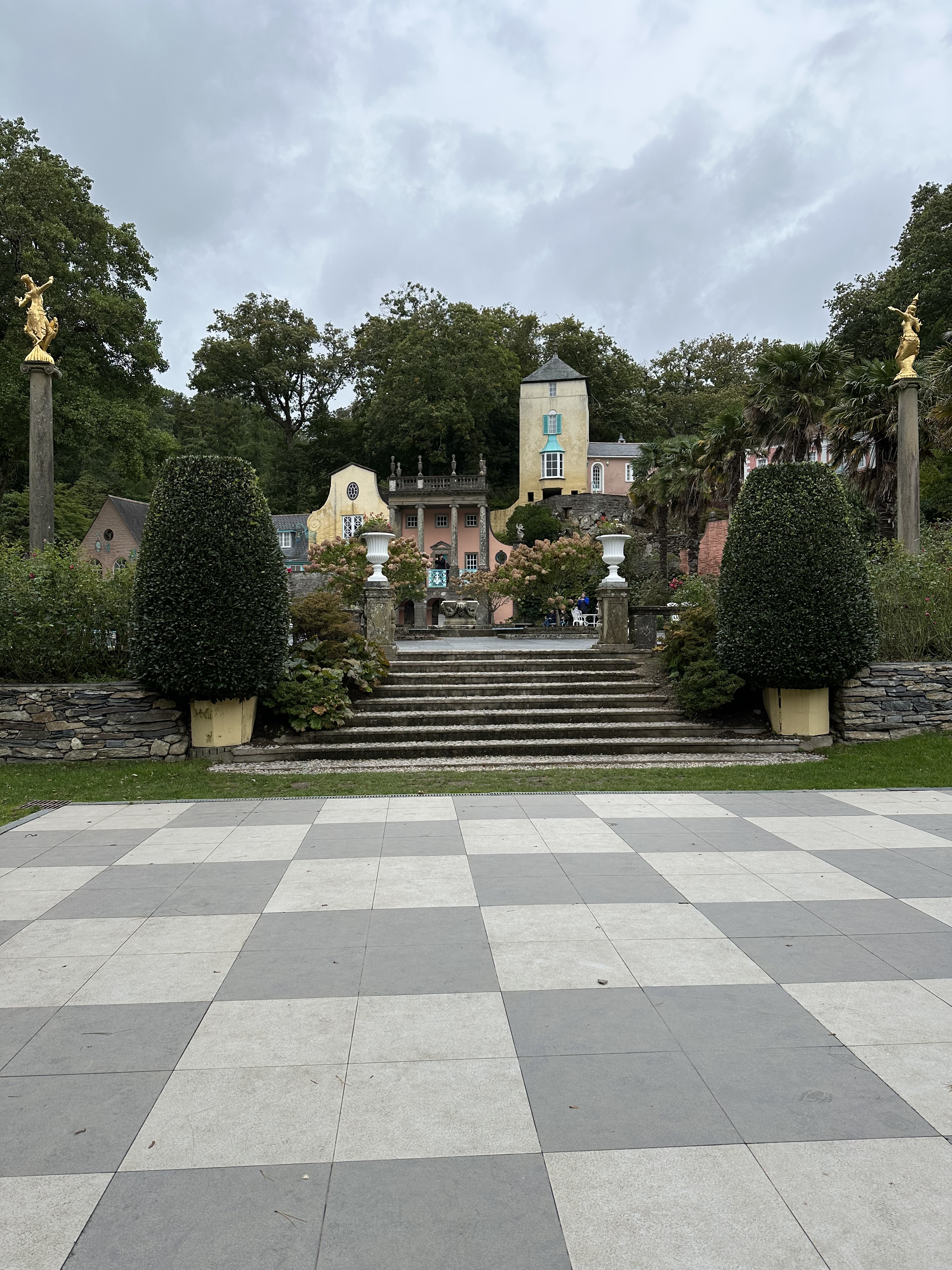
Portmeirion. On our way south, we stopped in Portmeirion. I’d seen pictures of it, and my barber the day before recommended it as a stop. I’d imagined a mix of Portofino-like cafes and Sintra’s Pena Palace-like buildings. We googled to try to find a place to eat and the results list was odd. We parked in the free lot and paid the substantial admission fee to enter the town a little head-scratched.
With a little pre-visit research, our puzzlement would have been alleviated, but our research was all post-visit to answer questions we had.
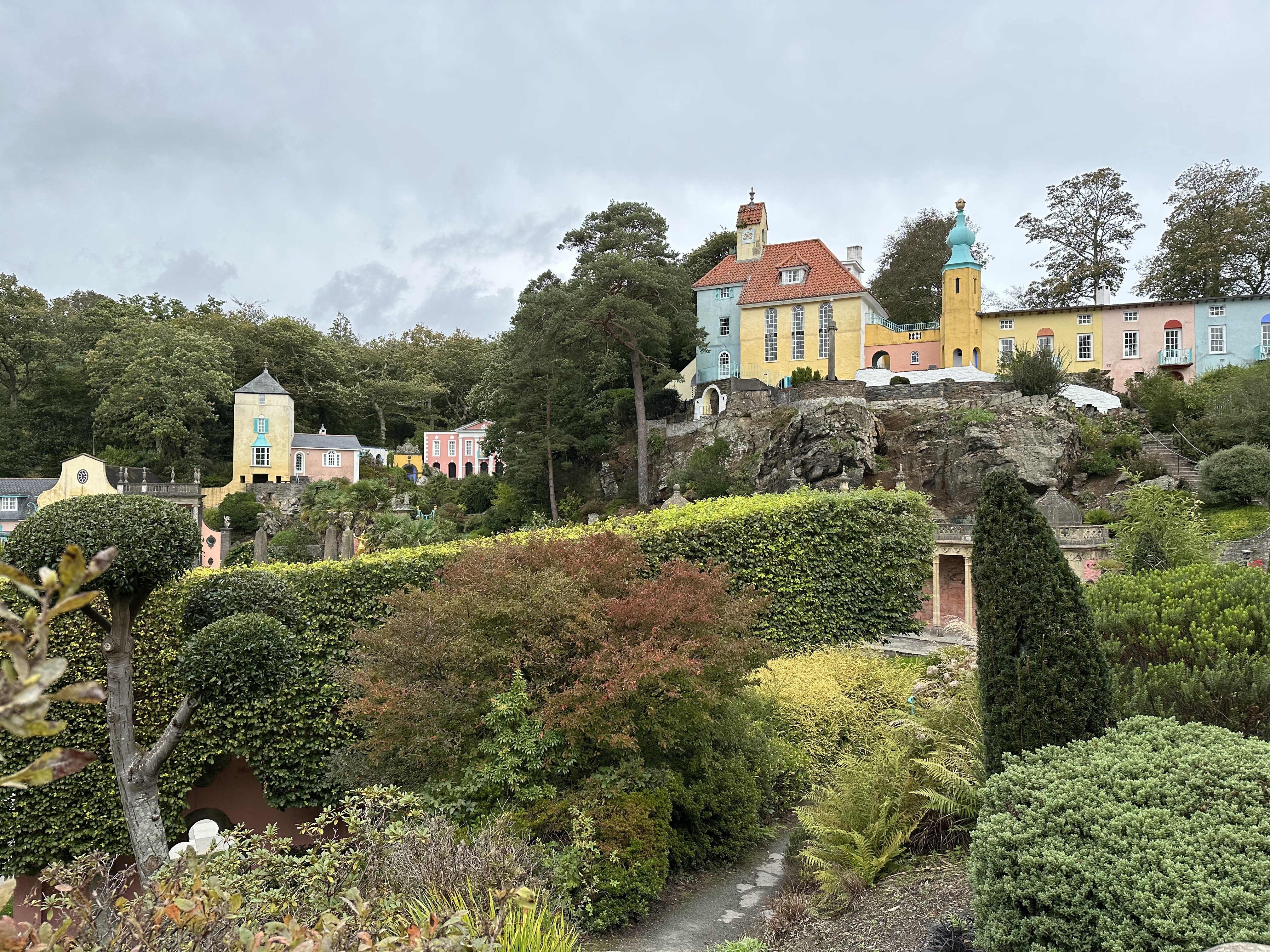
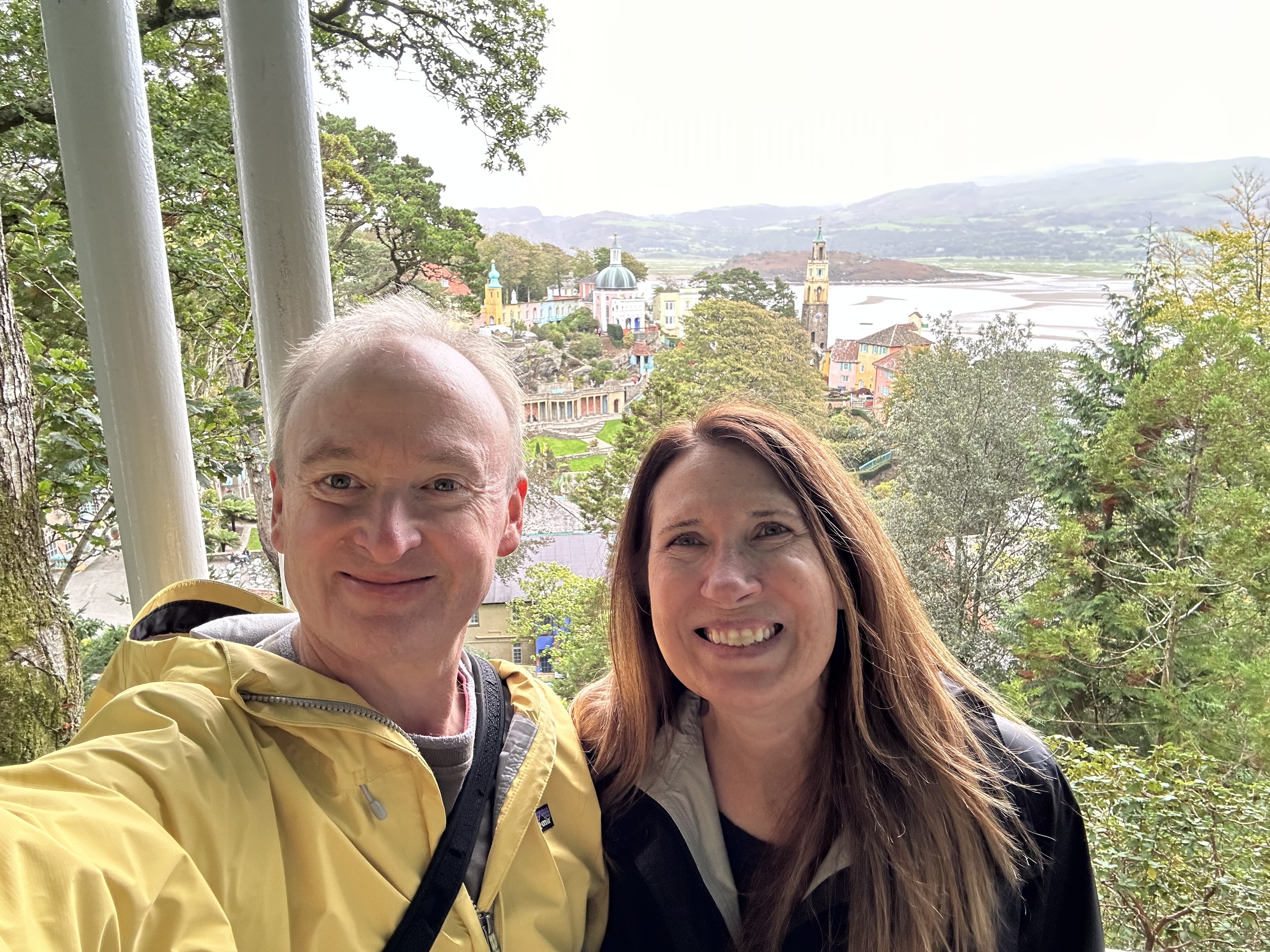
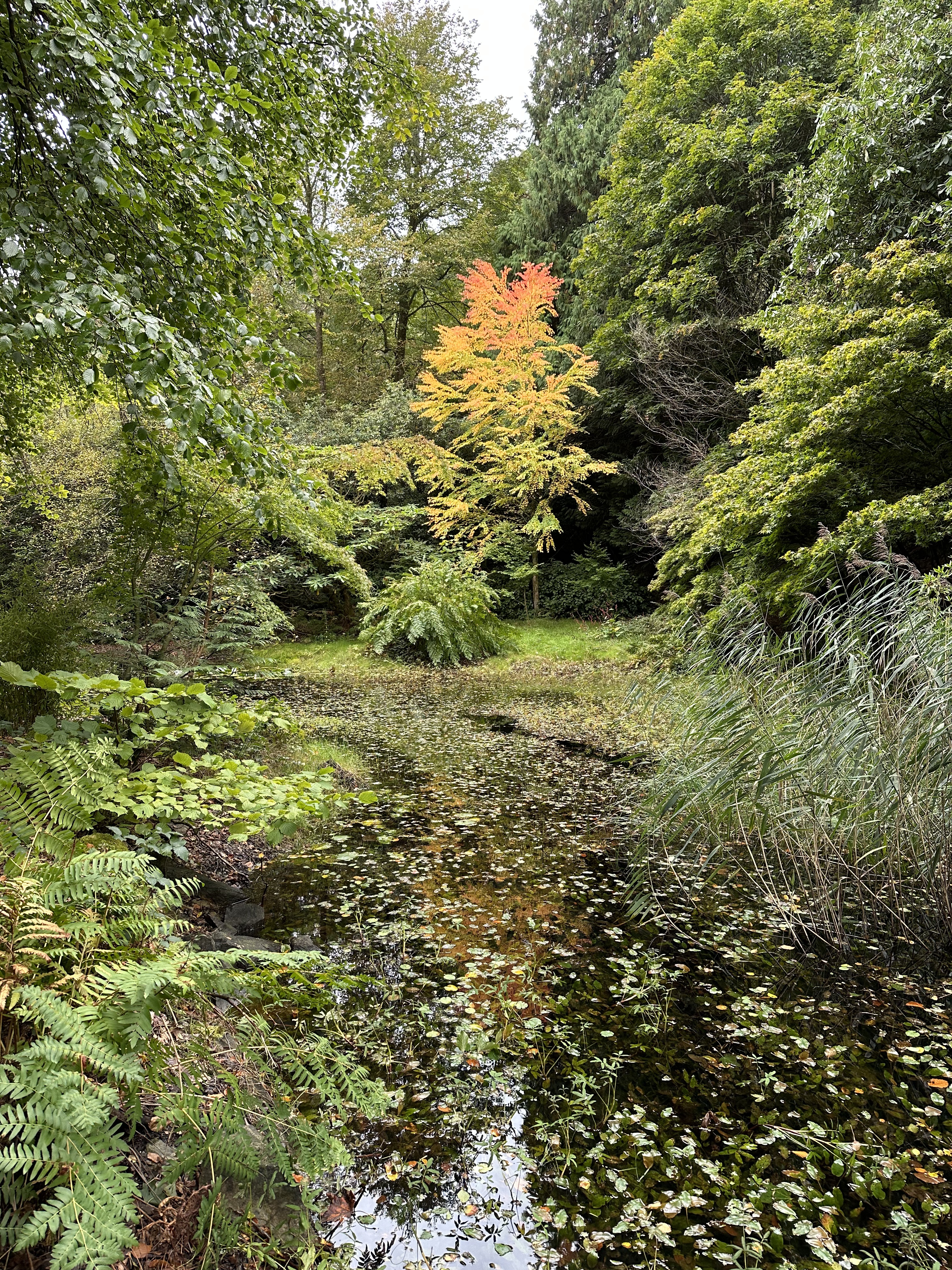
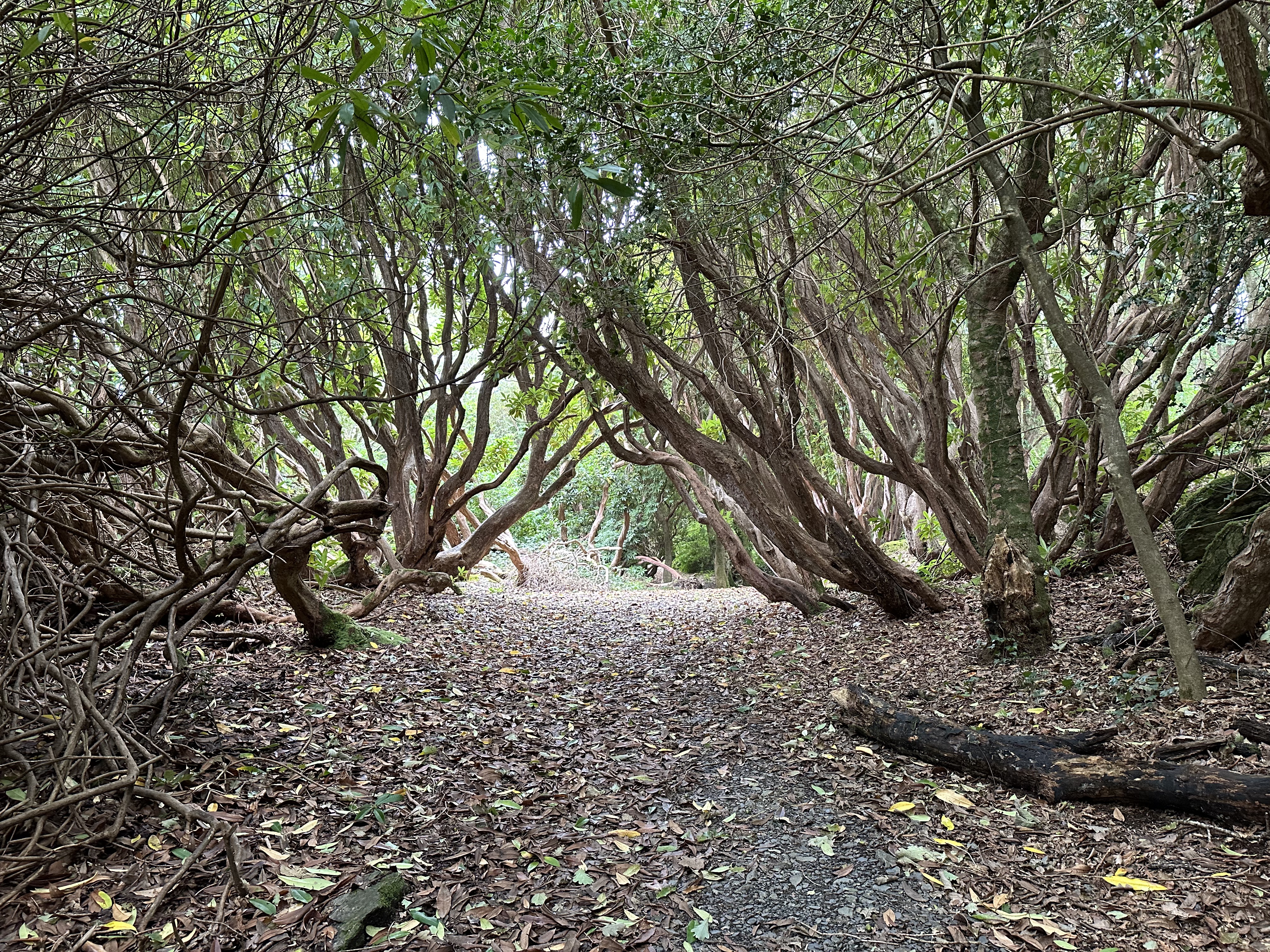
It isn’t a real town, first and foremost, and actually was not even built to be one. The town was designed and built as a “folly”, an architectural term I only learned after looking up Portmeirion. A folly is a “building primarily constructed for decoration”. The builder, Sir Clough Williams-Ellis, built the village between 1925 and 1975. There are two hotels on the grounds and many of the buildings are guest houses. The “staff only” signs and barricades make it feel a little like Disneyworld with its secret areas and as you wander the village it feels a bit like being inside a game of Candyland. The gardens are extensive with trails winding through massive rhododendrons and fantasy-novel like trees. It was an odd experience, but we would recommend a visit if you’re in the area. The guidebooks don’t call it the most unusual town in Europe for nothing.
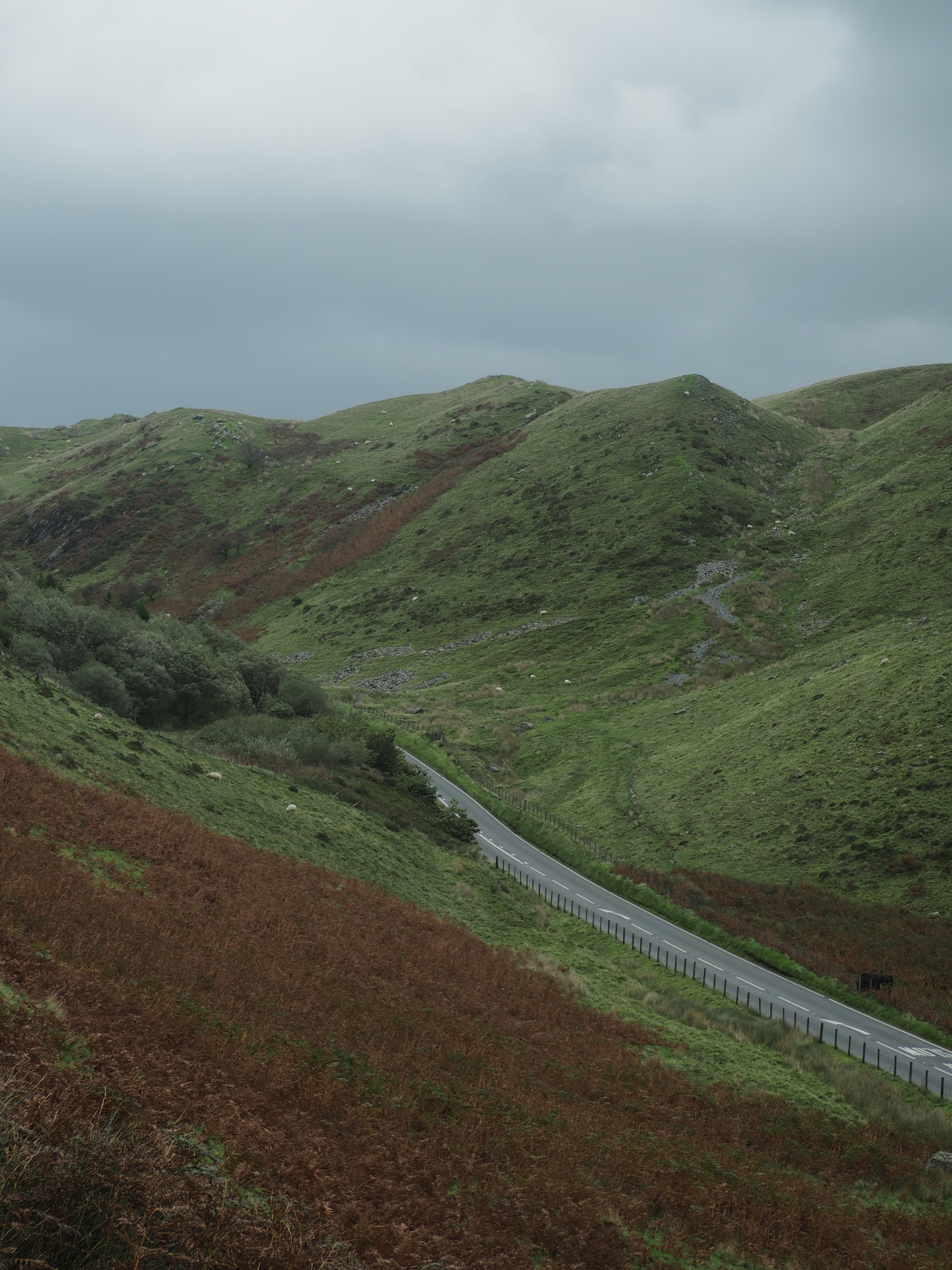
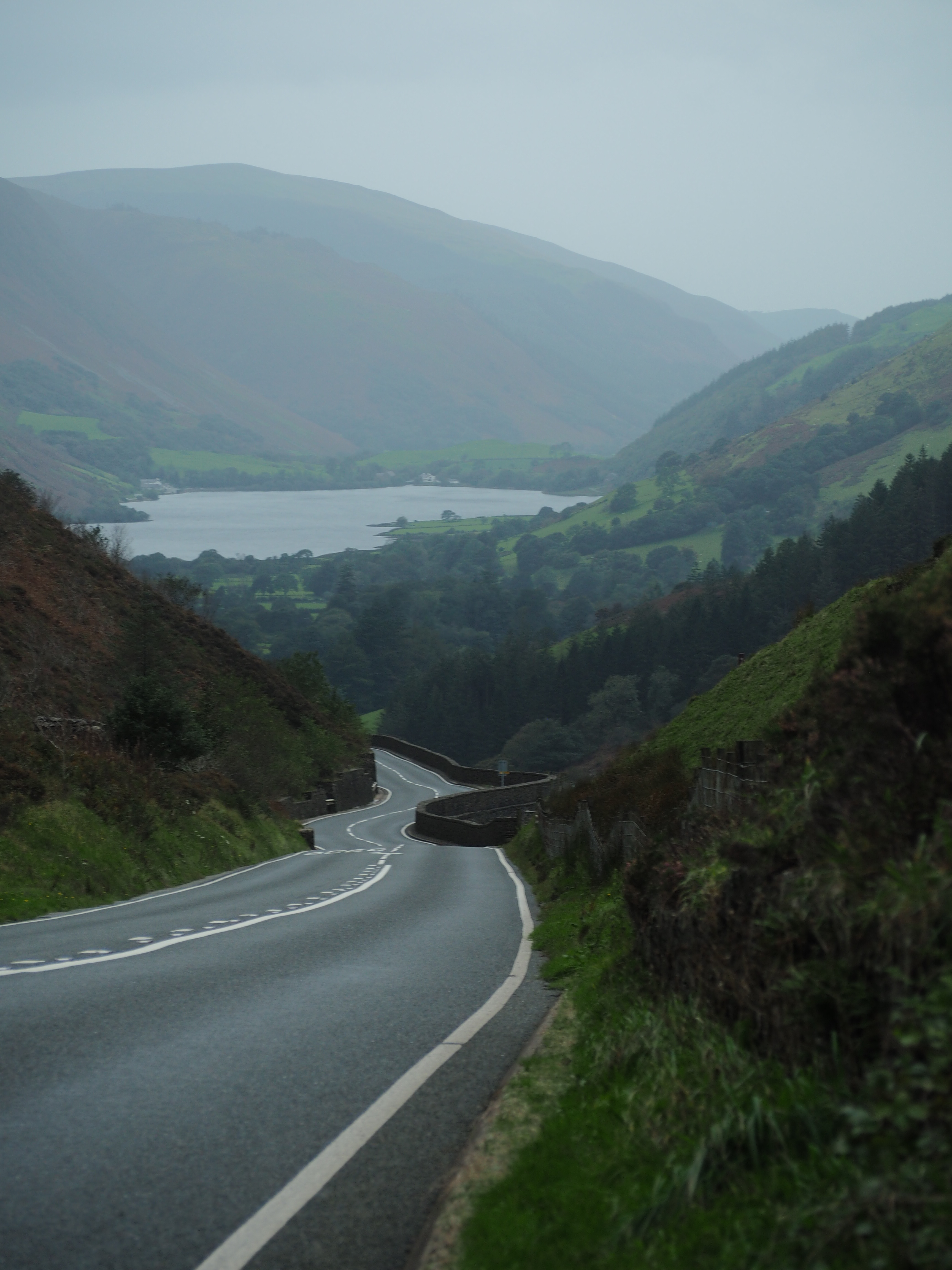
As we left northern Wales and drove south along the western perimeter of Snowdownia, we were treated to one of the most beautiful drives we’ve taken on this trip and maybe ever. Impossibly green fields with reddish-orange bushes run up to tall stone mountains as you wind through valleys, up over passes and into little stone Welsh villages. Spectacular. Pictures really don’t do it justice.
Sources:
2. https://en.m.wikipedia.org/wiki/Caernarfon_Castle
3. Secrets of Great British Castles. Season 1, Episode 4.
4. https://www.worldhistory.org/Caernarfon_Castle/
5. https://en.wikipedia.org/wiki/Edward_I_of_England
 The Traveling Ridleys
Pingback: Exploring the Wonders of Northern Wales | Tourism Sights Europe