

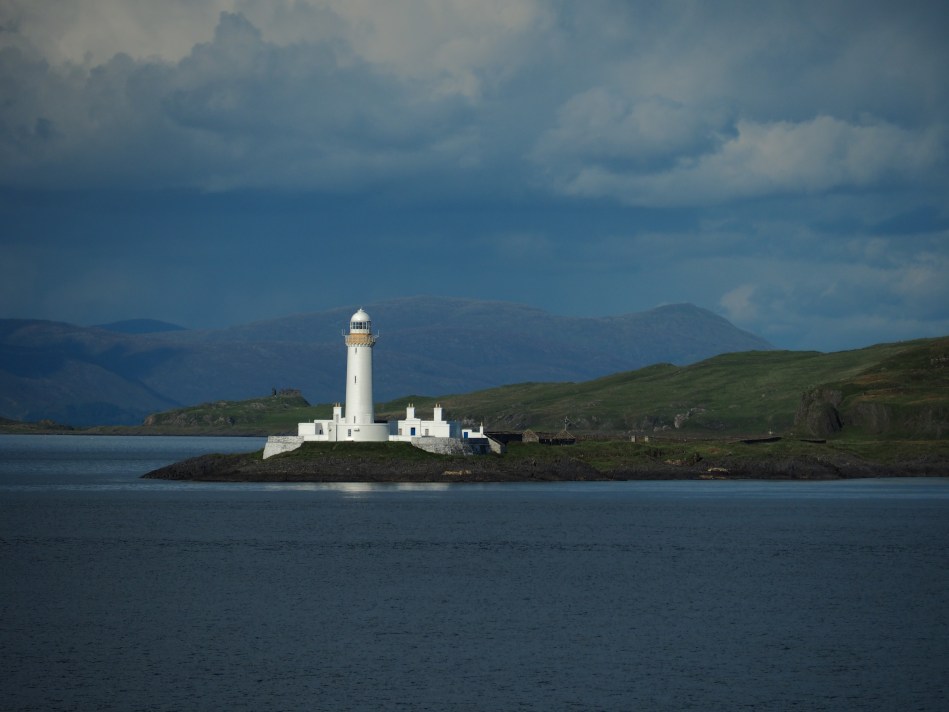
After departing the idyllic and picturesque Isle of Skye, we prepared to become best friends with the ferry operators of the Caledonian MacBrayne company. We had three more Scottish islands in our sights: the islands of Mull and Iona and the Isle of Arran.
We departed Skye across the Skye Bridge and retraced our steps through the Highlands (even stopping off for a short picnic lunch at our old stomping grounds there, just up our old road to say hello to our friends the sheep who undoubtedly missed us over the previous two weeks) to arrive in time for the ferry from Oban to Craignure on a sparklingly beautiful mid-September day. After making a wrong turn down into the pedestrian zone of Oban, we circled back and queued for the ferry (I wouldn’t call it “well marked”, you kinda have to know where you’re going or at least not be an idiot).
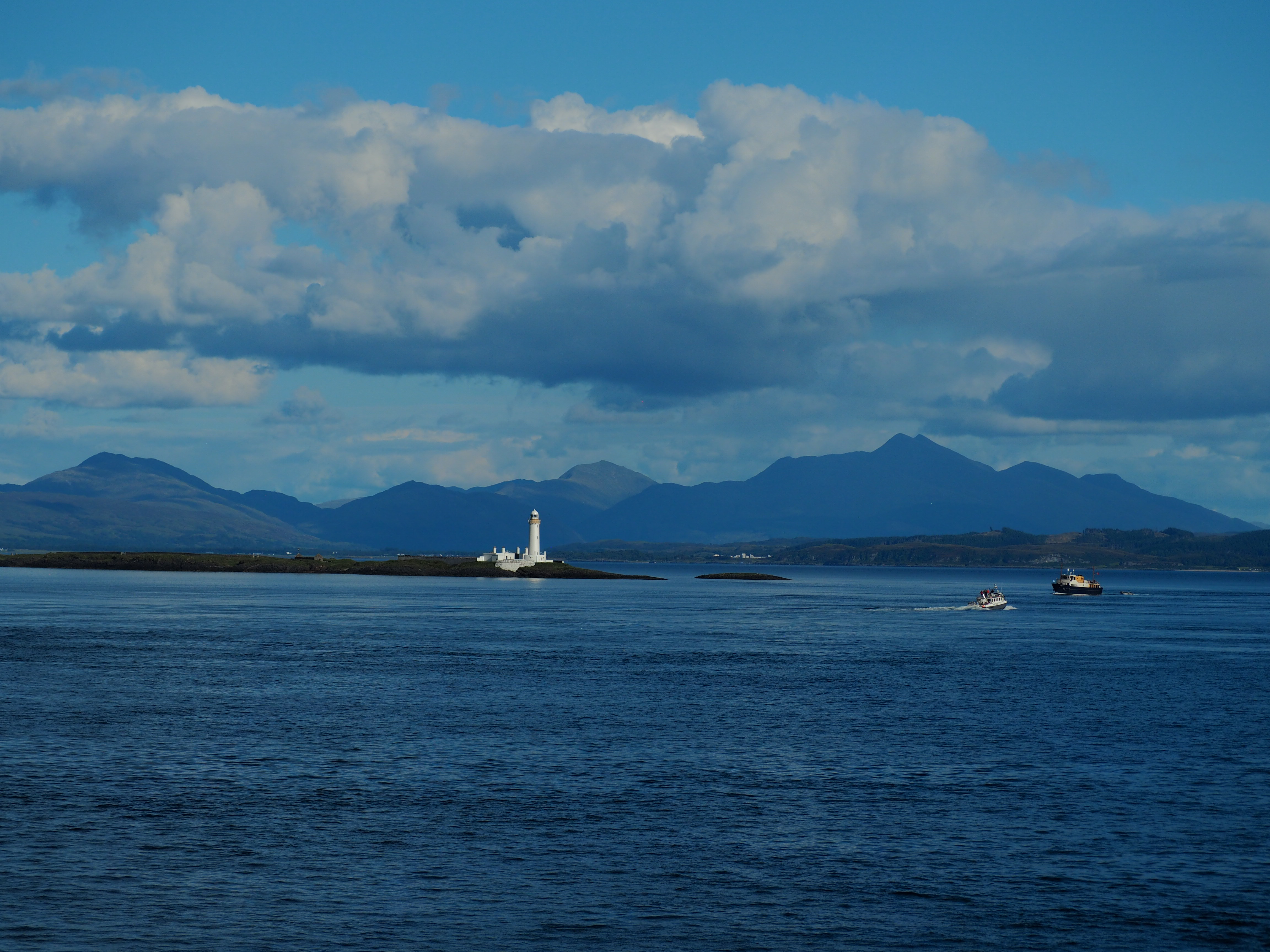
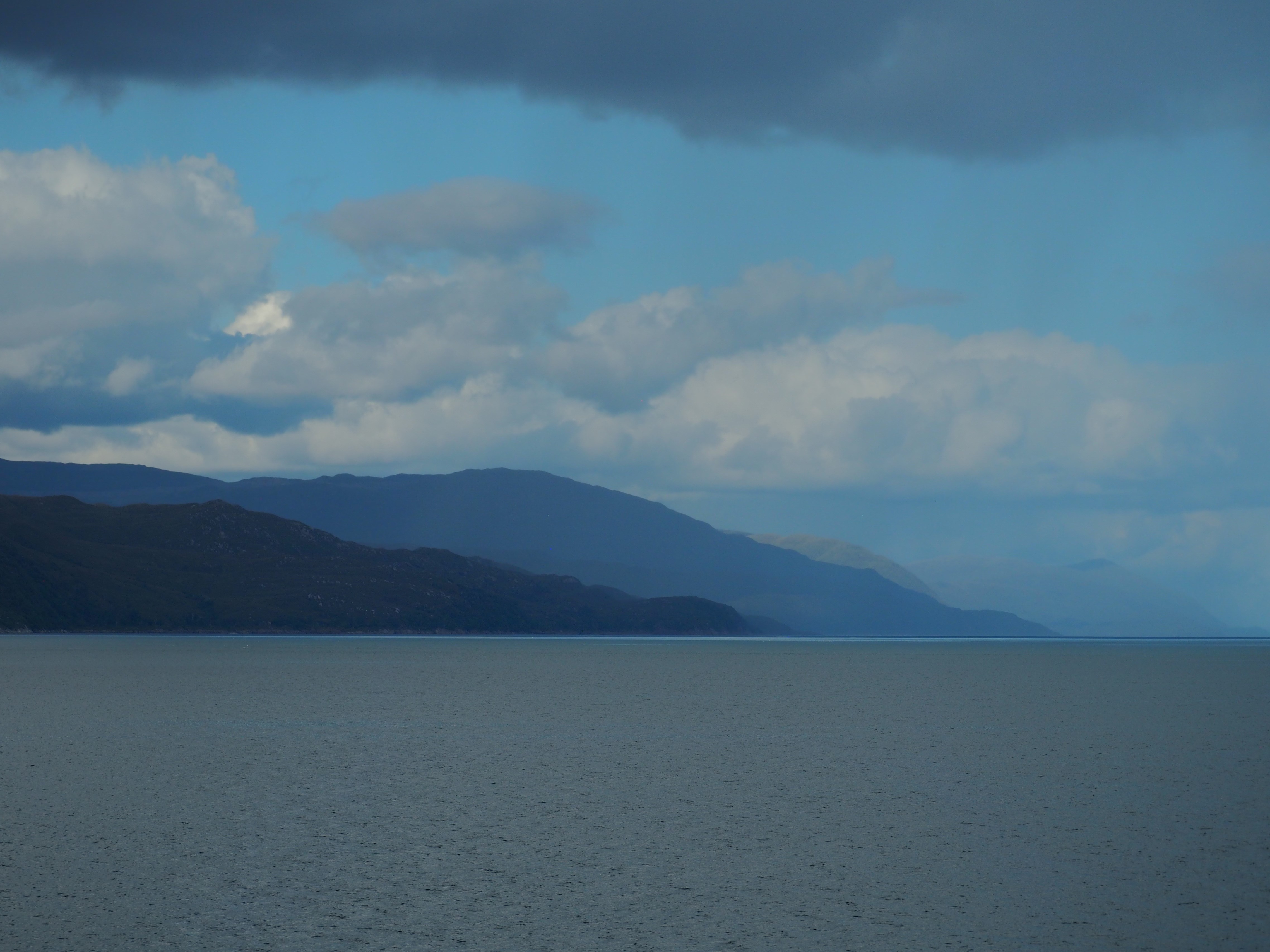
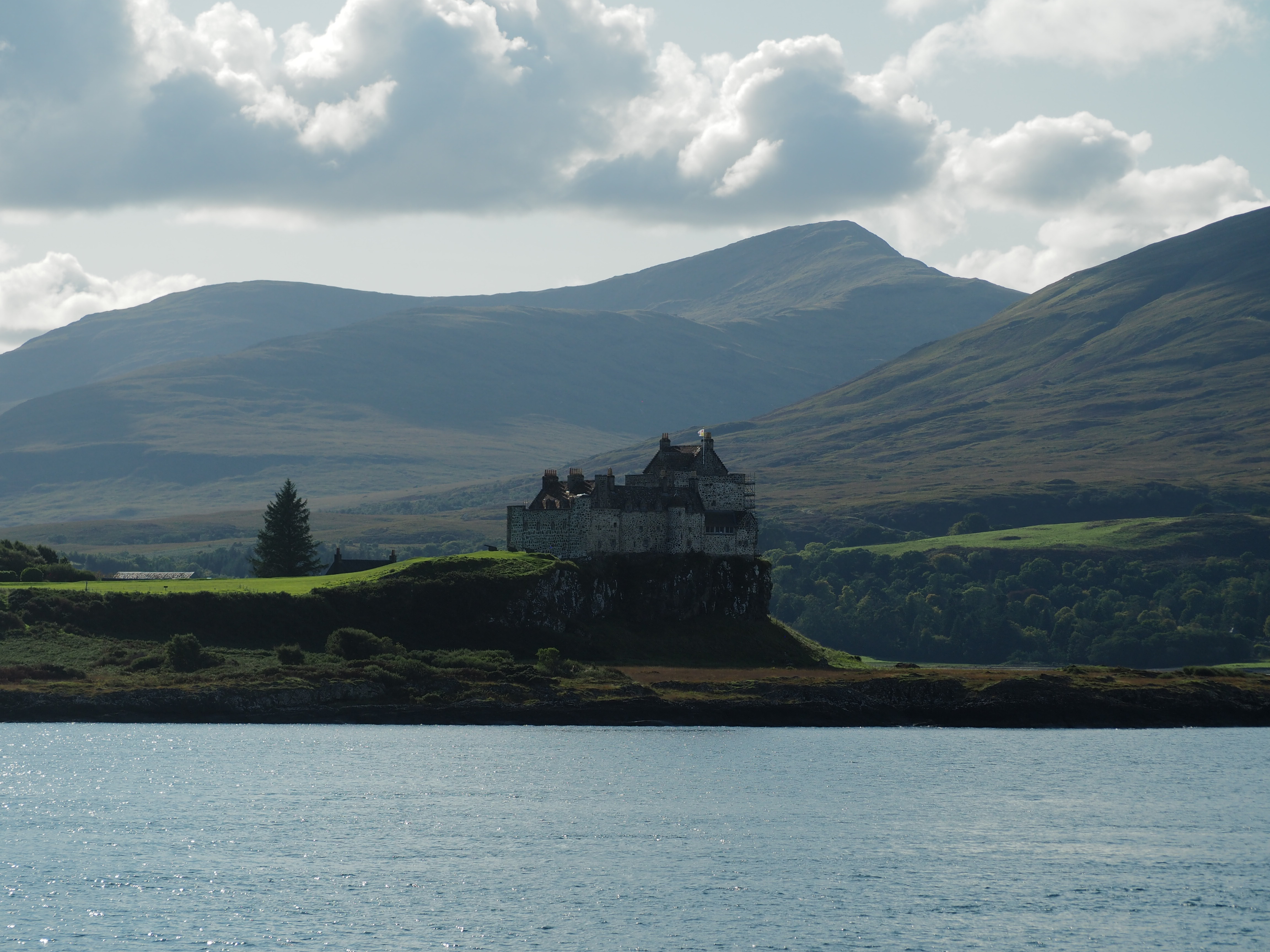
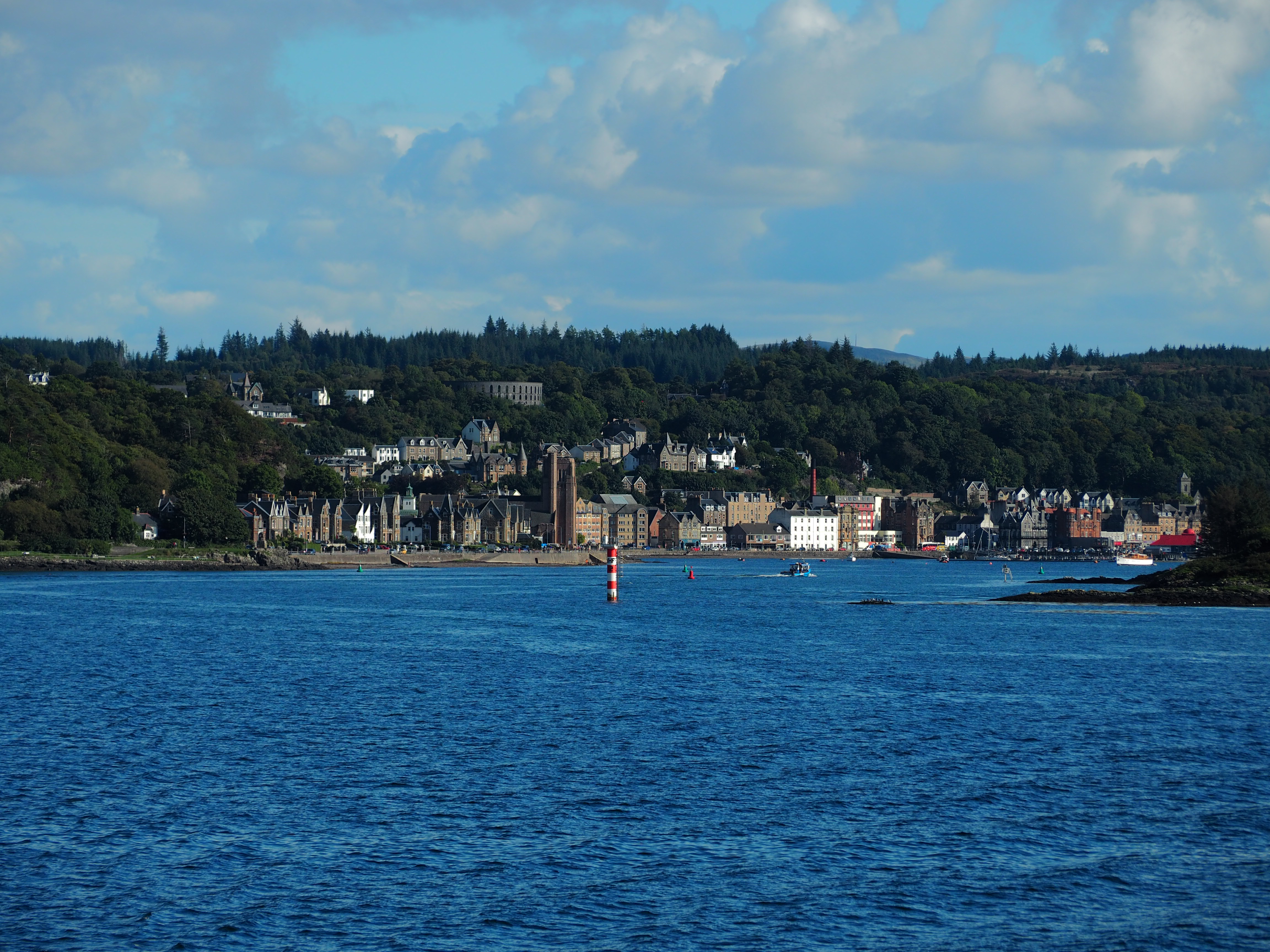
The Ferry Crossing from Oban, Oban lower right
Remote Mull and Iona. We arrived at our hotel, unpacked and struck off for a walk down a dirt path past Torosay Castle to a little point on which a solitary celtic cross sits and then hit the hopping Craignure Inn pub which only got fuller and fuller (and the non-local patrons more impatient, sadly, with the lone barman who was hustling to make drinks, take food orders, change the tables for a wired-tight Brit and a pretentious Canadian who had previously placed orders but changed their seats afterwards (seriously?) and cash people out). We quaffed a couple of drinks, left a tip and marched back to our hotel to eat sandwiches we’d made for our dinner that morning with views of a beautiful sunset out our window.
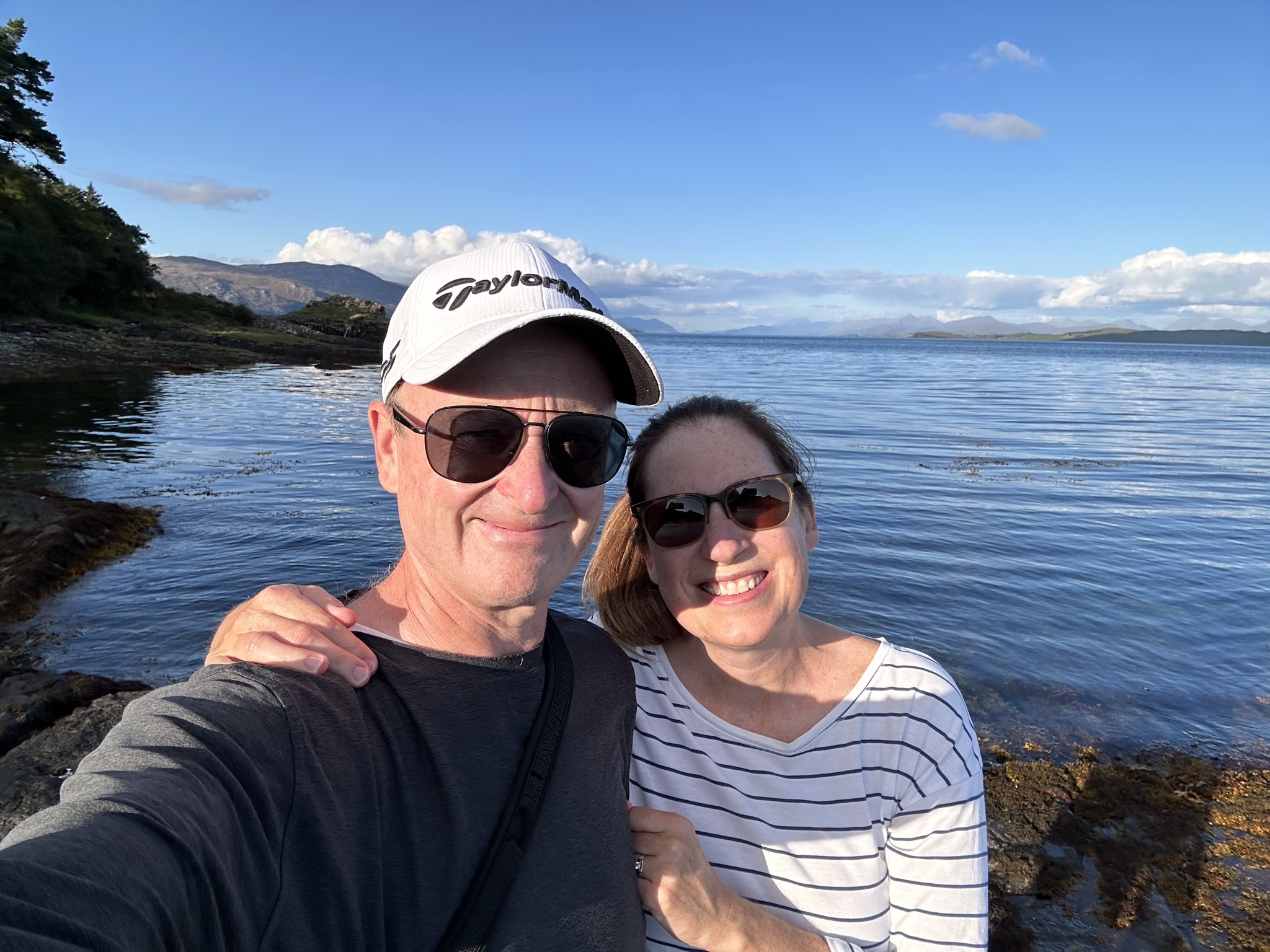

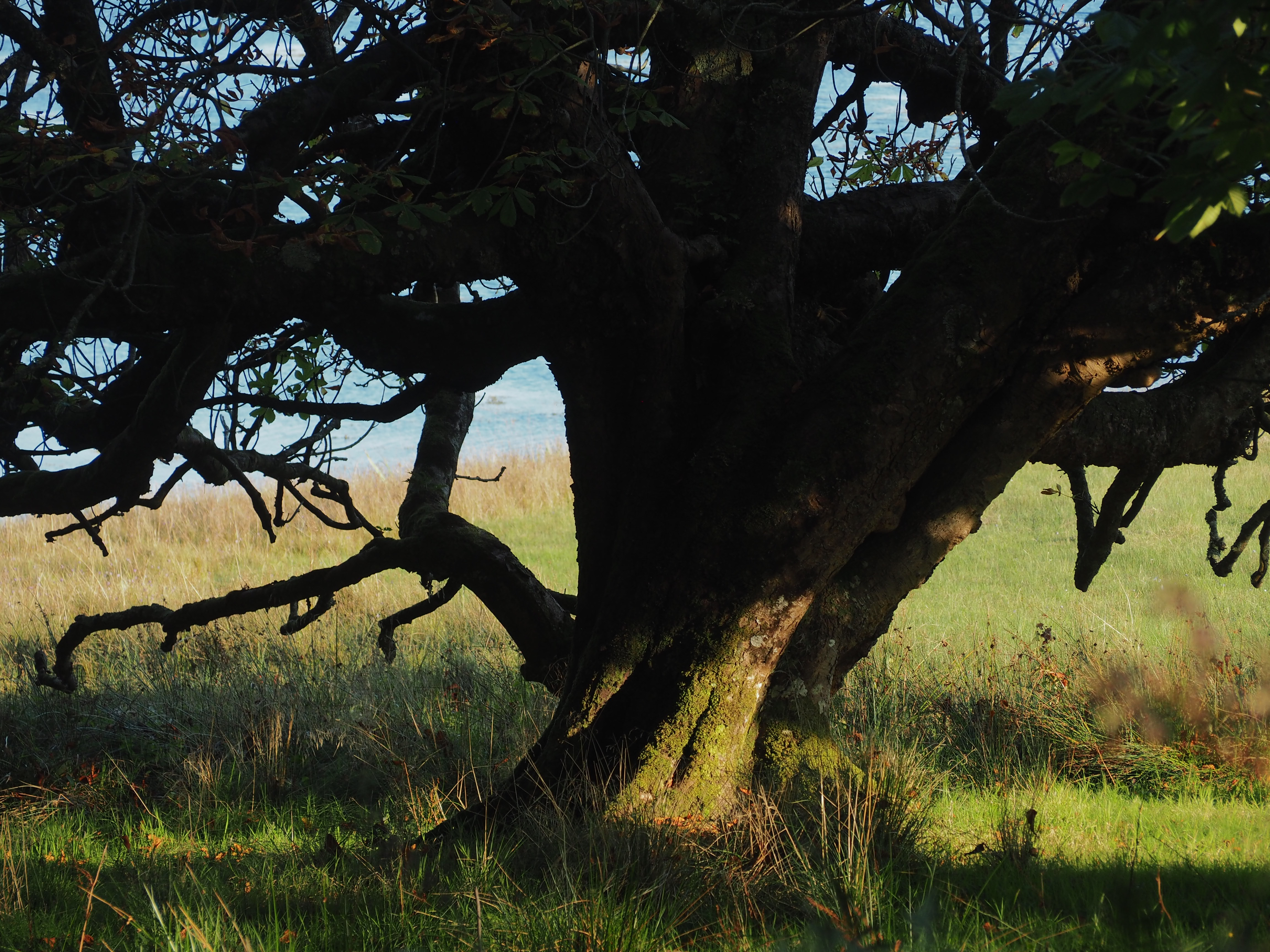
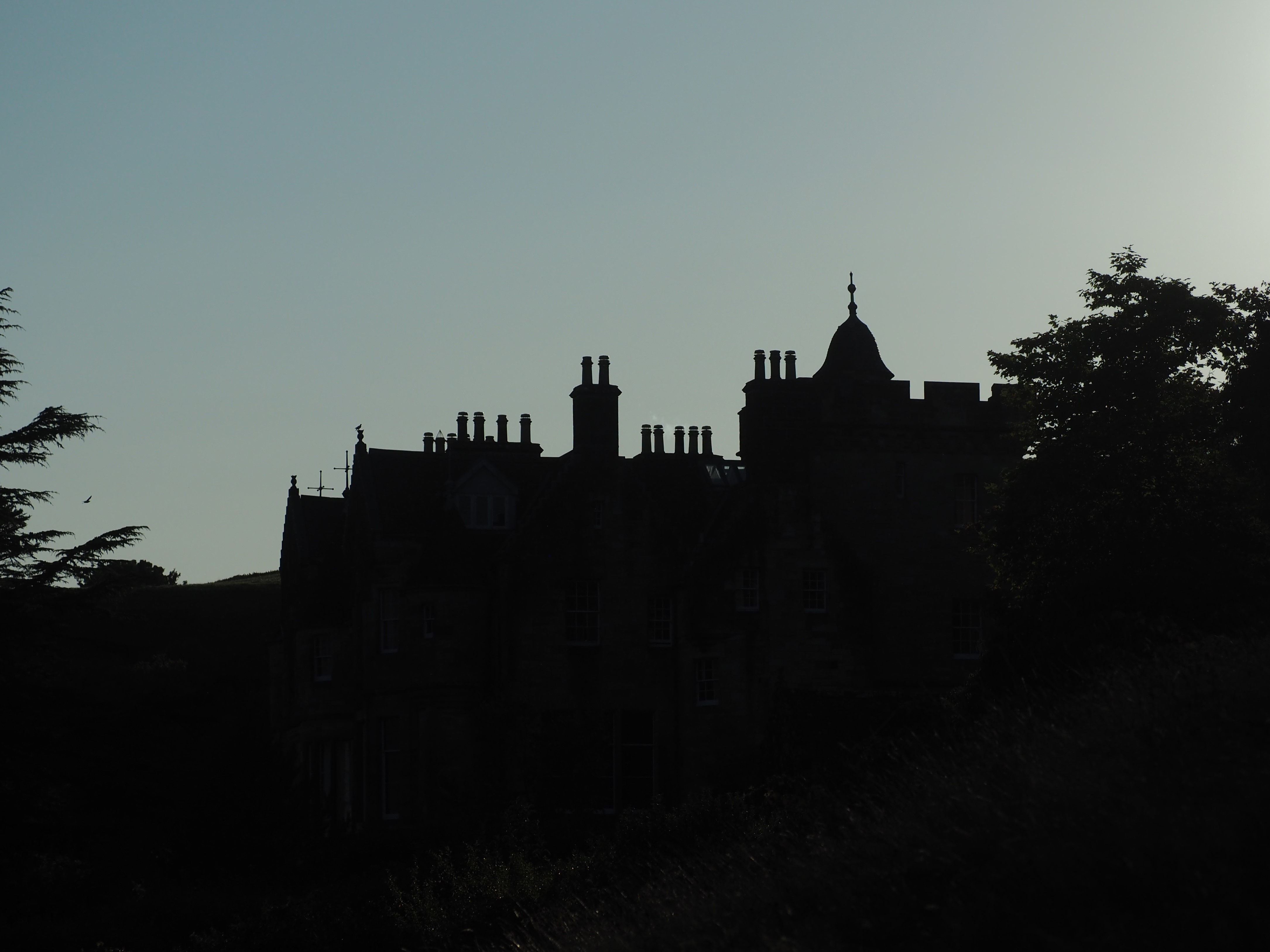

Mull is a jumping off point for Iona and Staffa, two smaller islands to its west. Iona is somewhat of a religious mecca, being one of the earliest Christian sites in the world and Staffa is a great place to check out the marine life, seabirds and the puffins, in season. The weather forecast for Mull and Iona was not good for the next day and a visit to Iona, reachable only by a 10-minute ferry, was our prime destination while on Mull. High winds and high seas were in the mix for the afternoon. So, we rose before the sun to be showered, dressed, breakfasted and out the door for the hour-plus drive up the 30-mile single-track road to Fionnphort, the ferry stop to Iona.


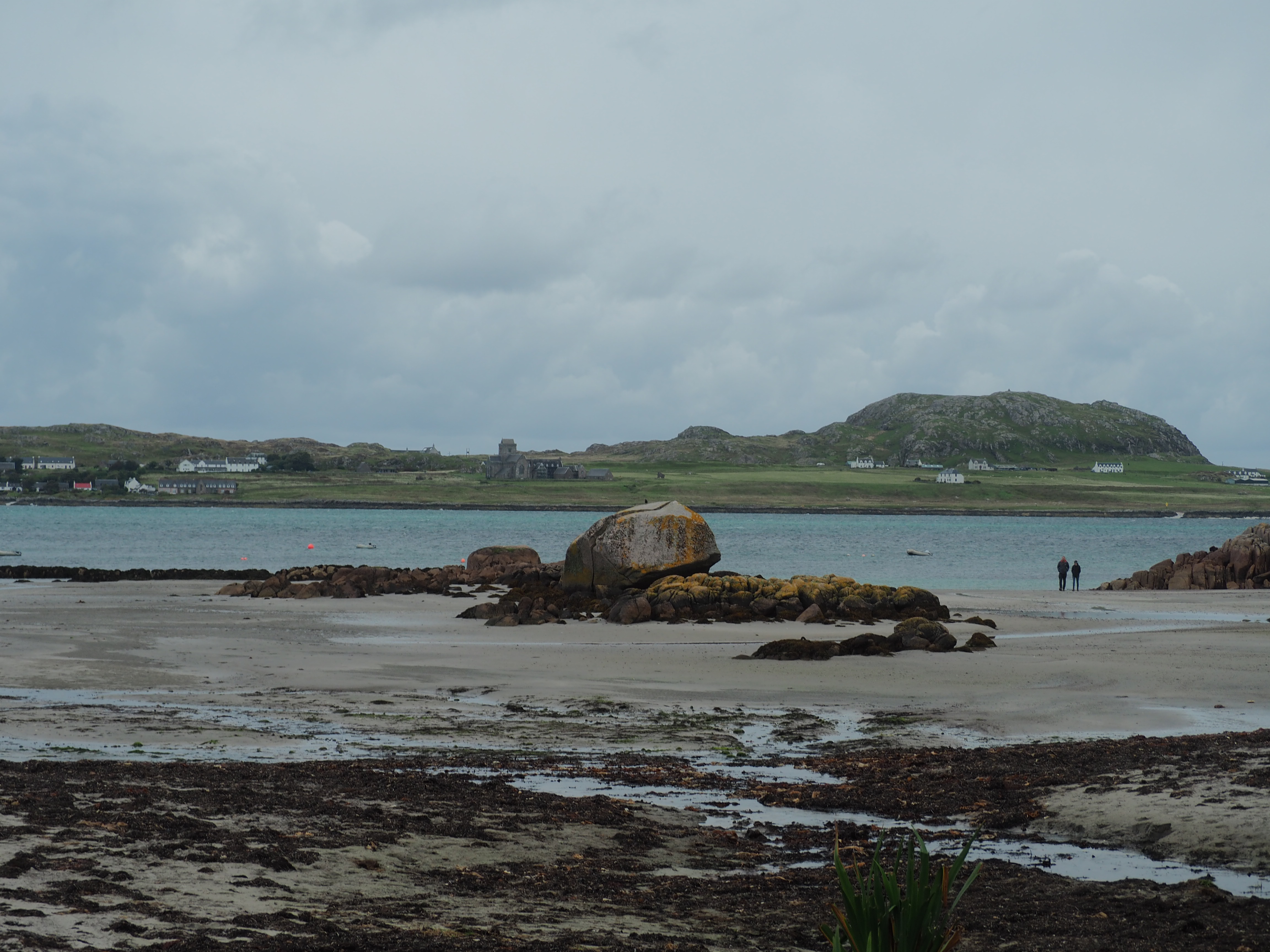

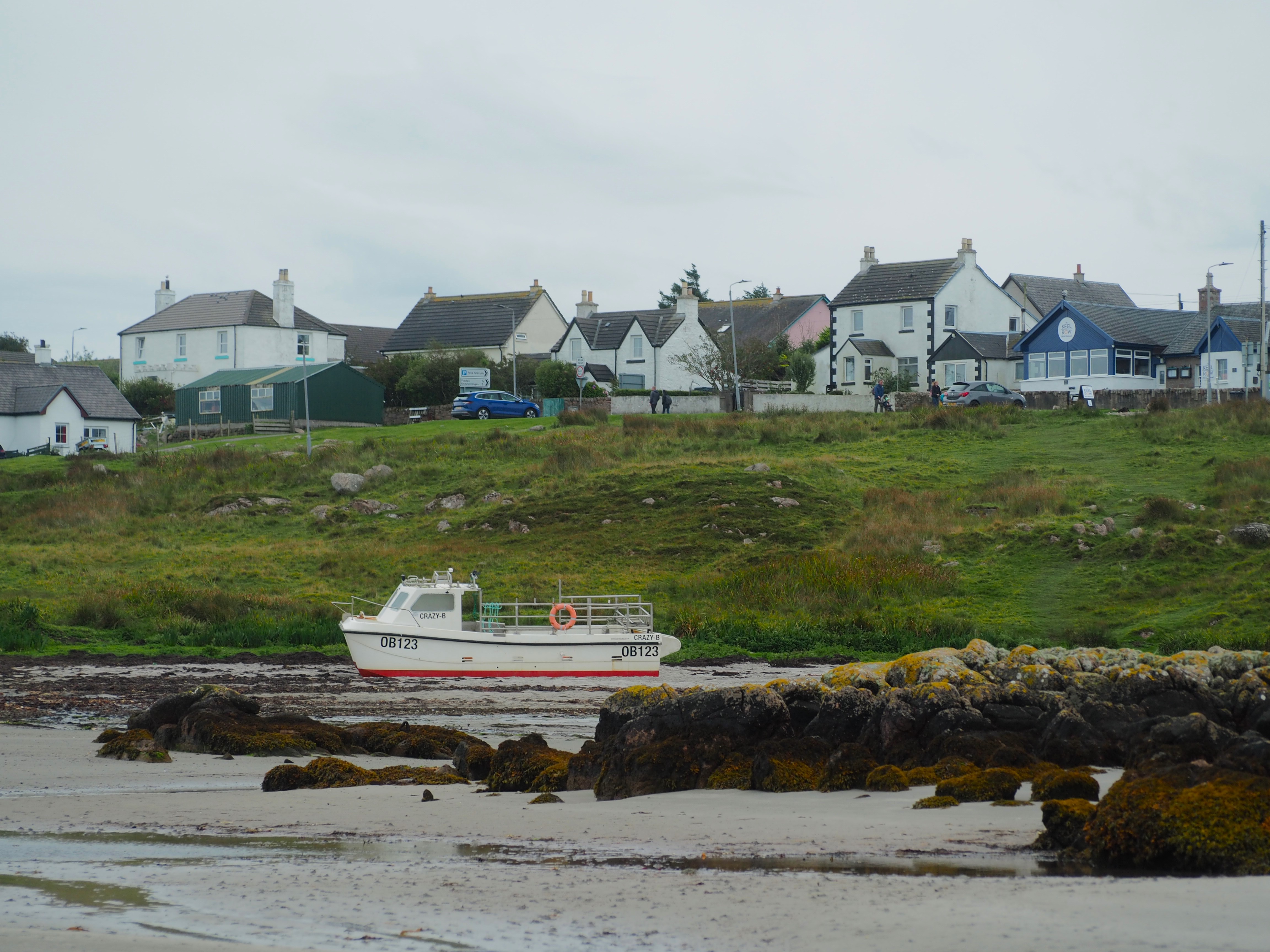
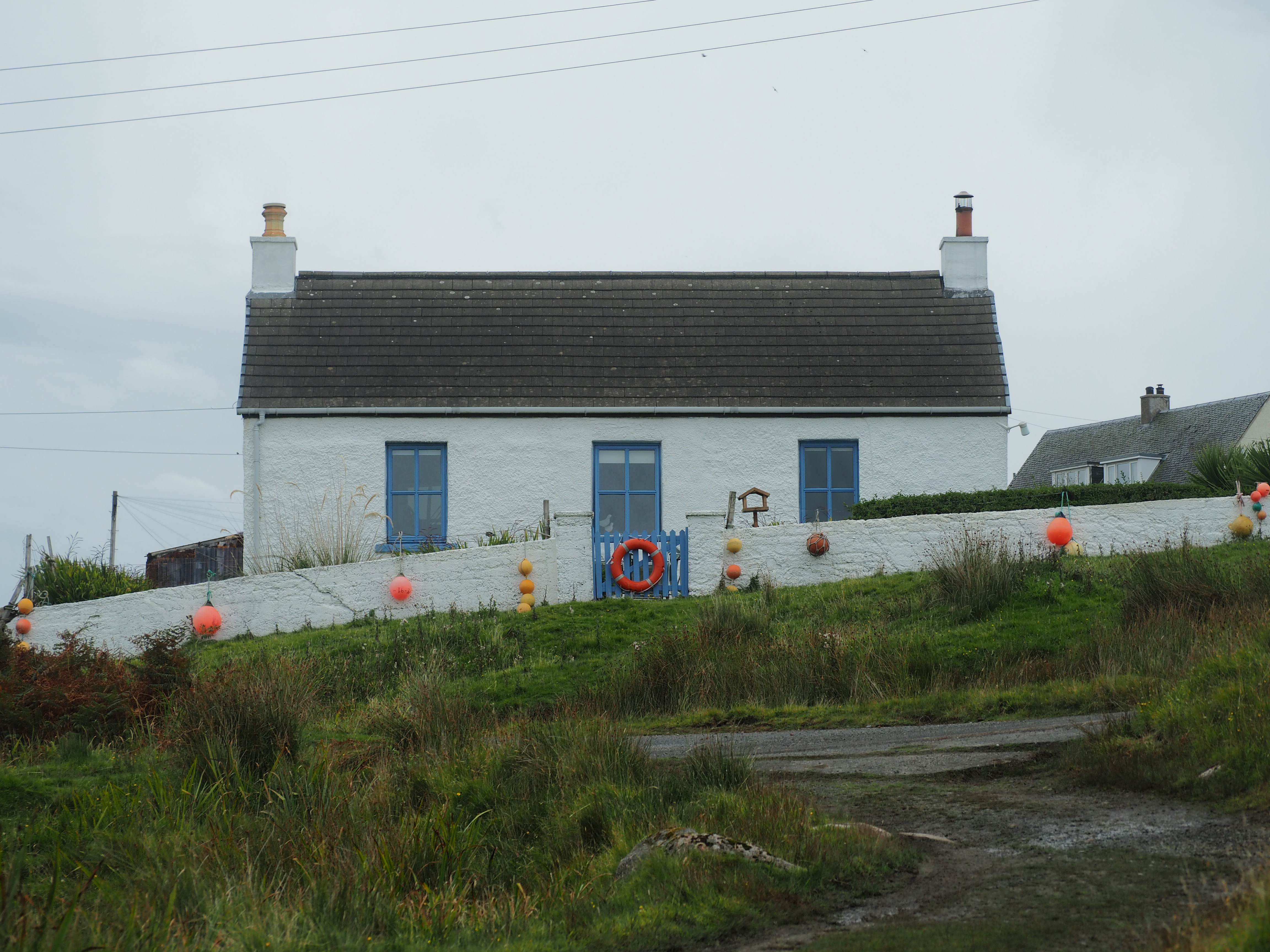
Fionnphort
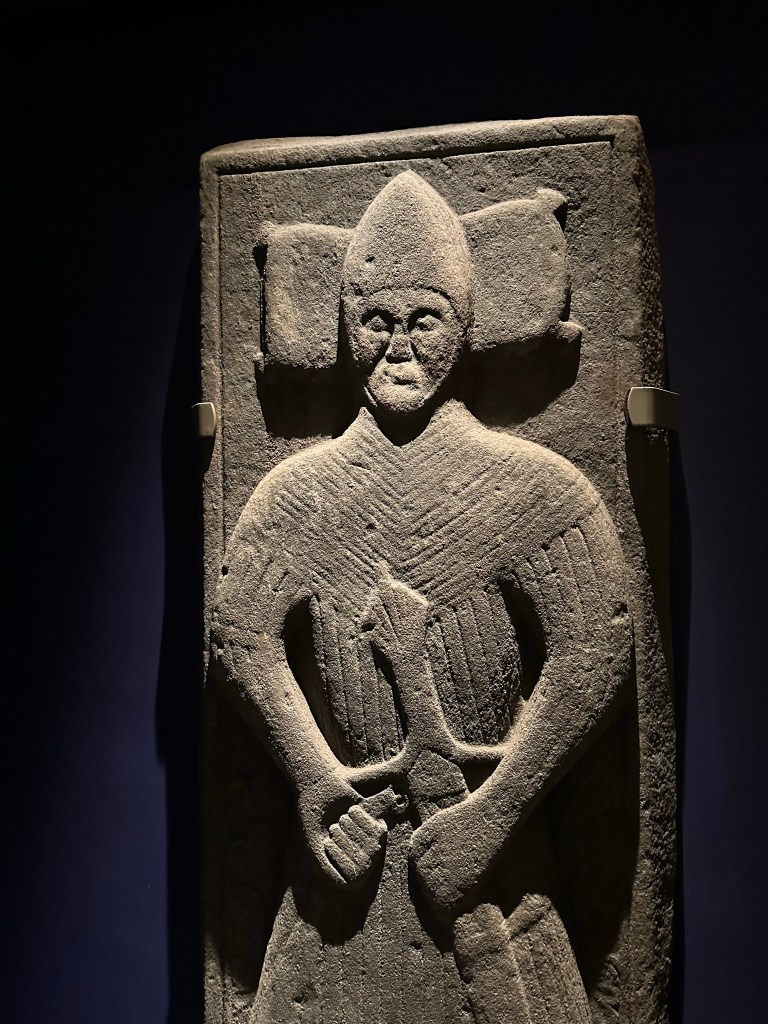
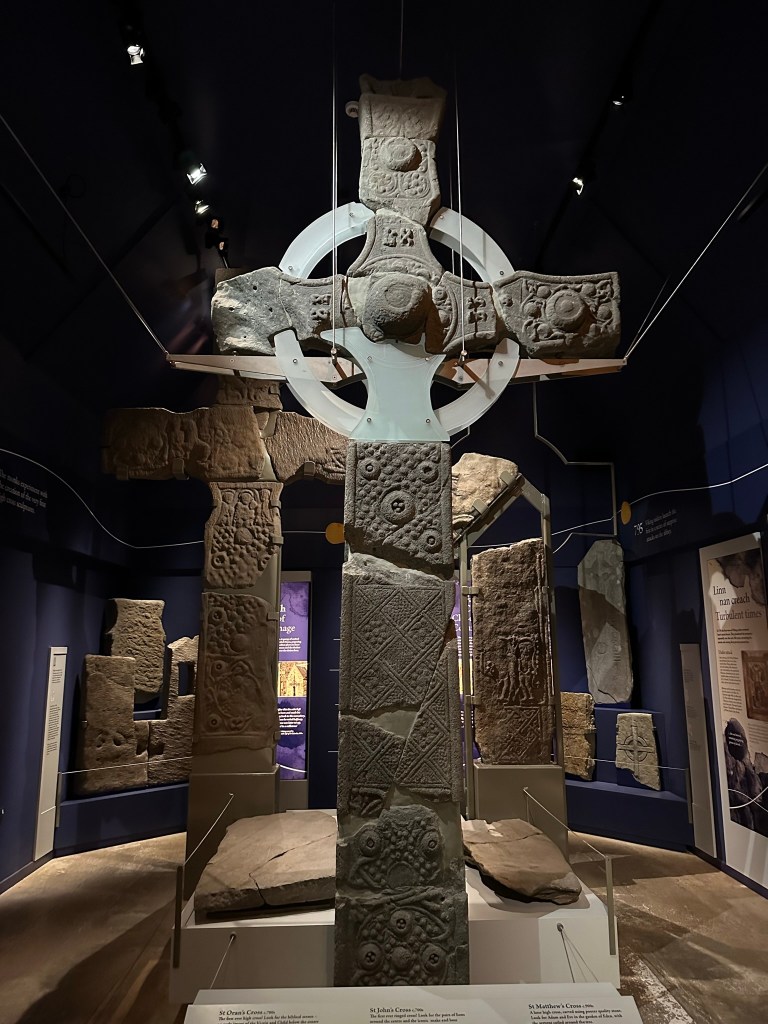
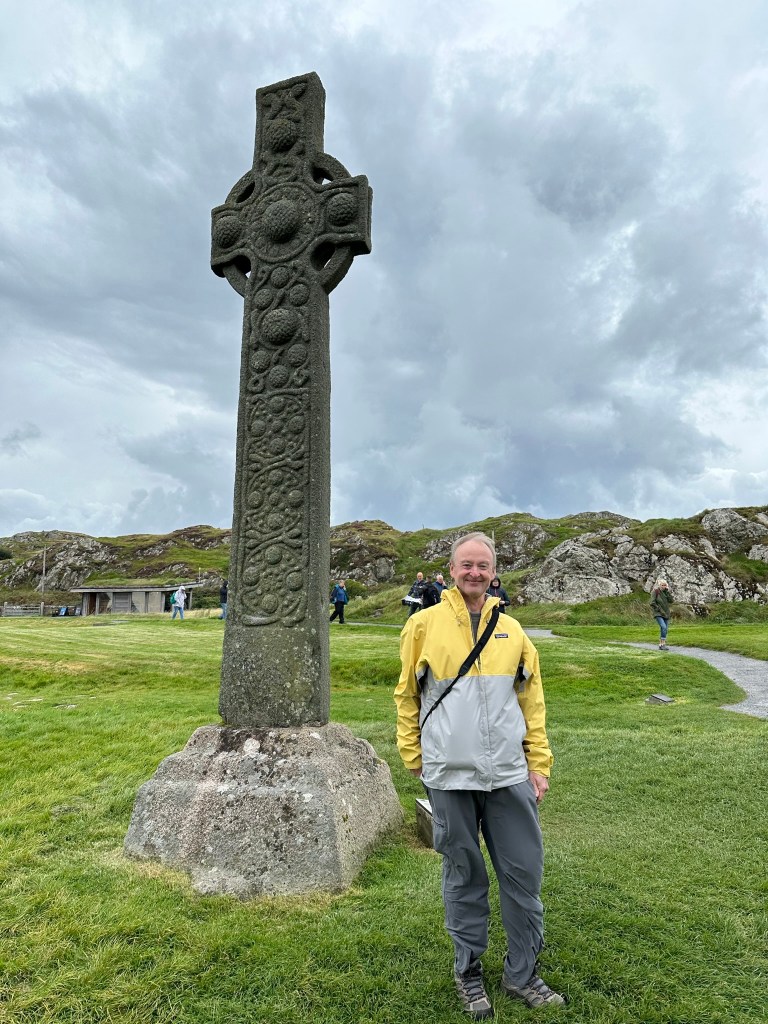
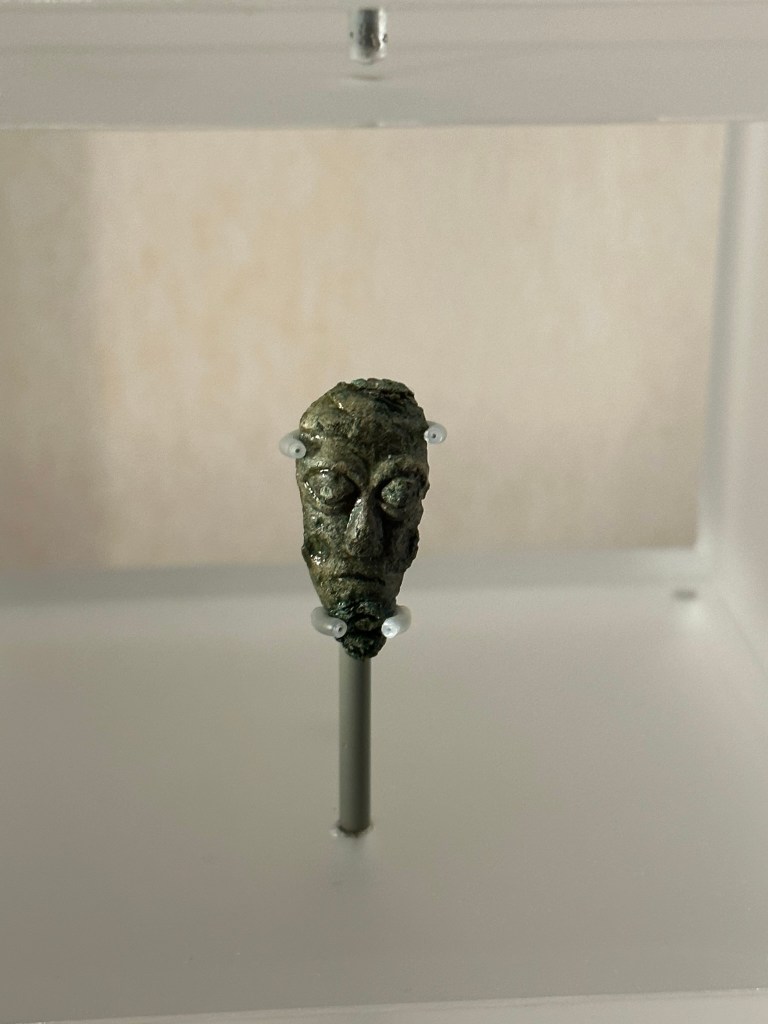
In 563 AD, St. Columba came to Iona from Ireland with twelve companions and built a monastery. The original monastery would have been constructed with wood and thatch, but it is believed that a stone chapel was built around 800 AD. It is also believed that the Book of Kells, which now resides in Dublin in the Long Room of Trinity University there, was composed on Iona in the years before 800 AD. The Vikings attacked the monks on Iona often and massacred 68 of them in “Martyr’s Bay” leading to a relocation of the majority of the monks to a new Abbey of Kells in Ireland. The present-day abbey at Iona was constructed in 1938.
I’d been here once before, 20 years ago, and really wanted to come again and hoped to spend most of the day wandering around and checking out the whole island. Before we boarded the ferry and while on board the crew warned us multiple times that ferry service could be “disrupted or canceled with no notice” starting around mid-day, as the storm approached. As such, we postponed all other wanderings and sightseeing on Iona for another visit and beelined to the Abbey and museum returning 45 minutes later to hop the ferry back to Mull.

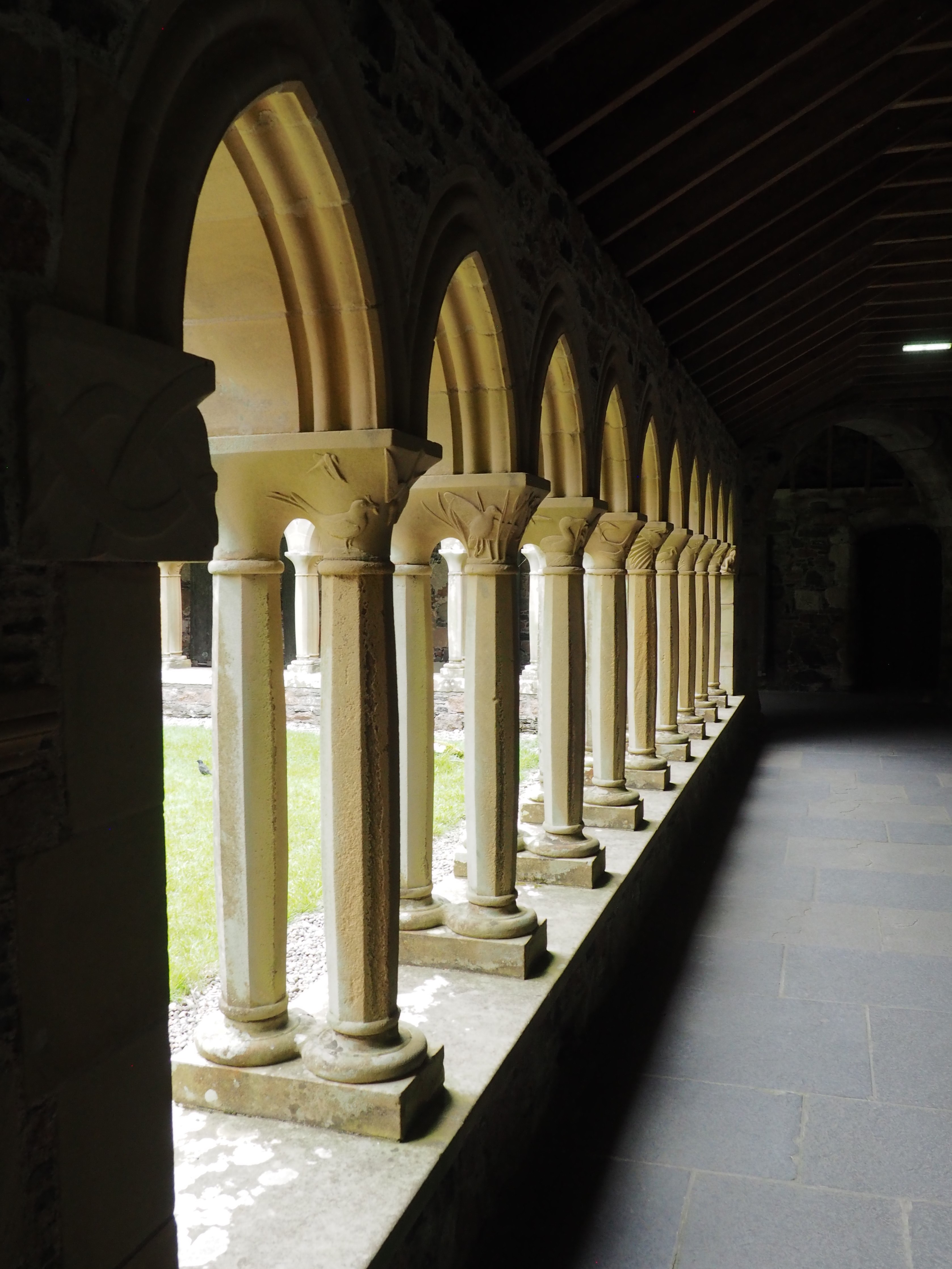
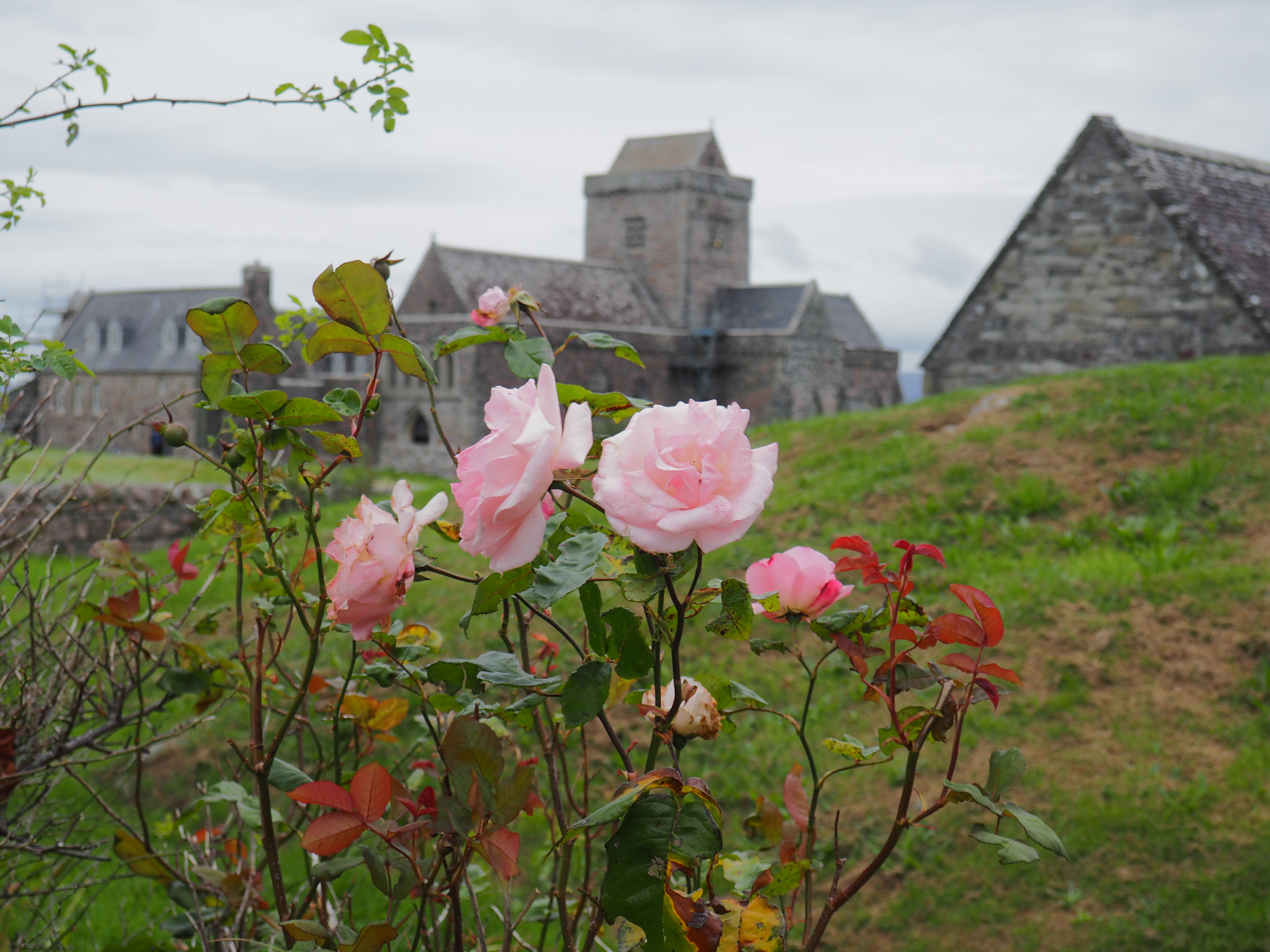
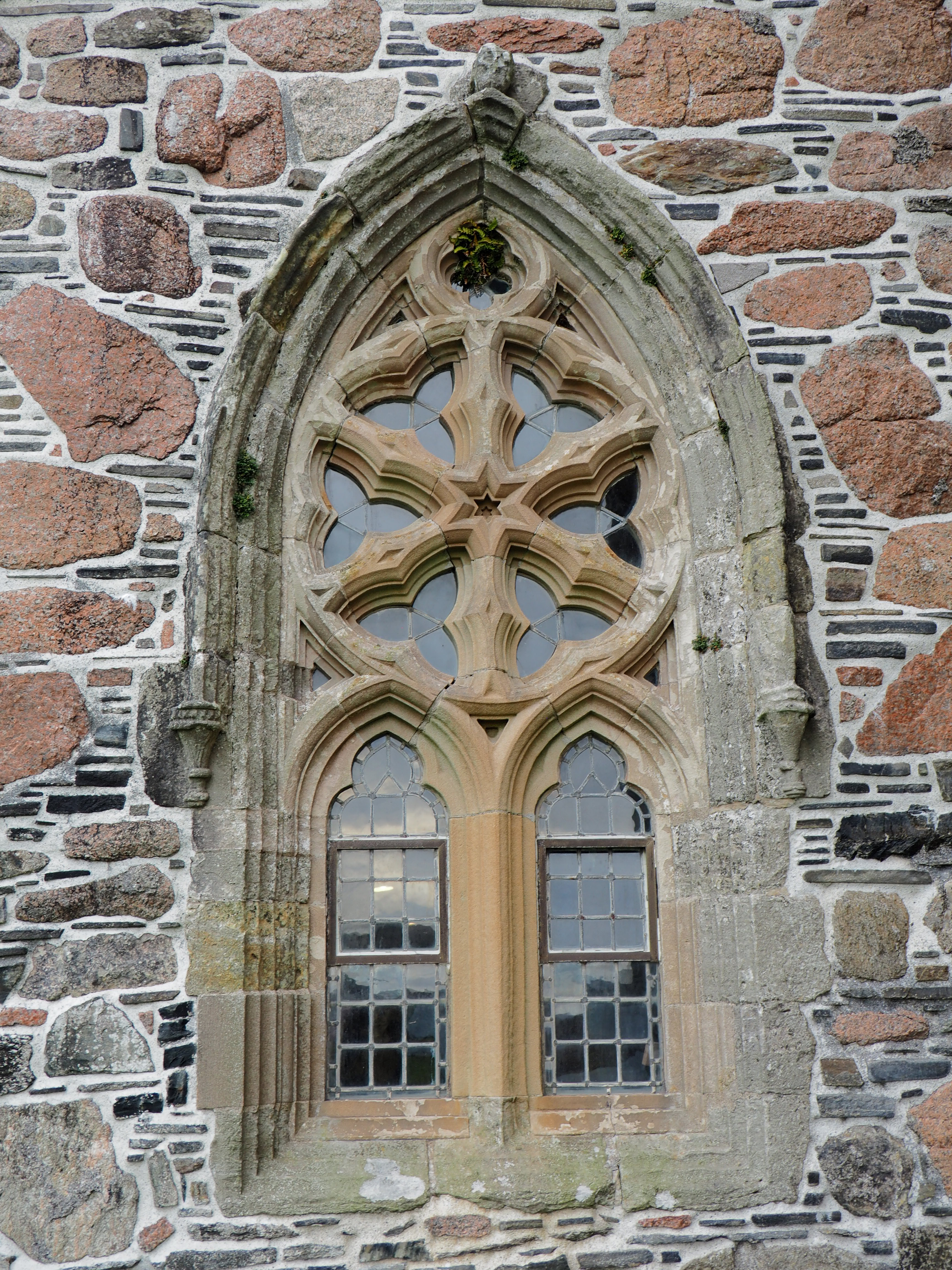


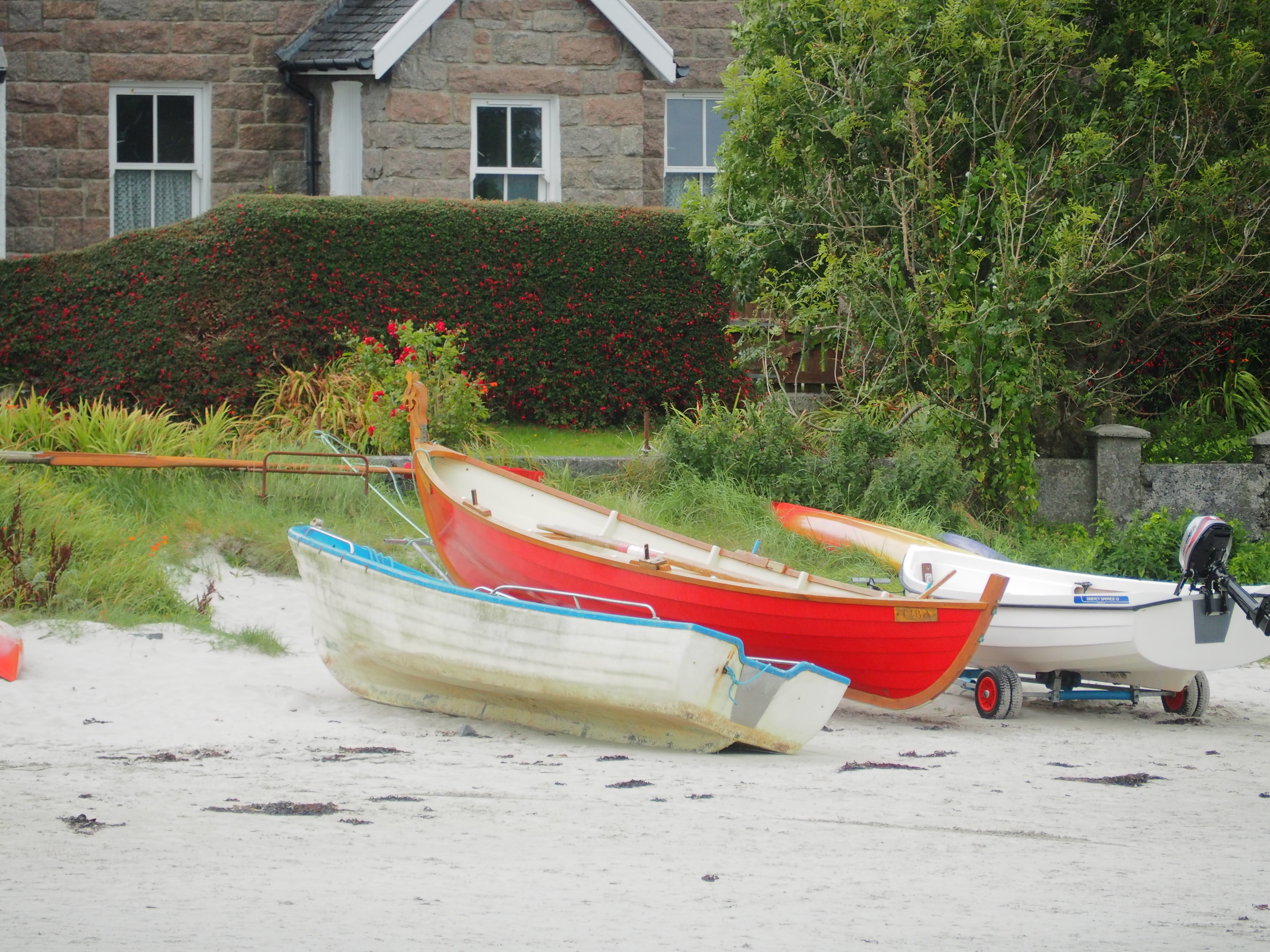
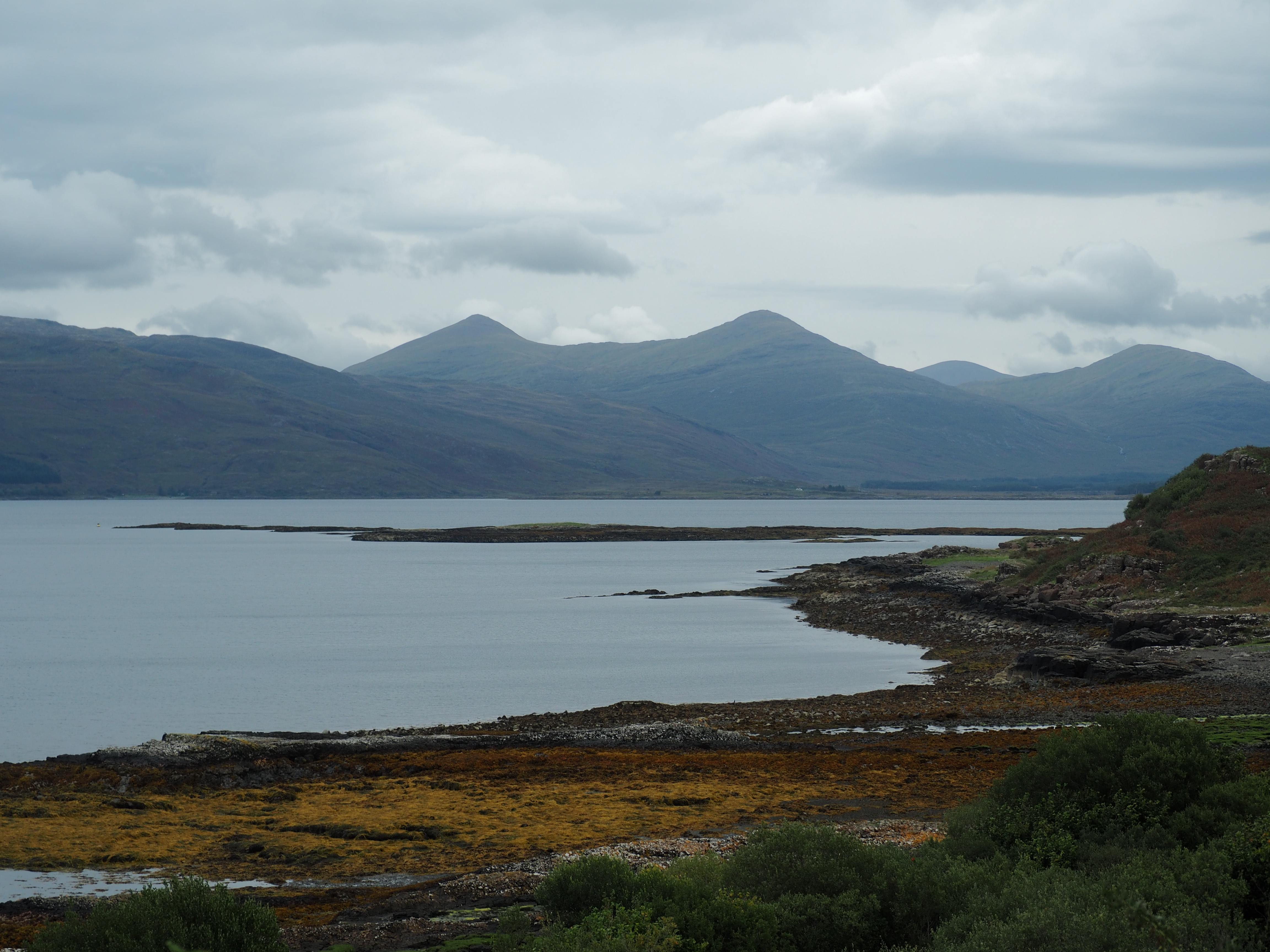
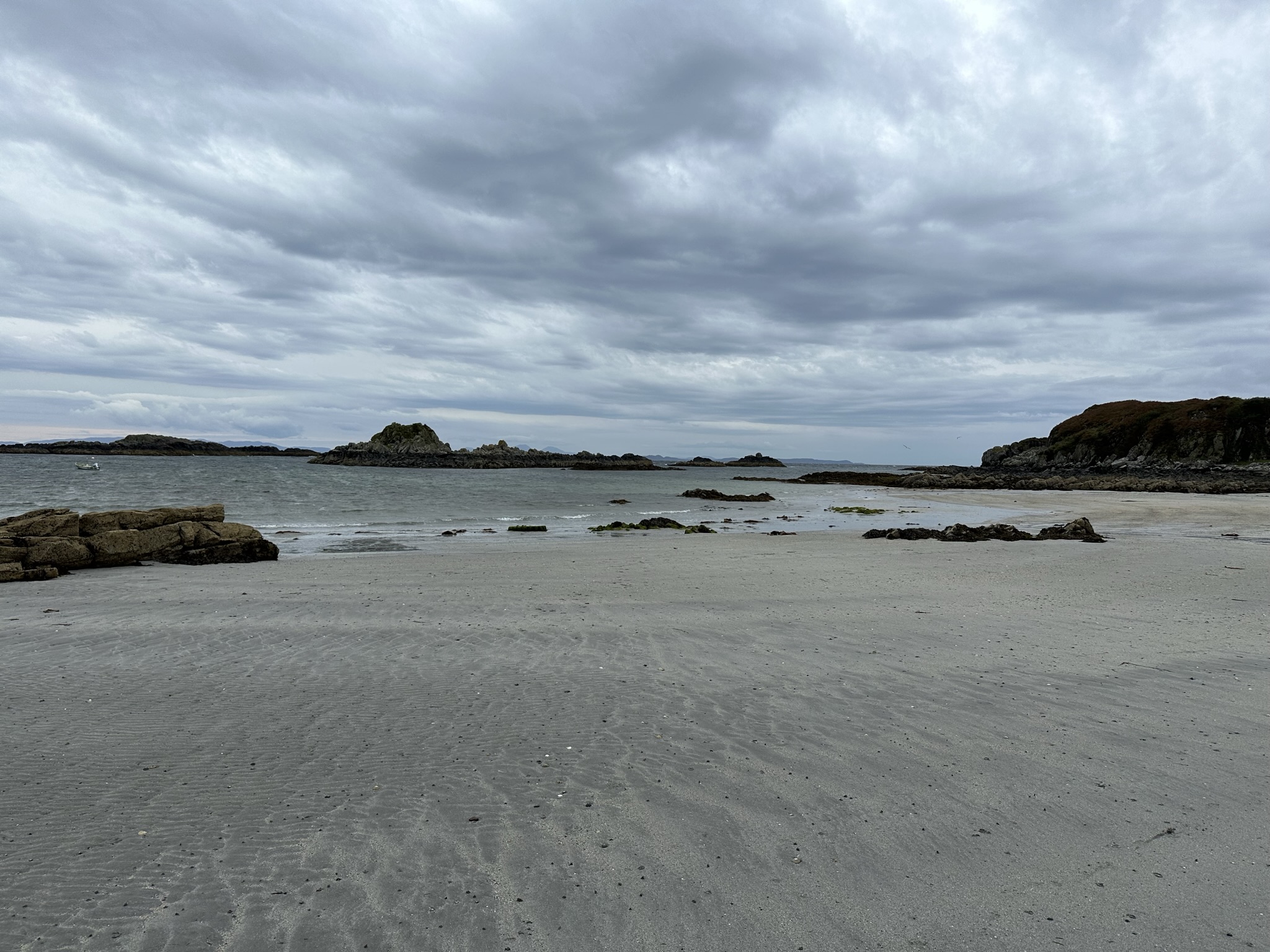
Many people visit Mull simply to visit Iona or Staffa, but Mull itself is quite beautiful. It is remote, making our last stop on Skye in tiny Carbost feel downright metropolitan. A long spine of green, humpbacked mountains runs up its middle and the single-track road from Craignure to Fionnphort crosses and runs alongside these mountains, dropping you down into little inlets and small villages on your way. We stopped off in Uisker, where the sheep absolutely outnumber the people by many times over, to stroll its beach but the winds were whipping and, as such, our stroll was brief.


Charming Arran. We arrived on the ferry into the tiny village of Lochranza at midday. We stopped off at the Sandwich Station (seasonally open, only April to end of September) directly across the street from the ferry and enjoyed two enormous sandwiches: a pork tenderloin and a spicy broccoli with babaganoush and spring onions. So big, we couldn’t finish them.
Having spent a bit too long at the bar the night before with our new Scottish best friend Mike (and his whiskey tasting) and with the rain and wind moving in, we opted to enjoy the confines of our hotel room and restaurant for the remainder of the cold, wet autumn day.
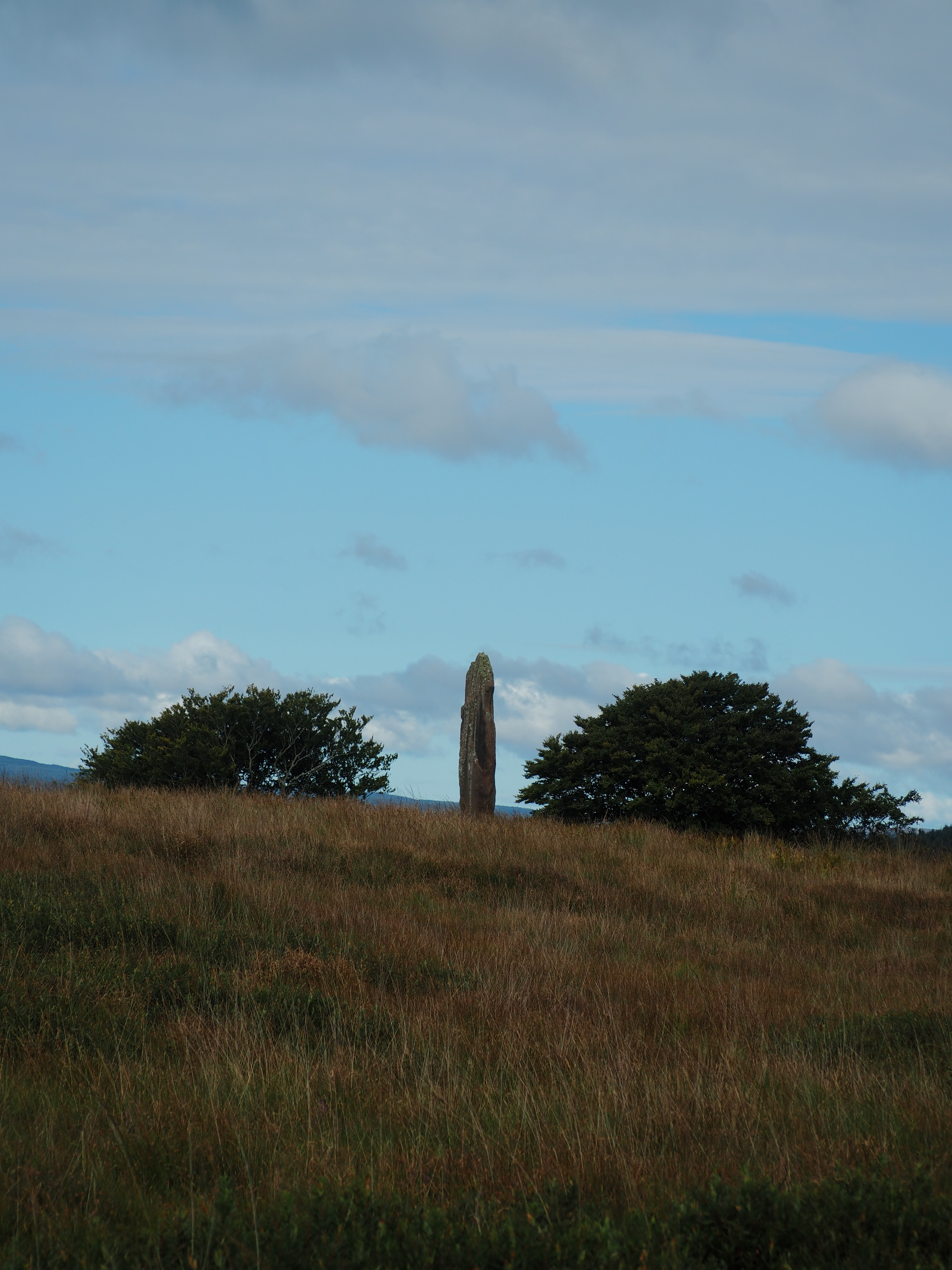
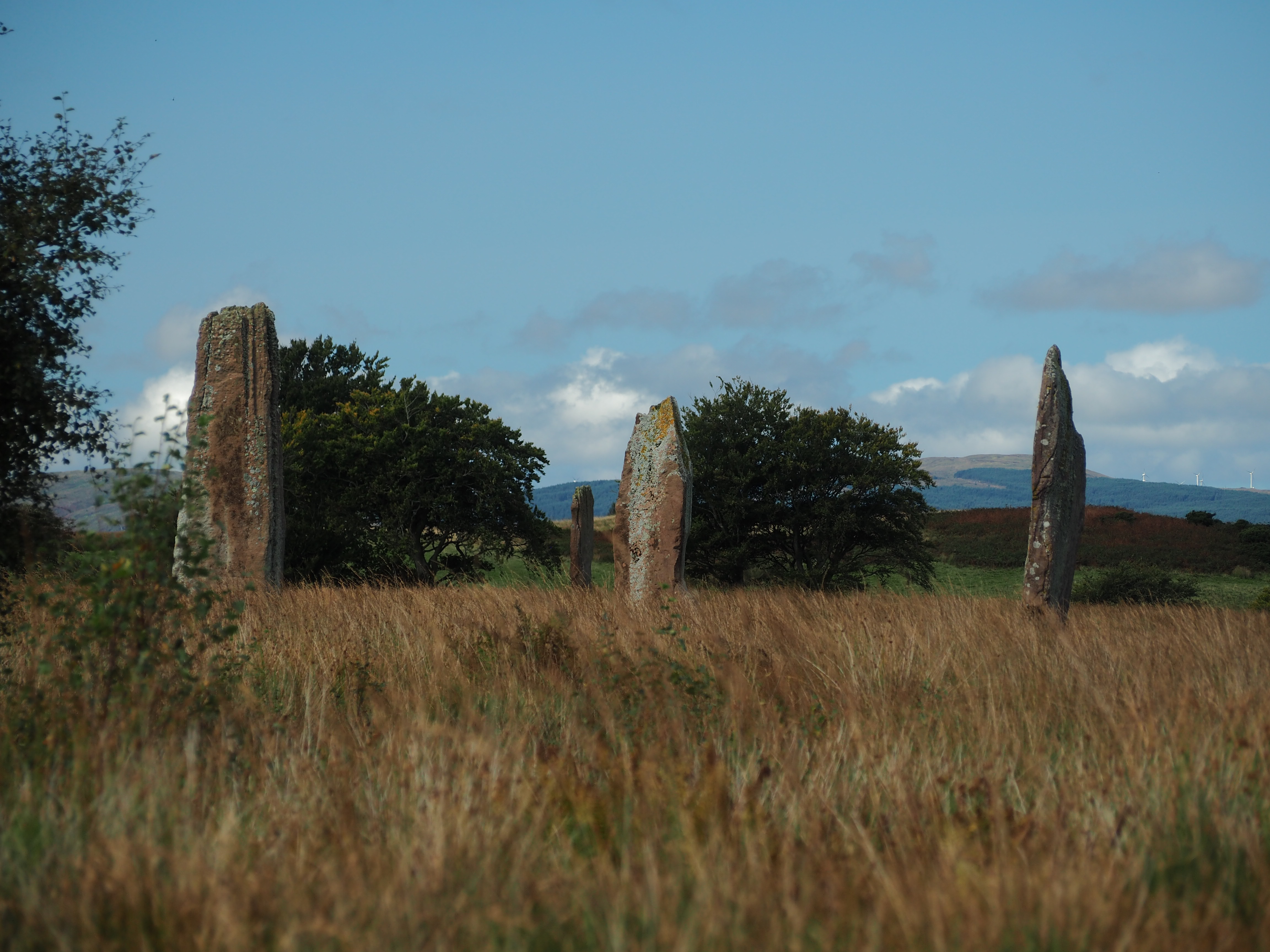
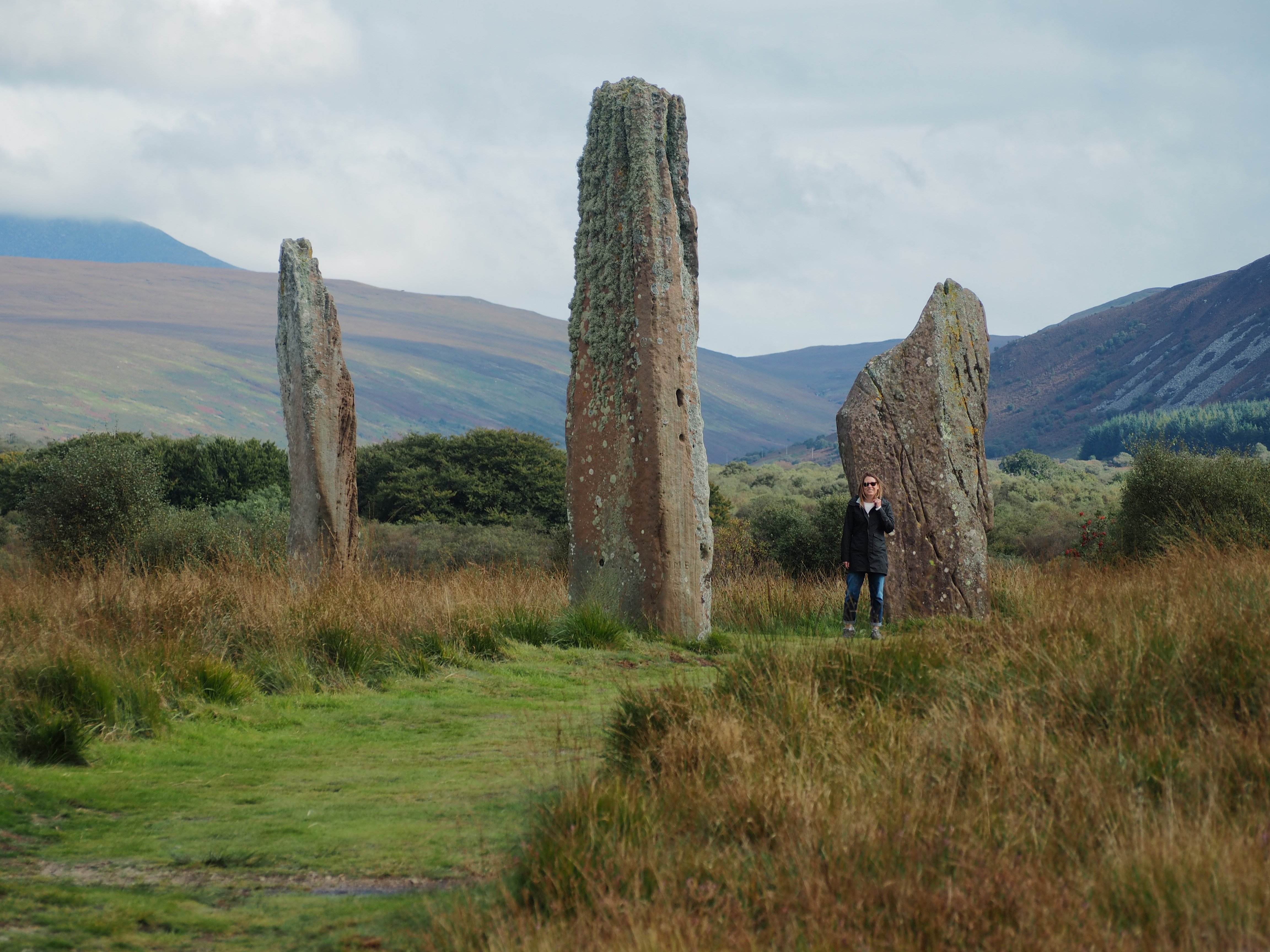
Well-fed and rested, we rose the next day ready to tour Arran. We began at the Machrie Moor standing stones, a set of six stone circles and monoliths dating to 1800 BC. Families lived here in around 2000 BC, farming barley and wheat and keeping animals like sheep. The stone circles were preceded by some wooden ones which are no longer visible. As with Stonehenge, the stones here are of different types and appear to have had some unknown special magical significance to their use. The stone circles are about 2 kilometers from the parking lot through sheep fields to the stones and we arrived early enough that we had the place to ourselves.


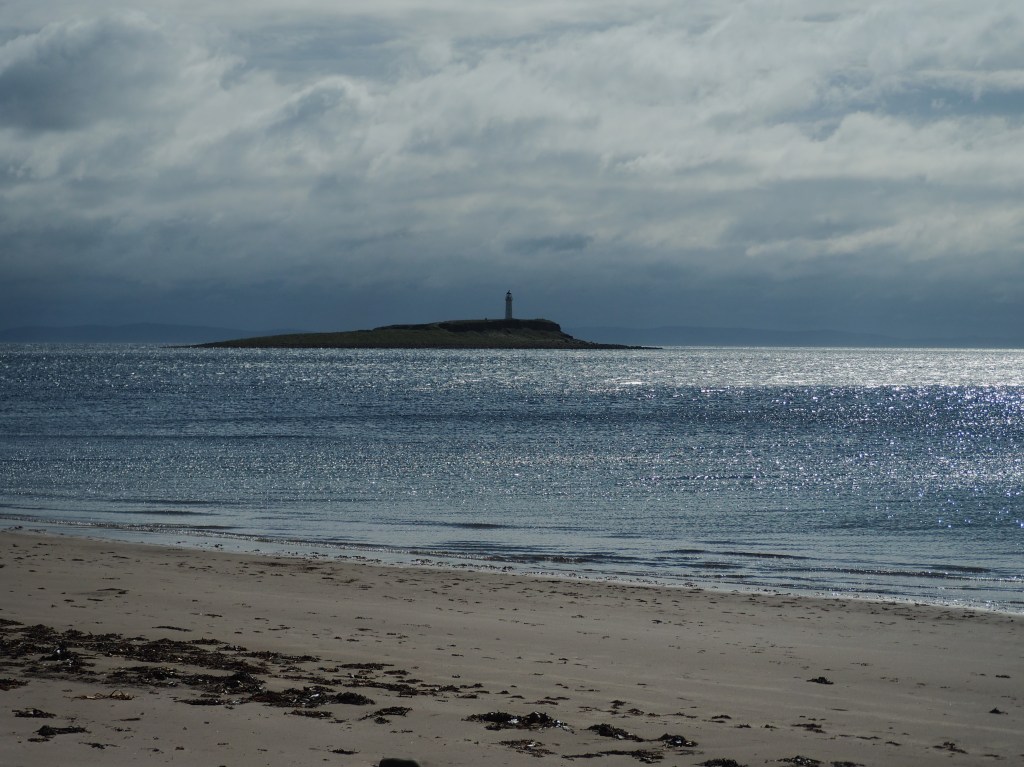
On a tip from our bartender the night before, we set off for the beach and village of Kildonan, at the southern tip of Arran, which overlooks the Pladda lighthouse then set off for lunch in Whiting Bay at The Shore with its delicious homemade soups and sandwiches.
We finished our circuitous route at Brodick Castle. We’ve toured a castle or two in our day and this one is top. The tour guides in many of the rooms are informative as are the placards set about the grounds which tell you of the trials and tribulations of the Hamilton clan in whose possession the castle was for much of its history.
The site of the castle was long a fortress on the Isle of Arran, dating back to the Viking Age and before. During Robert the Bruce’s war for Scottish independence, he took over Arran and the castle which sat here (a portion of which makes up the current castle). When Oliver Cromwell’s parliamentarian forces overran Scotland, Arran was taken over from the Hamiltons (its owners at the time) and used it as an English fortress. The castle was returned to the Hamiltons after the war. The 12th Duke, William Hamilton, was a gambler, a horse racer, a boxer and a hunter in his day, using Brodick as a hunting and entertaining palace. He also nearly bankrupted the family forcing the sale of the castle and much of its contents. The Scottish Trust does a nice job at painting the fascinating family history without either denying or whitewashing the sources of its wealth in the colonial American days.
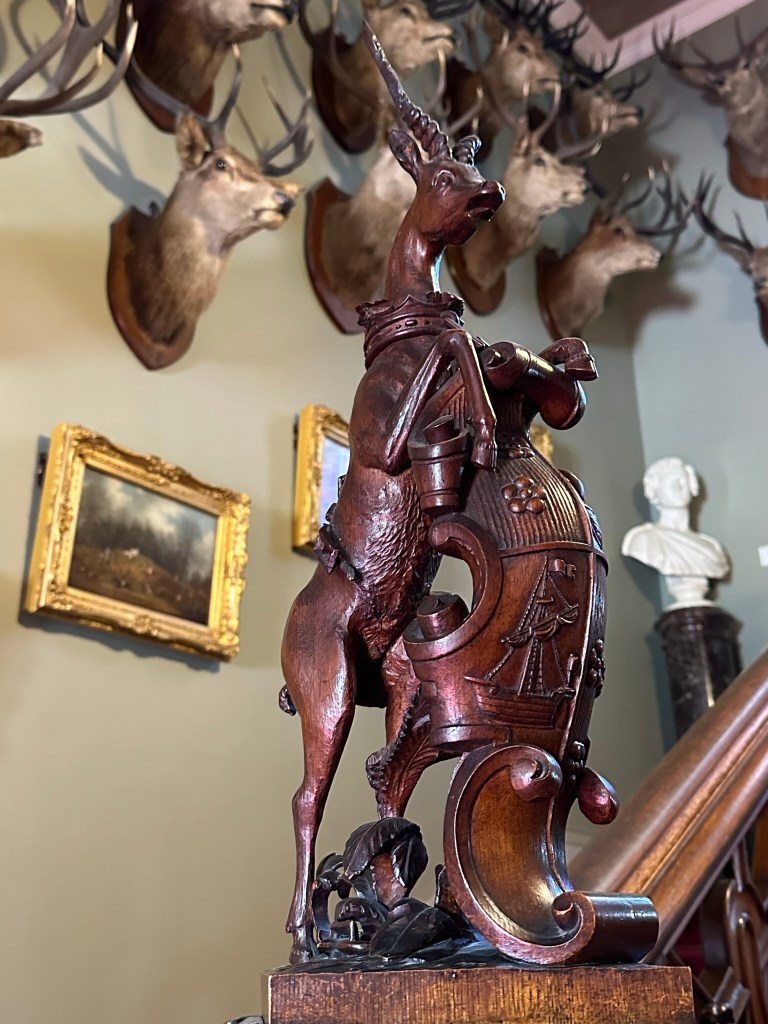
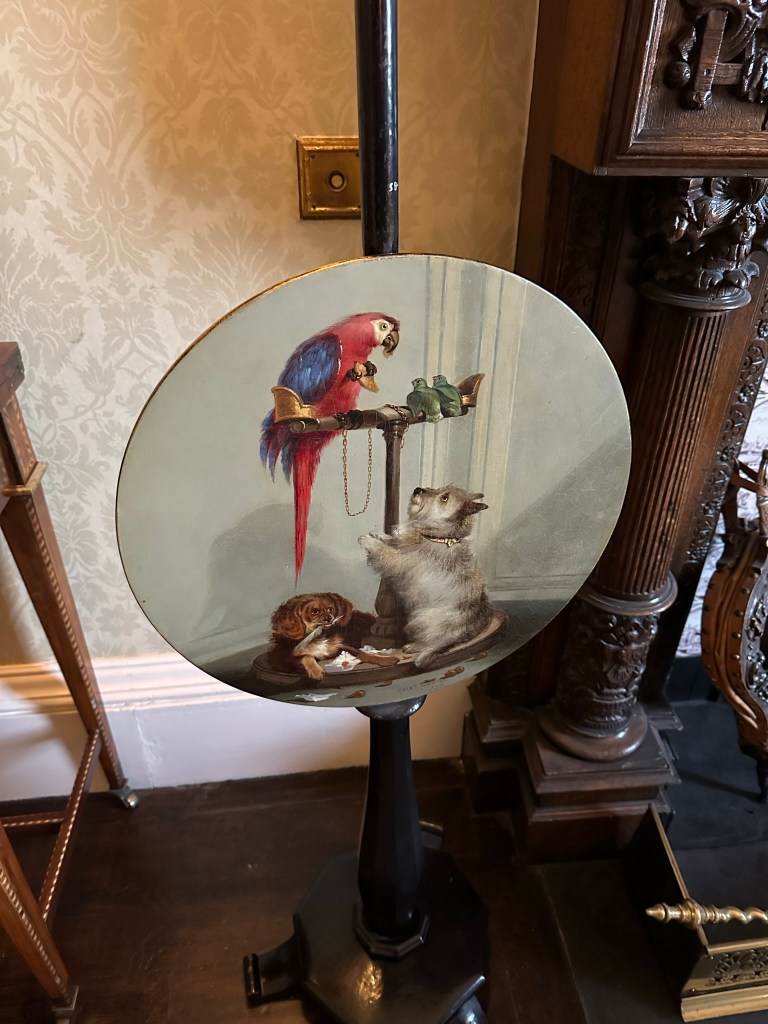
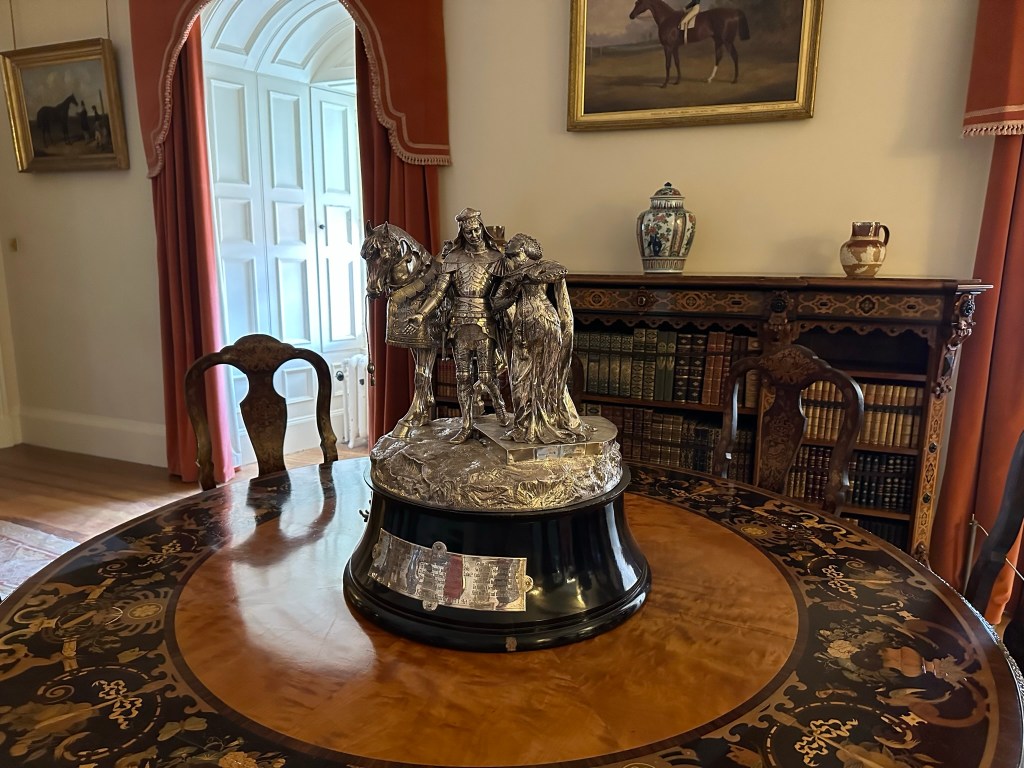


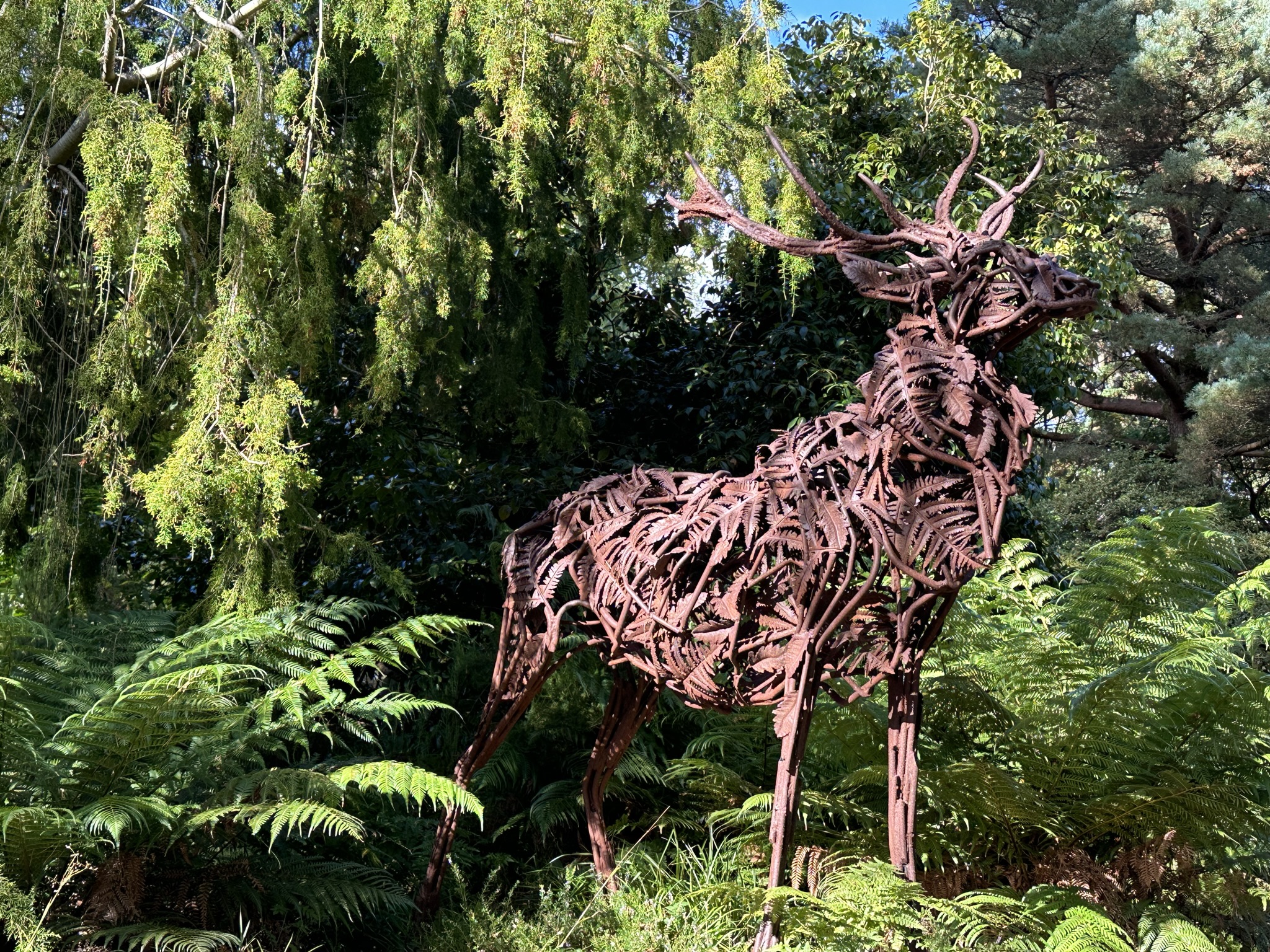
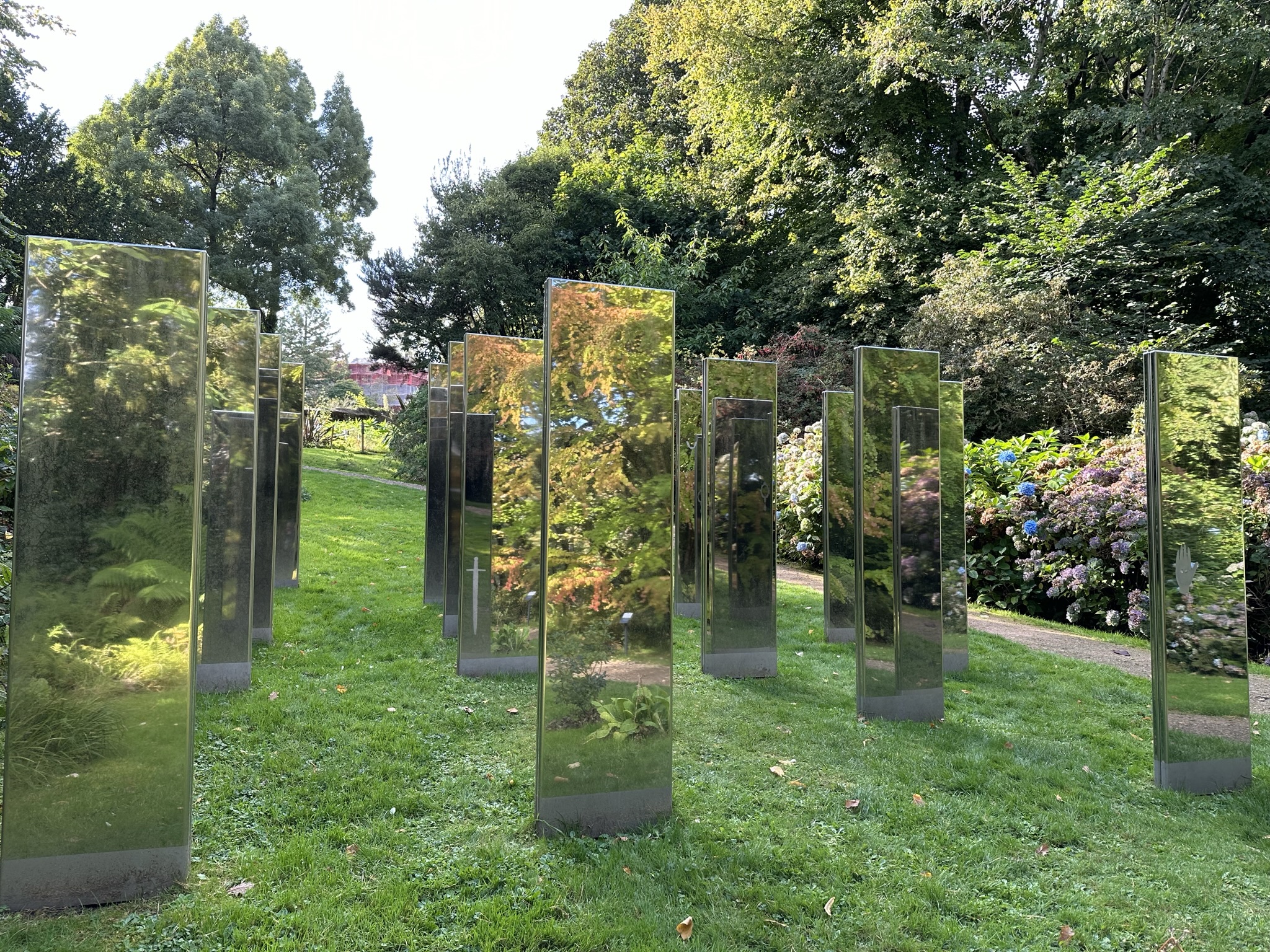
The gardens are worth a stroll as well. The wild, lower gardens with their massive rhododendrons, pinecone adorned Bavarian summer house, the stag sculpture and the mirrored silver garden commemorating the ancient clans of the island are just as interesting as the well-manicured walled garden.

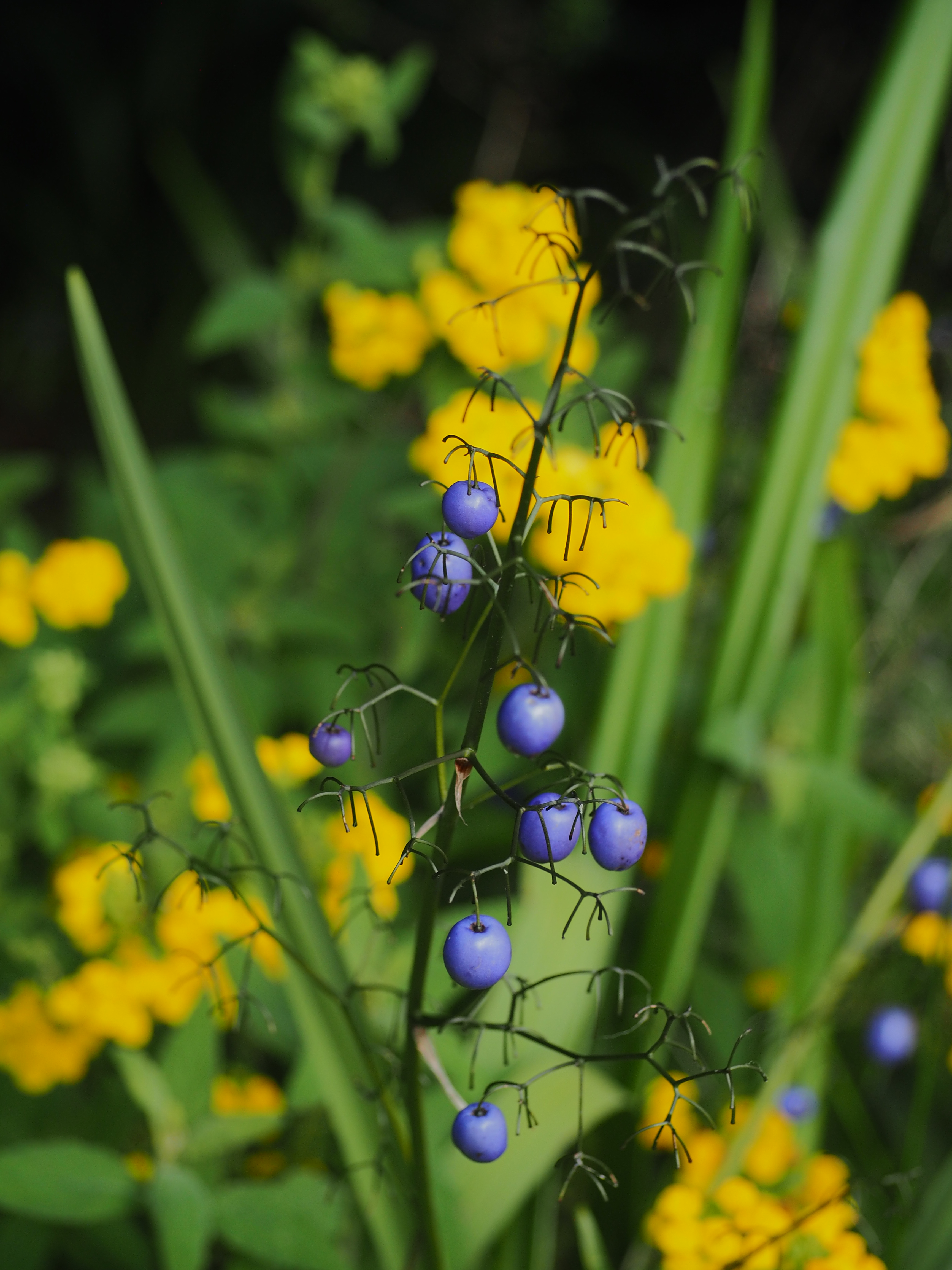
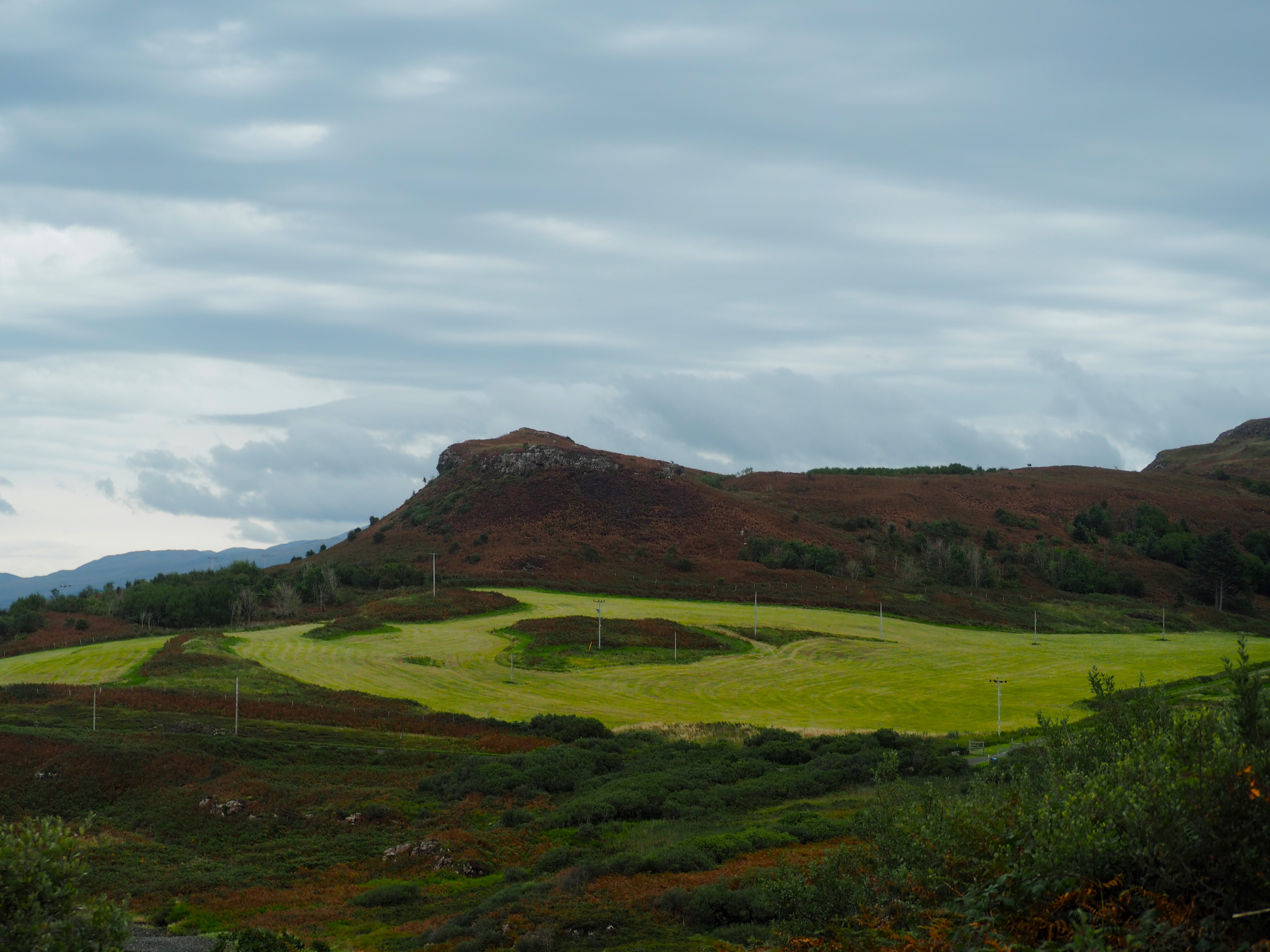
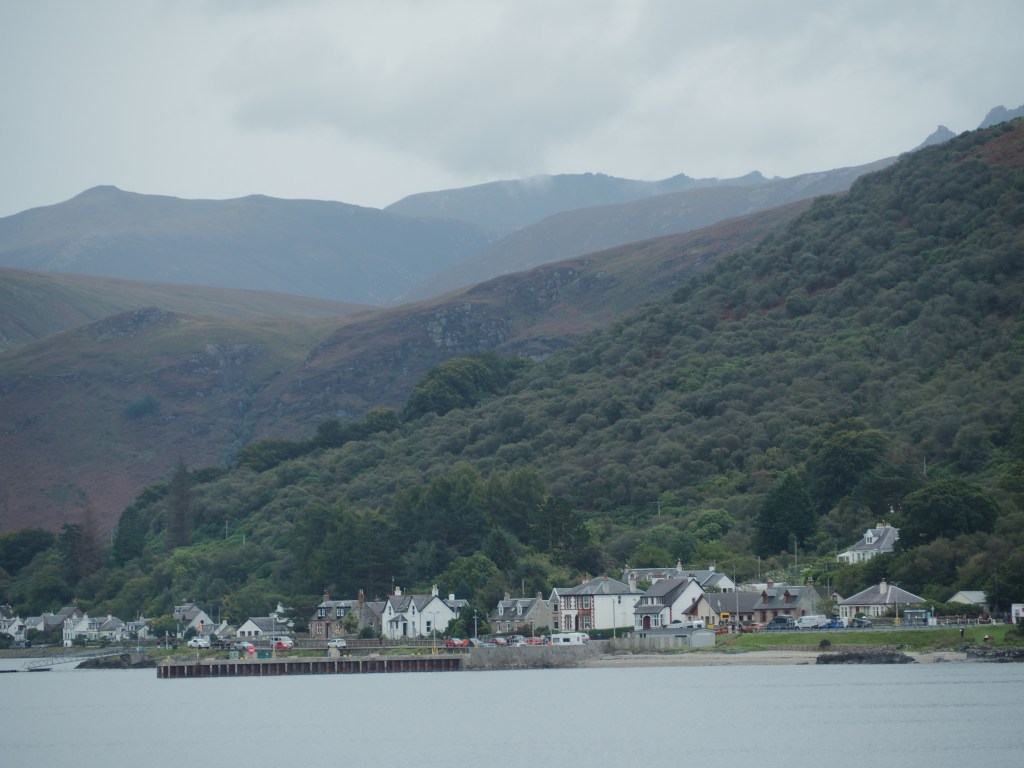
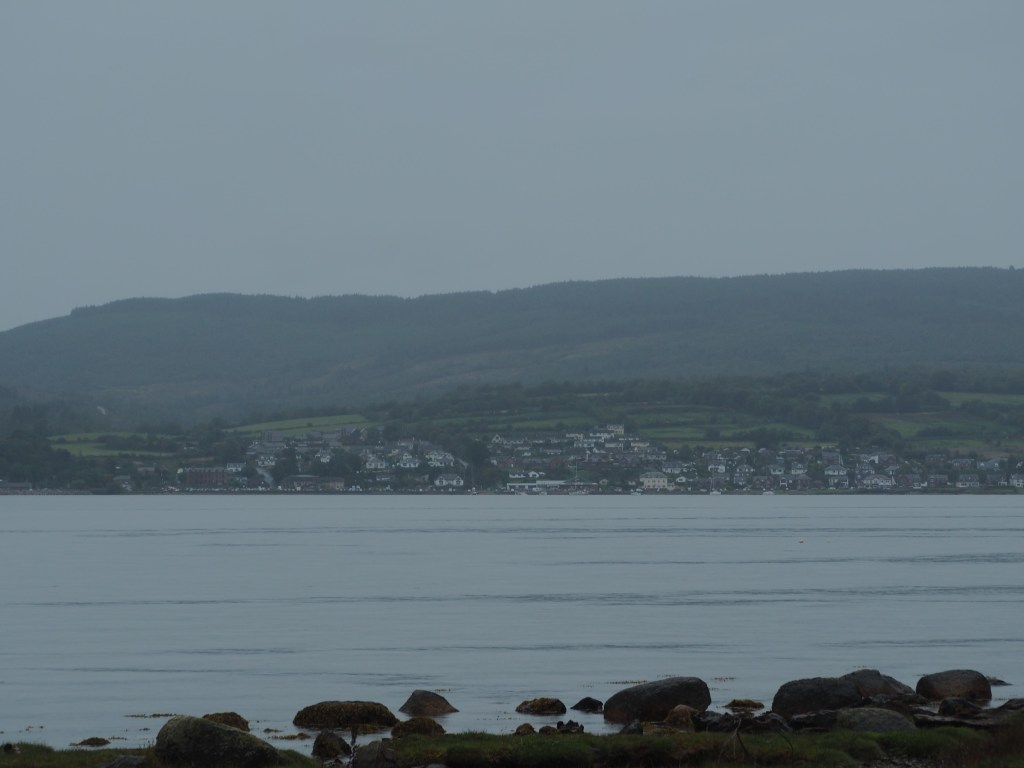
Most of the villages on the island are small. From quaint little Corrie, to tiny Lochranza and its distillery and castle ruin to the main village and ferry port, Brodick, we found the island charming from stem to stern and would happily return.

Sources:
 The Traveling Ridleys
0 comments on “Island Hopping on the West Coast of Scotland”