


Well, if rain is what you should expect for a Scottish summer in the Highlands, rain is what we got. When I was here twenty years ago, I saw a shirt that had a picture of a sheep holding an umbrella with rain coming down depicting all four Scottish seasons of the year and I felt, this time anyway, like I should have bought a pair of them for us to don under our rain slickers. Perhaps it was that we were further north or perhaps we were lucky in the cities of St. Andrews, Edinburgh and Glasgow, with mostly sun and minimal rain, but if it was luck, it ran out as we went north. To whatever ancient clansman was atop some ben or in some glen doing a rain dance while we were there, we didn’t appreciate it. Rain welcomed us, accompanied us and bid us adieu.
That said, we did get several breaks from water streaming down on us, and even a little sun. We just had to keep our eyes trained to the skies and to the radar on the Weather Channel app and to remain flexible as we laid out our daily plans which always included packing the raincoats.
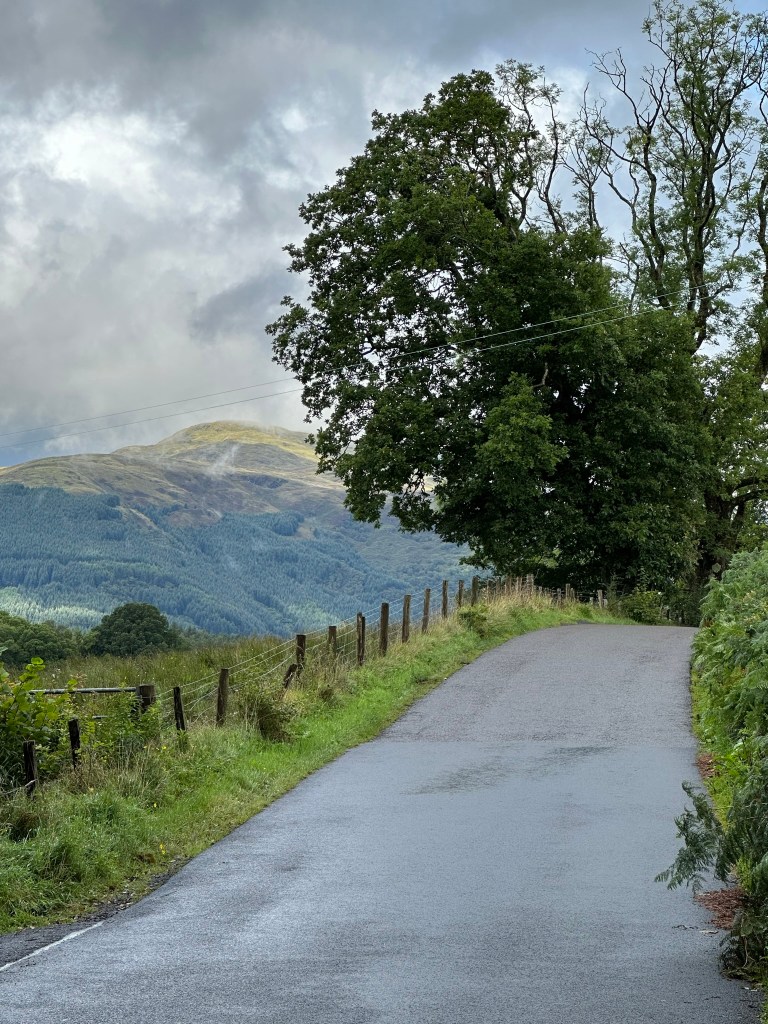
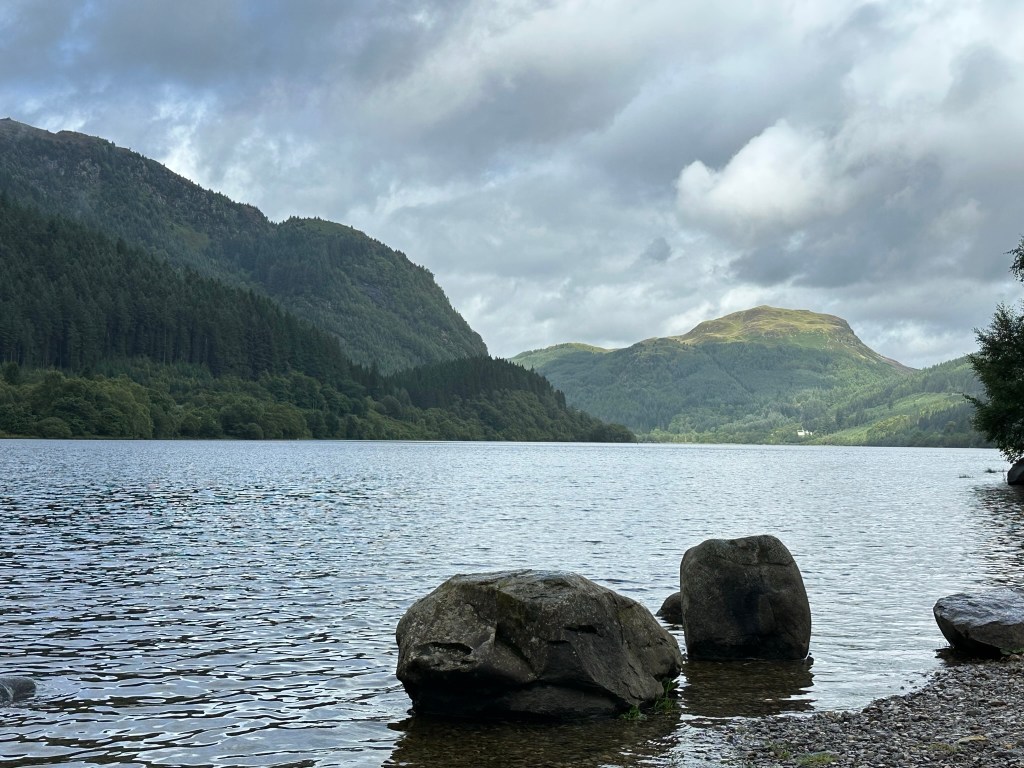
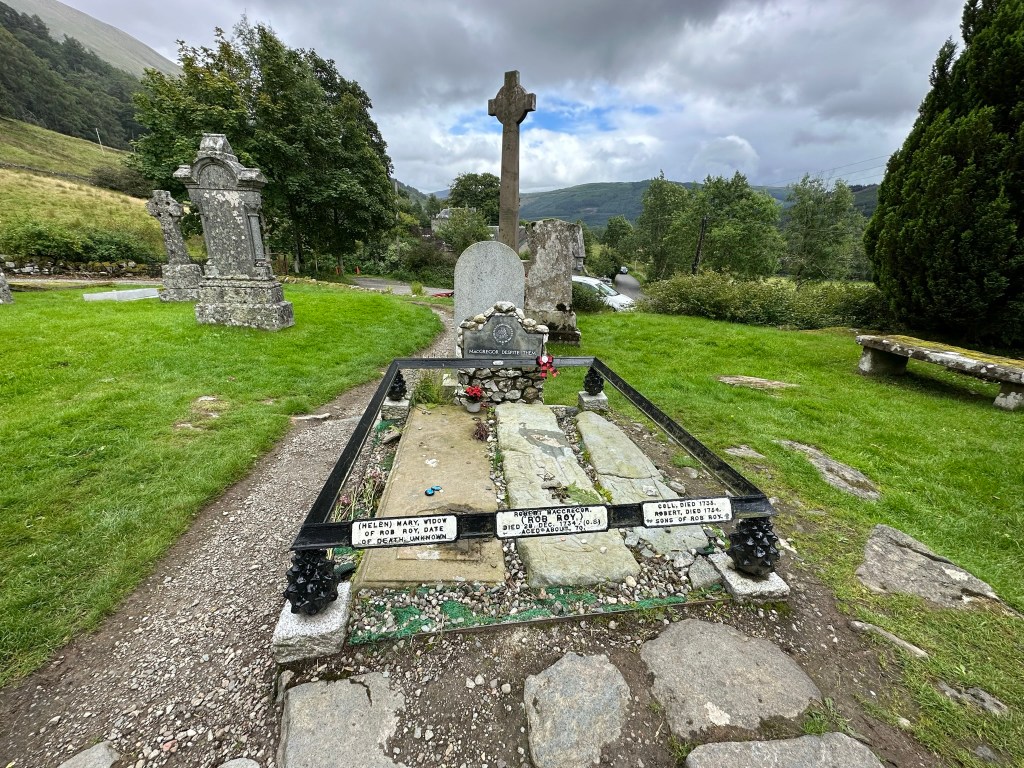
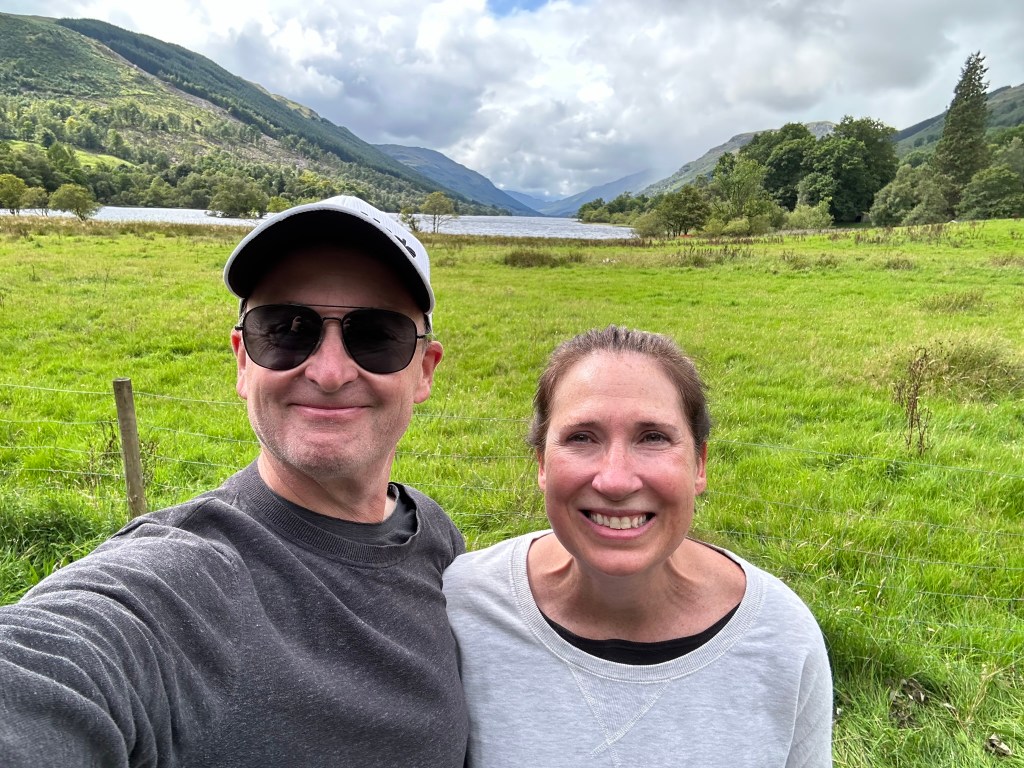
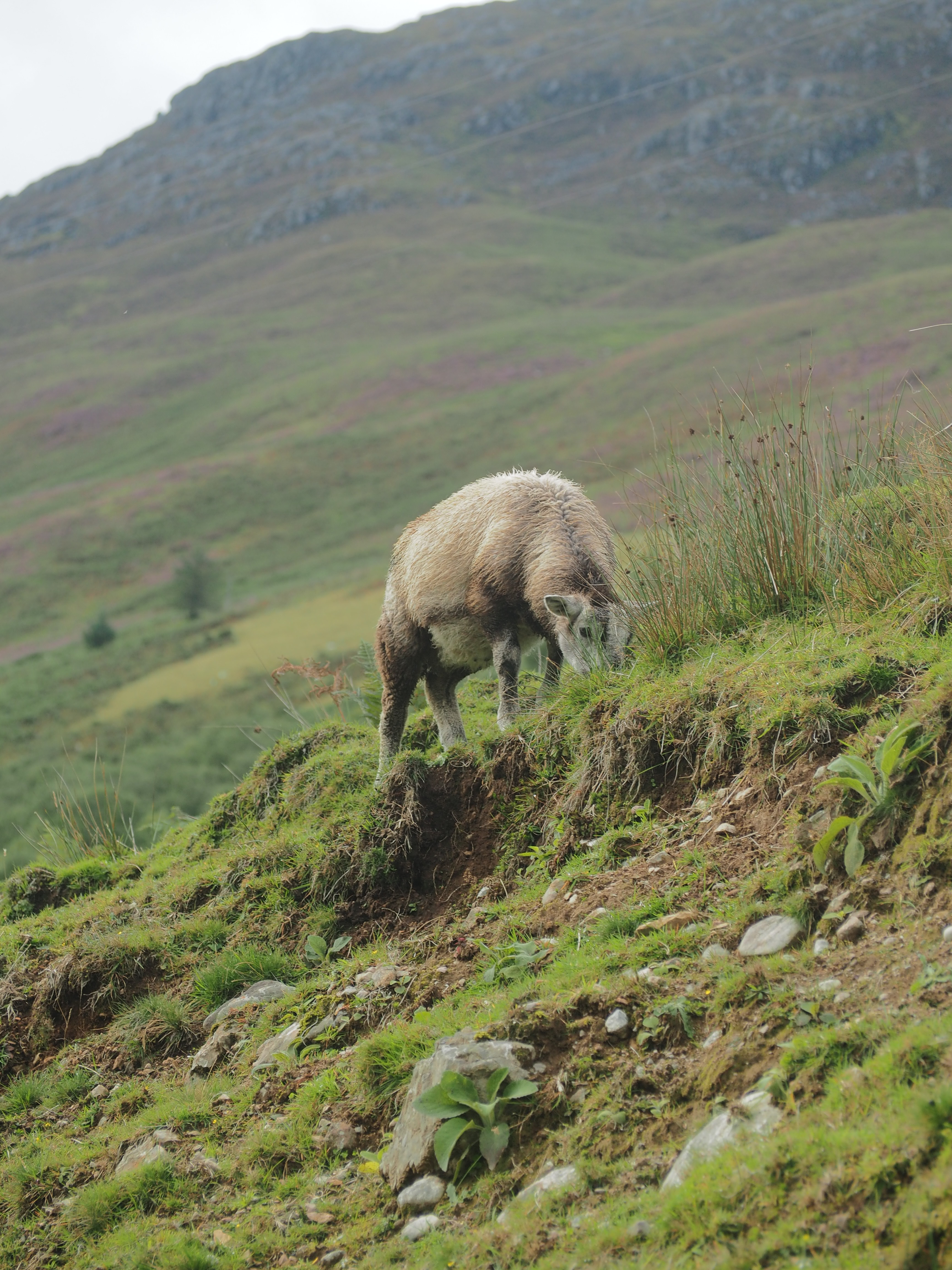
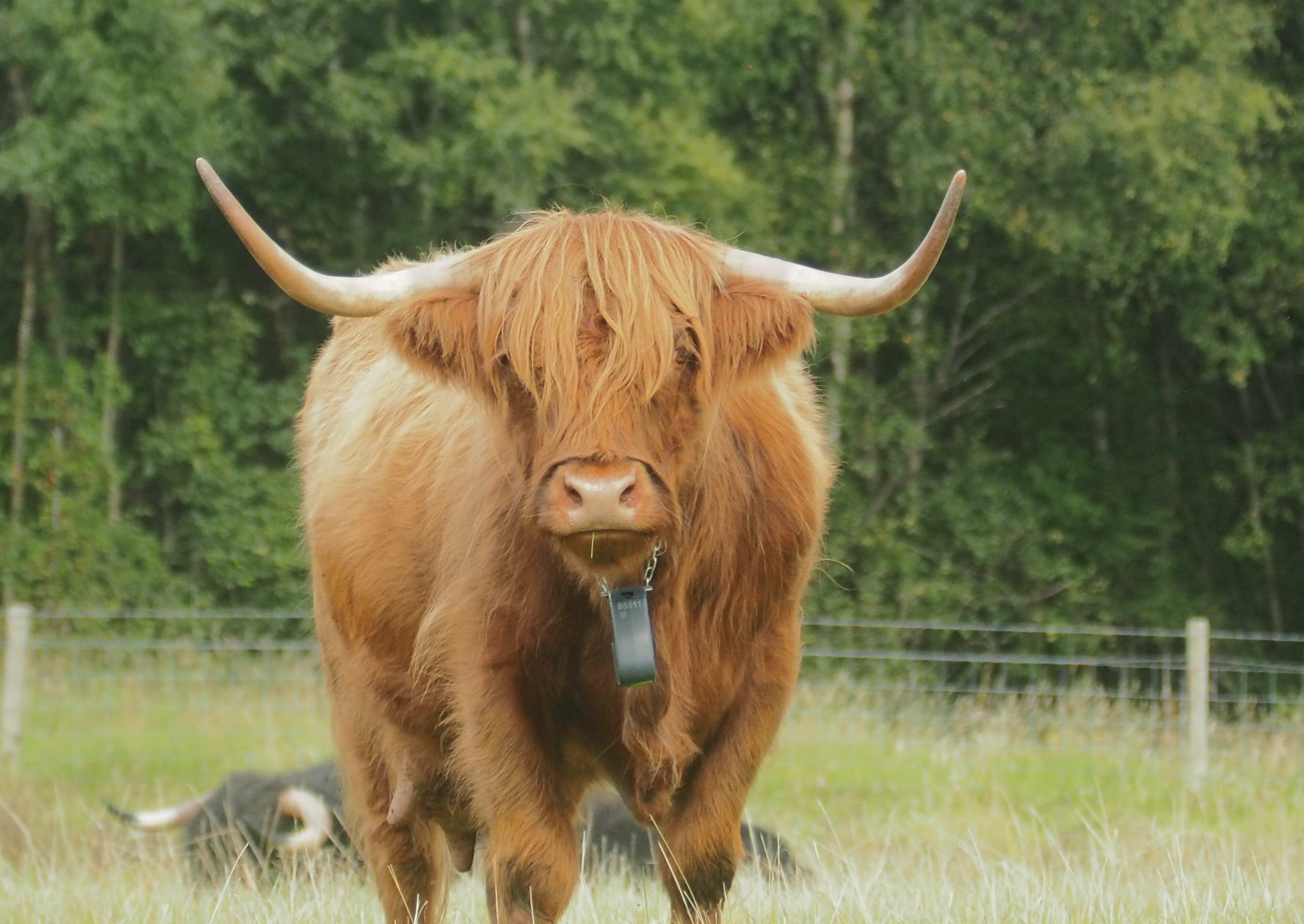
We departed Glasgow and headed north through the Loch Lomond and the Trossochs National Park. It doesn’t take too much time to get out of the city and feel like you’re in a totally different world. Looming mountains, narrow, long and deep lochs (body of water, not just a lake. Could be an inlet), lush green fields dotted with mostly purple and a sprinkling of orange and yellow flowers, grazing sheep, horses and highland cows on hillsides. We’re not in the concrete and steel of Glasgow anymore Toto. We wound through the hills, between the lochs and into little villages. We stopped off in Drymen for some fantastic sandwiches at the local bakery and visited the gravesite of Rob Roy, poet laureate of Scotland, in tiny little Balquhidder and then ascended into the highlands near Glencoe through driving rain passing through high alpine fields and between massive hilltops and mountains.

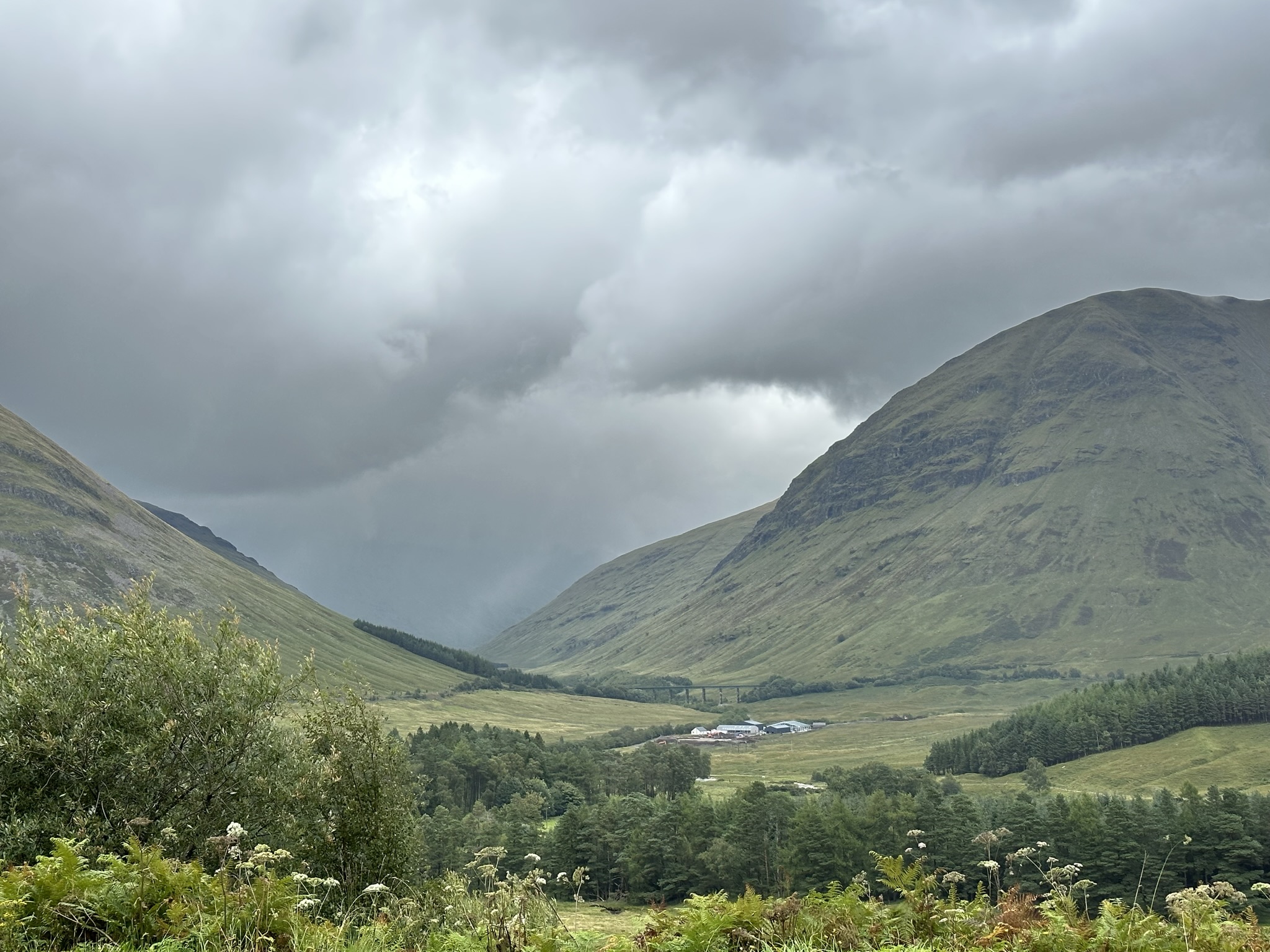
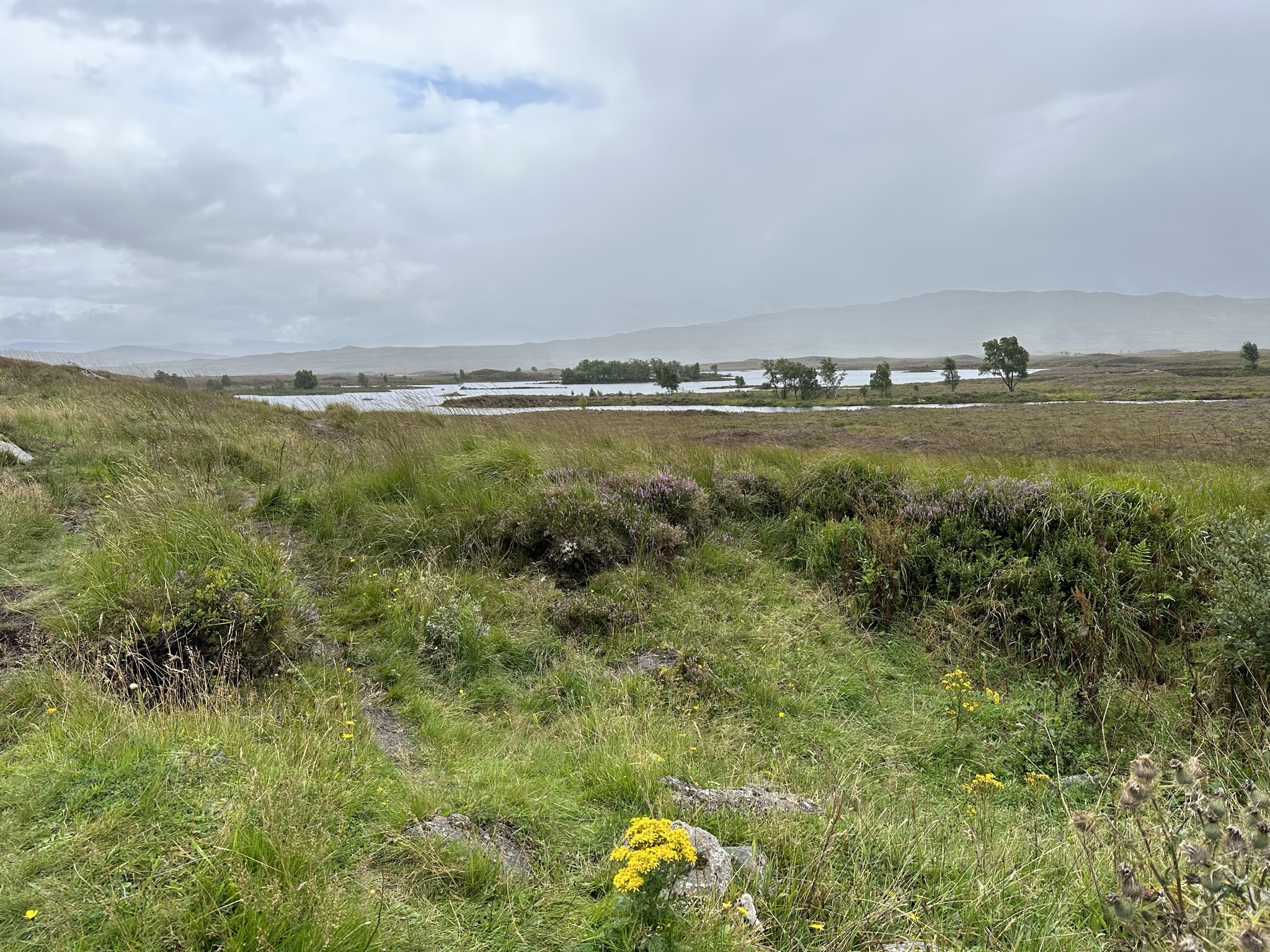
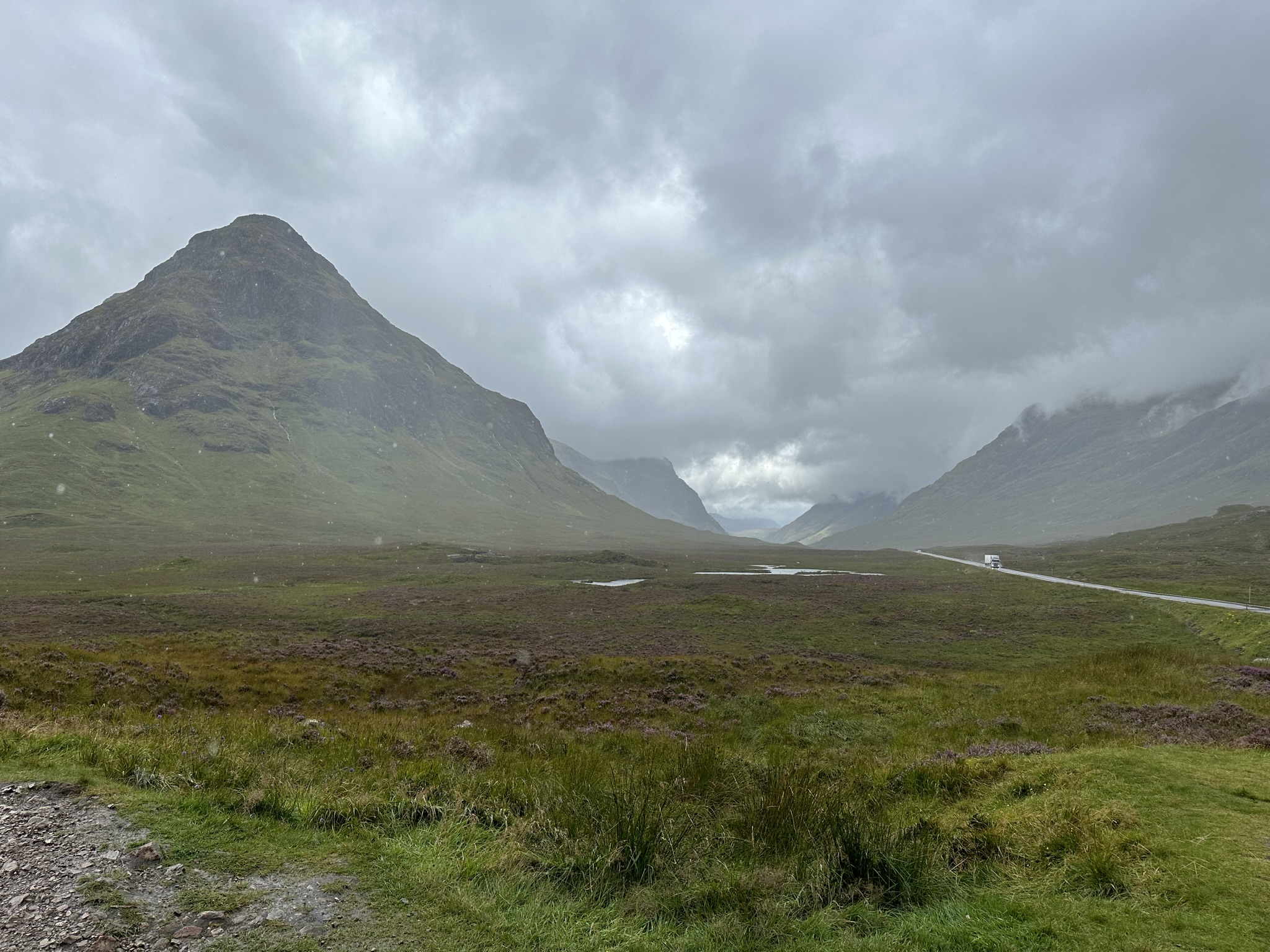
Around Glencoe
We arrived at our Airbnb, an A-Frame next to a small loch off of the Caledonian canal system (more on this later), surrounded by sheep in pastures and rolling mountains to all sides. We were located almost equidistant between Fort William to the south and Fort Augustus to the north, which made for a good spot to do some exploring and, some days, stick close to our highlands home and explore the trails and roads around our place.
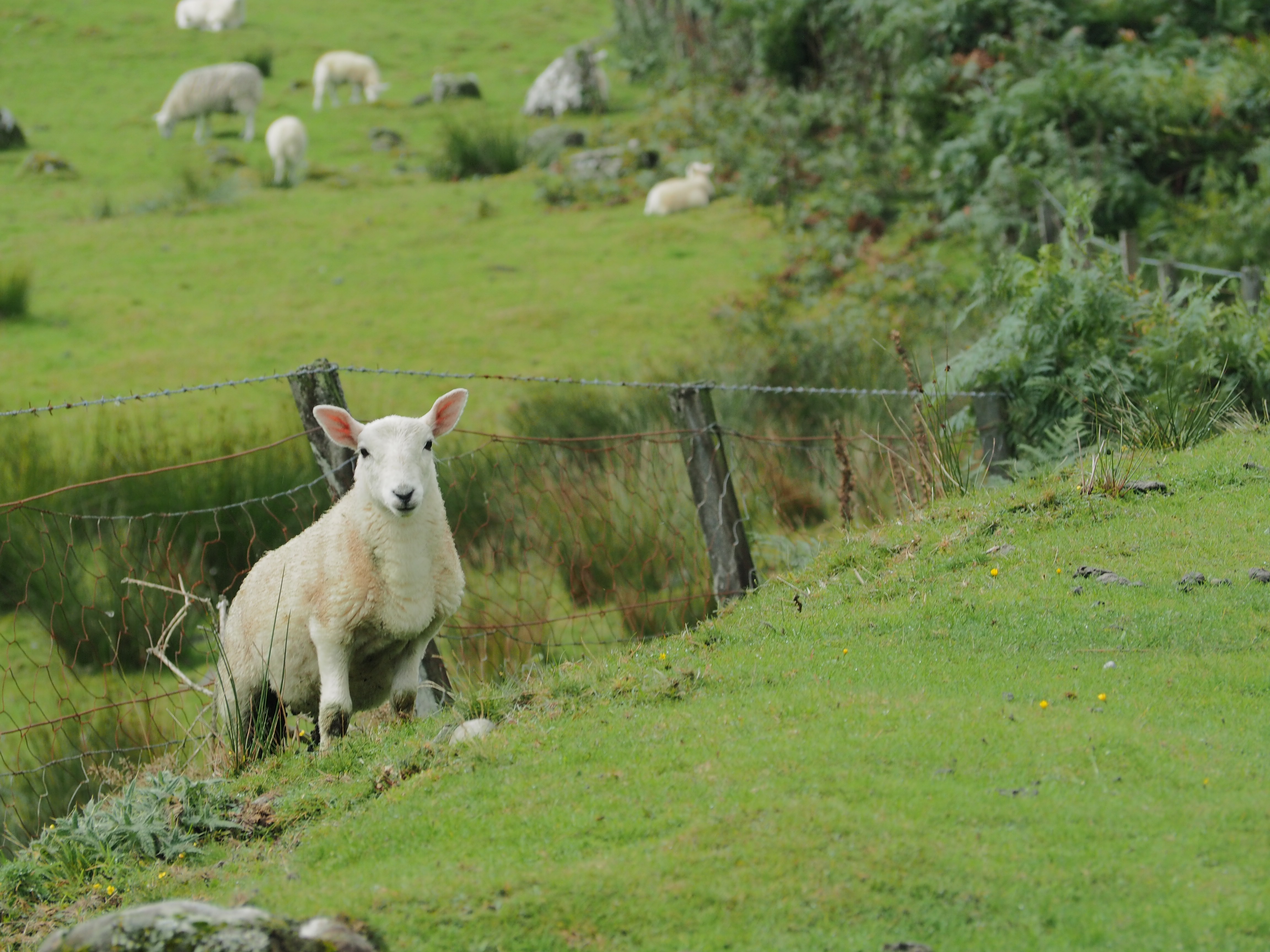
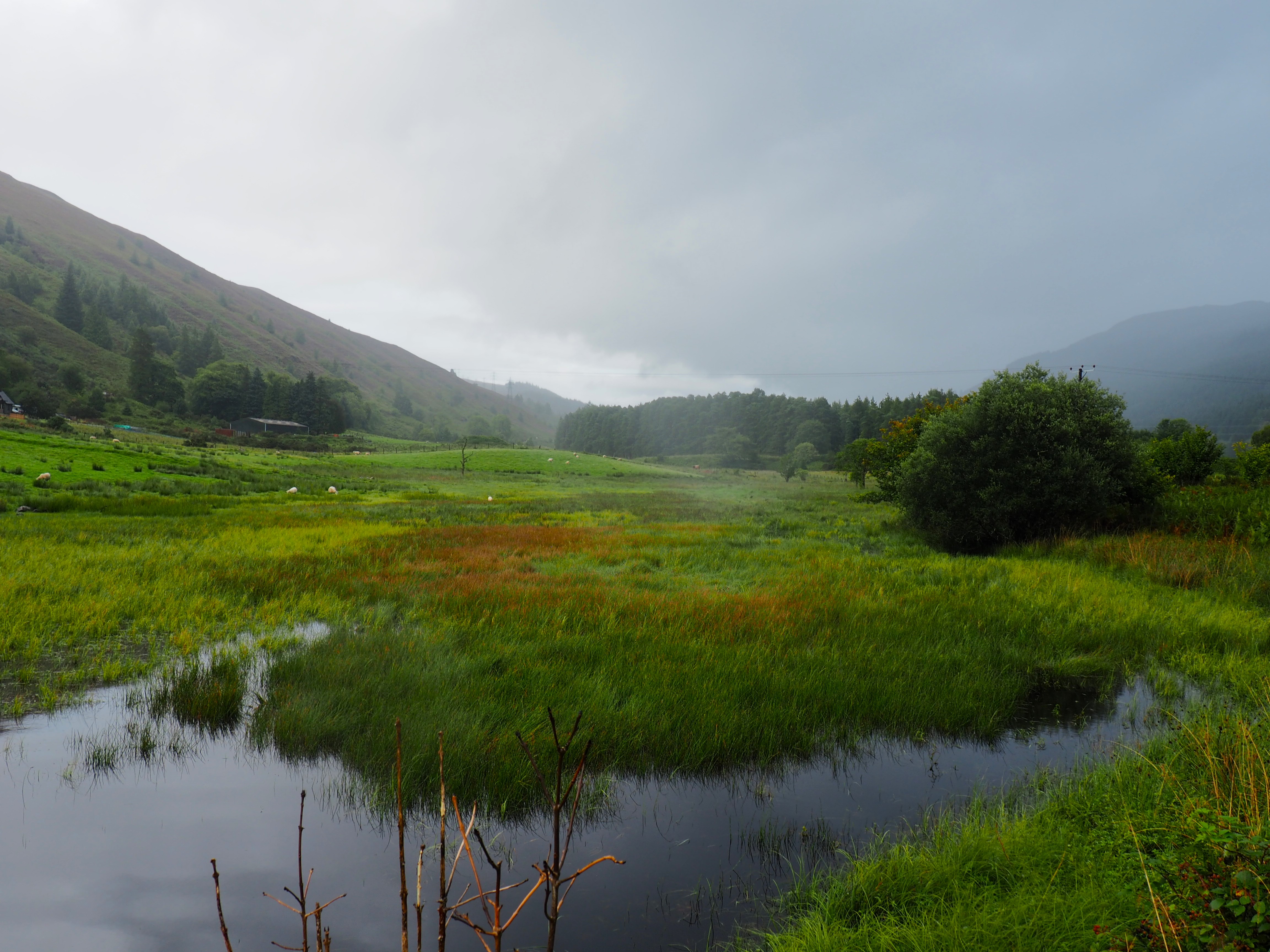
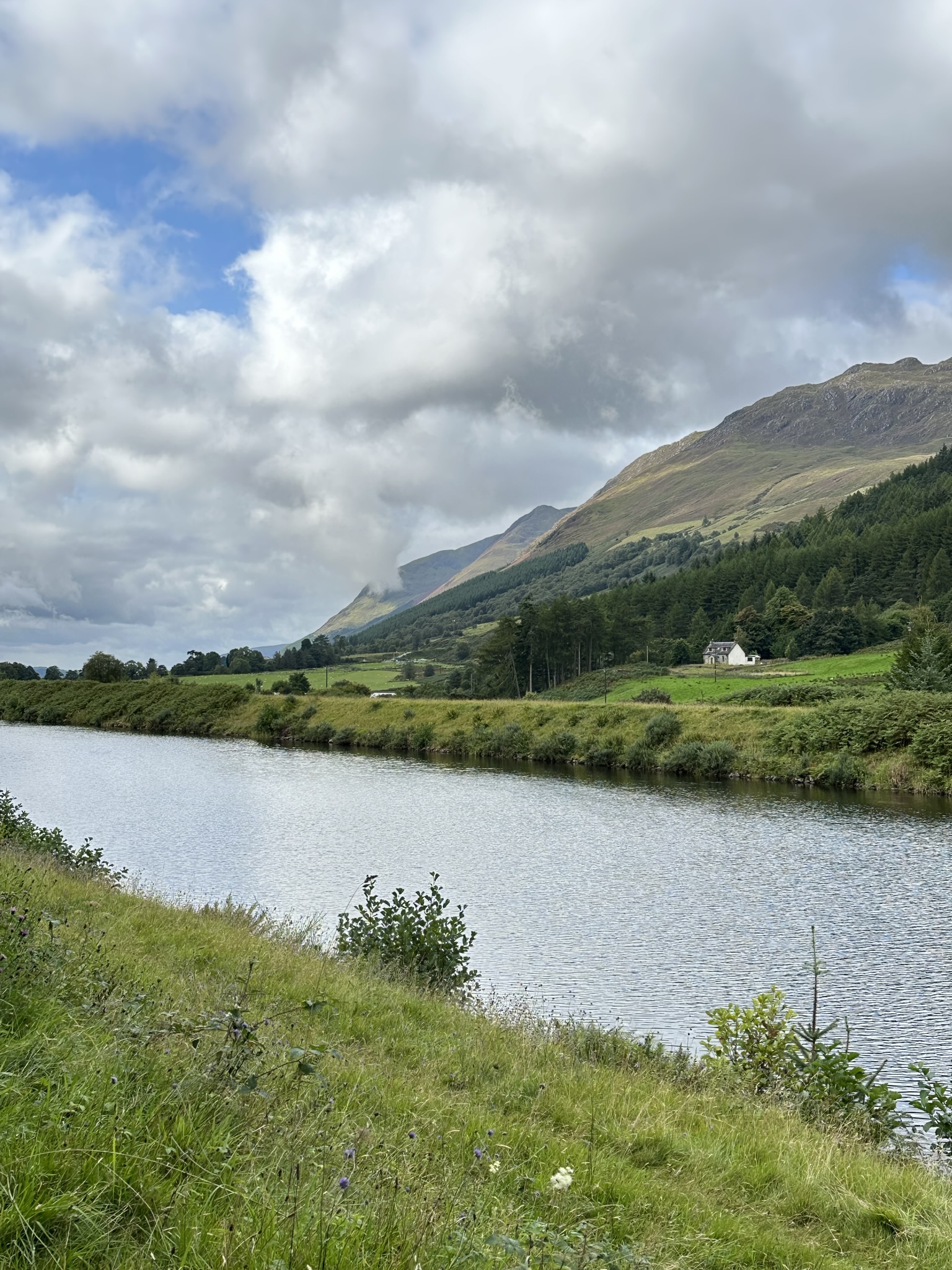
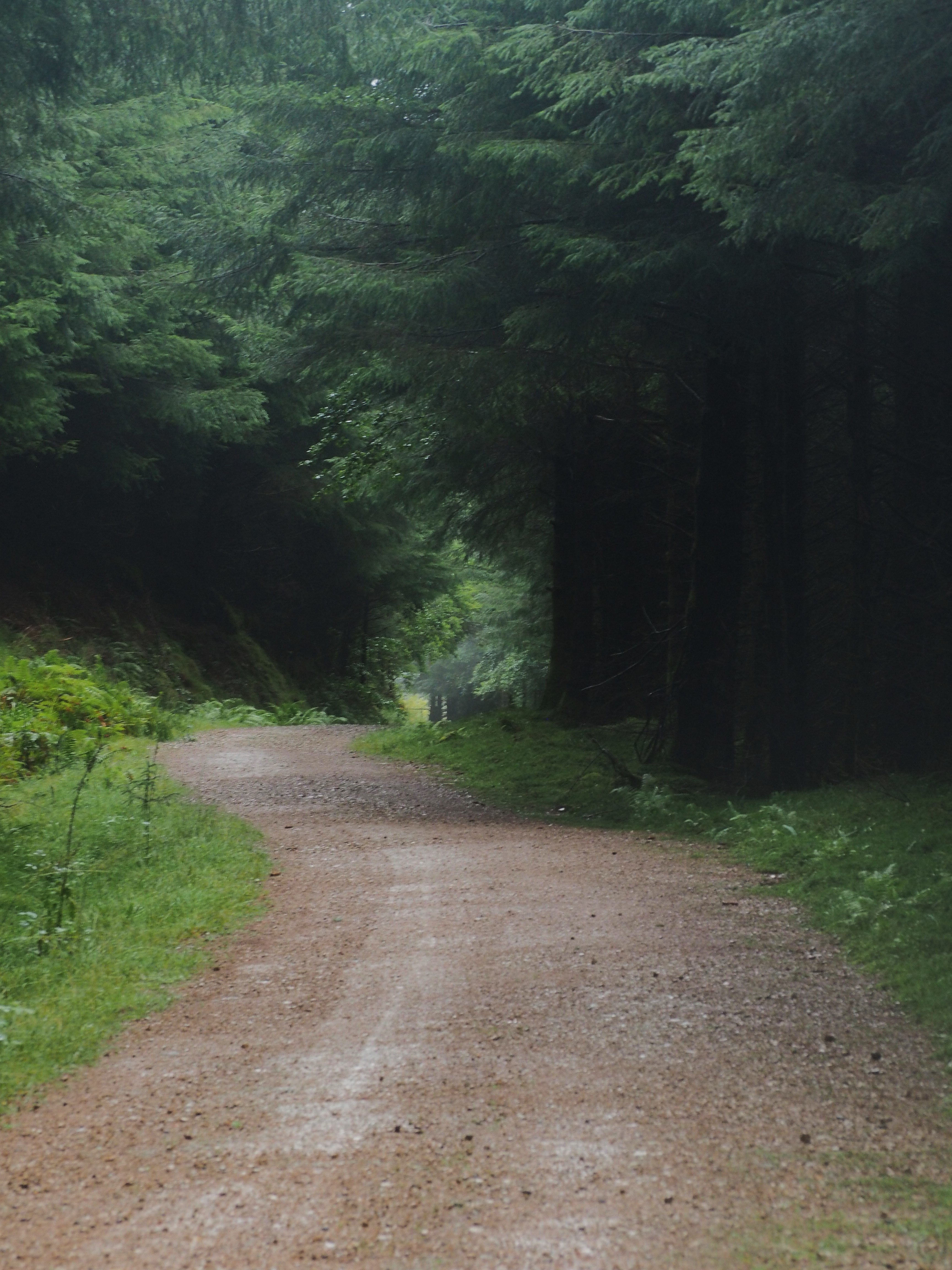
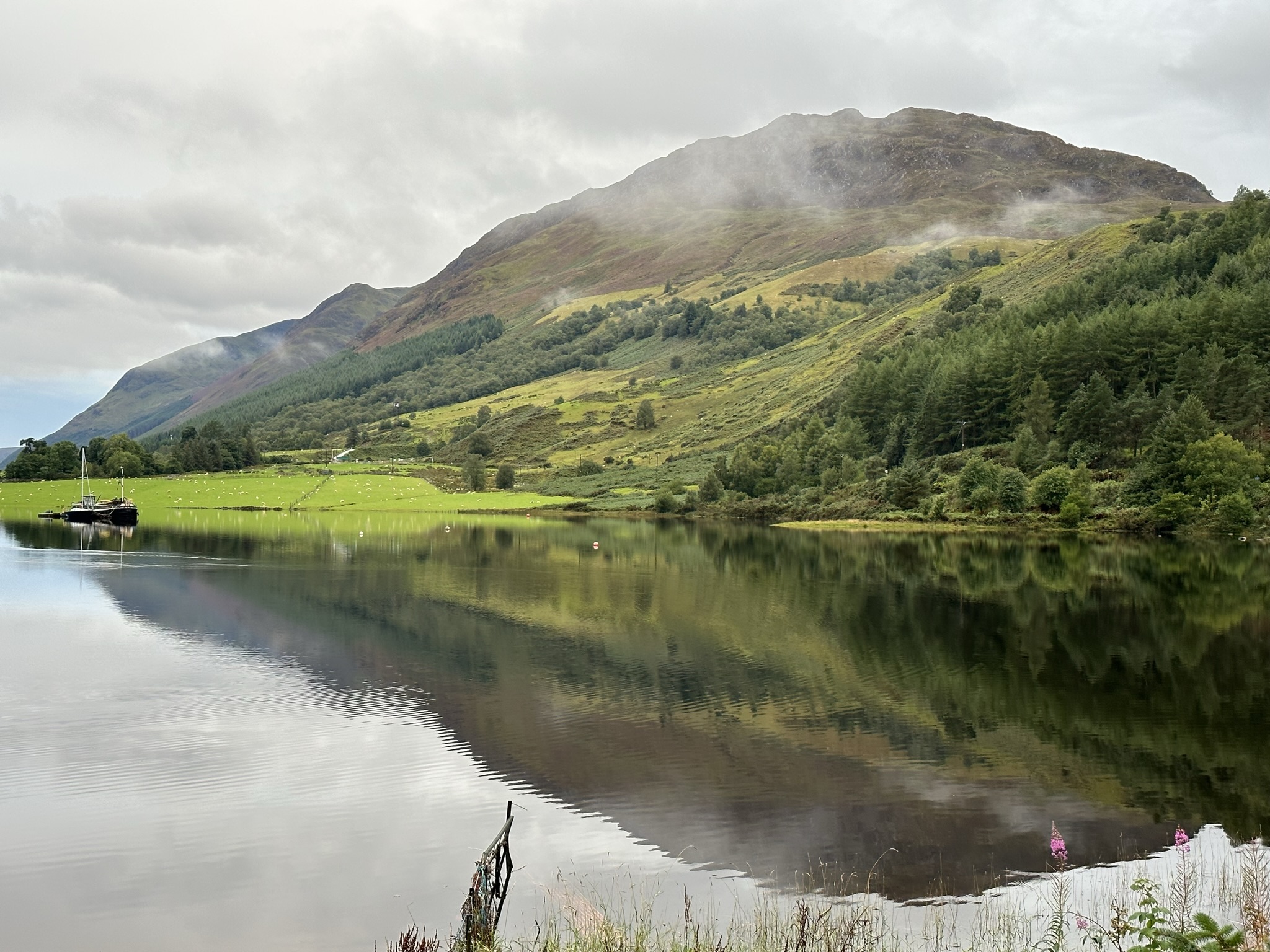
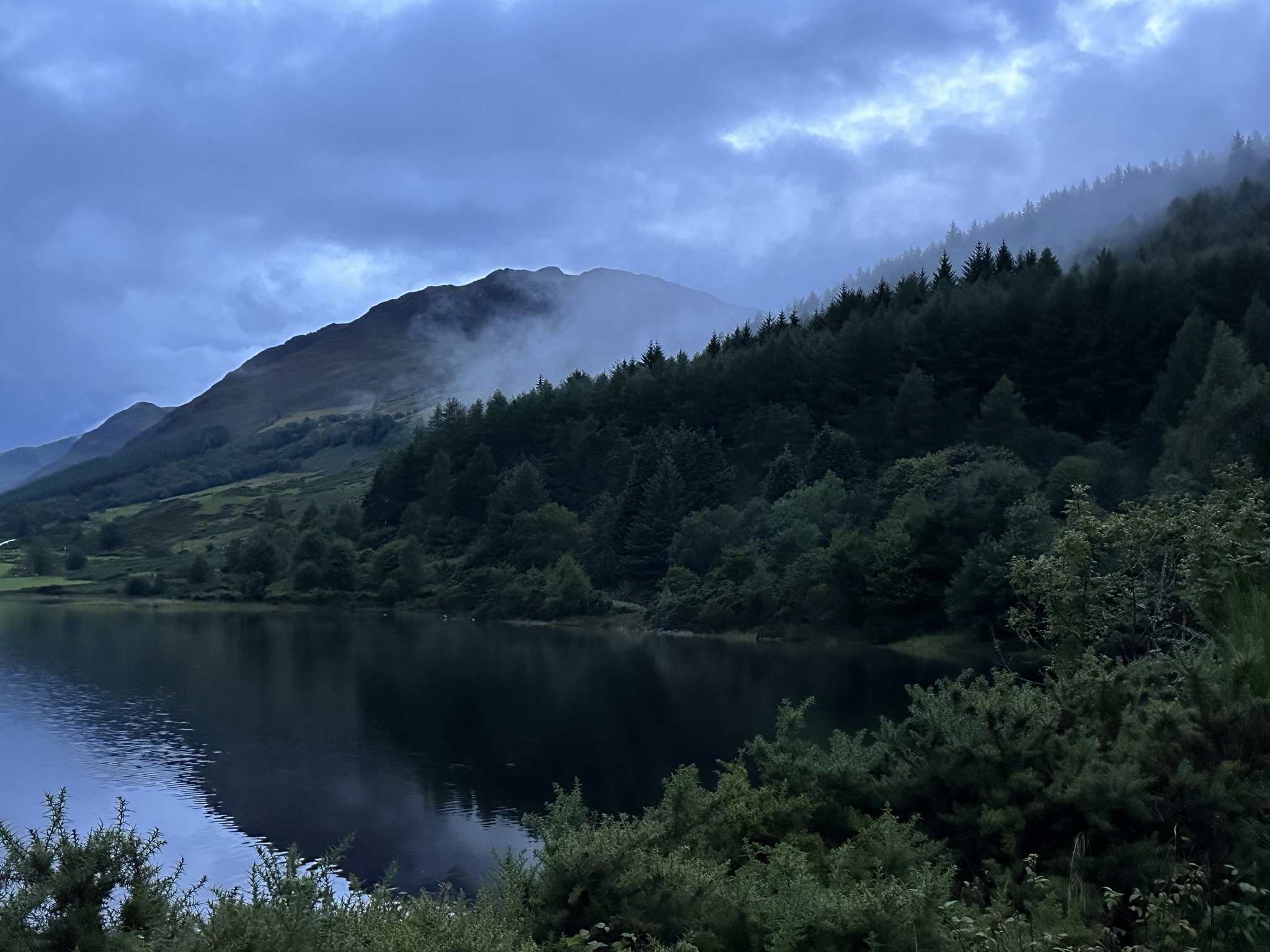
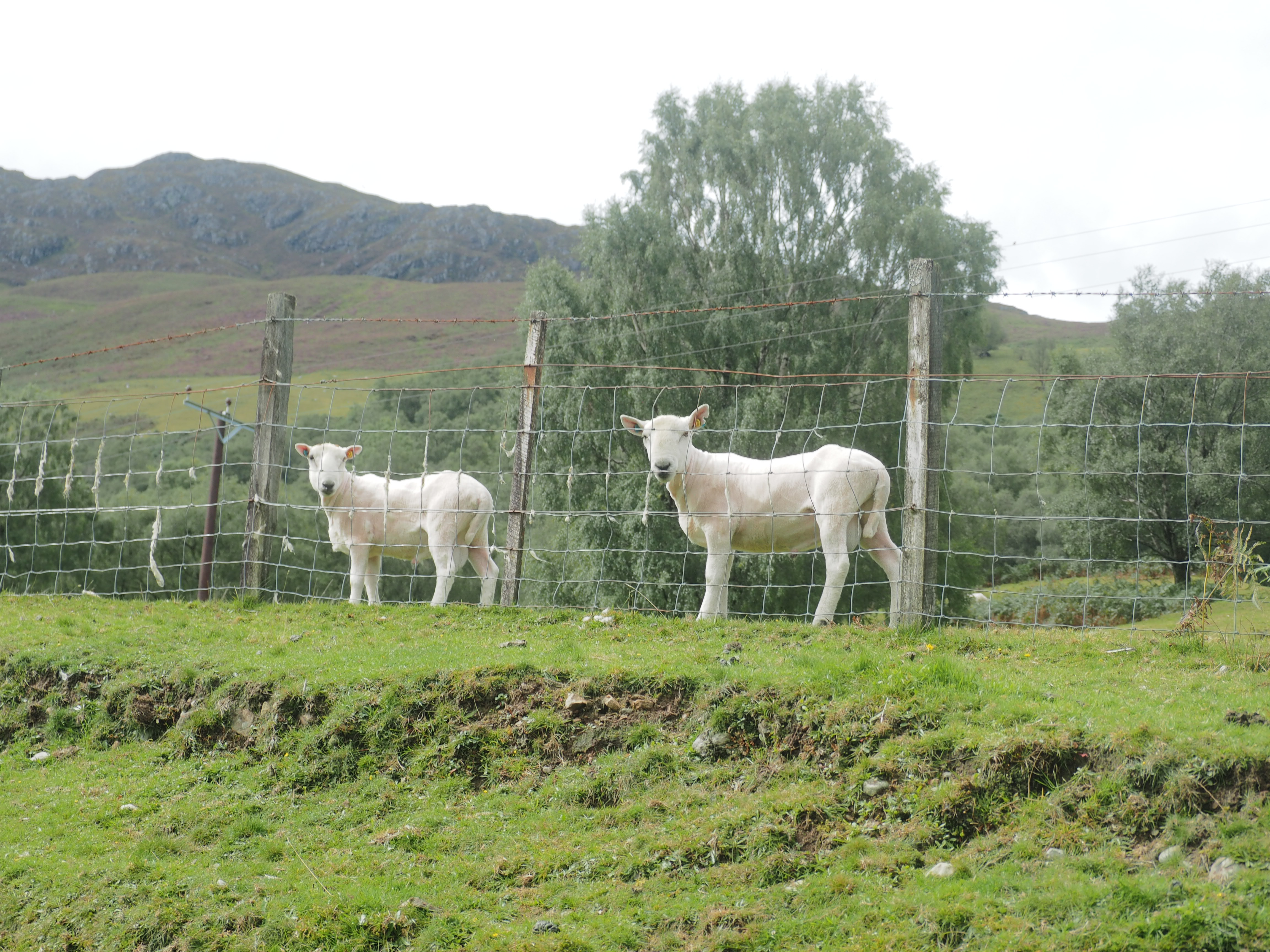
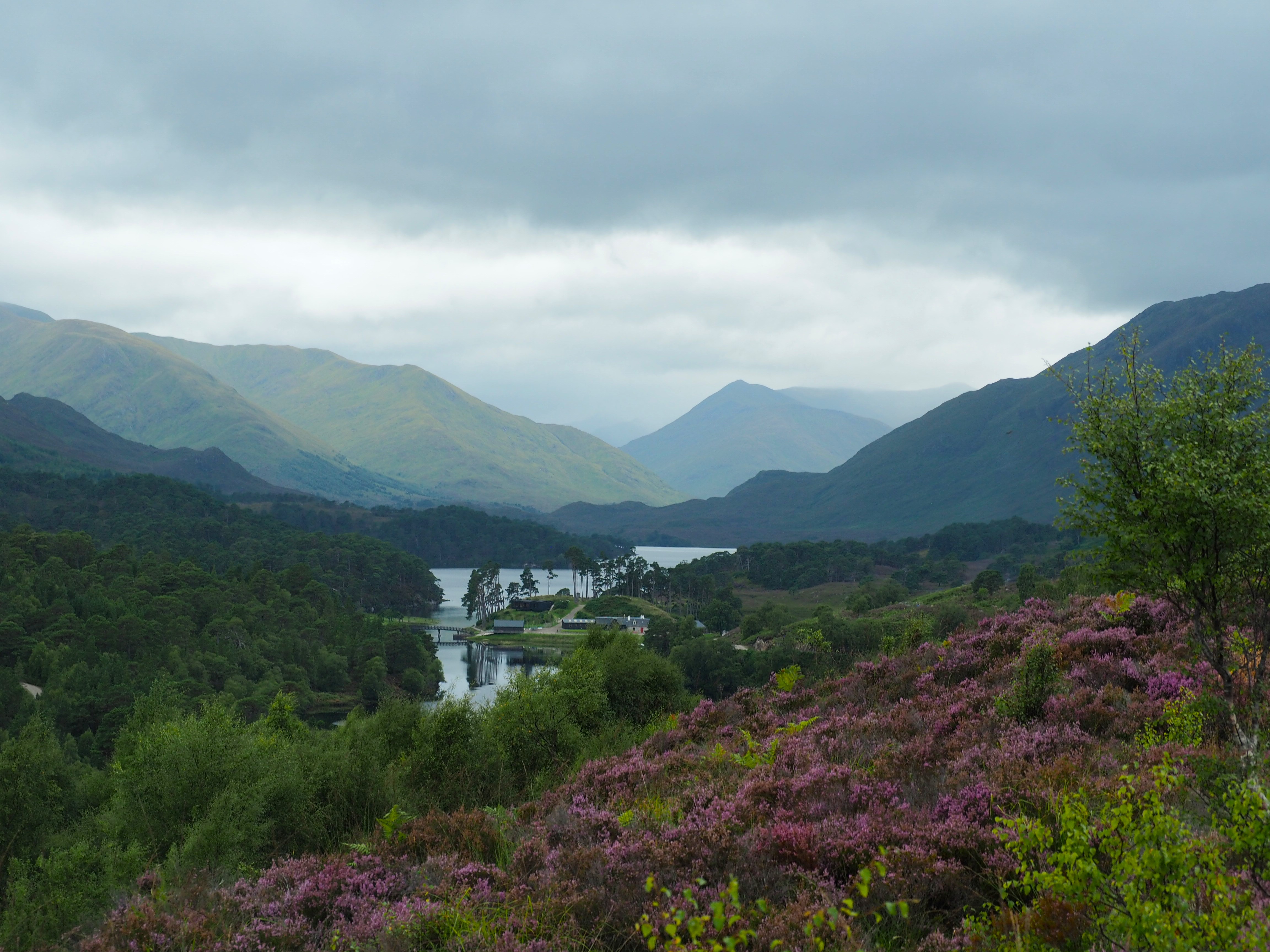
Glen Affric. On our first full day, we hit the road in search of a view I found in our guidebook in Glen Affric. One thing we’ve learned in Europe, reinforced in England and really experienced in Scotland is that a few miles to a destination does not mean something is close, especially when those miles include swing bridges which are unpredictably open and tiny narrow single lane roads which frequently require pausing for livestock crossings or pulling into passing lanes to let oncoming or larger vehicles by. It took a little less than 2 hours to go about 50 miles to get there and a little more than 90 minutes to get back, but we did get out and walk for a while, including up to the aforementioned viewpoint which defined our quest. Though most of it was from behind the windshield, we passed through some pretty beautiful country on the west side of Loch Ness and up into the hills of Glen Affric.


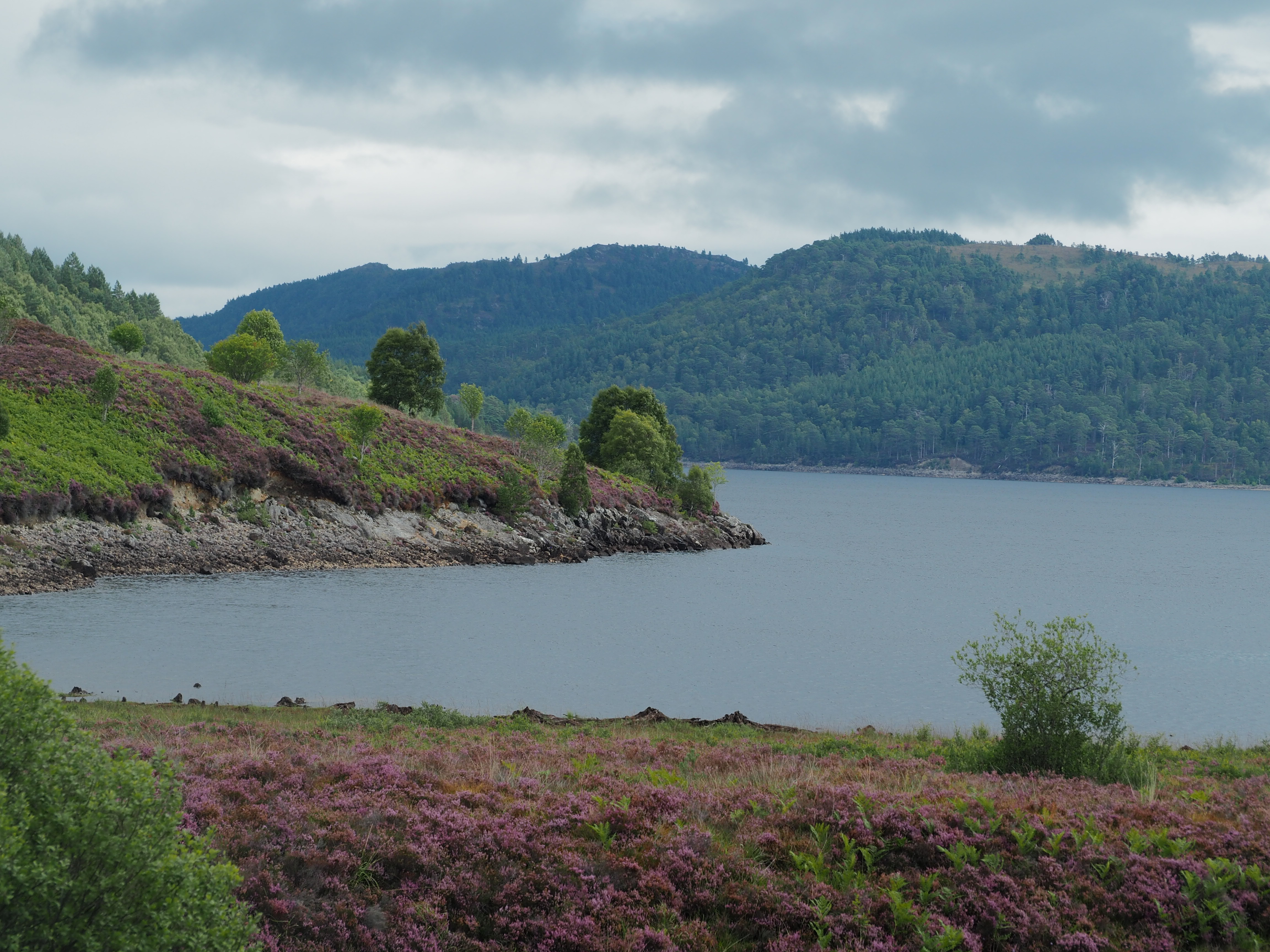
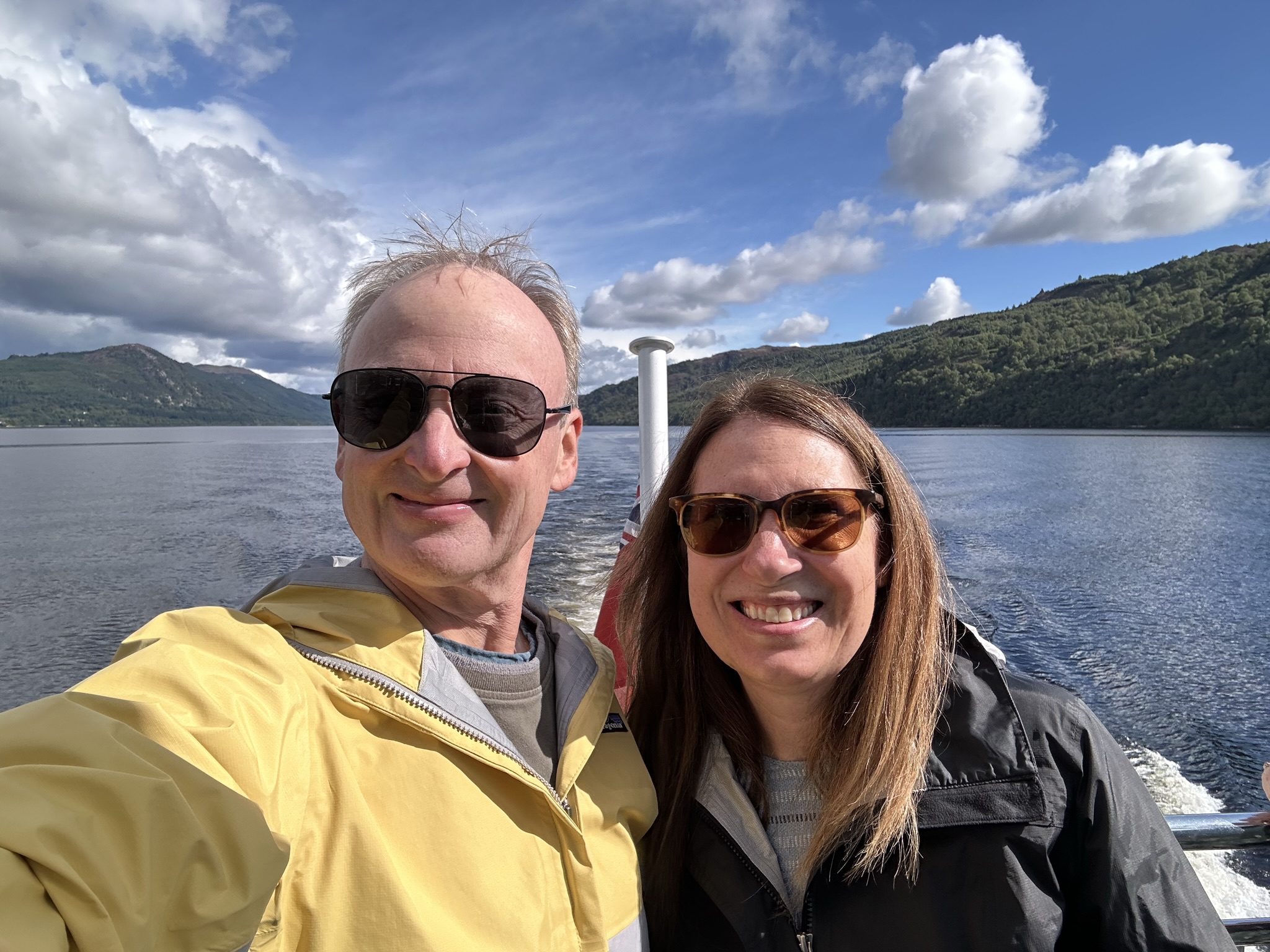
Loch Ness. In another break from the action (aka, the rain), we got lucky in that our pre-booked cruise on Loch Ness was under brilliant sunny skies, cloudless by Scottish standards. We went on Cruise Loch Ness, a 50-minute tour around the south end of the loch with a very well narrated trip full of interesting facts, the history of the search for Nessie and a wee bit of Scottish humor sprinkled throughout.
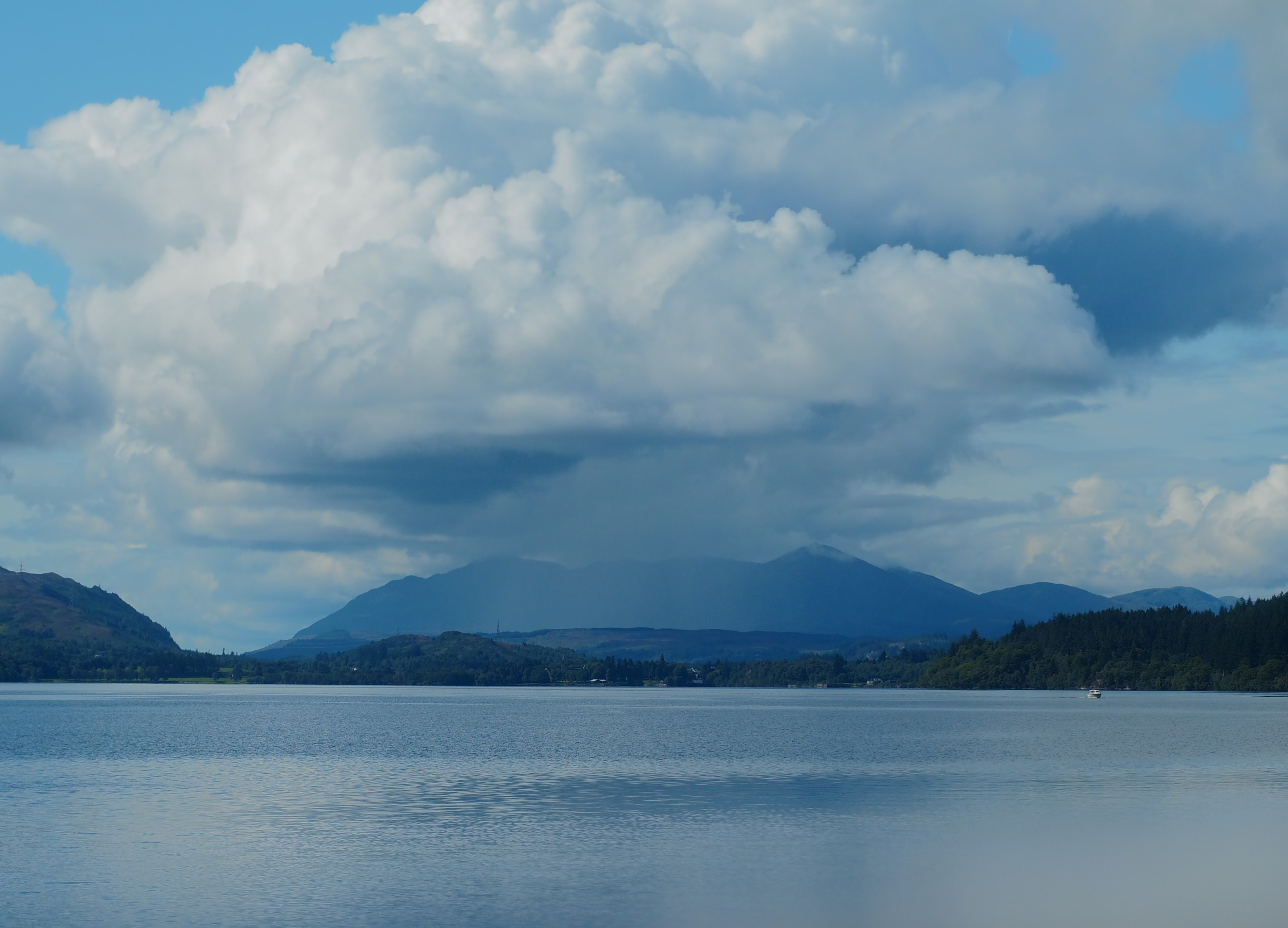
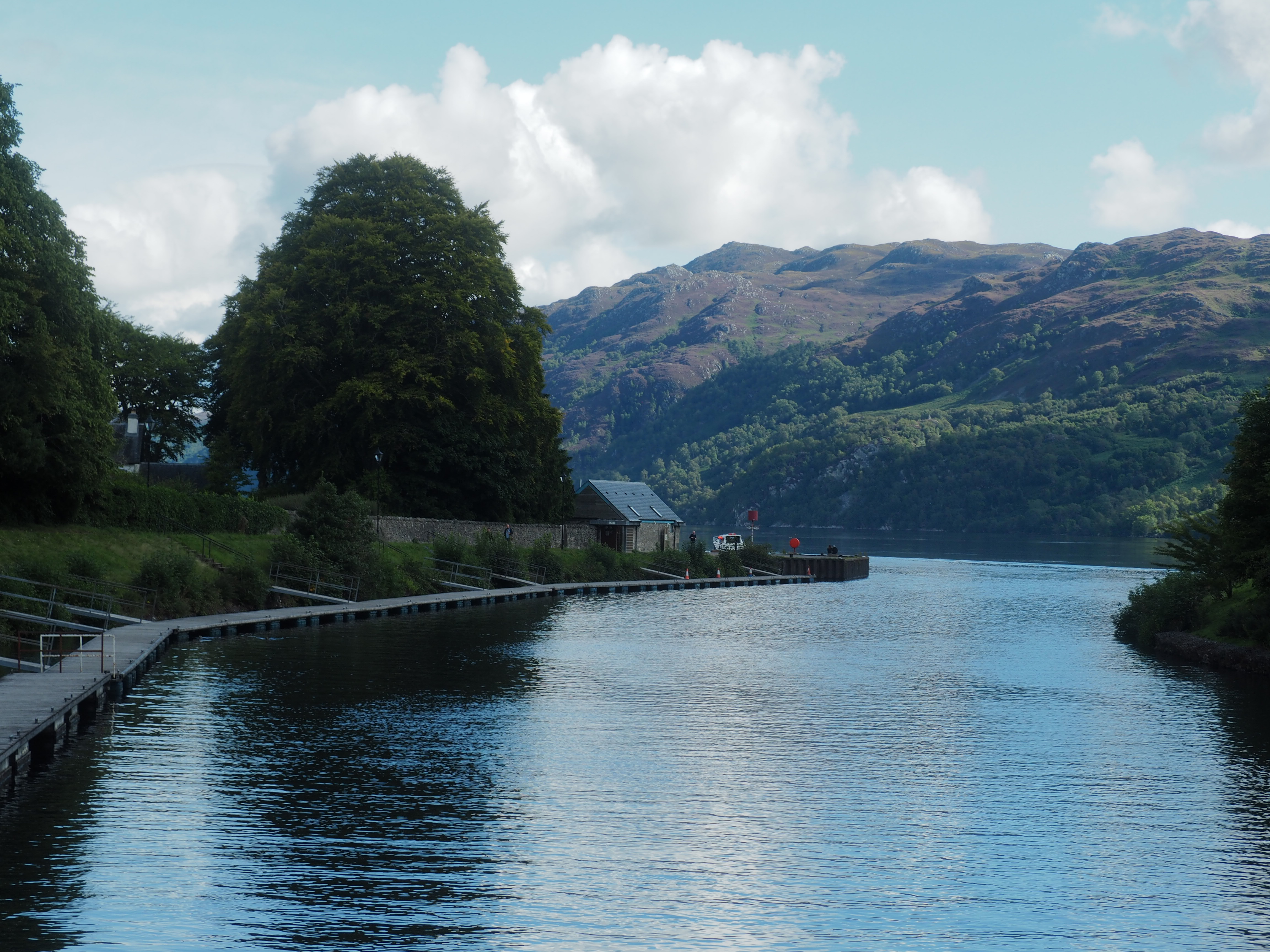
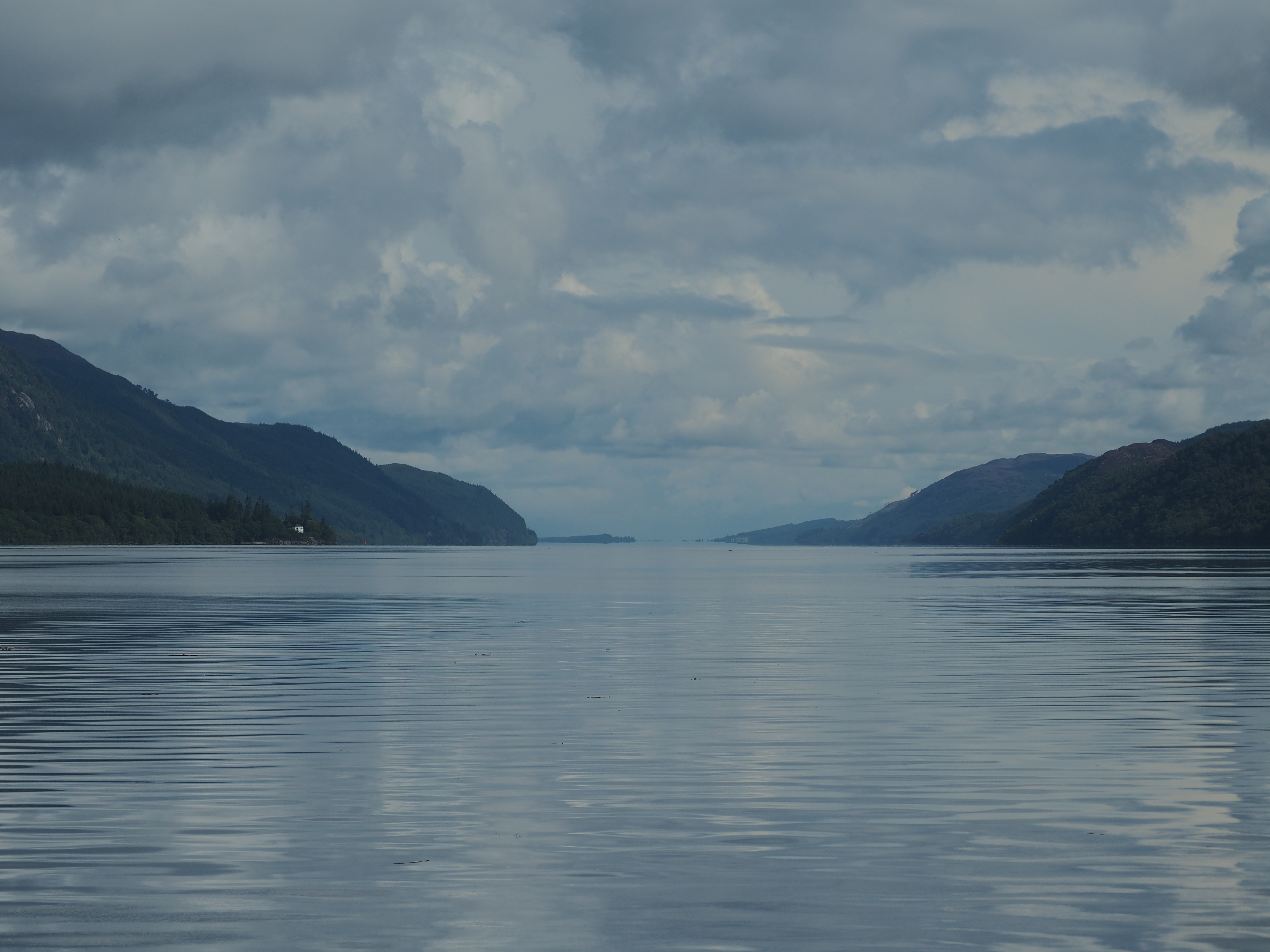
Loch Ness is the largest lake in the UK by water volume (Loch Lomond is the largest by size), in fact, it holds more water than all of the lakes in England and Wales combined. The loch was formed 10,000 years ago when the glaciers receded and was once made of salt water until the rain waters and rainflow from the mountains overwhelmed the volume of its salty neighbor and turned it fresh. The loch is 23 miles long and a mile wide at its widest and its deep: 230 meters/755 feet deep at its deepest point. Because it’s so deep, it never freezes, but lest you think it’d make for a refreshing dip, it maintains an average temperature of 5 degrees Celsius, 55 degrees Fahrenheit year-round. The water of the loch itself is black. Black from the peaty sediment which flows with the rains from the hills above and stays here in the depths of the loch. Because it is black, it is really dark, too dark to see anything even in a submarine once you get 30 feet down, which makes monster hunting challenging, but not impossible.
Scientists have ruled out that the famous image of a plesiosaur-like creature with its long neck surfacing could have been real. Such a creature would need to surface for air far more frequently than there have been sightings. And DNA matching has been used to try to identify what type of creature the monster is, or I should say monsters are. Because they have detected, using sonar, creatures lurking and moving in the depths of the loch. With DNA, scientists have narrowed it down to a few likely candidates. The “monster” may likely be a large eel. They’ve caught them measuring up to 5-7 meters (16-22 feet) long and there’s eel DNA all throughout the loch. Other sightings (and there have been a bunch) could have been of a huge arctic char. The char is usually a saltwater fish, but scientists believe that the char was here when the loch was salt water and evolutionarily adapted to fresh water as the water evolved from salt to fresh.
Whatever it is, its big. There’s something about this loch that lets things grow and grow. Creatures that ordinarily live deep down in the bottom of the ocean can flourish here. They’ve caught salmon so big here that they feed on baby birds. All this is to say, call my chicken, but despite the fact that some people have swum the length of the loch and there’s an annual team swim for charity, between the freezing temps and all that lurks beneath, count me out, I’ll stay happily above its surface on a boat with a bar.
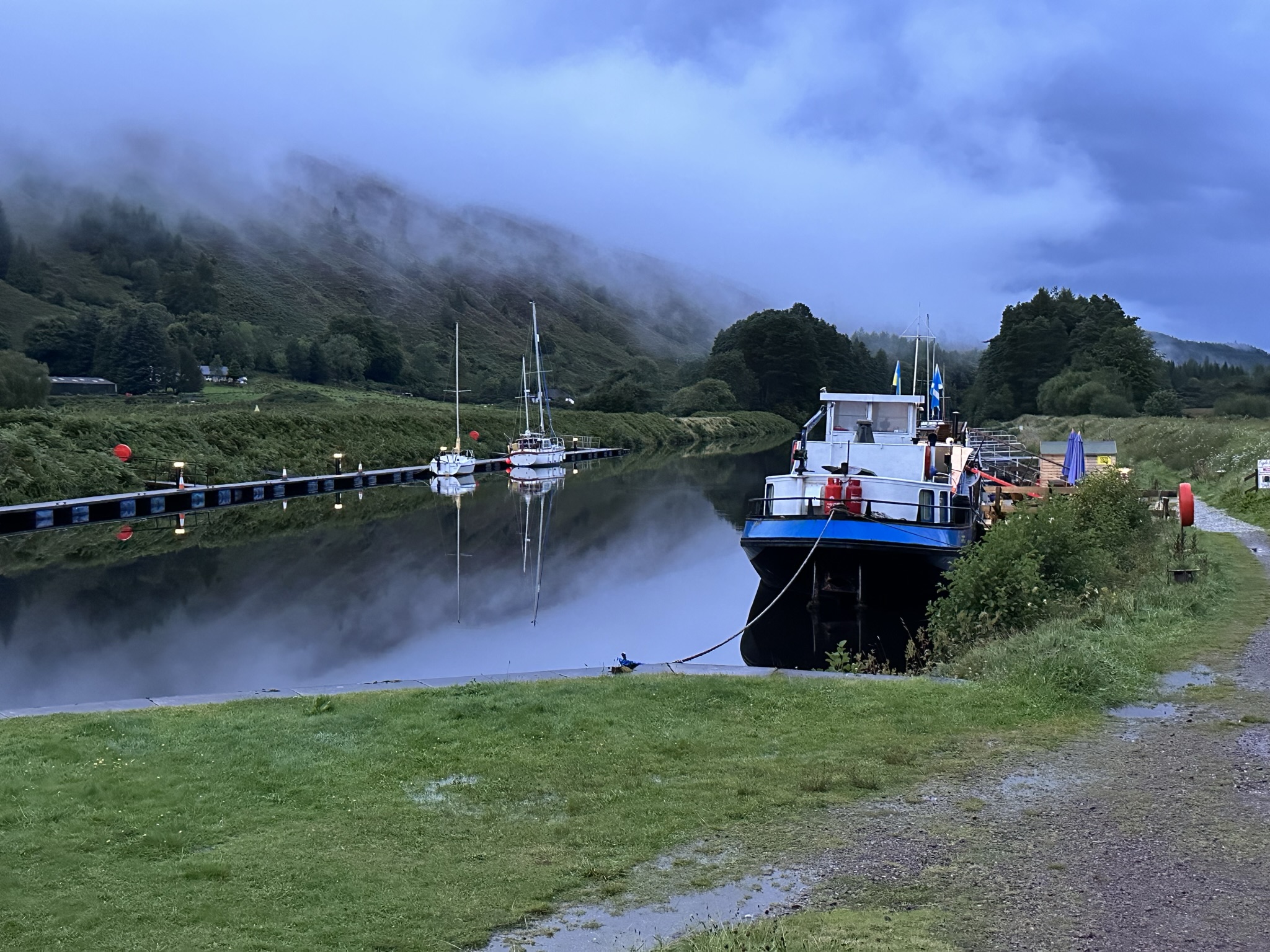
The Caledonian Canal. The lochs and a canal which was dug in the early 1800s make up a waterway which extends 60 miles long with 39 locks and 150 feet of rise. Swing bridges cross the canal at several points, which can certainly make you late for work if you sleep through the alarm. Prior to visiting Whitby in England, if you’d told me there was a swing bridge in town, I’d have thought you were talking about some kind of bawdy place full of creepy dudes which I’d take a pass on. But they are pretty fun to watch (video below of the one in Fort Augustus).
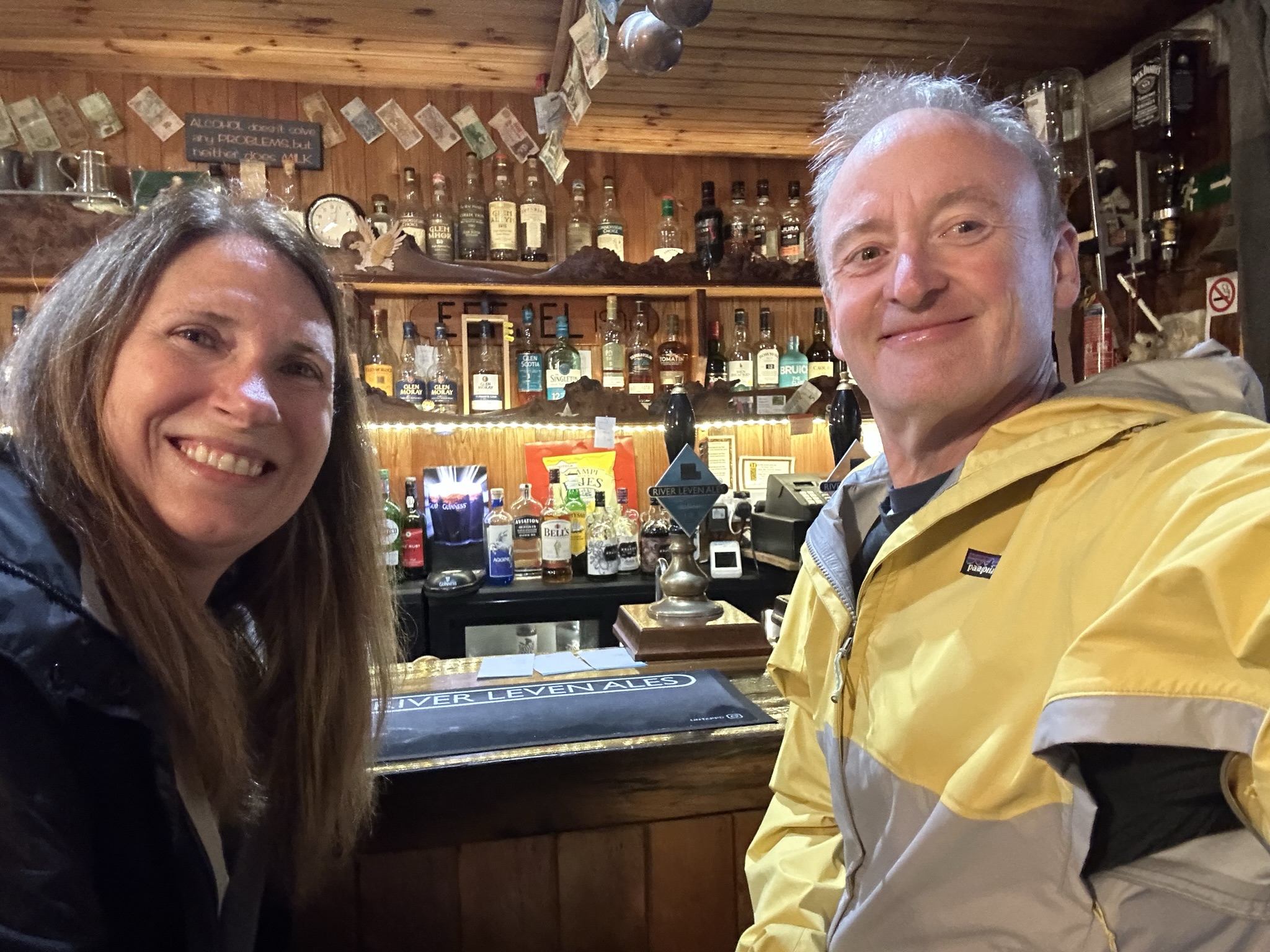
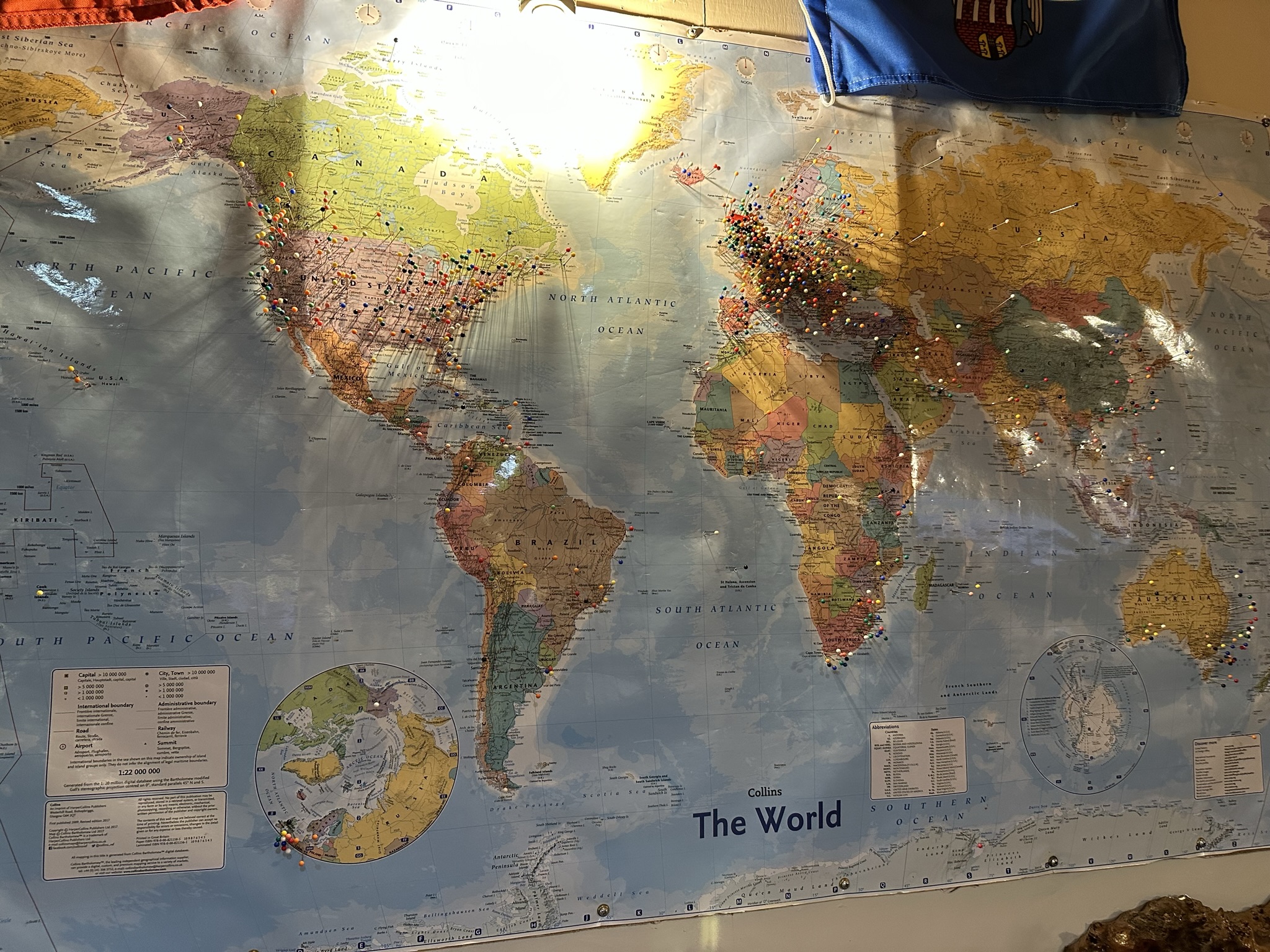
There are trails all up and down the canal side, and near our Airbnb there was a pub (Eagle Barge Floating Pub) on a boat on the canal. The couple that runs it have owned and operated the pub for 10 years, buying it from his father who owned it for 10 years prior. A map on the wall has pins in it from where all its patrons have come. Some of them are pretty interesting, like Antarctica (a friend of the owners who has lived there for 30 years, I’d say that counts) or the Parry Islands of Canada or the Reunion Islands or Perth Australia. It was a bit of an odd scene with German backpackers drinking just Cokes and staring at their charging phones for hours and some locals with their dogs, but the barge is cool, and the owners are really nice so it’s worth the stop even if it might feel more like a university library than a pub when you visit.
Rain check on the Highland Games. One of the things I was really looking forward to on our summer holiday in the highlands was the Highland Games. That, after I realized that they’d be relatively conveniently located to us about 45 minutes away in Glen Urquhart while we would be here. I had pictures men in kilts hurling hammers, tug-of-wars, bagpipes, plates of haggis, the whole nine. We had an alarm set for 7am to be up, breakfasted and ready to go to arrive by 9:30 or so to be there for the 10am gate opening. I woke up at 6am and checked the weather. It was looking promising, clearing around 8am until midafternoon. I confirmed it around 8:30 as we were getting ready to leave and it still looked good, but I started to get worried as we approached Glen Urquhart and the rain only picked up. Alas, Highland Games were canceled. Weather forecast was dead wrong. On to an alternate plan. We discussed a couple. Plan B: return to Airbnb, read, take walks if and when the weather broke, enjoy the view from our place. Plan C: shift Sunday’s plan to today and go to the Culloden Battle Field Memorial and lunch and take a walk in Cairngorms National Park. We settled on the latter, partly because the town of Grantown-on-Spey showed clear(er) skies in the hour-by-hour forecast and because we were nearly to Inverness next to Culloden anyway.
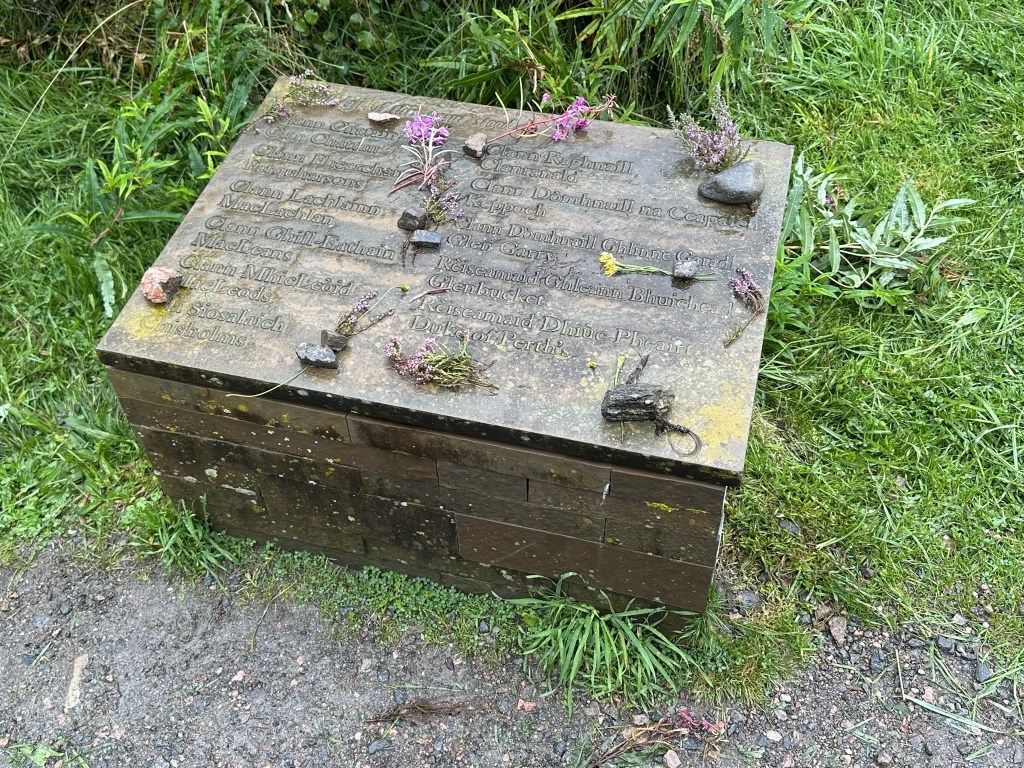
Culloden Battle Memorial. We arrived in Culloden and took in the museum exhibit. It was crowded, probably in part because it was an indoor activity on a dreary, cold, wet “summer” day. In 1754, Prince Charles Edward Stuart, known as “Bonnie” Prince Charlie (for his good looks) convinced several of the clansmen leaders of the highlands to take part in an uprising known as the Jacobite Rebellion as an attempt to regain the Scottish throne for the Stuarts, the fourth such rising in the 18th century. After some early success in taking Edinburgh and winning the battle at Prestonpans, Prince Charlie led his troops south to invade England, choosing a path he felt would stir support from disaffected Britons along the way. Support did not emerge as hoped and after retreating, the Jacobites met the British army at Culloden. It did not go well. The lambs had been led to the proverbial slaughter after an all-night march exhausted Charlie’s army on the eve of the battle. After a short rainy walk in the mud of the battlefield, we were back in the MG and on our way for, hopefully clearer skies.
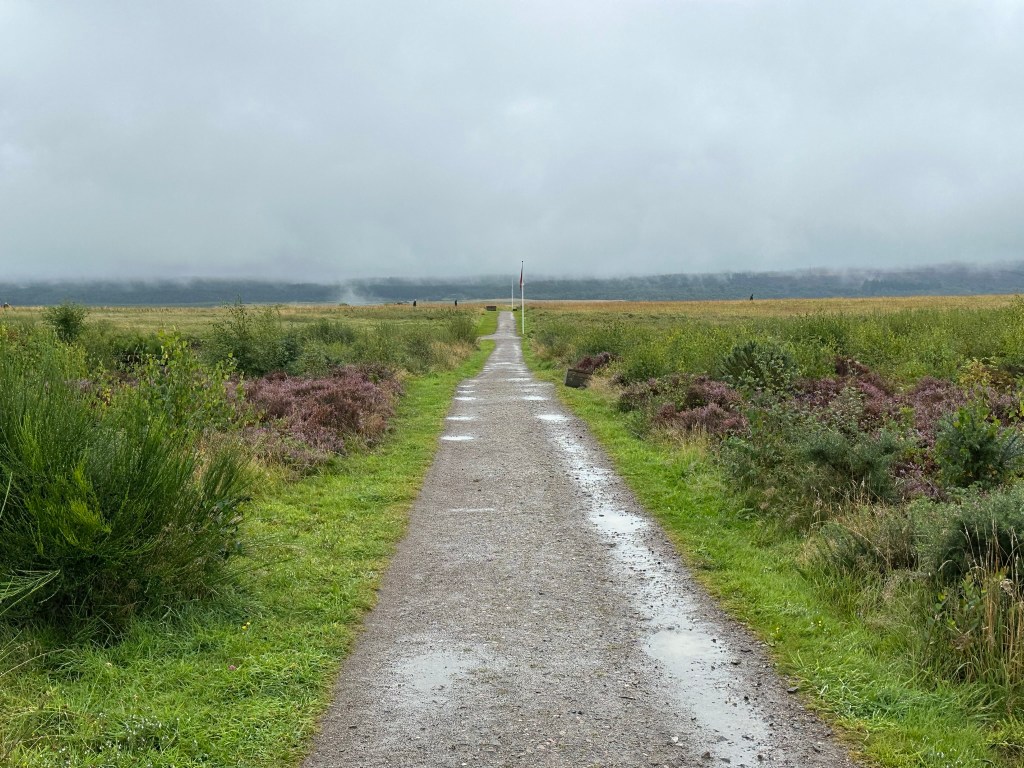
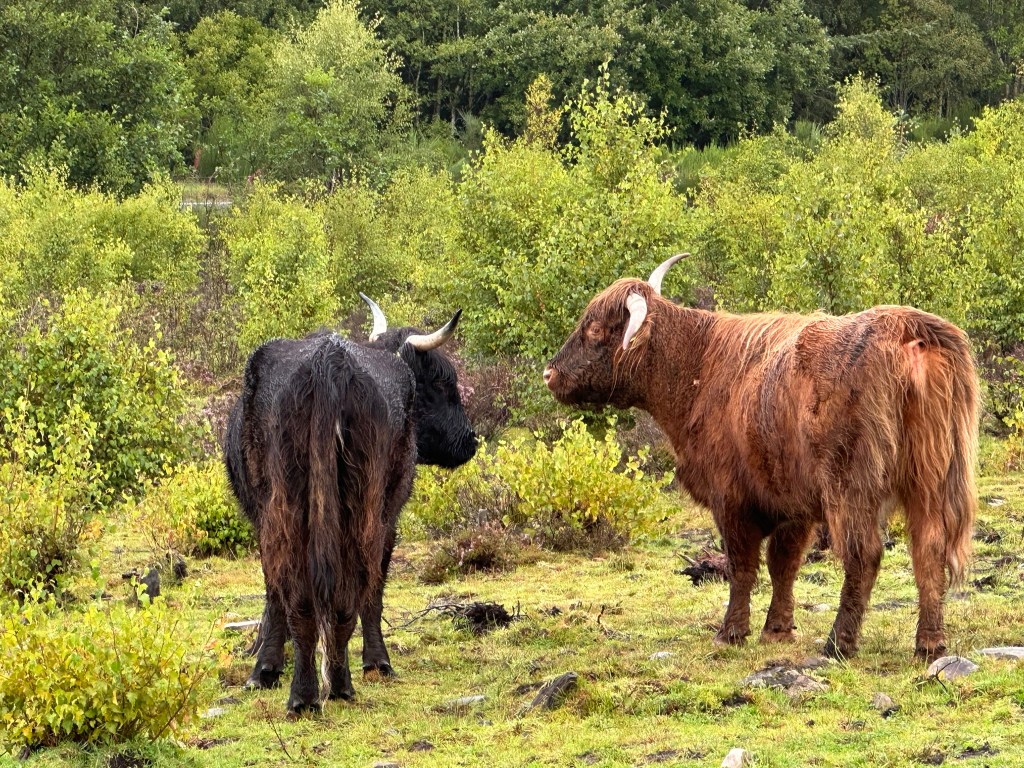
Cairngorms National Park. We arrived in Grantown-on-Spey on the day of a Harley Davidson rally and lunched at the local cafe with the bikers eating lox and bagels and sipping cappucinos (Sturgis, this is not). We followed it up with a two hour walk along the river Spey and in the Anagach Woods under nearly sunny skies. With a skinny latte in hand, we strolled back to the car as the skies opened up and rode back on a stunningly beautiful (but narrow and windy) drive through the Cairngorms National Park through Laggan on the A86.
While our Highland Games hopes had faded, we did make lemons from lemonade and enjoyed our day all the same.
I returned to the Cairngorms Park area to the Creag Meagaidh Nature Preserve to do a hike up to a lake which I found on AllTrails (Lochan na h-Earba, if you’re looking). It was a relatively easy hike (“moderate” on AllTrails) and took me up to a loch surrounded by mountains with a large network of trails including the one I was on. I certainly wasn’t expecting a sandy beach and marshy grassland amidst the highland meadows. Photos don’t do it justice and it was not too tough, if you’re looking to get out into the wilderness quickly and without much effort.
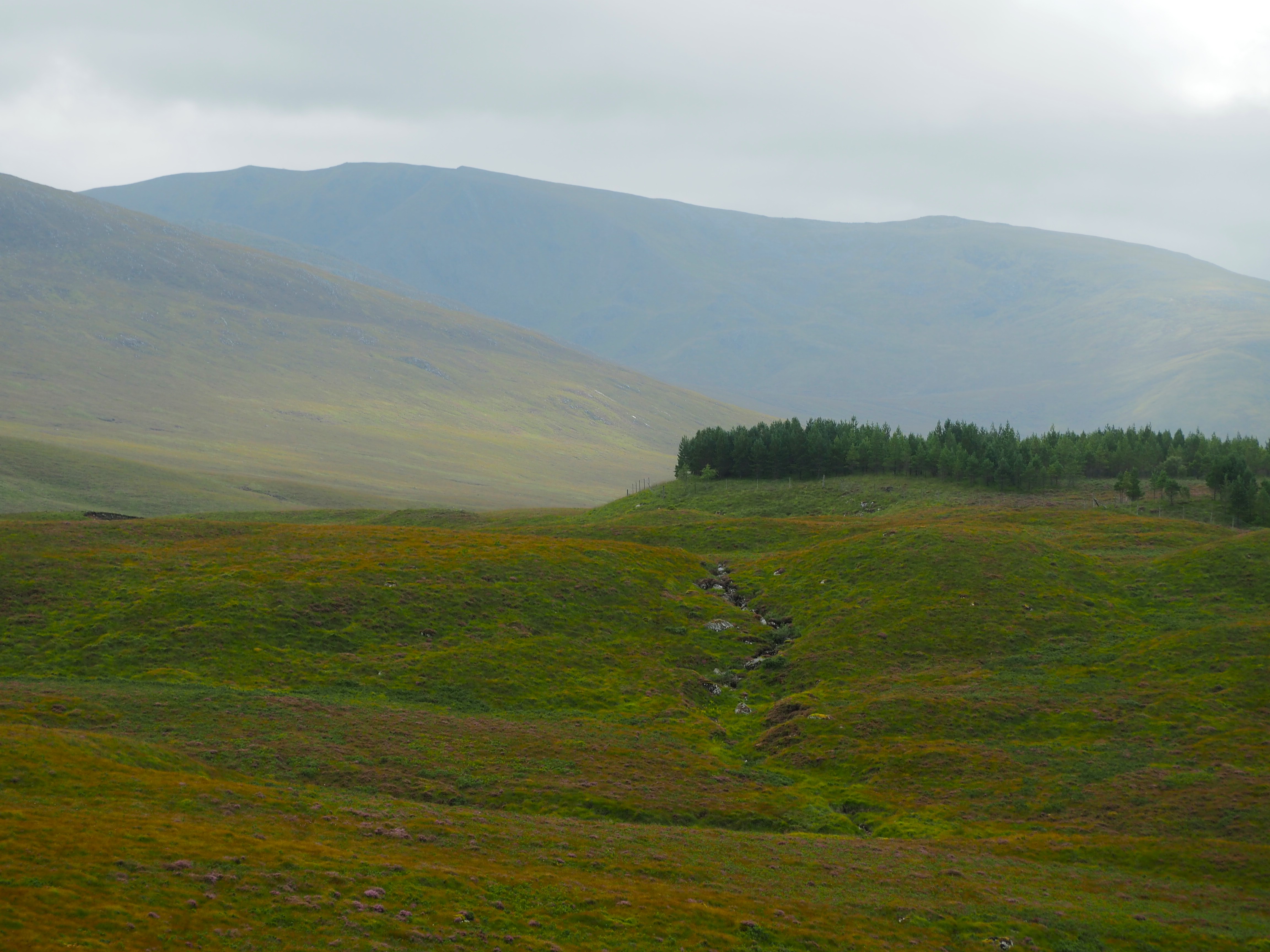
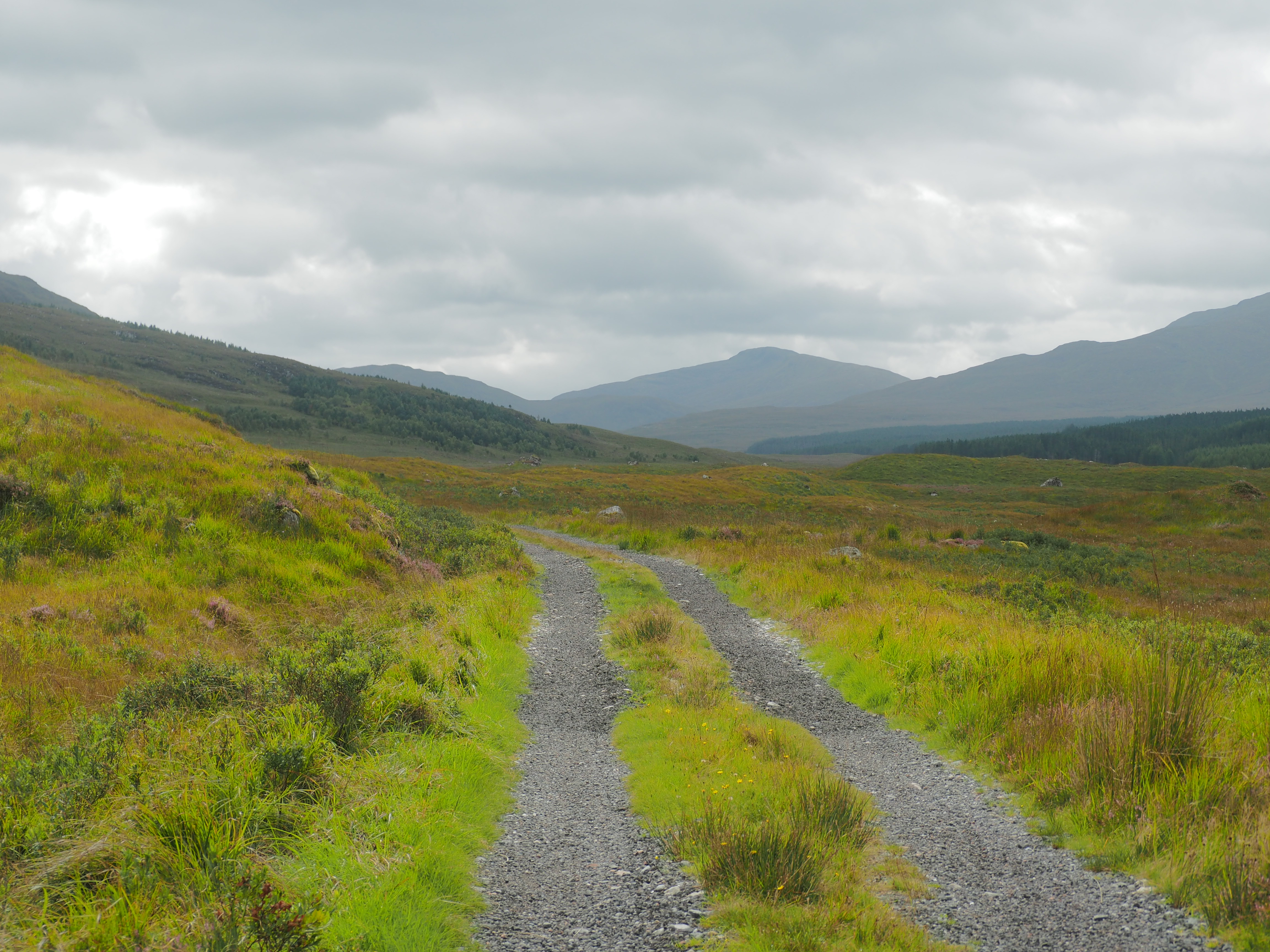
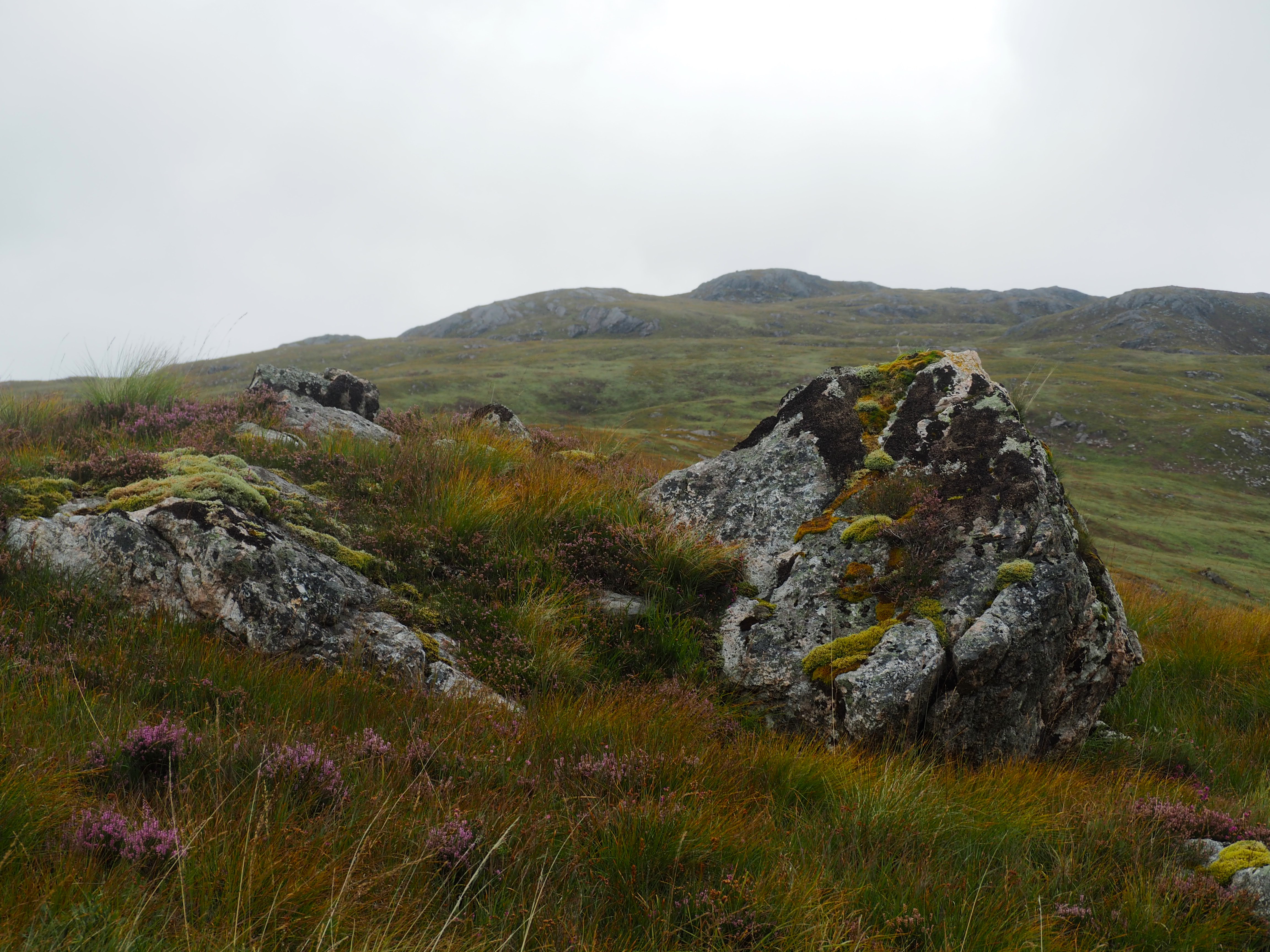
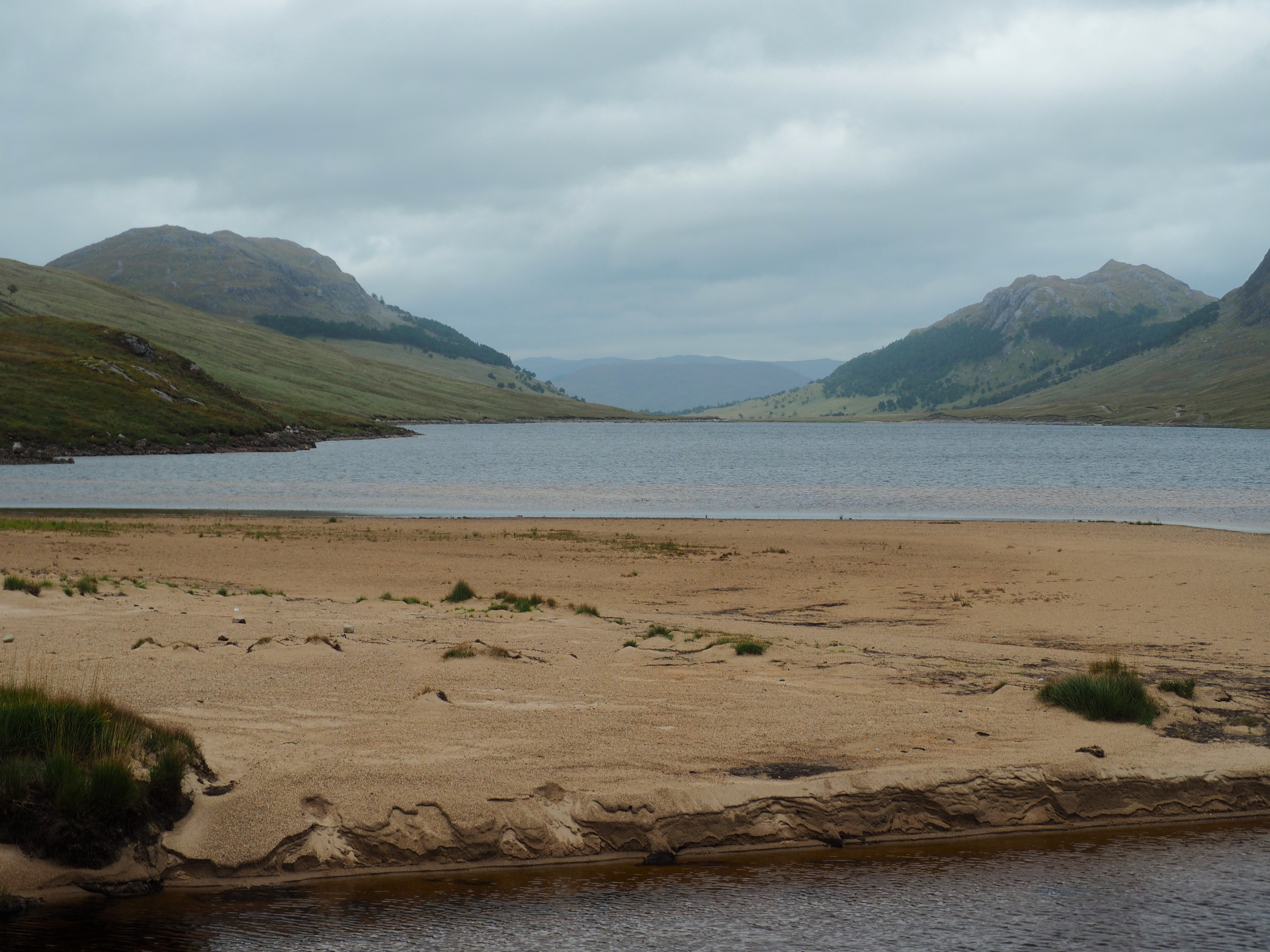
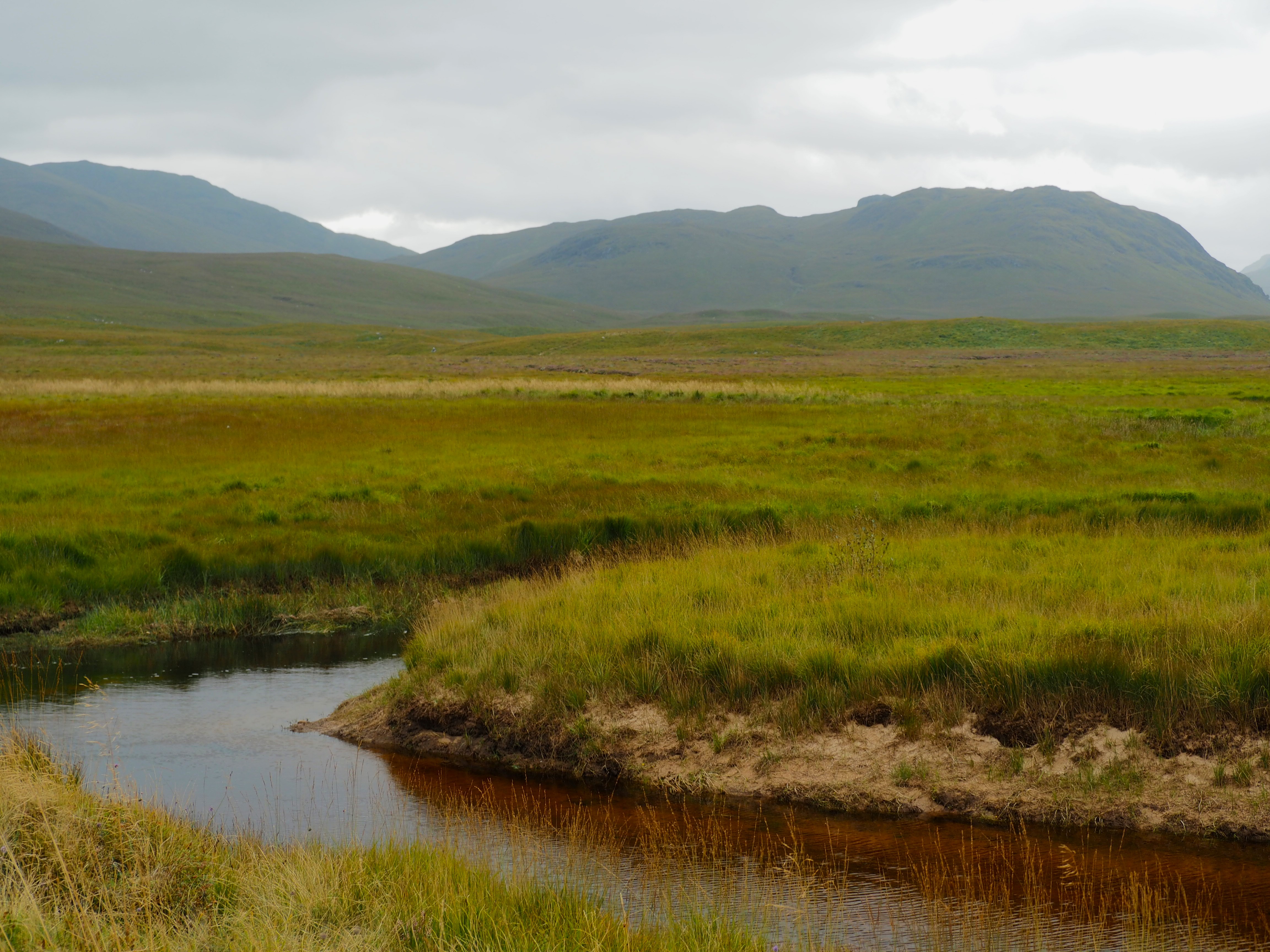
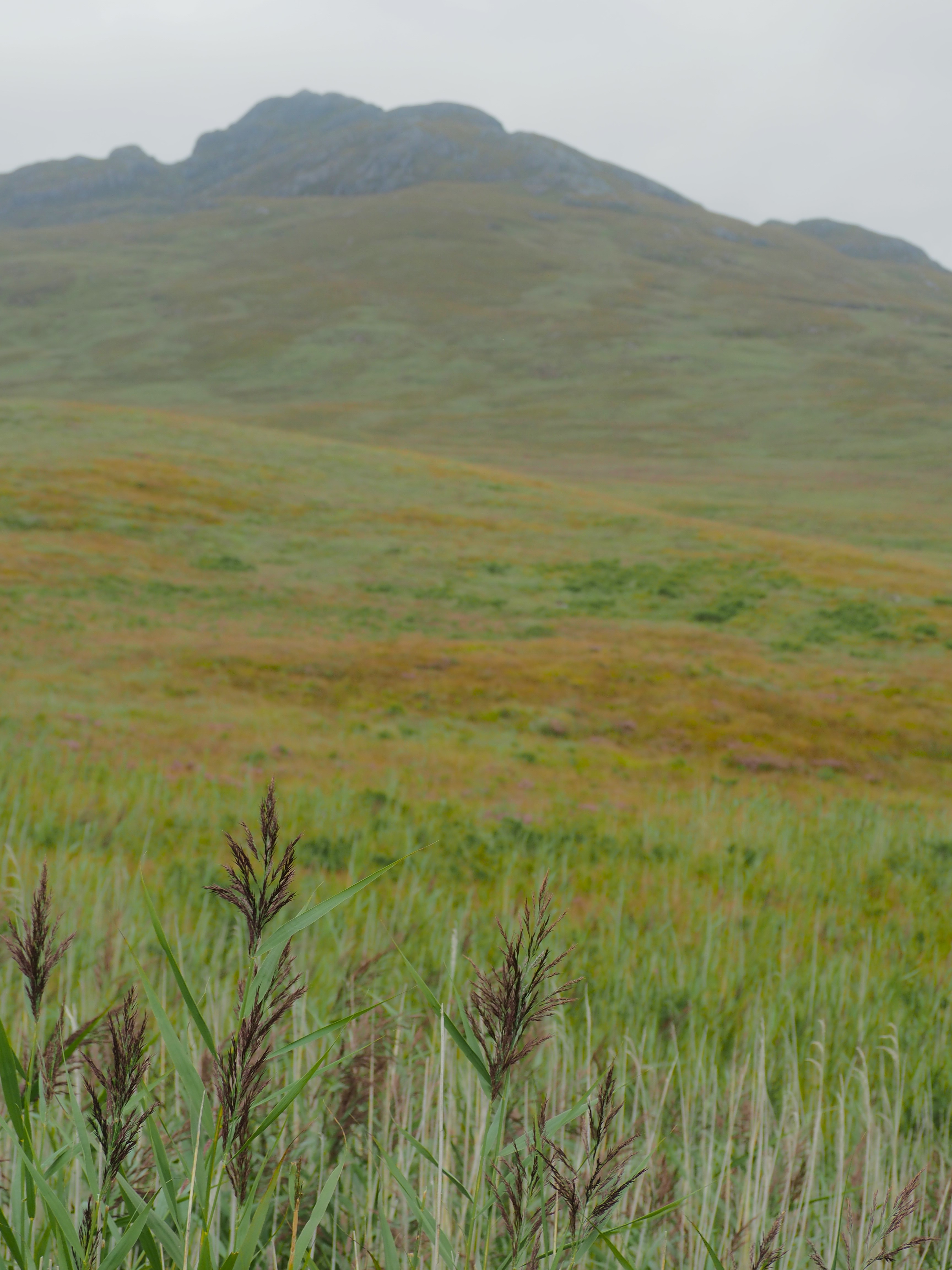
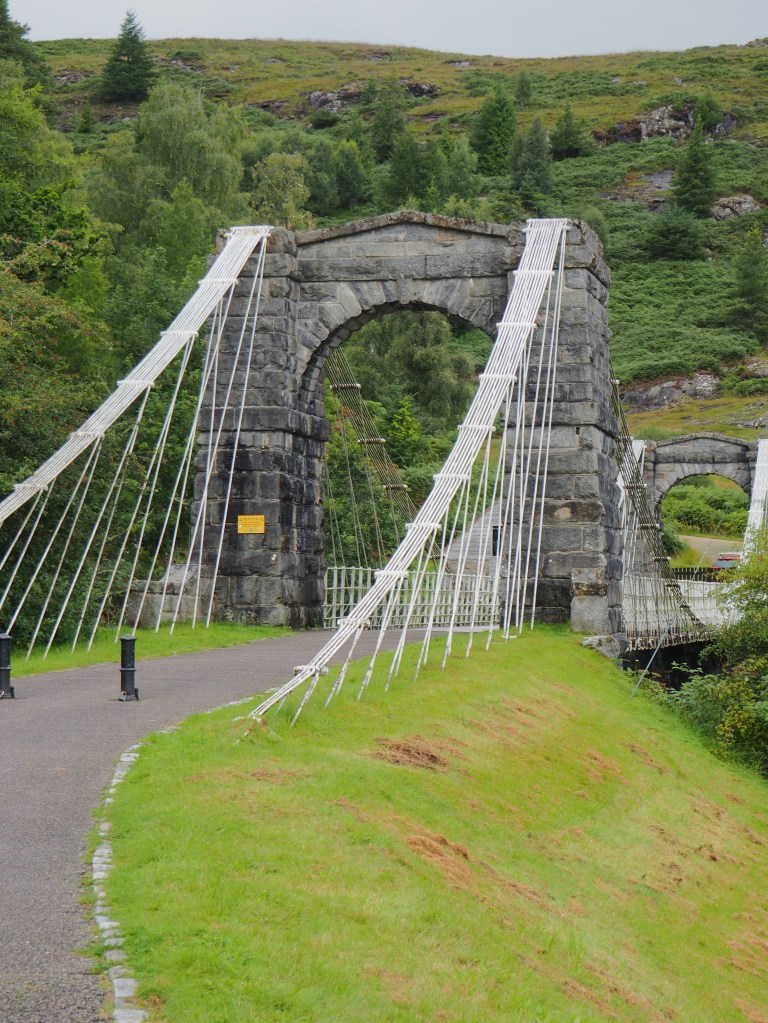
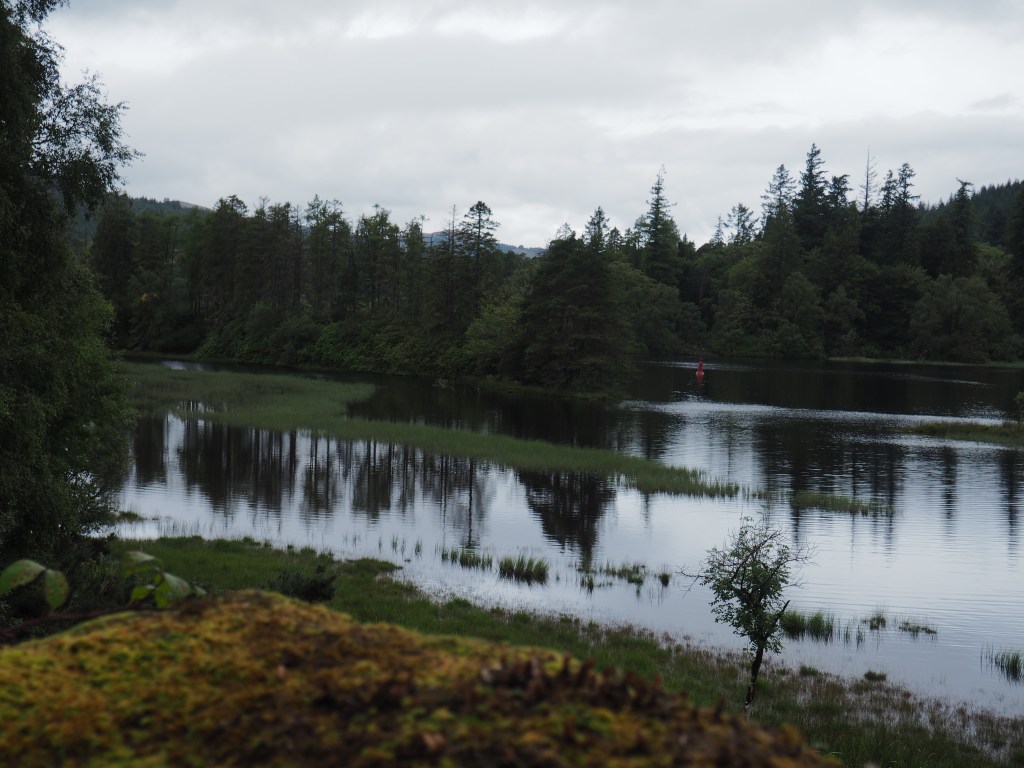
Loch Oich. Closer to home, we took to a trail I found, part of the Great Glen Way, a 79 mile path which passes from Fort William to Inverness through the central highlands, along Loch Oich. We took the eastern path from Oich Bridge to its north down almost the length of the Loch to South Laggan. The trail was closed for tree clearing at South Laggan but ordinarily encircles the loch (about 12 miles around).
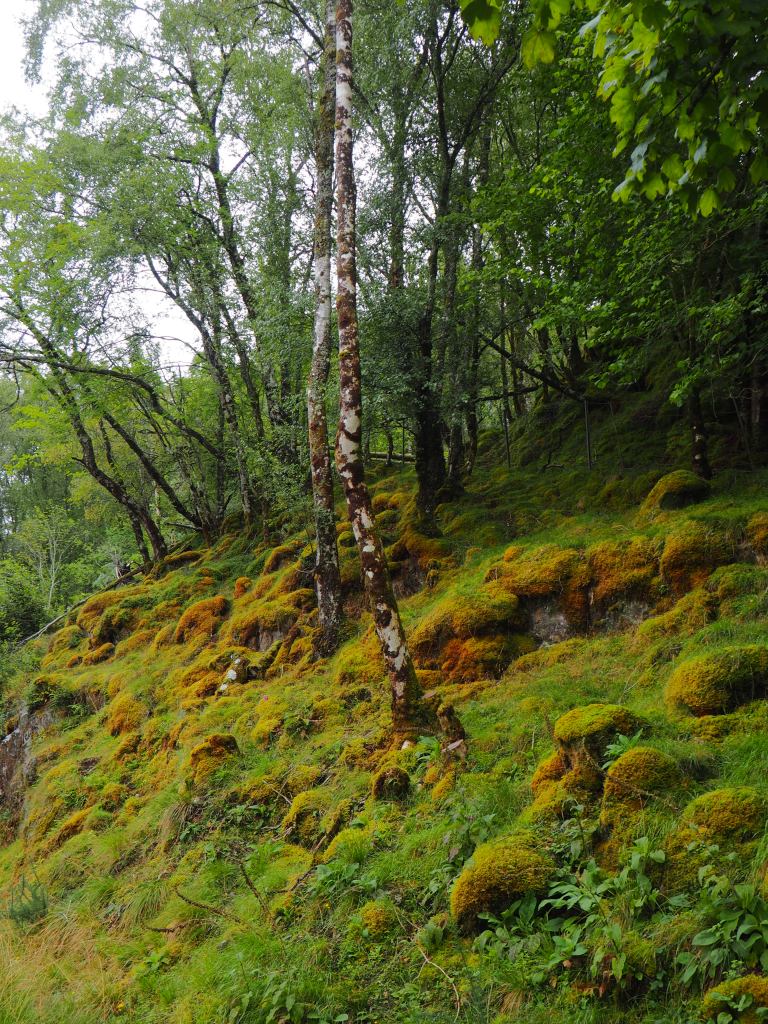
After watching boats pass through the Loch Oich swing bridge, we set south along the trail which is flat. Up the hillside, grow monstrously large rhododendron plants, lush fields of ferns and waterfalls of all sizes tumble down from above seemingly every fifty feet. Moss covered rocks line the hillsides and run down to the shores of the lake. It’s an easy walk and as long as you want to make it. There’s a parking lot right by the swing bridge that’s a good starting point.


Loch Lochy Munros from Kilfinnan trail. After navigating the lochside trail of Loch Oich and with sunny skies, not by Colorado or Portugal standards mind you, and a forecast of “possible rain showers around 5pm”, after lunch, I set out to tackle some incline on the Lochy Lochy Munros trail and climb Meall na Teanga, the mountain which has loomed over us for nearly a week. After five days in the highlands of Scotland I now translate “possible rain showers around 5pm” to “near certain rain in varying degrees of intensity from a light refreshing mist to an outright downpour occurring anywhere between 3:30 and 7:00pm”. You can’t fool this old dog more than three days in a row before I’m on to your tricks, Scottish weather.
So, I set off, about an hour’s walk from our Airbnb along the Great Glen Way to the trailhead for the ascent. When they tell you on AllTrails that a trail is “Hard” in Scotland, believe them. This sucker went straight up for probably a third of a mile and then wound its way as it climbed through gorgeous highlands meadows filled with heather and hardy trees being whipped by wind over a rocky and muddy trail as it was bathed by the week’s rainwater most of the way. Hard? Yes. Beautiful? Yes. Worth it? Yes.
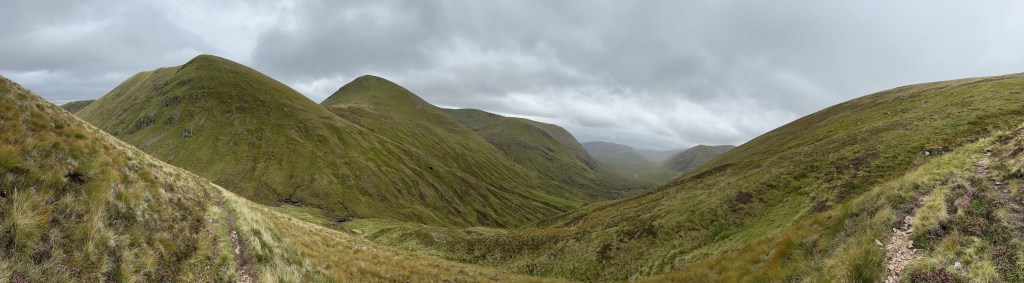
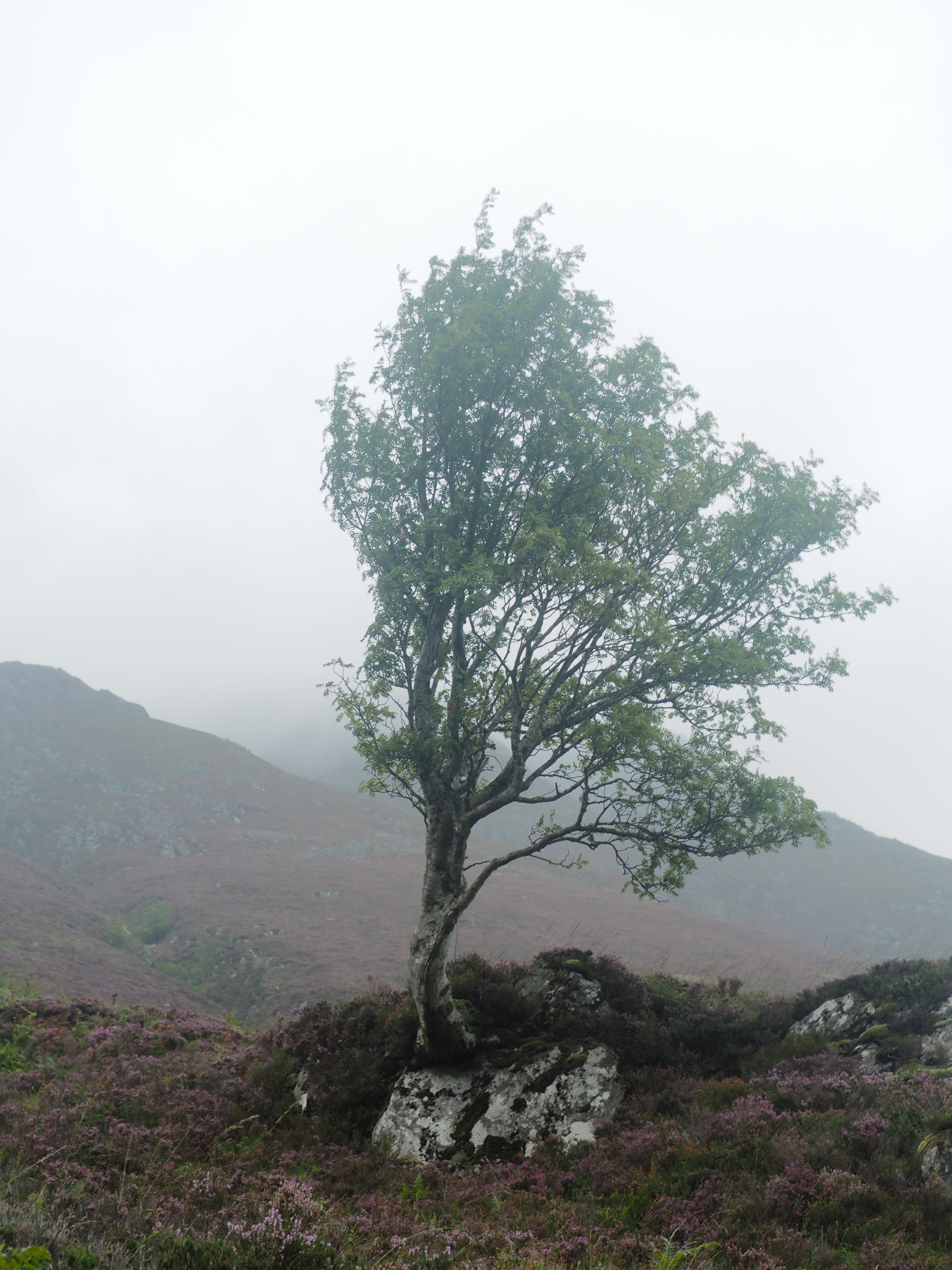

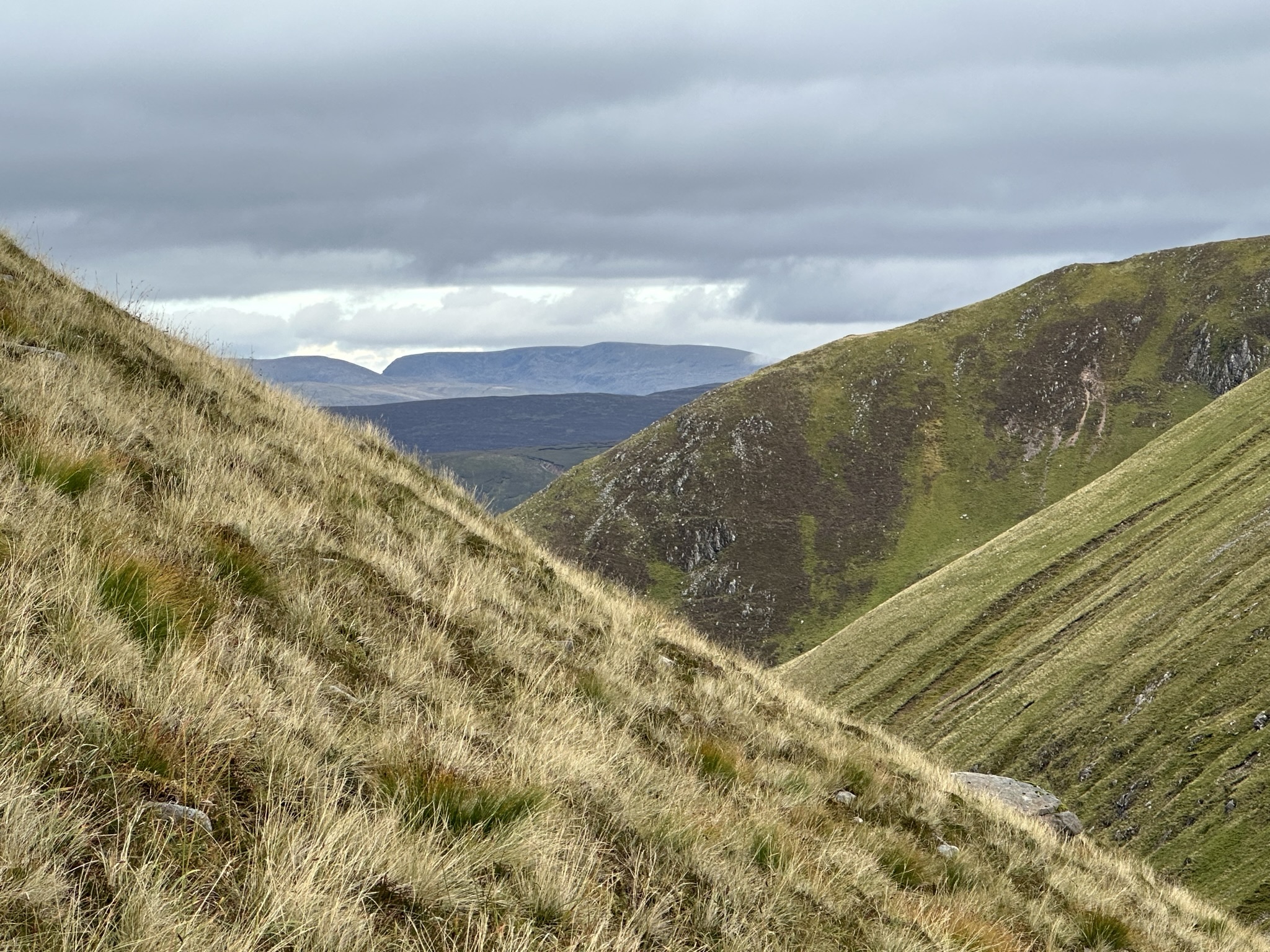
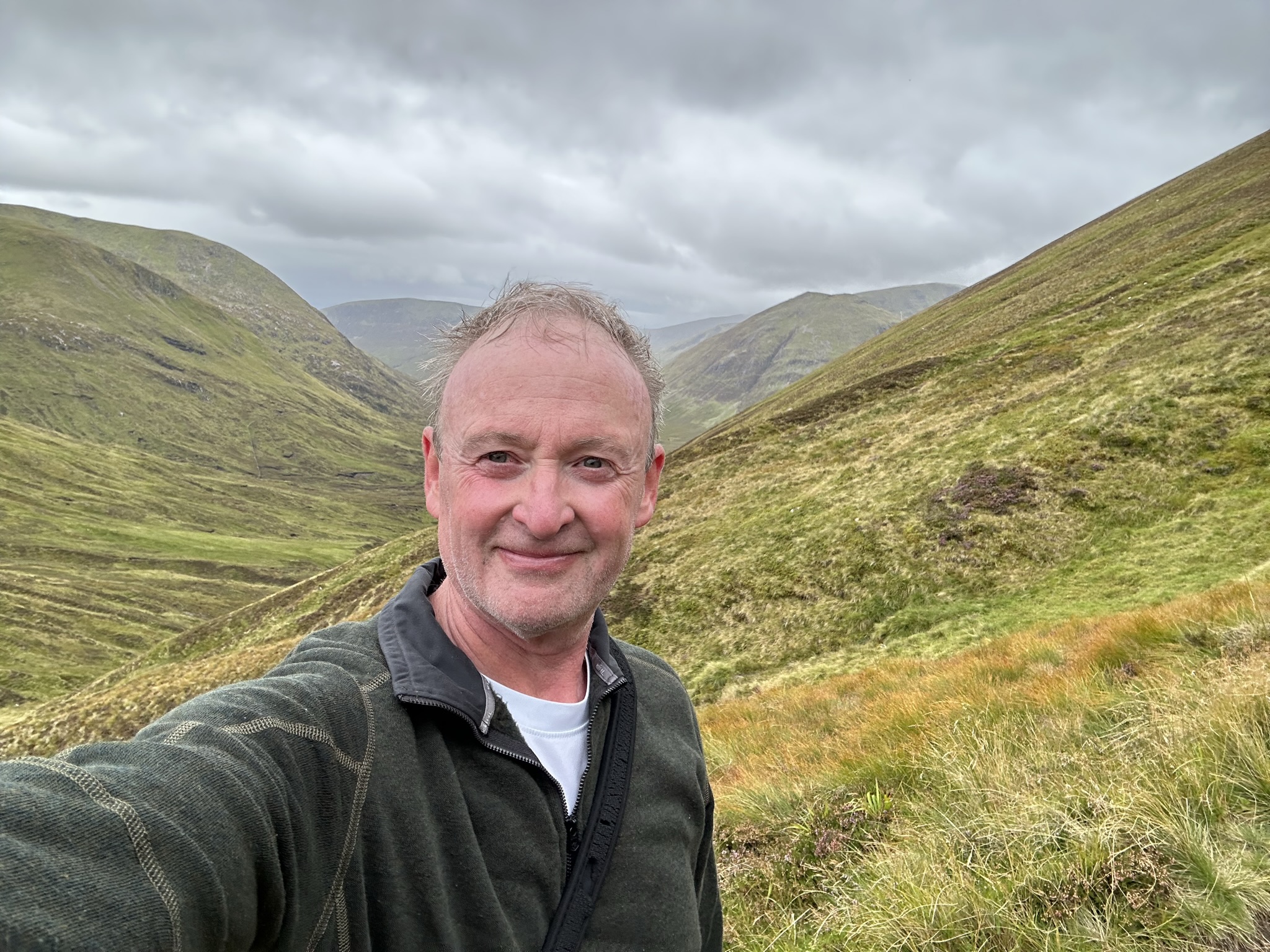
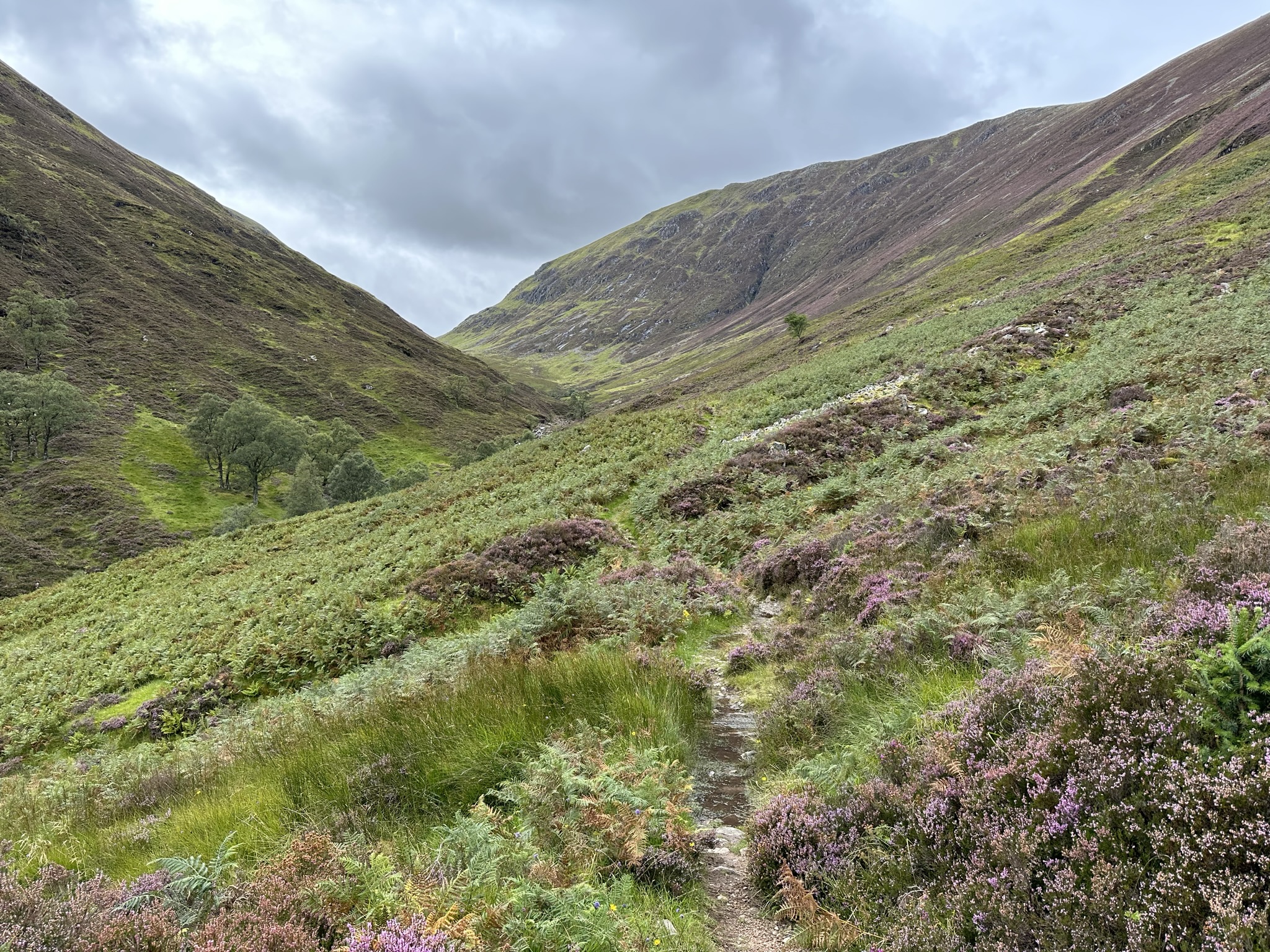
At my self-appointed turn time, however, I made the uncharacteristically wise decision to turn less than 30 minutes from the summit of the mountain. The rain off to my west seemed to be gathering and building and headed directly for moi in the strong Scottish summer breezes whipping up the hillside. It was a wise decision. The summit was completely engulfed in fog, mist and rain about ten minutes later as I made my hasty retreat on the descent. And then, after logging well over 30,000 steps for the day and a hot shower, I was ready to conquer the vindaloo, curry and naan at the un-Indian sounding Emily’s Byre (our first Indian restaurant, shockingly, on this trip to the UK) a short drive from our house.
There’s only one Highlands. Stealing from, and paraphrasing, the 1986 movie Highlander and Scotland’s own Sean Connery, there really is only one Highlands. I’ve lived most of my life in mountainous places and I’ve not been anywhere like it. Despite less-than-ideal weather, the highlands of Scotland are stunning and the breaks of rain and even sun make you appreciate why the ancient people who built Stonehenge and other stone circles in these parts to seemingly celebrate the solstices might have felt the need to pray for more.
Everything seems bigger here, looming mountains, deep lochs, enormous cows, plants grow to massive sizes and fill lush hillsides and forests. Even the creatures that lurk in the depths of Loch Ness are larger.
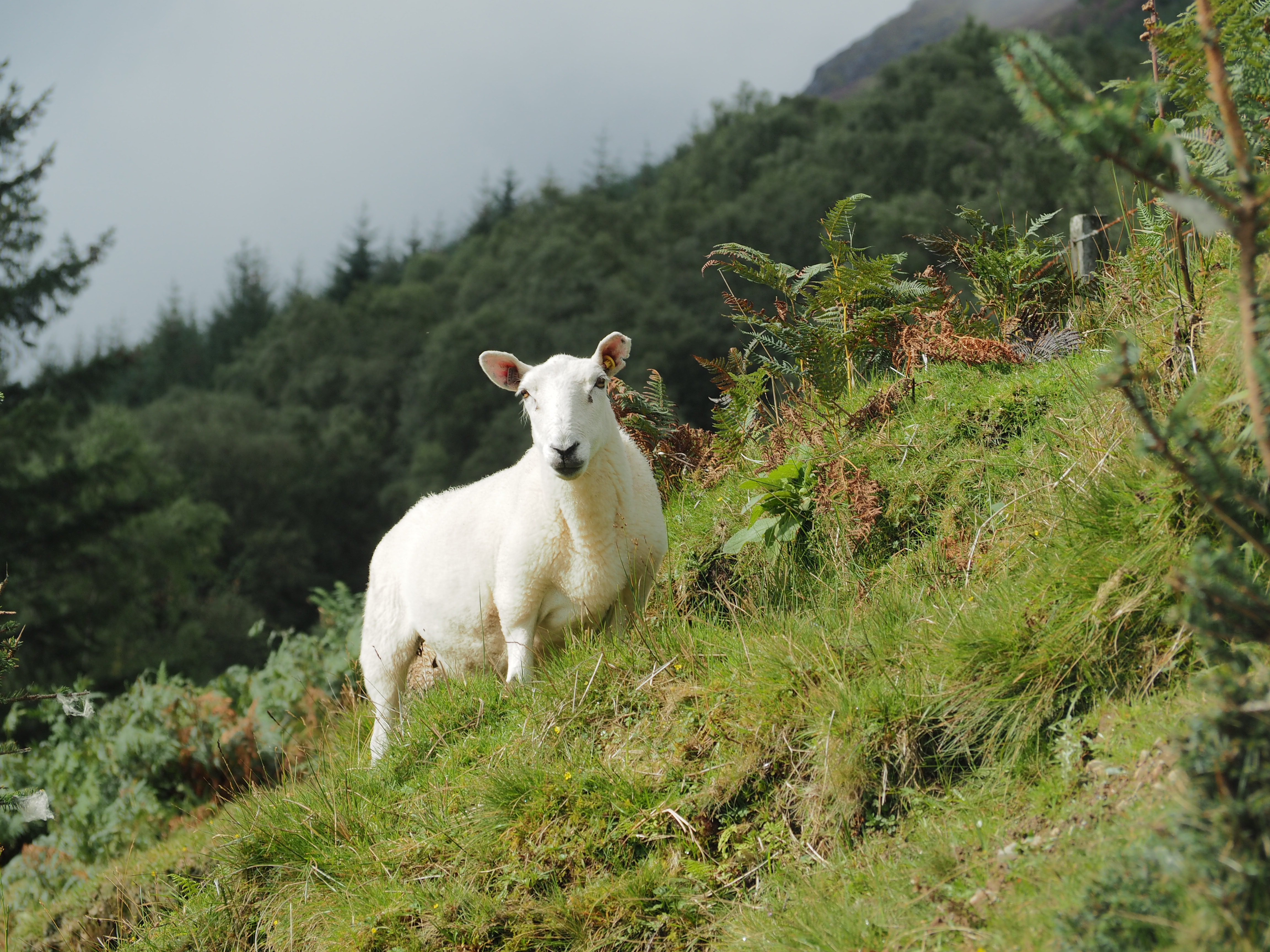
And everything that lives here is hardy: the people, the sheep, the trees and the highland cows, but it is easy to see why one would want to live here. Beauty is around every crook in the road and over every next hilltop. Our week here only made us want to come back again and not just because we missed the Highland Games.

Sources:
- Cruise Loch Ness, Fort Augustus Scotland, August 25, 2023.
- https://travelness.com/loch-ness-facts.
- https://en.wikipedia.org/wiki/Loch_Ness_Monster.
- https://www.bing.com/search?q=loch+ness+facts&form=ANNTH1&refig=4c71f3b853f34fa288613ba934fb05c4.
- https://www.visitscotland.com/things-to-do/attractions/historic/jacobites.
- https://en.wikipedia.org/wiki/Jacobite_rising_of_1745.
 The Traveling Ridleys
Greetings from Mo! Love being retired but haven’t gotten to do much traveling beyond a couple of weeks in Italy. Decided to buy different house so purging keeps me tied down . Vic Arnold is one of my new neighbors. He’s also retired but his wife has had some health challenges which interrupted their travel plans. Love your blog and recommend it to anyone who likes to travel.
One question—-do you ever share your itineraries? And I lied—2 questions—-do you rent your Portugal apartment? I need to plan a trip for next spring.
Thanks and keep the travel blog going!
Kay Davis
Sent from my iPhone
LikeLike
Hello! Good to hear from you. What’s a good email for you now? I’ll reply privately.
LikeLike